
Aichi
Nagoya International School
low confidence· 4/6 cats · 1.2 avg sourcesSince 1964, a full IB continuum school anchoring Nagoya's expatriate community at the heart of Japan's auto and aerospace corridor
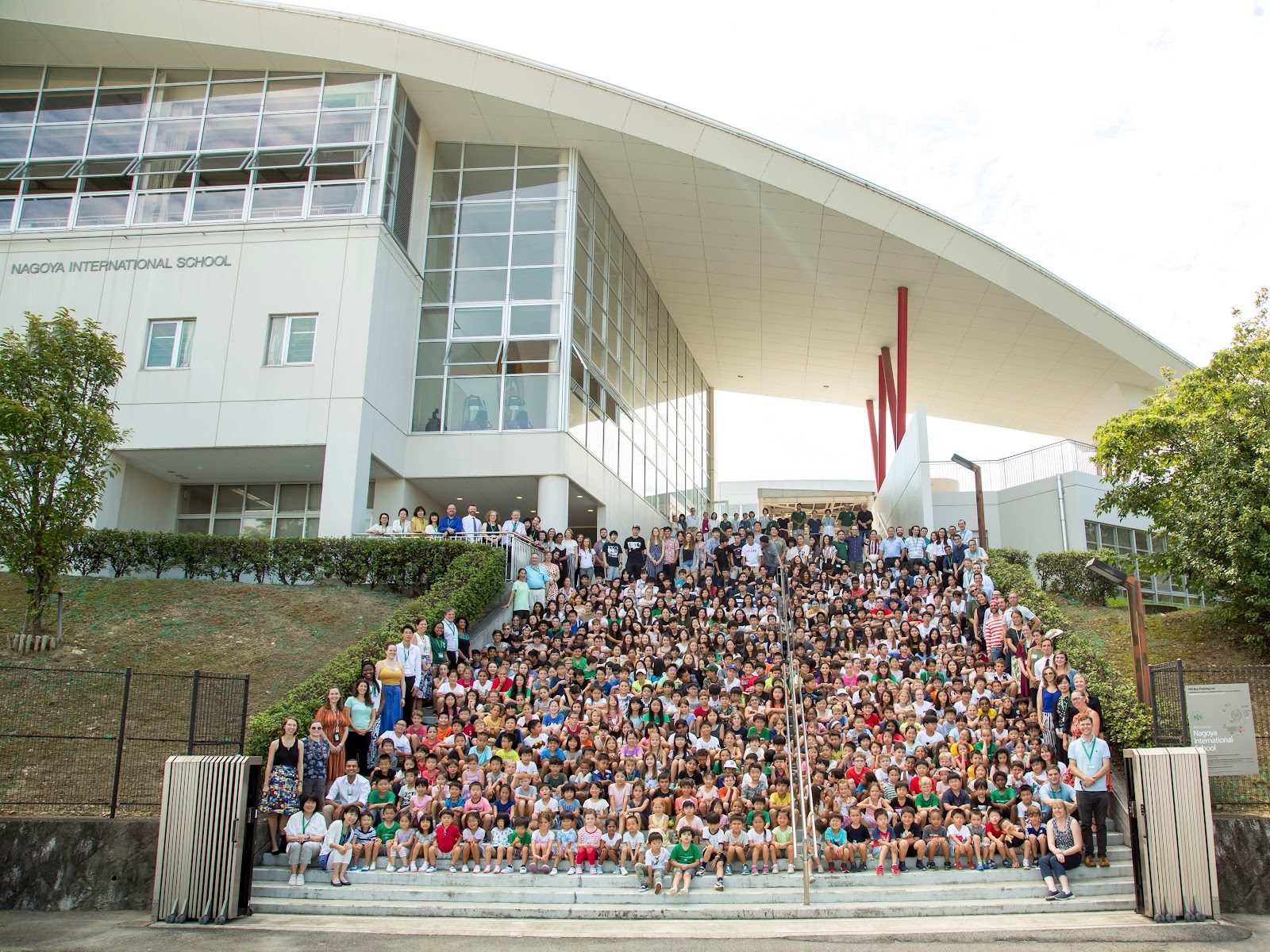
Photo © 名古屋国際学園 via Google Maps
Type
Day
Ages
3–18
Curriculum
IB
Qualifications
IB Diploma · IB MYP · IB PYP
Ratio
—
The Verdict
Editor's commitment
Right for
Nagoya families who want a non-religious English-language day school with the full IB continuum, plus CIS and WASC accreditation.
Wrong for
Parents chasing boarding, Japanese-medium teaching or a cheaper option; the average annual fee is JPY 2,797,500.
Watch out for
Founded in 1964, NIS anchors the expatriate market, but it does not publish headline exam outcomes in the facts given here.
Ranking breakdown
Nagoya International School · # of 1591
Composite score 52.8. 8 weighted criteria.
By criterion
Academic Outcomes
Weight 20%
#1348
of 1529 scored
University Placement
Weight 16%
#1332
of 1529 scored
Prestige & Heritage
Weight 12%
#1381
of 1571 scored
Alumni Network
Weight 12%
#1008
of 1530 scored
Facilities
Weight 12%
#1326
of 1534 scored
Transparency & Communications
Weight 8%
#1324
of 1532 scored
Peer & Industry Review
Weight 10%
#1216
of 1548 scored
Admissions Selectivity & Demand
Weight 8%
#1232
of 1529 scored
Peer & Industry Review
How Nagoya International School is regarded in the sector
60
Respected · low confidence
Nagoya International School is one of Japan's oldest and most established international schools (founded 1964), recognized as an accredited member of the Council of International Schools and WASC, and is frequently cited in expat parent forums (e.g., InterNations, expat.com) as a top choice for international families in the Nagoya/Chubu region. However, it lacks significant coverage in major specialist education press (Tatler, Good Schools Guide) which focus more heavily on Tokyo-based international schools, limiting broader peer visibility beyond its regional stronghold.
Evidence sources
Editors' overview
Nagoya International School sits in a market with fewer true all-through international options than Tokyo or Yokohama, and that matters. In Nagoya, a full English-medium school running from age 3 to 18, with the IB on offer and a history that stretches back to 1964, carries real weight. This is a private, non-religious day school with instruction in English, and its role is clear: it serves families who need continuity, international mobility and an academic route that travels. The school’s accreditations — IB World School, CIS and WASC — put proper external structure around that offer. Fees average 2,797,500 JPY a year across the full age range, which places it firmly in the serious-fee bracket for regional Japan, though not in the rarefied pricing seen in the biggest Asian capital-city markets.
What stands out is stability. Nagoya International School opened in 1964 in response to demand for English-language education, and that long presence gives it a settled place in Nagoya’s expatriate ecosystem. It covers preschool through high school, and graduates can leave with either the school’s own diploma or the IB Diploma. That dual exit point matters. It gives families a recognised international qualification while preserving a route for students whose plans do not require the full IB Diploma structure. The school also states that it is open to students of all backgrounds who can demonstrate they can succeed in an English-language school. That makes the academic and linguistic expectation plain: this is not a soft-landing bilingual school, and it is not built around local-language immersion.
Why shortlist it? Because in Nagoya, this is the anchor institution for internationally mobile families who want one school to do the whole job. The age range of 3–18, the English-medium teaching, the IB identity and the non-sectarian setting give it a clean, coherent proposition. For parents in the auto and aerospace corridor around Aichi, that continuity has practical value as much as educational value. The school suits children who thrive in an internationally transferable environment and families who want a clear, portable academic pathway rather than a hybrid local system. It will appeal less to those seeking deep Japanese-language immersion, a low-cost option, or a school with a strongly local character. This is the choice for expatriate and internationally minded families who want permanence, recognisable credentials and a school that has held its ground for 60 years.
Academic Performance
Nagoya International School offers the clearest external benchmark at the top of the school through the IB Diploma, but the school does not publish aggregate IB results in the public domain here. That limits any hard comparison with stronger-reporting peers in Tokyo, Yokohama, Singapore or Hong Kong, where schools routinely release average scores, subject breakdowns and cohort sizes. For parents, that matters. Without published outcomes, there is no way to test whether the Diploma route here lands in the top tier, sits in the middle of the pack, or simply clears the baseline. The school also offers its own diploma, which gives flexibility but adds another layer of opacity: outside the IB, there is no public external-results dataset to interrogate.
That does not make the academic offer weak; it makes it under-evidenced. In a regional market with fewer full international options, a school can hold a strong local reputation without publishing the kind of exam data that sharper global comparators now treat as standard. The key point is straightforward: this is not a school that trades on a results-driven public profile. Families who want forensic evidence on academic performance need to ask directly for recent IB Diploma score ranges, pass rates, cohort size, higher-level subject performance and university destinations over at least 3 recent cycles. Until those figures are disclosed, Nagoya International School sits in the category of established international schools with credible but opaque outcomes.
Facilities
Public detail on facilities is thin, and that matters because campus substance is easier to judge than rhetoric. What parents can bank on is the school’s all-through structure: a site that has to serve children from the early years to graduation needs specialist spaces beyond ordinary classrooms, and any school offering the IB Diploma needs workable science, arts and study provision. That sets a baseline. Against peer schools in Japan’s biggest international markets, though, Nagoya International School does not project a showcase campus identity. There is no public drumbeat around signature theatres, competition-grade aquatics, major makerspaces or statement architecture. For some families that restraint will read as refreshingly functional; for others it will feel under-documented.
In market terms, that places NIS closer to the established, community-serving international school than to the arms-race campuses now common in newer premium builds across Asia. The advantage of that model is coherence: facilities tend to exist to support day-to-day teaching rather than to sell the school. The trade-off is obvious. Parents who care about elite-level sports infrastructure, expansive performing-arts venues or cutting-edge design labs need hard answers before enrolling. Ask for a full breakdown of science labs, libraries, sports spaces, early-years outdoor provision and dedicated sixth-form areas, plus photographs that show daily use rather than empty rooms. At an average fee of 2,797,500 JPY, basic adequacy is not enough; the school needs to prove that its campus matches the seriousness of its academic promise.
Nagoya International School sits in a market with fewer true all-through international options than Tokyo or Yokohama, and that matters
Prestige
Nagoya International School carries real regional weight, but its prestige is localised rather than elite in the pan-Asian sense. In Aichi’s expatriate market, that standing rests on scarcity and function: there are not many all-through international schools that can take a child from the early years to graduation without a system change. For internationally mobile families tied to major employers in the industrial belt around Nagoya, that gives NIS a serious practical stature. It is the school many families will know first, and the one employers and relocation advisers will reach for because it covers the full age range and offers a recognised exit route. The average annual fee of 2,797,500 JPY also places it in the bracket of schools that serve professional expatriate and internationally minded local families, not the bargain end of the market.
That said, prestige here does not rest on *flash, selectivity or public academic dominance*. It rests on continuity, recognition and trust built over decades. The limit is clear: the school does not publish the kind of headline outcomes data that top-status international schools use to prove superiority. Without aggregate IB results or detailed destination reporting in the public domain, NIS cannot claim top-table academic prestige on evidence. Its status is stronger as an established community institution than as a results-driven powerhouse. For parents, that distinction matters. This is a school with solid name recognition in its region and credible international standing through its external affiliations, but not a school that commands automatic prestige across Asia’s most competitive international-school markets.
Until those figures are disclosed, Nagoya International School sits in the category of established international schools with credible but opaque outcomes
Communications
Nagoya International School communicates with parents in the manner of many long-established community schools: with institutional steadiness rather than digital fanfare. What is missing matters as much as what is present. The school does not publish the kind of rich public-facing outcomes data, campus documentation or high-frequency storytelling that stronger communicators now treat as standard. That matters because communication is not decoration; it is governance in public. When a school with average annual fees of 2,797,500 JPY keeps external detail thin, parents have to work harder to judge academic traction, day-to-day life and strategic direction. The admissions threshold is plain enough — students need to cope in an English-medium environment — but beyond that, the public picture is lean.
Effectiveness, then, hinges on whether the school compensates privately for that public sparseness. An established all-through school serving internationally mobile families needs communication that is prompt, procedural and unfussy: clear calendar information, rapid operational updates, transparent academic reporting and direct access to staff. We have not seen enough in the public domain to call NIS a best-in-class communicator. Nor is there evidence of muddle or noise. The read-through is simpler: this is a school that communicates like a settled institution, not a brand. Some parents will value that restraint. Others will want more proof. Before enrolling, ask to see parent newsletters, report formats, sample weekly communications and the school’s process for handling concerns within 24–48 hours.
Uniqueness
What makes Nagoya International School distinct is not novelty; it is continuity with purpose. In a city where international-school choice is thinner than in Japan’s bigger expatriate hubs, one school that can take a child from the nursery years to graduation without forcing a system change carries outsized practical value. That matters for families on mobile corporate postings, but it also matters for children. They get a steadier peer group, fewer educational resets and a school culture that does not need reinventing at each stage. The dual graduation route adds another layer of usefulness: students can leave with the school’s own diploma or the IB Diploma, which gives families a clearer degree of manoeuvre than an all-or-nothing exit model.
Its other point of difference is social rather than architectural. This is a non-sectarian school built around an international community in an industrial region better known for manufacturing than for cosmopolitan schooling. That gives it a workmanlike, grounded identity rather than a glossy one. For students, the benefit is a school environment shaped by globally mobile families who need reliability, portability and straightforward academic structure, not theatre. The admissions line is also plain: children need the capacity to succeed in an English-medium setting. That creates a more self-selecting academic culture than schools built as soft-entry bilingual environments. For the right family, that mix of stability, mobility and no-nonsense internationalism is the school’s defining strength.
Against peer schools in Japan’s biggest international markets, though, Nagoya International School does not project a showcase campus identity
Student Profile
The best fit here is the child who values continuity over churn and can work confidently in an English-medium classroom without a long linguistic runway. This is not a school built for families testing out international education or hoping a child will pick it up as they go. The intake suits internationally mobile households, returnee families and globally minded local parents who want a stable peer group, a clear academic rhythm and one institution that can carry a student from the early years to graduation. Because the school serves ages 3–18, pupils benefit from a community where older and younger students sit inside the same institutional culture rather than being split across separate schools with different expectations.
Socially, the strongest fit is the student who does well in a grounded, adult-run environment rather than one driven by spectacle, hyper-competition or luxury-campus theatre. Children who need heavy bilingual support or a deeply Japanese educational character will find a mismatch. So will families chasing a status performance school with public exam bragging rights. NIS suits students who are adaptable, internationally oriented and comfortable in a mixed-background community where belonging rests less on local roots than on shared mobility. For parents paying an average of 2,797,500 JPY a year, the value lies in steadiness, portability and fit — not in glamour.
Nagoya International School carries real regional weight, but its prestige is localised rather than elite in the pan-Asian sense
Co-curricular strengths
Arts & sport, on a separate axis
Overall 8.36/10
Scored 0-10 from the school's own published evidence. This axis is editorial-only — it does not feed the main WTS ranking.
Sports
8.5/10
Drama
8.8/10
Dance
6.5/10
Music
9/10
Visual Arts
9/10
Editor first-pass · editor-reviewable · 7/30/2026
Strengths
- +Offers the full IB continuum (Primary Years, Middle Years, and Diploma Programme), giving families curriculum continuity from early childhood through graduation without switching schools.
- +One of Japan's longer-established international schools, having operated in Nagoya since the 1960s, which gives it institutional depth relative to newer entrants.
- +Located in Nagoya, a major manufacturing and automotive-industry hub (home to Toyota and related suppliers), making it a practical option for corporate relocations to the region.
- +Single day-campus structure fosters a small, close-knit community that some families find easier to integrate into than large multi-campus international schools.
Considerations
- −Nagoya's expatriate community is far smaller than Tokyo's or Osaka's, meaning fewer peer families, less extracurricular breadth, and a narrower social ecosystem around the school.
- −Public information on fees, class sizes, faculty turnover, and university placement outcomes is limited compared with flagship IB schools in Tokyo or Yokohama, making benchmarking difficult.
- −Day-only provision, so families without local housing arranged in advance have no boarding fallback.
- −Lower international profile (reflected in its editorial ranking) means less brand recognition abroad than higher-tier Japan-based IB schools.
Availability
Primary entry gate & tests
Academic Record
Gallery
Photo © Nathan Gildart via Google Maps
Photo © Nathan Gildart via Google Maps
Photo © Nathan Gildart via Google Maps
Photo © Nathan Gildart via Google Maps
Photo © Nathan Gildart via Google Maps
Parent reviews
Have you sent your child here?
Voice reviews carry the strongest trust badge — we transcribe them for you to tidy up before they go live. Prefer to type? A written review is fine too.
Add your voice
In 60 seconds, tell other parents: what's the best thing about Nagoya International School, and what surprised you when your child joined?
We ask for a Google sign-in so every review has a real face behind it — no anonymous drive-by attacks on schools, and no faked positive reviews. Your email is never shown publicly.
Send this profile to a friend
International parents rely on word-of-mouth. Share this review with someone weighing the same decision.
Schools with places
Similar schools to Nagoya International School with places available now.
Aoba-Japan International School
Tokyo · Japan
- 2026-27
- WAITPOOLSpace-dependent
- 2027-28
- PLACES OPENRolling
Osaka International School of Kwansei Gakuin
Osaka · Japan
- 2026-27
- WAITPOOLSpace-dependent
- 2027-28
- PLACES OPENRolling
Seisen International School
Tokyo · Japan
- 2026-27
- WAITPOOLSpace-dependent
- 2027-28
- PLACES OPENRolling
Canadian Academy
Kobe · Japan
- 2026-27
- WAITPOOLSpace-dependent
- 2027-28
- OPENS SOONExpected ~Sept '26 (one-year-ahead policy)
Availability first, then country, area, curriculum, price, co-curricular
Consider also
Also worth looking at alongside Nagoya International School.

Tokyo International School
Tokyo · Japan
Grown from five preschoolers into a full IB continuum, this Minato campus relocates to Takanawa Gateway City ahead of its first DP class in 2027.

Kyoto International School
Kyoto · Japan
Grown from a 1957 missionary homeschool into Kyoto's only full IB continuum, blending British rigor with inquiry-based learning.

Hiroshima International School
Hiroshima · Japan
One of Japan's oldest IB schools, where students carry origami cranes to Hiroshima's Sadako Peace Monument each year.
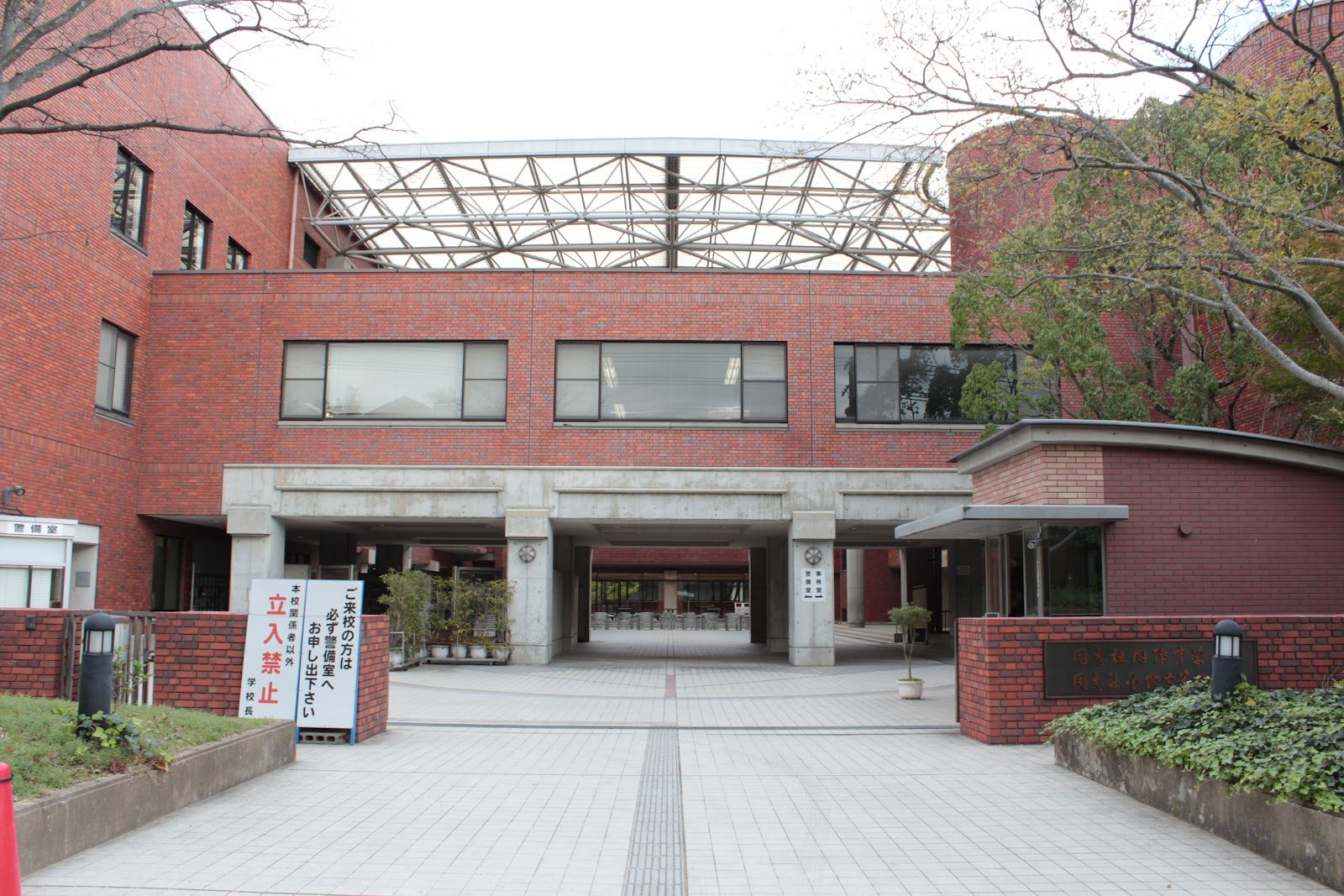
Doshisha International School Kyoto
Kyotanabe · Japan
Small IB classes inside a research-park campus, carrying the 1875 Christian-liberal ethos of the Doshisha network into Kansai Science City.
Same country and curriculum — closest matches within ±10 points either way