
North Holland
Latin and Greek still anchor the timetable inside a neoclassical 1885 monument facing Paradiso on the Weteringschans.
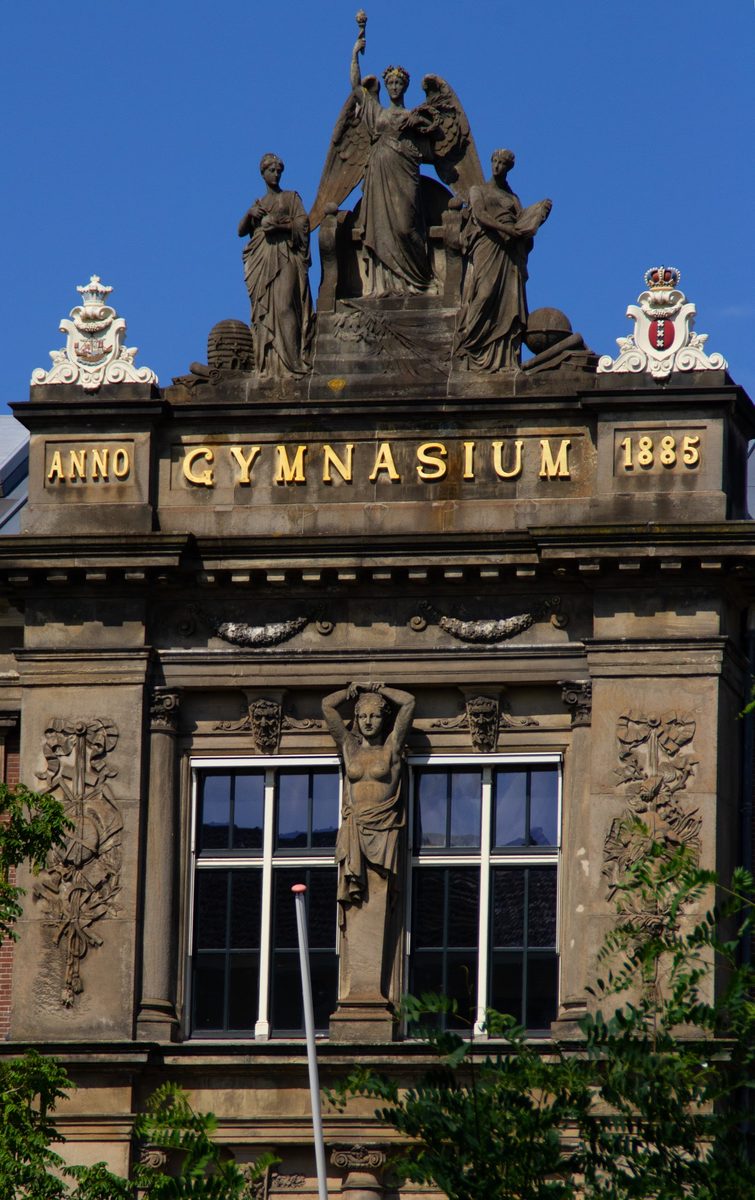
Photo © Evangelos Gerontakis via Google Maps
Type
Day
Ages
3–18
Curriculum
Dutch Gymnasium
Ratio
14:1
The Verdict
Editor's commitment
Right for
Families who want a Dutch Gymnasium in Amsterdam, founded in 1885, with a 14:1 ratio and classics still central.
Wrong for
Parents expecting intimate teaching will baulk at average class size 28 and a day school serving ages 3–18.
Watch out for
Instruction is listed as English, but the school’s public face is Dutch; verify classroom reality before treating language as settled.
Ranking breakdown
Barlaeus Gymnasium · #266 of 1591
Composite score 74.0. 8 weighted criteria.
By criterion
Academic Outcomes
Weight 20%
#293
of 1529 scored
University Placement
Weight 16%
#649
of 1529 scored
Prestige & Heritage
Weight 12%
#53
of 1571 scored
Alumni Network
Weight 12%
#83
of 1530 scored
Facilities
Weight 12%
#742
of 1533 scored
Transparency & Communications
Weight 8%
#92
of 1532 scored
Peer & Industry Review
Weight 10%
#173
of 1548 scored
Admissions Selectivity & Demand
Weight 8%
#760
of 1529 scored
Peer & Industry Review
How Barlaeus Gymnasium is regarded in the sector
68
Respected · medium confidence
Barlaeus Gymnasium is one of Amsterdam's oldest and most prestigious gymnasiums (founded 1917), consistently regarded within Dutch education circles as a top classical/academic secondary school, with strong Dutch Inspectorate (Onderwijsinspectie) ratings and frequent mentions in Dutch media rankings of top gymnasiums in Amsterdam alongside Vossius and Cygnus Gymnasium. It has a notable alumni network including several prominent Dutch cultural and political figures, and it is well-regarded among Amsterdam expat and local parent forums as a highly selective, academically rigorous option, though it lacks the international specialist press coverage (Tatler, Good Schools Guide) common for globally ranked international schools.
Evidence sources
Editors' overview
Barlaeus Gymnasium occupies a rare niche in Amsterdam: a Dutch Gymnasium in which the classical tradition is not decorative but structural. Latin and Greek sit at the centre of the proposition, and the school reinforces that intellectual identity through the timetable and through ritual: fourth-year art trips to Berlin, London or Paris, a fifth-year Rome and Naples journey, translation competitions in Classics, debating, philosophy, and a literary festival built around close reading and discussion. The setting matters too. A neoclassical 1885 building opposite Paradiso, near Leidseplein, gives Barlaeus a civic, urban seriousness that suburban campuses cannot fake. This is a school with old Amsterdam academic confidence, and it knows exactly what it is.
Its strongest selling point is culture, in the full sense of the word. Barlaeus does not confine student life to sport and token clubs; it runs a dense internal world of theatre, music, literature, debate and student-led production. The first-year musical is written, choreographed and directed by older pupils; the annual music theatre production pulls in around 100 students; the Barlaeus Youth Parliament extends the school’s debating culture beyond a small elite; mock elections, chess tournaments and literary events all point in the same direction. This is not a glossy “well-rounded” claim. It is a serious programme for articulate, high-energy adolescents who want school to feel busy, brainy and socially alive. The published student-teacher ratio of 14:1 and average class size of 28 indicate that intimacy is not the main draw; the draw is scale, tradition and participation.
Parents should shortlist Barlaeus if they want an academically selective day school with a strong humanities backbone and a distinctive civic atmosphere. It offers something sharper than a generic high-performing secondary: an intellectual tribe, a real classics culture, and a student body that debates, stages, translates and organises. The school’s own messaging leans hard on socialisation and personal formation, and the volume of cross-year activity gives that claim substance. Barlaeus suits the student who relishes language, ideas and performance; who can thrive in a large, active peer culture; and who wants more than credential collection from adolescence. It fits the self-propelled reader, debater, musician, classicist or theatre child. It does not fit families looking for a quiet, pastoral, low-pressure environment or for broad curriculum flexibility detached from the Gymnasium model. Barlaeus offers intellectual density and institutional character. For the right child, that is exactly the point.
Academic Performance
Barlaeus does not publish aggregate external examination data in the public domain, and that matters. No school asking parents to trust its academic seriousness gets a free pass on outcomes. We have not seen school-level pass rates, grade distributions, value-added data, or subject-by-subject results that would allow a clean comparison with Amsterdam peers. What the public record does show is indirect rather than definitive: students winning a KNAW education prize for a profielwerkstuk, sixth-form biology pupils all passing a resuscitation exam, a strong debating culture, Classics translation competition participation, and philosophy at a high level. Those are serious academic signals, but they are not a substitute for published examination performance.
Relative to peers, Barlaeus sits in the category of intellectually ambitious, classically oriented secondary schools where expectations are plainly high and the academic culture extends well beyond test preparation. That places it in the top tier of seriousness by ethos, not by disclosed metrics. Parents comparing selective Amsterdam schools need to press for hard data: final examination pass rates, proportions achieving top marks, university destinations, and performance across core subjects. Until Barlaeus publishes that, its academic reputation rests on institutional character, student activity and selective identity rather than transparent results. For some families, that confidence in tradition will suffice. For others, the opacity is a real weakness.
Facilities
Barlaeus is not a campus-school with acres of specialist infrastructure. It is an urban academic building, and parents should read the facilities through that lens. The standout spaces are the ones that support its internal culture: a mediatheek for study and reading, a gym hall that can be converted into a theatre, and the shared rooms required to sustain an unusually active programme of music, debate, literature and student production. The school’s own account of the annual music theatre production is telling: around 100 pupils take part, with staging, make-up, set-building and publicity folded into the operation. That points to facilities that are hard-worked, multi-use and embedded in school life rather than showpiece amenities. The same applies to the first-year musical and literary festival: Barlaeus uses space intensively and expects pupils to animate it.
Against peer schools, that puts Barlaeus behind newer institutions on pure physical plant. Families hunting glossy sports centres, black-box theatres, design labs or broad outdoor provision will find the offer plain and constrained by the city. What Barlaeus has instead is institutional fit: rooms and shared spaces that serve a dense humanities-led culture with real conviction. The building opposite Paradiso adds atmosphere, but atmosphere is not a facility. On facilities alone, Barlaeus sits below the best-resourced competitors; on the intelligent use of modest space for serious collective activity, it is far stronger than many richer schools.
Barlaeus Gymnasium occupies a rare niche in Amsterdam: a Dutch Gymnasium in which the classical tradition is not decorative but structural
Prestige
Barlaeus carries real local prestige and a clear intellectual stamp. In Amsterdam, membership of the city’s small group of categorial gymnasia already places a school in a selective, academically self-conscious bracket; Barlaeus strengthens that standing with a classical core that is lived rather than ceremonial. Latin and Greek are not garnish for a prospectus. They shape identity, peer culture and status. The school’s public life reinforces that: a Rome and Naples study trip, major in-house theatre, city debate participation, philosophy at a serious level, Classics translation contests, and a Youth Parliament built to widen access beyond the usual tiny debating clique. Even the turnout for student mock elections — 573 voters — points to a school where intellectual participation is part of the social mainstream. That combination gives Barlaeus old-guard academic cachet rather than fashionable global-school prestige.
The prestige here rests less on glossy outcomes branding and more on institutional density, tradition and a recognisable house style. The building opposite Paradiso adds symbolic weight, but the stronger point is cultural continuity: cross-year productions drawing around 100 students, a student body engaged enough to sustain rituals, and an alumni network still attached enough to return in force for school competitions. This is serious Amsterdam cultural capital. The caveat is important. Prestige without transparent whole-school exam data remains incomplete. Barlaeus has standing, history and intellectual credibility; it does not publish enough hard outcome data to convert that standing into an unqualified claim of supremacy.
Parents should shortlist Barlaeus if they want an academically selective day school with a strong humanities backbone and a distinctive civic atmosphere
Communications
Barlaeus communicates with parents in a steady, serviceable, school-first way. The homepage carries a busy news feed, and the school publishes a recurring nieuwsbrief through its mediatheek rather than relying on a polished admissions front end. That choice tells you a lot. The communication style is geared to an existing parent body that already understands the school’s rhythms, references and rituals. Families get a clear sense of what fills the term: student prizes, debate outings, performances, mock elections, open days, biology certification, reading initiatives. The volume alone is useful. Parent communication here is active, institutionally confident and tied to the real life of the school, not to branding copy.
Its weakness is accessibility. The public-facing communication is dense, insiderish and light on hard strategic information. Barlaeus is good at signalling atmosphere and activity; it is less good at giving parents a clean administrative picture of how the school performs and how it operates at system level. We have not seen transparent public reporting on aggregate exam outcomes, and the school’s communications do little to close that gap. There is also a strong chance that newcomers, especially international families, find the tone clubbable and hard to decode unless they already know the Dutch academic landscape. For current parents, this is perfectly functional communication from a self-assured school. For prospective parents trying to compare schools rigorously, it leaves important questions unanswered.
Uniqueness
What marks Barlaeus out is not simply that it teaches Latin and Greek, but that the classics govern the school’s social and intellectual life. At many schools, ancient languages survive as an ornament for a narrow academic set. Here they drive trips, competitions, conversation and status. The fifth-year journey to Rome and Naples is the clearest expression of that: pupils do not consume culture as tourists, they revisit material already studied and test it against place. The same pattern runs through the wider programme — translation contests, philosophy, literary discussion, debate — producing a school that treats ideas as public activity rather than private homework. That is unusual in modern secondary education and gives Barlaeus a coherent intellectual identity that many academically strong schools lack.
The second distinctive feature is the degree of student ownership. Older pupils write, direct and choreograph a musical for younger ones; around 100 students join the annual music theatre production; the school built its own youth parliament so debating did not remain restricted to 8 selected participants. That matters. Barlaeus does not train passive high achievers; it trains adolescents to organise, perform, argue and collaborate across year groups. The result is institutional self-confidence and a pupil culture with real internal energy. For the right student, that brings belonging, fluency and stamina. For the wrong one, it brings noise, expectation and the risk of being swallowed by a high-pressure collective culture.
That places it in the top tier of seriousness by ethos, not by disclosed metrics
Student Profile
Barlaeus suits the student who wants school to function as a full social and intellectual world, not a sequence of lessons followed by home time. The public life of the school is crowded with debate, theatre, reading, music and trips tied to what pupils study, and that shapes the peer group. The best fit is an adolescent who reads willingly, argues fluently, copes with a busy calendar and does not need constant adult prompting to join in. Cross-year collaboration is built into the culture: older pupils run major productions for younger ones, around 100 pupils join the annual music theatre production, and student participation in civic and literary events runs deep. This is a good environment for the verbally confident, the high-energy generalist, the classicist, debater, musician or theatre child who enjoys being surrounded by other sharp-elbowed minds.
The weaker fit is just as clear. A reserved child who wants anonymity, low social demand or a quiet, loosely structured school life will find Barlaeus hard work. The school prizes participation and collective ritual, and the atmosphere carries a strong internal code that rewards students who understand how to enter it. Newcomers who dislike performance, public discussion or intellectually competitive peers risk feeling peripheral. Barlaeus works best for pupils who want to belong to a distinct tribe and who can hold their own inside a large, articulate student body. It is not for the faint-hearted.
The second distinctive feature is the degree of student ownership
Co-curricular strengths
Arts & sport, on a separate axis
Overall 7.4/10
Scored 0-10 from the school's own published evidence. This axis is editorial-only — it does not feed the main WTS ranking.
Sports
7/10
Drama
8.5/10
Dance
5/10
Music
8.5/10
Visual Arts
8/10
WTS 300 badge
Barlaeus Gymnasium is one of the World's Top 300 Schools. Claim your listing to add it to your site →
Strengths
- +Founded in 1885 as Het Stedelijk Gymnasium, the school traces its roots to Latin schools documented as far back as 1594, giving it a long institutional history in Amsterdam.
- +The school offers a classical curriculum, including studies in Latin and Greek, within the Dutch VWO track that leads directly to university entry.
- +The Dutch Education Inspectorate rates the quality of the VWO department as "voldoende" (sufficient), with no indication of significant shortcomings.
- +The school has for years taken part in the European Youth Parliament, a debate competition among Dutch schools that can lead to international sessions, alongside an annual literary festival and inter-gymnasium chess and debate tournaments.
- +The school stands opposite the music venue Paradiso, close to the Leidseplein, and is reachable by tram lines 1, 2, 5, 6, 7 and 10 plus various buses, giving it an unusually central, well-connected site.
Considerations
- −Instruction is entirely in Dutch with compulsory Latin and Greek from the first year; there is no bilingual or IB stream, which limits fit for expat families without strong Dutch.
- −Within Amsterdam's admissions procedure the school may apply priority rules that automatically place staff children and siblings, but not children of alumni, while a hardship clause covers only a limited share (around 2%) of places for serious circumstances - a place is not guaranteed even for well-scoring applicants.
- −The Amsterdams Lyceum and Barlaeus have each had to form an extra class to absorb oversubscription among Amsterdam's gymnasia, underlining how tight capacity is relative to demand.
- −The building dates from 1884-1885 and is a protected monument in a mixed neo-classical style, meaning facilities sit within a heritage-listed structure rather than a purpose-built modern campus.
Availability
Primary entry gate & tests
CITO Score / Central Match
Gallery
Photo © Guy Shishiou via Google Maps
Photo © Pierre Gladieux via Google Maps
Photo © Andrei Arkhipov via Google Maps
Photo © Yo Gaarsman via Google Maps
Photo © srl-jr via Google Maps
Photo © srl-jr via Google Maps
Photo © Jaroslav Matoušek via Google Maps
Photo © Yanita Nikolova via Google Maps
Photo © Zbych via Google Maps
Parent reviews
Have you sent your child here?
Voice reviews carry the strongest trust badge — we transcribe them for you to tidy up before they go live. Prefer to type? A written review is fine too.
Add your voice
In 60 seconds, tell other parents: what's the best thing about Barlaeus Gymnasium, and what surprised you when your child joined?
We ask for a Google sign-in so every review has a real face behind it — no anonymous drive-by attacks on schools, and no faked positive reviews. Your email is never shown publicly.
Send this profile to a friend
International parents rely on word-of-mouth. Share this review with someone weighing the same decision.
Schools with places
Similar schools to Barlaeus Gymnasium with places available now.
Availability first, then country, area, curriculum, price, co-curricular
Consider also
Also worth looking at alongside Barlaeus Gymnasium.
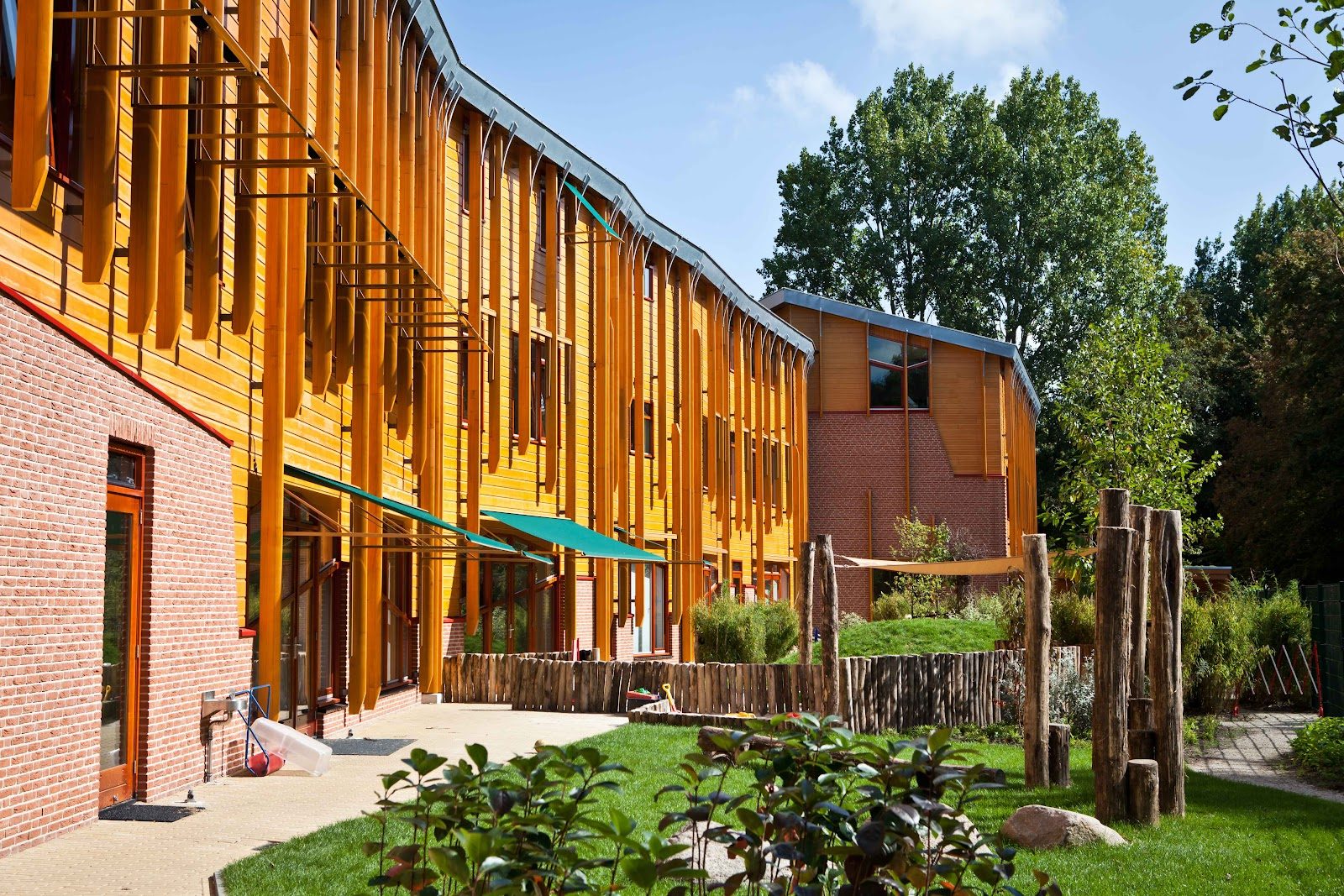
International School of Amsterdam
Amstelveen · Netherlands
Just outside Amsterdam, this 1964 founding became the first school anywhere to run the full IB continuum from age two to eighteen.
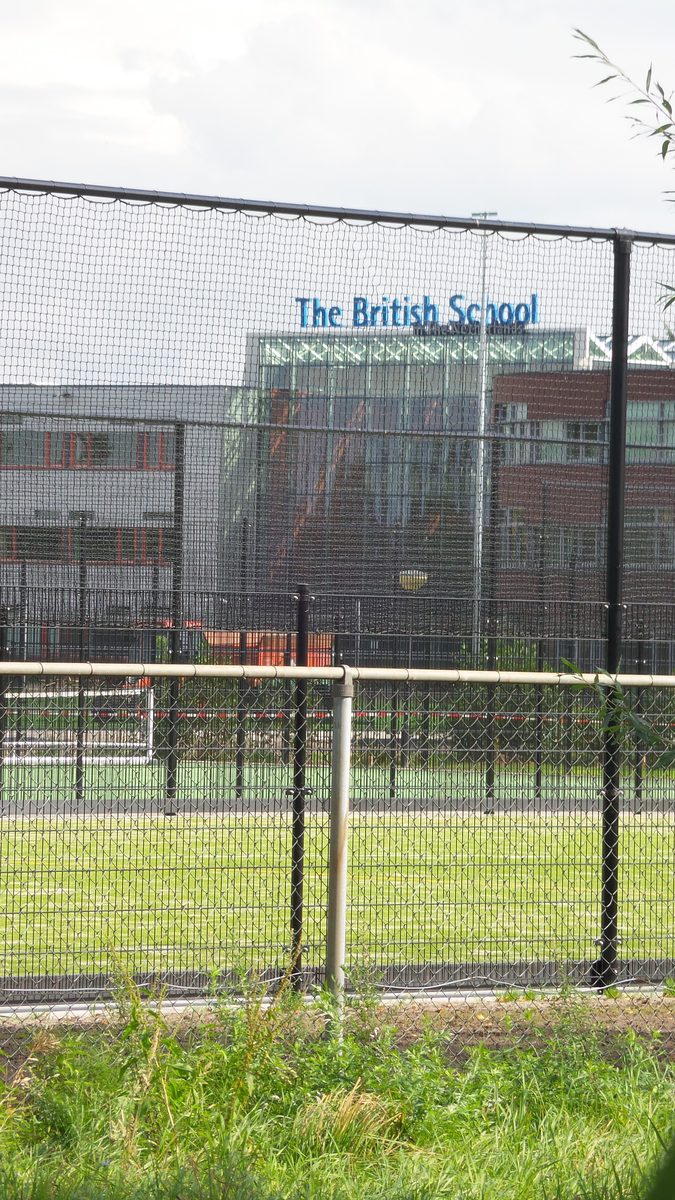
The British School in The Netherlands
Voorschoten · Netherlands
Since 1931, a Voorschoten campus near The Hague where sixth formers choose freely among A-Levels, BTEC, IB Diploma or IB Career Programme.
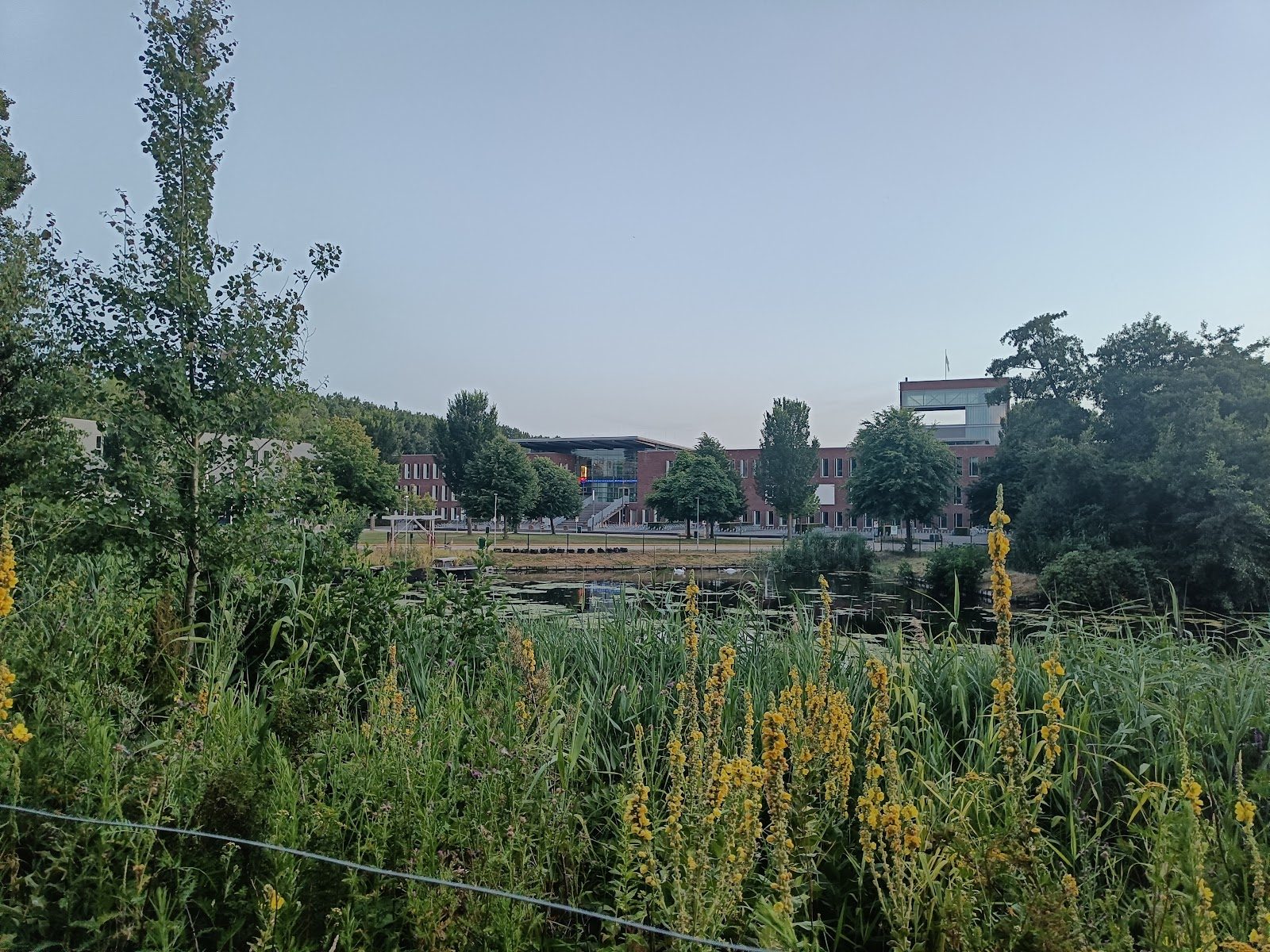
The International School of The Hague
The Hague · Netherlands
In the Kijkduin dunes, this IB day school runs MUNISH, Europe's second-largest student Model UN conference.
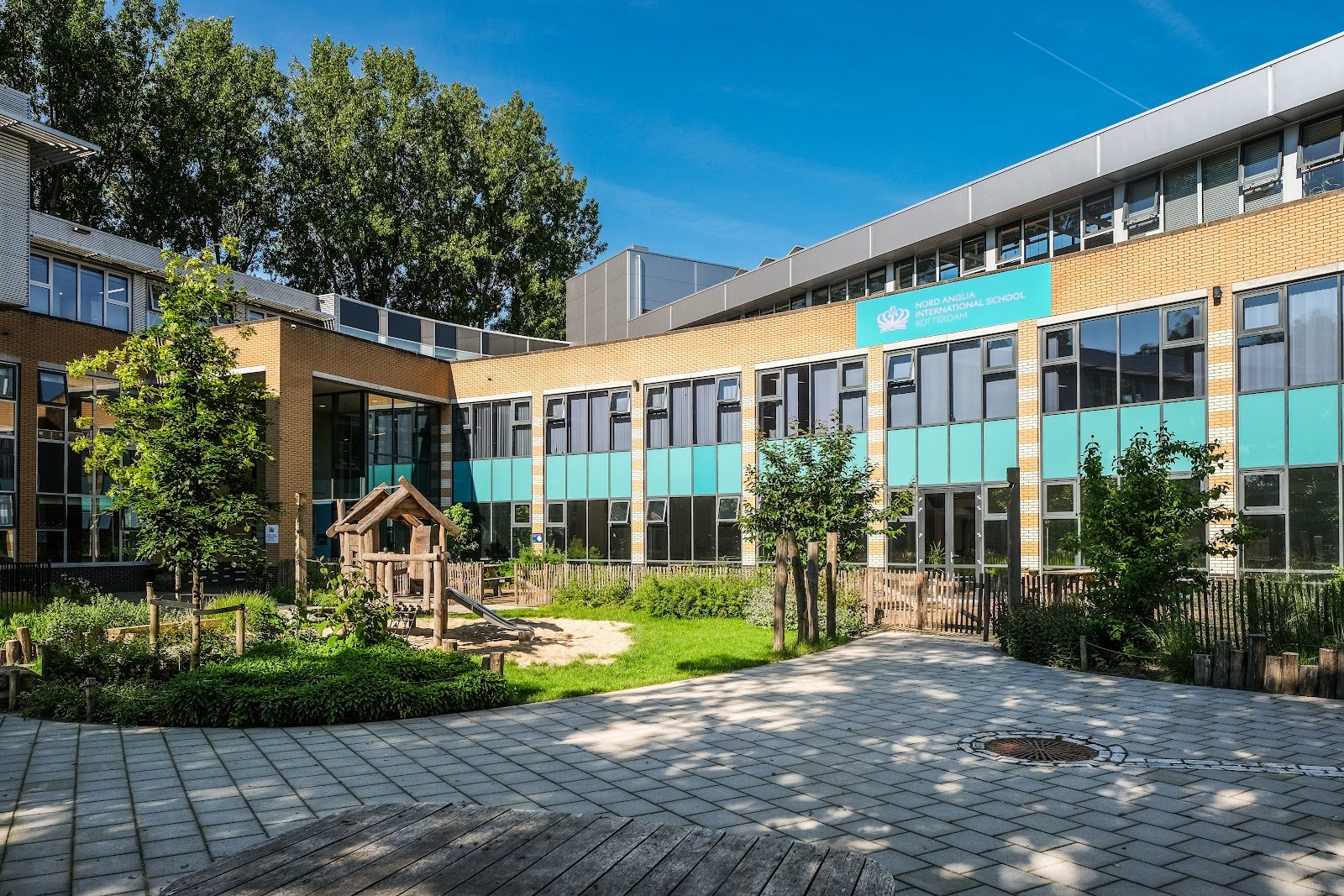
Nord Anglia International School Rotterdam
Rotterdam · Netherlands
Born from a 1959 American community, this Hillegersberg school pairs IB rigor with MIT-designed STEAM and Juilliard arts training.
Same country and curriculum — closest matches within ±10 points either way