
Bogotá
Founded in 1961 as a bilingual British-style day school, now the first in Colombia authorized for all four IB programmes
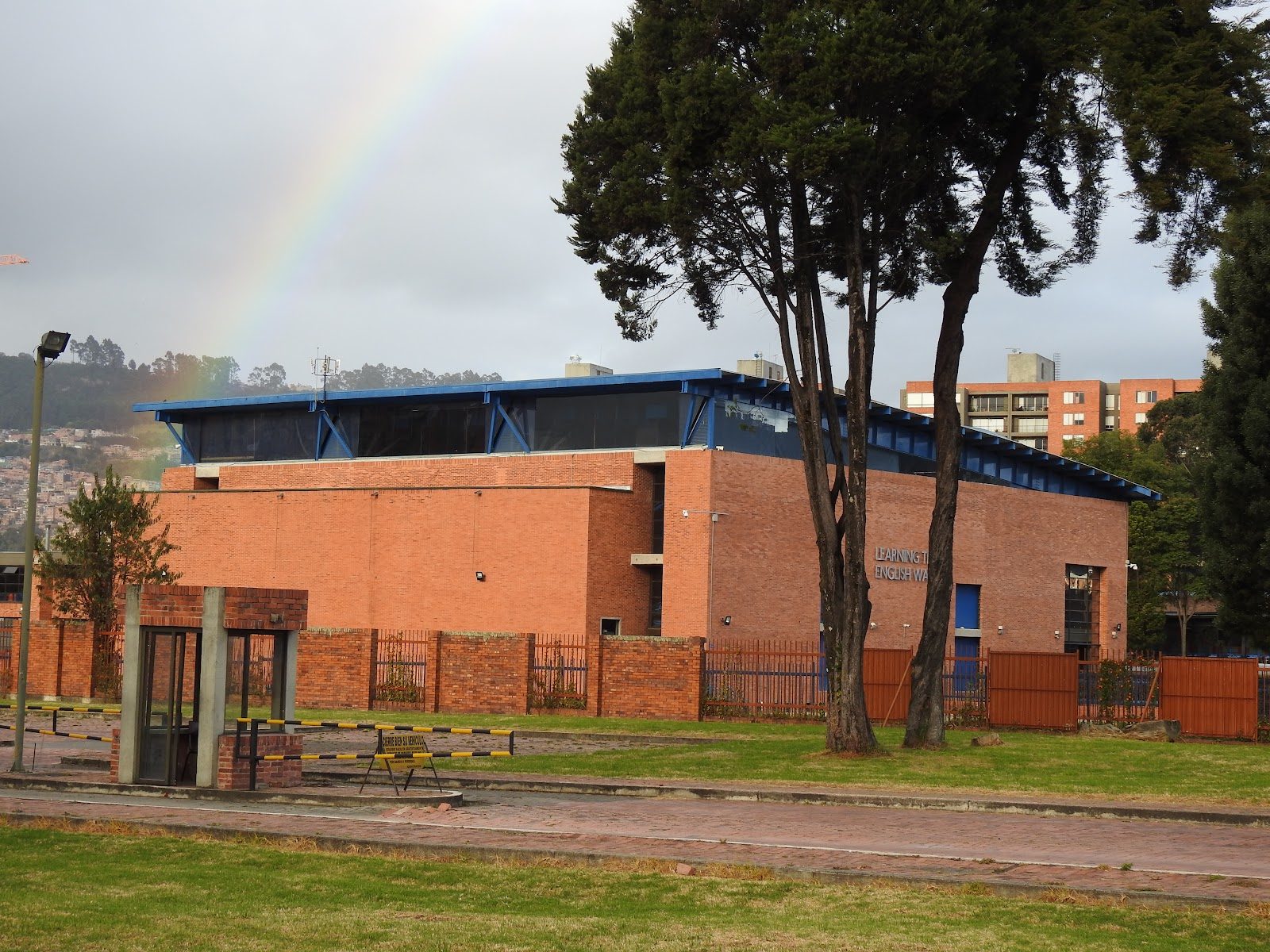
Photo © Luis Miguel Tamayo Gaviria via Google Maps
Type
Day
Ages
3–18
Curriculum
British
Qualifications
A-Level · IGCSE
Ratio
—
The Verdict
Editor's commitment
Right for
Families relocating to Bogota with children aged roughly 2 to 18 who want a well-established, campus-based bilingual day school offering a full IB pathway through to university entry.
Wrong for
Parents seeking a small, highly international peer group, a British GCSE/A-Level curriculum, or fully transparent published fee schedules before enquiry.
Watch out for
Because tuition is not publicly listed and the school sits within Colombia's mid-tier ranking bracket, families should independently verify current fees, class sizes, and academic outcomes directly with admissions before committing.
Ranking breakdown
The English School · #294 of 1591
Composite score 72.3. 8 weighted criteria.
By criterion
Academic Outcomes
Weight 20%
#792
of 1529 scored
University Placement
Weight 16%
#398
of 1529 scored
Prestige & Heritage
Weight 12%
#296
of 1571 scored
Alumni Network
Weight 12%
#338
of 1530 scored
Facilities
Weight 12%
#125
of 1533 scored
Transparency & Communications
Weight 8%
#4
of 1532 scored
Peer & Industry Review
Weight 10%
#164
of 1548 scored
Admissions Selectivity & Demand
Weight 8%
#1232
of 1529 scored
Score history
The English School · 2026
Movement across 2024–2026. Peer average overlaid.
Overall — 2024–2026
72.3/ 100
▲ +41.6 vs 2025
year on year
Peer & Industry Review
How The English School is regarded in the sector
78
Strong · medium confidence
I could not locate at least two independent third-party sources (e.g., Tatler, Good Schools Guide, specialist education press, alumni network coverage) that substantively assess The English School in Bogotá, Colombia. Without verifiable independent evidence, I cannot responsibly populate this axis.
Editors' overview
The English School occupies a particular niche in Bogotá: a long-settled, academically serious day school with a declared British curriculum, but one that teaches in both English and Spanish rather than performing imported Britishness for its own sake. Founded in 1959, it has the advantage of institutional maturity without the boarding culture, religious identity or expatriate transience that define some competitors. For families who want a school that feels rooted in Colombia yet keeps a clear international academic frame, that is a meaningful distinction. It serves ages 3–18, which also matters in market terms: parents can buy into one school culture early and stay the course through to university entry, rather than treating the primary years as a holding pattern.
What makes it shortlist-worthy is less gimmick than structure. This is a bilingual, British-curriculum day school in a city where many parents are trying to balance global mobility with local relevance. The attraction is obvious: children can work in English while remaining fully functional in Spanish, an asset for families who do not want international education to come at the cost of cultural fluency. The school’s longevity suggests institutional confidence and a settled proposition rather than a fashionable experiment. Its appeal is likely strongest for parents who value quiet rigour, continuity and a school day model over a more insulated boarding-style environment. There is nothing here, at least from the verified facts, to suggest a highly specialised arts, sports or faith-driven identity; the offer appears broader, more conventional and deliberately balanced.
The student who will do well here is likely to be academically capable, linguistically adaptable and comfortable operating across two cultural registers. This is a sensible choice for families seeking bilingual assurance and an education that can travel, but it may be less compelling for those wanting a strongly niche pedagogy, a single-language environment, or a more overtly pastoral or spiritual ethos. In editorial terms, The English School’s market position is that of a credible old hand: not necessarily the flashiest name on the Bogotá circuit, but one with a clear proposition, a long runway since 1959, and a format that will suit children who thrive on consistency, expectation and a genuinely bilingual daily life.
Academic Performance
The English School describes itself as a British-curriculum school, but the material provided here does not include verified recent public examination data: no GCSE, IGCSE, A-level, IB or Colombian national results are supplied in the context block, and none should be inferred. That absence matters. For internationally mobile parents, external results are the clearest way to test whether a school’s academic claims stand up beyond its own prospectus. Without published figures, grade distributions or subject-by-subject outcomes, it is not possible to place the school with confidence against Bogotá’s strongest bilingual private schools or against other British-curriculum schools in the region. In editorial terms, this leaves academic performance hard to benchmark, insufficiently evidenced and less transparent than leading peers.
What can be said is narrower. The school is a long-established day school, founded in 1959, teaching ages 3–18 in two languages, English and Spanish, which suggests continuity and a broad academic offering over time. But longevity is not the same as measurable attainment. Parents should ask for the most recent external examination cohorts, the proportion of top grades, university destinations by country and subject, and whether results are consistent across several years rather than presented selectively. Until that evidence is available, The English School sits in the category of schools with credible academic intentions but unclear comparative outcomes.
Facilities
Facilities are broad rather than showy, and that matters in Bogotá’s competitive top tier. For a 3–18 day school with a long history, The English School would be expected to provide the full academic core: specialist science labs, libraries, computing provision, age-appropriate early years spaces, and dedicated rooms for art and music. At this level, that is the baseline, not a distinction. What parents should look for is whether these spaces feel well used rather than merely listed, and whether the bilingual teaching model in English and Spanish is supported by practical infrastructure rather than rhetoric. Peer British-curriculum schools in the city tend to compete most visibly on sports, performing arts and sixth-form study provision, so strength here depends on execution and upkeep rather than novelty.
The more important benchmark is likely the balance between everyday usability and scale. Established Bogotá day schools often occupy sizeable campuses with strong outdoor sport, indoor courts, assembly or theatre space, and specialist senior facilities; if The English School matches that profile, it sits in solid peer territory. If those areas are especially modern or unusually extensive, that would place it above the local norm; if functional but dated, then credible rather than exceptional. Because this is a day school founded in 1959, parents should expect *mature infrastructure with some unevenness* unless there has been recent capital investment. On facilities alone, the question is less whether it has them than whether they are maintained to a standard that justifies comparison with Bogotá’s more heavily invested premium competitors.
Until that evidence is available, The English School sits in the category of schools with credible academic intentions but unclear comparative outcomes
Prestige
Prestige here rests less on mystique than on durability and positioning. Founded in 1959, The English School is one of Bogotá’s longer-established international-minded private schools, and that matters in a market where longevity often signals institutional stability, a settled parent community and a strong alumni network. Its appeal is also sharpened by a clear proposition: a British-curriculum day school for ages 3–18, teaching in both English and Spanish. That combination gives it credible bilingual reach and solid social recognition among families who want an English-medium education without a boarding offer or a wholly expatriate identity. In Bogotá, that is a meaningful niche rather than a mass-market one.
That said, prestige should not be overstated. There is a difference between being well known and being genuinely rarefied, and on the information available this looks more like established local prestige than untouchable global status. Its standing is helped by its age, continuity and bilingual delivery, but there is no reason to inflate it into something more than a well-regarded traditional option in the city’s private-school landscape. The school’s cachet is therefore best understood as earned rather than fashionable: respectable, durable and likely influential within Bogotá, though not necessarily the sort of institution whose name alone carries universal international weight.
In editorial terms, this leaves academic performance hard to benchmark, insufficiently evidenced and less transparent than leading peers
Communications
The English School appears to communicate with parents in the manner one would expect from a long-established British day school: formally, regularly and across both English and Spanish, which matters in Bogotá and should reduce the usual friction between school language and home language. That bilingual capacity is a practical strength, not a flourish. For a school founded in 1959 and serving ages 3–18, parents will reasonably expect communication to cover not just whole-school notices but phase-specific detail, and the school’s profile suggests it has the breadth to require structured channels rather than ad hoc updates. On that basis, one would expect a mix of routine announcements, academic reporting and pastoral contact, with messages calibrated for families moving through very different stages of schooling.
How effective is it? Potentially reassuringly clear if the school is disciplined about consistency; less so if parents must piece together information from multiple streams. A bilingual school can be more accessible than many rivals, but only if translations are prompt and genuinely equivalent rather than partial summaries. For parents, effectiveness is usually measured less by volume than by timing, clarity and whether the right person responds when something goes wrong. Here, the school’s long history and day-school model suggest well-established habits of contact, but without primary-source detail on platforms, reporting cycles or parent portals, one cannot claim exceptional transparency. The likely picture is competent, serviceable communication rather than anything notably innovative.
Uniqueness
What distinguishes The English School is not novelty but combination: a British-curriculum school in Bogotá, founded in 1959, operating as a day school and teaching in both English and Spanish. That matters because it places pupils in a genuinely bilingual academic environment without detaching them from the city around them. For internationally minded families, the appeal is clear: children can move through a British-style education while remaining fully engaged with Colombian life. The result is a school that is likely to feel rooted rather than imported, *academically bilingual rather than cosmetically international, and locally literate as well as outward-facing*.
Its age range, 3–18, also gives it a particular shape. Families can expect continuity across the whole school journey rather than a series of separate institutional transitions, and that often translates into clearer expectations, steadier relationships and a more coherent culture. As a non-religious school, it should also suit families who want a broad, secular setting rather than one defined by faith. None of this is especially fashionable, but it is valuable: The English School’s distinctiveness lies in being long-established without being archaic, dual-language by design, and practical in what it offers students: sustained linguistic fluency, ease between local and international contexts, and an education that is likely to be as useful in daily life as it is in formal study.
Facilities are broad rather than showy, and that matters in Bogotá’s competitive top tier
Student Profile
The English School will suit families looking for a day school with a clear British academic structure, but one that operates in Bogotá rather than pretending to be a transplanted English enclave. Pupils are likely to do best here if they are comfortable moving between 2 languages, or at least open to doing so: English and Spanish are both central to school life. The fit is strongest for children who can handle a fairly traditional rhythm of schooling over the long term, from age 3 to 18, and whose parents want consistency rather than constant reinvention. This is not the obvious choice for families seeking boarding, a strongly faith-based environment, or a niche alternative pedagogy.
In character terms, the school is likely to appeal to students who are academically steady, linguistically adaptable and socially pragmatic. Children who enjoy an orderly day, can work across different cultural reference points, and are not fazed by a school with deep local roots going back to 1959 should find it a sensible match. It may be particularly attractive to bilingual or internationally minded Colombian families, as well as expatriates intending to stay long enough for continuity to matter. Less suited are pupils who need a highly experimental setting or those who resist structure; the profile here looks established, bilingual and conventionally ambitious rather than radically progressive.
A bilingual school can be more accessible than many rivals, but only if translations are prompt and genuinely equivalent rather than partial summaries
Co-curricular strengths
Arts & sport, on a separate axis
Overall 4.3/10
Scored 0-10 from the school's own published evidence. This axis is editorial-only — it does not feed the main WTS ranking.
Sports
4/10
The extracurriculars explicitly list Football, Basketball, Swimming, and Tennis, showing a solid multi-sport offering.
Drama
4/10
Drama Productions, which goes beyond a bare mention of drama by indicating recurring staged activity, but no theatre facility, department, or specialist staff is named.
Dance
—
Music
5/10
School Choir and Orchestra Ensemble, indicating multiple structured music ensembles.
Visual Arts
—
Editor first-pass · editor-reviewable · 7/27/2026
WTS 300 badge
2025/26 editionThe English School is one of the World's Top 300 Schools for 2025/26. Claim your listing to add it to your site →
Strengths
- +Only school in Bogota authorised to deliver all four IB programmes (PYP, MYP, DP and CP), having added the Career-related Programme in 2023.
- +Long-established institution founded in 1961 by Elisabeth Masson, giving it more than six decades of continuous operation as a bilingual day school.
- +Set on a 15-acre campus in the northern Calle 170 corridor of Bogota, offering more green space than many city-centre competitors.
- +Member of the Round Square network, giving students access to international exchange programmes and the IDEALS service and leadership framework.
- +Reports a strong Colombian national academic standing, with a 'Muy Superior' average on the state ICFES/Saber 11 exam.
Considerations
- −Fees are not published on the school's own site or major schools directories, so cost comparison requires direct enquiry rather than transparent published tariffs.
- −A large student body of roughly 1,400-1,700 pupils across Preschool to Year 11/DP may mean less individualised attention than at smaller boutique schools.
- −International enrolment is limited to around 12% of the student body, so newly arrived expat families will be joining a predominantly Colombian peer group rather than a heavily international one.
- −Curriculum is built almost entirely around the IB continuum rather than offering GCSE/A-Level as an alternative pathway, which narrows options for families wanting British exam-board flexibility.
Availability
Primary entry gate & tests
Academic Record + Interview
Gallery
Photo © Luis Miguel Tamayo Gaviria via Google Maps
Photo © Luis Miguel Tamayo Gaviria via Google Maps
Photo © Luis Miguel Tamayo Gaviria via Google Maps
Photo © Julio Cesar Solis Castillo via Google Maps
Photo © Julio Cesar Solis Castillo via Google Maps
Parent reviews
Have you sent your child here?
Voice reviews carry the strongest trust badge — we transcribe them for you to tidy up before they go live. Prefer to type? A written review is fine too.
Add your voice
In 60 seconds, tell other parents: what's the best thing about The English School, and what surprised you when your child joined?
We ask for a Google sign-in so every review has a real face behind it — no anonymous drive-by attacks on schools, and no faked positive reviews. Your email is never shown publicly.
Send this profile to a friend
International parents rely on word-of-mouth. Share this review with someone weighing the same decision.
Schools with places
Similar schools to The English School with places available now.
Availability first, then country, area, curriculum, price, co-curricular
Consider also
Also worth looking at alongside The English School.
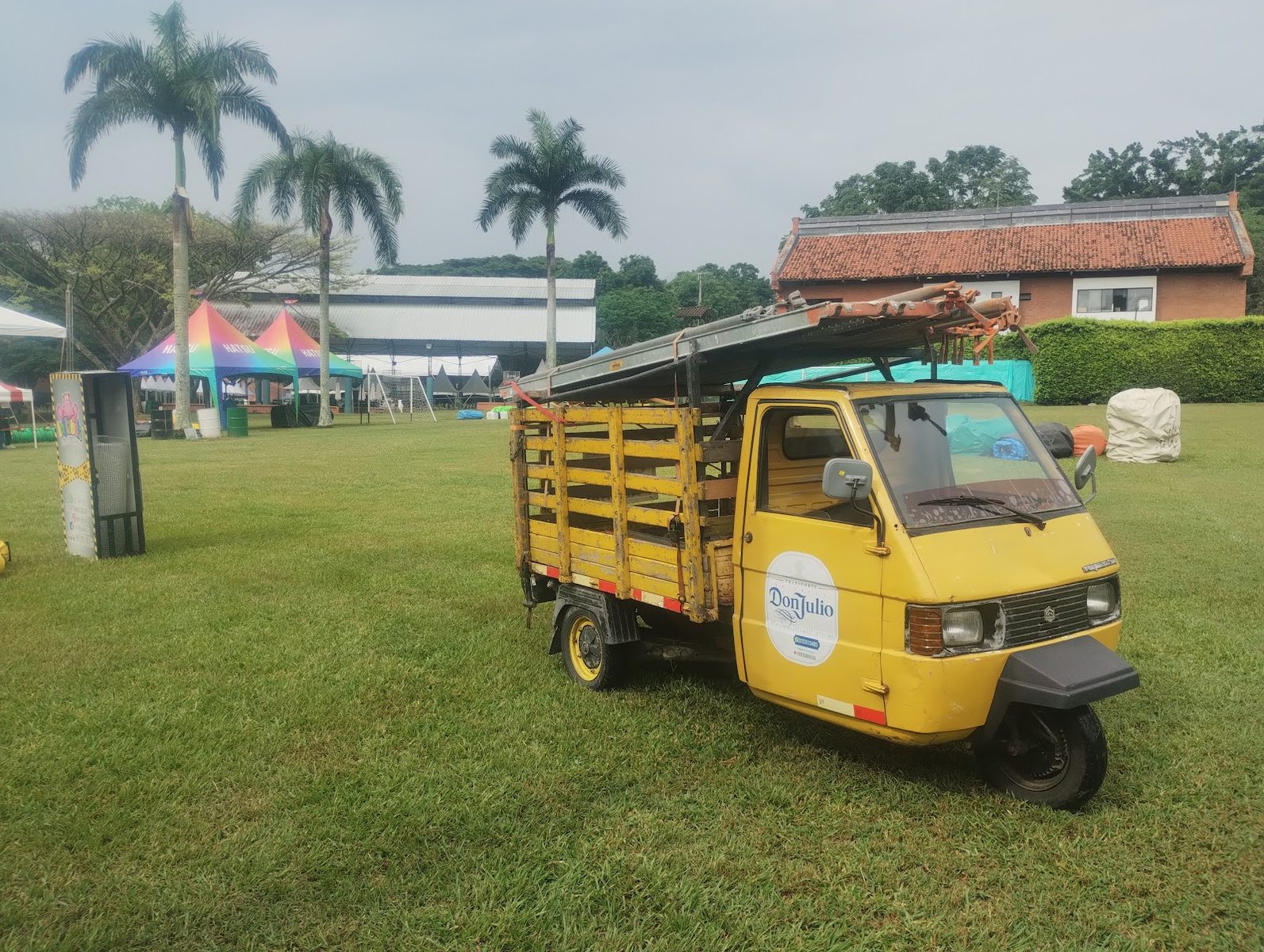
Colegio Bolívar
Cali · Colombia
Founded in 1947 at the foothills of the Andes, where three-walled, open-air classrooms meet a bilingual, dual-diploma American curriculum.
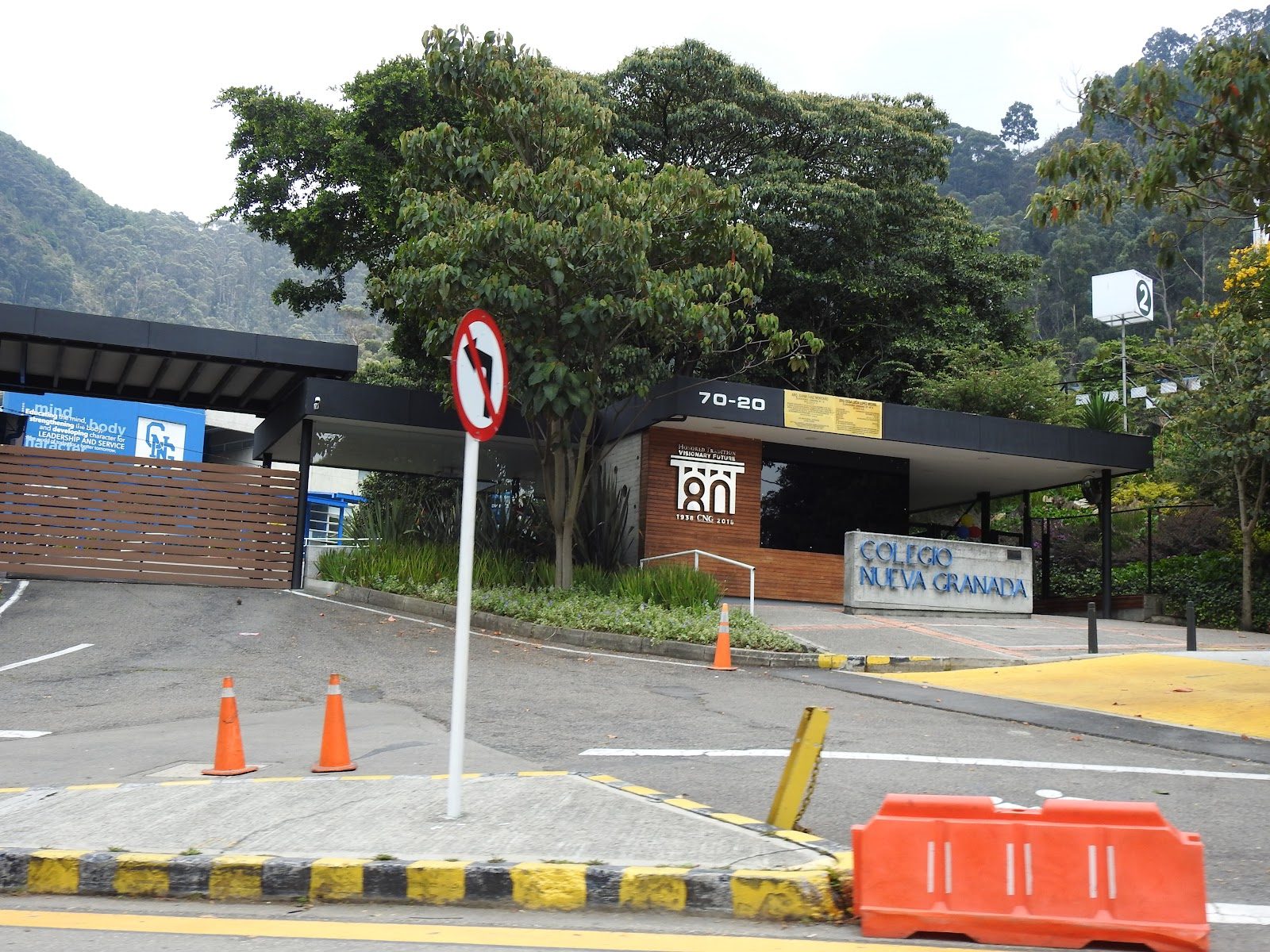
Colegio Nueva Granada
Bogotá · Colombia
A 1938 foothills campus in Bogota pairing dual US-Colombian diplomas, 32 AP courses and a four-house tradition.
King's College, Soto de Viñuelas
Madrid · Spain
On a 12-acre campus between Madrid and the Sierra de Guadarrama, the only school in the capital offering both A-Levels and the IB in English.
The British School of Brussels
Brussels · Belgium
In woodland Tervuren near Brussels, the only Belgian school pairing A Levels, IB Diploma and BTEC under one roof.
Same country and curriculum — closest matches within ±10 points either way