
South Holland
Rijnlands Lyceum Oegstgeest
low confidence· 4/6 cats · 1.25 avg sourcesOne of five schools worldwide that piloted the IB Middle Years Programme, pairing Dutch rigor with a bilingual, Leiden-rooted campus.
Photo © Mimi Nikolova via Google Maps
Type
Day
Ages
11–18
Curriculum
Dutch · IB
Qualifications
IB Diploma
Ratio
—
The Verdict
Editor's commitment
Right for
Pupils aged 11–18 who want Dutch and English teaching with a real IB spine: this IB World School helped pilot the Middle Years Programme.
Wrong for
Families wanting boarding, a faith setting or a cheap option; this non-religious day school in Oegstgeest averages €8,742 a year.
Watch out for
The founding date is muddled: editorial records say 1935, Wikipedia says 1956. Verify the school’s own history before reading too much into heritage.
Ranking breakdown
Rijnlands Lyceum Oegstgeest · #1106 of 1591
Composite score 59.4. 8 weighted criteria.
By criterion
Academic Outcomes
Weight 20%
#667
of 1529 scored
University Placement
Weight 16%
#649
of 1529 scored
Prestige & Heritage
Weight 12%
#678
of 1571 scored
Alumni Network
Weight 12%
#1469
of 1530 scored
Facilities
Weight 12%
#848
of 1534 scored
Transparency & Communications
Weight 8%
#778
of 1532 scored
Peer & Industry Review
Weight 10%
#640
of 1548 scored
Admissions Selectivity & Demand
Weight 8%
#489
of 1529 scored
Peer & Industry Review
How Rijnlands Lyceum Oegstgeest is regarded in the sector
63
Respected · medium confidence
Rijnlands Lyceum Oegstgeest is consistently listed among the established international/bilingual secondary schools in the Netherlands in expat-focused directories such as IamExpat and Expatica, and is recognized as one of the longer-standing providers of IB and bilingual education in the Leiden/The Hague region. It lacks coverage in international prestige rankings (Tatler, Good Schools Guide) but has a solid, regionally strong reputation among expat parent communities and Dutch education directories.
Evidence sources
- Prince Constantijn of the Netherlands — Royal, Public Service
- Prince Friso of Orange-Nassau — Royal, Business/Finance
- Alexander Pechtold — Politician, Government
Editors' overview
Rijnlands Lyceum Oegstgeest sits in a narrow and serious lane of the Dutch market: a non-religious day school for ages 11 to 18 that teaches in both Dutch and English and carries IB World School accreditation alongside a Dutch curriculum. The point of difference is not vague “international mindedness” but structure. This is one of the five schools worldwide that piloted the IB Middle Years Programme, and that matters because it places the school at an unusual junction between Dutch academic discipline and a programme built around breadth, independent organisation and cross-subject thinking. For families in the Leiden area who want more range than a standard Dutch secondary route without abandoning academic rigour, that is a rare combination.
Its market position is also unusually clear. At an average annual day fee of €8,742, Rijnlands is not priced like a premium expatriate enclave; it sits far closer to the Dutch mainstream than to the high-fee international sector. That makes it a high-value option for parents who want bilingual teaching and an IB footing without paying international-school tariffs. The school’s age range, 11–18, gives it a full secondary ladder, and the bilingual setting will suit students who can handle movement between Dutch and English without treating language support as an afterthought. Parents looking for a soft landing, heavy hand-holding or a glossy all-through campus model should look elsewhere.
The right child for Rijnlands Lyceum Oegstgeest is academically resilient, linguistically confident and happy in a school that asks for intellectual flexibility rather than constant coaching. This is a strong fit for Dutch and internationally minded families rooted in South Holland who want access to both Dutch and IB pathways. It is a weaker fit for students who need a highly sheltered environment or who want a fully international, English-only culture detached from the local system. What puts Rijnlands on a shortlist is straightforward: a foundation date of 1935, a bilingual Dutch-English model, IB World School status, and a long-standing connection to the MYP that gives the school real educational substance rather than imported branding. The proposition is serious, grounded and distinctive.
Academic Performance
Rijnlands’ academic case rests on pedigree and pathway breadth more than on published headline outcomes. The school has a genuine claim to educational seriousness through its early involvement with the Middle Years Programme, and that carries weight: schools that adopted the MYP at pilot stage tend to have deep organisational familiarity with interdisciplinary assessment, moderation and progression. That gives Rijnlands a stronger academic architecture than schools that bolt an international programme onto a local secondary model as window dressing. The Dutch setting also matters. In this market, external examinations are not packaged with the relentless score-marketing common in high-fee international schools, so parents looking for clean public data on aggregate pass rates, diploma averages or top-score distribution will find the picture frustratingly opaque.
Relative to peers, Rijnlands fits best in the category of serious bilingual academic schools rather than the prestige tier that trades on published university destinations and heavily promoted results. Its advantage lies in access to more than one recognised route through secondary education at an average annual fee of €8,742, which undercuts much of the international sector by a wide margin. Its weakness is disclosure: no public aggregate examination figures are in view here, so there is no basis for placing it numerically against Dutch selective schools or better-publicised IB competitors. That does not weaken the school’s substance; it does limit external scrutiny. For parents, the academic question is straightforward: ask for recent cohort results, route-by-route outcomes and destination patterns before treating Rijnlands as a proven top-performer rather than a credible, disciplined option.
Facilities
Facilities are the least legible part of Rijnlands’ public profile, and that matters. We have not seen a published facilities case with the kind of detail international parents now expect: no clear inventory of science provision, arts spaces, sports infrastructure or specialist sixth-form study areas. That puts the school behind stronger communicators in the Dutch bilingual market, where even academically restrained schools still spell out labs, performance venues and athletic assets. For a secondary school with a serious academic brief, parents need more than a generic sense of campus life; they need to know whether practical teaching happens in well-equipped subject rooms or in serviceable but ordinary spaces.
Against peer schools, that leaves Rijnlands in an awkward middle ground. At this fee level, parents should not expect the showpiece estate of a premium international campus with theatres, competition pools and architect-led design. They can expect a competent secondary environment that supports daily teaching without theatrical excess. The issue is not glamour; it is disclosure. Schools competing for bilingual and internationally minded families need to show their hand on laboratories, creative spaces, indoor sport and library provision. Rijnlands does not do that publicly with enough precision. Until it does, the facilities verdict stays functional rather than distinctive — acceptable for families buying academic substance, less convincing for those who want a campus that carries its own weight.
Rijnlands is distinctive not because it tries to be all things to all families, but because it does one serious, specialised job very well
Prestige
Rijnlands carries real educational prestige, but it is the restrained Dutch kind, not the polished international-school version built on brand theatre. Its standing comes from institutional seriousness, not social cachet. Being one of only five schools worldwide involved in the early piloting of the Middle Years Programme gives it a claim few schools can match, and that matters more than a glossy campus narrative. This is prestige rooted in contribution to educational practice, long-term competence with programme delivery and credibility among families who value substance over image. The fee level reinforces that point: at €8,742 on average each year, Rijnlands does not buy prestige through exclusivity; it earns it through academic legitimacy and quiet authority.
That still places a ceiling on its status. Rijnlands does not sit in the European elite bracket occupied by schools with globally marketed university placements, hyper-selective admissions and relentless publication of outcomes. Its name carries weight most strongly with families who know the Dutch system, know the IB, and know the difference between a school with serious intellectual credentials and one with expensive packaging. In that sense, its prestige is specialist rather than glamorous. For the right family, that is more valuable: not a badge school, but a school whose reputation rests on durable educational work rather than social signalling.
The point of difference is not vague “international mindedness” but structure
Communications
Rijnlands communicates with parents in the restrained Dutch manner: functional, school-first and light on polish. That has virtues. Families are less exposed to the performative cheerfulness and sales language that clog many international-school channels, and more exposed to the practical business of timetables, expectations and academic process. The school’s public-facing communication, though, lacks depth where international parents need it most. We have not seen clear, parent-friendly explanation of day-to-day systems, escalation routes, student support structures or a detailed facilities picture. For a school charging an average of €8,742 a year, that is not a scandal; for a school courting bilingual and internationally minded families, it is a clear weakness.
Effectiveness therefore depends on the parent. Families already fluent in Dutch school culture will cope with a spare, no-nonsense flow of information and may even prefer it. Newcomers, dual-national households and parents comparing Rijnlands with more transparent competitors will find gaps. Good school communication does not require glossy production. It requires precision, hierarchy and anticipation: who to contact, when reports arrive, how concerns move through the system, what pastoral oversight looks like, and how the school explains its academic routes in plain terms. Rijnlands does not publish enough of that with editorial clarity. The result is communication that is *serviceable rather than confidence-building*: adequate for insiders, less strong for families who need the school to do more explanatory work upfront.
Uniqueness
What sets Rijnlands apart is not a decorative international label but a rare institutional role in the development of a major school programme. Very few schools can say they helped test a framework before the rest of the world adopted it; being one of five places to pilot the Middle Years Programme gives Rijnlands a form of educational distinctiveness that is hard to fake and harder to buy. For students, that matters in practical terms. It means they enter a school with long-standing fluency in interdisciplinary planning, criterion-based assessment and the habits of independent academic organisation. In a market crowded with schools that import international programmes as packaging, Rijnlands has real ownership of this one.
Its second point of difference lies in the junction it occupies between the Dutch system and a bilingual academic culture. That creates a student experience with more intellectual range than a standard local secondary school and more local rootedness than a fully expatriate campus. The result is demanding in the right way: pupils learn to move between educational registers, adapt to different expectations and handle complexity without constant scaffolding. That combination suits students who are mentally agile, self-managing and comfortable operating across more than one academic tradition. It also gives them a stronger base for later choices, because they are not being trained inside a single narrow track. Rijnlands is distinctive not because it tries to be all things to all families, but because it does one serious, specialised job very well.
For families in the Leiden area who want more range than a standard Dutch secondary route without abandoning academic rigour, that is a rare combination
Student Profile
The pupils who fit best here are not chasing a soft, highly curated international bubble. They are teenagers who can handle pace, switch between academic modes and manage themselves without constant prompting. This suits families who want a school grounded in the Dutch system but open to a wider educational frame, and it will reward students who are *organised, resilient and intellectually flexible*. Children who need repeated reassurance, intensive hand-holding or a heavily cushioned transition into secondary school will find the culture demanding. The fee level — an average of €8,742 a year — also shapes the intake: this is not a luxury enclave insulated by price, but a school that draws a broader mix of locally rooted and internationally minded families.
Socially, the strongest fit is a student comfortable in a community that prizes substance over display. The right pupil does not need flashy facilities or a school built around image; they need teachers, classmates and routines that take work seriously. That makes Rijnlands attractive to self-starting students with solid academic habits and to parents who value discipline, clarity and long-term educational value over status theatre. It is a weaker match for families seeking a high-gloss expatriate culture, intensive lifestyle support or a campus experience designed to impress on first sight. In character, the student body is best understood as serious rather than sheltered, and that distinction matters.
That makes it a high-value option for parents who want bilingual teaching and an IB footing without paying international-school tariffs
Co-curricular strengths
Arts & sport, on a separate axis
Overall 6.9/10
Scored 0-10 from the school's own published evidence. This axis is editorial-only — it does not feed the main WTS ranking.
Sports
7.2/10
Drama
7.5/10
Dance
4.5/10
Music
7.5/10
Visual Arts
7.8/10
Editor first-pass · editor-reviewable · 7/29/2026
Strengths
- +Offers both Dutch and IB curricula
- +Dutch and English instruction broadens access
- +IB World School accreditation is established
- +Day school suits Leiden-area families
Considerations
- −No boarding; unsuitable for non-local families
- −Dual Dutch-IB structure may complicate choice
- −Founded year is inconsistent across sources
Availability
Primary entry gate & tests
Academic Record
Gallery
Photo © Jeroen Wiert Pluimers via Google Maps
Photo © Peter van Nederpelt via Google Maps
Photo © Zoande 83 via Google Maps
Photo © Jan Weststrate via Google Maps
Photo © Ricardo van oudenhoven via Google Maps
Parent reviews
Have you sent your child here?
Voice reviews carry the strongest trust badge — we transcribe them for you to tidy up before they go live. Prefer to type? A written review is fine too.
Add your voice
In 60 seconds, tell other parents: what's the best thing about Rijnlands Lyceum Oegstgeest, and what surprised you when your child joined?
We ask for a Google sign-in so every review has a real face behind it — no anonymous drive-by attacks on schools, and no faked positive reviews. Your email is never shown publicly.
Send this profile to a friend
International parents rely on word-of-mouth. Share this review with someone weighing the same decision.
Schools with places
Similar schools to Rijnlands Lyceum Oegstgeest with places available now.
Nord Anglia International School Rotterdam
Rotterdam · Netherlands
- 2026-27
- WAITPOOLSpace-dependent
- 2027-28
- PLACES OPENRolling
The International School of The Hague
The Hague · Netherlands
- 2026-27
- WAITPOOLSpace-dependent
- 2027-28
- PLACES OPENRolling
Availability first, then country, area, curriculum, price, co-curricular
Consider also
Also worth looking at alongside Rijnlands Lyceum Oegstgeest.
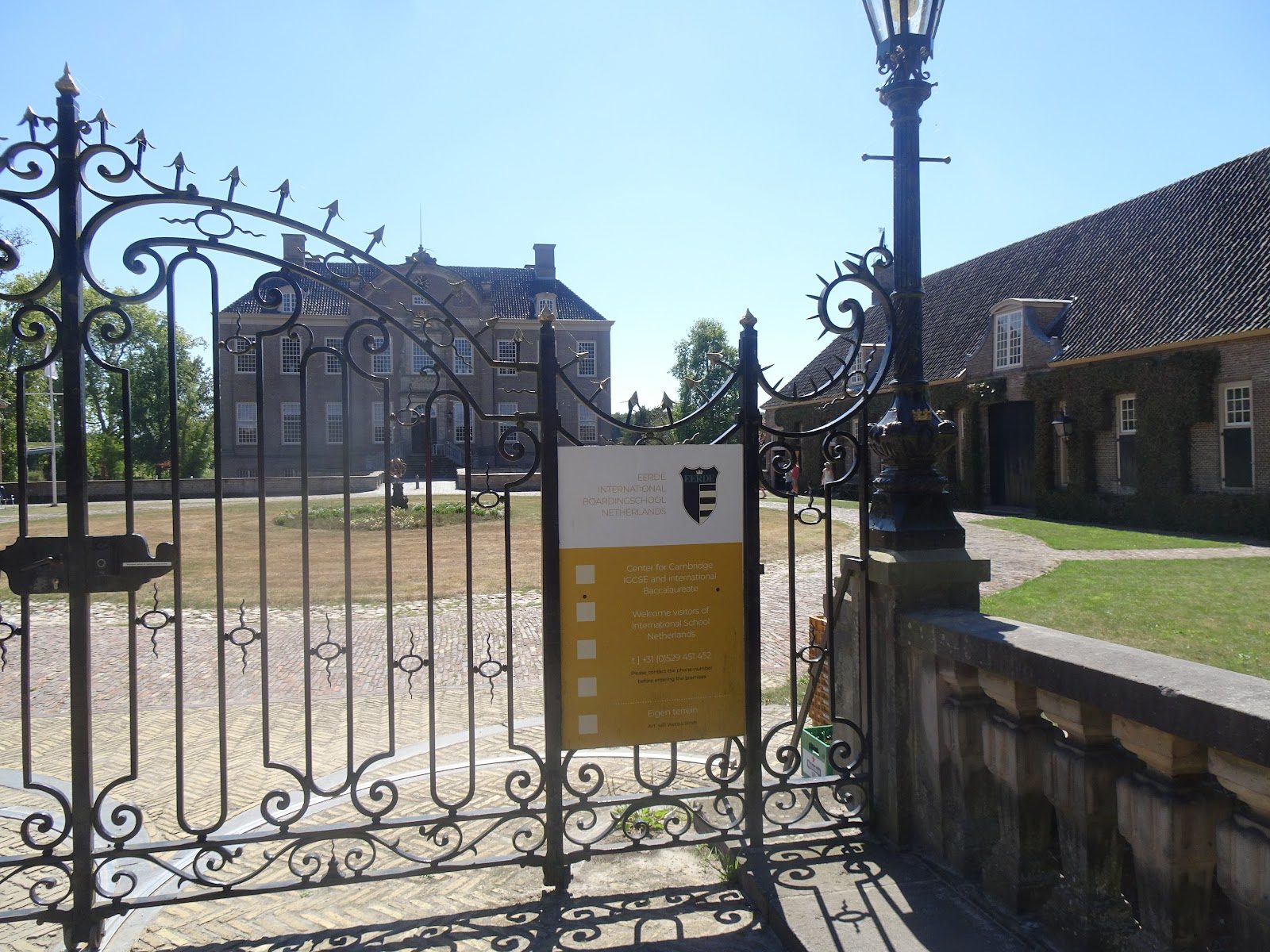
International School Eerde
Ommen · Netherlands
A moated 1715 castle that once sheltered Jewish refugee children now anchors an IB boarding community of 25-plus nationalities.
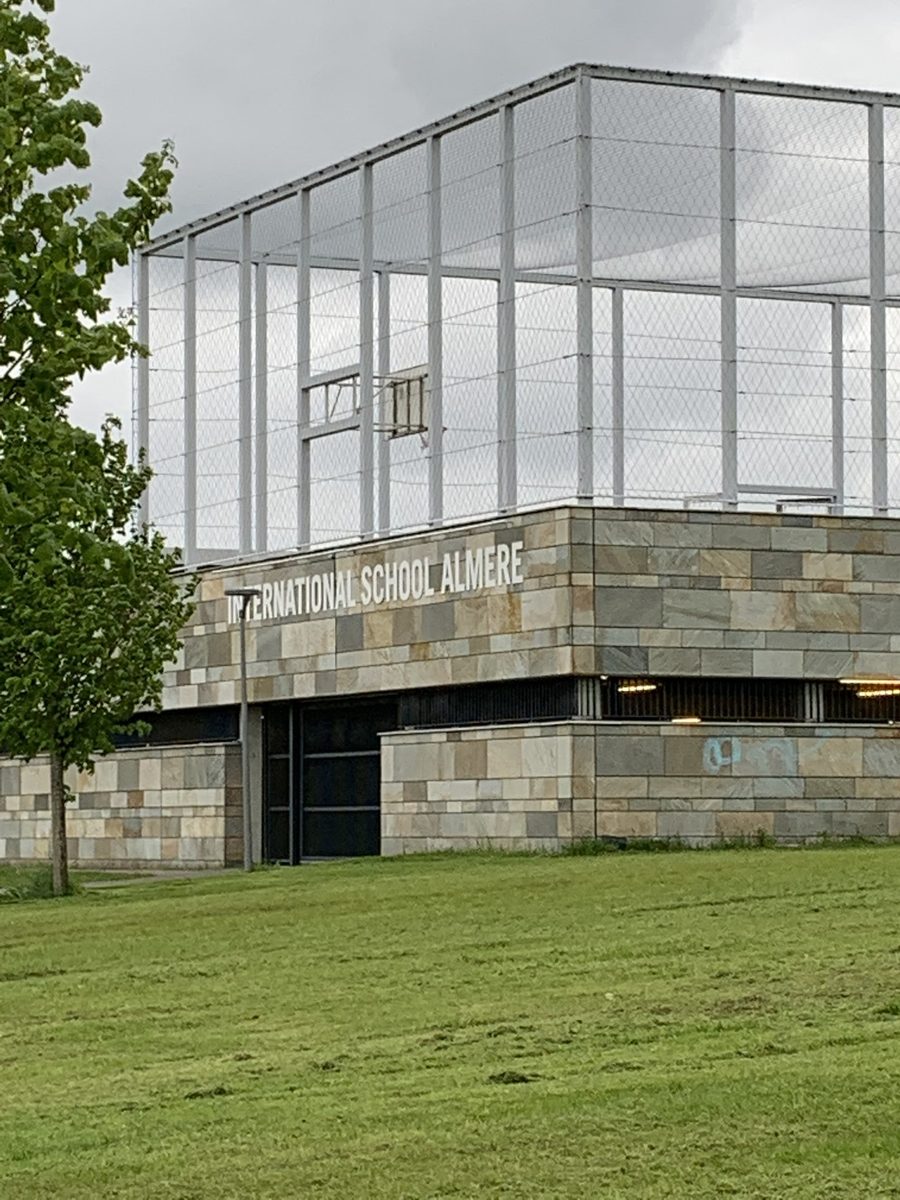
International School Almere
Almere · Netherlands
A full IB continuum, ages two to eighteen, on one shared campus in the Netherlands' fastest-growing city
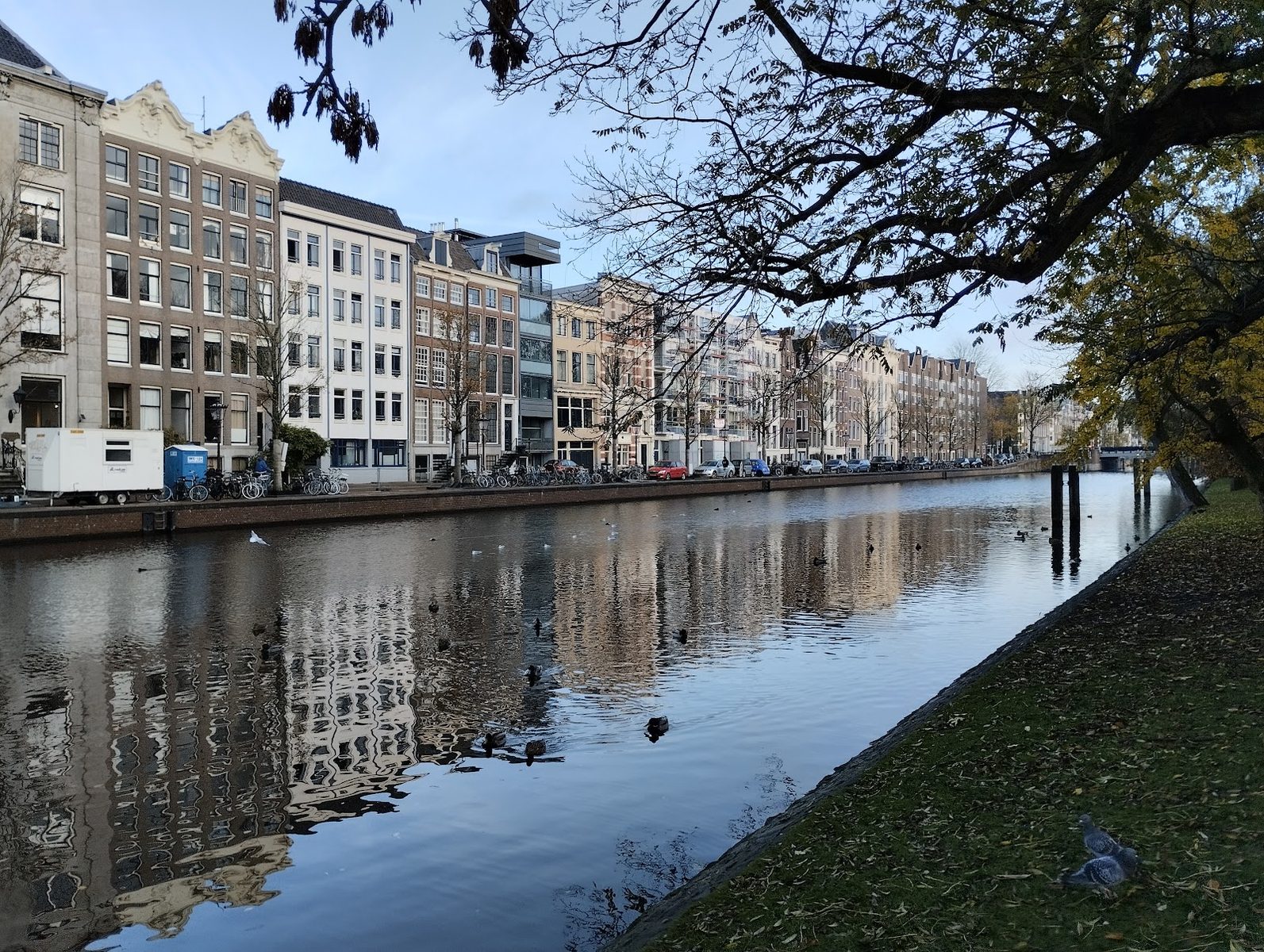
Amsterdam International Community School
Amsterdam · Netherlands
A public alternative to Amsterdam's private international schools, running the full IB continuum from a climate-neutral campus.
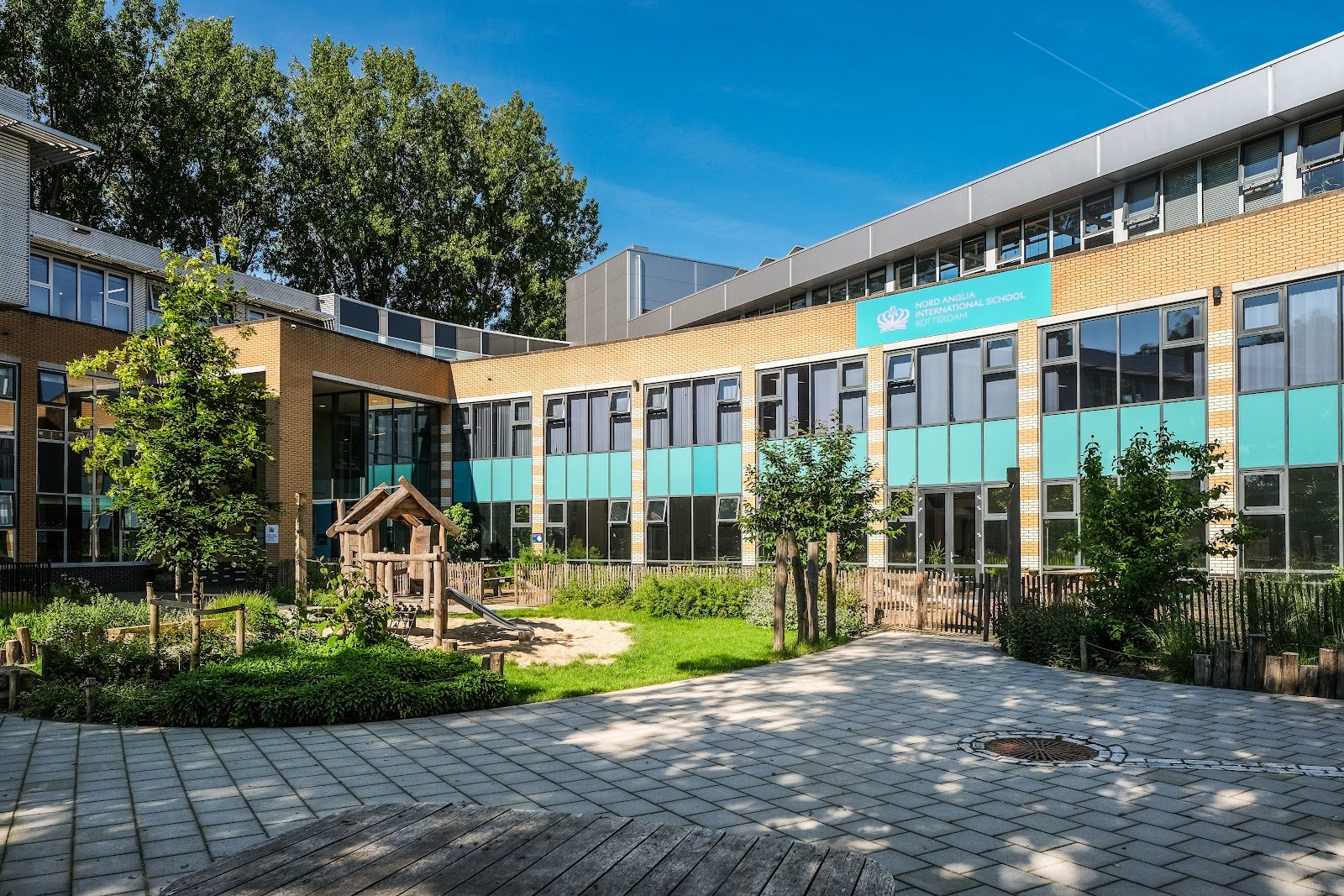
Nord Anglia International School Rotterdam
Rotterdam · Netherlands
Born from a 1959 American community, this Hillegersberg school pairs IB rigor with MIT-designed STEAM and Juilliard arts training.
Same country and curriculum — closest matches within ±10 points either way