
Route de l'Ourika
American School of Marrakesh
low confidence· 4/6 cats · 1 avg sourcesOutside Marrakesh, a dual-diploma campus pairs American college prep with the IB in English, French and Arabic classrooms.
Type
Both
Ages
3–18
Curriculum
American · IB
Qualifications
AP · IB Diploma · US High School Diploma
Ratio
1:8
The Verdict
Editor's commitment
Right for
Families wanting American and IB pathways on one campus, with Middle States and IB World accreditation and a 1:8 student-teacher ratio.
Wrong for
Parents seeking a single-curriculum school, French-medium teaching, or religious formation; ASM teaches in English and is non-religious from ages 3–18.
Watch out for
Founded in 1995 and outside central Marrakesh, ASM has credibility, but it does not publish aggregate IB results or university destination data.
Ranking breakdown
American School of Marrakesh · #1340 of 1591
Composite score 54.0. 8 weighted criteria.
By criterion
Academic Outcomes
Weight 20%
#1313
of 1529 scored
University Placement
Weight 16%
#1313
of 1529 scored
Prestige & Heritage
Weight 12%
#1357
of 1571 scored
Alumni Network
Weight 12%
#995
of 1530 scored
Facilities
Weight 12%
#1314
of 1533 scored
Transparency & Communications
Weight 8%
#1309
of 1532 scored
Peer & Industry Review
Weight 10%
#1108
of 1548 scored
Admissions Selectivity & Demand
Weight 8%
#1205
of 1529 scored
Peer & Industry Review
How American School of Marrakesh is regarded in the sector
64
Respected · medium confidence
I could not identify at least two independent, credible third-party sources (e.g., Tatler, Good Schools Guide, specialist education press, or established expat forums) that substantively assess the American School of Marrakesh's reputation. Available information appears limited largely to the school's own materials or unverified listings, which do not meet the evidentiary threshold required.
Editors' overview
American School of Marrakesh occupies a narrow but useful niche in Morocco: an English-medium school outside the city that offers both an American college-preparatory route and the IB. For families who want optionality at sixth form rather than an early lock-in, that matters. The campus footprint also stands out. The school cites 8 hectares, which is substantial by city-school standards and gives weight to the promise of room for sport, events and lower-school life. This is not a polished old institution trading on a century of history; it was founded in 1995, and the public face still reads like a school building out its identity in real time. That cuts both ways: fresh leadership energy, visible activity, and a busy community calendar on one side; less institutional gravitas on the other.
What puts ASM on a shortlist is the combination of breadth and scale. It serves ages 3–18, carries Middle States and IB authorisation, and posts a 1:8 student-teacher ratio, which is unusually lean. If that ratio holds in classrooms, pupils get attention that larger international schools struggle to deliver. The school also has the infrastructure of a full international school rather than a small start-up: college counselling, learning support, service learning, sports and activities, a library, alumni network, and a steady rhythm of fairs, tournaments and parent events. The trilingual cultural environment matters too. Instruction is in English, but the school’s life clearly includes French and Arabic, along with a steady engagement with Moroccan heritage. For expatriate families who want global mobility without cultural isolation, that is a real asset.
The caveat is academic transparency. ASM promotes the IB Diploma Programme and college counselling, but it does not publish aggregate IB results, university destination data, or other hard outcome measures in the public domain. For a school selling both academic ambition and international progression, that omission is conspicuous. Parents need to ask direct questions: how many students take the full IB Diploma, what score distribution the school secures, where graduates enrol, and how the American pathway sits beside the IB in the upper school. The school’s communications are strong on community warmth, student events and celebratory news; they are weaker on the evidence serious parents use to compare academic value.
The best fit is a student who will use a broad campus, join in, and benefit from close adult attention: internationally mobile children, bilingual or multilingual pupils, and families who value a grounded Moroccan setting as much as an overseas-facing curriculum. It suits children who thrive in a small-school atmosphere rather than a fiercely competitive, high-pressure machine. It suits less well the family that wants a school with published top-end outcomes, a deep archive of elite university placements, or the social scale of a big capital-city international school. In market terms, ASM is a credible, distinctive option in Marrakesh: room to grow, curricular flexibility, and individual attention — with one clear condition that parents press hard on results.
Academic Performance
Academic performance is where ASM asks parents for trust rather than giving them proof. The school promotes the diploma route, college counselling and a college-preparatory upper school, yet it does not publish aggregate IB scores, pass rates, subject averages, SAT or AP data, or a university destinations list in the public domain. That leaves a clear information gap at the point where comparison with peers matters most. In a market where stronger international schools publish at least headline outcomes, that silence is a weakness. The low staffing ratio points to scope for close academic support, and the school’s calendar shows active sixth-form life — IB fairs, university events and graduation messaging — but activity is not attainment. Parents should ask for the last 3 to 5 years of diploma results, score distribution, cohort size, and destination offers split between the American and IB pathways.
Relative to peers, ASM sits in the opaque middle ground: more academically ambitious than a purely lifestyle expatriate school, less transparent than the best-run international schools that treat outcomes as standard public evidence. That does not mean weak results; it means unpublished results. For families choosing between schools in Morocco or elsewhere in North Africa, the absence of hard data makes ASM harder to place with confidence. A school offering two senior routes needs to show how each performs. Until it does, the academic case rests on institutional assurance rather than verifiable external results.
Facilities
Facilities are one of ASM’s stronger selling points, because the school has the space to run like a full campus rather than a squeezed urban operation. The school flags a site of 8 hectares, and the public record points to more than just playing fields: there is a library, a cafeteria, a dedicated faculty lounge, a permaculture garden behind the primary football field, and enough event capacity to host fairs, exhibitions, tournaments and whole-school ceremonies on site. That matters. Many peer schools in North Africa talk about holistic education while operating from compact plots with limited specialist room. ASM has the footprint for outdoor learning, sport and community use without forcing every activity into the same multipurpose corner. For families with younger children, that translates into a less cramped, more functional daily environment.
The caveat is that ASM does not publish the kind of detailed facilities map that stronger competitors now provide. We have not seen a full breakdown of science labs, performing arts spaces, indoor sports provision, design technology rooms or sixth-form study areas. The school’s news feed confirms active use of STEAM, sport and cultural events, but it leaves parents to infer the physical standard from photographs and calendar items. Against peers, ASM looks *better than the bare-minimum international school, but short of the fully documented premium campus* where every specialist space is laid out in detail. The grounds are a real asset; the published detail around what sits on them is thinner than it should be.
It serves ages 3–18, carries Middle States and IB authorisation, and posts a 1:8 student-teacher ratio, which is unusually lean
Prestige
ASM’s prestige is local and practical, not elite in the way parents associate with the grandest international names. It has the markers of a serious school: not-for-profit status, independent governance, a full age range, and recognised external oversight. The site also points to the machinery families expect in an established operation — college counselling, learning support, service learning, an alumni network, a high school profile, and a steady public calendar of tournaments, fairs, exhibitions and graduation events. The scale of the campus adds to that impression. The school itself highlights 8 hectares, which gives it more physical presence than many smaller city campuses. In Marrakesh, that carries weight.
What ASM does not have is status by cachet. There is no century-deep institutional story, no published stream of headline university destinations, and no hard public outcomes that turn a good regional school into a magnet for prestige-seeking families. Its reputation rests more on community life, breadth of provision and day-to-day school experience than on academic bragging rights or old-boy mythology. The presence of the IB Diploma and a broad international calendar raises the school above the level of a purely functional local option, but the public case stops short of top-tier authority. That leaves ASM in a respectable middle category: credible, established, and attractive to families who value substance over social signalling — but not a school whose name alone carries decisive international clout.
What distinguishes ASM is not brand power or a singular academic claim
Communications
ASM communicates with parents through a busy, serviceable mix of website updates, newsletters, downloadable resources, the myASM portal, a public calendar, direct admissions touchpoints and frequent parent events. The school also posts a clear run of practical notices: parent-teacher conferences, open houses, supply lists, summer learning packets, child protection information and contact routes. That matters more than glossy prose. Parents need dates, documents and named channels, and ASM provides them. The cadence is high. The news feed is updated across the year with school events, sports fixtures, cultural celebrations and senior-school milestones, which gives families a constant line of sight into school life. For day-to-day community visibility, the communication is active, accessible and functional.
The weakness is emphasis. ASM talks far more about events than standards. Parents can track bazaars, fairs, tournaments and themed weeks with ease; they get far less hard academic reporting. There is a high school profile link and visible college counselling activity, but the school does not use its communications to publish the outcome data serious parents expect. That leaves the public message warm but incomplete. The tone also runs cheerful to the point of soft focus: celebration-heavy, light on scrutiny, and short on the comparative evidence that builds confidence in the upper years. For current families, that may feel community-minded. For prospective families making an expensive decision, it is a communications model that handles logistics well and underserves academic due diligence.
Uniqueness
What distinguishes ASM is not brand power or a singular academic claim. It is the combination of a broad age range, a not-for-profit structure, and a campus outside the city that gives children more room to live a full school day. The school’s own public life shows that range clearly: science fairs in the lower years, STEAM events for older pupils, Model United Nations, TEDxASM, language-themed weeks, service activity, sports fixtures through MASAC, and visible engagement with Moroccan culture. That mix gives the place a grounded internationalism that many expatriate schools talk about and fewer deliver. Children do not sit in an imported bubble; they move through a school culture that connects international schooling with its host country.
The benefit for students is practical. Younger children get space, routine and community visibility; older pupils get a school that expects participation beyond the classroom and gives them platforms to speak, compete, organise and present. The public calendar reads as busy rather than polished, which in this case is a strength: pupils have things to do, audiences to face and causes to join. The low staffing ratio — 1:8 — also matters more in this setting than it would in a more anonymous institution. In a school of this kind, close adult attention can turn a small-school atmosphere into genuine confidence, especially for internationally mobile children or pupils who need a school to know them well.
Less suited are children who want a huge peer group, highly stratified competitive culture, or a school identity built around published top-end outcomes
Student Profile
The best fit at ASM is a child who wants to be known, not lost in the crowd. This is a school for students who benefit from close adult oversight, regular participation and a campus life that asks them to turn up for more than lessons. The public rhythm of the school points to pupils who join tournaments, fairs, exhibitions, cultural events and service activity rather than treating school as a narrow academic transaction. Children who thrive here will tolerate visibility. They will present, perform, compete and mix across age groups. For internationally mobile families, that can be quietly reassuring: a school where staff notice a child quickly and where routines look community-led rather than anonymous. The published 1:8 staffing ratio reinforces that reading.
It suits pupils who are socially adaptable, comfortable in a mixed cultural setting and happy in a school that blends international ambitions with local reference points. Students who enjoy a busy, outward-facing school life, and who do not need the social scale or relentless edge of a giant metropolitan institution, will settle more easily. It also fits families who value pastoral familiarity over status theatre. Less suited are children who want a huge peer group, highly stratified competitive culture, or a school identity built around published top-end outcomes. ASM reads as a good home for engaged, grounded students who will use the place fully; it is a weaker proposition for the results-first family that wants public proof before trust.
American School of Marrakesh occupies a narrow but useful niche in Morocco: an English-medium school outside the city that offers both an American college-preparatory route and the IB
Co-curricular strengths
Arts & sport, on a separate axis
Overall 8/10
Scored 0-10 from the school's own published evidence. This axis is editorial-only — it does not feed the main WTS ranking.
Sports
8/10
Drama
8/10
Dance
8/10
Music
8/10
Visual Arts
8/10
Editor first-pass · editor-reviewable · 7/30/2026
Strengths
- +Offers a dual pathway of an American curriculum through high school alongside the IB Diploma Programme, giving families flexibility for university destinations in the US, Europe or elsewhere.
- +Accredited by the Middle States Association / Middle States Association of Colleges and Schools (MSA-CESS), a recognised US accreditation body for international schools.
- +Located in Marrakesh, giving access to a growing expatriate and diplomatic community and relatively lower cost of living than European hub cities.
- +Serves a full PK-12 age range on one campus, reducing the need for families to change schools as children progress.
- +English-medium instruction with additional French and Arabic language provision, useful for families integrating into Moroccan society.
Considerations
- −Marrakesh is a secondary international-school market compared with Casablanca or Rabat, so the pool of similarly-profiled expatriate peers is smaller.
- −As a single-campus school, families have no alternative site within the same network if a change of location is needed.
- −Independent, detailed fee schedules and boarding data are not consistently published online, making budgeting harder to verify in advance.
- −Being a lower-profile, non-flagship international school (editorial tier: candidate), it lacks the extensive public track record of top-ranked global schools.
Availability
Primary entry gate & tests
Academic Record
Parent reviews
Have you sent your child here?
Voice reviews carry the strongest trust badge — we transcribe them for you to tidy up before they go live. Prefer to type? A written review is fine too.
Add your voice
In 60 seconds, tell other parents: what's the best thing about American School of Marrakesh, and what surprised you when your child joined?
We ask for a Google sign-in so every review has a real face behind it — no anonymous drive-by attacks on schools, and no faked positive reviews. Your email is never shown publicly.
Send this profile to a friend
International parents rely on word-of-mouth. Share this review with someone weighing the same decision.
Schools with places
Similar schools to American School of Marrakesh with places available now.
Collège du Léman
Versoix · Switzerland
- 2026-27
- WAITPOOLSpace-dependent
- 2027-28
- PLACES OPENRolling
Al Hekma International School
Manama · Bahrain
- 2026-27
- PLACES OPENApps open / space-dependent
- 2027-28
- WAITPOOL2027/28 timetable TBC
Yew Chung International School of Chongqing
Chongqing · China
- 2026-27
- WAITPOOLSpace-dependent
- 2027-28
- WAITPOOLRolling / space-dependent
Bishop Cotton School
Shimla · India
- 2026-27
- WAITPOOLSpace-dependent
- 2027-28
- PLACES OPENRolling
Availability first, then country, area, curriculum, price, co-curricular
Consider also
Also worth looking at alongside American School of Marrakesh.
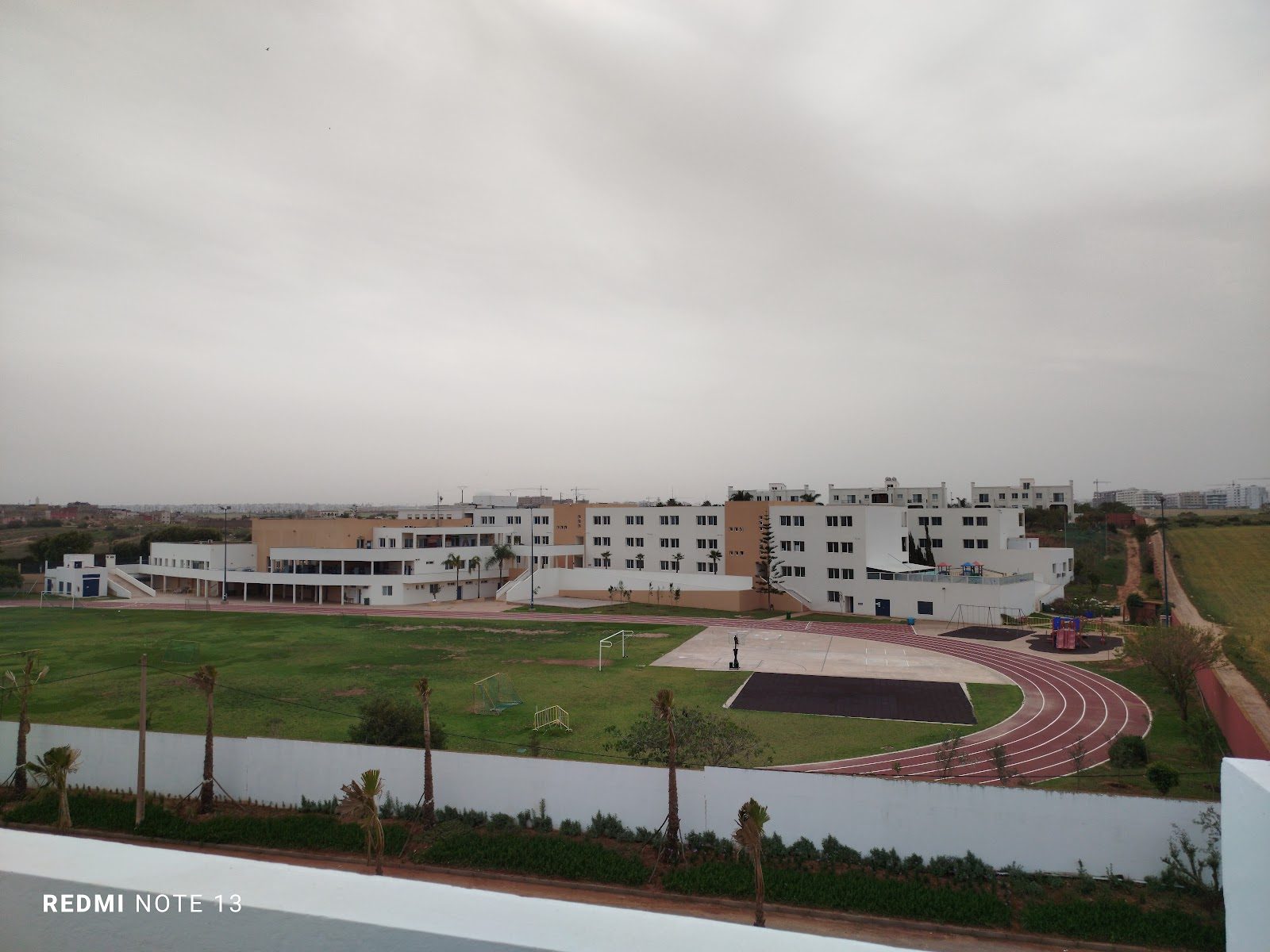
George Washington Academy
Casablanca · Morocco
American diploma meets IB rigor in trilingual Casablanca, anchored by Morocco's only LEGO Innovation Center.
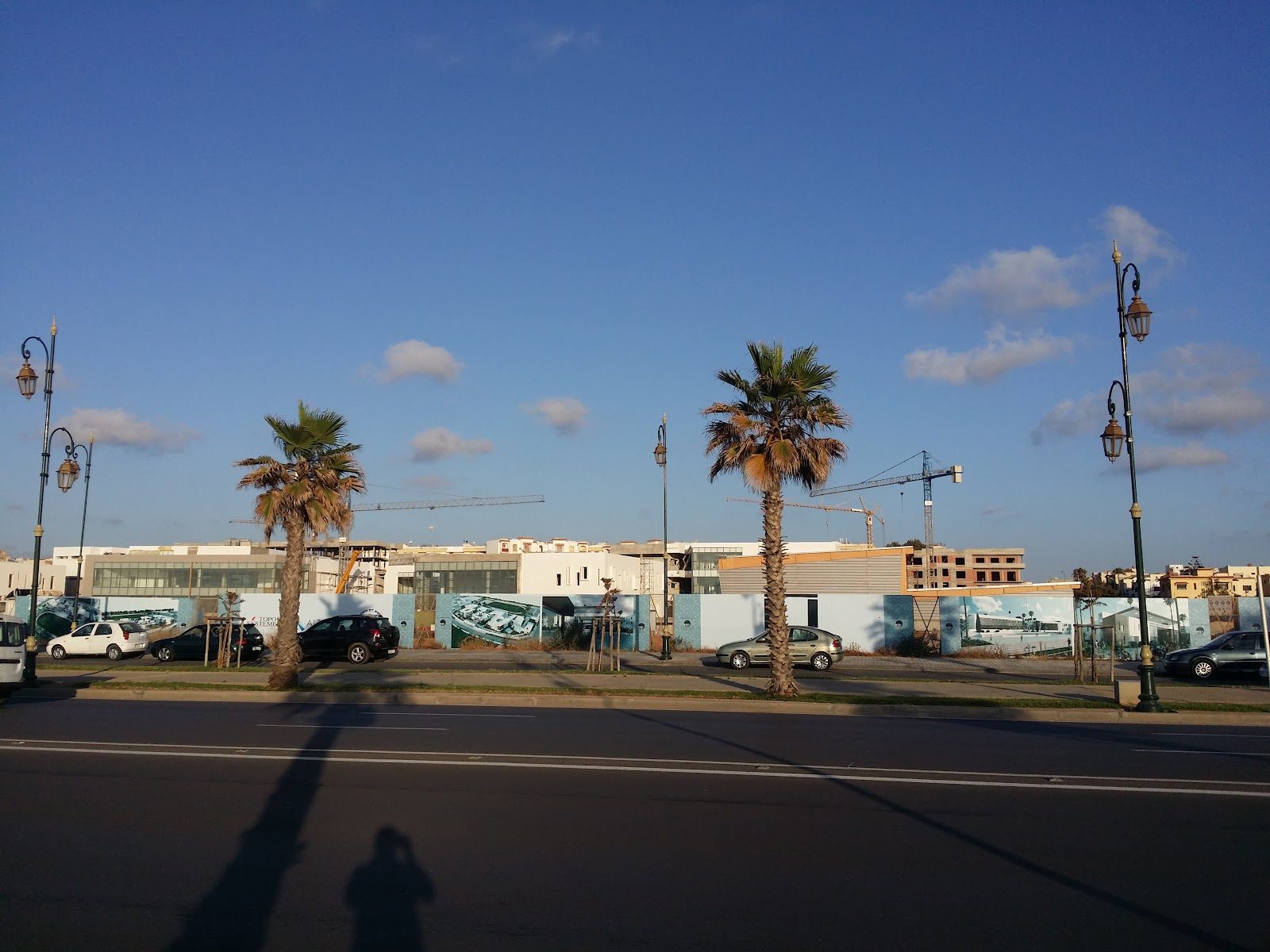
Rabat American School
Rabat · Morocco
On Rabat's Atlantic corniche, a 1962 embassy school built one of the region's earliest IB Diploma programmes.
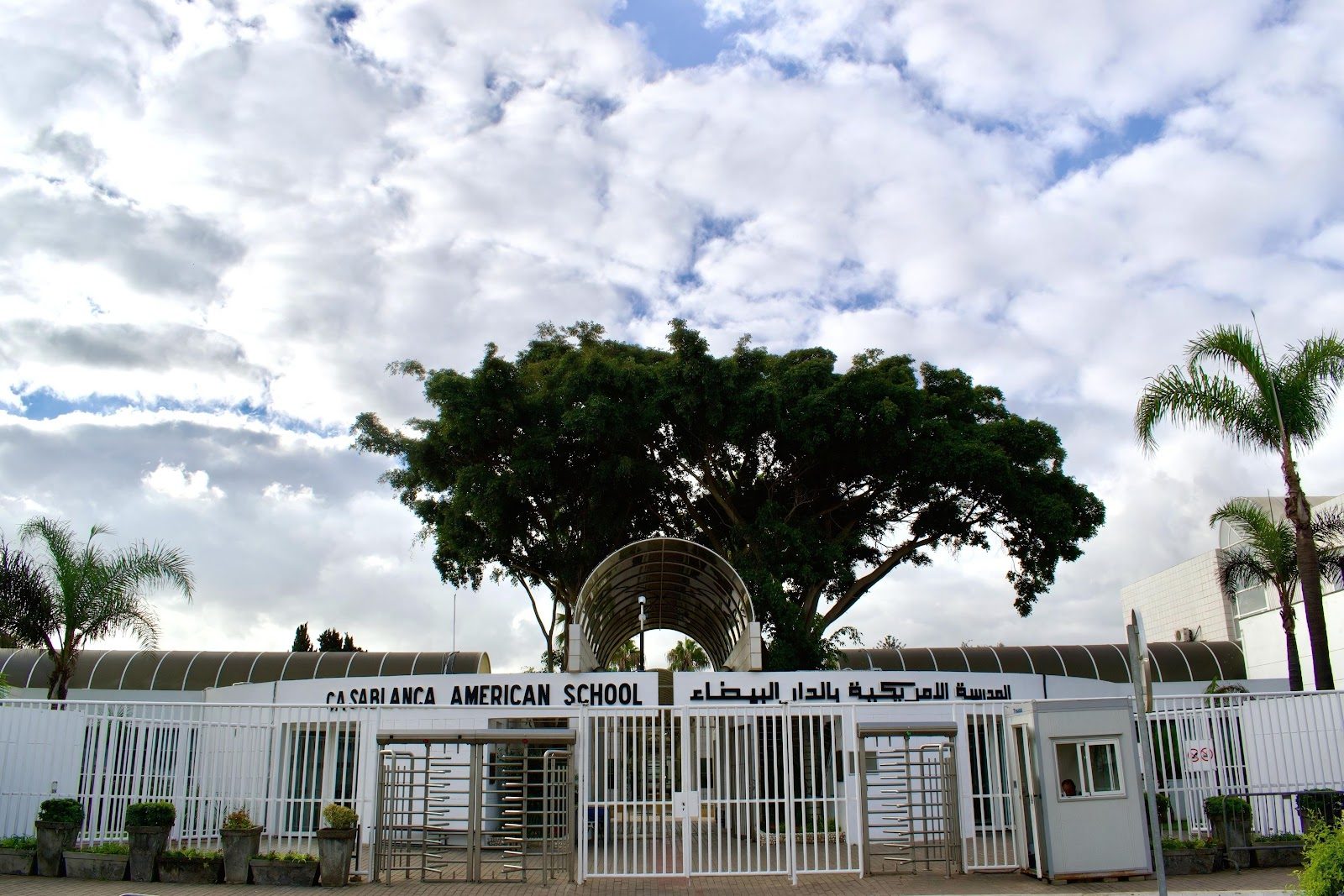
Casablanca American School
Casablanca · Morocco
North Africa's first full IB Diploma programme, paired since 1986 with an American university-prep track in Casablanca.
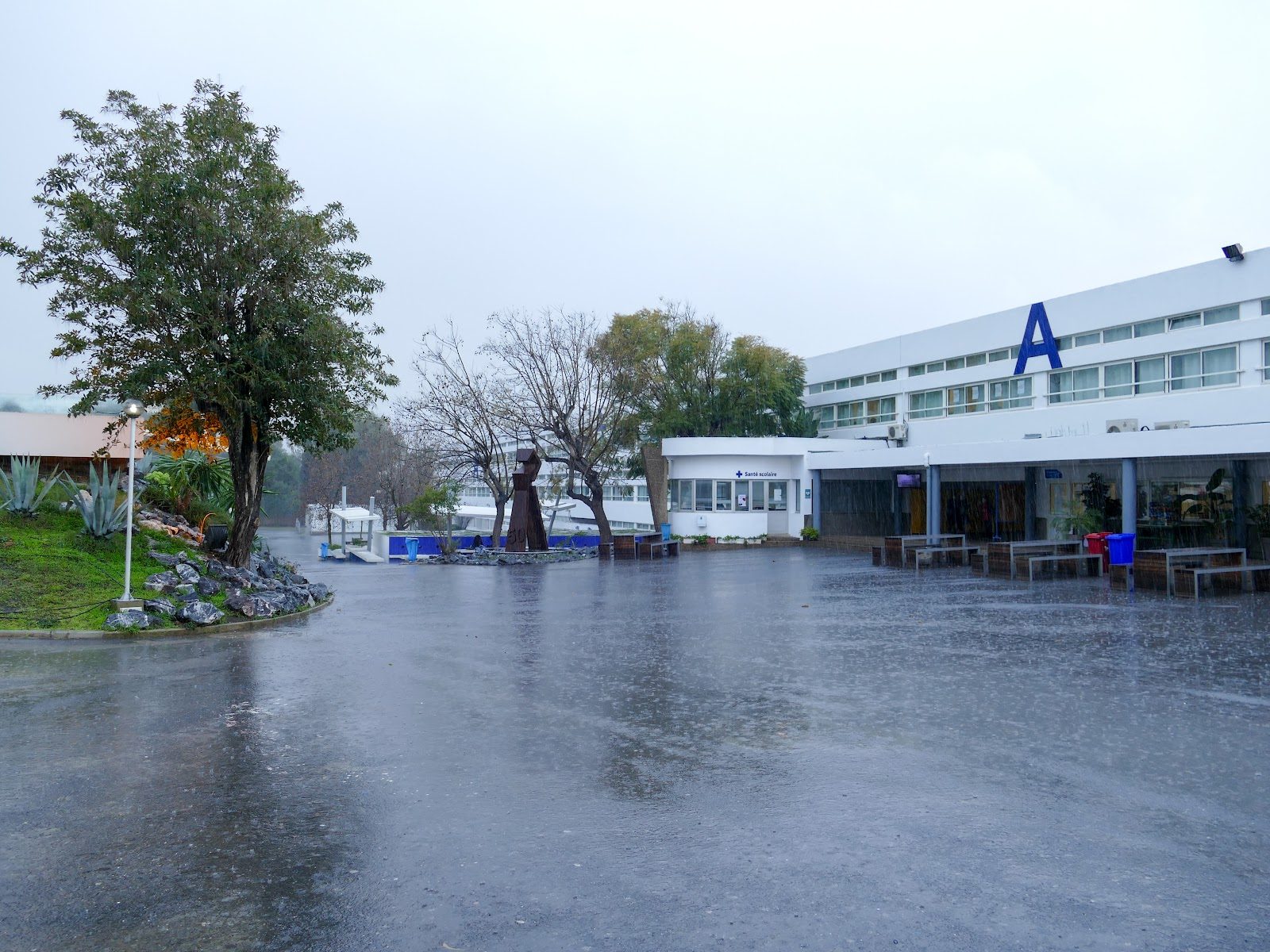
Lycée Descartes
Rabat · Morocco
In Agdal, graduates trade mortarboards for embroidered tarbouches, crowning a Baccalaureate pipeline that runs clear through to classes preparatoires.
Same country and curriculum — closest matches within ±10 points either way