
Chongqing
Yew Chung International School of Chongqing
medium confidence· 4/6 cats · 3 avg sourcesChongqing's first Ministry-registered international school, pairing Chinese and Western co-teachers through IGCSE and the IB Diploma.
Type
Day
Ages
3–18
Curriculum
IB
Ratio
—
The Verdict
Editor's commitment
Right for
Families in Chongqing who want English and Mandarin taught in tandem, with IGCSE leading to the IB Diploma from ages 3–18.
Wrong for
Anyone wanting lower fees, boarding or a single-teacher model; this is a day school at an average RMB 249,857 a year.
Watch out for
CIS, WASC and IB World School accreditation give reassurance; beyond that, the school does not publish hard outcome data here.
Ranking breakdown
Yew Chung International School of Chongqing · #1214 of 1591
Composite score 57.3. 8 weighted criteria.
By criterion
Academic Outcomes
Weight 20%
#1191
of 1529 scored
University Placement
Weight 16%
#1201
of 1529 scored
Prestige & Heritage
Weight 12%
#1272
of 1571 scored
Alumni Network
Weight 12%
#856
of 1530 scored
Facilities
Weight 12%
#1153
of 1534 scored
Transparency & Communications
Weight 8%
#1194
of 1532 scored
Peer & Industry Review
Weight 10%
#1108
of 1548 scored
Admissions Selectivity & Demand
Weight 8%
#991
of 1529 scored
Score history
Yew Chung International School of Chongqing · 2026
Movement across 2024–2026. Peer average overlaid.
Overall — 2024–2026
57.3/ 100
▲ +29.0 vs 2025
year on year
Peer & Industry Review
How Yew Chung International School of Chongqing is regarded in the sector
64
Respected · medium confidence
While the Yew Chung International Schools group has some name recognition (particularly its Hong Kong and Shanghai campuses), I could not locate independent third-party coverage—such as Tatler, Good Schools Guide, specialist education press, or established expat-parent forum threads—specifically addressing the Chongqing campus's reputation, peer standing, or alumni network. Any available information appears to derive from the school's own marketing or general directory listings rather than substantive independent commentary.
Editors' overview
Yew Chung International School of Chongqing has a clear claim on the city: it opened in 2001 and bills itself as Chongqing’s first Ministry-registered international school. That matters. In a market where many schools borrow the language of international education, YCIS Chongqing has a longer runway than most and a defined model: bilingual education in English and Mandarin, delivered through Chinese and Western co-teachers, then on to IGCSE and the IB Diploma. For families who want a child to operate confidently in both languages rather than pick up survival Mandarin on the side, that is the school’s distinguishing feature. It is not a generic English-medium expatriate school with Chinese lessons bolted on; the bilingual ambition sits at the centre of the proposition.
The school covers ages 3 to 18, runs as a day school, and holds three accreditations that parents will recognise: CIS, WASC and IB World School status. That combination gives it solid institutional ballast. The curriculum line is direct: an international pathway through to the IB, with the school stating that it prepares students to become bilingually competent in English and Chinese and internationally minded. Parents should still note what the school does not publish here: no public aggregate IB results, no university destination data, and no cohort-size detail. That leaves academic outcomes less transparent than they should be for a school charging an average annual fee of 249,857 RMB.
Why shortlist it? Because in Chongqing, YCIS Chongqing occupies a distinctive niche: established, bilingual, secular, and built for internationally mobile families who want more than an imported curriculum in an English-only bubble. The right student for this school is adaptable, linguistically open and comfortable switching between educational and cultural frames. Children who thrive in one fixed academic style or want a narrowly exam-drilled environment may find the model too hybrid. Families who value bicultural fluency, a full 3–18 through-line and the credibility that comes with CIS, WASC and IB accreditation will find a school with a serious identity and a proposition that is harder to replicate than the usual international-school template.
Academic Performance
Academic performance is the weak point in YCIS Chongqing’s public case. The school offers an examination route through IGCSE and the IB Diploma, but it does not publish aggregate IB scores, pass rates, subject averages, top scores, or trend lines across multiple years. Nor does it disclose university destinations or cohort size. That leaves parents without the basic comparators that serious international schools use to prove academic quality. In editorial terms, the outcomes picture is opaque, under-evidenced and hard to benchmark. For a school with an average annual fee of 249,857 RMB, that is a material gap.
Where does that place it relative to peers? Behind the stronger operators on transparency. In China’s upper tier of international schools, parents can often inspect mean diploma scores, bilingual outcomes, selective university lists and year-on-year stability. YCIS Chongqing does not put those markers into the public domain, so it cannot claim that ground. That does not mean results are weak; it means the school has chosen not to show them. Families who prioritise documented academic traction will want direct answers on recent IB cohorts, IGCSE grade distribution, value added and university offers before moving forward. Families who rank bilingual formation above hard-score visibility may accept the trade-off, but it remains a trade-off.
Facilities
YCIS Chongqing does not flood the public domain with a long facilities inventory, which matters in itself. What is clear is the setting: a full K3 to Year 13 campus in the city’s international school zone, built to serve one school through the whole age range rather than a fragmented collection of rented blocks. That usually gives parents the practical basics they need — age-segmented classrooms, specialist teaching areas and outdoor space that can handle daily school life — but the school does not publish the kind of detailed room-by-room campus brief that stronger competitors now provide. There is no public parade of theatres, design labs, competition pools or headline sports infrastructure. Against peer schools in China’s top international tier, that leaves the estate under-described and the sales case thinner than it should be.
That does not make the campus weak. It makes it hard to verify in detail. For families choosing this school, the key facilities question is not whether there is a grand showpiece building; it is whether the site supports the school’s bilingual, all-through model without strain. On that measure, a dedicated day-school campus for ages 3–18 carries practical value. Still, premium-fee peers now publish far more on science spaces, arts provision, indoor sport and campus square footage. YCIS Chongqing asks parents to infer more than first-rank competitors do. For a school charging an average of 249,857 RMB a year, that is a clear weakness in presentation.
Against peer schools in China’s top international tier, that leaves the estate under-described and the sales case thinner than it should be
Prestige
YCIS Chongqing carries real local standing, but its prestige sits in a specific lane. It is not the kind of school that trades on elite exam disclosure, famous alumni or a headline-grabbing admissions mythology. Its status rests instead on two harder-to-copy assets: longevity in the market and a model that is more distinctive than the standard international-school import. In a city where many schools can offer an overseas-facing curriculum, far fewer can claim a fully built-through bilingual proposition from the early years to graduation. For families who value bicultural formation, that gives the school serious credibility. The average annual fee of 249,857 RMB also places it in the premium bracket, which reinforces its position among Chongqing’s top-fee international options.
That said, prestige here is institutional rather than glittering. The school has recognised accreditation and a clear educational identity, which gives it substance. What it lacks is the public proof that turns a respected school into an undisputed one: published aggregate exam outcomes, destination lists and the kind of hard performance data that elite peers use to separate themselves from the field. That gap matters. It means YCIS Chongqing commands earned respect for its history, structure and bilingual mission, but not the fully evidenced academic prestige of the strongest names in the sector. In plain terms: high-status within Chongqing’s international market, but not a school that closes the case with public results alone.
The average annual fee of 249,857 RMB also places it in the premium bracket, which reinforces its position among Chongqing’s top-fee international options
Communications
YCIS Chongqing’s parent communication reads as functional rather than expansive. The public-facing message is concise: who the school serves, where it sits, and what educational proposition it is selling. That gives busy parents the basic frame quickly. It does not give them much operational texture. There is little published detail on cohort size, outcomes, destinations or the finer grain of campus life, so families cannot build a rounded picture from the school’s own channels alone. For a school charging an average annual fee of 249,857 RMB, that is a thin level of disclosure. Good communication at this price point does more than state a philosophy; it answers the practical and academic questions parents ask before they need to ask them twice.
That matters even more here because the school’s model asks families to buy into something more complex than a standard English-medium international education. A bicultural, dual-teacher structure needs clear, disciplined explanation: how classrooms work, how languages are balanced, how progress is tracked, and how parents are kept informed across different expectations and backgrounds. The school’s published messaging establishes the broad identity well. It falls short on proof, process and evidence. The result is *coherent branding but incomplete communication*. Parents who are already sold on the concept will grasp the appeal. Parents who want transparency on delivery, performance and daily school mechanics will need to push for direct answers.
Uniqueness
What sets YCIS Chongqing apart is not a badge or a glossy promise; it is the school’s dual-teacher model and the fact that bilingual education is built into the daily structure rather than left at the margins. Chinese and Western teachers share the classroom, so students do not encounter one culture as the default and the other as an add-on. That changes the texture of school life. Children learn to shift register, interpret different expectations and work across two intellectual traditions from the start. In a market crowded with English-medium schools that add local language lessons for form’s sake, this is a genuinely differentiated proposition. The school’s all-through age range also matters: families can commit to one educational logic from nursery to graduation, which gives the model greater coherence than schools that patch together separate phases.
For students, the payoff is practical bicultural fluency, not just classroom Mandarin or a token international ethos. They are trained to operate in more than one linguistic and cultural frame every day, which builds adaptability, social range and confidence with difference. That is valuable for internationally mobile families, mixed-background households and parents who want children to do more than pass through China in an expatriate bubble. The trade-off is clear: this is not a single-track, exam-factory environment, and families who want a narrow academic drill may find the hybrid model less comfortable. For the right child, though, YCIS Chongqing offers something hard to copy: a school identity built around crossing boundaries rather than reinforcing them.
In a market crowded with English-medium schools that add local language lessons for form’s sake, this is a genuinely differentiated proposition
Student Profile
The best fit here is a child who is comfortable living in two worlds at once. This school suits students who switch between home cultures, who enjoy language rather than resist it, and who can cope with classrooms that ask for more than one way of thinking. Children from internationally mobile families, mixed-background households, and parents who want a life in China without an expatriate bubble sit in the school’s natural constituency. So do students who are socially adaptable rather than territorial: the ones who can move between peer groups, absorb different adult expectations, and tolerate a degree of educational complexity. For those families, the premium price tag — 249,857 RMB on average each year — buys a *distinctive social and cultural environment*, not just lessons.
The weaker fit is just as clear. A child who wants one dominant classroom culture, one linguistic norm, and a narrow exam-first rhythm may find this place too hybrid and *less comforting than a conventional international track*. Students who need heavy external validation, public league-table signals, or a strong prestige hierarchy built around disclosed outcomes will not get that reassurance easily here. The school suits pupils with intellectual flexibility, cultural curiosity and a tolerance for ambiguity. It does not suit families looking for a hard-edged academic machine or a school that spells out every proof point in public.
For those families, the premium price tag — 249,857 RMB on average each year — buys a distinctive social and cultural environment, not just lessons
Co-curricular strengths
Arts & sport, on a separate axis
Overall 7.7/10
Scored 0-10 from the school's own published evidence. This axis is editorial-only — it does not feed the main WTS ranking.
Sports
8/10
The extracurriculars explicitly list Football, Basketball, and Swimming, showing multiple sports offerings with visible participation.
Drama
8/10
Drama Club is explicitly named in the extracurriculars.
Dance
6/10
Music
8.5/10
Choir and Orchestra are explicitly listed as extracurriculars, indicating a solid music offering with more than a bare single mention.
Visual Arts
8/10
Visual Arts is explicitly named in the extracurriculars, but there is.
Editor first-pass · editor-reviewable · 7/27/2026
Strengths
- +IB curriculum declared by the school
- +Bilingual English-Chinese curriculum
- +Covers K3 through Year 13
- +Located in Chongqing's New Northern Economic Development Zone
Considerations
- −No published accreditations named here
- −No exam results published here
- −No boarding provision stated here
Availability
Primary entry gate & tests
Academic Record
Parent reviews
Have you sent your child here?
Voice reviews carry the strongest trust badge — we transcribe them for you to tidy up before they go live. Prefer to type? A written review is fine too.
Add your voice
In 60 seconds, tell other parents: what's the best thing about Yew Chung International School of Chongqing, and what surprised you when your child joined?
We ask for a Google sign-in so every review has a real face behind it — no anonymous drive-by attacks on schools, and no faked positive reviews. Your email is never shown publicly.
Send this profile to a friend
International parents rely on word-of-mouth. Share this review with someone weighing the same decision.
Schools with places
Similar schools to Yew Chung International School of Chongqing with places available now.
International School of Tianjin
Tianjin · China
- 2026-27
- WAITPOOLSpace-dependent
- 2027-28
- PLACES OPENRolling
Beijing City International School
Beijing · China
- 2026-27
- WAITPOOLSpace-dependent
- 2027-28
- PLACES OPENRolling
Utahloy International School Guangzhou
Guangzhou · China
- 2026-27
- WAITPOOLSpace-dependent
- 2027-28
- PLACES OPENRolling
Shekou International School
Shenzhen · China
- 2026-27
- WAITPOOLSpace-dependent
- 2027-28
- PLACES OPENRolling
Availability first, then country, area, curriculum, price, co-curricular
Consider also
Also worth looking at alongside Yew Chung International School of Chongqing.
Daystar Academy
Beijing · China
A Chaoyang campus where bilingual immersion tilts from mostly Mandarin to mostly English by senior year, anchored by China's first K-12 social innovation curriculum.
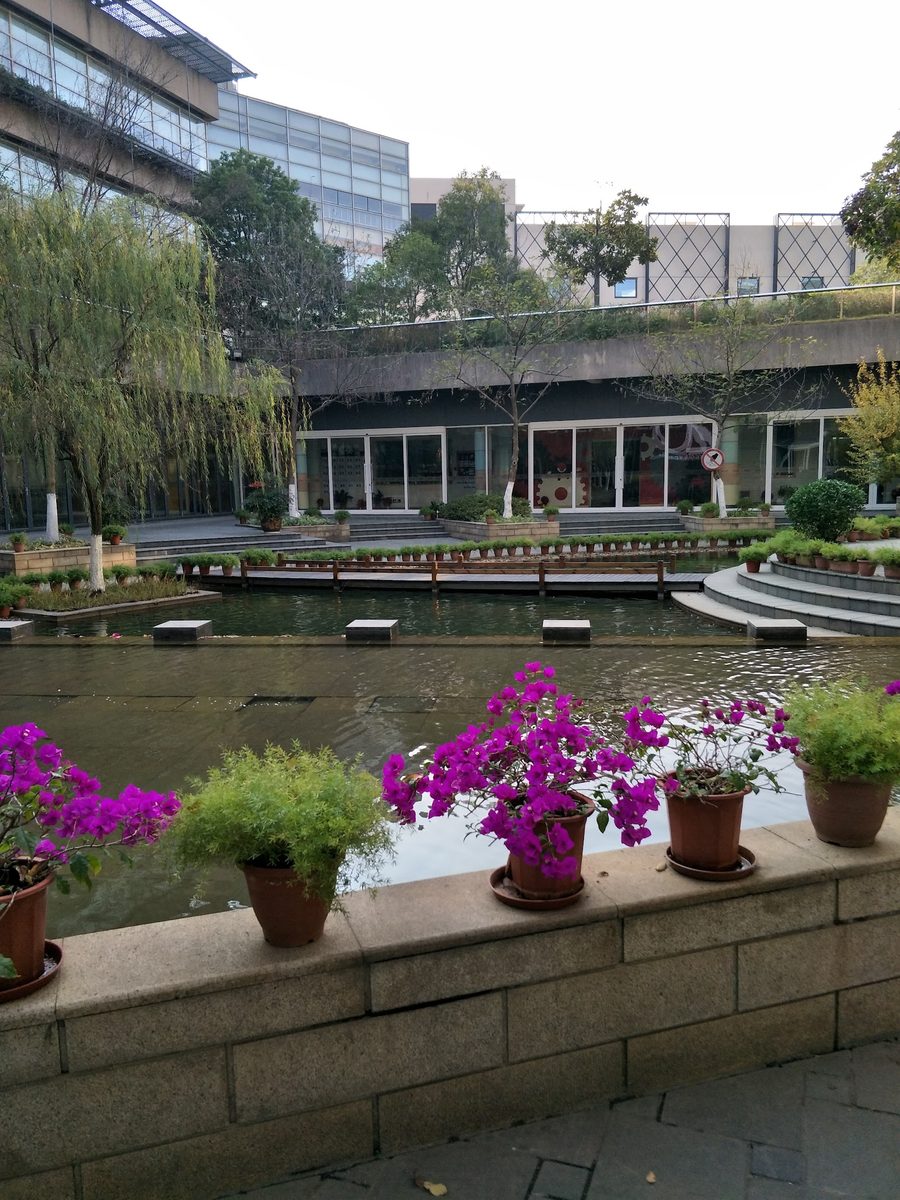
Shanghai Singapore International School
Shanghai · China
Singapore maths rigour anchors an IGCSE-to-IB pathway, threaded with banded Chinese immersion in Minhang's expatriate heartland.
Yew Chung International School of Shanghai
Shanghai · China
Since 1993, paired Chinese and English co-teachers lead every classroom, carrying bilingual immersion from nursery through the IB diploma.
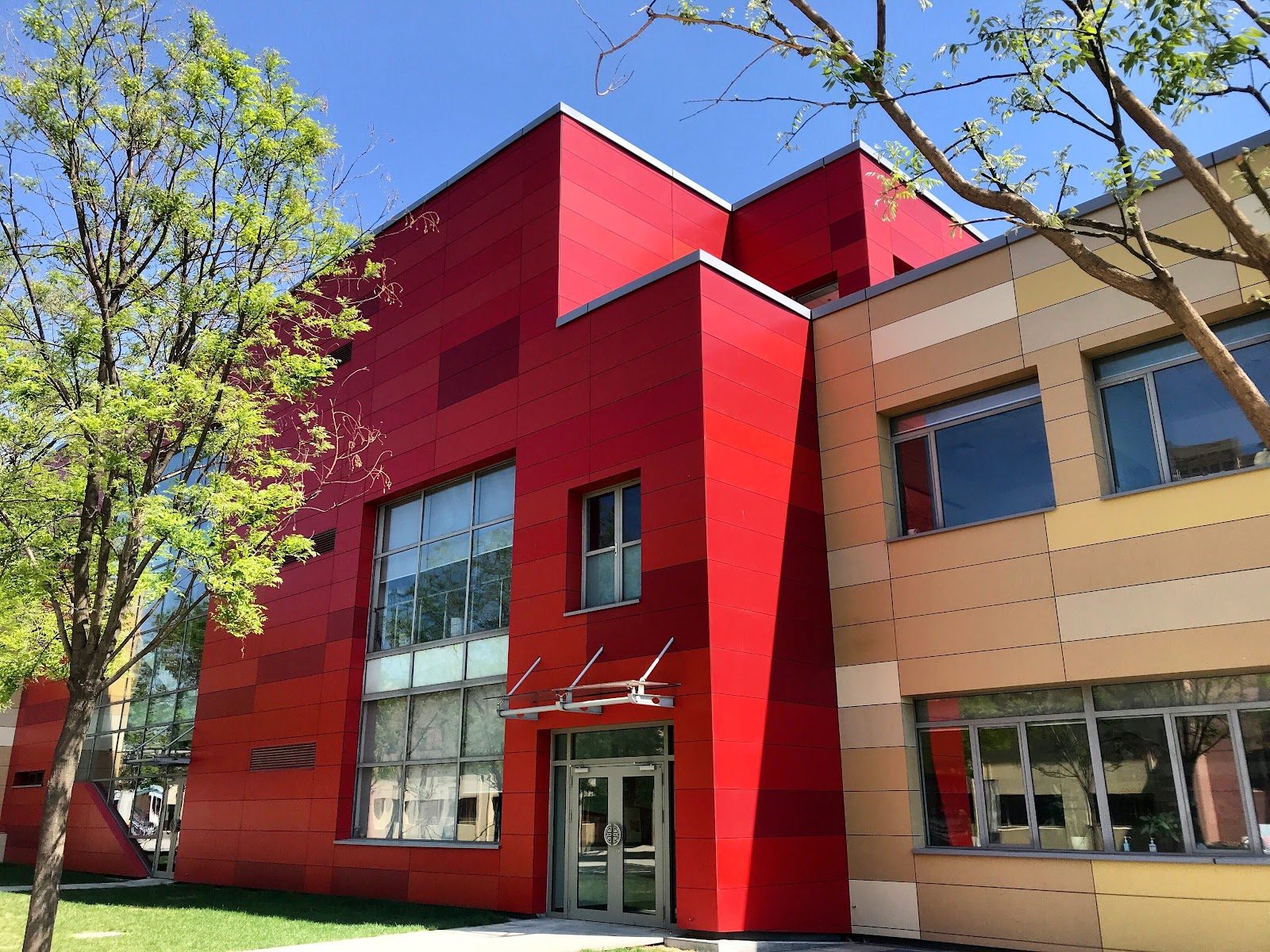
International School of Tianjin
Tianjin · China
Tianjin's only three-programme IB World School, where Diploma scores average 36 points against a global mean of 30
Same country and curriculum — closest matches within ±10 points either way