
Leblon + Barra
Colégio Santo Agostinho Rio de Janeiro
low confidence· 4/6 cats · 1 avg sourcesAugustinian friars have run rigorous Catholic schooling from Leblon since 1946, still placing among Rio's top ENEM scorers.
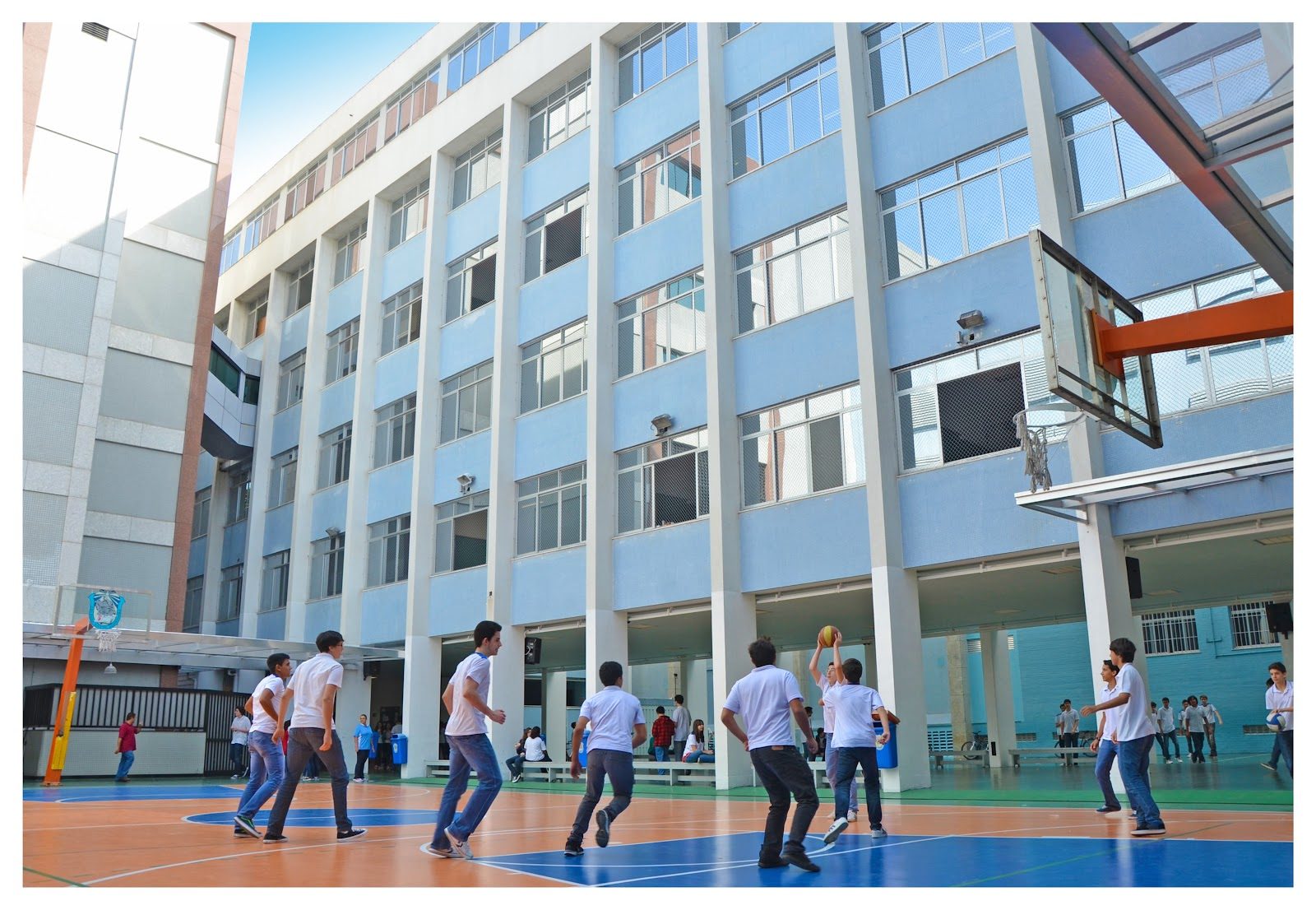
Photo © Colégio Santo Agostinho via Google Maps
Type
Day
Ages
3–18
Curriculum
Brazilian
Ratio
—
The Verdict
Editor's commitment
Right for
Families wanting Catholic day schooling from age 3 to 18 in Rio, with Augustinian oversight and Portuguese-English teaching.
Wrong for
Anyone wanting boarding, a non-Brazilian curriculum, or schooling detached from Catholic life; this is a day school in Leblon.
Watch out for
Founded in 1927 and accredited by MEC and the Augustinian Schools Network, it trades on tradition; published outcomes beyond ENEM are thin.
Ranking breakdown
Colégio Santo Agostinho Rio de Janeiro · #1233 of 1591
Composite score 57.3. 8 weighted criteria.
By criterion
Academic Outcomes
Weight 20%
#1192
of 1529 scored
University Placement
Weight 16%
#1201
of 1529 scored
Prestige & Heritage
Weight 12%
#1219
of 1571 scored
Alumni Network
Weight 12%
#835
of 1530 scored
Facilities
Weight 12%
#1247
of 1533 scored
Transparency & Communications
Weight 8%
#1226
of 1532 scored
Peer & Industry Review
Weight 10%
#1108
of 1548 scored
Admissions Selectivity & Demand
Weight 8%
#991
of 1529 scored
Peer & Industry Review
How Colégio Santo Agostinho Rio de Janeiro is regarded in the sector
64
Respected · medium confidence
I could not verify at least two independent, third-party sources (e.g., Tatler, Good Schools Guide, specialist education press, alumni-network coverage) that specifically assess Colégio Santo Agostinho Rio de Janeiro's reputation. Most available information appears to derive from the school's own materials or unverified aggregator listings, which do not meet the independent-evidence threshold required for scoring.
Editors' overview
Colégio Santo Agostinho Rio de Janeiro occupies a clear niche in the city’s private-school market: academically serious, Catholic, established, and rooted in Leblon. Founded in 1927, it carries the institutional weight of an old Rio school without the vagueness that often surrounds legacy names. This is a Brazilian-curriculum day school for ages 3–18, run in the Augustinian tradition, with teaching in Portuguese and English. The draw is straightforward: disciplined academics, a defined moral framework, and a reputation for strong ENEM performance. For parents who want intellectual rigour without the cultural looseness of a secular school, this is a credible contender.
What makes it special is the combination of religious identity and academic ambition. Many confessional schools trade on atmosphere and pastoral language; Santo Agostinho competes on results as well as ethos. The Augustinian influence matters here: this is not generic Catholic branding but a school tied to a longstanding educational order and the Augustinian Schools Network. That gives the place a serious moral centre and a clear institutional identity. It also sits in one of Rio’s most coveted neighbourhoods, which sharpens both its social cachet and its competitiveness. Parents should still ask hard questions about how the school serves children who do not fit a conventional high-performing mould. Schools with this profile can be excellent for the focused middle and top of the cohort, and less accommodating for students who need a looser pace or a less prescriptive culture.
This belongs on a shortlist for families seeking structured ambition, high expectations, and a school day framed by Catholic values rather than diluted by them. It suits students who thrive on routine, respond well to firm standards, and are comfortable in an environment where academic attainment carries weight. It will also appeal to families who want continuity from early years to university entrance within one institution. It is less suited to children who need broad curricular experimentation, a progressive classroom culture, or distance from organised religion. In market terms, Santo Agostinho is not the school for educational fashion; it is the school for disciplined formation and exam-facing confidence.
Academic Performance
Santo Agostinho’s academic reputation rests on university-entry performance, and the public claim that matters is its placement among Rio’s stronger ENEM schools. That gives it real standing in a market crowded with private schools that promise rigour and publish little. ENEM strength signals a school that drills the national curriculum hard, keeps expectations high, and prepares pupils for the pressure of competitive admissions. For families targeting Brazil’s selective universities, that matters more than airy talk about holistic development. The academic culture here reads as results-conscious, exam-facing and demanding.
The missing piece is precision. We have not seen published aggregate ENEM data, year-by-year trend lines, or subject-by-subject breakdowns that would allow a cleaner comparison with Rio’s other top private schools. The school’s reputation is strong; its public statistical disclosure is not. That does not erase the school’s standing, but it does limit scrutiny. Against peers, Santo Agostinho fits the bracket of serious traditional schools whose value lies in consistent preparation and a hard-edged academic core rather than in novel programmes or international exam branding. Parents who care about outcomes should ask for recent ENEM averages, approval rates for public universities, and where the school sits in current city and state tables. Without that, the picture remains impressive but opaque.
Facilities
Public detail on facilities is thin, which matters. The school does not publish the kind of campus inventory that stronger peers now treat as standard: no clear map of specialist spaces, no serious visual record of labs, libraries, performing-arts rooms or sports provision, and no hard sense of scale. That leaves parents with a school whose *academic reputation outstrips its public transparency*. What can be inferred from its profile and setting is narrower: this is an urban day school in a dense, high-value neighbourhood, so families should expect a compact, vertical campus rather than the sprawling grounds, extensive pitches and resort-style sports complexes that suburban Brazilian competitors use to sell lifestyle as much as education. If your benchmark is a traditional academic school with functional teaching spaces and limited land, that is a fair fit. If your benchmark is a full-service campus with headline amenities, ask sharper questions.
Against peer schools in Rio’s upper private tier, that puts Santo Agostinho in the bracket where classroom seriousness matters more than architectural theatre. That is not a weakness in itself; many of the city’s strongest exam schools operate from constrained sites and invest in teaching rather than spectacle. The issue is proof. Parents should ask directly about science labs, library stock, indoor sports access, arts rooms, early-years spaces and where physical education actually takes place. They should also ask how the school handles circulation, breaktime and student movement on a busy urban site serving ages 3–18. Until the school publishes more, the facilities picture stays serviceable but opaque.
In an educational market full of inflated language about creativity and innovation, that kind of institutional certainty is distinctive
Prestige
A Santo Agostinho education carries real local prestige, but it is a specific kind of prestige. This is not the glossy status of an international school trading on foreign labels; it is the old-guard Rio version: established, academically demanding, Catholic, and socially legible to families who know the city’s private-school hierarchy. Leblon sharpens that signal. So does the school’s durable association with disciplined university preparation. In practical terms, the name carries weight with parents, tutors, and admissions-conscious families because it denotes a pupil who has been trained in a structured, high-pressure environment where performance matters. That gives the brand credibility beyond parish-school familiarity and places it in the upper tier of traditional private education in its market.
The limit to that prestige is plain. It is strongest inside Rio and within families who value conventional markers of seriousness: exam strength, religious formation, and behavioural standards. It does not carry the same international cachet as a school built around IB, US admissions pipelines, or global-name branding. Nor does it project elite polish through public data; the school does not publish the level of outcome transparency that top schools with nothing to hide often do. So the prestige here is substantial but bounded: strong in its own ecosystem, weaker outside it, and rooted more in reputation earned over time than in modern visibility. For the right family, that is solid social and academic capital rather than mere name-dropping.
That distinctiveness cuts both ways, and parents should recognise the trade
Communications
Parent communication looks competent but tightly managed, with the school using a conventional mix of website notices, admissions contact channels and social-media updates rather than a rich, data-heavy parent information system. That tells you something important about the institution. This is a school that values order, message control and institutional tone over chatty transparency. For many families, that works: announcements are easy to find, the school’s identity is clear, and the public face stays disciplined, formal and coherent. For families who want deep operational detail before enrolment, it is thinner than it should be. We have not seen the level of routine public disclosure that stronger communicators now provide on calendars, assessment reporting, pastoral processes, leadership access or the day-to-day mechanics of school life.
That makes the effectiveness uneven. For straightforward communication of ethos, admissions pathway and school culture, the school does the job. For scrutiny, it is controlled to the point of opacity. The pattern matches the institution’s wider character: authority travels downward, and parents are expected to trust the school’s systems rather than inspect every moving part. Some families welcome that old-school clarity. Others will read it as a weak spot. Before signing, parents should ask how communication works once a child is enrolled: response times from teachers, reporting frequency, digital platforms, behaviour notifications, schedule changes and who takes responsibility when problems escalate. Those answers matter more than polished public messaging.
Uniqueness
What sets Santo Agostinho apart is not novelty but concentration of purpose. Few Rio schools combine a hard-edged Catholic identity, a full through-school structure across 3–18, and a reputation tied so tightly to mainstream academic performance. The Augustinian link gives the school more than chapel-window branding: it supplies a defined moral vocabulary, a coherent authority structure, and a view of education that treats character, discipline and intellectual effort as part of the same project. For students, that brings clarity of expectations. They know the code, the hierarchy and the standard required. In an educational market full of inflated language about creativity and innovation, that kind of institutional certainty is distinctive.
That distinctiveness cuts both ways, and parents should recognise the trade. Students who thrive in structured ambition gain continuity, pressure-tested routines and a school culture that does not apologise for demanding work. The long age range also gives families a single institutional spine from early childhood to university entrance, which can reduce disruption and build strong internal identity. The downside is equally plain: children who need wide curricular experimentation, softer boundaries or a more plural moral climate will find the model tight, prescriptive and unforgiving. Santo Agostinho’s uniqueness lies in that refusal to dilute itself. For the right child, that produces confidence, stamina and academic focus. For the wrong one, it produces friction.
Santo Agostinho’s uniqueness lies in that refusal to dilute itself
Student Profile
The students who fit best here are steady, compliant and ambitious. They do not need novelty to stay engaged; they work within a clear system, accept correction and keep going when the pace tightens. In a school that runs from age 3–18, that matters. The strongest match is a child who values routine, copes well with comparison, and does not crumble under a culture where standards are explicit and adults hold authority. Families who want a firm moral frame, clear behavioural limits and a results-driven peer group will find the student body aligned with those expectations. This is not the natural home of the contrarian, the chronically disorganised or the child who needs constant negotiation around rules.
Socially, the fit is just as specific. The school will suit families comfortable with a traditional Catholic milieu and with the codes of an established private school in an affluent part of town. Pupils who flourish here tend to be well supported at home, responsive to structure and prepared for a school life where academic performance carries social weight as well as institutional weight. Children with strong self-direction can do very well; children who need broad latitude, therapeutic softness or a highly individualised pace face a harder road. The right student leaves with discipline, stamina and exam readiness. The wrong one spends years pushing against the grain.
Colégio Santo Agostinho Rio de Janeiro occupies a clear niche in the city’s private-school market: academically serious, Catholic, established, and rooted in Leblon
Co-curricular strengths
Arts & sport, on a separate axis
Overall 6.5/10
Scored 0-10 from the school's own published evidence. This axis is editorial-only — it does not feed the main WTS ranking.
Sports
7/10
Drama
6.5/10
Dance
5.5/10
Music
6.5/10
Visual Arts
7/10
Editor first-pass · editor-reviewable · 7/30/2026
Strengths
- +Long-established Catholic day school in Rio de Janeiro with an Augustinian religious foundation and a multi-decade presence in the city.
- +Offers a continuous educational pathway from early childhood through to the final year of Ensino Medio, avoiding a school change at secondary level.
- +Located in the Jardim Botanico area, a well-regarded residential district of Rio de Janeiro convenient for many expat and local families.
- +Follows the standard Brazilian national curriculum, giving strong alignment with ENEM and vestibular entrance exams for Brazilian universities.
- +Operates as a single, unified campus rather than a multi-site network, which can simplify school-run logistics for families.
Considerations
- −Instruction is conducted in Portuguese under the Brazilian curriculum, which is not designed for families seeking an English-medium or international diploma pathway.
- −As a Catholic-affiliated institution, religious education and ethos form part of school life, which may not suit strictly secular families.
- −Public information in English is limited; most communications, admissions material and school life are Portuguese-language only.
- −No independently verifiable rankings, inspection reports or published fee schedules are readily available in English-language sources.
Availability
Primary entry gate & tests
Academic Record
Gallery
Photo © Colégio Santo Agostinho via Google Maps
Photo © Colégio Santo Agostinho via Google Maps
Photo © Colégio Santo Agostinho via Google Maps
Photo © Colégio Santo Agostinho via Google Maps
Photo © Colégio Santo Agostinho via Google Maps
Parent reviews
Have you sent your child here?
Voice reviews carry the strongest trust badge — we transcribe them for you to tidy up before they go live. Prefer to type? A written review is fine too.
Add your voice
In 60 seconds, tell other parents: what's the best thing about Colégio Santo Agostinho Rio de Janeiro, and what surprised you when your child joined?
We ask for a Google sign-in so every review has a real face behind it — no anonymous drive-by attacks on schools, and no faked positive reviews. Your email is never shown publicly.
Send this profile to a friend
International parents rely on word-of-mouth. Share this review with someone weighing the same decision.
Schools with places
Similar schools to Colégio Santo Agostinho Rio de Janeiro with places available now.
Availability first, then country, area, curriculum, price, co-curricular
Consider also
Also worth looking at alongside Colégio Santo Agostinho Rio de Janeiro.

St. Nicholas School São Paulo
São Paulo · Brazil
A full IB continuum across two Sao Paulo campuses, where Oxford, London and Cambridge Houses meet annually for a countryside challenge.
Escola Beacon
São Paulo · Brazil
A former industrial warehouse in Vila Leopoldina now houses a full IB continuum rooted in bilingual Brazilian identity.

Chapel School
São Paulo · Brazil
Founded in 1947 by Oblate priests for American Catholic families, this Sao Paulo day school runs American, Brazilian and IB diplomas side by side.

British College of Brazil
São Paulo · Brazil
Sao Paulo's twin campuses pair Cambridge IGCSEs with Juilliard-linked arts and a rare secondary sailing programme.
Same country and curriculum — closest matches within ±10 points either way