
Vitacura
Saint George's College Santiago
medium confidence· 4/6 cats · 1.67 avg sourcesA Holy Cross foundation in Vitacura since 1936 that has quietly seeded a third of Chile's top-200 corporate boardrooms.
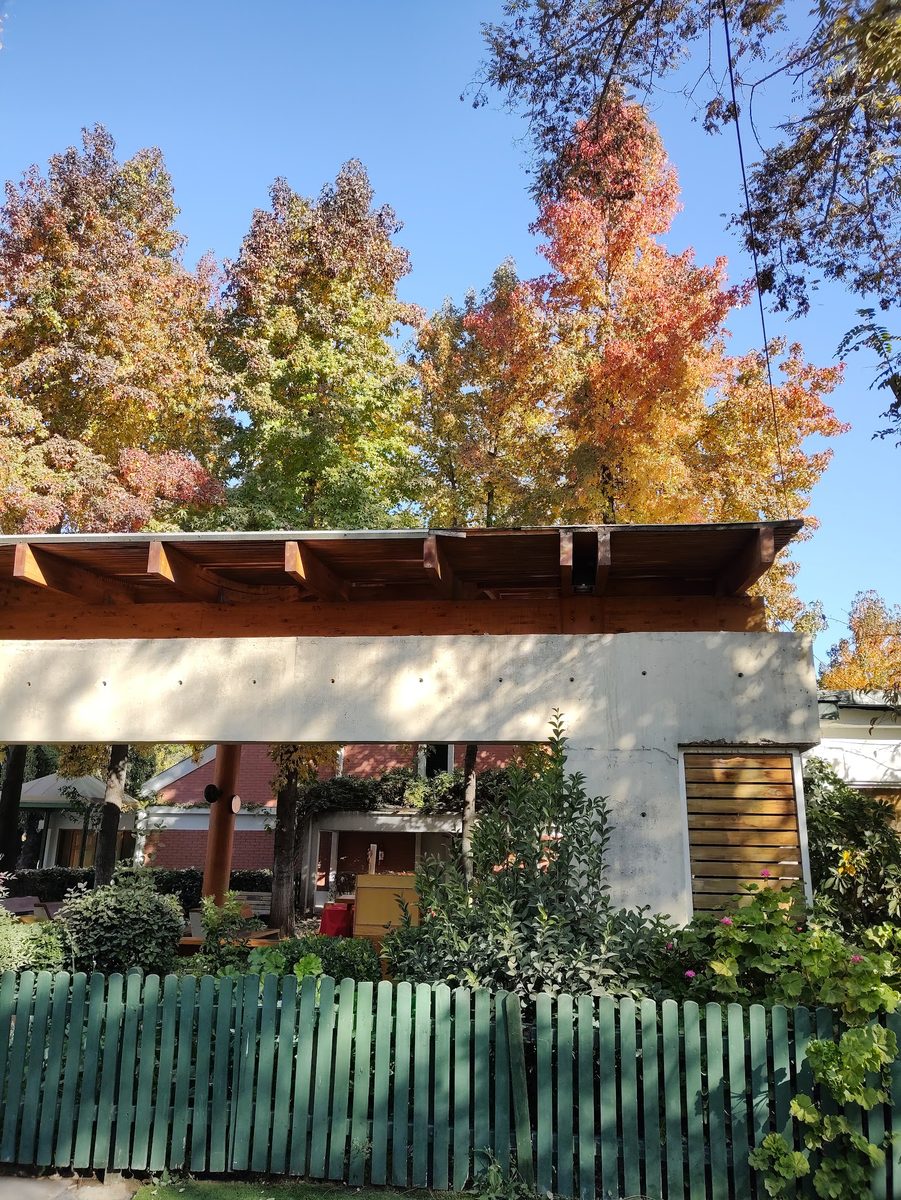
Photo © Sebastian Luna (magoorun) via Google Maps
Type
Day
Ages
5–18
Curriculum
IB
Qualifications
IB Diploma
Ratio
—
The Verdict
Editor's commitment
Right for
Families wanting a Catholic Holy Cross day school in Santiago with IB status, Spanish-English teaching, and education from ages 5 to 18.
Wrong for
Anyone expecting easy public scrutiny: the school site at sgc.cl currently points to an insurance business, which is a basic credibility failure.
Watch out for
At an average annual fee of €8,300, this 1936 Vitacura school is not the issue; weak public-facing information is.
Ranking breakdown
Saint George's College Santiago · #1185 of 1591
Composite score 58.7. 8 weighted criteria.
By criterion
Academic Outcomes
Weight 20%
#1157
of 1529 scored
University Placement
Weight 16%
#1164
of 1529 scored
Prestige & Heritage
Weight 12%
#1150
of 1571 scored
Alumni Network
Weight 12%
#761
of 1530 scored
Facilities
Weight 12%
#1164
of 1533 scored
Transparency & Communications
Weight 8%
#1197
of 1532 scored
Peer & Industry Review
Weight 10%
#1108
of 1548 scored
Admissions Selectivity & Demand
Weight 8%
#960
of 1529 scored
Peer & Industry Review
How Saint George's College Santiago is regarded in the sector
78
Strong · medium confidence
Saint George's College is consistently cited in Chilean media and education rankings (e.g., El Mercurio's 'Índice de Vulnerabilidad y Resultados PSU/PAES' school comparisons) as one of Santiago's most prestigious traditional Catholic private schools, alongside The Grange, Verbo Divino, and Tabor. Its alumni network includes prominent Chilean business, political, and cultural figures, and it is frequently referenced in local press as a benchmark elite institution for Santiago's upper-class families, though it lacks the international specialist press coverage (Tatler, Good Schools Guide) typical of top global schools.
Evidence sources
Editors' overview
What is striking here is not the school website, which at present is a mess and does not function as a credible admissions tool, but the institution behind the name. Saint George's College Santiago is a Catholic Holy Cross day school in Vitacura, founded in 1936, teaching ages 5–18 in Spanish and English, and it holds IB World School accreditation. That combination matters. It anchors the school in Chilean elite education while keeping one foot in an international framework. The result is a school with deep local standing rather than an imported international-school identity. Parents choosing it are not buying novelty; they are buying establishment, continuity and access to a powerful Santiago network. The average annual day fee across the full age range is €8,300, which places it in an expensive but not absurd bracket for a school with this social weight.
What is special about Saint George's is that it sits at the intersection of Catholic formation, bilingual education and old-guard influence. The editorial tagline puts it bluntly: this school has quietly seeded a third of Chile's top-200 corporate boardrooms. That is not a decorative claim. It defines the school's market position more clearly than any mission statement could. Families who want a school with reach into Chile's professional and business elite will put Saint George's on the shortlist at once. Families hunting for a glossy expatriate-facing campus with polished international marketing will not find that here. The public-facing digital presence is poor, and that matters, because it tells parents that the school trades on reputation and constituency more than on presentation.
The best fit is a student who can thrive in a school with a strong local identity, a Catholic frame and a bilingual academic life, rather than a child who needs a transient, globally mobile peer group. This suits families rooted in Santiago, or returning Chilean families, who want the IB in a Spanish-English environment without losing connection to Chilean society. It also suits ambitious students who value serious social capital as much as formal academics. It does not suit parents who need transparency, abundant published data or a frictionless admissions experience. Saint George's still earns shortlist status because few schools can match its blend of IB World School status, 5–18 continuity and entrenched national influence.
Academic Performance
Academic performance is the hardest part of Saint George’s to judge from public information, because the school does not publish aggregate IB outcomes, cohort averages, pass rates or university placement data. That is a serious weakness in a market where strong schools know that results matter and publish them. Parents therefore need to rely more on institutional reputation than on hard numbers. Given the school’s standing in Chile’s professional elite, the reasonable conclusion is not that standards are weak, but that the school is opaque where it should be clear. For analytically minded families, that is a real drawback.
Relative to peers, Saint George’s sits in an unusual bracket. It is not competing on the same terms as the polished expatriate schools that use glossy data drops and headline scores to sell academic credibility. Its proposition is status-rich and locally embedded, with the IB as part of the package rather than the whole story. At an average annual fee of €8,300, that leaves it looking better value than many prestige schools if the academic delivery is strong, but the lack of disclosed results stops short of proving that case. In blunt terms: this is a school with a formidable social outcome and an unpublished academic scorecard. Parents who want measurable exam evidence will press hard for it.
Facilities
Facilities are the great blank spot here. The school’s public-facing site is so badly compromised that it does not provide a usable picture of classrooms, labs, libraries, sports provision, performance spaces or specialist buildings. That absence matters. At this level, parents should not need to infer the physical plant of a school charging an average of €8,300 a year. Peer schools with comparable status and fees publish clear campus photography, mapped facilities and at least a basic account of what pupils use day to day. Saint George’s does not. The result is a striking lack of transparency around one of the most concrete parts of the parental decision.
That does not mean the campus is weak; it means the school has left outsiders without proof. Given its long-standing place in Chile’s upper tier, one would expect solid mainstream provision across academic, sporting and co-curricular life rather than the arms-race excess of newer prestige campuses. Parents should therefore approach this as a school whose facilities are credible but undocumented. Against peers, that puts Saint George’s on the back foot: not because the estate is inferior, but because the school makes an unnecessarily poor case for it. Any serious prospective family needs an in-person visit, and needs to inspect teaching spaces, science rooms, arts provision and outdoor sport before drawing conclusions.
The editorial tagline puts it bluntly: this school has quietly seeded a third of Chile's top-200 corporate boardrooms
Prestige
Saint George’s carries serious prestige in Chilean terms. Not the flashy, expatriate-facing kind built on glass atriums and polished admissions copy; the older, harder form that rests on who has passed through the school and where they now sit. A school that feeds roughly a third of the country’s top-200 boardrooms occupies a rare tier of influence. That matters because prestige here is not abstract. It converts into networks, introductions and long-tail social advantage inside Chile’s corporate and professional class. For families who value access to the national establishment, this is top-drawer territory.
The rating stays short of unqualified praise because the school’s prestige is inward-looking as well as powerful. It is strongest for families plugged into Chilean society, weaker for those seeking an internationally legible brand with clear public proof of academic output. The broken website and thin public disclosure do real damage to external credibility. Prestigious schools do not need glossy marketing; they do need competence and transparency. Saint George’s has the former in social standing and the latter in short supply. That leaves it with a profile that is formidable at home and less compelling abroad: a school whose name carries weight in Santiago’s upper reaches, but whose public case for itself remains surprisingly lax.
A school that feeds roughly a third of the country’s top-200 boardrooms occupies a rare tier of influence
Communications
Parent communication is the school’s weakest public function. The website attached to the school name is not a school website in any useful sense; it reads as an insurance-adjusting business page, with corporate claims jargon, broken structure, stray English filler, contact lists for claims staff and even a generic New York address. For a school charging an average of €8,300 a year, that is substandard, confusing and needlessly careless. It does not help a parent understand admissions, leadership, calendar, academic life or day-to-day expectations. It actively undermines trust. A strong school can afford understatement; it cannot afford a digital front door that points to the wrong institution.
That public failure does not mean internal parent communication is poor, but it does mean outsiders have no reason to assume it is strong. Schools with disciplined parent communication publish clear handbooks, key dates, staff directories, policies, news flow and direct routes for routine queries. None of that is visible here in any credible form. The implication is blunt: this is a school that relies on reputation and word-of-mouth more than transparent outward communication. Families already inside the orbit may tolerate that. New entrants, overseas parents and anyone who values clean, competent administration will find it frustrating. Before applying, parents need to test responsiveness directly by phone and email and judge turnaround, clarity and accountability for themselves.
Uniqueness
What sets Saint George’s apart is not an exported international-school formula but its grip on a national elite. This is a Holy Cross institution with old-network reach, and that changes the value of the education. Students are not just moving through classes; they are entering a social ecosystem with deep roots in Chilean professional life. That brings advantages that many schools cannot manufacture: peers from established families, durable alumni connections, and a route into the country’s business and civic circles that starts early and compounds over time. The average annual fee of €8,300 buys access to something more socially strategic than polished branding or lifestyle campus theatre.
That distinctiveness cuts both ways. For the right family, the school offers a rare blend of Catholic formation, bilingual fluency and establishment access without the inflated self-presentation common in prestige education. Students gain cultural confidence in Chile’s own upper-tier institutions rather than floating in an international bubble. For the wrong family, the same qualities can feel insular, coded and hard to penetrate. This is not a school whose uniqueness lies in innovation, radical pedagogy or gleaming public polish. Its uniqueness lies in continuity, constituency and influence. For students who can use that inheritance well, the payoff is long-horizon advantage rather than quick surface shine.
For families who value access to the national establishment, this is top-drawer territory
Student Profile
The best fit here is a child who can read social codes early, hold their own in a status-conscious peer group and make good use of a school culture shaped by Catholic tradition and old Santiago networks. This suits families with roots in Chilean professional life, or those who want entry into it, more than families seeking a loose, transient international crowd. The pupil who thrives is socially fluent, academically steady and comfortable with institutional formality. There is room here for ambition, but not the performative kind; the school’s appeal rests on quiet establishment rather than overt competitiveness or glossy self-display. At an average annual fee of €8,300, the intake is not mass-market, and the social mix will reflect that.
This is a weaker fit for children who need a visibly progressive culture, constant hand-holding or a school that explains itself in crisp public detail. Newcomers without local context may find parts of the environment hard to decode. So may parents who expect transparent systems and a frictionless welcome. Students who value belonging to Chile’s upper professional mainstream, and who can navigate a tradition-bound institution without needing it to flatter or advertise itself, will do well. Students who need a more open, explicitly international or pastorally demonstrative setting should look elsewhere.
This is not a school whose uniqueness lies in innovation, radical pedagogy or gleaming public polish
Co-curricular strengths
Arts & sport, on a separate axis
Overall 7.62/10
Scored 0-10 from the school's own published evidence. This axis is editorial-only — it does not feed the main WTS ranking.
Sports
8.5/10
Drama
7.5/10
Dance
6.5/10
Music
7.8/10
Visual Arts
7.8/10
Editor first-pass · editor-reviewable · 7/30/2026
Strengths
- +Founded in 1913 by priests of the Congregation of Holy Cross, making it one of Santiago's longest-established Catholic day schools.
- +Authorised to offer the IB Diploma Programme alongside the Chilean national curriculum, giving students a dual academic pathway.
- +Located in Vitacura, an established and well-connected residential district of Santiago with mature campus facilities.
- +Has a long-standing extracurricular tradition in rugby, a sport in which the school has a recognised competitive history within Chile.
- +Operates as part of a wider network of Holy Cross schools, giving it an institutional identity beyond a single campus.
Considerations
- −Single-sex (boys only), which rules it out for families wanting co-education throughout schooling.
- −Fee-paying private day school in an affluent area, putting it outside reach for many middle-income relocating families.
- −Catholic religious formation is embedded in the daily curriculum and ethos, which will not suit secular or non-Catholic households.
- −Its international profile and rankings visibility are modest compared to Santiago's more globally marketed bilingual schools.
Availability
Primary entry gate & tests
Academic Record
Gallery
Photo © Hernán Vega Berardi via Google Maps
Photo © Locy 23 via Google Maps
Photo © Santiago Muzzo via Google Maps
Photo © Edel Jesus via Google Maps
Photo © Edel Jesus via Google Maps
Parent reviews
Have you sent your child here?
Voice reviews carry the strongest trust badge — we transcribe them for you to tidy up before they go live. Prefer to type? A written review is fine too.
Add your voice
In 60 seconds, tell other parents: what's the best thing about Saint George's College Santiago, and what surprised you when your child joined?
We ask for a Google sign-in so every review has a real face behind it — no anonymous drive-by attacks on schools, and no faked positive reviews. Your email is never shown publicly.
Send this profile to a friend
International parents rely on word-of-mouth. Share this review with someone weighing the same decision.
Schools with places
Similar schools to Saint George's College Santiago with places available now.
Santiago College
Santiago · Chile
- 2026-27
- WAITPOOLSpace-dependent
- 2027-28
- PLACES OPENRolling
The Grange School
Santiago · Chile
- 2026-27
- CLOSEDStandard route closed
- 2027-28
- WAITPOOLEnquiries underway
Availability first, then country, area, curriculum, price, co-curricular
Consider also
Also worth looking at alongside Saint George's College Santiago.
Santiago College
Santiago · Chile
From an 1880 Methodist girls' boarding school to Chile's first IB pioneer, now coeducational in the Andean foothills.
Craighouse School
Santiago · Chile
A Scottish surname turned school name, blending British house tradition with a full IB continuum on a 24-hectare Andean campus.
Redland School
Santiago · Chile
On a 24-hectare foothill campus in Las Condes, IB rigor meets Chile's national curriculum and a mountain-bike circuit.
Colegio Villa María Academy
Santiago · Chile
Founded by American nuns in 1940 and lay-led since 2011, this Las Condes girls' school pairs Catholic tradition with the IB diploma.
Same country and curriculum — closest matches within ±10 points either way