
Shanghai
High School Affiliated to Fudan University
Bordering Fudan University in Yangpu, this boarding school shares its motto and sends over 40 percent of graduates straight into China's top campuses.
Type
Day
Ages
12–18
Curriculum
Chinese National
Qualifications
Gaokao · AP · IB
Ratio
—
The Verdict
Editor's commitment
Right for
Families in Shanghai who want a 1950-founded day school beside Fudan University, with over 40% progressing to China’s top campuses.
Wrong for
Parents seeking boarding, a non-Chinese National curriculum, or teaching outside English for ages 12–18 will need another school.
Watch out for
IB World School status broadens the picture, but the school does not publish public detail here on how IB sits with the Chinese National curriculum.
Ranking breakdown
High School Affiliated to Fudan University · #843 of 1591
Composite score 64.5. 8 weighted criteria.
By criterion
Academic Outcomes
Weight 20%
#792
of 1529 scored
University Placement
Weight 16%
#516
of 1529 scored
Prestige & Heritage
Weight 12%
#446
of 1571 scored
Alumni Network
Weight 12%
#966
of 1530 scored
Facilities
Weight 12%
#1193
of 1533 scored
Transparency & Communications
Weight 8%
#1151
of 1532 scored
Peer & Industry Review
Weight 10%
#1319
of 1548 scored
Admissions Selectivity & Demand
Weight 8%
#198
of 1529 scored
Peer & Industry Review
How High School Affiliated to Fudan University is regarded in the sector
62
Respected · medium confidence
Within China, High School Affiliated to Fudan University is consistently grouped with Shanghai High School, East China Normal University No.2 High School and Shanghai Foreign Language School as one of the city's four benchmark 'model high schools' (Shanghai Municipal Demonstration High School designation), a classification other principals and the Shanghai Education Commission use when discussing top-tier feeder schools. Its closeness to Fudan University gives it recognized standing in national gaokao recommendation and early-admission pathways, and Fudan, Jiao Tong, Tsinghua and Peking University admissions offices routinely draw disproportionate numbers of entrants from its graduating cohorts, a pattern noted in Chinese education press coverage (Sina Education, The Paper, Shanghai Education Commission bulletins) profiling its International Division's overseas placement into US, UK and Hong Kong universities. It appears regularly in domestic league-table style rankings of Shanghai secondary schools compiled by education commentators, though it has limited independent Western review-site coverage (no WhichSchoolAdvisor or Good Schools Guide entries found), reflecting its identity as a Chinese public affiliated school rather than an international school marketed to expatriate families. Reputation is therefore strongest through academic outcomes and university-admissions signaling rather than through Western independent-press critique.
Editors' overview
High School Affiliated to Fudan University occupies a prized patch of educational real estate: beside one of China’s heavyweight universities in Yangpu. That matters. Fudan University sits inside the country’s top public-university tier, with Project 211, Project 985 and Double First-Class status, and the school trades on that intellectual gravity. Founded in 1950, it has age, name recognition and a direct association that cuts through the noise of Shanghai’s crowded school market. The headline attraction is clear: more than 40% of graduates move straight into China’s top universities. For families who want a Chinese National curriculum school with serious domestic university traction, that is the point.
This is not an international-school-lite proposition. It is a day school for ages 12–18, non-religious, with English listed as the language of instruction, and it also holds IB World School accreditation. That combination gives it an unusual profile: rooted in the Chinese system, but with enough international signalling to attract families who want options and institutional credibility. The special quality here is not pastoral charm or glossy facilities. It is academic proximity to power, hard-edged university ambition and *a clear route into elite Chinese higher education*. Parents should still ask sharper questions than the school’s reputation answers on its own: how the IB accreditation operates in practice, how much teaching actually runs in English across the school, and how transparent the destination data is beyond that 40% top-university figure.
The students who thrive here are disciplined, exam-capable and comfortable in a competitive culture. This suits teenagers who want serious academic pressure, who value status with substance, and who are aiming at China’s strongest universities rather than a softer international experience. It will also appeal to families who like the idea of a school shaped by a major research university next door, not by lifestyle branding. Students who need broad curricular freedom, a relaxed classroom climate or intensive hand-holding should look elsewhere. This school belongs on a shortlist for one reason above all: it offers prestige with purpose in a market where many schools sell aspiration, but fewer can point to a concrete record of sending large numbers into the top of the Chinese system.
Academic Performance
The school’s strongest published performance signal is university placement, not granular exam disclosure. More than 40% of graduates progress to China’s top universities, which places the school in the serious domestic-achievement bracket rather than the broad middle of Shanghai’s market. That figure carries weight because the benchmark is unforgiving: entry into China’s top institutions depends on sustained academic strength, not soft destination inflation. For families judging academic performance in practical terms, that outcome matters more than polished rhetoric. The school’s affiliation with Fudan University adds institutional ballast, but the result still points to students clearing a hard-edged competitive bar.
The limitation is transparency. The school does not publish aggregate external examination data in the public domain: no cohort-wide score profile, no subject-level breakdowns, no IB results summary, and no year-by-year destination table beyond the headline claim. That leaves parents without the comparative detail that stronger operators now provide as standard. Relative to peers, then, the picture is split. On outcomes that matter inside the Chinese system, the school sits in a high-performing, exam-driven tier. On published evidence, it is opaque where it should be exact. Parents considering it for academic reasons should press for recent university destination lists, exam distributions and evidence on how top-end results are spread across the cohort, not just concentrated among a select elite.
Facilities
The decisive facility here is not a showpiece theatre or resort-style sports complex. It is adjacency to Fudan University itself. A school beside a top public research university has access to an academically charged environment that peer schools without that neighbour cannot replicate, even when they outspend it on glossy campus build. That matters more for older pupils than a lobby full of imported finishes. The drawback is plain: the school does not publish a proper facilities inventory. We have not seen clear public detail on science labs, specialist arts spaces, indoor sports provision, library scale or sixth-form study areas. Against Shanghai peers at the top end, that is a weak point. Strong schools now disclose the hardware plainly; this school relies on name, location and outcomes to do the work.
That leaves the facilities picture functional but under-evidenced. Parents should not assume university adjacency translates into routine access to university-grade resources; the school does not set out the terms of any such use. If there is shared access to lecture spaces, laboratories or sports amenities, it needs stating directly. Without that, the benchmark shifts unfavourably against better-documented competitors, especially international schools that publish floorplans, specialist spaces and campus photography in exhaustive detail. The school’s physical offer may be perfectly serviceable. Public disclosure is not. For a school with this level of standing, that gap feels surprisingly thin and needlessly opaque.
High School Affiliated to Fudan University occupies a prized patch of educational real estate: beside one of China’s heavyweight universities in Yangpu
Prestige
This school carries real domestic prestige because the name on the gate does heavy lifting in China. Affiliation to Fudan University is not decorative branding; it ties the school to one of the country’s top public universities, with Project 211, Project 985 and Double First-Class status. In a market crowded with schools that trade on imported labels, that kind of local academic association has hard currency. Families focused on the Chinese higher-education route will read the signal instantly: this is a school connected to an institution that sits near the top of the national hierarchy. The published destination claim strengthens that standing. Sending more than 40% of graduates into China’s top universities gives the prestige substance, not just shine.
The rating stops short of the very top because the school does not match its name recognition with first-rate public disclosure. Prestige built on affiliation and outcomes is still prestige, but opaque excellence has limits. Parents can infer that the school is selective, competitive and taken seriously by ambitious local families; they cannot inspect a full public set of exam distributions, destination tables or cohort-wide performance detail. That matters. The school’s status is earned and inherited at once: inherited from the Fudan connection, earned through strong university progression. For families who prize standing inside the Chinese system, that combination is formidable. For families who want prestige validated by meticulous transparency, it falls short of the cleanest benchmark.
The headline attraction is clear: more than 40% of graduates move straight into China’s top universities
Communications
Parent communication is not a public strength here. The school’s external communication gives families the big signal — prestige, university adjacency, elite destinations — but not the operational detail that parents need once interest turns serious. We have not seen a clear public parent-communications architecture: no obvious calendar of reporting points, no detailed explanation of how academic progress is shared, no published guide to parent meetings, and no clear account of who handles routine pastoral or academic queries. For a school with this level of standing, that is a thin public-facing standard. It creates a reputation-first, detail-second impression. Families can grasp the school’s ambition quickly; they get far less help understanding the day-to-day flow of information.
That matters because schools built around hard academic pressure need disciplined, reliable communication with home. Parents need to know how concerns are escalated, how performance dips are flagged, and how exam-year expectations are managed. Here, the public picture is too opaque. That does not prove weak communication in practice; it does mean the school does not demonstrate communication quality before enrolment in the way stronger operators do. The result is a system that asks parents to trust the brand and ask the right questions later. In interviews, families should press for response times, reporting frequency, sample parent reports, and the structure of tutor or homeroom contact. The school may communicate well internally. It does not prove that clearly in public.
Uniqueness
What marks this school out is not an imported brand story or a boutique educational concept. It sits in the orbit of a major Chinese research university and converts that proximity into a clear social and academic signal. That gives students something concrete: daily exposure to a high-pressure intellectual culture in which top universities are not an abstract aspiration but the expected destination. The school’s identity is bound up with that neighbour’s status, and the effect is powerful. For ambitious pupils, the message is unmistakably serious: this is a place built around ascent inside China’s academic hierarchy, not around lifestyle extras or a softened version of competition. The published progression figure — more than 40% into top Chinese universities — underlines that this culture produces results with real weight.
The distinctive gain for students is direction. Teenagers who thrive on external standards, reputational pressure and clear pecking orders get a framework that sharpens effort and ambition. They study in a setting where prestige is local, legible and tied to one of the country’s strongest university names, which matters far more in China than generic international-school gloss. The trade-off is plain. This is not a broad church. Students looking for experimentation, unusual subject combinations or a gentler atmosphere will find the model constraining. Students who want status with consequences — and who can carry the strain that comes with it — get a school with a rare kind of institutional gravity.
Sending more than 40% of graduates into China’s top universities gives the prestige substance, not just shine
Student Profile
The students who fit here are driven, status-conscious and comfortable with institutions that sort people by performance. This school suits teenagers who do not need coaxing to work, who can absorb pressure without drama, and who treat competition as normal rather than corrosive. A strong student here will have intellectual stamina, respect for hierarchy and a high tolerance for external standards. That matters more than flamboyance, sociability or breadth of extracurricular appetite. The school’s public academic signal — with 40%-plus of leavers moving into top Chinese universities — points to a cohort shaped by ambition and selection, not by inclusivity as a first principle. Families looking for a soft landing or a school that prizes self-expression above measurable attainment will find the culture a poor fit.
This is also a place for pupils who value institutional prestige and understand the currency of a famous academic name in China. Students who thrive here are focused, resilient and prepared to align themselves with a narrow definition of success. They do not need a highly individualised route through school; they need a system that rewards consistency, discipline and rank-order achievement. That brings a clear trade-off. Creative but uneven learners, late developers, and children who need close pastoral scaffolding sit at a disadvantage. So do students who want broad subject experimentation or a looser social climate. This school suits the thick-skinned, the exam-capable and the purposefully ambitious; it does not suit the easily discouraged.
The rating stops short of the very top because the school does not match its name recognition with first-rate public disclosure
Co-curricular strengths
Arts & sport, on a separate axis
Overall 7.04/10
Scored 0-10 from the school's own published evidence. This axis is editorial-only — it does not feed the main WTS ranking.
Sports
8.2/10
Drama
6.5/10
Dance
5.5/10
Music
7.5/10
Visual Arts
7.5/10
Strengths
- +Ranked among Shanghai's 'big four' key high schools alongside Shanghai High School, East China Normal University No. 2 High School and Shanghai Jiao Tong University Affiliated High School, a status reflecting decades of consistent academic reputation.
- +Operates under dual leadership of the Shanghai Education Commission and Fudan University, giving the school direct curricular and admissions links to a C9 League research university.
- +Campus sits only a short walk from Fudan University's main campus, allowing students informal access to the university's academic atmosphere and resources.
- +Runs an IB Diploma track for local students since 2014 in addition to the Chinese national curriculum, plus a separate WASC-accredited international division (Fudan International School) for foreign-passport students.
- +Faculty includes several teachers holding Shanghai's 'Special-Grade Teacher' title, a recognised municipal distinction for senior educators.
Considerations
- −Entry to the mainstream Chinese-curriculum track is extremely selective, drawing from a pool of top-scoring Shanghai junior-high graduates for roughly 360 places a year.
- −The school is historically a boarding institution under dual municipal/university governance, so families expecting a purely day-school routine should confirm current boarding arrangements.
- −Non-Chinese nationals cannot generally enrol in the mainstream Chinese-curriculum programme and must instead apply to the separately administered international division, which follows a different curriculum and fee structure.
- −Public information on fees, uniform requirements and detailed special-needs provisions for the international division is limited, requiring direct enquiry with admissions for specifics.
Availability
Primary entry gate & tests
Shanghai Zhongkao Exam
Parent reviews
Have you sent your child here?
Voice reviews carry the strongest trust badge — we transcribe them for you to tidy up before they go live. Prefer to type? A written review is fine too.
Add your voice
In 60 seconds, tell other parents: what's the best thing about High School Affiliated to Fudan University, and what surprised you when your child joined?
We ask for a Google sign-in so every review has a real face behind it — no anonymous drive-by attacks on schools, and no faked positive reviews. Your email is never shown publicly.
Send this profile to a friend
International parents rely on word-of-mouth. Share this review with someone weighing the same decision.
Schools with places
Similar schools to High School Affiliated to Fudan University with places available now.
Wellington College International Shanghai
Shanghai · China
- 2026-27
- WAITPOOLSpace-dependent
- 2027-28
- PLACES OPENRolling
Shanghai American School
Shanghai · China
- 2026-27
- WAITPOOLSpace-dependent
- 2027-28
- PLACES OPENRolling
Shanghai High School International Division
Shanghai · China
- 2026-27
- CLOSEDStandard route
- 2027-28
- OPENS SOONOpens Late '26 (Spring '27)
Availability first, then country, area, curriculum, price, co-curricular
Consider also
Also worth looking at alongside High School Affiliated to Fudan University.
Yew Chung International School of Shanghai
Shanghai · China
Since 1993, paired Chinese and English co-teachers lead every classroom, carrying bilingual immersion from nursery through the IB diploma.
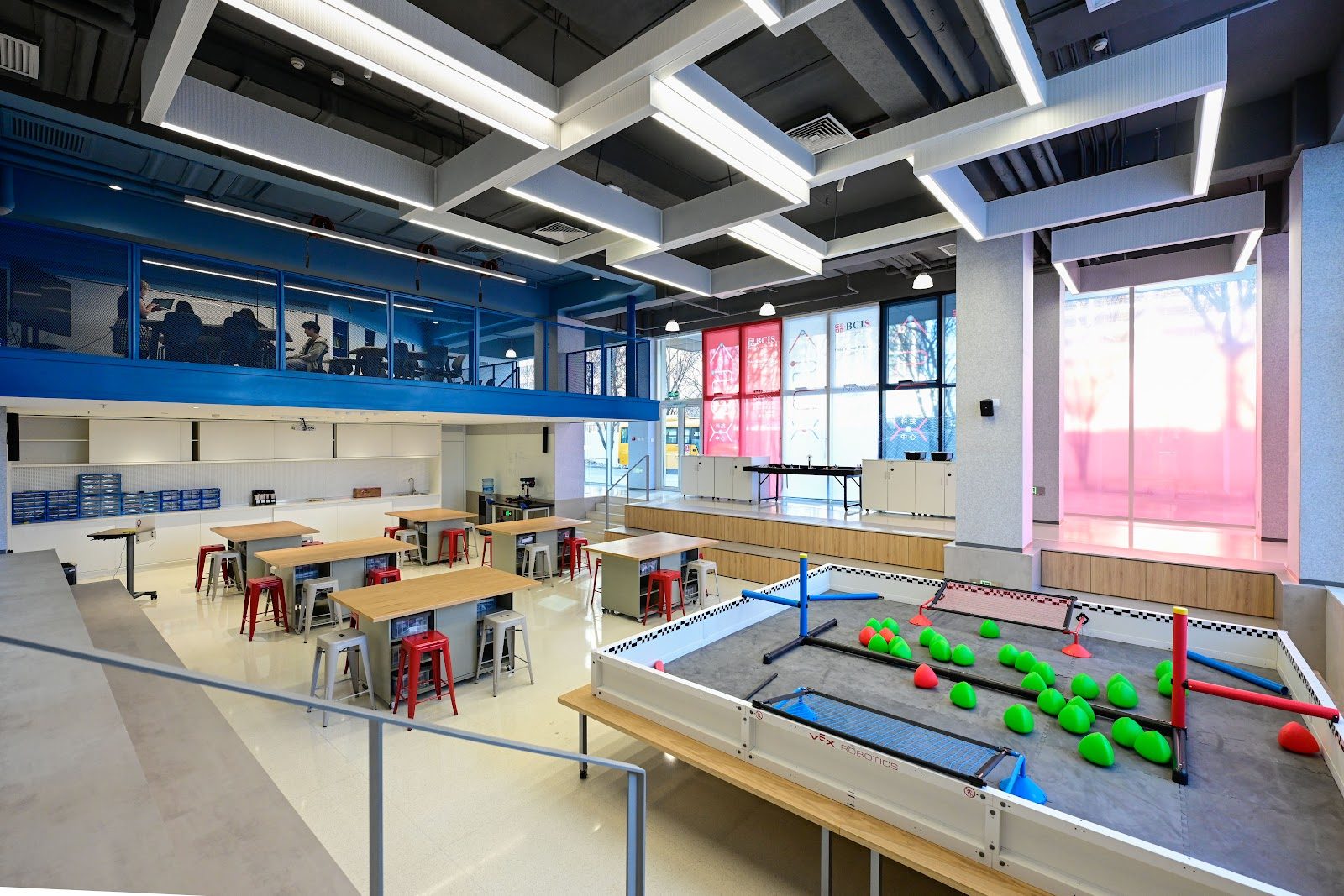
Beijing City International School
Beijing · China
In Beijing's Central Business District, a full IB continuum pairs with IDEATE, an in-house project-based track alongside the diploma years.
The British School of Beijing, Shunyi
Beijing · China
Behind air-filtered domes sits Beijing's longest-running British campus, pairing an MIT-built STEAM centre with a Juilliard performing arts partnership.
Harrow International School Beijing
Beijing · China
Six centuries-old Harrow houses transplanted to Chaoyang, anchored by China's largest LAMDA drama centre and a British A-Level core.
Same country and curriculum — closest matches within ±10 points either way