
Nakhon Pathom Province
Mahidol Wittayanusorn School
On Mahidol University's Salaya campus, Thailand's first specialized science school pairs a full state scholarship with a mandatory research project for every student.
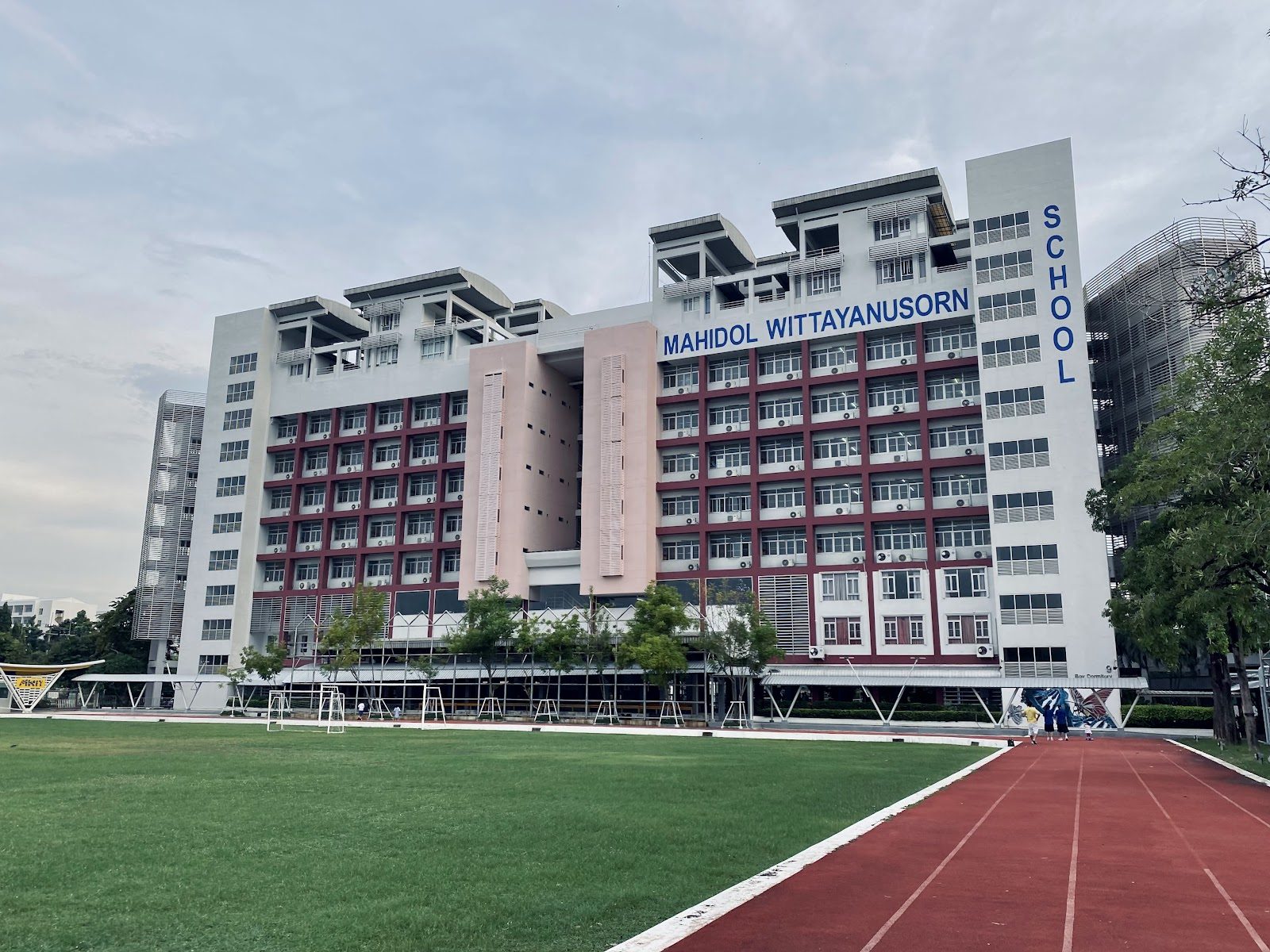
Photo © Jiratt Stephen Lumpaopong via Google Maps
Type
Day
Ages
15–18
Curriculum
Thai National STEM
Qualifications
Thai Matthayom 6
Ratio
—
The Verdict
Editor's commitment
Right for
Scientifically gifted 15–18-year-olds who want Thailand’s first science school, a Mahidol University campus base, and average classes of 24.
Wrong for
Families seeking breadth over STEM intensity, younger entry than 15, or boarding; this is a day school in Nakhon Pathom.
Watch out for
Founded in 1990, it teaches Thai National STEM in English and Thai, with every advantage tied to a narrow academic brief.
Ranking breakdown
Mahidol Wittayanusorn School · #203 of 1591
Composite score 74.3. 8 weighted criteria.
By criterion
Academic Outcomes
Weight 20%
#148
of 1529 scored
University Placement
Weight 16%
#136
of 1529 scored
Prestige & Heritage
Weight 12%
#53
of 1571 scored
Alumni Network
Weight 12%
#785
of 1530 scored
Facilities
Weight 12%
#339
of 1533 scored
Transparency & Communications
Weight 8%
#1019
of 1532 scored
Peer & Industry Review
Weight 10%
#424
of 1548 scored
Admissions Selectivity & Demand
Weight 8%
#11
of 1529 scored
Peer & Industry Review
How Mahidol Wittayanusorn School is regarded in the sector
72
Respected · medium confidence
Mahidol Wittayanusorn School (MWIT) is widely regarded within Thailand as the country's premier public science school, consistently outperforming both elite private international schools and top public schools in Olympiad medal counts (IChO, IMO, IPhO, IBO) tracked by IPST and reported in Thai national press such as Bangkok Post and Matichon. Thai university admissions officers, particularly at Chulalongkorn, Mahidol, and Kasetsart engineering and medical faculties, informally treat MWIT graduates as a benchmark cohort given disproportionate representation in top-tier entrance exam (dek-D, PAT/GAT) rankings. It is a founding-era member of Thailand's science school network and frequently hosts or presents at national STEM education conferences organized by IPST and the Ministry of Education. Because it is a specialized state boarding school rather than an international curriculum institution, it rarely appears in Western-oriented outlets like Good Schools Guide or WhichSchoolAdvisor, which focus on IB/British-curriculum schools; its reputation circulates mainly through Thai STEM education circles, alumni networks in overseas PhD programs, and domestic league tables rather than international independent-school press.
Award
Elite Science & Research 58
World's Top School · The Global Ranking
Mahidol Wittayanusorn School is featured on our Global Top 58 ranking at #6. This seal is available for the school's marketing team to use on their website, prospectus and social channels.
Editors' overview
Mahidol Wittayanusorn School occupies a rare position in Thailand’s school market: a state science school with national reach, a campus inside Mahidol University, and a full public scholarship for every student. Founded in 1990 and teaching upper secondary only, it was created for pupils with unusual strength in mathematics and science, not for families shopping for a broad all-round independent-school experience. Its importance rests on structure, not branding. Thailand built it as the country’s first specialised science school and gave it unusual autonomy as a public organisation. That combination matters. It gives the school a sharper academic identity than standard state schools and a stronger institutional link to university-level laboratories, libraries and sports facilities. For the right student, that is a serious academic proposition.
What marks MWIT out is the intensity of purpose. This is a day school in the verified listing, serving ages 15–18, with teaching in English and Thai and an average class size of 24. Every part of the model points towards advanced STEM study: selective intake, a peer group made up of high-attaining science students, and a curriculum built around research and scientific development rather than general prestige. The school’s own founding rationale is blunt: cultivate students with high potential in science, mathematics and technology, and use the school as a national prototype. Parents who want glossy breadth, elite social signalling or a heavy co-curricular sales pitch will find a narrower offer here. Parents who want intellectual pressure, a meritocratic atmosphere and real scientific seriousness will find exactly that.
The school belongs on a shortlist because very few schools can match its combination of public funding, specialist mission and university adjacency. The Wikipedia extract states that students receive a full scholarship for 3 years, including accommodation, with government funding of up to 100,000 baht per student. That changes the calculation for families: MWIT offers access to a high-end science education without the fee burden attached to many international and private alternatives. It also offers something harder to buy elsewhere — a cohort in which academic ambition is normal, not exceptional. The trade-off is clear. This is not the school for a student still undecided about academic direction, or one who wants the widest possible subject mix across arts, humanities and sciences. It is for the teenager who already knows that lab work, mathematical problem-solving and extended research are not chores but the main event.
The student who will want MWIT is bright, resilient and happy in a competitive academic environment. They need stamina for sustained science and maths study, comfort with abstraction, and enough independence to thrive in a school designed around high expectations rather than pastoral theatre. Curiosity matters more here than polish. So does discipline. The best fit is a student who wants to test ideas, work with equally driven peers and treat school as preparation for serious study in STEM fields. For that child, MWIT offers a clear runway, a demanding peer group and a powerful head start.
An Elite Science & Research 58 school
Mahidol Wittayanusorn School, situated on the Salaya campus of Mahidol University in Nakhon Pathom, Thailand, sits at rank six on the Elite Science & Research 58. It is the first specialised science school in the country, designed to provide education for the development of gifted and talented students in science and mathematics, and the concentration of talent it produces is stark: in 2009 alone, seven of Thailand's twenty-three national Olympiad contestants came from this single school.
The specialism here is not a relabelled AP or IB track but a genuine gifted-science pipeline built around mandatory original work. MWIT became an academic training centre in mathematics, physics, computer science, chemistry and biology for the Promotion of Academic Olympiad and Development of Science Education Foundation (POSN), and every student, without exception, is required to complete at least one formal science project before graduation. That research load sits inside a purpose-built 2002 curriculum layering advanced science, mathematics, technology and English onto the national syllabus, and it is delivered on Mahidol University's own campus, giving pupils direct proximity to university academic support that was written into the school's founding agreement. MWIT also co-founded and has hosted the International Student Science Fair, drawing 49 schools from 19 countries to its own campus for project presentations and cross-border collaboration.
The clearest evidence of output is the school's Olympiad record. Pun Saejang won silver at the 2025 International Chemistry Olympiad, while Peerasak Sae-eung took gold and Sorawit Wattanapenpaiboon took silver at the same International Physics Olympiad sitting, both representing Nakhon Pathom's Mahidol Wittayanusorn School. This is a school that turns out multiple international medallists most years rather than producing isolated stars.
International openness is limited and families should approach it with clear eyes. Entry runs through a fiercely competitive national entrance exam, with applicant numbers rising from 8,501 in 2001 to 17,539 by 2006, and every admitted student receives a full three-year government scholarship covering tuition and dormitory accommodation, funded at up to 100,000 baht per pupil. Instruction is in Thai, and no dedicated overseas-applicant admissions track or international boarding programme is publicised for the secondary school itself. The realistic point of engagement for non-Thai families is Mahidol University's own international programmes, which state that admission procedures for non-Thai citizens mirror those for Thai applicants. Parents seeking a direct enrolment route for an overseas teenager should not treat MWIT as a conventional international school; instead, engage through Mahidol University's international science programmes or the school's periodic International Student Science Fair as the honest starting point.
Academic Performance
MWIT sits at the top end of Thailand’s school system for science-maths specialists, but parents need to recognise a basic limitation: the school does not publish a clean, digestible set of aggregate external examination results in the way many fee-charging schools market A-level, IB or AP outcomes. That makes straightforward cross-school comparison harder than it should be. The more useful indicator is structural. Entry is highly selective, the cohort is academically concentrated, and the school was built for students heading into advanced STEM study. In that context, weak outcomes would be a serious surprise. The school’s standing rests less on polished score publicity than on its role as a national talent pipeline for mathematically and scientifically strong pupils and on the intensity of its academic design.
Relative to peers, MWIT belongs with Thailand’s most academically exacting upper-secondary options in science. It is not a broad academic all-rounder and it does not compete on that basis. It competes with specialist science schools and top selective programmes, where the real measure is depth, not brochure-ready averages. The strongest hard data in the public domain here is financial rather than exam-related: direct state support of up to 100,000 baht per student and a full scholarship covering 3 years. That level of public investment signals elite national status. For parents, the conclusion is clear: this is a school with a serious academic reputation and opaque public results reporting. If you need published league-table style exam data, ask the school directly.
Facilities
The decisive facility advantage here is not ornamental campus design but access. MWIT sits inside Mahidol University and the school’s own account states that the university supports academic work and opens its laboratories, library and sports grounds for school activities. That puts pupils closer to real working science than most secondary schools manage. For a specialist STEM school, that matters more than a glossy theatre or a resort-style pool. The same source also makes clear that the school was built to develop advanced scientific learning and research habits, so parents should read the facilities through that lens: labs and academic infrastructure first, general prestige amenities second. Against peer schools in Thailand, that is a serious structural advantage. Many strong schools have decent science rooms; far fewer can draw on a university estate and its research-adjacent environment.
There is a caveat. The school does not publish the kind of polished, room-by-room facilities inventory that premium private schools use to sell themselves. Families will need to ask direct questions about specialist equipment, lab access protocols, computing provision and where sixth-form research work is actually carried out. Still, the broad picture is clear. If your benchmark is an elite international school selling breadth across arts, sport and lifestyle, MWIT gives a narrower, more utilitarian offer. If your benchmark is a top science school, the university-linked labs, library access and sports infrastructure put it in a formidable bracket.
It also offers something harder to buy elsewhere — a cohort in which academic ambition is normal, not exceptional
Prestige
MWIT carries real national prestige, but it is a specialised kind of prestige. This is not the status that comes from old-boy networks, polished social cachet or expensive branding. It comes from state design, academic selectivity and a clear public purpose. Thailand created the school as the country’s first specialist science school and gave it a role beyond teaching its own pupils: research, development and model-building for science education. That matters. Schools trusted to function as prototypes sit in a different category from ordinary strong schools. The scholarship structure sharpens that standing further. A place funded at up to 100,000 baht per student, with a full award covering 3 years, signals that the state treats these pupils as a national asset.
That prestige is strongest in scientific and mathematical circles. Among families, universities and educators who value serious intellectual training, MWIT has elite credibility. Its location within Mahidol University’s campus reinforces that by tying school life to university facilities and to a more adult academic culture than most secondary schools can offer. The limitation is clear: this prestige is *narrower than all-purpose elite-school prestige*. A student aiming for broad humanities distinction, social polish or a conventional high-fee international-school profile will not find the same cachet here. A student aiming at high-level STEM study will. That is why the school ranks as *high-prestige, mission-specific and academically formidable*.
It competes with specialist science schools and top selective programmes, where the real measure is depth, not brochure-ready averages
Communications
MWIT communicates like a public academic institution, not a luxury school. That distinction matters. The website carries the machinery of a state body: governance pages, an information centre, internal contact channels, complaint routes, document verification, privacy policy, webmail, VPN access and named departmental pathways. The contact details are direct and concrete, including 2 phone lines and a physical campus address. There is also a YouTube channel. For parents, that points to a system built for administration and accountability rather than persuasion. It is functional, bureaucratic and serious-minded. Families who want glossy storytelling, polished admissions hand-holding or a high-fee style of concierge communication will not get it here.
Effectiveness depends on what you value. For operational communication, the school looks well structured: clear institutional channels, formal routes for enquiries and complaints, and a digital infrastructure that fits a school with public responsibilities. For parent-facing warmth and clarity, the picture is weaker. The site does not foreground a crisp explanation of day-to-day parent experience, and it does not package key information with the ease seen at top private schools. That matters less for families already committed to the school’s mission and more for those trying to understand culture, routines and support before applying. The overall verdict: competent rather than charming, transparent in process but thin on interpretive guidance. If you are assessing communication quality, ask how quickly staff reply, how academic updates are delivered, and how parents are briefed when problems arise.
Uniqueness
What makes MWIT distinct is the way Thailand built it to do more than educate one cohort of bright teenagers. The school has a dual job: teach highly able science pupils and act as a working prototype for how the country handles advanced science education. That gives it a sharper institutional purpose than most selective schools. It is not chasing rounded-school mythology or selling a luxury adolescent experience. It is training a concentrated group for serious scientific work and testing methods that can extend beyond its own gates. The autonomous public-organisation status matters here too. It gives MWIT unusual room to shape its academic life with *more freedom than a standard state school*, and that changes the texture of the place. Students get a school built around intellectual concentration, not one where STEM excellence sits beside a dozen competing priorities.
The benefit to students is concrete. Every pupil studies inside a system that treats scientific aptitude as the main criterion, not an optional extra, and every pupil is backed by a full scholarship package worth up to 100,000 baht per year over 3 years. That strips away the fee logic that governs so many elite schools and replaces it with a hard meritocratic bargain: perform, contribute, and use the opportunity well. The school’s mission also centres on research, invention and knowledge creation, which gives students an early encounter with genuine academic seriousness. For a mathematically gifted teenager, that is rare. For a student who wants broadness, social theatre or a softer pace, it is not for the faint-hearted.
If your benchmark is a top science school, the university-linked labs, library access and sports infrastructure put it in a formidable bracket
Student Profile
The right student for MWIT is academically aggressive, mathematically fluent and genuinely energised by hard science. This is a school for teenagers who do not need to be coaxed into difficult work. They need to enjoy problem-solving for its own sake, tolerate failure in experiments, and recover fast when a first answer collapses under scrutiny. A child who wants constant affirmation, broad subject dabbling or a socially glamorous school identity will struggle. A child who wants to spend time in labs, argue through methods, and work among equally able peers will fit. With average classes of 24, there is room for individual attention, but the bigger force is the peer culture: bright is normal here, serious study is the baseline, and intellectual stamina matters more than charm.
Temperament counts as much as raw ability. The best-fit pupil is self-directed, organised and calm under pressure, with enough maturity to use a scholarship-funded opportunity well over 3 years. They also need intellectual honesty. In a school built around science and mathematics, bluffing does not last long; curiosity, persistence and precision do. Socially, this suits students who are comfortable being defined by academic purpose rather than by a wide menu of identities. It is meritocratic, narrow by design and not for the faint-hearted. For the right student, that concentration is liberating. For the wrong one, it is claustrophobic.
The right student for MWIT is academically aggressive, mathematically fluent and genuinely energised by hard science
Co-curricular strengths
Arts & sport, on a separate axis
Overall 6.2/10
Scored 0-10 from the school's own published evidence. This axis is editorial-only — it does not feed the main WTS ranking.
Sports
7/10
Drama
5.5/10
Dance
5.5/10
Music
6.5/10
Visual Arts
6.5/10
WTS 300 badge
Mahidol Wittayanusorn School is one of the World's Top 300 Schools. Claim your listing to add it to your site →
Strengths
- +As Thailand's first specialised science school, MWIT is fully government-funded, so all admitted students receive a full scholarship covering tuition and accommodation for three years.
- +Class sizes are deliberately small, with new intake capped at roughly 240 students a year and individual classes limited to 24 pupils to support close teacher-student interaction.
- +MWIT students have a long, documented record of representing Thailand at International Mathematics and Science Olympiads, including multiple gold and silver medals in events such as the IMO and IPhO.
- +The school hosted the International Student Science Fair in 2011 and continues to run its own annual science fair, drawing participant schools from dozens of countries.
- +MWIT's admissions model and curriculum were adopted as the template for Thailand's 12 Princess Chulabhorn's Colleges, the regional network of government science high schools.
Considerations
- −Entry is via a nationally competitive entrance examination for a small annual intake, drawing thousands of applicants for a few hundred places, making admission highly uncertain even for strong students.
- −MWIT operates as a boarding school for Mathayom 4-6 (grades 10-12, ages 15-18) students living on the Salaya campus, which is a different daily-life structure to a conventional day school.
- −Instruction follows the Thai national curriculum with a heavy STEM specialisation, so the academic breadth in humanities and arts is narrower than at a full international-curriculum school.
- −Public information on English-medium teaching or a distinct international-student admissions track is limited, suggesting the school is oriented primarily toward Thai-speaking applicants.
Availability
Primary entry gate & tests
National MWIT Entrance Exam
Gallery
Photo © Anucha Teerasakulchol via Google Maps
Photo © 케미은영 via Google Maps
Photo © 케미은영 via Google Maps
Photo © บี บ้านบึงฯ via Google Maps
Photo © บี บ้านบึงฯ via Google Maps
Photo © wallop hamethanon via Google Maps
Photo © wallop hamethanon via Google Maps
Parent reviews
Have you sent your child here?
Voice reviews carry the strongest trust badge — we transcribe them for you to tidy up before they go live. Prefer to type? A written review is fine too.
Add your voice
In 60 seconds, tell other parents: what's the best thing about Mahidol Wittayanusorn School, and what surprised you when your child joined?
We ask for a Google sign-in so every review has a real face behind it — no anonymous drive-by attacks on schools, and no faked positive reviews. Your email is never shown publicly.
Send this profile to a friend
International parents rely on word-of-mouth. Share this review with someone weighing the same decision.
Schools with places
Similar schools to Mahidol Wittayanusorn School with places available now.
International School Bangkok
Bangkok · Thailand
- 2026-27
- WAITPOOLSpace-dependent
- 2027-28
- OPENS SOONOpens Sept '26
Shrewsbury International School Bangkok
Bangkok · Thailand
- 2026-27
- WAITPOOLSpace-dependent
- 2027-28
- PLACES OPENRolling
Bangkok Patana School
Bangkok · Thailand
- 2026-27
- CLOSEDThai closed / Non-Thai open
- 2027-28
- OPENS SOONThai 1 Sept / Non-Thai rolling
NIST International School
Bangkok · Thailand
- 2026-27
- WAITPOOLSpace-dependent
- 2027-28
- PLACES OPENRolling
Availability first, then country, area, curriculum, price, co-curricular
Consider also
Also worth looking at alongside Mahidol Wittayanusorn School.
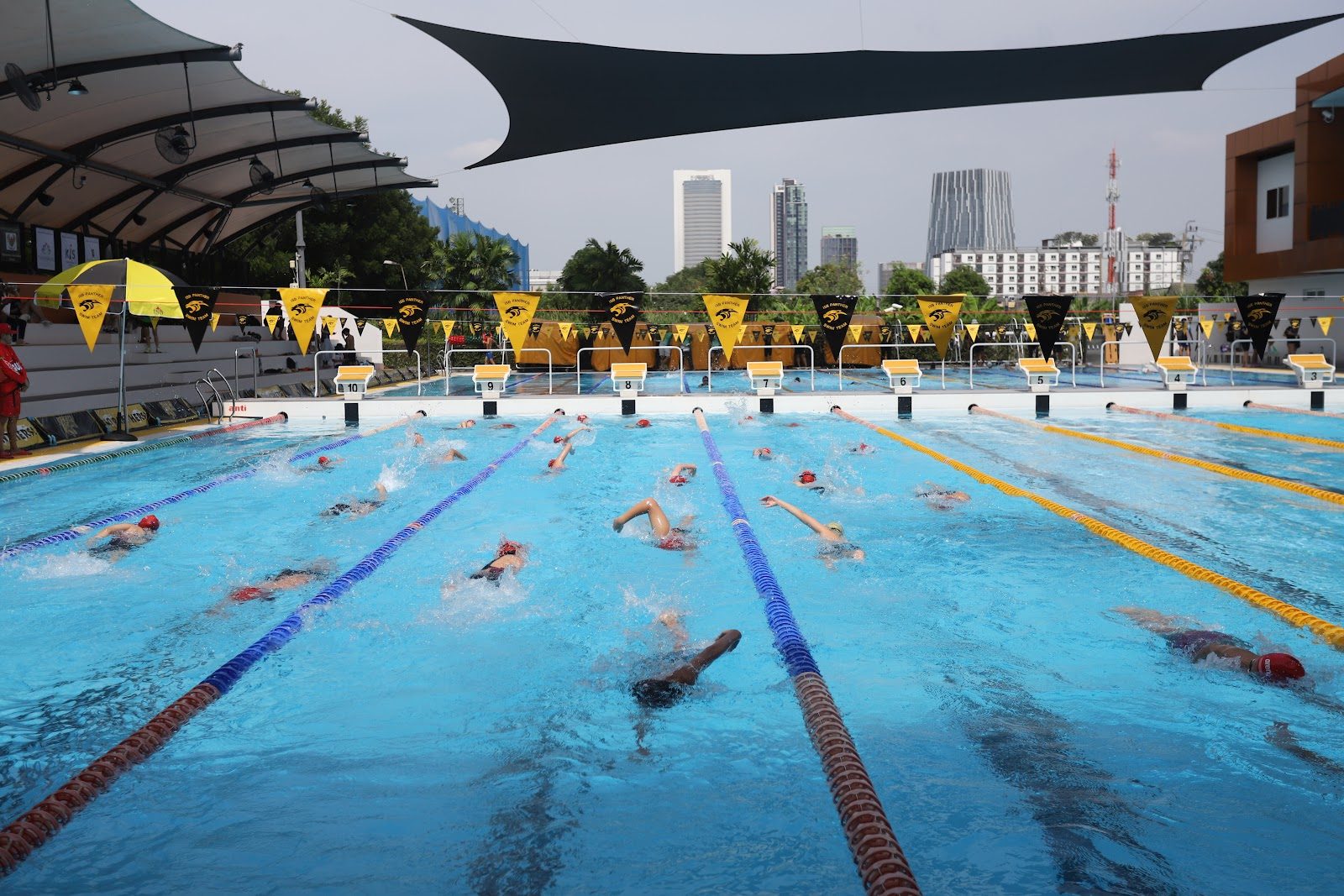
International School Bangkok
Bangkok · Thailand
Opened in 1951 as Thailand's first international school, it pioneered the country's IB Diploma and runs a wilderness campus in Phetchaburi.
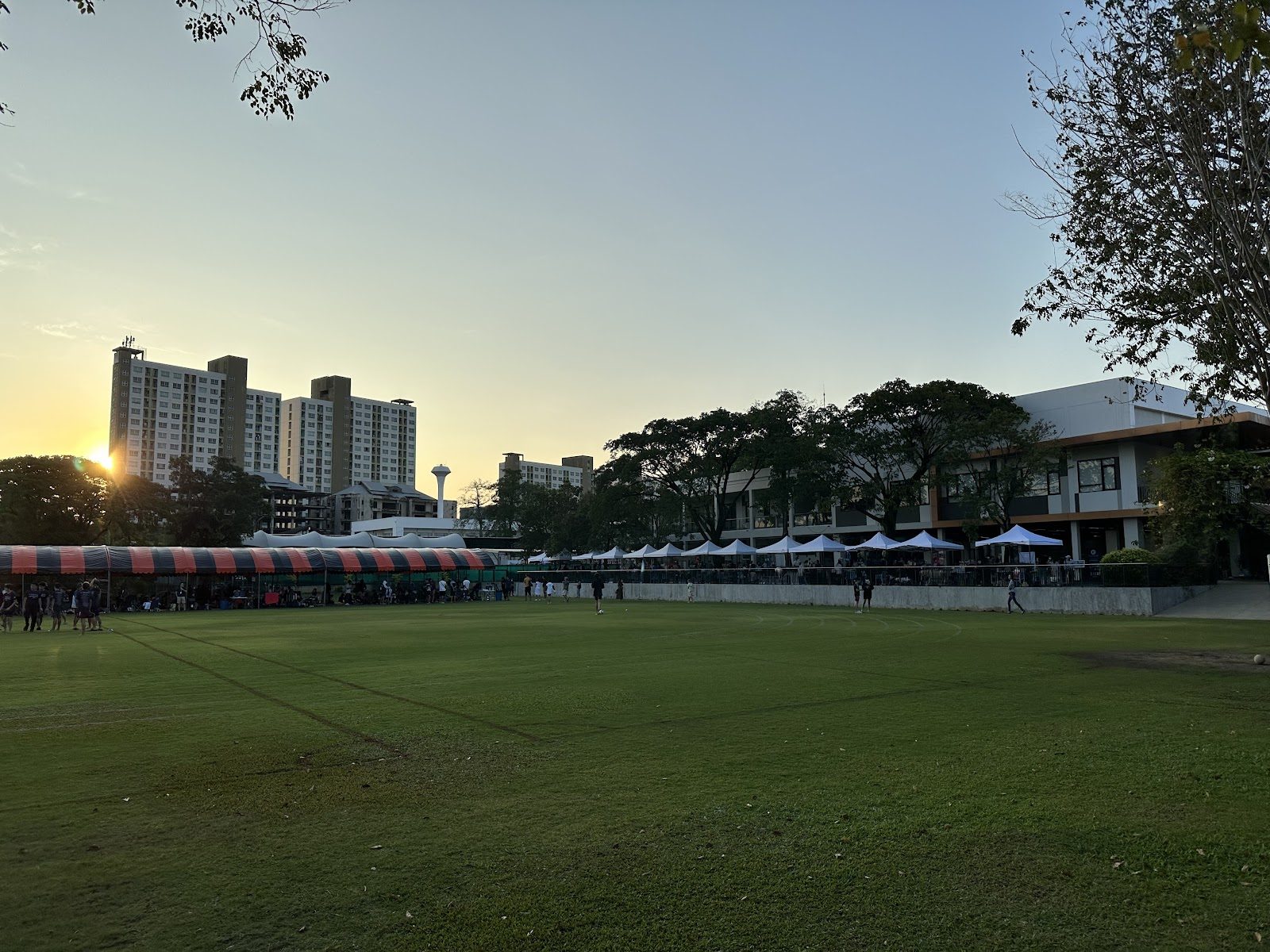
Shrewsbury International School Bangkok
Bangkok · Thailand
A 1552 English public-school pedigree anchors a Chao Phraya riverside campus reachable by its own school boat.
Bangkok Patana School
Bangkok · Thailand
Thailand's first British school, running since 1957, blends English curriculum grounding with IB breadth across a 17-hectare Bang Na campus.

NIST International School
Bangkok · Thailand
Founded in 1992 with United Nations backing, Thailand's first not-for-profit IB World School sits amid downtown Sukhumvit.
Same country and curriculum — closest matches within ±10 points either way