
Virginia
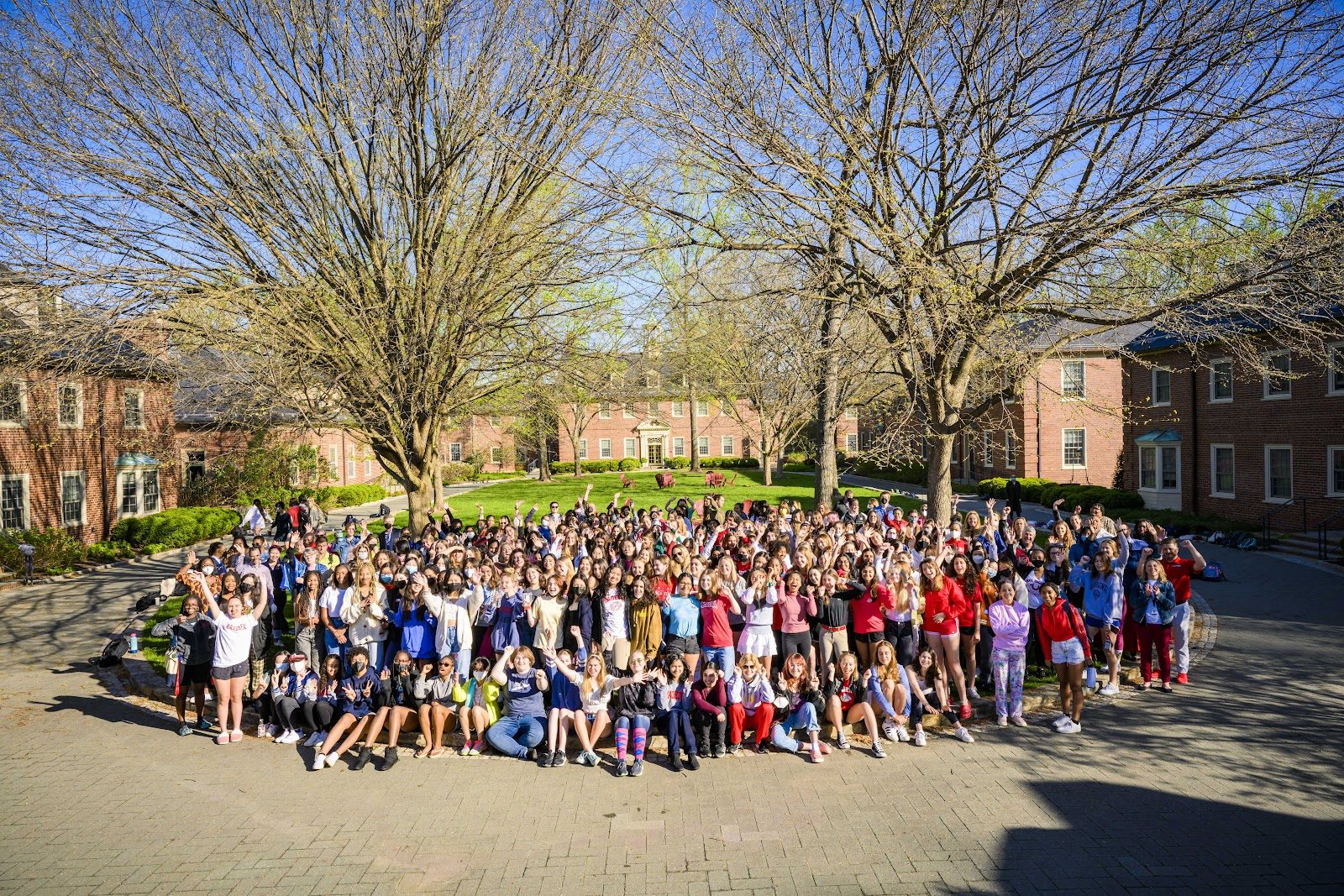
An all-girls campus on the Potomac where every graduate leaves with a Capitol Hill internship behind her.
Type
Both
Ages
13–18
Curriculum
American
Qualifications
AP
Ratio
1:8
The Verdict
Editor's commitment
Right for
Girls aged 13–18 who want American academics, boarding or day entry, and the internship programme as a serious part of school.
Wrong for
Families wanting co-education, a religious school, or a non-American curriculum; Madeira is girls-only, non-religious, English-medium and NAIS-accredited.
Watch out for
The 1:8 ratio and McLean campus buy access, not anonymity; this is a concentrated, adult-facing school built around girls aged 13–18.
Ranking breakdown
The Madeira School · #181 of 1591
Composite score 74.8. 8 weighted criteria.
By criterion
Academic Outcomes
Weight 20%
#294
of 1529 scored
University Placement
Weight 16%
#263
of 1529 scored
Prestige & Heritage
Weight 12%
#212
of 1571 scored
Alumni Network
Weight 12%
#142
of 1530 scored
Facilities
Weight 12%
#279
of 1533 scored
Transparency & Communications
Weight 8%
#354
of 1532 scored
Peer & Industry Review
Weight 10%
#385
of 1548 scored
Admissions Selectivity & Demand
Weight 8%
#266
of 1529 scored
Peer & Industry Review
How The Madeira School is regarded in the sector
73
Respected · medium confidence
Within the Washington DC private-school landscape, Madeira is generally grouped with Holton-Arms, Potomac School and National Cathedral School as a credible, mission-driven all-girls option, though regional guides and rival heads typically credit NCS and Holton-Arms with marginally stronger Ivy placement rates. Admissions officers at William & Mary, Georgetown and the University of Virginia, which draw disproportionately from Madeira's graduating classes, describe its students as well prepared for discussion-based, self-directed coursework, a byproduct of the honor-code culture. Independent education press coverage of Madeira focuses less on academic league tables than on its governance model; the Adsum self-reporting system is frequently cited in broader journalism about single-sex schooling. It receives little attention from UK-focused outlets like WhichSchoolAdvisor, and US equivalents of the Good Schools Guide position it as a strong regional choice rather than a nationally dominant boarding brand, consistent with its best_300 rather than top-tier standing.
Editors' overview
The Madeira School occupies a narrow and valuable niche: an American girls’ school with boarding and day options, a 1:8 student–teacher ratio, and a campus in McLean with direct access to Washington’s political, civic and cultural machinery. The defining feature is not a slogan about leadership; it is the school’s long-established internship programme, which gives students structured exposure to workplaces far beyond the classroom. That makes Madeira more than a conventional college-preparatory school. It offers an education shaped by action, public engagement and adult expectations. For families who want an all-girls environment with serious purpose, real-world pressure and a route into Washington networks, Madeira earns a place on the shortlist.
What distinguishes it is the coherence of the model. Founded in 1906, Madeira has had time to refine its identity, and the pieces fit together: a girls’ school, boarding as well as day, a modular schedule, explicit attention to civil discourse, and a co-curricular menu that runs from arts publications to athletics and equestrianism. The school also advertises learning support, health and wellness, and financial aid, which matters because ambitious schools can fall into the trap of celebrating attainment while neglecting pastoral structure. Here, the public picture is of a campus that expects girls to speak, lead, organise and test ideas in public. That will appeal to students drawn to high standards, close adult attention and confident female company.
Madeira is not for everyone. A girl who wants anonymity, a loose academic culture or a low-stakes sixth-form experience will find the environment constraining. The school’s identity is strong, and strong identities impose demands. Students who thrive here will be intellectually alert, happy in discussion, willing to take responsibility, and ready to use the school’s location as part of their education. Boarders also need the temperament for a close-knit residential community; the school highlights student leadership within the houses and dorms, which points to a culture where contribution counts. The best fit is a student who wants a campus with edge, ambition without apology and tangible preparation for life beyond school, not just university admission.
In market terms, Madeira sits in the top tier of US girls’ schools with a distinctive Washington advantage. Plenty of schools promise empowerment; Madeira ties that promise to a visible structure and a physical setting that gives it teeth. The result is a school for girls who want to practise influence, not just talk about it. Parents should shortlist it if they want English-language American education for ages 13–18, a non-religious setting, and a school where leadership is treated as work rather than decoration.
Academic Performance
Madeira does not publish the hard academic data that would let parents place it cleanly against the strongest US independents. We have not seen average SAT or ACT results, aggregate AP score distributions, National Merit counts, or a college-matriculation table detailed enough to judge academic yield. That matters. In this market, schools with serious academic firepower tend to show their workings. Madeira instead foregrounds programme architecture: a modular schedule, learning support, seminar-style electives such as Global Justice Seminar and Research Seminar, and a culture of questioning, discussion and written expression. That points to an education with intellectual self-possession rather than a narrow test-prep machine, but it leaves external academic performance too opaque.
Relative to peers, Madeira fits the group of selective girls’ schools whose value rests on a blend of college preparation, close adult attention and distinctive opportunities beyond the classroom. The internship programme and Washington access shift part of the school’s competitive case away from raw exam statistics and towards high-functioning applied education. That is a real strength, not an excuse. Still, parents comparing Madeira with more transparently academic rivals need to press for results data: AP participation and score profiles, standardised testing ranges, and university destinations by cohort. Until the school publishes that evidence, Madeira ranks as credible but unproven on external exam performance.
Facilities
The standout facility is the school’s access to Washington itself, used through the internship programme rather than treated as scenery. That gives Madeira an asset few girls’ schools can match: classrooms and campus life feed directly into workplaces, institutions and adult settings beyond the school gates. On site, the priorities are clear from the programme structure. There is dedicated space for boarding life, athletics, arts, learning support, health and wellness, and a visible equestrian operation, with a new equestrian centre in planning. Student references point to darkroom photography, studio art and printmaking rather than a generic “arts offering”, which matters; those are facilities that require real rooms, equipment and staffing. The result is a campus built for structured ambition, adult-facing responsibility and a close-knit residential culture.
Against peers, Madeira’s facilities are strong where they align with mission and less showy than the grandest all-girls boarding campuses. Families looking for the brute-force scale of a giant suburban independent school — multiple headline sports complexes, vast maker spaces, endless specialist centres — need to ask for detail. The school does not publish the kind of exhaustive facilities inventory that top competitors sometimes do. Still, the combination of boarding, arts production, athletics, equestrianism and off-campus professional placement gives Madeira a sharply differentiated platform. The campus works best for girls who value purpose-built opportunity over spectacle. The real benchmark here is not square footage. It is whether a school turns its facilities into action, and Madeira does.
In market terms, Madeira sits in the top tier of US girls’ schools with a distinctive Washington advantage
Prestige
Madeira carries real prestige in a narrow but powerful corner of the US independent-school market: selective girls’ education with direct traction in Washington life. The school’s standing rests less on published academic trophies than on social position, institutional confidence and access. The internship programme matters here. Every graduate leaves with work experience attached to her schooling, and in this setting that reads as practical status, not decoration. Add a 1:8 staffing ratio, a long-established student government tradition, civil discourse as an explicit part of school life, and co-curriculars that include equestrianism, and the picture is of a school built for families who expect girls to occupy rooms of consequence. That is prestige with a clear class and cultural signature.
It does not sit at the top table because the school declines to publish the hard attainment data that the strongest academic operators use to prove dominance. Prestige without transparent outcomes has limits. Still, Madeira’s name carries weight because its model is distinctive, well-bred and hard to replicate: an all-girls campus, close adult attention, boarding and day enrolment, and a route into workplaces tied to public life. For ambitious families who value influence, polish and female leadership, that package has serious cachet. For families who want visible proof in exam statistics first, the brand outruns the evidence.
The school does not publish the kind of exhaustive facilities inventory that top competitors sometimes do
Communications
Madeira communicates with parents through a full, workmanlike set of channels: a parent portal, calendar, news stream, event listings, giving pages, admissions information, transport details and visible access points for health and wellness, boarding, college counselling and leadership. The navigation is broad without being chaotic. Parents can see the school’s priorities quickly: student life, residential life, internships, athletics, arts and pastoral structures all have clear public presence. That matters because schools with complicated moving parts need clean operational communication. Madeira does that well. The signal is of a school that expects families to stay engaged, read closely and keep up with a busy institutional rhythm. For a community split between day students and boarders, that level of structure is necessary rather than optional.
The limitations are also clear. Madeira communicates culture and programme better than it communicates outcomes. There is plenty on mission, civil discourse and student experience, and enough student voice to give the school texture. There is far less hard comparative data for parents who want to judge academic performance with precision. That weakens the overall communications picture. A polished account of school life is useful; a serious parent audience also wants published results, destination patterns and sharper operational detail on what success looks like in practice. So the verdict is mixed: communications are confident, well-organised and strong on ethos, but selective in the facts they choose to foreground.
Uniqueness
Madeira’s distinctive feature is simple: it treats school as a training ground for public action, not a sealed academic enclave. The internship programme is the clearest expression of that. Students do not wait until university for their first encounter with professional standards, deadlines and adult scrutiny; they meet them while still at school, with Washington’s institutions close at hand. That changes the texture of the education. Discussion, writing and leadership stop being decorative school virtues and become working tools. The school’s explicit attention to civil discourse reinforces the same idea. Madeira is building girls who can argue, listen, dissent and hold their ground in rooms where the stakes are real.
The all-girls setting sharpens that model rather than merely framing it. Student leadership in boarding, a historic student government tradition, and a co-curricular mix that runs from literary publishing to rock climbing, diving and equestrianism create a culture where girls take visible responsibility early and often. The low staffing ratio of 1:8 gives that ambition practical backing: adults have the time to know who can manage pressure and who needs stronger scaffolding. For the right student, the result is high-agency education with real-world muscle. For the wrong one, it is intense, exposed and hard to hide in. That is precisely what makes Madeira unusual.
It does not sit at the top table because the school declines to publish the hard attainment data that the strongest academic operators use to prove dominance
Student Profile
The student who fits Madeira is bright, verbal, socially confident and willing to be known. This is not a school for girls who want to drift through the week unnoticed. The public life of the place runs on discussion, responsibility and visible contribution, whether that means student government, literary publishing, team sport, dorm leadership or an internship placement where an adult outside school will judge your work. Students need the nerve to speak up, the discipline to follow through, and the maturity to handle a campus where expectations do not stop at the classroom door. The low staffing ratio of 1:8 reinforces that culture: adults have the time to notice who is contributing and who is coasting. The best match is a girl with intellectual backbone, good social stamina and a taste for high-accountability environments.
Madeira also suits girls who want an all-girls education with range rather than one narrow mould. The school’s own student profiles point to combinations that matter: darkroom photography with forensics, volleyball with arts publishing, diving with residential leadership, rock climbing with advanced studio art. That mix tells you something useful. The successful student here is not just polished; she is energetic, self-directed and comfortable moving between academic, artistic and communal roles. Boarders need an extra layer of resilience, because close residential communities reward generosity and punish passivity. A shy girl can thrive, but only if she is ready to grow teeth. A student who resists scrutiny, structure or collective obligation will find Madeira tight-grained and demanding.
Madeira’s distinctive feature is simple: it treats school as a training ground for public action, not a sealed academic enclave
Co-curricular strengths
Arts & sport, on a separate axis
Overall 8.8/10
Scored 0-10 from the school's own published evidence. This axis is editorial-only — it does not feed the main WTS ranking.
Sports
9/10
Competes fiercely across Virginia independent school leagues, balancing intensive academic tracking with strong foundational fitness.
Drama
9/10
The school's theater complexes operate at an exceptionally high standard, cultivating creative and performance tech tracks.
Dance
8.5/10
Highly popular synchronization and ensemble choreography featured prominently in major annual school cultural showcases.
Music
8.5/10
High-end orchestral setups supporting advanced symphonies and traditional choral tracking that perform in major civic halls.
Visual Arts
9/10
Technical fine arts focus housed within custom studio environments, prioritizing portfolio development and digital media.
WTS 300 badge
The Madeira School is one of the World's Top 300 Schools. Claim your listing to add it to your site →
Strengths
- +All-girls college-preparatory school with a low student-to-faculty ratio of roughly 6:1 and average class sizes around 12, enabling close faculty attention.
- +Distinctive Co-Curriculum program gives every student real-world internships, including a junior-year placement working on Capitol Hill in Washington, DC.
- +Sits on a 376-acre campus overlooking the Potomac River just outside Washington, DC, with dedicated arts, athletic and equestrian facilities.
- +Received a $60 million gift announced in January 2025, described as the largest single gift ever made to an independent girls' school, strengthening long-term financial resources.
- +Long, continuous history dating to 1906, with alumnae including Katharine Graham, Alice Rivlin, Mika Brzezinski, Stockard Channing and Brooke Astor.
Considerations
- −Single-sex institution, which rules out families seeking a coeducational environment for their daughter or a matching option for sons.
- −Boarding tuition runs to roughly $74,000-$77,000 a year (day tuition around $58,000-$60,000), a significant recurring cost even before extras.
- −Campus is in suburban/fringe-rural McLean rather than central Washington, DC, so students without cars rely on school transport for city access.
- −Moderately selective rather than ultra-selective, with a reported acceptance rate in the 37-40% range, meaning prestige is real but entry is not as scarce as at the very top tier of US boarding schools.
Availability
Primary entry gate & tests
SSAT/ISEE + Interview (Girls)
Gallery
Parent reviews
Have you sent your child here?
Voice reviews carry the strongest trust badge — we transcribe them for you to tidy up before they go live. Prefer to type? A written review is fine too.
Add your voice
In 60 seconds, tell other parents: what's the best thing about The Madeira School, and what surprised you when your child joined?
We ask for a Google sign-in so every review has a real face behind it — no anonymous drive-by attacks on schools, and no faked positive reviews. Your email is never shown publicly.
Send this profile to a friend
International parents rely on word-of-mouth. Share this review with someone weighing the same decision.
Schools with places
Similar schools to The Madeira School with places available now.
Episcopal High School
Alexandria · United States
- 2026-27
- CLOSEDRegular cycle closed
- 2027-28
- OPENS SOONOpens Sept '26
Thomas Jefferson High School for Science and Technology
Alexandria · United States
- 2026-27
- CLOSEDStandard route
- 2027-28
- OPENS SOONOpens 5 Oct '26
Availability first, then country, area, curriculum, price, co-curricular
Consider also
Also worth looking at alongside The Madeira School.

San Francisco University High School
San Francisco · United States
Inside a 1917 Julia Morgan building in Pacific Heights, a signature Civilization seminar drives independent-study scholarship.
Packer Collegiate Institute
Brooklyn · United States
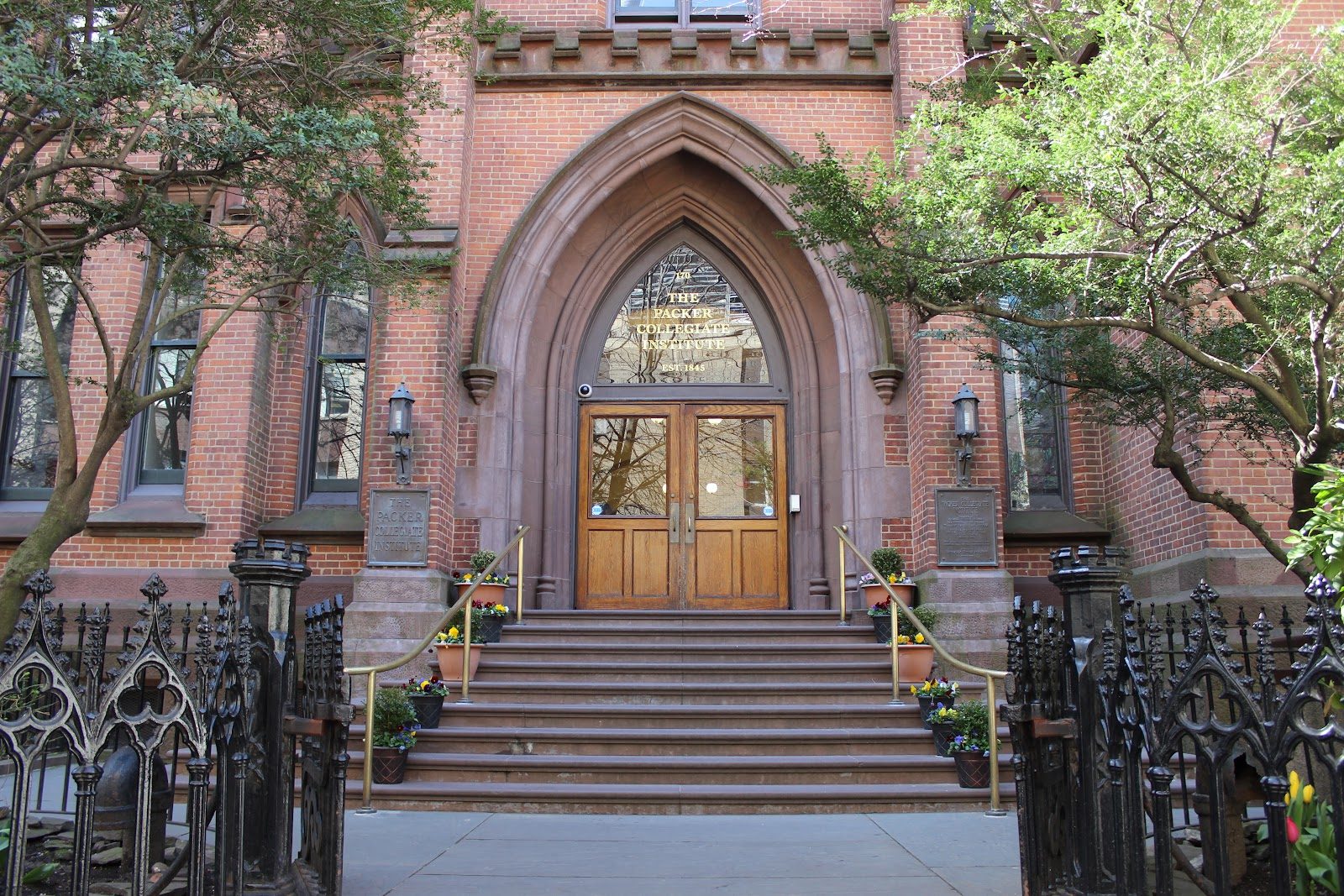
Brooklyn Heights' oldest independent school, its 1854 Gothic Revival chapel still glowing with Tiffany glass a single subway stop from Manhattan.
Convent of the Sacred Heart (NYC)
New York City · United States
Since 1881, New York's oldest girls' school has taught inside two landmarked Fifth Avenue mansions.
Nightingale-Bamford School
New York City · United States
On a quiet Carnegie Hill block, a century-old liberal-arts curriculum sends ninth graders to London to fuse literature, history, science and art into one capstone journey.
Same country and curriculum — closest matches within ±10 points either way