
New York
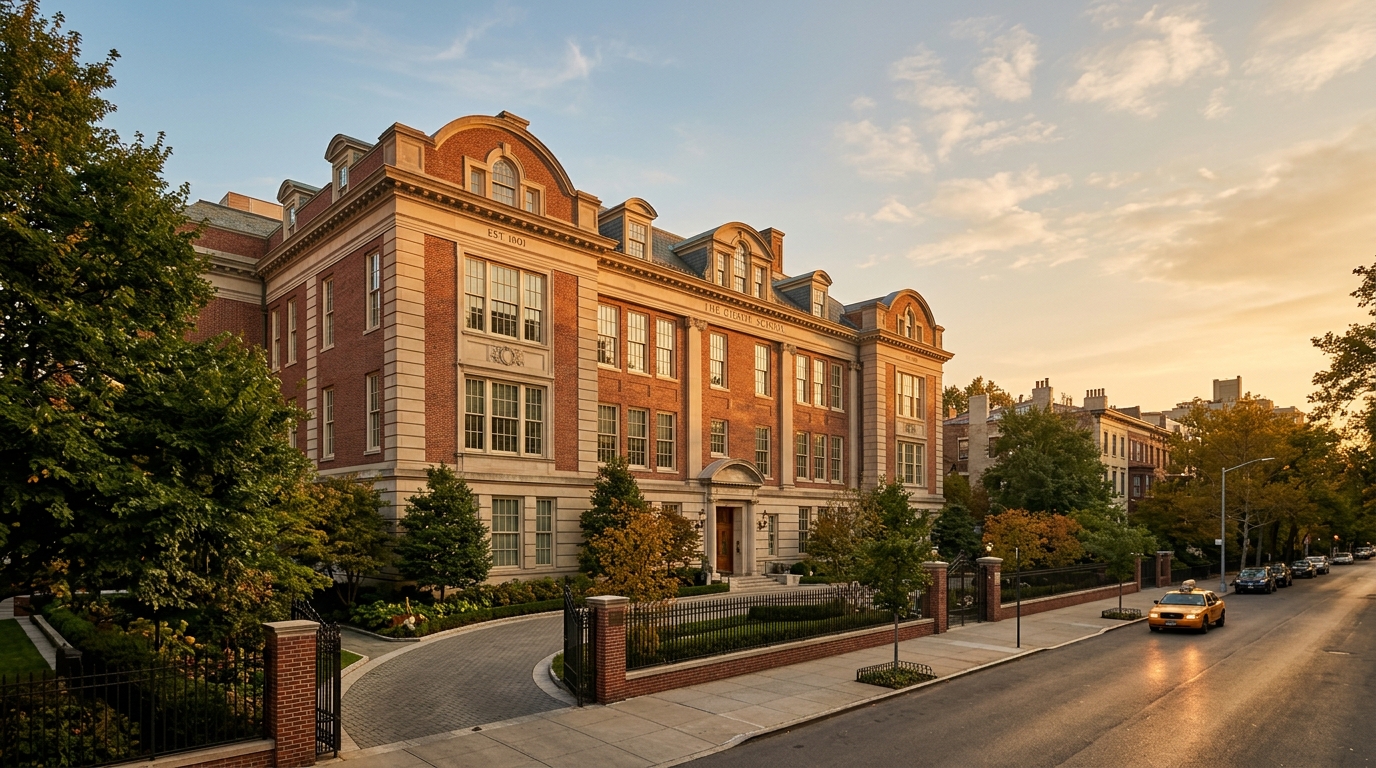
On the East River's edge, a K-12 girls' school where two years of Latin are compulsory and no valedictorian is named.
Type
Day
Ages
5–18
Curriculum
American
Qualifications
AP
Ratio
6:1
The Verdict
Editor's commitment
Right for
Girls who want a K-12 education on one East End Avenue campus, compulsory Latin, and a 6:1 ratio in a serious academic culture.
Wrong for
Families wanting co-education, boarding or a cheaper Manhattan option: Chapin is girls-only, day-only, and averages $71,000 a year.
Watch out for
NEASC and NAIS accreditation reassure, but the school does not publish headline exam outcomes; at $71,000, that opacity matters.
Ranking breakdown
The Chapin School · #128 of 1591
Composite score 76.6. 8 weighted criteria.
By criterion
Academic Outcomes
Weight 20%
#183
of 1529 scored
University Placement
Weight 16%
#187
of 1529 scored
Prestige & Heritage
Weight 12%
#188
of 1571 scored
Alumni Network
Weight 12%
#117
of 1530 scored
Facilities
Weight 12%
#339
of 1533 scored
Transparency & Communications
Weight 8%
#204
of 1532 scored
Peer & Industry Review
Weight 10%
#250
of 1548 scored
Admissions Selectivity & Demand
Weight 8%
#198
of 1529 scored
Score history
The Chapin School · 2026
Movement across 2024–2026. Peer average overlaid.
Overall — 2024–2026
76.6/ 100
▲ +23.4 vs 2025
year on year
Peer & Industry Review
How The Chapin School is regarded in the sector
90
Top-tier · high confidence
The Chapin School is consistently ranked among the elite Manhattan all-girls private schools alongside Brearley, Spence, and Nightingale-Bamford, frequently covered in the New York Times, New York Magazine, and Town & Country as part of the city's most prestigious 'Big Three/Four' girls' schools. Its notable alumni (including Jacqueline Kennedy Onassis, Gloria Vanderbilt, and members of prominent NY families) receive substantial independent press coverage, and it is a fixture in private school admissions guides and specialist NYC education press covering elite feeder schools to Ivy League institutions.
Evidence sources
Editors' overview
On East End Avenue, The Chapin School makes an unusually clear offer: a K–12 girls’ education with one campus, a strong academic spine and no appetite for empty status signals. Two details capture the place well. Latin is compulsory for two years, which tells you something about its view of intellectual discipline, and the school names no valedictorian, which tells you something about its resistance to turning every high achiever into a public ranking exercise. Founded in 1901 by Maria Bowen Chapin, Chapin still runs from Kindergarten to Class 12 under one roof at 100 East End Avenue. That continuity matters. It gives the school a coherent internal culture rather than three semi-detached divisions sharing a badge.
This is an American-curriculum day school, non-religious, accredited by NEASC and NAIS, with a 6:1 student-teacher ratio. That ratio is not decorative. In a girls’ school that talks about scholarly excellence, it points to close adult attention and a serious classroom culture. The mission language is heavy on intellect, character and community; many schools write that way, but Chapin’s structure backs it up better than most. A single-site K–12 school in New York can feel intensely cohesive or claustrophobically insular. Parents need to decide which side of that line appeals. The average annual day fee is $71,000, which places Chapin firmly in New York’s top-fee bracket. At that price, families are not buying facilities on a sprawling campus. They are buying access to a concentrated, academically demanding urban girls’ school with very strong peer effects.
What is special here is not novelty but conviction. Chapin reads as a school that still values scholarship for its own sake, not just as a delivery system for college admissions. The founder’s language about “sound scholarship”, tradition and “untrodden ways” still sits close to the centre of the school’s self-understanding. That combination — intellectual seriousness, female leadership, and a refusal to flatten achievement into one prize at the end — will put Chapin on the shortlist for families who want a fiercely academic, high-expectation girls’ school without religious framing. Its documented alumni footprint is also substantial, with 33 notable alumni catalogued in Wikidata across business, science, journalism, film and the arts, which reinforces the sense that the school has long produced graduates who move comfortably into public life.
The student who will want Chapin is bright, organised and comfortable in a culture where academic effort is taken for granted. She does not need hand-holding to value reading, writing and disciplined thought, and she will benefit from a community built entirely around girls and young women from age 5 to 18. This is not for families chasing flash. It is for families who want seriousness, consistency and a school that has kept faith with its own standards for more than a century.
Academic Performance
Chapin does not publish the kind of headline exam data that would let parents stack it neatly against New York’s other elite independents. No school-wide SAT or ACT averages are in the public domain here; no aggregate AP profile is disclosed either. That opacity matters. In a market where some schools use numbers aggressively, Chapin asks families to trust institutional reputation, selectivity and college outcomes more than raw score tables. That is a deliberate old-guard choice, and not every parent will welcome it. The academic message itself is still clear: this is a school that prizes serious scholarship, keeps expectations high across the full K–12 span, and resists the public theatre of ranking students against one another.
Relative to peers, Chapin sits in the top academic tier of Manhattan girls’ schools by reputation, admissions demand and the texture of its programme. A compulsory run of Latin in the early secondary years signals a curriculum with backbone rather than one built around easy customisation. The one-building K–12 model also gives teachers a long view of student development, which strengthens continuity and raises the floor for academic culture. None of that substitutes for published external results, and parents who want hard comparative metrics will find Chapin frustratingly private. Parents who care more about a *high-pressure, intellectually disciplined* environment than public score-reporting will read that same restraint very differently.
Facilities
For a Manhattan day school on a tight urban footprint, Chapin’s facilities are strong and intelligently chosen. The building houses 56 classrooms, a two-storey library with a multimedia room, 8 science laboratories, three art studios, three music studios, a black box theatre, two dance studios, two computer labs, a design and innovation lab, three gymnasiums, a fitness centre, a training room, a greenhouse and a play roof. That is a serious academic plant, not a token collection of specialist rooms squeezed into an old townhouse. The inclusion of a photography darkroom, ceramics studio and greenhouse adds range that many city schools talk about more than they actually deliver. Keeping the whole school under one roof also gives younger and older pupils access to a shared set of resources, which strengthens continuity and reduces the silo effect common in split-campus schools.
Against peer schools in Manhattan, the picture is clear. Chapin does not offer the acreage, separate fields or architectural spectacle that suburban independents can field, and families wanting vast outdoor space will not find it here. What it does offer is a dense, high-functioning urban campus with the specialist rooms a demanding girls’ school needs across science, arts, sport and performance. In this market, that counts for a great deal. The facilities are more comprehensive than glamorous: *practical, well-balanced and academically aligned* rather than built for show.
On East End Avenue, The Chapin School makes an unusually clear offer: a K–12 girls’ education with one campus, a strong academic spine and no appetite for empty status signals
Prestige
Chapin carries *real Manhattan independent-school prestige*, but it is the restrained kind, not the peacock version. Its standing rests on three things: admissions selectivity, durable social recognition among New York families, and a long record of placing girls inside a serious academic culture that other schools respect. Membership of Interschool matters here. That consortium includes the city’s best-known academic independents, and schools do not enter that orbit by accident. The all-girls format sharpens the brand further: Chapin sits in the small group of names that parents discuss when they want a girls’ school with old-established clout rather than a newer school with money and glossy facilities. The notable-alumni base adds weight too. 33 verified figures across public life, the arts, science and business is not trivial; it points to a school with reach beyond its own parent body.
The prestige also has limits, and those limits are worth stating. Chapin’s reputation is strongest in New York’s private-school world and among families who already know the Upper East Side landscape. It does not trade on mass global name recognition in the way a handful of boarding schools and university-linked brands do. That does not weaken the value of the education; it defines the kind of status on offer. This is insider prestige: high-trust, high-expectation, socially literate, and legible to the families, schools and colleges that matter in its home market. The $71,000 average annual fee reinforces that positioning. It is an elite local institution, not a global trophy brand.
The average annual day fee is $71,000, which places Chapin firmly in New York’s top-fee bracket
Communications
Chapin communicates with parents in the manner of an established independent school that expects families to read carefully and keep up. The public-facing site is orderly, information-rich and structurally clear: the school explains its mission, values, campus resources and institutional history without clutter or gimmickry. The tone is formal, self-possessed and old-school. That suits the school. A K–12 operation with all pupils in one building, an enrolment of 830, and families spread across more than 100 postcodes needs communication that is centralised, consistent and legible across age groups. Chapin’s web presence meets that test. It gives parents a coherent picture of the school’s priorities and internal culture, and it does not insult them with marketing fluff.
The weakness sits elsewhere. Chapin is not a school that over-shares. Parents who want dashboards, headline score tables and constant performance signalling will find the communications model guarded and, at points, frustratingly spare. That reticence is not accidental; it matches the school’s broader refusal to turn itself into a running advertisement. For many families, that restraint reads as confidence and institutional discipline. For others, it reads as opacity. My view: Chapin communicates effectively on ethos, expectations and the practical shape of school life, but less well on the hard comparative data that exacting parents now expect before they commit to a school at this price point.
Uniqueness
What marks Chapin out is the coherence of the thing. Many schools promise continuity across the age range; Chapin actually runs the whole enterprise in one building, with every girl moving through the same institutional culture from the first years to the final ones. That produces a rare internal consistency: older students are not a separate species, junior school habits do not get discarded at adolescence, and the school can build expectations slowly, then hold them. The compulsory Latin requirement in the middle years sharpens that identity. It signals a school that values structure, memory, grammar and disciplined study, not just choice and personal preference. The refusal to name a valedictorian pushes in the same direction. Chapin rewards achievement without turning the sixth form into a public leaderboard.
For students, that mix brings real advantages. A girl with academic appetite gets a clear intellectual spine and a peer group that does not treat effort as embarrassing. The all-girls setting matters too: leadership, performance, argument and technical subjects are not filtered through co-ed social dynamics. Add the school’s reach across more than 100 home postcodes and its membership of an 8-school Manhattan consortium, and the result is not a cloistered Upper East Side bubble but a tightly run, high-expectation school with access to a wider city network. The trade-off is plain. This model suits girls who want seriousness and structure. It will feel too enclosed for students who need looseness, anonymity or reinvention.
Relative to peers, Chapin sits in the top academic tier of Manhattan girls’ schools by reputation, admissions demand and the texture of its programme
Student Profile
The Chapin student is academically ambitious without needing applause every five minutes. She is comfortable in a school where close teacher attention is built into daily life, where discussion, writing and sustained effort carry real weight, and where girls are expected to take intellectual work seriously from the start. The right fit is not just bright but self-disciplined, mentally organised and willing to work inside a culture that values standards over display. A child who enjoys structure, reads willingly, keeps up with deadlines and does not need endless novelty will do well. So will a girl who wants leadership and confidence-building in an all-girls setting without the social distraction of performative co-ed competition.
The less suitable student is easy to spot too. Chapin is not a loose-fit school for girls who need anonymity, constant reinvention or a casual attitude to academic pressure. Its one-site model and enrolment of 830 create continuity, but they also create visibility: pupils are known, habits are noticed, and weak organisation does not stay hidden for long. The intake also draws from more than 100 postcodes, which broadens the social mix more than the Upper East Side address alone might imply; still, this remains a high-expectation, socially fluent environment. Girls who thrive here tend to combine competence with composure. Girls who resent rules, resist close scrutiny or want school to feel emotionally low-stakes will find Chapin too tightly wound for comfort.
Founded in 1901 by Maria Bowen Chapin, Chapin still runs from Kindergarten to Class 12 under one roof at 100 East End Avenue
Co-curricular strengths
Arts & sport, on a separate axis
Overall 8.6/10
Scored 0-10 from the school's own published evidence. This axis is editorial-only — it does not feed the main WTS ranking.
Sports
8.5/10
'Varsity athletics', and the facilities review adds that Chapin offers age-appropriate indoor athletics with competitive sport partly dependent on shared or off-site arrangements, which evidences a real programme.
Drama
8.5/10
'Theater productions', which goes beyond a bare listing of drama by indicating actual staged productions.
Dance
8.5/10
The extracurriculars explicitly list a 'Dance program'.
Music
8.5/10
Both 'Choir ensemble' and 'String orchestra', showing multiple named music activities and visible ensemble participation.
Visual Arts
9/10
'arts spaces' and says families should expect solid provision for 'visual and performing arts', which is dimension-specific but still vague and unsupported by named courses, studios, exhibitions, or clubs.
Editor first-pass · editor-reviewable · 7/28/2026
Notable alumni · Wikidata
33notable alumni
17 historic (born pre-1930) · 7 modern (born post-1970)wikidata:2026-07-28 How we source this

WTS 300 badge
2025/26 editionThe Chapin School is one of the World's Top 300 Schools for 2025/26. Claim your listing to add it to your site →
Strengths
- +Founded in 1901, Chapin is one of Manhattan's oldest all-girls independent schools, with all grades from Kindergarten through Class 12 housed in a single building at 100 East End Avenue.
- +The school reports a 6:1 student-to-teacher ratio, supporting small-class instruction across Lower, Middle, and Upper School divisions.
- +Chapin belongs to the Interschool consortium of eight Manhattan independent schools, sharing curricular and extracurricular resources with peer institutions such as Brearley, Dalton, and Spence.
- +Notable alumnae publicly documented on Wikipedia's alumni list include Jacqueline Bouvier Kennedy (Class of 1947) and fashion designer Vera Wang.
- +The school maintains a dedicated financial aid program using the SSS/NAIS form, with aid intended to meet demonstrated need for qualifying families.
Considerations
- −As a single-sex school, Chapin does not offer a coeducational option at any grade level, which will not suit families seeking mixed-gender schooling.
- −Published tuition for 2025-26 is $68,250 per year, placing it among the most expensive private day schools in New York City, before additional fees.
- −Admission is highly concentrated at Kindergarten entry, with very few openings in later grades, limiting options for families relocating mid-childhood.
- −The school occupies a single Upper East Side building, meaning campus space, athletic facilities, and grounds are more constrained than schools with multiple or suburban campuses.
Availability
Primary entry gate & tests
ISEE/SSAT + Interview (Girls)
Parent reviews
Have you sent your child here?
Voice reviews carry the strongest trust badge — we transcribe them for you to tidy up before they go live. Prefer to type? A written review is fine too.
Add your voice
In 60 seconds, tell other parents: what's the best thing about The Chapin School, and what surprised you when your child joined?
We ask for a Google sign-in so every review has a real face behind it — no anonymous drive-by attacks on schools, and no faked positive reviews. Your email is never shown publicly.
Send this profile to a friend
International parents rely on word-of-mouth. Share this review with someone weighing the same decision.
Schools with places
Similar schools to The Chapin School with places available now.
Hunter College High School
New York City · United States
- 2026-27
- CLOSED
- 2027-28
- OPENS SOONOpens late Sept '26
The Spence School
New York City · United States
- 2026-27
- CLOSEDRegular cycle
- 2027-28
- OPENS SOONOpens mid-Aug '26
The Bronx High School of Science
New York City · United States
- 2026-27
- CLOSEDStandard route
- 2027-28
- OPENS SOONOpens 6 Oct '26 (Closes 30 Oct)
Regis High School
New York City · United States
- 2026-27
- CLOSEDStandard route
- 2027-28
- PLACES OPENNov 2 Deadline, HSPT 14 Nov
Availability first, then country, area, curriculum, price, co-curricular
Consider also
Also worth looking at alongside The Chapin School.
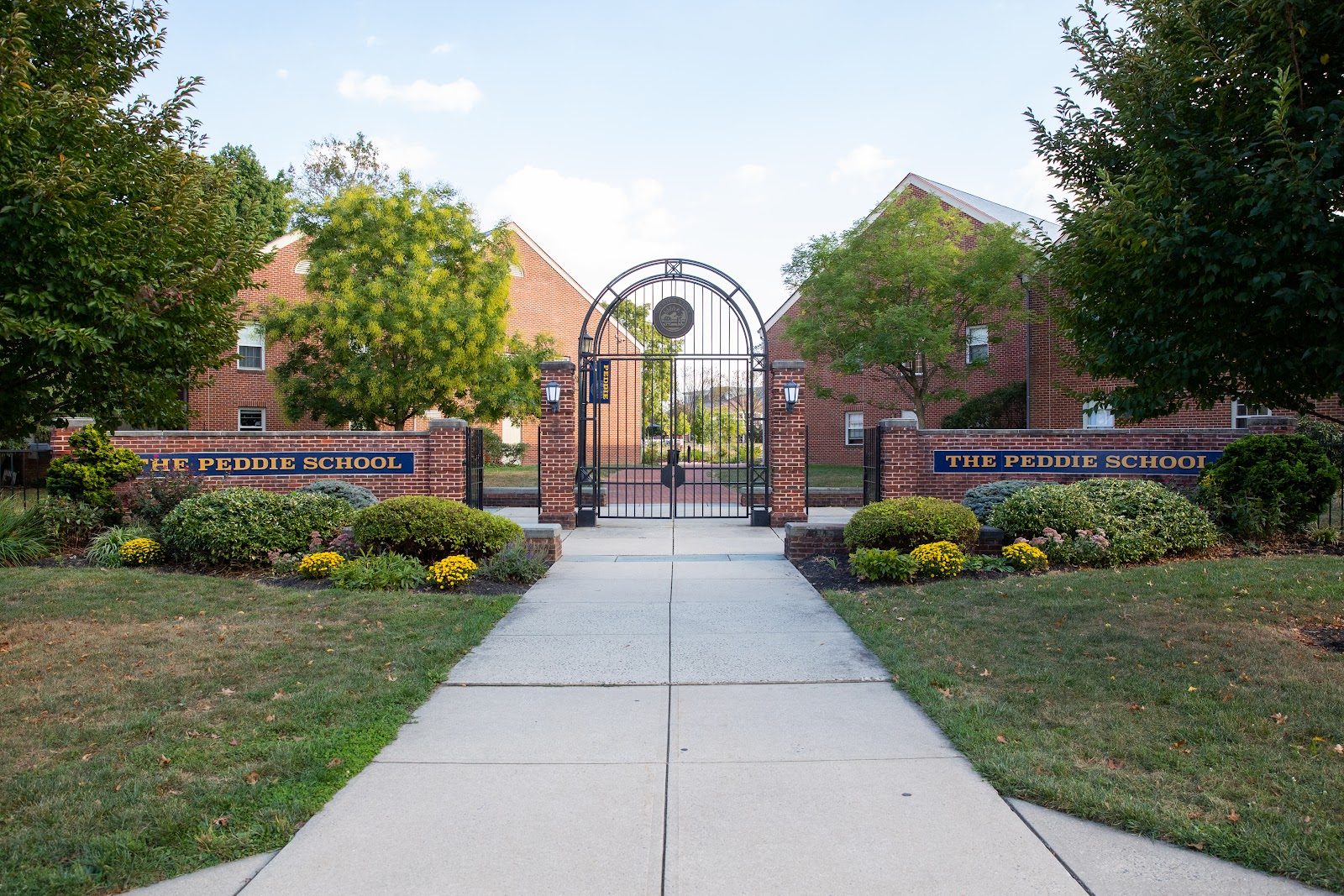
Peddie School
Hightstown · United States
Since 1864, a lakeside New Jersey campus builds signature tracks in research science and Shanghai-linked Asian studies.
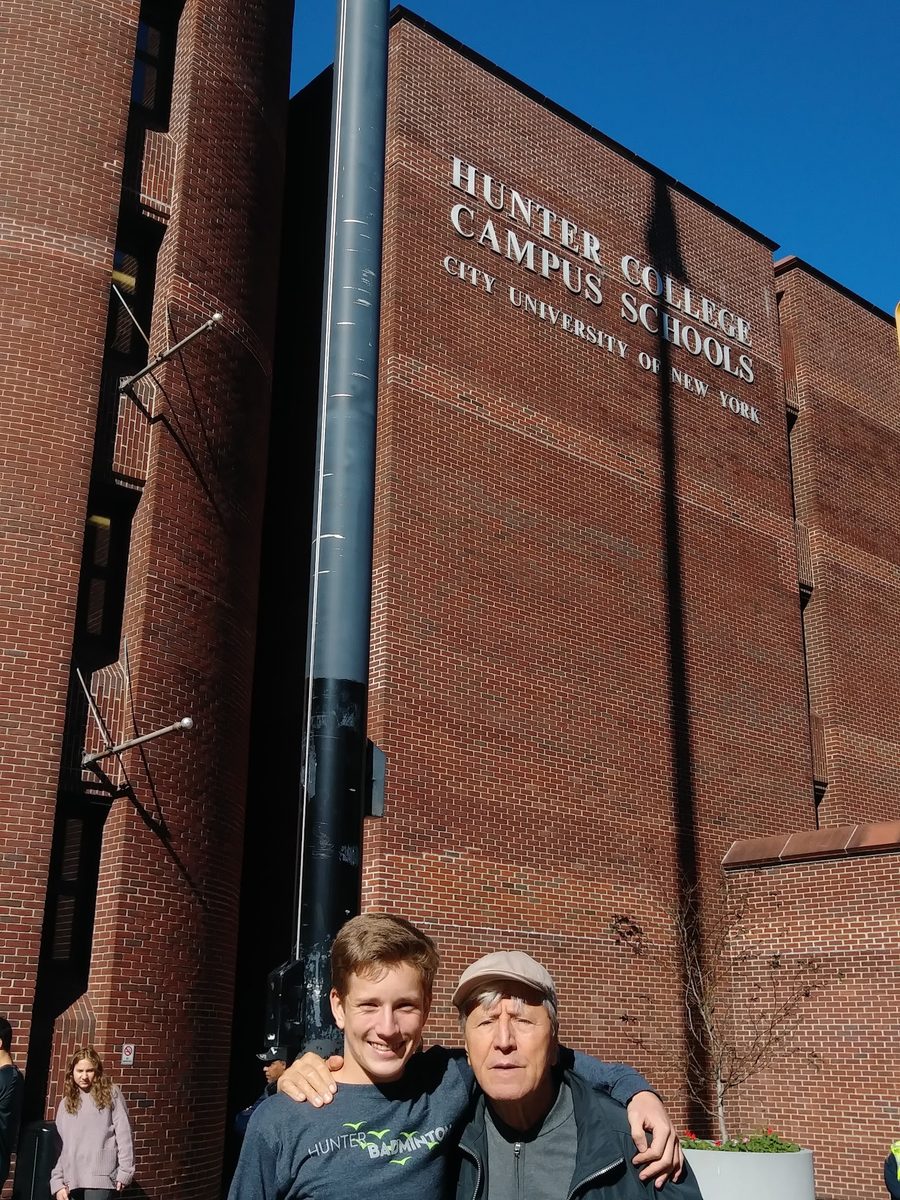
Hunter College High School
New York City · United States
A tuition-free CUNY-run gifted school on the Upper East Side, admitting by a single brutal exam and about 7 percent of applicants.

The Spence School
New York City · United States
Since 1892 on Manhattan's Upper East Side, an all-girls institution built on research fellowships and a founder's progressive vision.

The Bronx High School of Science
New York City · United States
A Bronx public school whose exam-only admissions have produced more Nobel physics laureates than any other U.S. high school.
Same country and curriculum — closest matches within ±10 points either way