
New Jersey
Since 1864, a lakeside New Jersey campus builds signature tracks in research science and Shanghai-linked Asian studies.
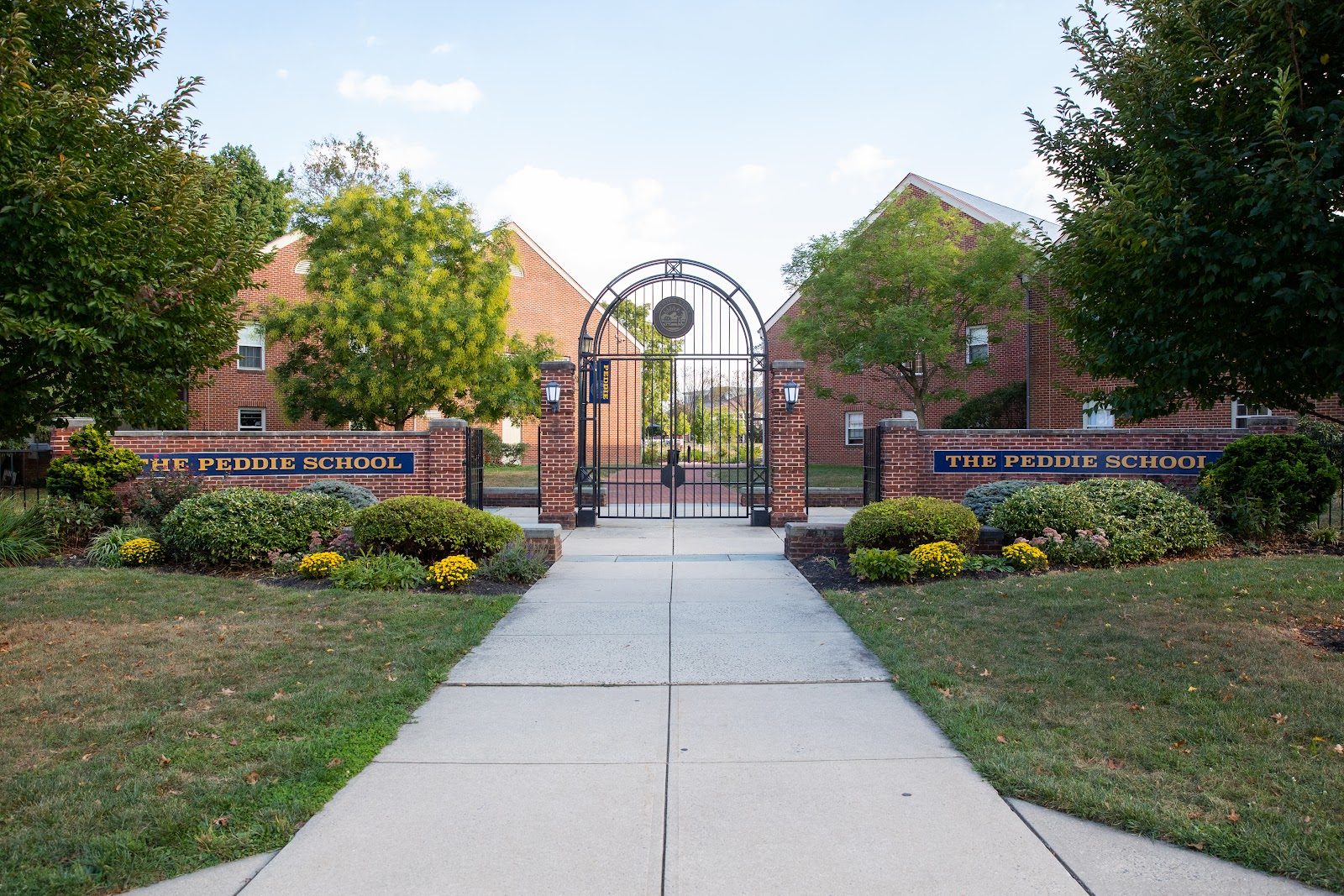
Photo © The Peddie School via Google Maps
Type
Both
Ages
14–19
Curriculum
American
Qualifications
AP
Ratio
8:1
The Verdict
Editor's commitment
Right for
Ambitious 14–19 year-olds who want a 540-student boarding school with an 8:1 ratio and serious adult presence: 90% of faculty live on campus.
Wrong for
Families chasing headline college bragging rights or scale; recent destinations list American University, Barnard and Bates, not a parade of HYPSM names.
Watch out for
This is expensive: average annual fees run to $68,300 day and $78,300 boarding, despite $11.8m in tuition assistance.
Ranking breakdown
Peddie School · #156 of 1591
Composite score 76.6. 8 weighted criteria.
By criterion
Academic Outcomes
Weight 20%
#260
of 1529 scored
University Placement
Weight 16%
#219
of 1529 scored
Prestige & Heritage
Weight 12%
#144
of 1529 scored
Alumni Network
Weight 12%
#127
of 1529 scored
Facilities
Weight 12%
#83
of 1529 scored
Transparency & Communications
Weight 8%
#354
of 1529 scored
Peer & Industry Review
Weight 10%
#255
of 1529 scored
Admissions Selectivity & Demand
Weight 8%
#282
of 1529 scored
Score history
Peddie School · 2026
Movement across 2024–2026. Peer average overlaid.
Overall — 2024–2026
76.6/ 100
▲ +19.2 vs 2025
year on year
Peer & Industry Review
How Peddie School is regarded in the sector
78
Strong · medium confidence
Peddie School is consistently included among top-tier US Northeastern boarding schools alongside peers like Lawrenceville, Hotchkiss, and Hill School, and is frequently referenced in boarding school directories and college placement discussions. It has a notable alumni network including business leaders and public figures, and is regularly covered in specialist boarding school guides (e.g., Peterson's, Boarding School Review) as a highly selective, academically rigorous institution. However, it receives less mainstream media attention than the most elite 'Ivy feeder' schools like Andover or Exeter, placing it solidly in the strong-but-not-unanimous-top-tier category.
Evidence sources
Editors' overview
Peddie trades on something more substantial than old-school East Coast polish: a compact 540-student boarding school on a lakeside New Jersey campus, with 1:8 student-to-faculty ratio and 90 per cent of faculty living on site. That matters. It creates the kind of round-the-clock adult presence that boarding schools promise and many do not fully deliver. The school’s age range, 14 to 19, keeps the focus squarely on secondary education, and the American curriculum sits in a distinctly residential, high-touch setting. For parents, the practical market position is clear: this is an expensive, high-attention US boarding school, at an average annual fee of $78,300 for boarders and $68,300 for day pupils.
What puts Peddie on a shortlist is the combination of scale and ambition. It is small enough to feel tightly run, but large enough to draw students from 25 countries and sustain breadth beyond the standard college-prep formula. The school’s own emphasis on research science and Shanghai-linked Asian studies gives it sharper definition than the many American boarding schools that offer breadth without a memorable academic shape. Add $11.8 million in tuition assistance and a non-religious foundation, and Peddie lands as a school with resources, diversity and a serious residential culture rather than a finishing-school gloss. Its accreditations, NEASC and NAIS, are standard markers of credibility, not decoration.
The caveat is that Peddie will not suit a student who wants anonymity, loose structures or a giant suburban high-school social scene. With so many staff on campus, this is a closely observed environment. The upside is strong mentoring and a real community; the downside is that students live in a place with expectations, not just facilities. Recent destinations such as American University, Barnard and Bates show solid progression, though the school does not publish the kind of headline-grabbing university list that some rivals use as a sales tool. That restraint cuts both ways: less noise, less public data.
The right Peddie student is academically engaged, comfortable in a boarding culture, and ready to use a small school’s opportunities rather than wait to be carried by brand name alone. This is a serious, cosmopolitan school for teenagers who want close access to teachers, a genuinely residential experience and room to build depth in a few areas rather than skim across many. Families looking for swagger and status theatre can find louder schools. Families looking for disciplined attention, strong adult presence and a sixth-form-age community with real intellectual shape should look hard at Peddie.
Academic Performance
Peddie does not flood the market with public exam data. We have not seen aggregate SAT, ACT, AP or IB score tables, and the school does not publish the kind of headline outcomes grid that many US boarding rivals now treat as standard. That limits any hard ranking against peers on raw external results. What is clear is the school’s academic model: a college-preparatory upper school with a post-graduate year, small classes, and enough scale to support serious work beyond core requirements. The editorial signal sits less in score-chasing than in the school’s own emphasis on distinctive depth, with research science and Asian studies given unusual prominence. For families who want clean, comparative data, that opacity is a weakness.
Relative to the strongest US boarding schools, Peddie sits in the tier where ambition and resources are evident, but public proof of exam performance is thinner than the best operators now provide. Recent destinations point to credible university placement rather than a mass-market conveyor belt to hyper-selective names. That matters: it reads as a school built for students who will use close teaching well, not one trading on a relentless Ivy narrative. The presence of students from 25 countries also points to a classroom culture with breadth, which can sharpen discussion and writing even when published testing data stay sparse. In short: academically serious, not metrics-forward, and stronger on educational substance than on public score disclosure.
Facilities
Facilities at Peddie are strongest where a full boarding school earns its keep: the campus functions as an all-day, all-evening working environment rather than a day-school plant that empties after lessons. The important asset is not one showpiece building but the residential-academic weave created by staff living on site and students working, rehearsing and training in the same orbit. That gives the school a properly immersive feel that many peers advertise and fewer deliver. The school’s own academic identity also points parents toward the right facilities question: not whether there are enough classrooms, but whether specialist spaces support advanced work in research science and internationally minded study. On that measure, Peddie sits in the serious operator bracket of US boarding schools, not the lightweight college-prep tier.
Against peers, the campus footprint is an advantage. A 280-acre site gives room for athletics, boarding and teaching without the cramped, over-programmed feel that weaker schools tolerate. The arts matter too: the school itself flags stage work as part of daily life, which signals usable performance space rather than arts provision tucked to the margins. What we have not seen is the kind of publicly detailed facilities inventory that top competitors now publish building by building, lab by lab and studio by studio. That absence does not erase quality, but it does leave parents with less hard evidence than the best-documented rivals provide. The verdict: well-equipped, genuinely residential and strong in the essentials, but less transparent than the market leaders about exactly how far the hardware goes.
It creates the kind of round-the-clock adult presence that boarding schools promise and many do not fully deliver
Prestige
Peddie carries real boarding-school prestige, but it is a contained, old-network form of prestige rather than a global trophy brand. The school’s standing rests on three things: longevity, alumni reach and the social credibility that attaches to a selective American residential school with deep donor history. Walter Annenberg’s transformative gift still matters in how the institution is read: families recognise that level of philanthropic association as a marker of establishment confidence, not a lucky one-off. The alumni bench strengthens the case. Wikidata alone records 61 notable alumni across politics, business, scholarship, the arts and sport, which gives Peddie a serious multigenerational footprint beyond the campus gates. That breadth counts more than a single celebrity graduate.
I rate its prestige below the tiny cluster of US boarding schools that dominate international parent shorthand, but comfortably above the large field of respectable college-prep schools with little distinction outside their immediate region. The school has a quietly elite profile: strong enough to open doors, restrained enough not to trade on noise. Its compact scale and close adult culture add to that reading; parents are buying access, attention and an entrenched alumni network, not mass-name glamour. The weak point is public outcomes theatre. Peddie does not publish the kind of results dashboard that turns prestige into a hard, comparative sales case. So the school’s status feels earned rather than advertised — substantial, credible and less flashy than the market leaders.
What puts Peddie on a shortlist is the combination of scale and ambition
Communications
Peddie’s parent communications benefit from one structural advantage that many schools lack: adults are not remote from student life. When most faculty live on campus, communication has a better chance of being grounded in direct knowledge of how a teenager is actually doing, not just in attendance logs and grade snapshots. The public-facing side is competent rather than polished to excess. The school website answers the obvious admissions questions cleanly, foregrounds leadership, history, DEI and alumni, and gives parents a workable sense of institutional priorities. That said, it is stronger on tone and ethos than on operational detail. Parents who want exhaustive public information on academic outcomes, programme architecture or facility-by-facility provision will find gaps. For an expensive school, that restraint cuts against full transparency.
The effect is a communications style that feels confident, high-touch and internally coherent, but not maximally informative. Families already inside the school community are positioned to benefit most, because the residential model and the 8:1 staffing ratio support direct access and quicker clarification when issues arise. Prospective parents get a clear statement of values and a strong sense of community, but less hard data than the best US boarding competitors now provide as standard. That matters. Good communication is not only warmth, mission and responsiveness; it is also disclosure. Peddie handles the first half well. On the second, it remains selective, and parents making a high-cost decision have every reason to ask sharper questions before enrolling.
Uniqueness
What distinguishes Peddie is not heritage on its own, and not the generic American boarding-school promise of “opportunity”. It is the way the school gives unusual weight to a few signature areas inside a tightly supervised residential setting. The most interesting example is the pairing of research science with Shanghai-linked Asian studies: that is a more deliberate intellectual shape than many competitors manage, and it gives students a chance to build real subject identity before university rather than drift through a broad but forgettable menu. The school’s post-graduate year adds another layer. It widens the academic and social range of the senior cohort and creates a more mature, purposeful upper-school culture than families get at schools confined to the standard four-year sequence.
The other point of difference is adult proximity. With 90% of faculty living on campus, Peddie offers a form of boarding-school life that is closely held, high-accountability and difficult to fake. Students get easier access to teachers, more continuity between lessons and evening study, and a campus culture where mentorship is part of daily life rather than an admissions slogan. Add a student body drawn from 25 countries, and the result is a school that gives adolescents both structure and range: intellectual seriousness, international exposure and enough personal attention to stop able students from vanishing into the middle. For self-directed teenagers, that mix is genuinely valuable. For students who want distance from adults or a looser social atmosphere, it is not.
It is small enough to feel tightly run, but large enough to draw students from 25 countries and sustain breadth beyond the standard college-prep formula
Student Profile
The students who thrive here are the ones who want to be known. Peddie suits teenagers who respond well to close adult attention, steady expectations and a school day that does not end when lessons do. In a community of around 540 students drawn from 25 countries, there is enough range for different interests and backgrounds, but not enough space to disappear. That matters. A pupil who wants endless social anonymity or the looser rhythms of a large public high school will find the culture tight-grained, high-accountability and not easily gamed. A pupil who likes debate, asks hard questions and will use teachers as daily intellectual partners will do well.
The best fit is an adolescent with real appetite: academic, artistic, athletic or some combination of the three. The school’s strongest pull is for students who want depth rather than performance for its own sake — the kind who will join a lab, commit to rehearsal, train seriously, or build a subject interest into something more substantial. The international mix also raises the bar socially: students need curiosity, tact and enough confidence to live and work with peers from very different backgrounds. This is not a refuge for passengers. It is a closely watched, ambitious environment that rewards initiative, resilience and a willingness to contribute to community life instead of merely consuming it.
Its accreditations, NEASC and NAIS, are standard markers of credibility, not decoration
Co-curricular strengths
Arts & sport, on a separate axis
Overall 8.5/10
Scored 0-10 from the school's own published evidence. This axis is editorial-only — it does not feed the main WTS ranking.
Sports
9.2/10
Absolute athletic powerhouse in the Mid-Atlantic MAPL league; universally renowned for its historically dominant swimming, tracking, and lacrosse pipelines.
Drama
8.5/10
The modern theater complex provides a conservatory-style framework for staging high-production mainstage plays and musicals.
Dance
7/10
Popular choreographic development track explicitly integrated within their collaborative theater and musical networks.
Music
9/10
Robust private vocal and instrumental infrastructure feeding active jazz big bands and full symphonies.
Visual Arts
8.8/10
Sun-drenched studio spaces running advanced design pipelines, ceramics, and photography to build elite university portfolios.
Editor-verified · 8/6/2026
Outcomes & destinations
Where students go next
Class of 2026
Top destinations
137 placements
- American University· 2
- Barnard College· 1
- Bates College· 1
- Bellarmine University· 1
- Boston College· 2
- Boston University· 2
- Brandeis University· 1
- Brown University· 1
- Bucknell University· 3
- Carleton College· 1
- Carnegie Mellon University· 1
- Case Western Reserve University· 1
- Claremont McKenna College· 1
- Colgate University· 2
- College of the Holy Cross· 1
- Columbia University· 4
- Cornell University· 7
- Davidson College· 1
- Denison University· 1
- Dickinson College· 1
- Duke Kunshan University· 1
- Duke University· 2
- Emory University· 1
- Fordham University· 3
- Gardner-Webb University· 1
- George Washington University· 1
- Georgetown University· 1
- Georgia Tech· 3
- Hamilton College· 1
- Harvard University· 2
- Hobart and William Smith Colleges· 1
- Howard University· 1
- Johns Hopkins University· 2
- Kenyon College· 1
- Lafayette College· 2
- Lehigh University· 1
- Loyola University Maryland· 1
- Manhattan University· 1
- Marist University· 2
- Merrimack College· 1
- Monmouth University· 1
- New Jersey Institute of Technology· 1
- New York University· 3
- Northwestern University· 1
- Nova Southeastern University· 1
- Occidental College· 1
- Penn State University· 1
- Princeton University· 2
- Purdue University· 1
- Rhodes College· 1
- Rowan University· 1
- Rutgers University· 3
- Rutgers University (Camden)· 1
- Skidmore College· 1
- Stanford University· 2
- Stevens Institute of Technology· 1
- Swarthmore College· 1
- The College of Wooster· 1
- The Ohio State University· 1
- Tufts University· 2
- Tulane University· 1
- Union College· 3
- United States Naval Academy· 4
- Universidad Pontifica Comillas· 1
- University College London· 1
- University of California (Berkeley)· 2
- University of California (Irvine)· 2
- University of California (Los Angeles)· 3
- University of California (San Diego)· 1
- University of Chicago· 2
- University of Connecticut· 1
- University of Delaware· 2
- University of Florida· 1
- University of Illinois (Urbana-Champaign)· 3
- University of Pennsylvania· 2
- University of Southern California· 3
- University of Washington· 1
- Villanova University· 3
- Virginia Tech· 1
- Wake Forest University· 1
- Washington and Lee University· 2
- Washington University in St. Louis· 1
- Wesleyan University· 1
- William & Mary· 2
- Williams College· 1
- Yale University· 1
Reported by the school. Confirm with admissions.
Notable alumni · Wikidata
61notable alumni
21 historic (born pre-1930) · 16 modern (born post-1970)wikidata:2026-07-28 How we source this
WTS 300 badge
2025/26 editionPeddie School is one of the World's Top 300 Schools for 2025/26. Claim your listing to add it to your site →
Strengths
- +Boarding school with 280-acre campus in Hightstown, New Jersey, founded in 1864, offering both boarding (around 60% of students) and day options for grades 9-12 plus post-graduate year.
- +Small classes and a low student-teacher ratio of roughly 7:1 support close academic contact between faculty and students.
- +Endowment in the hundreds of millions of dollars (reported among the largest of any US boarding school) funds substantial financial aid, with average grants covering about 70% of tuition for recipients.
- +International student body of around 17-19% and boarding rate near 60% create a genuinely residential, globally mixed community rather than a commuter-only campus.
- +Notable alumni include diplomat and publisher Walter Annenberg, who made a major philanthropic gift to the school, and former World Bank president and statesman John J. McCloy.
Considerations
- −Boarding tuition runs into the mid-$70,000s per year (with day tuition in the mid-$60,000s), placing it firmly in the upper tier of US private school fees.
- −Admission is selective, with a reported acceptance rate around 20-22%, meaning most applicants are turned away.
- −Location in suburban central New Jersey is roughly 40 miles from Philadelphia and further from New York City, requiring a deliberate travel plan for international boarding families.
- −As a single, non-specialized college-preparatory institution, families seeking a niche curriculum (e.g., IB, arts conservatory, or STEM-only focus) will not find that specialization here.
Availability
Primary entry gate & tests
SSAT/ISEE + interview
Gallery
Photo © Walt Danker via Google Maps
Photo © Walt Danker via Google Maps
Photo © Di Lou (Dee Lo) via Google Maps
Photo © Di Lou (Dee Lo) via Google Maps
Photo © Zakir Hussain via Google Maps
Photo © Nicholas Rudd via Google Maps
Photo © The Peddie School via Google Maps
Photo © The Peddie School via Google Maps
Photo © Nunya Business via Google Maps
Parent reviews
Have you sent your child here?
Voice reviews carry the strongest trust badge — we transcribe them for you to tidy up before they go live. Prefer to type? A written review is fine too.
Add your voice
In 60 seconds, tell other parents: what's the best thing about Peddie School, and what surprised you when your child joined?
We ask for a Google sign-in so every review has a real face behind it — no anonymous drive-by attacks on schools, and no faked positive reviews. Your email is never shown publicly.
Send this profile to a friend
International parents rely on word-of-mouth. Share this review with someone weighing the same decision.
Schools with places
Similar schools to Peddie School with places available now.
Riverdale Country School
New York City · United States
- 2026-27
- WAITPOOLLate application possible
- 2027-28
- OPENS SOONOpens 8 Sept '26 (Noon ET)
Ethical Culture Fieldston School
New York City · United States
- 2026-27
- WAITPOOLLimited late availability
- 2027-28
- OPENS SOONOpens post-Labor Day '26
Loomis Chaffee School
Windsor · United States
- 2026-27
- WAITPOOLLate/Rolling Space Available
- 2027-28
- OPENS SOONOpens 1 Sept '26
Saint Ann's School
Brooklyn · United States
- 2026-27
- WAITPOOLLate / attrition-dependent
- 2027-28
- OPENS SOONOpens 8 Sept '26
Availability first, then country, area, curriculum, price, co-curricular
Consider also
Also worth looking at alongside Peddie School.
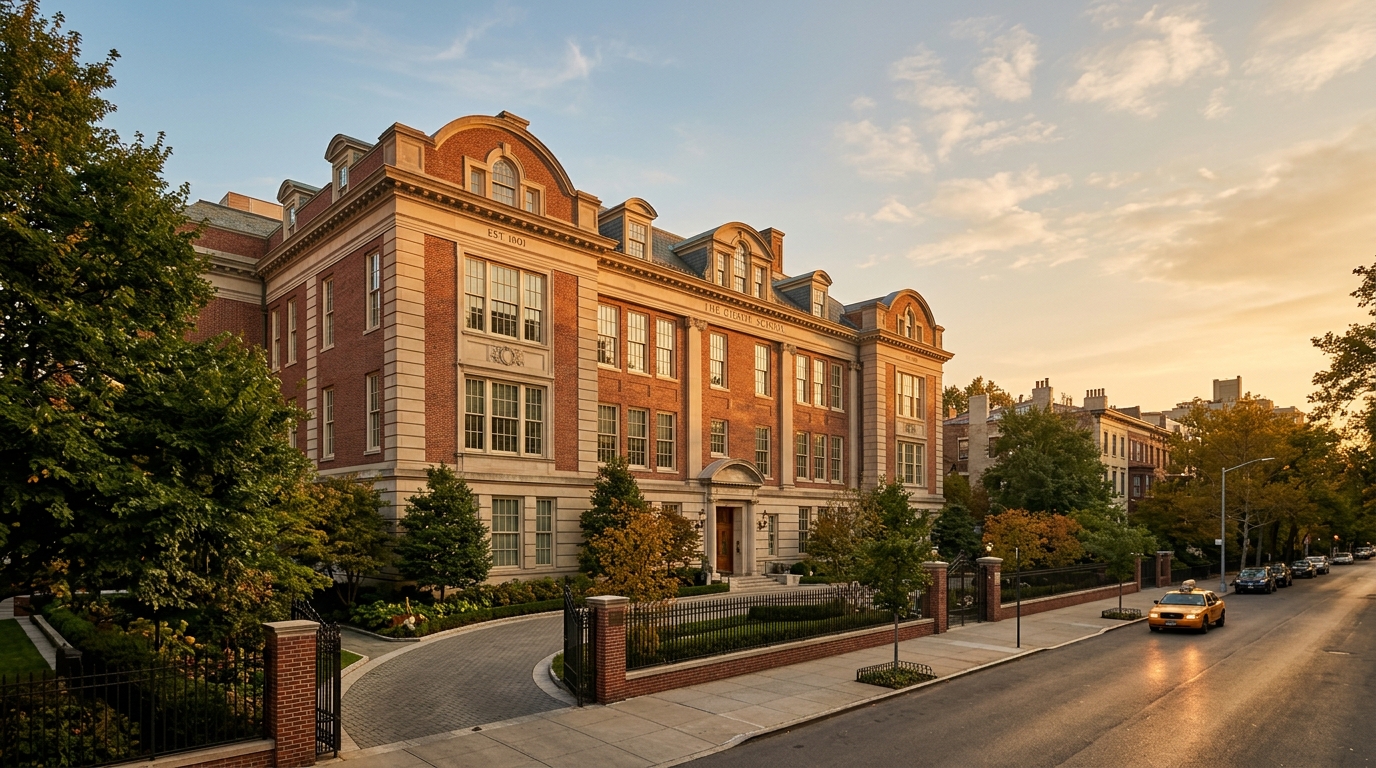
The Chapin School
New York City · United States
On the East River's edge, a K-12 girls' school where two years of Latin are compulsory and no valedictorian is named.
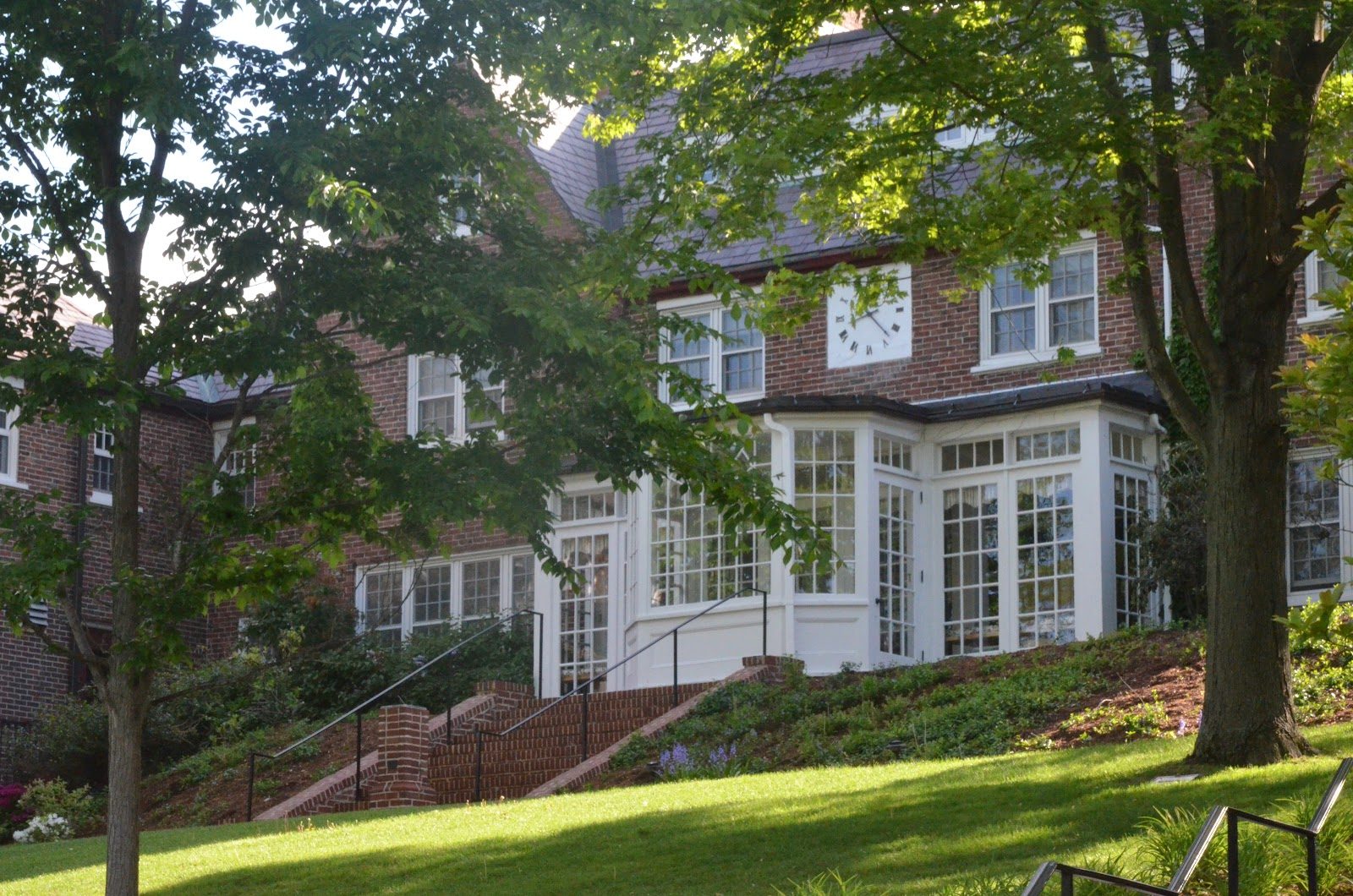
Belmont Hill School
Belmont · United States
A hilltop day school outside Boston, where jacket-and-tie ritual and family-style lunch anchor a century-old all-boys formation.
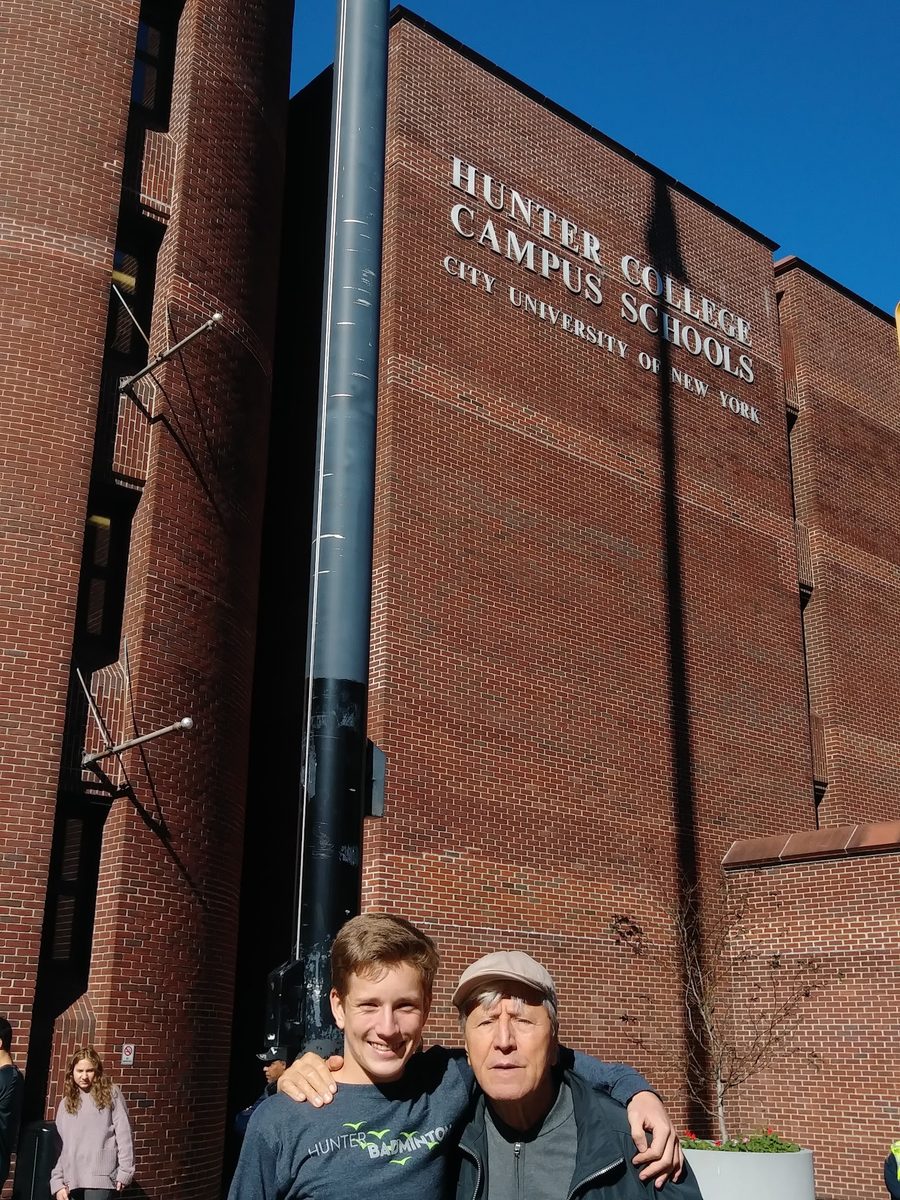
Hunter College High School
New York City · United States
A tuition-free CUNY-run gifted school on the Upper East Side, admitting by a single brutal exam and about 7 percent of applicants.

The Spence School
New York City · United States
Since 1892 on Manhattan's Upper East Side, an all-girls institution built on research fellowships and a founder's progressive vision.
Same country and curriculum — closest matches within ±10 points either way