
Massachusetts
Belmont Hill School
high confidence· 5/6 cats · 3.07 avg sourcesA hilltop day school outside Boston, where jacket-and-tie ritual and family-style lunch anchor a century-old all-boys formation.
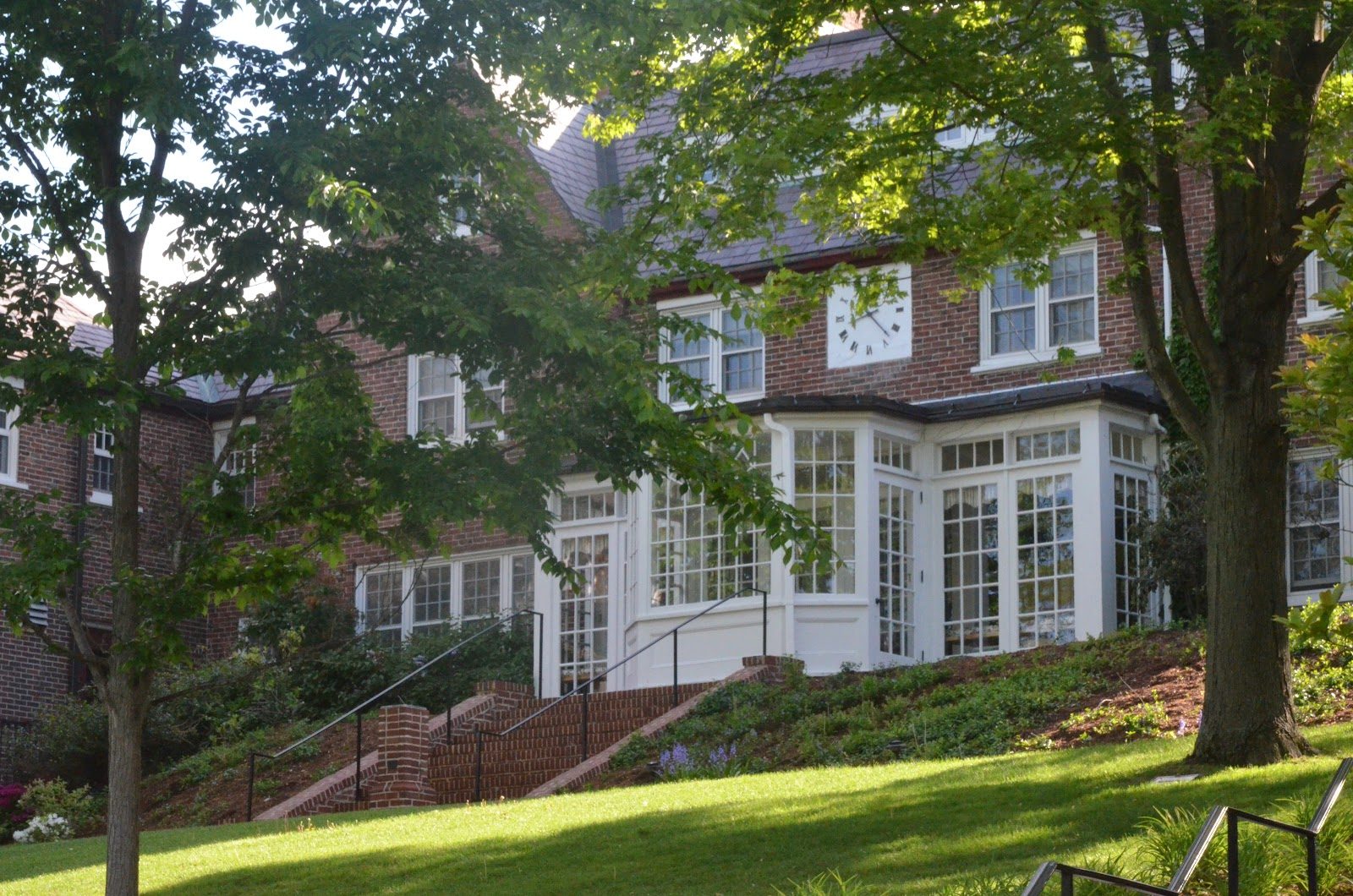
Photo © Belmont Hill School via Google Maps
Type
Both
Ages
12–18
Curriculum
American
Qualifications
AP
Ratio
6:1
The Verdict
Editor's commitment
Right for
Boys aged 12–18 who will use a 6:1 student-teacher ratio, 40-acre campus and 100% four-year college progression.
Wrong for
Families wanting coeducation, a less codified culture, or cheap access: this is an all-boys school charging an average $68,350 day fee.
Watch out for
Ritual matters here: 470 boys, jacket-and-tie expectations, and an average $77,650 boarding fee create a polished, demanding social world.
Ranking breakdown
Belmont Hill School · #473 of 1591
Composite score 69.2. 8 weighted criteria.
By criterion
Academic Outcomes
Weight 20%
#260
of 1529 scored
University Placement
Weight 16%
#263
of 1529 scored
Prestige & Heritage
Weight 12%
#122
of 1571 scored
Alumni Network
Weight 12%
#1312
of 1530 scored
Facilities
Weight 12%
#255
of 1534 scored
Transparency & Communications
Weight 8%
#254
of 1532 scored
Peer & Industry Review
Weight 10%
#250
of 1548 scored
Admissions Selectivity & Demand
Weight 8%
#247
of 1529 scored
Score history
Belmont Hill School · 2026
Movement across 2024–2026. Peer average overlaid.
Overall — 2024–2026
69.2/ 100
▲ +20.7 vs 2025
year on year
Peer & Industry Review
How Belmont Hill School is regarded in the sector
78
Strong · medium confidence
Belmont Hill School is a well-regarded all-boys independent day school in Massachusetts, frequently mentioned alongside other elite New England prep schools (e.g., Roxbury Latin, Noble and Greenough) in regional press coverage of top private schools and college placement statistics. It has a strong alumni network with notable graduates in business, politics, and academia, and is consistently referenced in Boston-area 'best private schools' rankings and college counseling circles, though it lacks the national/international brand recognition of boarding schools like Phillips Exeter or Andover.
Evidence sources
- Charlie Baker — Governor of Massachusetts, Politics
- Jonathan Kraft — President, New England Patriots/Kraft Group, Business
- Josh Kraft — President, New England Patriots Charitable Foundation, Business
Editors' overview
Belmont Hill trades on ritual, and in this case the ritual has substance. Jacket and tie, family-style lunch and an all-boys setting can read as old New England theatre; here they form a deliberate system for boys aged 12 to 18. The school sits on a 40-acre campus with 18 buildings in Belmont, just outside Boston, and enrols 470 students drawn from more than 80 communities. Its scale matters: this is small enough to know boys closely, but large enough to sustain serious breadth in sport, languages and advanced courses. The academic engine is strong. The student-teacher ratio is 6:1, 75% of faculty hold master’s degrees and 6 hold doctorates. In May 2025, 227 students sat 465 AP exams and 432 scores were 3 or better, a 92.9% hit rate. That is hard evidence of a school that teaches with discipline, not just polish.
What marks Belmont Hill out is the way it combines patrician tradition with real academic and pastoral infrastructure. Every student has a faculty adviser; the school also offers health and academic support services. It teaches five languages — Chinese, French, Spanish, Latin and Greek — which tells you something about its intellectual range and its refusal to flatten the curriculum into pure pragmatism. Financial aid is substantial: $7.9 million for 2025–26, supporting 29% of students with an average grant of $55,000. That does not make Belmont Hill cheap. The average annual day fee is $68,350, and the average annual boarding fee is $77,650. This sits firmly in the top tier of the US independent-school market, and parents should expect a school with high expectations, entrenched customs and an unapologetically demanding peer culture.
This belongs on a shortlist for families who want a boys’ school with real academic heft, strong adult oversight and a culture that takes character formation seriously. It will suit boys who thrive with structure, who can handle competition without needing constant reassurance, and who want a campus life where camaraderie, sport and scholarship carry equal weight. It will not suit every child. Co-educational families, or parents who dislike formal dress, inherited traditions and an explicitly masculine formation, will find cleaner fits elsewhere. But for the right boy — intellectually ambitious, socially robust and responsive to clear standards — Belmont Hill offers a deeply coherent education with an unusually strong record of turning adolescence into adulthood.
Academic Performance
Belmont Hill has one clear piece of externally benchmarked academic evidence, and it is strong. Its students produced a 92.9% score of 3 or better across AP sittings in the latest published round. In a US independent-school market where many schools advertise course breadth but publish little about outcomes, that level of disclosure matters. So does the hit rate itself: this is serious academic output, not decorative rigour. The volume of testing also counts. With 465 AP exams taken, this was not a tiny cohort generating flattering percentages from a narrow sample; it reflects a school with real depth in advanced study and a student body pushed to sit demanding external papers in meaningful numbers.
Set against peers, Belmont Hill sits in the academically hard-edged tier of selective New England day schools for boys. It does not publish SAT or ACT aggregates here, and it does not give a full AP score distribution beyond the threshold figure, so the public record stops short of complete transparency. Even so, the pattern is clear enough. A school that sends every senior to a four-year college, records National Merit recognition, and posts strong AP conversion at scale belongs among the high-performing independents around Boston rather than the merely polished ones. Parents should read the profile as one of disciplined attainment: high expectations, external validation, and little sign of grade-inflated complacency.
Facilities
Belmont Hill’s physical plant is strong by the standards of a compact New England boys’ school. The important point is not spectacle but coverage. An 18-building campus gives it enough room to support the full school day properly: classrooms built for a wired one-to-one environment, dedicated health and academic support, and the institutional spaces that matter in a school built around supervision, routine and shared meals. The layout suits its culture. This is not a glossy sprawl where boys disappear into anonymous blocks; it is a tightly run, high-oversight campus in which movement, contact with adults and communal habits form part of the educational method. The hilltop setting also gives the place a self-contained, clubby identity that many peers chase and fewer achieve.
Against rival day schools around Boston, Belmont Hill sits in the upper bracket for breadth rather than architectural drama. It does not trade on the research-lab scale of the biggest co-educational independents, and families hunting headline-making specialist centres in engineering, design or performing arts will find flashier estates elsewhere. But that misses the point. For a school of its size, the campus is well-proportioned and functionally serious: enough buildings, enough grounds and enough specialist capacity to sustain academics, sport, advising and boarding without strain. Parents choosing between peer schools should read the facilities as coherent rather than extravagant — a campus that serves the school’s disciplined social model, not a vanity project in brick and glass.
The hilltop setting also gives the place a self-contained, clubby identity that many peers chase and fewer achieve
Prestige
Belmont Hill carries *real New England independent-school cachet*. Part of that rests on age and ritual, but prestige here is not just costume. The school has the social markers affluent Boston families recognise — formal dress, family-style lunch, a hilltop campus, a strong alumni network — and it backs them with institutional substance. The endowment is $194 million, financial aid reaches a meaningful share of the roll, and the faculty bench is stronger than many schools of comparable size. Prestige built only on manners feels hollow; Belmont Hill pairs its old-guard polish with academic seriousness, pastoral structure and a community that expects boys to take standards seriously.
The destination pattern reinforces that standing. This is not a school spraying names across a marketing page; it sends boys on to selective four-year colleges and does so with consistency. Its public profile is also helped by a documented notable-alumni base, with at least 35 figures of public consequence across business, scholarship, journalism and sport. That matters because prestige in American independents is cumulative: outcomes, family perception, alumni reach and peer-school reputation feed each other over decades. Belmont Hill sits in the upper tier of boys’ schools around Boston and in the serious national bracket for families considering single-sex education. The limiting factor is scope, not standing: this is a boys’ school with a specific ethos, not a universal badge of status. For the families who want that ethos, the name carries weight without gimmickry.
We have not seen aggregate SAT or ACT figures, and the AP disclosure stops at the headline threshold rather than a full score breakdown
Communications
Belmont Hill communicates like a school that expects parents to meet it halfway. The website is orderly, detailed and practical: key institutional facts, leadership, student support, languages, financial aid and even campus access instructions are easy to find. That matters more than glossy storytelling. Schools with weak parent communication bury essentials under mood-setting copy; Belmont Hill does not. The college counselling page is flagged, the matriculation list is available, and the school publishes hard academic signals such as AP outcomes and National Merit recognition. It also gives parents concrete welfare information: every boy has a faculty adviser, with health and academic support in the structure rather than treated as an afterthought. For a school with a high-control culture and strong internal rituals, that level of public specificity is a mark of competence.
The limits are clear too. Belmont Hill publishes selected outcome data, not the full dashboard. We have not seen aggregate SAT or ACT figures, and the AP disclosure stops at the headline threshold rather than a full score breakdown. That leaves parents with a partial rather than complete picture of attainment. The tone of communication also mirrors the institution itself: formal, confident, not remotely hand-holding. Families who want constant digital warmth or extensive narrative about day-to-day classroom life will find the school spare and institution-first. Families who value clarity, operational detail and a school secure enough to publish real numbers — including $7.9 million in aid and a 92.9% AP success rate — will judge the communication effective.
Uniqueness
What makes Belmont Hill distinctive is not the existence of tradition but the way tradition is operationalised. Plenty of American independents keep a tie code or talk about character; Belmont Hill builds a full adolescent system around male formation, daily ritual and close adult oversight. Family-style lunch matters here because it forces conversation across ages and social groups. The adviser structure matters because boys do not drift unseen. The result is a school that treats manners, resilience, competition and responsibility not as decorative values but as daily practice. Add an all-boys environment and optional boarding, and you get a culture that is deliberately contained, high in expectation and not remotely casual about how boys conduct themselves with peers and adults.
That brings clear gains for the right student. Boys who need structure, clear rules and a communal rhythm get exactly that, backed by a faculty body of unusual depth for a school this size and a staffing model that allows real scrutiny. The language offer, including both modern and classical options, adds a strand of intellectual seriousness that cuts against the caricature of the jockish boys’ school. So does the school’s public disclosure of outcomes, from 92.9% AP scores at 3 or above to National Merit recognition. Belmont Hill’s uniqueness, then, lies in its old-guard masculine code paired with hard academic accountability. For sturdy, ambitious boys, that can be formative in the best sense. For children who recoil from formality or gendered institutional culture, it will feel narrow.
What makes Belmont Hill distinctive is not the existence of tradition but the way tradition is operationalised
Student Profile
Belmont Hill suits boys who can live inside a high-structure culture without chafing at it. The social fit is not mysterious. This is a school for boys who can handle formality, accept visible standards and function in an environment where adults keep a close watch. The all-boys setting, adviser system and communal routines reward boys who are socially sturdy, coachable and willing to contribute beyond their immediate friendship group. It also helps that the intake is drawn from over 80 communities, which gives the student body a wider social spread than the old caricature of the monocultural Boston prep school. Even so, the dominant mode is contained, disciplined and competitive. A boy who needs loose structure, constant affirmation or a highly informal relationship with teachers will find the culture hard work.
The academic fit is equally clear. Belmont Hill works for boys with genuine intellectual appetite, not just polished manners or sporting confidence. The school offers both modern and classical languages, and its public academic data points to boys willing to sit demanding external exams in volume. Families should also note the economic profile: financial aid reaches 29% of students, with an average grant of $55,000, which broadens access in a school that still sits in an expensive, socially confident corner of the market. The right student is bright, resilient and responsive to expectation. The wrong one will read the same environment as pressurised or narrowly masculine.
Belmont Hill’s uniqueness, then, lies in its old-guard masculine code paired with hard academic accountability
Co-curricular strengths
Arts & sport, on a separate axis
Overall 8.02/10
Scored 0-10 from the school's own published evidence. This axis is editorial-only — it does not feed the main WTS ranking.
Sports
9.6/10
Absolute ISL heavyweight; operates a dominant varsity model in wrestling, crew, and ice hockey with elite collegiate pipelines.
Drama
8.7/10
Ambitious theater curriculum staging collaborative plays with neighboring girls' schools inside their mainstage theater.
Dance
4.5/10
Kept strictly as a minor auxiliary component for stage movement in musical theater or physical movement exercises.
Music
8.8/10
Deeply institutionalized choral and jazz tracking modules feeding active campus events and seasonal concerts.
Visual Arts
8.5/10
Sprawling studio footprint specializing in high-end woodworking design, sculpture, and digital graphics.
Editor-verified · 8/6/2026
Outcomes & destinations
Where students go next
Top destinations
389 placements
- American University· 1
- Amherst College· 4
- Assumption University· 1
- Babson College· 12
- Bates College· 6
- Bentley University· 4
- Boston University· 5
- Boston College· 23
- Bowdoin College· 12
- Brandeis University· 3
- Brigham Young University· 3
- Brown University· 8
- Bucknell University· 3
- University of California, Berkeley· 1
- University of California, San Diego· 1
- Carleton College· 1
- Carnegie Mellon University· 1
- University of Chicago· 8
- Colby College· 9
- Colgate University· 8
- Colorado College· 2
- Columbia University· 1
- Connecticut College· 8
- Cornell University· 8
- Dartmouth College· 15
- Davidson College· 3
- Dickinson College· 1
- Duke University· 5
- Elon University· 2
- Emory University· 3
- Fairfield University· 1
- Franklin & Marshall College· 1
- George Washington University· 2
- Georgetown University· 10
- Grinnell College· 1
- Hamilton College· 3
- Harvard College· 23
- College of the Holy Cross· 7
- Indiana University· 2
- Johns Hopkins University· 4
- Kenyon College· 1
- Lafayette College· 3
- Lehigh University· 1
- Le Moyne College· 1
- University of Massachusetts Amherst· 2
- University of Massachusetts Lowell· 1
- Massachusetts Institute of Technology· 3
- Miami University· 1
- University of Miami· 1
- University of Michigan· 3
- Middlebury College· 8
- New York University· 1
- Northeastern University· 7
- Northwestern University· 2
- University of Notre Dame· 3
- Occidental College· 2
- University of Pennsylvania· 4
- Pomona College· 2
- Princeton University· 7
- Providence College· 3
- Purdue University· 2
- Quinnipiac University· 1
- Rice University· 1
- University of Richmond· 6
- University of St Andrews· 2
- Saint Anselm College· 1
- St. Lawrence University· 1
- Saint Michael's College· 1
- Skidmore College· 3
- Southern Methodist University· 4
- Stanford University· 2
- Stonehill College· 1
- Syracuse University· 6
- University of Texas at Austin· 1
- Texas Christian University· 1
- Trinity College· 8
- Tufts University· 11
- Tulane University· 5
- Union College· 4
- United States Naval Academy· 1
- Vanderbilt University· 3
- University of Vermont· 2
- Villanova University· 3
- University of Virginia· 4
- Wake Forest University· 12
- Washington and Lee University· 2
- Washington University in St. Louis· 3
- Wesleyan University· 2
- West Virginia University· 1
- William & Mary· 1
- College of William & Mary and University of St Andrews Joint Degree Programme· 1
- Williams College· 7
- University of Wisconsin–Madison· 2
- College of Wooster· 1
- Worcester Polytechnic Institute· 3
- Yale University· 8
Reported by the school. Confirm with admissions.
Notable alumni · Wikidata
35notable alumni
2 historic (born pre-1930) · 18 modern (born post-1970)wikidata:2026-07-28 How we source this
Strengths
- +Belmont Hill maintains an 8:1 student-teacher ratio across its roughly 470 boys in grades 7-12, allowing close faculty attention.
- +The school offers 16 interscholastic sports and competes in the Independent School League (ISL), NEPSAC and NEIRA, giving boys extensive athletic options.
- +Belmont Hill sits on a 37-acre suburban campus about six miles from Boston, with facilities including the Jordan Athletic Center, Prenatt Music Center and Kraft Theater.
- +Financial aid is entirely need-based and substantial: the school awards about $7 million annually and roughly 28% of students receive tuition assistance.
- +The school is accredited by the New England Association of Schools and Colleges and holds membership in the National Association of Independent Schools and the International Boys' Schools Coalition.
Considerations
- −Belmont Hill is single-sex (boys only), which rules it out for families seeking a co-educational environment.
- −Admission is highly selective, with only about 30% of applicants admitted in 2023, and a formal application deadline of January 15.
- −Day tuition runs to roughly $68,350 and boarding to about $70,050 (2024 figures), a significant cost before any additional fees.
- −Boarding is limited to a small five-day program (fewer than 30 students who go home on weekends), so it is not a true full-time residential option for international families.
Availability
Primary entry gate & tests
ISEE/SSAT + interview
Gallery
Photo © Belmont Hill School via Google Maps
Photo © Belmont Hill School via Google Maps
Photo © Belmont Hill School via Google Maps
Photo © Belmont Hill School via Google Maps
Parent reviews
Have you sent your child here?
Voice reviews carry the strongest trust badge — we transcribe them for you to tidy up before they go live. Prefer to type? A written review is fine too.
Add your voice
In 60 seconds, tell other parents: what's the best thing about Belmont Hill School, and what surprised you when your child joined?
We ask for a Google sign-in so every review has a real face behind it — no anonymous drive-by attacks on schools, and no faked positive reviews. Your email is never shown publicly.
Send this profile to a friend
International parents rely on word-of-mouth. Share this review with someone weighing the same decision.
Schools with places
Similar schools to Belmont Hill School with places available now.
Boston University Academy
Boston · United States
- 2026-27
- CLOSEDRegular cycle closed
- 2027-28
- OPENS SOONOpens Sept '26
Noble and Greenough School
Dedham · United States
- 2026-27
- CLOSEDRegular cycle
- 2027-28
- PLACES OPENJan 15 '27 Deadline
Middlesex School
Concord · United States
- 2026-27
- CLOSEDRegular cycle
- 2027-28
- OPENS SOONOpens 1 Sept '26
Commonwealth School
Boston · United States
- 2026-27
- CLOSEDRegular cycle
- 2027-28
- OPENS SOONOpens 1 Sept '26
Availability first, then country, area, curriculum, price, co-curricular
Consider also
Also worth looking at alongside Belmont Hill School.
Pine Crest School
Fort Lauderdale · United States
Born as a 1930s tutoring practice for winter visitors, this Fort Lauderdale day school now tops the nation's Challenge Index rankings.

Episcopal High School
Alexandria · United States
A 130-acre hilltop campus 10 minutes from the Capitol, running America's only fully residential school of its caliber in a major metro area.

Rye Country Day School
Rye · United States
Founded in 1869 as a girls' seminary in Westchester, this campus still measures success by its motto: not for self, but for service.

Ransom Everglades School
Miami · United States
On Biscayne Bay since 1903, where sailing and marine science turn the water itself into a classroom
Same country and curriculum — closest matches within ±10 points either way