
Massachusetts
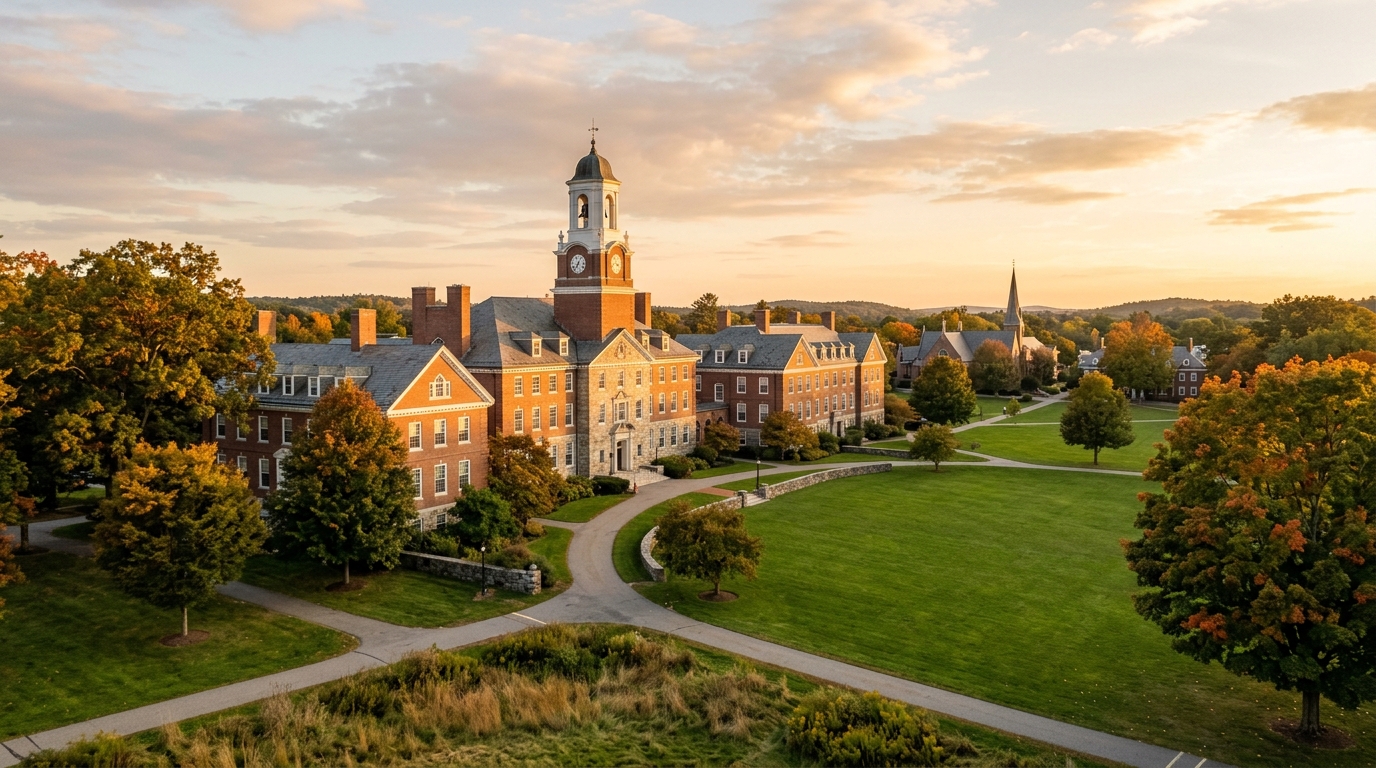
A secular alternative to New England's church-affiliated academies since 1901, on an Olmsted-designed campus in historic Concord.
Type
Both
Ages
14–18
Curriculum
American
Qualifications
AP
Ratio
4:1
The Verdict
Editor's commitment
Right for
Families wanting a secular 9–12 boarding school with a 4:1 student-teacher ratio and a compact 425-student community near Boston.
Wrong for
Anyone seeking lower-cost access, a through-school below age 14, or religious framing: day fees average $64,350 and boarding $79,200.
Watch out for
NEASC and NAIS accreditation reassure, but grades 9–12 only means no junior pipeline; entry lands in a small, high-expectation 425-student cohort.
Ranking breakdown
Middlesex School · #132 of 1591
Composite score 77.3. 8 weighted criteria.
By criterion
Academic Outcomes
Weight 20%
#208
of 1529 scored
University Placement
Weight 16%
#219
of 1529 scored
Prestige & Heritage
Weight 12%
#125
of 1529 scored
Alumni Network
Weight 12%
#72
of 1529 scored
Facilities
Weight 12%
#190
of 1529 scored
Transparency & Communications
Weight 8%
#204
of 1529 scored
Peer & Industry Review
Weight 10%
#227
of 1529 scored
Admissions Selectivity & Demand
Weight 8%
#247
of 1529 scored
Score history
Middlesex School · 2026
Movement across 2024–2026. Peer average overlaid.
Overall — 2024–2026
77.3/ 100
▲ +19.4 vs 2025
year on year
Peer & Industry Review
How Middlesex School is regarded in the sector
80
Strong · medium confidence
Middlesex School is consistently regarded as one of the elite New England boarding schools, frequently grouped with peer institutions like Groton, St. Paul's, and Deerfield in specialist education press and boarding school guides. It has a strong alumni network including notable figures in politics, business, and academia, and is a member of the selective Eight Schools Association, a benchmark grouping of top-tier US boarding schools. However, it maintains a somewhat lower public profile than the very top tier (Groton, Andover, Exeter) in terms of unanimous 'best schools' list appearances.
Evidence sources
Editors' overview
Set on an Olmsted-designed campus in Concord, 20 miles outside Boston, Middlesex has long occupied a distinct niche in the New England boarding market: secular, coeducational and intentionally small in a region crowded with historic church-affiliated or more socially stratified rivals. The numbers matter here. Middlesex teaches 425 students in grades 9–12, runs at a striking 4:1 student-teacher ratio, and draws pupils from 30 US states and 22 countries. That scale gives it a different feel from the larger New England names: more intimate, more supervised, and harder to disappear inside. Parents who want a school with reach but not sprawl will take notice.
What marks Middlesex out is the combination of tight academic community and full residential seriousness. The school talks frankly about faculty living on campus and opening their homes to students; that matters, because boarding schools either have a real all-hours adult presence or they do not. Middlesex does. The campus life also reads as broad rather than niche: theatre, chamber music, chapel talks, a cappella, student-centre sociability and competitive sport all sit inside the same compact ecosystem. The school is accredited by NEASC and NAIS, and the alumni floor is stronger than many schools of this size, with 42 notable alumni catalogued in Wikidata across politics, business, science, writing and the arts. This is not a bargain option. The average annual fee is $64,350 for day pupils and $79,200 for boarders, which places Middlesex firmly in the top tier of the American independent-school market.
The right student for Middlesex wants serious schooling without piety, structure without grandstanding, and a campus where adults are visible and expectations are hard to evade. It suits bright teenagers who thrive in close discussion, can use a small school well, and want the classic American boarding-school range without the scale or theatrical prestige culture of the biggest brands. It will also appeal to international families who want an American curriculum in English inside a contained, high-contact environment. Students chasing anonymity, looser oversight or a giant social scene will find Middlesex too contained. For the right child, that containment is the point.
Academic Performance
Middlesex does not publish aggregate AP, SAT, ACT or matriculation outcome tables in the public domain, and that limits any hard-edged judgement on raw academic performance. For a school in this fee bracket and competitive set, that opacity matters. Parents comparing it with New England peers that release university destinations, testing profiles or subject-level score distributions get less to work with here. What the school does make plain is the academic setup: a small-scale, discussion-led secondary programme with broad subject range, close faculty access and a residential culture that keeps adults near the work. That architecture supports strong outcomes; the school simply does not disclose the headline data that would prove how strong.
Relative to peers, Middlesex sits in the serious but data-light camp: clearly academically ambitious, clearly selective, but less numerically transparent than schools that publish annual exam summaries. The low staffing ratio and tightly supervised environment give it the ingredients of a high-expectation school, and its long-standing reputation in the New England boarding market keeps it in conversation with stronger academic names. Still, reputation is not results reporting. Families who want a school where independent thought, close reading and classroom discussion drive the culture will find a demanding, high-contact model here; families who want published score evidence before paying $79,200 for boarding or $64,350 for day places will find a gap.
Facilities
Facilities at Middlesex are built around the advantages of a compact boarding school rather than a sprawling estate with marquee architecture. The school itself points parents to the theatre, a non-denominational chapel used for senior talks and music, a student centre that functions as social commons, and playing fields that support a full athletic programme. The more important facility, though, is residential rather than scenic: faculty housing on campus, with adults available beyond lesson hours. In boarding schools, that counts as core infrastructure, not pastoral ornament. Against peers, this is a high-contact, all-hours setup with less emphasis on monumental showpieces and more on spaces that keep students under close adult eyes.
That brings strengths and limits. For arts, the presence of full-ensemble musicals, chamber performance and communal gathering spaces points to a school that funds participation, not just elite specialists. For sport, the fields matter, but there is no public drumbeat here about vast aquatic centres, indoor tennis complexes or the kind of athletics build-out that some richer competitors use as sales theatre. The campus reads as purposeful, traditional and community-led rather than flashy. Families looking for an estate engineered to dazzle on the tour will find stronger spectacle elsewhere. Families who care more about whether facilities reinforce daily contact, routine and involvement will judge Middlesex well equipped.
What makes Middlesex distinctive is not branding or architectural theatre; it is the school’s deliberate smallness and the way that smallness is used
Prestige
Middlesex has real prestige, but it is contained prestige, not mass-market glamour. In the American boarding world, that distinction matters. The school draws authority from selectivity, a long-established place in the New England independent sector, and a scale that keeps standards visible. Its alumni floor carries weight for a school of this size: 42 notable alumni catalogued in Wikidata across politics, finance, science, writing and the arts, including 2 star-tier drama laureates. That does not put Middlesex in the absolute celebrity bracket occupied by the most mythologised boarding schools, but it places it firmly in the serious upper tier: respected by people who know the sector, less fixated on spectacle, and stronger in substance than in brand noise.
The prestige also rests on social and cultural coding. Middlesex was founded to educate old Boston families, and that heritage still gives it quiet establishment cachet even as the school now enrols students from far beyond that original circle. Its small scale works in its favour here: the institution feels deliberate and hard to game, with less room for a family to buy gloss and more pressure on a pupil to hold their own. The fee level reinforces that status. An average of $79,200 for boarding places sets a clear market signal: this is an expensive, highly selective school selling access to a tight network, close adult attention and a name that carries real eastern-seaboard weight.
Middlesex teaches 425 students in grades 9–12, runs at a striking 4:1 student-teacher ratio, and draws pupils from 30 US states and 22 countries
Communications
Middlesex communicates in the voice of a school that expects parents to trust its internal culture. The public-facing copy is polished, coherent and full of concrete scenes: classrooms in discussion, faculty houses with open doors, senior talks in chapel, rehearsals, games and student-centre life. That gives families a clear read on atmosphere and adult presence. It does not give them much operational detail. There is little public evidence of the kind of hard information many parents want when stakes and fees are this high: no published dashboard of outcomes, limited quantification beyond the memorable 4:1 ratio, and heavy reliance on tone, tradition and community language. For current parents, that style can work well if the day-to-day communication is strong behind the login. For prospective parents, it leaves too much to inference.
The effectiveness, then, is uneven. Middlesex is strong at communicating what it values and how life on campus feels. It is weaker at communicating measurable performance, institutional self-scrutiny and practical transparency. That distinction matters. Schools with this level of selectivity and cost need more than elegant prose and warm vignettes; they need published evidence that answers hard parental questions quickly. Middlesex does not do that in the public domain. The result is a communications model that is confident, highly controlled and culturally legible, but not fully transparent. Families who buy schools on ethos will find enough. Families who want data before commitment will find the messaging too curated.
Uniqueness
What makes Middlesex distinctive is not branding or architectural theatre; it is the school’s deliberate smallness and the way that smallness is used. In a corner of American boarding education crowded with institutions built on chapel tradition, inherited grandeur or social display, Middlesex offers a secular, tightly supervised version of the model. Faculty do not vanish after lessons. They live on site, keep their doors open, and form part of the daily rhythm of the place. That creates a school where teenagers are known in full: in class, in houses, in rehearsals, on the fields, and in the in-between hours when problems or ambitions surface. For students, the gain is obvious: more adult scrutiny, more access, more accountability, and less room to drift.
It also has a rare balance of intimacy and reach. The school is small enough for a pupil to become legible quickly, but broad enough to pull together students from 30 states and 22 countries. That combination matters. It gives pupils a compact social world without provincialism, and a high-pressure, high-support environment without the anonymity of a larger campus. Add the school’s roots in old Boston privilege and its later scholarship expansion, and Middlesex lands in an unusual position: establishment in tone, but not doctrinal; selective, but not performatively grand. The result suits students who want close adult attention, strong peer culture and a boarding school that feels serious rather than theatrical.
That scale gives it a different feel from the larger New England names: more intimate, more supervised, and harder to disappear inside
Student Profile
Middlesex suits teenagers who do their best work when adults know them well and excuses do not survive long. This is not a campus for drifting at the edges. The combination of a small, closely watched community, on-site faculty and a 4:1 staffing ratio creates a student culture where participation is visible, academic passivity gets exposed, and social behaviour carries consequences. The strongest fit is a pupil who can handle constant accountability: ready to speak in class, join the life of the school beyond lessons, and live comfortably in a setting where teachers remain part of the day after the timetable ends. Students who need bustle, anonymity or room to disappear will find Middlesex too enclosed.
It also fits a child who wants seriousness without religious framing. The school’s secular identity matters in a New England market where tradition has long run through chapel and church affiliation. Middlesex offers communal ritual and institutional structure without doctrinal overlay, which will appeal to families who want a disciplined, high-expectation boarding-school education without piety. Socially, the intake mixes old American independent-school culture with a wider national and international reach, so the ideal student can move between confidence and humility: secure enough to hold their ground, mature enough not to perform status. For the right teenager, this is a demanding, adult-shaped place that rewards self-possession, curiosity and stamina.
Parents who want a school with reach but not sprawl will take notice
Co-curricular strengths
Arts & sport, on a separate axis
Overall 8.26/10
Scored 0-10 from the school's own published evidence. This axis is editorial-only — it does not feed the main WTS ranking.
Sports
9/10
Highly competitive ISL league performer, fielding dominant varsity lacrosse, field hockey, and crew teams on a picturesque Massachusetts campus.
Drama
8.5/10
The Rachel Carson Music and Campus Center anchors an ambitious dramatic tracking program, mounting complex classical and modern plays.
Dance
6.5/10
Active afternoon co-curricular activity offering structured contemporary and jazz choreography classes.
Music
8.8/10
Excellent chamber orchestras, jazz ensembles, and vocal troupes that anchor major seasonal campus showcase events.
Visual Arts
8.5/10
Studio-intensive fine arts tracking housed within the fine arts center, prioritizing high-end digital design and sculpture portfolios.
Editor-verified · 8/6/2026
Notable alumni · Wikidata
42notable alumni
15 historic (born pre-1930) · 6 modern (born post-1970)wikidata:2026-07-28 How we source this

WTS 300 badge
2025/26 editionMiddlesex School is one of the World's Top 300 Schools for 2025/26. Claim your listing to add it to your site →
Strengths
- +Very low student-to-teacher ratio of 4:1 with an average class size of around 12, enabling close faculty attention.
- +Long-established college-preparatory boarding school founded in 1901, with a 350-acre campus set 20 miles from Boston.
- +Broad co-curricular offering for a school of its size, including 20 interscholastic sports and substantial performing and visual arts participation.
- +Notable alumni across public life, business and the arts, including actor Steve Carell and Instagram co-founder Kevin Systrom.
- +Draws students from roughly 30 US states and 20 countries, giving a genuinely national, if modestly international, boarding cohort.
Considerations
- −Highly selective, with a reported acceptance rate of around 16 percent, well below the typical US boarding school average.
- −Boarding tuition of roughly $79,200 for 2025-26 places it among the most expensive secondary options in the United States.
- −Small total enrollment of about 425 students across grades 9-12 means fewer elective and specialist course options than larger prep schools.
- −International enrollment is a relatively modest share of the student body, so families seeking a heavily internationalised peer group may find the culture predominantly American.
Availability
Primary entry gate & tests
SSAT/ISEE + Interview
Parent reviews
Have you sent your child here?
Voice reviews carry the strongest trust badge — we transcribe them for you to tidy up before they go live. Prefer to type? A written review is fine too.
Add your voice
In 60 seconds, tell other parents: what's the best thing about Middlesex School, and what surprised you when your child joined?
We ask for a Google sign-in so every review has a real face behind it — no anonymous drive-by attacks on schools, and no faked positive reviews. Your email is never shown publicly.
Send this profile to a friend
International parents rely on word-of-mouth. Share this review with someone weighing the same decision.
Schools with places
Similar schools to Middlesex School with places available now.
Loomis Chaffee School
Windsor · United States
- 2026-27
- WAITPOOLLate/Rolling Space Available
- 2027-28
- OPENS SOONOpens 1 Sept '26
Riverdale Country School
New York City · United States
- 2026-27
- WAITPOOLLate application possible
- 2027-28
- OPENS SOONOpens 8 Sept '26 (Noon ET)
Ethical Culture Fieldston School
New York City · United States
- 2026-27
- WAITPOOLLimited late availability
- 2027-28
- OPENS SOONOpens post-Labor Day '26
Davidson Academy of Nevada
Reno · United States
- 2026-27
- PLACES OPENApplications still open
- 2027-28
- OPENS SOONOpens late summer '26
Availability first, then country, area, curriculum, price, co-curricular
Consider also
Also worth looking at alongside Middlesex School.
Noble and Greenough School
Dedham · United States
Founded in Boston in 1866, this Charles River campus pairs rigorous academics with hands-on EXCEL leadership training.

Cate School
Carpinteria · United States
A century-old mesa-top boarding school above the Pacific, where equestrian roots meet inquiry-driven academic rigor.

Commonwealth School
Boston · United States
In Back Bay brownstones, a 150-student cohort takes college-level seminars from set theory to Shakespeare

Concord Academy
Concord · United States
No class rank, no academic prizes, and mandatory arts study set apart this selective day-and-boarding school in literary Concord.
Same country and curriculum — closest matches within ±10 points either way