
West Midlands
BOA Stage & Screen Production Academy
In Birmingham's Jewellery Quarter, a 16-19 academy trains backstage talent for the BBC, the RSC and Birmingham Royal Ballet.
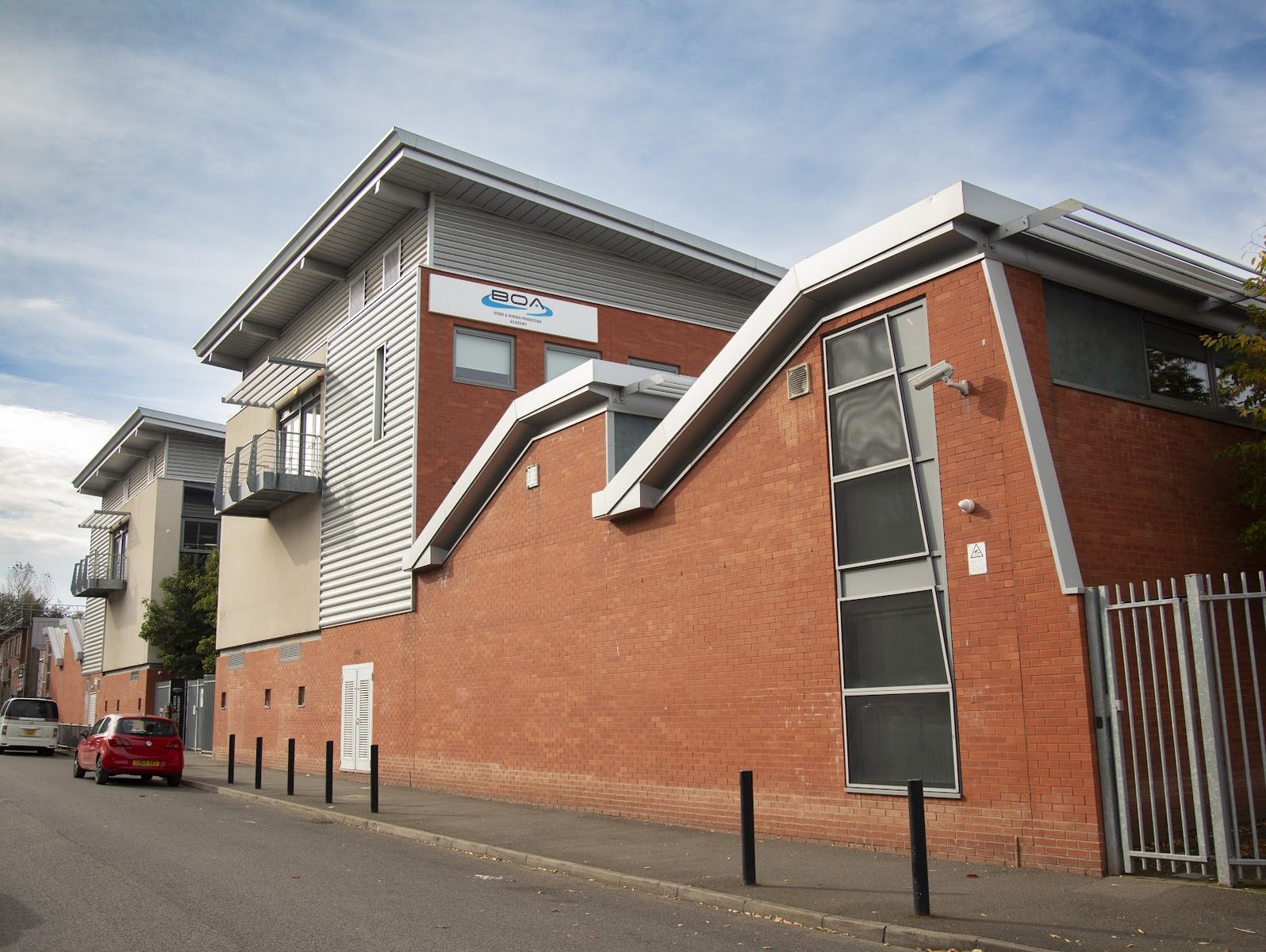
Photo © BOA Stage and Screen Academy via Google Maps
Type
Day
Ages
16–19
Curriculum
BTEC
Ratio
—
The Verdict
Editor's commitment
Right for
Focused 16–19 students who want BTEC study in English and a direct run at stage, screen and digital production.
Wrong for
Families wanting a broad sixth form, A-levels, boarding or a through-school from younger years; BOA is a day academy founded in 2012.
Watch out for
Admission rests on an aptitude workshop, not prior experience; that still makes BOA selective, and the school does not publish aggregate outcomes.
Ranking breakdown
BOA Stage & Screen Production Academy · #1524 of 1591
Composite score 47.4. 8 weighted criteria.
By criterion
Academic Outcomes
Weight 20%
#1299
of 1529 scored
University Placement
Weight 16%
#263
of 1529 scored
Prestige & Heritage
Weight 12%
#1570
of 1571 scored
Alumni Network
Weight 12%
#1180
of 1530 scored
Facilities
Weight 12%
#1497
of 1533 scored
Transparency & Communications
Weight 8%
#1521
of 1532 scored
Peer & Industry Review
Weight 10%
#1534
of 1548 scored
Admissions Selectivity & Demand
Weight 8%
#990
of 1529 scored
Peer & Industry Review
How BOA Stage & Screen Production Academy is regarded in the sector
60
Respected · low confidence
BOA has active links with BBC Birmingham, regional production companies and Metro Studios, earning respect within the West Midlands creative sector though limited international industry visibility.
Award

Elite Film 50
World's Top School · The Global Ranking
BOA Stage & Screen Production Academy is featured on our Global Top 50 ranking at #17. This seal is available for the school's marketing team to use on their website, prospectus and social channels.
Editors' overview
BOA Stage & Screen Production Academy occupies a narrow, valuable niche. This is not a general sixth form with a decent drama department. It is a specialist 16–19 day academy, founded in 2012, built for students who want technical and production-facing routes into the screen, stage and live-broadcast industries. The core proposition is clear: BTEC study, specialist pathways, and admission by aptitude workshop rather than a conventional academic filter. That matters. It opens the door to students with raw talent, practical instinct and serious creative intent, including beginners who have not had polished training before. Parents looking for A-level breadth, a conventional academic culture or a broad extra-curricular menu should look elsewhere.
What sets BOA apart is its direct relationship with industry practice. The school does not just talk about media and performance; it runs BOA TV, described as a film production company producing music promos, commercials, entertainment and multi-camera live broadcasts, and B2 Radio, a 24/7 student station for Birmingham. That gives students exposure to live workflows, deadlines, technical kit and collaborative production disciplines that many school arts courses never reach. The result is a place with professional pressure early, real technical training and a stronger sense of the backstage and production economy than many performing arts schools, which focus heavily on front-of-house performance.
Its market position is strongest for students targeting the creative industries with purpose: production, broadcast, music, acting, musical theatre, digital arts and the wider machinery around them. The alumni list is the school’s sharpest argument. It includes graduates who have moved into BBC Radio 1, West End productions, the RSC, major television drama and film, with one Oscar- and BAFTA-winning director among them. That does not make BOA a guaranteed pipeline to elite careers; no school can offer that. It does show that the academy has credible industry outcomes and that its specialist model travels beyond school showcases into paid professional work.
BOA belongs on a shortlist for the teenager who already knows that school is a route into a creative trade, not an end in itself. The right student is focused, resilient, comfortable with audition or workshop-based selection, and ready to specialise early. They will want a peer group built around performance, production and media rather than a conventional sixth-form social mix. They will also need to accept the trade-off: a specialist BTEC environment narrows the academic lane. For the right child, that focus is the whole point. For the wrong child, it is too narrow by design.
A Global Elite 50 Film school
BOA Stage & Screen Production Academy in Birmingham, England, earns its place on the Global Elite 50 Film ranking because it has built a genuine industry pipeline rather than a generic media-studies offering: alumna Nia, who studied Film, TV & Radio at BOA until 2019, trained at the National Film and Television School in Production Management for Film and Television, and has since worked as an Assistant Production Co-Ordinator on The Gentlemen, Bridgerton and The Witcher, plus Production Secretary on Disney's Snow White. That is a verifiable route from a Birmingham academy into the National Film and Television School and onto major Netflix and Disney productions.
The specialism is delivered through BTEC Level 3 Extended Diplomas spanning broadcast, film and content creation, writing, directing and screen-craft, production arts and stage management, and technical theatre and live events, each worth the equivalent of three A-levels. Facilities include a fully equipped TV studio, editing and post-production suites, two recording studios, two radio studios and a film and lecture theatre. Year 13 students make a full commercial feature film with an indie partner, and one such collaboration, Stolen Thought, was a Top 10 Finalist in the Films for the Forest competition in Austin, Texas, giving students their first IMDb credits; a separate student film, Solar, screened at the Birmingham Film Festival with multiple nominations.
Beyond Nia's NFTS-to-Netflix trajectory, Maisie Britton, who studied the writing, directing and screen-craft pathway, went on to a role in the historical drama The Cadburys, while a member of Solar's student writer-director team, Lewis Hooper, has since joined the academy as a Screen Technician.
International openness here is limited and should be stated plainly: BOA Stage & Screen is a state-funded, tuition-free English academy admitting 14-19 year-olds at Key Stage 4 and Post-16, via an aptitude workshop rather than academic grades, and it is a day school. No established overseas admissions route, visa-sponsorship pathway, or ESL programme is advertised. Families outside the UK should treat this as an aspirational benchmark rather than a direct application target unless they can independently secure UK residency or guardianship, and should contact the academy directly well ahead of the January application deadline to confirm current eligibility.
Academic Performance
BOA’s academic performance is hard to judge in the way parents can judge a conventional sixth form, because the school does not publish a clear set of aggregate external exam outcomes in the public domain. We have not seen headline pass rates, high-grade rates, value-added data or destination statistics broken down across the academy’s specialist courses. That is a real weakness. In a sector where specialist schools ask families to accept early narrowing, transparent attainment data matters. Without it, BOA sits in an opaque middle ground: strong on visible creative outcomes, weak on published academic proof.
Relative to peers, that places the academy behind the better-run specialist arts schools that pair industry-facing training with hard performance data. BOA’s public case rests far more on alumni progression and practical production work than on exam disclosure. That does not invalidate the model; for a vocational provider, professional destinations and technical competence carry weight. But parents should read the balance correctly. This is not a school selling itself on forensic academic accountability. It is selling specialist training, selective aptitude entry and access to live creative practice. For students whose priority is a trade-facing education, that can be enough. For families who want external results laid out in black and white, BOA gives too little.
Facilities
The crucial facilities here are the ones tied to production rather than campus spectacle. BOA TV and B2 Radio are the academy’s defining assets: one functions as a film production company making music promos, commercials, entertainment and multi-camera live broadcasts; the other runs as a student radio station 24/7. That matters more than a glossy theatre foyer or an impressive sports hall. Students who want to learn how crews work, how deadlines bite, and how technical mistakes carry consequences get a working environment, not a simulation. The school also organises its offer around specialist creative pathways, which points to dedicated teaching spaces for screen, performance and digital work, though the academy does not publish the kind of room-by-room facilities detail that stronger operators now give parents. That lack of precision is a clear gap.
Against peer schools, BOA’s strength is industry-shaped infrastructure. Many arts sixth forms can stage a musical and film a showcase; fewer run an always-on broadcast platform and an outward-facing production arm with a commercial brief. That gives BOA an edge for students targeting backstage, technical and media roles, not just performers chasing applause. The trade-off is breadth. Families looking for sprawling grounds, high-end sport, extensive science provision or a conventional sixth-form estate are in the wrong market. BOA’s facilities are purpose-built and narrow. In its lane, that is an advantage. Outside that lane, it is a constraint.
BOA Stage & Screen Production Academy occupies a narrow, valuable niche
Prestige
BOA carries niche prestige, not broad prestige. In the hierarchy of British post-16 education, it does not hold the social cachet of an old independent school, nor the academic status of a top sixth form known for published exam strength. Its standing comes from something narrower and more concrete: access to professional creative practice, selective entry by aptitude workshop, and visible traction in theatre, screen and broadcasting. For families inside those industries, or trying to enter them, that has real weight. The school’s partnerships-and-platforms ecosystem matters more here than league-table vanity. A student station running 24/7 and an in-house production company are not decorative add-ons; they signal a school built around working industry habits rather than school-play gloss.
That is why the academy earns serious vocational credibility but not elite all-round prestige. Its alumni record gives it legitimacy in front-line performance and media, and the names attached to the school travel well in British cultural life: the BBC, the RSC, Birmingham Royal Ballet, West End productions, film and commercial broadcasting. That said, prestige here is sector-specific and hard-earned, not universal. Outside creative circles, BOA’s name does not command the instant recognition of the country’s established academic brands. Inside its lane, it does. For the teenager who wants backstage, broadcast or performance work, that focused reputation is commercially useful and more relevant than social polish.
This is not a general sixth form with a decent drama department
Communications
BOA communicates in a fast, transactional way. The homepage pushes parents straight to the practical essentials: applications, open events, pathway choices and the admissions process. That suits a specialist academy recruiting families who already know why they are there. The tone is direct, the calls to action are prominent, and the school does not bury entry mechanics under lifestyle fluff. The key facts that matter at decision point — aptitude-based admission, no prior experience required, dates for the next intake, and the distinction between age phases — are easy to find. BOA also keeps its outward-facing channels tied to student work, with BOA TV and B2 Radio functioning as public proof of activity rather than empty branding. That gives communications a clear vocational spine and a useful sense of momentum.
Where BOA is weaker is depth. The school is good at promotion and event signposting; it is less good at giving parents the hard operational detail that builds full confidence. We have not seen strong public disclosure on academic outcomes, nor much granular explanation of day-to-day parent communication, pastoral systems, reporting routines or response standards. For a specialist institution asking families to commit early to a narrow route, that is a serious omission. The public message is energetic and industry-facing. The parental information base is thinner than it should be. Effective for attracting interest, then; less effective for answering every sensible question a careful parent will ask before committing.
Uniqueness
What distinguishes BOA is not “creativity” in the vague school-brochure sense. It is the academy’s insistence that students enter through an aptitude workshop, not a standard academic gate, and then work inside a culture built around specialist pathways and live output. That produces a different kind of sixth-form experience: less essay-and-exam prestige, more rehearsal room, edit suite, studio discipline and production deadline. The school also gives beginners a route in. That matters. Many arts-focused environments reward polish acquired elsewhere; BOA is set up to spot raw potential and train it hard. For the right student, that is genuinely distinctive.
The other point of difference is that students are not confined to internal showcases. BOA TV operates as a production company, and B2 Radio broadcasts 24 hours a day, 7 days a week. Those are serious vocational assets. They expose students to technical workflows, on-air pressure, crew reliability and the unglamorous habits that creative industries actually pay for. Add the alumni traffic into screen, stage and broadcasting, and the school’s uniqueness sharpens: this is a place where the machinery around performance carries as much weight as performance itself. That brings commercial realism, earlier professional fluency and a peer group that treats creative work as labour, not just self-expression. It also makes the academy too narrow for dabblers. For committed students, that narrowness is its edge.
The core proposition is clear: BTEC study, specialist pathways, and admission by aptitude workshop rather than a conventional academic filter
Student Profile
BOA suits teenagers who already treat creative work as a serious direction, not a hobby with good lighting. The strongest fit is the student who wants to make, rehearse, edit, crew, broadcast or perform for long stretches without needing the reassurance of a conventional sixth-form life around them. They do not need polish on day one; the school states that beginners can enter and that selection turns on aptitude, not prior experience. That opens the door to raw, hungry students with instinct, stamina and the appetite to be corrected. It also points to a peer group that is intensely specialist, career-minded and less socially conventional than the intake at a broad sixth form. If your child wants academic variety, sport-heavy school culture or a slower decision about their future, this is the wrong environment.
The right student will also tolerate pressure well. A school running a 24/7 radio station and outward-facing production work rewards reliability, time discipline and technical calm under scrutiny. Egos will find that uncomfortable; durable collaborators will thrive. This is a good fit for the teenager who likes being judged on output, can take blunt feedback, and gains energy from working with other young people who are obsessive about their craft. It is a poor fit for dabblers, for students who need constant external structure to stay on task, or for families who want a soft-edged, all-purpose school experience. BOA is for committed specialists.
It opens the door to students with raw talent, practical instinct and serious creative intent, including beginners who have not had polished training before
Co-curricular strengths
Arts & sport, on a separate axis
Overall 6.3/10
Scored 0-10 from the school's own published evidence. This axis is editorial-only — it does not feed the main WTS ranking.
Sports
3/10
Drama
8.5/10
Dance
4.5/10
Music
7.5/10
Visual Arts
8/10
Strengths
- +State-funded specialist academy for 14-19 year olds, meaning no tuition fees for UK-resident students unlike most creative arts schools.
- +Purpose-built campus includes a TV studio, theatre with automated flying, editing and post-production suites and recording studios used for BTEC coursework.
- +Offers a distinctive BTEC-led curriculum across Creative, Digital and Performing Arts pathways alongside core GCSEs.
- +Part of Ormiston Academies Trust, giving structural links to a national network of academies and to Birmingham's film and TV production sector.
- +Rated Outstanding by Ofsted in its most recent published inspection.
- +Publishes its Key Stage 4 and Key Stage 5 results transparently on its own website and via DfE performance tables.
Considerations
- −Entry is by aptitude workshop within a chosen pathway, so places in popular disciplines are competitive and not guaranteed.
- −As a 14-19 institution it offers no primary or lower-secondary provision, so families need a separate school for younger children.
- −The academy is a day school oriented to UK-resident families within commuting distance of Birmingham.
- −Being state-funded, capital investment and resources are tied to public budgets rather than private endowment or high fee income.
Gallery
Photo © BOA Stage and Screen Academy via Google Maps
Photo © James via Google Maps
Photo © James via Google Maps
Photo © James via Google Maps
Photo © James via Google Maps
Photo © Hannah Kershaw via Google Maps
Photo © BOA Stage and Screen Academy via Google Maps
Parent reviews
Have you sent your child here?
Voice reviews carry the strongest trust badge — we transcribe them for you to tidy up before they go live. Prefer to type? A written review is fine too.
Add your voice
In 60 seconds, tell other parents: what's the best thing about BOA Stage & Screen Production Academy, and what surprised you when your child joined?
We ask for a Google sign-in so every review has a real face behind it — no anonymous drive-by attacks on schools, and no faked positive reviews. Your email is never shown publicly.
Send this profile to a friend
International parents rely on word-of-mouth. Share this review with someone weighing the same decision.
Schools with places
Similar schools to BOA Stage & Screen Production Academy with places available now.
Availability first, then country, area, curriculum, price, co-curricular
Consider also
Also worth looking at alongside BOA Stage & Screen Production Academy.
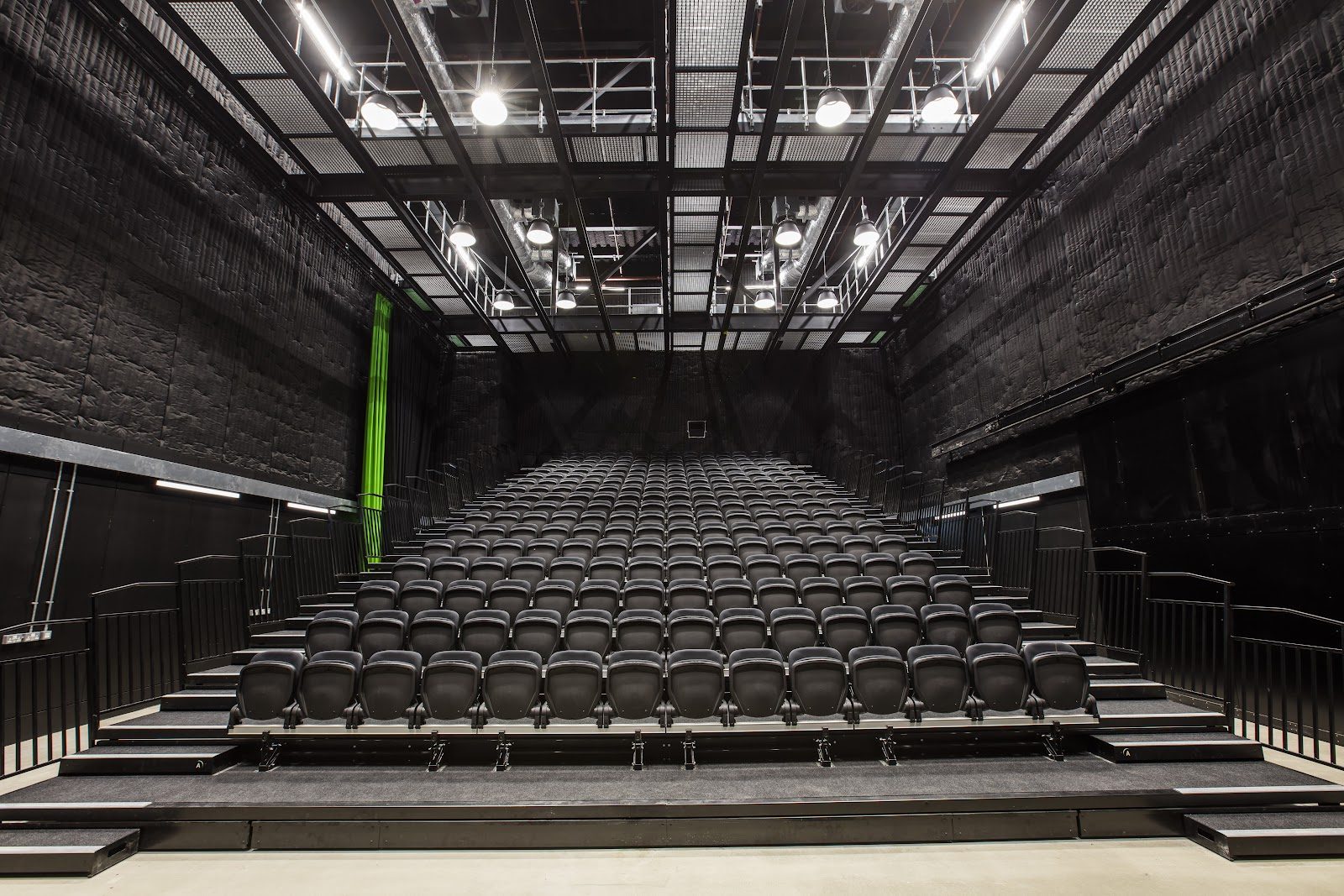
London Screen Academy
Islington, London · United Kingdom
Housed in a 1930s radio factory in Islington, this free sixth form trains students for screen careers via industry masterclasses.
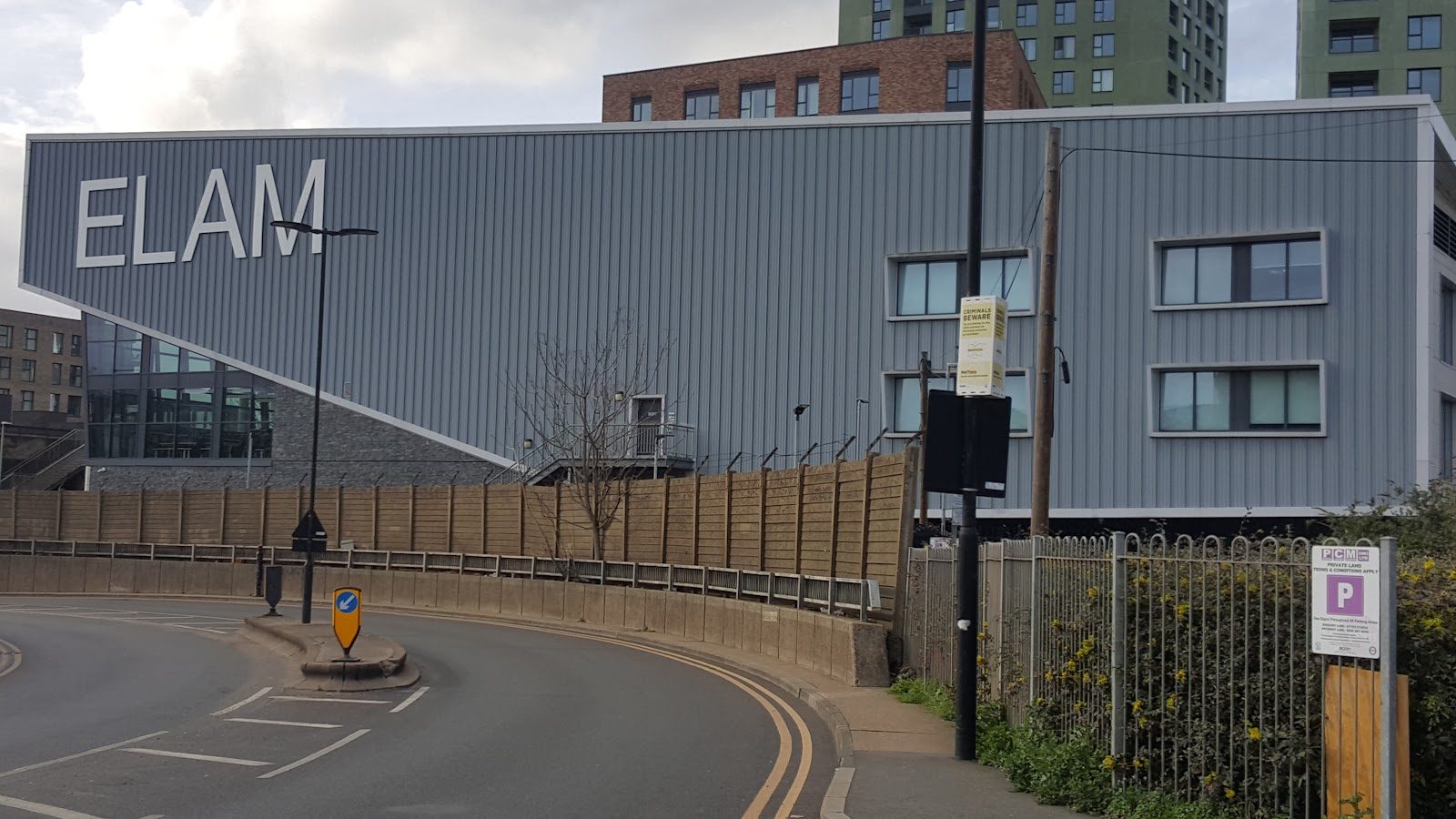
ELAM
London · United Kingdom
A free East London sixth form built around industry-standard studios, training music, games and film talent for direct industry entry.
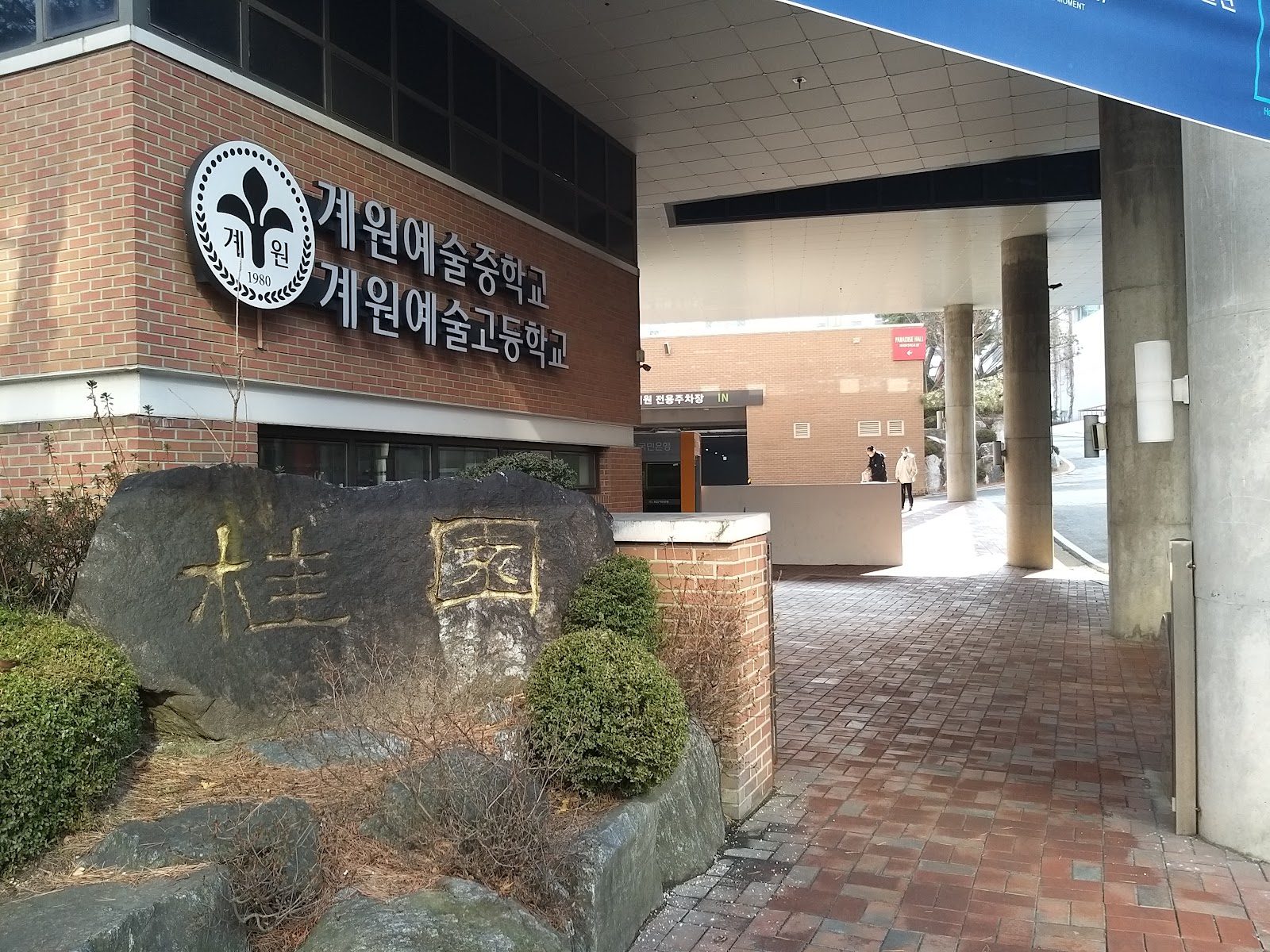
Kaywon High School of Arts
Uiwang, Gyeonggi · South Korea
Since 1980, a Gyeonggi campus splits fine art, music, dance and theatre into four dedicated conservatory tracks under one roof.

School of Performing Arts Seoul
Guro, Seoul · South Korea
Once a night school for Guro's factory workers, now a state-designated arts academy shaping Korea's stage, screen and dance talent.
Same specialism, country and curriculum — closest matches within ±10 points either way