
Muyenga
Rainbow International School Uganda
low confidence· 4/6 cats · 1 avg sourcesSixty nationalities share a nine-acre Kampala campus where Cambridge IGCSEs and BTEC pathways lead side by side to university.
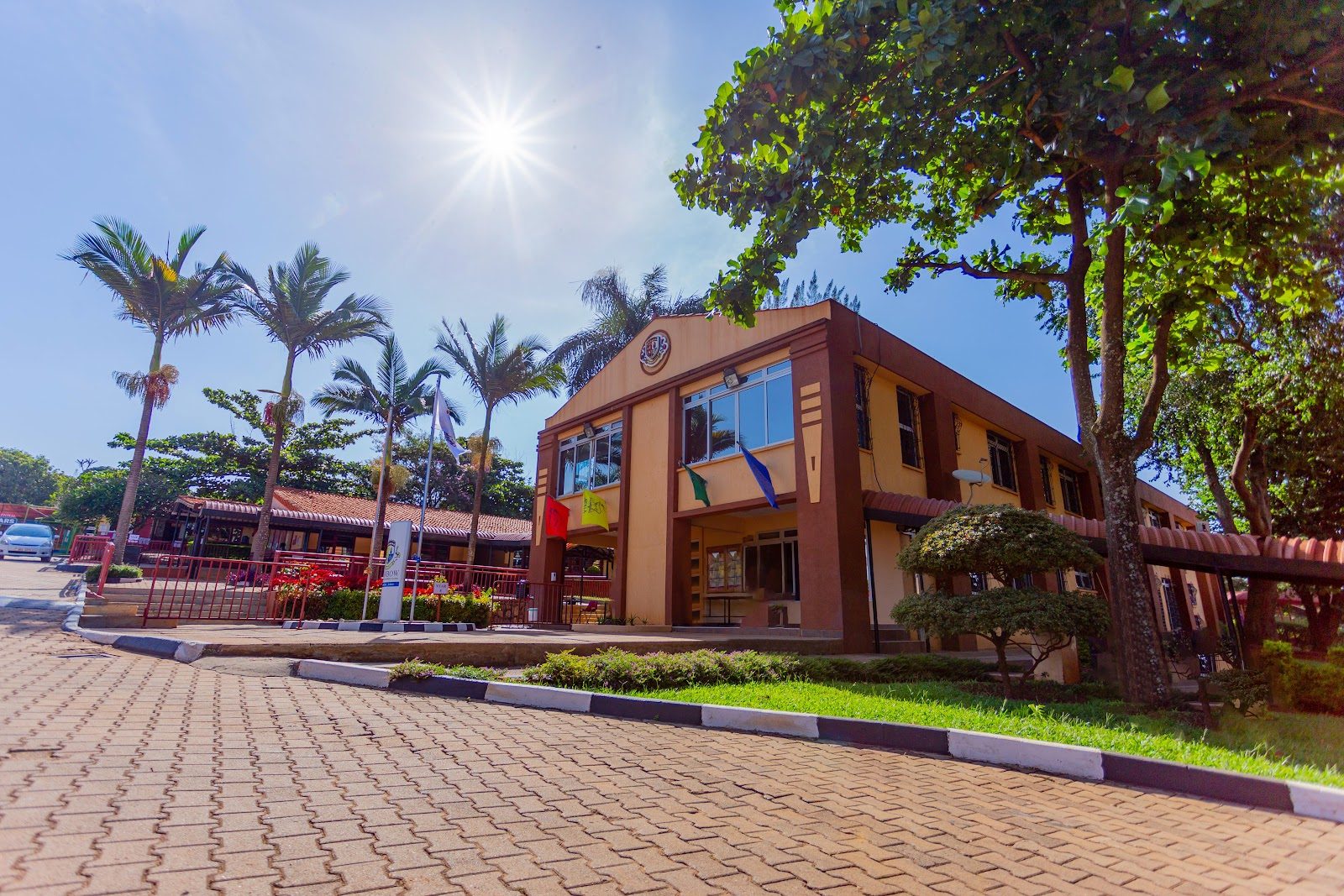
Photo © Rainbow International School via Google Maps
Type
Day
Ages
3–18
Curriculum
Cambridge International · British
Qualifications
IGCSE · A-Level
Ratio
—
The Verdict
Editor's commitment
Right for
Kampala families wanting a day school from ages 3–18 with Cambridge International schooling, English teaching and COBIS membership.
Wrong for
Families wanting boarding, religious formation or IB; Rainbow is non-religious, day-only, and the stated offer is Cambridge International/British.
Watch out for
Founded in 1993 on a nine-acre Kampala campus, it sells aspiration hard; the school does not publish exam outcomes or university destinations.
Ranking breakdown
Rainbow International School Uganda · #1380 of 1591
Composite score 52.8. 8 weighted criteria.
By criterion
Academic Outcomes
Weight 20%
#1352
of 1529 scored
University Placement
Weight 16%
#1332
of 1529 scored
Prestige & Heritage
Weight 12%
#1396
of 1571 scored
Alumni Network
Weight 12%
#1061
of 1530 scored
Facilities
Weight 12%
#1333
of 1533 scored
Transparency & Communications
Weight 8%
#1326
of 1532 scored
Peer & Industry Review
Weight 10%
#1216
of 1548 scored
Admissions Selectivity & Demand
Weight 8%
#1232
of 1529 scored
Peer & Industry Review
How Rainbow International School Uganda is regarded in the sector
63
Respected · medium confidence
I could not identify at least two independent, third-party sources (e.g., Tatler, Good Schools Guide, expat forums, education press) that substantively discuss Rainbow International School Uganda's reputation. Available information appears limited to school-published materials or unverifiable directory listings, which do not meet the evidentiary threshold required.
Editors' overview
Rainbow International School Uganda occupies a useful middle ground in Kampala’s international market: a non-religious, English-medium day school with Cambridge International and British framing, founded in 1993, serving ages 3–18 on a nine-acre campus. Its clearest distinction is breadth without obvious pretension. The school draws around a genuinely international mix — the editorial context points to sixty nationalities — while keeping a family-focused atmosphere rather than the scale and machinery of a giant expatriate school. For parents who want an international environment, a long-established Kampala address and a school that covers the full age range under one roof, Rainbow earns a place on the shortlist.
What matters most is the shape of the offer. Rainbow runs Cambridge pathways and, as your editorial context notes, places IGCSEs alongside BTEC routes to university. That matters because it widens the definition of success. This is not only a school for the narrow academic high-flyer chasing one examination track; it suits students who benefit from choice, structure and room to develop through different strengths. The school’s own language leans heavily on personal best, mentoring and individual development. Strip out the promotional gloss and the core message is clear: Rainbow wants to combine standards with close pastoral attention and steady academic guidance. COBIS and Cambridge International accreditation add useful external reference points, though parents should still ask for hard detail on subject breadth in the senior years and post-16 outcomes.
The students who fit best here are children who thrive in a diverse community, want a full through-school experience and value relationships with teachers rather than anonymity. Rainbow suits internationally mobile families, Ugandan families seeking an English-medium international education, and students who want a route that is not confined to a single academic mould. A child who enjoys a settled, mixed community, responds to encouragement, and wants access to both academic and applied pathways will find a strong fit. A child who needs a vast campus, heavy institutional prestige or highly public academic data may look elsewhere. Rainbow’s appeal lies in something more grounded: continuity, inclusion and a broad definition of achievement on a well-established Kampala campus.
Academic Performance
Rainbow does not publish the exam data that serious parents need. We have not seen aggregate IGCSE grades, top-grade distributions, cohort pass rates, average point scores, sixth-form destination lists, or year-on-year trends. That puts the school at a disadvantage against stronger operators in the international segment, where families can inspect outcomes rather than rely on ethos. The presence of parallel academic and applied routes is useful, but it also makes transparency more important: parents need to know how many students take each pathway, how those students perform, and where they go next. Without that, academic performance sits in the realm of assurance without proof.
Relative to peers, Rainbow fits the group of established international schools whose value rests on breadth, stability and community more than on hard-edged academic signalling. That is not a criticism in itself. It is a warning against over-reading the school’s claims about excellence. A family considering Rainbow should ask for the last 3 years of external results, subject-by-subject IGCSE outcomes, BTEC completion and progression data, and university destinations split by course and country. If the school can produce that cleanly, confidence rises fast. If it cannot, parents should treat academic claims with healthy scepticism. In a market where some schools trade on published results and others trade on carefully managed ambiguity, Rainbow currently sits closer to the latter.
Facilities
The school’s strongest facility asset is space. A nine-acre campus gives Rainbow more breathing room than many urban international schools, which matters in Kampala where cramped plots are common. The public-facing picture points to a conventional but serviceable spread: classrooms across the age range, science practical space, music provision and outdoor sports areas rather than a showpiece complex built to impress on tour day. That places Rainbow in the solidly functional camp. Families hunting for theatres, elite athletic infrastructure, specialist design suites or headline architecture will not find evidence of that here. Families who care more about room to move, daily usability and a campus that supports school life without flashy excess will read the estate more favourably.
Against peers, Rainbow sits above the smaller city schools that struggle to offer breadth beyond the classroom, and below the best-resourced operators that publish extensive facilities inventories and invest heavily in premium specialist spaces. The school’s own communications lean on pastoral tone more than physical plant, which tells its own story: facilities are part of the offer, not the main event. The visible strengths are practical science, early years provision and enough campus scale to support a proper through-school rhythm. The weakness is opacity. We have not seen a clear public account of laboratories, libraries, indoor sports, performance venues, technology suites or specialist senior spaces. For an established school, that lack of detail is needlessly vague and worth probing on a visit.
Rainbow’s distinctiveness lies less in any single flagship feature than in the way the pieces fit together
Prestige
Rainbow’s prestige is real but limited. In Kampala, it carries the weight of an established international school with a broad age range, a recognisable Cambridge link and a parent body drawn from 60 nationalities. That gives it social credibility and practical appeal for families who want an internationally mixed peer group without buying into the grander mythology of a top-tier legacy institution. The school’s non-religious identity also widens its reach. For many parents, that combination reads as solid, modern and accessible rather than rarefied. Prestige here rests on continuity, diversity and market familiarity, not on exclusivity.
That distinction matters. Rainbow does not project elite academic clout in the way more selective or more data-transparent schools do. It does not publish the kind of results profile that turns reputation into hard status, and it does not trade on a famous historic brand, a university-linked aura or a heavily signalled pipeline into the world’s most competitive institutions. Its standing is better described as trusted local prominence than top-table prestige. Families choosing Rainbow are buying a credible international education and a well-known school community, not a badge that carries unusual power on its own. In prestige terms, this is a respectable middle-upper market school with clear visibility and no mystique.
We have not seen aggregate IGCSE grades, top-grade distributions, cohort pass rates, average point scores, sixth-form destination lists, or year-on-year trends
Communications
Rainbow’s parent communication has a clear pastoral bias. The public face pushes contact points hard: phone numbers, WhatsApp, visit requests, a prospectus link, office hours and regular news posts from different parts of school life. That matters because it signals a school that expects routine parent traffic rather than treating communication as a formal annual exercise. The tone is warm, direct and family-oriented, with repeated emphasis on partnership and safeguarding leads named on the site. For parents of younger children, that reads as accessible and reassuring. For parents of older students, it is only a partial answer. Day-to-day approachability is visible; serious academic reporting is not.
That is the weakness. Rainbow communicates atmosphere better than substance. News items on assemblies, practical lessons and music give families a sense of school life, but they do not answer the harder questions that matter once children move up the school: reporting cycles, assessment clarity, response times, leadership visibility, parent portals, or how concerns are escalated. The use of WhatsApp points to a practical, local communication culture and will suit many families; it also risks informality without structure if not backed by disciplined systems. We have not seen enough public evidence of those systems. Verdict: effective for access and community, thin on hard information, and less rigorous than it needs to be for a school serving ages 3–18 across a complex parent body drawn from 60 nationalities.
Uniqueness
Rainbow’s distinctiveness lies less in any single flagship feature than in the way the pieces fit together. It runs as a full-age, international day school without the hard social edges that mark parts of this market: no religious frame, no obvious single-nationality tilt, and no narrow definition of success. The editorial context points to 60 nationalities, which gives the school a wider social mix than many competitors and changes daily life in concrete ways. Children grow up around different accents, customs and family expectations; that broadens confidence, social fluency and ease with difference. For internationally mobile families, that matters. For local families, it offers an education that is outward-looking without feeling imported wholesale from somewhere else.
The second point of difference is the coexistence of academic and applied routes under one roof. That gives Rainbow a more adult understanding of ability than schools that reward only one type of student. A pupil whose strengths sit in coursework, practical learning or a less exam-dominated structure is not pushed to the margins. Coupled with the school’s repeated emphasis on mentoring, partnership with parents and individual development, the result is a less doctrinaire culture than the standard “excellence” script. The benefit to students is plain: more room to develop at their own pace, stronger pastoral continuity across the age range, and a school experience that feels broad rather than brittle. For the right child, that combination is genuinely valuable.
Its standing is better described as trusted local prominence than top-table prestige
Student Profile
The children who fit best here are those who value people as much as programmes. A pupil who settles through relationships, likes being known by teachers, and benefits from a school that talks openly about mentorship, safeguarding and partnership with parents will find a supportive, close-quartered culture. The school’s international mix — 60 nationalities in the editorial record — also matters in practice. Students who are curious about other families, comfortable hearing different accents and willing to move across social groups will do well. This is a good match for internationally mobile children who need continuity without the impersonal sprawl of a giant institution, and for local families who want a more outward-facing peer group.
It is less suited to children who want a sharply selective, high-pressure academic tribe or who draw confidence from overt hierarchy and status. Rainbow’s public language centres on personal best, security and individual development, which points to a student body that is mixed in ambition, temperament and route through school. That breadth is a strength for steady, adaptable pupils and for teenagers whose talents do not sit neatly inside one narrow exam profile. It is a weaker fit for the child who wants a hard-driving, publicly benchmarked environment with visible academic pecking order. In short: students who are sociable, adaptable and responsive to encouragement will fit; students who want a more abrasive, prestige-led culture will not.
Its clearest distinction is breadth without obvious pretension
Co-curricular strengths
Arts & sport, on a separate axis
Overall 8.1/10
Scored 0-10 from the school's own published evidence. This axis is editorial-only — it does not feed the main WTS ranking.
Sports
8.5/10
Drama
8/10
Dance
8/10
Music
8/10
Visual Arts
8/10
Editor first-pass · editor-reviewable · 7/30/2026
Strengths
- +Delivers the Cambridge International curriculum, giving students a recognised pathway toward IGCSEs and A Levels for university entry abroad.
- +Located within Kampala, making it accessible for expatriate and local families based in the capital without requiring a boarding commitment.
- +As a day school, fee structures are typically lower than comparable boarding institutions in the region.
- +British curriculum framework allows for relatively straightforward transfer to other Cambridge-affiliated schools if a family relocates internationally.
Considerations
- −Carries a low editorial ranking (candidate tier), reflecting limited independently published data on academic outcomes or inspection history.
- −Less established public profile compared with Kampala's longer-running international schools, making track record harder to verify.
- −Day-only format offers no boarding option for families who may need residential schooling.
- −Publicly available information on class sizes, facilities, and exam results is sparse, requiring families to request specifics directly from the school.
Availability
Primary entry gate & tests
Academic Record
Gallery
Photo © mayank jain via Google Maps
Photo © mayank jain via Google Maps
Photo © mayank jain via Google Maps
Photo © Sjardug via Google Maps
Photo © Abumayos (Njuki) via Google Maps
Parent reviews
Have you sent your child here?
Voice reviews carry the strongest trust badge — we transcribe them for you to tidy up before they go live. Prefer to type? A written review is fine too.
Add your voice
In 60 seconds, tell other parents: what's the best thing about Rainbow International School Uganda, and what surprised you when your child joined?
We ask for a Google sign-in so every review has a real face behind it — no anonymous drive-by attacks on schools, and no faked positive reviews. Your email is never shown publicly.
Send this profile to a friend
International parents rely on word-of-mouth. Share this review with someone weighing the same decision.
Schools with places
Similar schools to Rainbow International School Uganda with places available now.
Collège du Léman
Versoix · Switzerland
- 2026-27
- WAITPOOLSpace-dependent
- 2027-28
- PLACES OPENRolling
Muscat International School
Muscat · Oman
- 2026-27
- PLACES OPENApps open / space-dependent
- 2027-28
- WAITPOOL2027/28 timetable TBC
Bishop Cotton School
Shimla · India
- 2026-27
- WAITPOOLSpace-dependent
- 2027-28
- PLACES OPENRolling
Millfield School
Street · United Kingdom
- 2026-27
- CLOSEDStandard route closed
- 2027-28
- PLACES OPEN11+ / 13+ / 16+ active
Availability first, then country, area, curriculum, price, co-curricular
Consider also
Also worth looking at alongside Rainbow International School Uganda.
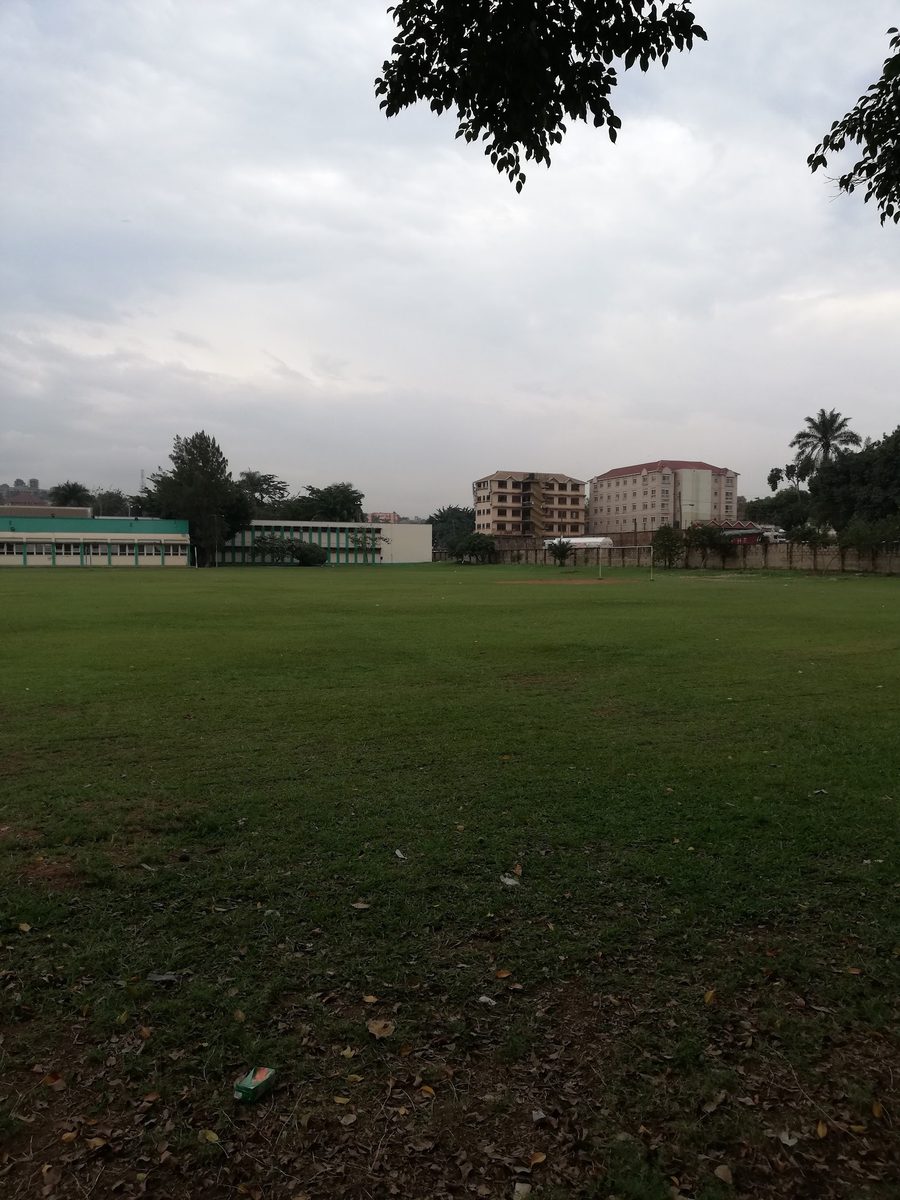
Aga Khan High School Kampala
Kampala · Uganda
Since 1959, Uganda's first multicultural school remains one of only four in the country authorised for the IB Diploma.
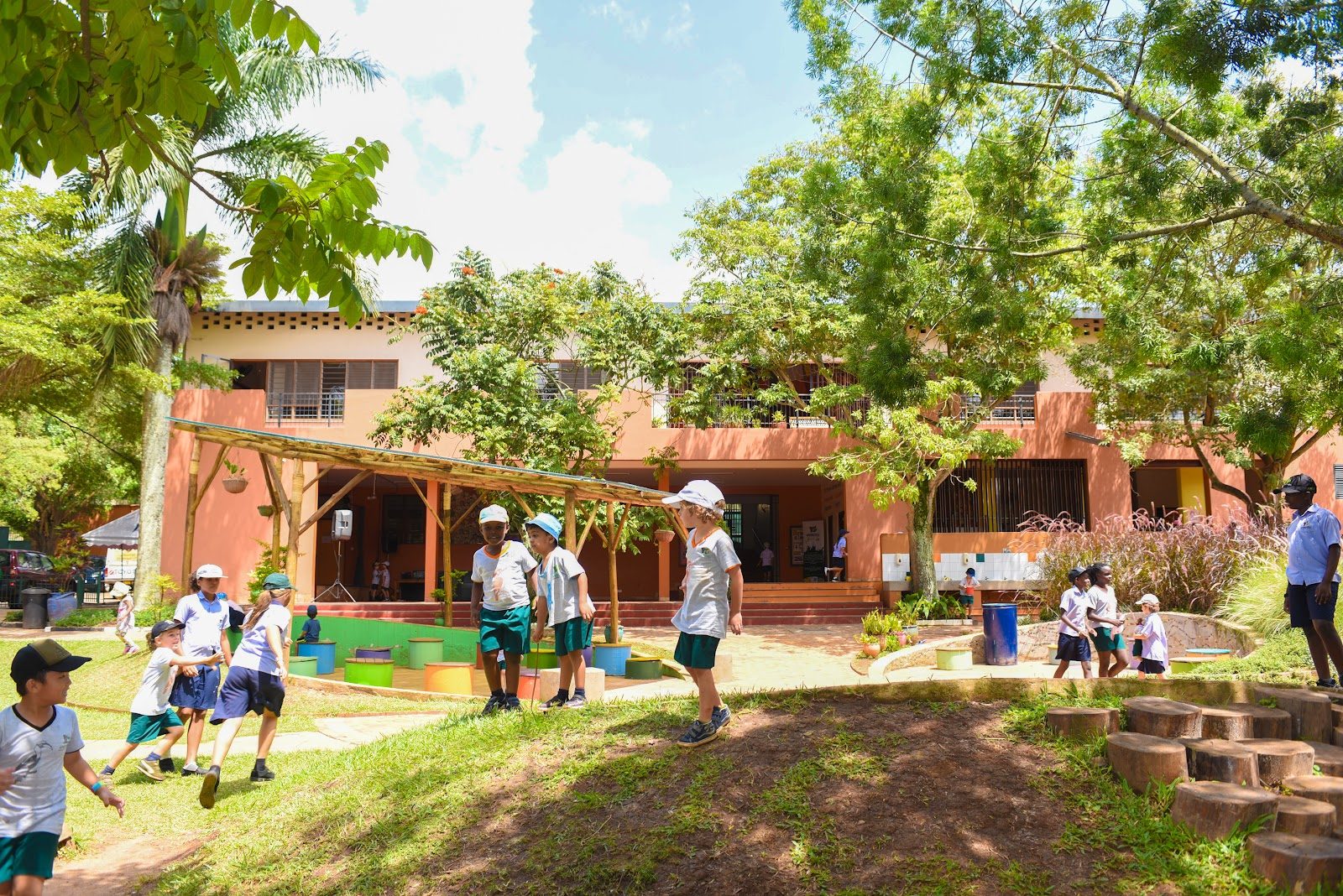
Ambrosoli International School
Kampala · Uganda
Named for a missionary doctor-priest, this Bugolobi primary became Uganda's first IPC-accredited school in 2019.
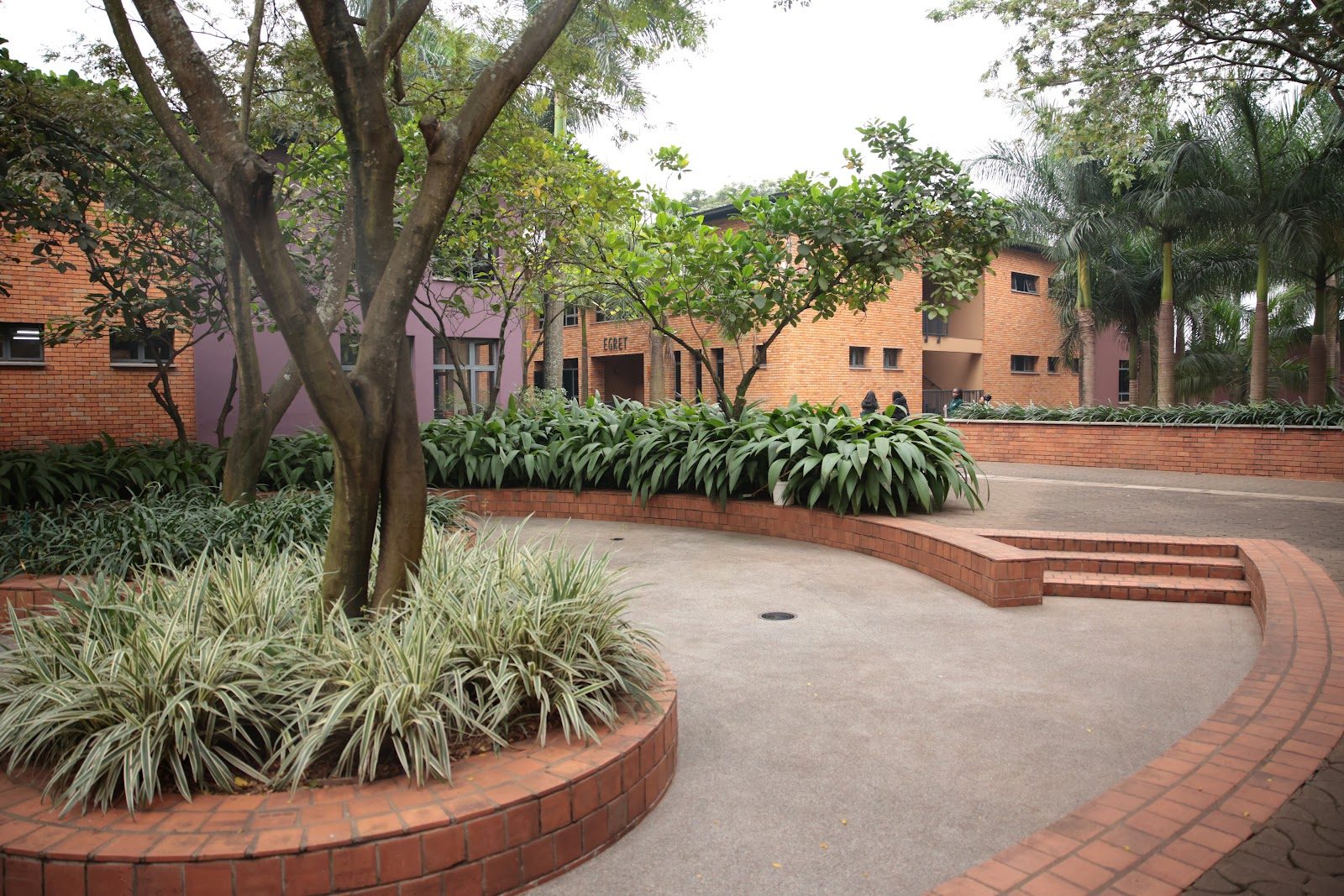
Kabira International School
Kampala · Uganda
A leafy Bukoto campus where the English National Curriculum feeds into Cambridge IGCSE and the IB Diploma for over 40 nationalities.
Lechwe School
Kitwe · Zambia
Born in a Copperbelt church hall in 1977, this Cambridge day school has tracked Kitwe's mining fortunes ever since.
Same country and curriculum — closest matches within ±10 points either way