
Cundinamarca
Colegio Rochester
low confidence· 4/6 cats · 1.4 avg sourcesOn the Sabana's edge, circular classrooms and a LEED Platinum campus embed sustainability into an IB curriculum built for global citizens.
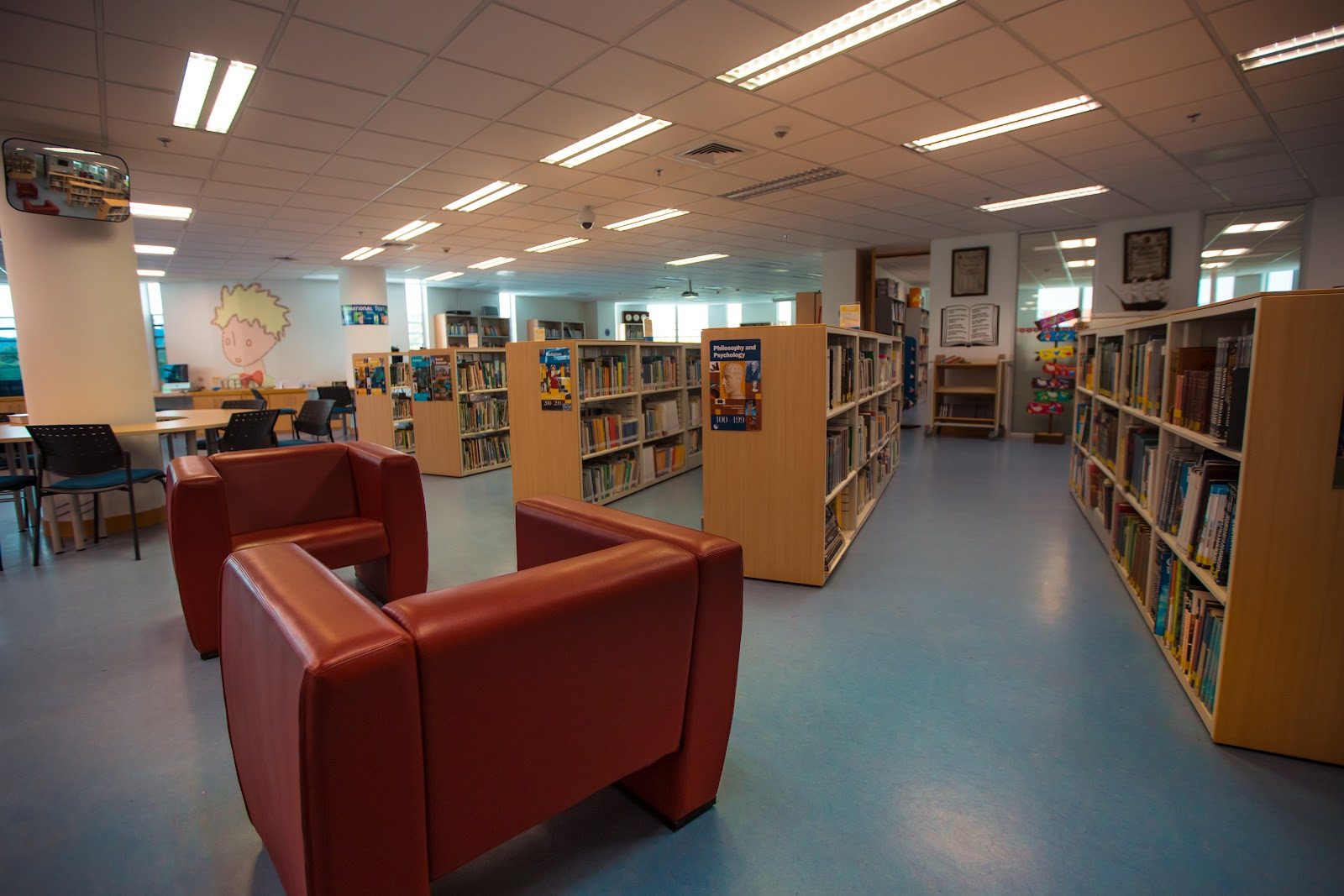
Photo © Colegio Rochester - Bilingüe, Calendario B via Google Maps
Type
Day
Ages
3–18
Curriculum
IB
Qualifications
IB Diploma
Ratio
—
The Verdict
Editor's commitment
Right for
Families in Chía who want a 1959-founded, non-religious day school with IB and sustainability built into daily school life.
Wrong for
Parents wanting a conventional, subject-siloed classroom or monolingual teaching; Rochester works in Spanish and English, with mixed-age projects.
Watch out for
IB World School and Green School Alliance credentials are clear; academic outcomes are not published here, so scrutiny has to shift elsewhere.
Ranking breakdown
Colegio Rochester · #443 of 1591
Composite score 69.8. 8 weighted criteria.
By criterion
Academic Outcomes
Weight 20%
#512
of 1529 scored
University Placement
Weight 16%
#516
of 1529 scored
Prestige & Heritage
Weight 12%
#854
of 1571 scored
Alumni Network
Weight 12%
#584
of 1530 scored
Facilities
Weight 12%
#193
of 1533 scored
Transparency & Communications
Weight 8%
#93
of 1532 scored
Peer & Industry Review
Weight 10%
#424
of 1548 scored
Admissions Selectivity & Demand
Weight 8%
#991
of 1529 scored
Peer & Industry Review
How Colegio Rochester is regarded in the sector
72
Respected · medium confidence
I could not identify at least two independent, third-party sources (e.g., Tatler, Good Schools Guide, specialist education press, alumni network coverage, or expat forums) that substantively assess Colegio Rochester's reputation. Available information appears limited to the school's own materials or unverifiable directory listings, which do not meet the evidentiary bar required.
Editors' overview
Colegio Rochester occupies a distinct niche on Bogotá’s northern fringe: an established 1959 day school in Chía that ties an IB education to sustainability, systems thinking and a conspicuously values-driven culture. The defining asset is the campus itself. Rochester states that it is a LEED Platinum campus, and that matters because environmental stewardship here is not a decorative slogan but part of the school’s operating logic. Add the circular-classroom architecture for which the school is known, and parents get a setting built to reinforce collaboration, visibility and community. This is a school for families who want education with a moral centre, not a conventional exam factory.
The academic proposition is broader than the usual “international school in English” formula. Rochester teaches in Spanish and English, and its own description pushes hard on interdisciplinary, real-world work, mixed-age collaboration, coding, sustainability, multilingualism and self-evaluation. That gives the school a clear educational identity: useful learning, not rote performance. It also gives it a sharper edge than many IB schools that market global citizenship without explaining what pupils actually do. Rochester does explain it. Students work across subjects, tackle concrete projects and are expected to connect learning to life beyond school. For the right child, that is serious intellectual nourishment. For a family seeking tight conventionalism, relentless academic ranking talk or a socially narrow environment, Rochester is the wrong fit.
Its market position rests on coherence. Rochester is non-religious, serves ages 3–18, and has had decades to refine a house style that blends pastoral language, environmental commitment and international-minded schooling. The school’s philosophy is explicit about happiness, health, teamwork and leadership without authoritarianism. That will attract parents who value calm confidence over prestige theatre. It will also appeal to internationally minded Colombian families and expatriates who want a bilingual setting with a school culture that talks directly about wellbeing, citizenship and sustainability rather than treating them as add-ons.
The pupil who thrives here is curious, collaborative and comfortable with reflection. Rochester suits students who like projects, discussion, interdisciplinary work and learning that connects to the world beyond the classroom. It suits children who will use a campus and curriculum shaped around sustainability, and who can handle a school culture that asks them to think about community, conduct and self-management from an early age. Families should shortlist Rochester for one reason above all: it offers a rare combination of architectural purpose, environmental seriousness and an IB framework delivered through a bilingual, values-led model with genuine internal consistency.
Academic Performance
Rochester does not publish the hard outcome data that serious parents need. We have not seen average or median IB scores, diploma pass rates, subject breakdowns, university destinations by cohort, or multi-year trend lines. That leaves a conspicuous gap. In a market where stronger schools put external results into the public domain, this level of opacity matters. It makes peer comparison blunt, because there is no verified headline figure — no average IB score, no pass rate, no top-score count — to test whether the school’s confident educational philosophy translates into examination performance at the top end.
That does not mean weak academics; it means unproven academics in public. Rochester’s own language centres on real-world projects, interdisciplinary work, teamwork, wellbeing, sustainability and self-evaluation. That is a coherent educational stance, but it is not the same thing as published exam evidence. Parents choosing between Rochester and more results-forward IB competitors will need to ask direct questions: How many students take the full diploma? What were the last 3 years of results? How do higher-level subject grades compare with Colombian and global IB averages? Which universities admit its graduates, and in what numbers? Until the school answers those plainly, Rochester sits in the category of philosophically distinctive schools whose academic outcomes are insufficiently transparent.
Facilities
The decisive facility here is the campus itself. Rochester states that it operates a LEED Platinum campus, and that places it ahead of most peer schools, where sustainability lives in posters, recycling bins and occasional projects rather than in the building’s daily function. The circular classrooms matter too. They are not a gimmick. They change sightlines, group dynamics and teacher supervision, and they suit a school that values mixed-age work, teamwork and discussion. In practical terms, this gives Rochester a high-functioning learning environment with an architectural logic that supports its educational model instead of fighting it. The school also frames the campus as a place built for inclusion, safety, connection and attainable challenge, which fits the spatial design.
What Rochester does not do, at least publicly, is publish the granular facilities inventory that strong competitors now provide: no clear breakdown of specialist science provision, performing arts spaces, sports infrastructure, library scale, maker facilities or technology suites. That is a weakness. Parents can identify the school’s signature asset immediately, but not the full depth of its provision. Against peer schools, Rochester therefore scores strongly on campus identity and environmental design, less strongly on disclosure. The impression is of a school with a *purpose-built moral and pedagogic setting*, but one that still needs to show, room by room, whether the rest of the estate matches the strength of the headline concept.
It does not yet earn the top tier of academic prestige, because the school does not publish the data that would justify that standing
Prestige
Rochester’s prestige rests on distinction, not on social cachet or published academic dominance. This is not the school parents cite for a headline IB average, elite-university placement table or old-boy network. It carries status in a different register: educational seriousness, a clear house philosophy and a campus model that gives the school an identity parents will remember after one visit. The LEED Platinum claim matters here. In a crowded international market, very few schools build prestige through environmental design that is tied directly to daily teaching, conduct and community life. Rochester does. That gives it institutional character rather than generic international-school polish.
That said, prestige has limits when outcomes stay opaque. Among informed parents, prestige built on philosophy alone ranks below prestige backed by hard results. Rochester earns respect for coherence, longevity and a model that treats sustainability, teamwork, wellbeing and real-world application as core rather than decorative. It does not yet earn the top tier of academic prestige, because the school does not publish the data that would justify that standing. Our rating, then, sits in the middle-to-upper range: admired, distinctive and credible, but not formidably elite. Families who value educational ethos over status signalling will rate Rochester highly. Families chasing the strongest external validation will place it below more transparent competitors.
Our rating, then, sits in the middle-to-upper range: admired, distinctive and credible, but not formidably elite
Communications
Rochester’s parent communication follows the same pattern as the rest of the school: highly intentional, values-led and tightly bound to community culture. The school talks in institutional language about students, parents, staff, grandparents and alumni working together, and that matters because it frames parents as participants rather than customers at arm’s length. It also states that each class, grade and level develops agreed constitutions covering core principles, expected behaviour and procedures for resolving poor conduct. That points to a school that does not leave expectations vague. Parents who want clear norms, a shared vocabulary around behaviour and regular reference to wellbeing, teamwork and self-management will find Rochester’s approach coherent and disciplined. The inclusion of online curricula and off-campus learning also indicates that digital communication is part of the operating model, not an emergency add-on.
The weakness is precision. Rochester publishes a great deal of philosophy and purpose, but far less about the mechanics parents usually want before enrolment: who to contact for what, how feedback cycles work, how quickly concerns are handled, how academic progress is reported, and what formal channels exist beyond the broad language of community. That leaves the public-facing picture strong on ethos, weaker on process. For some families, that is enough; for others, it is a warning sign. Effective communication in schools depends on both tone and system. Rochester clearly has the tone. It still needs to show the system with more operational clarity and less abstraction.
Uniqueness
What sets Rochester apart is not one isolated feature but an educational system with an unusually tight internal logic. The school links campus design, student conduct, teaching method and institutional purpose into one model. Mixed-age work, real-world projects, coding, environmental stewardship and professional self-evaluation all sit inside the same frame. Many schools talk about global citizenship; Rochester defines it in operational terms: teamwork across ages and backgrounds, systemic problem-solving, multilingual competence, and the expectation that students produce work that is useful beyond the classroom. That gives pupils a coherent intellectual culture rather than a menu of disconnected initiatives. The school’s use of agreed class constitutions and explicit procedures for handling poor behaviour also marks it out. This is a high-structure, values-driven environment, not a loose progressive free-for-all.
For students, the gain is clear. Children who like purpose, collaboration and reflection get a school that treats those habits as daily practice, not enrichment. The emphasis on healthy relationships, leadership without authoritarianism, and health across physical, mental and spiritual domains creates a conspicuously intentional culture around character formation. Rochester also states that students can learn at different paces with online curricula and assistant teachers, which brings a degree of flexibility many traditional schools still resist. The trade-off is just as clear: this model suits self-aware, community-minded pupils and families who want education to shape conduct as well as attainment. For them, Rochester offers something genuinely uncommon: a school built to connect learning, behaviour and responsibility into one lived experience.
What sets Rochester apart is not one isolated feature but an educational system with an unusually tight internal logic
Student Profile
The Rochester pupil is not a status-chaser and not a child who needs school to reduce learning to marks, rank and routine. The fit is a student who likes to connect ideas across subjects, work with others, and discuss how learning applies beyond the next test. The school’s own model points to children who can handle mixed-age collaboration, real-world projects, coding, and explicit reflection on conduct. It also suits students who respond well to clear moral structure: agreed class constitutions, direct expectations around behaviour, and a culture that treats respect, cooperation and self-evaluation as daily work. Children who want to disappear into the back row or resist community obligations will find the culture tight-grained and demanding.
There is also a strong personal profile underneath the academics. Rochester talks openly about happiness, health, service, leadership, and relationships, and that gives the student body a conspicuously values-led centre. The best fit is a child who can thrive in a school that asks for courtesy, teamwork and self-management from an early stage, not just at 16 or 18. International and Colombian families who want their children educated with social purpose will recognise the appeal. Families who want a harder-edged, more anonymous, exam-driven environment will not. This is a school for students who are reflective, cooperative and ready to be known well; for them, Rochester offers a coherent social world rather than a loose collection of classes.
For them, Rochester offers something genuinely uncommon: a school built to connect learning, behaviour and responsibility into one lived experience
Co-curricular strengths
Arts & sport, on a separate axis
Overall 9.06/10
Scored 0-10 from the school's own published evidence. This axis is editorial-only — it does not feed the main WTS ranking.
Sports
8.8/10
Drama
9/10
Dance
9.5/10
Music
9/10
Visual Arts
9/10
Editor first-pass · editor-reviewable · 7/30/2026
Strengths
- +Colegio Rochester is part of the Nord Anglia Education network and offers the IB Diploma Programme, a globally recognised university-entry qualification. Rochester International School students excel in the classroom, achieving outstanding academic results and prestigious qualifications - including the International Baccalaureate Diploma - that are recognized around the world.
- +The campus has achieved LEED Platinum certification from the US Green Building Council and is described as a 'True Zero Waste' certified site. The world's first TRUE Zero Waste certified campus - and LEED Platinum accredited for our commitment to sustainability - Rochester offers an environment designed for the future.
- +The school has a long institutional history, tracing its sustainability commitment back to its founding year. El Colegio Rochester, ubicado en Chía, Cundinamarca, se ha destacado por su compromiso con la sostenibilidad ambiental desde su fundación en 1959.
- +Instruction is bilingual (English-Spanish) from pre-kindergarten, adding a third language, French or Portuguese, from grade 8. El Colegio Rochester es un colegio bilingüe en inglés y castellano desde Prejardín hasta Undécimo grado con una tercera lengua entre francés y portugués desde Octavo.
- +It is recognised as the first Glasser Quality School in Latin America, a certification tied to its 'Choice Theory' wellbeing model. El Colegio Rochester es un colegio mixto, multilingüe y de calendario B (agosto a junio), reconocido como el primer Glasser Quality School en Latinoamérica.
Considerations
- −The campus sits in a semi-rural area outside the city proper, which can mean a longer daily commute for families based in central Bogota. El Colegio Rochester se encuentra ubicado en la zona sub-rural del municipio Chía, Cundinamarca, Colombia.
- −Fee schedules are not fully published online for prospective families to compare in advance. This school does not make their fees public for the academic year 2026/2027.
- −As one school within a large, multi-country group, the school's curriculum and operations are shaped by a corporate network rather than a fully independent governance model. Nord Anglia is the world's largest provider of the IB Diploma Programme.
Availability
Primary entry gate & tests
Academic Record + Interview
Gallery
Parent reviews
Have you sent your child here?
Voice reviews carry the strongest trust badge — we transcribe them for you to tidy up before they go live. Prefer to type? A written review is fine too.
Add your voice
In 60 seconds, tell other parents: what's the best thing about Colegio Rochester, and what surprised you when your child joined?
We ask for a Google sign-in so every review has a real face behind it — no anonymous drive-by attacks on schools, and no faked positive reviews. Your email is never shown publicly.
Send this profile to a friend
International parents rely on word-of-mouth. Share this review with someone weighing the same decision.
Schools with places
Similar schools to Colegio Rochester with places available now.
Availability first, then country, area, curriculum, price, co-curricular
Consider also
Also worth looking at alongside Colegio Rochester.
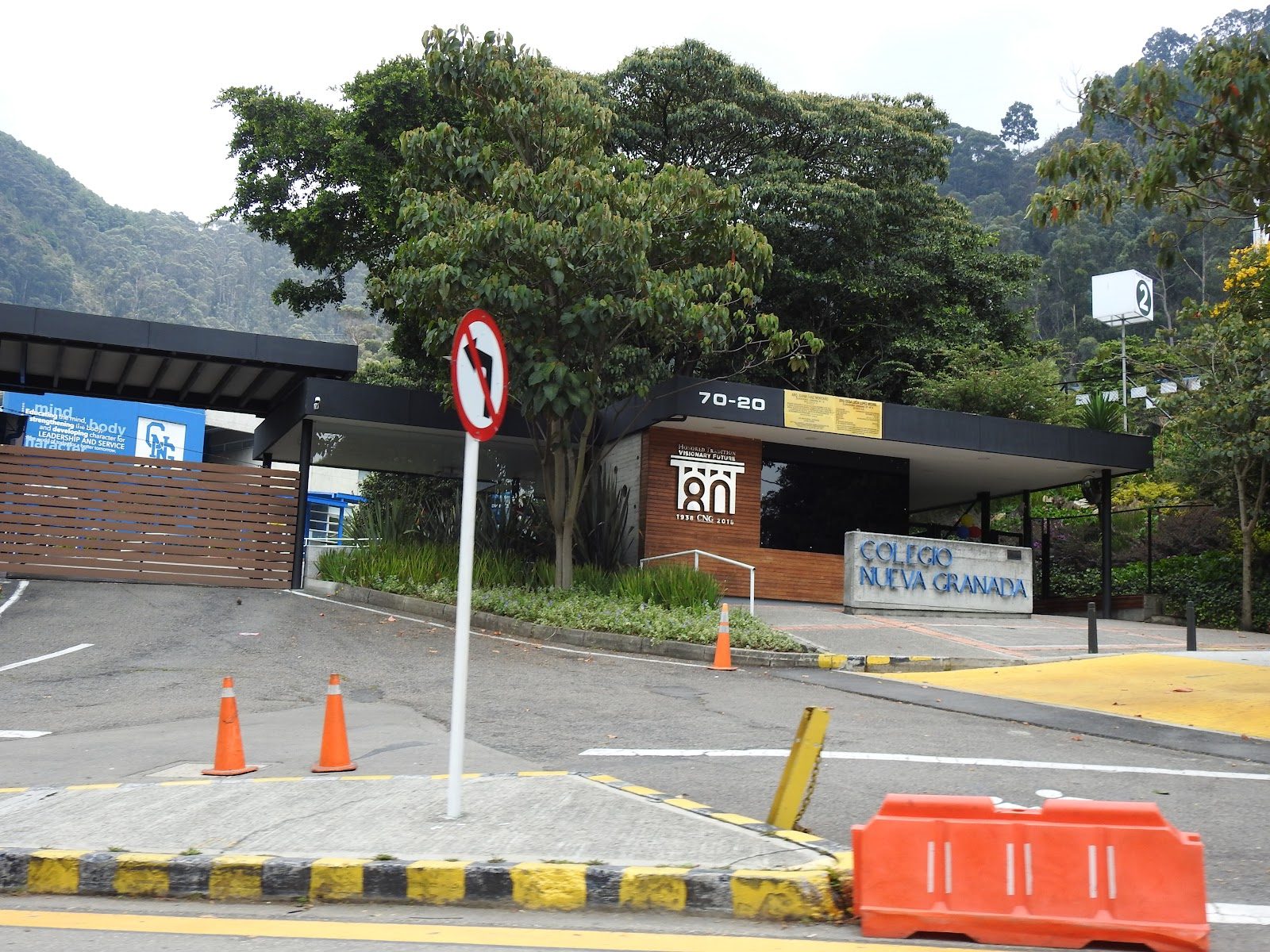
Colegio Nueva Granada
Bogotá · Colombia
A 1938 foothills campus in Bogota pairing dual US-Colombian diplomas, 32 AP courses and a four-house tradition.
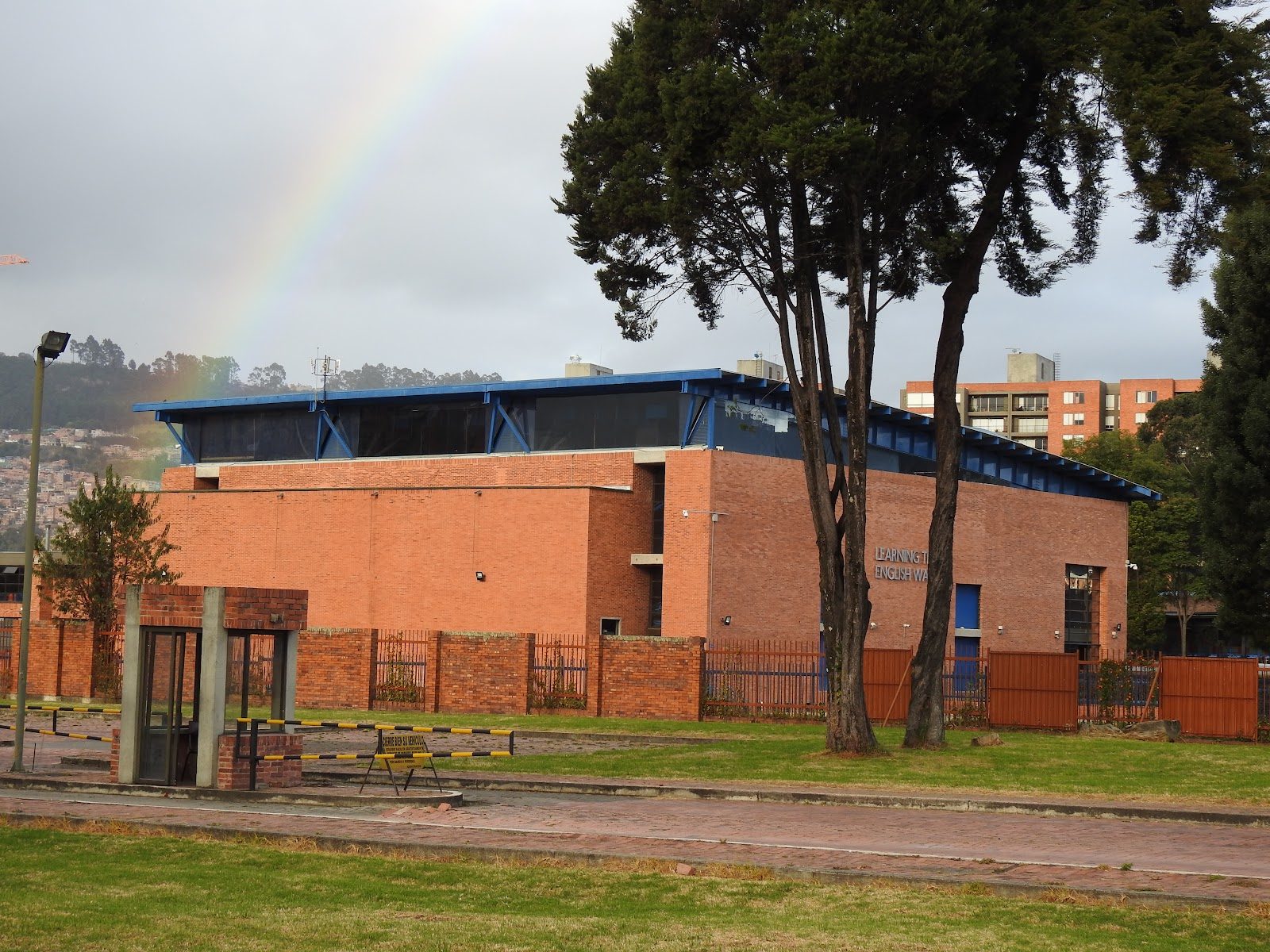
The English School
Bogotá · Colombia
Founded in 1961 as a bilingual British-style day school, now the first in Colombia authorized for all four IB programmes
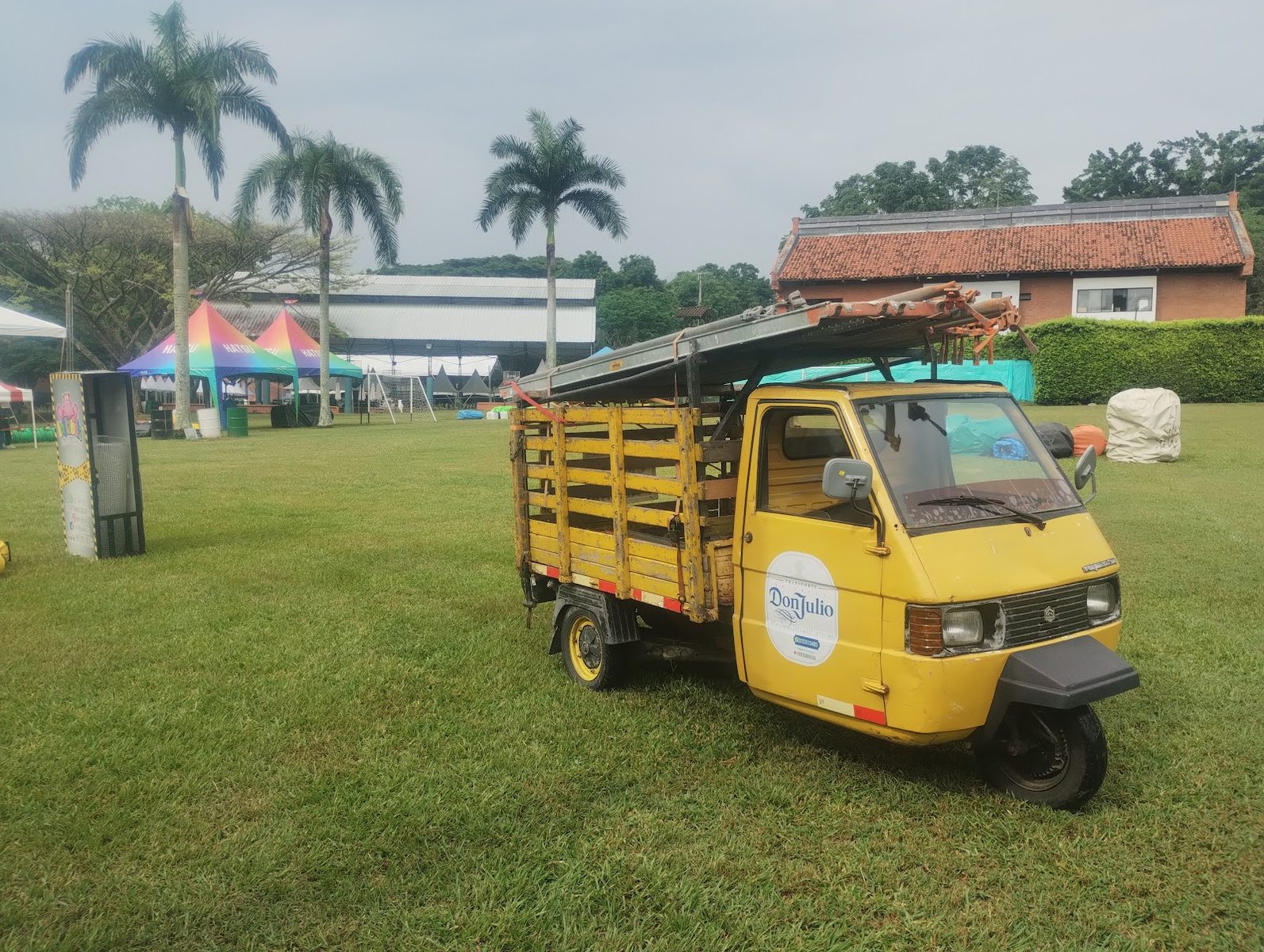
Colegio Bolívar
Cali · Colombia
Founded in 1947 at the foothills of the Andes, where three-walled, open-air classrooms meet a bilingual, dual-diploma American curriculum.
Ridley College
St Catharines · Canada
St Catharines day-and-boarding school blending Ontario's OSSD with the full IB continuum
Same country and curriculum — closest matches within ±10 points either way