
Central Department
American School of Asunción
medium confidence· 4/6 cats · 3 avg sourcesSince 1953 in Villa Morra, pairing a US college-prep diploma with Paraguay's own, taught in English, Spanish, and Guarani.
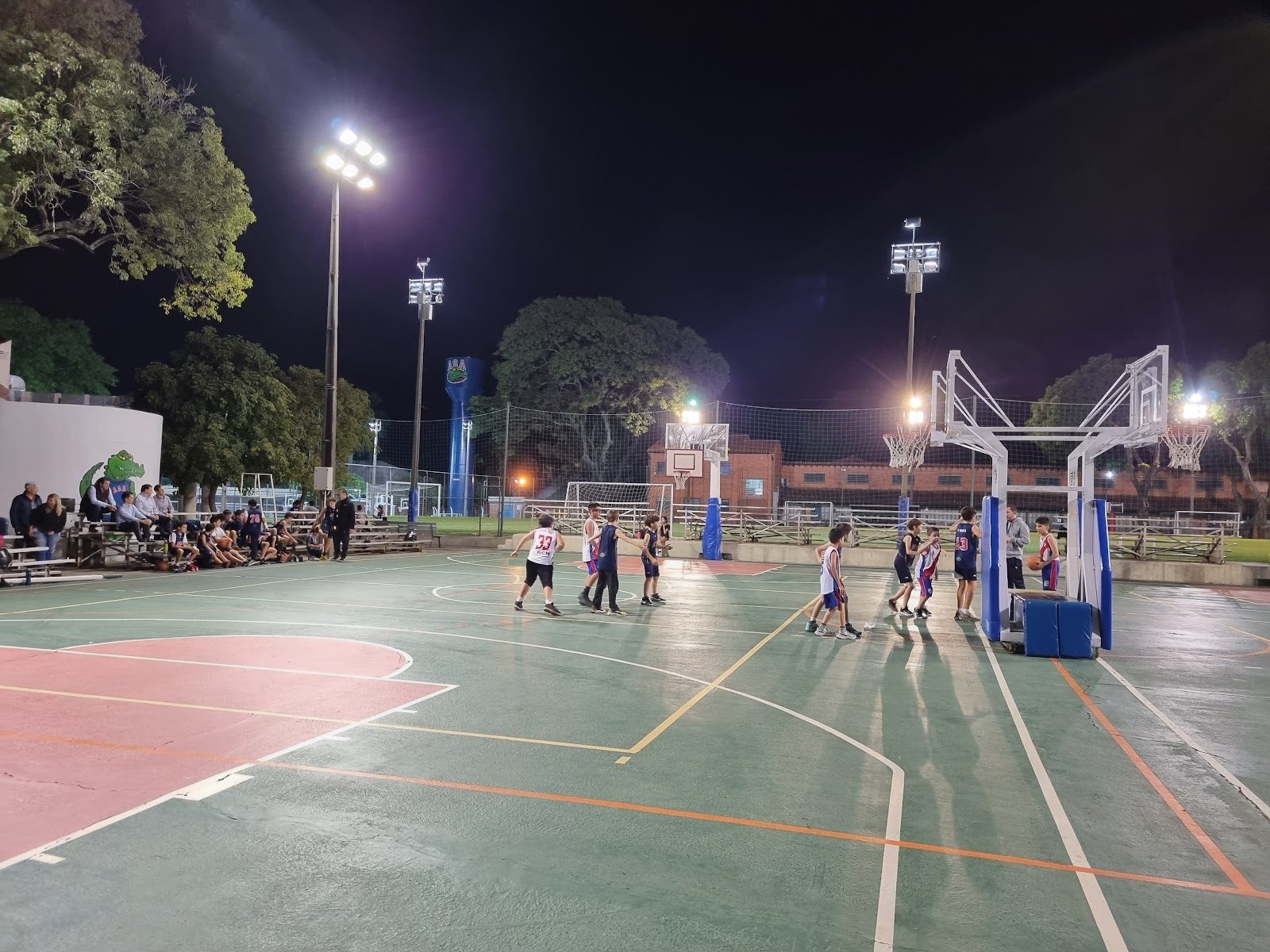
Photo © Daniel López R. via Google Maps
Type
Day
Ages
3–18
Curriculum
American
Qualifications
AP
Ratio
—
The Verdict
Editor's commitment
Right for
Families in Asunción wanting a day school from ages 3–18 with an American curriculum and teaching in English and Spanish.
Wrong for
Parents seeking boarding, a religious ethos, or published exam data beyond a private international school founded in 1954.
Watch out for
Villa Morra and a 1954 founding give it longevity, but the school does not publish headline outcomes or broader accreditation detail.
Ranking breakdown
American School of Asunción · #958 of 1591
Composite score 63.6. 8 weighted criteria.
By criterion
Academic Outcomes
Weight 20%
#959
of 1529 scored
University Placement
Weight 16%
#965
of 1529 scored
Prestige & Heritage
Weight 12%
#926
of 1529 scored
Alumni Network
Weight 12%
#787
of 1529 scored
Facilities
Weight 12%
#976
of 1529 scored
Transparency & Communications
Weight 8%
#979
of 1529 scored
Peer & Industry Review
Weight 10%
#883
of 1529 scored
Admissions Selectivity & Demand
Weight 8%
#726
of 1529 scored
Score history
American School of Asunción · 2026
Movement across 2024–2026. Peer average overlaid.
Overall — 2024–2026
63.6/ 100
▲ +27.0 vs 2025
year on year
Peer & Industry Review
How American School of Asunción is regarded in the sector
66
Respected · medium confidence
I could not identify at least two independent, verifiable third-party sources (e.g., Tatler, Good Schools Guide, specialist education press, or established expat forums) that substantively discuss the American School of Asunción's reputation. Available information appears limited to the school's own materials or unverifiable general directory listings, which do not meet the evidentiary bar required.
Editors' overview
The American School of Asunción occupies a narrow but important niche in Paraguay: an English-medium, non-religious day school in Villa Morra that runs an American programme while also pairing it with Paraguay’s own diploma structure. That dual track is the point. For families who want a route into US-style higher education without stepping outside the Paraguayan system, ASA offers a practical answer. The linguistic mix matters too. Teaching in English and Spanish gives the school a wider local and international catchment than monolingual competitors, and the age span from 3–18 makes it a full-through option rather than a temporary stop. Founded in 1954, it also has the advantage of institutional permanence; this is not a start-up trading on an imported name. That matters in a small market.
What puts it on a shortlist is not glamour but utility. Paraguay does not have an endless supply of schools that combine American college-prep expectations, local recognition, and a non-religious setting in one place. For diplomatic, expatriate, binational, and internationally minded Paraguayan families, that mix has real value. The school’s claim is continuity: one campus culture, one educational philosophy, and one set of expectations carried through from early years to graduation. That creates stability. It also creates pressure: schools covering the full 15-year age range need coherence, strong leadership, and clean academic progression. ASA’s market position rests on whether it delivers that consistently.
The student who will want ASA is not looking for a traditional Paraguayan school wrapped in English lessons. This is for children who can handle a bilingual academic environment, families who want clear international mobility, and teenagers targeting universities where an American-style transcript carries weight. It also suits students who prefer a day-school rhythm over boarding and families who want a non-religious setting. The best fit is straightforward: adaptable, outward-facing, and comfortable moving between cultures and languages. Parents who want heavy institutional mystique, published elite-brand signalling, or a narrow exam-factory model will look elsewhere. Parents who want a school that connects Asunción to a wider academic world will keep ASA in view.
Academic Performance
Public information on external results is thin. The school does not publish aggregate SAT, ACT, AP, IB, or other standardised examination outcomes, and we have not seen a consistent run of university destination data that would let parents benchmark academic yield against regional competitors. That matters. In an international school market, published results are the cleanest way to test whether a college-prep claim translates into measurable attainment. Here, the record is opaque. Families can infer that students sit for recognised assessments within the American system and the local diploma structure, but inference is not evidence, and ASA does not put enough hard data into the public domain to support a high-confidence verdict on exam performance.
Relative to peers, that places ASA in the middle tier for transparency, not at the front. The strongest schools in this segment publish cohort outcomes, score distributions, or at minimum named university matriculations year after year. ASA does not. That does not mark weak academics; it marks limited disclosure. In a smaller national market, some parents will accept that and rely on reputation, fit, and individual guidance. More data-driven families will want harder proof before treating the school as an academic standout. The burden sits with ASA: publish exam results, publish destinations, and the school’s academic case becomes easier to judge.
Facilities
Facility disclosure is thin, and that limits any serious comparison. We can say this much with confidence: as a full-through school serving children from nursery to graduation, ASA needs the standard spine of an international day campus — age-segmented classrooms, science provision for older pupils, sports space, library access, and rooms for arts and performance. What it does not publish, at least not in any useful level of detail, is the kind of campus inventory parents need to judge quality: specialist labs, theatre standard, indoor sports provision, maker spaces, aquatics, design technology, or the scale and condition of outdoor areas. That leaves the physical offer hard to audit.
Against peer schools, that matters. In the stronger international-school markets across Latin America, schools now treat facilities as a core part of the proposition and document them clearly with floorplans, programme-specific spaces, and images that show how pupils actually use them. ASA does not meet that standard of transparency. That does not mean the campus is weak; it means the school asks families to rely on visits and local word of mouth rather than published evidence. For parents comparing ASA with other bilingual international schools, the facilities case is serviceable but unproven in public. Any shortlist decision here needs an in-person tour, because the school’s published case for its campus is underpowered.
For families who want a route into US-style higher education without stepping outside the Paraguayan system, ASA offers a practical answer
Prestige
ASA’s prestige is real but bounded. In Paraguay, an established American international school carries social and academic cachet because the category itself is scarce. For families who want an education tied to US university admissions norms while retaining local legitimacy, the school sits in a useful upper tier of the market. Its standing rests on institutional longevity, bilingual reach, and the fact that it serves pupils from early childhood to graduation under one roof. That gives it recognition and network value. It does not, however, place ASA in the same prestige bracket as the Latin American schools that trade on globally visible results, ultra-selective admissions, or a steady pipeline to internationally famous universities. The school has 1 notable alumnus catalogued in Wikidata; that is a floor, not a full measure of influence, but it does underline the absence of a broad public alumni aura.
The bigger constraint is opacity. Prestige at the top end needs proof: destination lists, standout examination data, major university offers, distinguished alumni, or signature institutional affiliations. ASA does not publish enough of that. So the school’s reputation works best at a local and practical level, not as a status trophy. For many parents, that will be enough. The value here is credibility, continuity and access, not elite mystique. In plain terms: respected in its context, not internationally luminous.
Founded in 1954, it also has the advantage of institutional permanence; this is not a start-up trading on an imported name
Communications
ASA’s parent communication is hard to audit because the school does not publish the kind of operational detail that lets outsiders judge discipline and consistency: no clear archive of leadership updates, no visible cadence of academic reporting, no public explanation of how parents receive timetable changes, safeguarding notices, or university guidance. That gap matters in a through-school serving pupils across 3–18. The communications burden in a school like this is heavy: early years parents need day-to-day clarity, older families need accurate academic and counselling information, and everyone needs fast answers when routines change. ASA does not make that machinery plainly visible. The public-facing picture is functional rather than robust.
That does not make communication weak. It makes it insufficiently evidenced. Schools that communicate well leave a trail: handbooks with substance, calendars that stay current, principal messages with a recognisable voice, policy pages that answer real parent questions before they are asked. ASA does not put enough of that into the open to count as a transparent operator. For existing families, the system may work perfectly well through closed channels. For prospective parents, the message is less reassuring: you need to ask direct questions, test response times, and inspect how information flows between school and home. In editorial terms, this is a competent but underpowered communications case, not a model of openness.
Uniqueness
ASA’s distinctiveness lies in combination, not spectacle. In Paraguay, schools that promise international mobility often force a trade-off: global orientation or local anchoring, English-medium ambition or day-to-day embeddedness in the national context. ASA closes that gap. It gives families a child’s full school life in one place, across a 3–18 age span, while keeping one foot in the American model and the other in the country around it. That matters for students who do not fit neatly into one box — expatriate children staying longer than expected, binational families, and local families who want overseas options without cutting ties at home. The result is a school with a practical internationalism: less performance, more transferability.
For students, that brings a clear advantage. They learn to move between systems, expectations and social worlds without treating any of them as exotic. That habit is genuinely useful. It builds academic flexibility, cultural fluency and a stronger sense of where they belong, especially in a market where many schools are either too locally bounded or too detached from their setting. ASA also gains from being a non-religious institution in a landscape where ethos can narrow fit. That widens the intake and shifts the focus onto compatibility with the school’s academic and social culture rather than confessional identity. The school’s niche is cleanly defined: not elite theatre, not national orthodoxy, but a durable bridge between Paraguay and the wider world.
Paraguay does not have an endless supply of schools that combine American college-prep expectations, local recognition, and a non-religious setting in one place
Student Profile
The best fit is a student who handles switching codes without drama: home and school cultures that do not match perfectly, classmates from different backgrounds, and classroom expectations shaped by more than one national reference point. Children who need a single, monolithic identity from their school will find that tiring. Students who thrive on adaptation will not. This is also a school for families who want continuity across the whole age range, so it suits children who benefit from institutional steadiness rather than repeated school changes. Because the school runs from age 3 to 18, pupils who grow well inside a long-term community, and parents prepared to invest in one, are the natural constituency.
Socially, ASA fits students who are outward-facing, resilient and comfortable speaking up across linguistic and cultural lines. It will also suit grounded high-achievers who want a credible route outward without the status theatre that defines some international schools. The harder fit is the child who wants a deeply traditional local school environment, heavy religious framing, or a campus brand built around public prestige first and substance second. Equally, students who need intense public validation through published league-table style outcomes may find the school’s low-disclosure culture frustrating. The strongest match is practical, mobile-minded and self-possessed: a young person who values range, can tolerate some ambiguity, and does not need institutional hand-holding at every turn.
For diplomatic, expatriate, binational, and internationally minded Paraguayan families, that mix has real value
Co-curricular strengths
Arts & sport, on a separate axis
Overall 7.4/10
Scored 0-10 from the school's own published evidence. This axis is editorial-only — it does not feed the main WTS ranking.
Sports
8.2/10
The extracurriculars explicitly list Basketball, Soccer, and Volleyball, showing a structured multi-sport offering.
Drama
7.6/10
Drama productions, which goes beyond a bare club listing by evidencing actual staged productions, but gives no facility, department, or specialist staff detail.
Dance
5.6/10
Music
8/10
The extracurriculars explicitly list Choir, but provide no further detail on ensembles, facilities, staff, or performance pedigree.
Visual Arts
7.6/10
Editor first-pass · editor-reviewable · 7/28/2026
Strengths
- +American curriculum for families seeking US-style schooling
- +English and Spanish instruction suits bilingual households
- +Day school avoids boarding for local-based families
- +Ages 3–18 allows continuous schooling on one campus
Considerations
- −No boarding; unsuitable for families needing residential provision
- −Non-religious ethos may not suit faith-based preferences
- −American curriculum may not suit British or IB seekers
Availability
Primary entry gate & tests
Admissions application + school records / assessment
Gallery
Photo © Daniel López R. via Google Maps
Photo © Daniel López R. via Google Maps
Photo © Daniel López R. via Google Maps
Photo © Denis Estigarribia via Google Maps
Photo © Daniel López R. via Google Maps
Parent reviews
Have you sent your child here?
Voice reviews carry the strongest trust badge — we transcribe them for you to tidy up before they go live. Prefer to type? A written review is fine too.
Add your voice
In 60 seconds, tell other parents: what's the best thing about American School of Asunción, and what surprised you when your child joined?
We ask for a Google sign-in so every review has a real face behind it — no anonymous drive-by attacks on schools, and no faked positive reviews. Your email is never shown publicly.
Send this profile to a friend
International parents rely on word-of-mouth. Share this review with someone weighing the same decision.
Schools with places
Similar schools to American School of Asunción with places available now.
Greenwich Academy
Greenwich · United States
- 2026-27
- CLOSEDRegular cycle closed
- 2027-28
- OPENS SOONOpens Sept '26
Emirates National Schools - Abu Dhabi Campus
Abu Dhabi · United Arab Emirates
- 2026-27
- PLACES OPENApps open / space-dependent
- 2027-28
- WAITPOOL2027/28 timetable TBC
American School of Warsaw
Konstancin-Jeziorna · Poland
- 2026-27
- WAITPOOLSpace-dependent
- 2027-28
- PLACES OPENRolling
Christian Academy in Japan
Tokyo · Japan
- 2026-27
- WAITPOOLSpace-dependent
- 2027-28
- PLACES OPENRolling
Availability first, then country, area, curriculum, price, co-curricular
Consider also
Also worth looking at alongside American School of Asunción.
The American School of Kuwait
Kuwait City · Kuwait
Founded in 1964 by American families, this Hawalli day school reopened after Gulf War closure to keep its AP college-prep legacy alive.

Greenwich Academy
Greenwich · United States
Connecticut's oldest all-girls school pairs single-sex grounding with coeducational upper-school classes shared alongside Brunswick's boys.
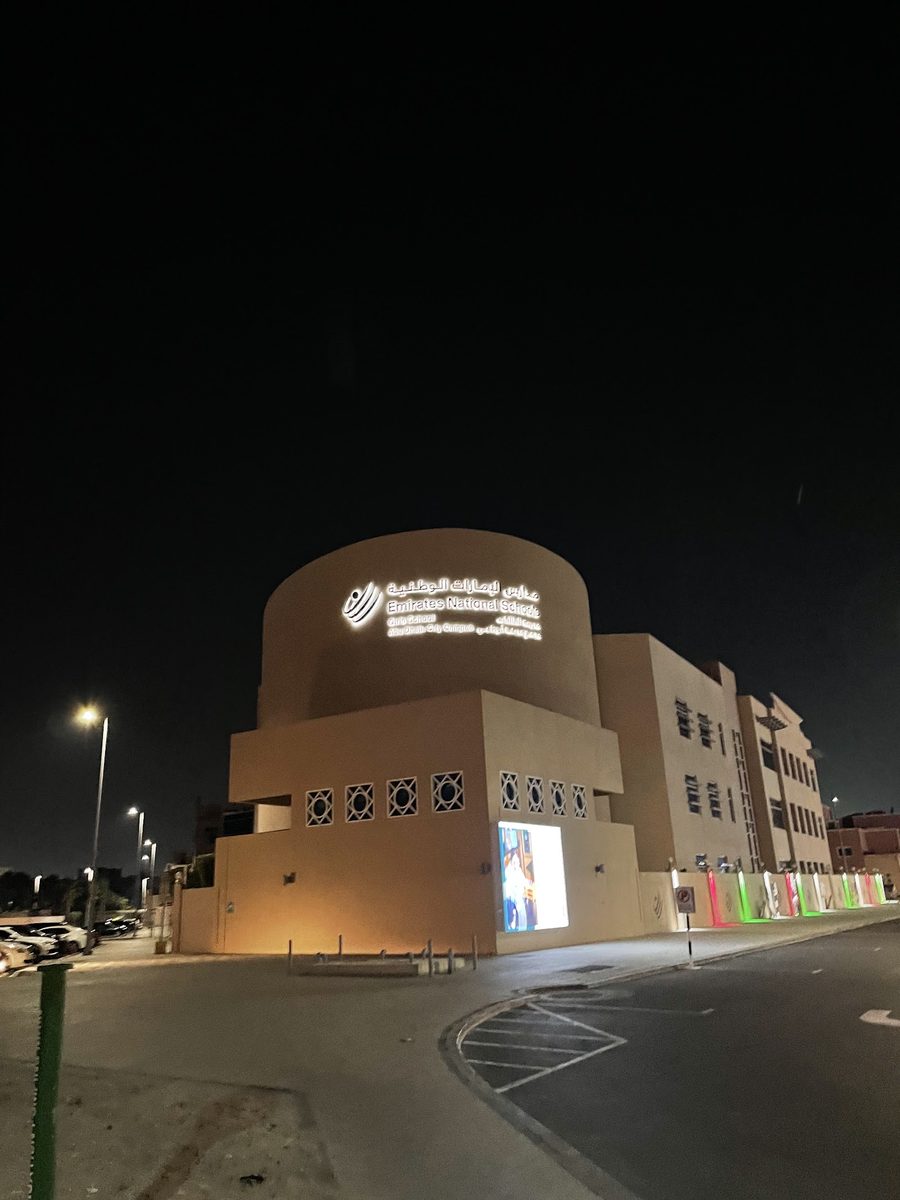
Emirates National Schools - Abu Dhabi Campus
Abu Dhabi · United Arab Emirates
American Common Core curriculum meets the IB Diploma and AP pathways, framed by mandatory Arabic and Islamic studies.
Universal American School
Dubai · United Arab Emirates
A not-for-profit Festival City campus where Grade 11 students choose between the IB Diploma and an AP-enriched US track
Same country and curriculum — closest matches within ±10 points either way