
Greater London
In Sutton, a selective boys' grammar where Year 8 pupils tackle politics and civilisations years before GCSEs begin.
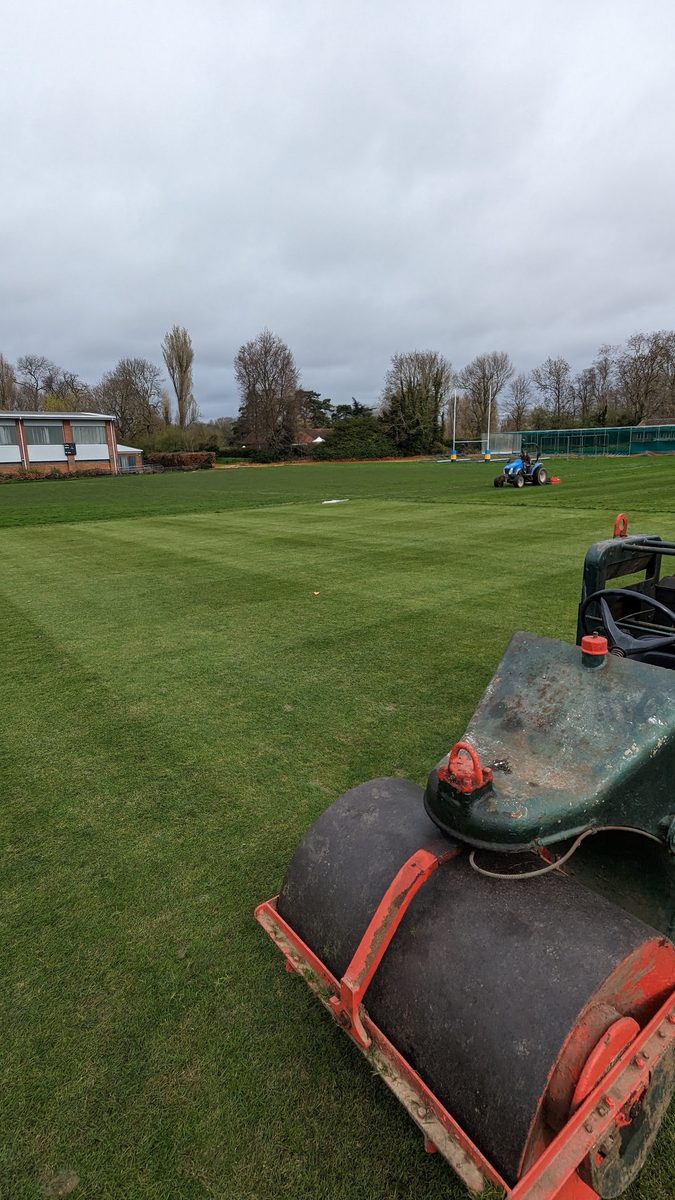
Photo © Adam Geisler via Google Maps
Type
Day
Ages
11–18
Curriculum
British
Ratio
14:1
The Verdict
Editor's commitment
Right for
Boys, and girls in the coeducational sixth form, who want a selective Sutton state grammar with a 14:1 student-teacher ratio.
Wrong for
Families wanting an all-through coeducational school, boarding, or a non-British curriculum; this is day-only, 11–18, and school-declared British.
Watch out for
Average class size is 27, so teaching will not feel intimate; the politics-and-civilisations pitch in Year 8 also signals an academically assertive culture.
Ranking breakdown
Wallington County Grammar School · #135 of 1591
Composite score 76.3. 8 weighted criteria.
By criterion
Academic Outcomes
Weight 20%
#91
of 1529 scored
University Placement
Weight 16%
#136
of 1529 scored
Prestige & Heritage
Weight 12%
#255
of 1571 scored
Alumni Network
Weight 12%
#155
of 1530 scored
Facilities
Weight 12%
#848
of 1534 scored
Transparency & Communications
Weight 8%
#254
of 1532 scored
Peer & Industry Review
Weight 10%
#234
of 1548 scored
Admissions Selectivity & Demand
Weight 8%
#113
of 1529 scored
Peer & Industry Review
How Wallington County Grammar School is regarded in the sector
68
Respected · medium confidence
Wallington County Grammar School is recognised as a genuinely high-performing selective state school within south London's competitive grammar tier, placing 27th nationally among selective schools in the Sunday Times Parent Power guide with 87% of A-level grades at A*-B. The Good Schools Guide's independent verdict is unambiguous, judging that "places are fiercely contested" for reasons rooted in "excellent teaching in a supportive atmosphere," while noting a young leadership team that "know exactly what they're about" and commands pupil respect. Ofsted has twice confirmed an outstanding judgement, most recently reaffirmed in 2022, underscoring consistency rather than a one-off result. Its profile sits a tier below the handful of London grammars (Henrietta Barnett, Queen Elizabeth's Barnet, Wilson's) that dominate national headlines, and specialist coverage remains largely confined to UK-focused guides rather than international sector press, giving it solid but not top-tier peer visibility.
Editors' overview
Wallington County Grammar School occupies a clear place in the south London market: a selective state boys’ grammar with a co-educational sixth form, founded in 1927, and still built around academic stretch rather than pastoral theatre. In Sutton, where grammar-school competition is fierce and parental scrutiny is intense, that matters. The draw is not novelty; it is intellectual pace, seriousness and a grammar-school culture that does not apologise for being demanding. The editorial clue sits in the school’s own character: Year 8 pupils tackling politics and civilisations before GCSE study begins signals academic ambition with teeth. For families who want scholarship, structure and a peer group that treats learning as normal, WCGS earns a place on the shortlist.
What marks it out is the blend of old grammar-school selectivity with a wider sixth-form intake and a mainstream day-school footing. This is not a cloistered private institution with small seminar groups; the average class size is 27, and the student-teacher ratio is 14:1. Parents need to read that correctly. WCGS offers access to a high-performing selective environment without private-school fees, but it does so at state-school scale. The advantage is a large, able cohort and the quickening pressure of competition that sharp students relish. The trade-off is obvious: boys who need constant hand-holding, extensive individual monitoring or a softer pace will find the culture unforgiving.
The school suits boys aged 11–18 who are energised by academic comparison, comfortable in a selective system and ready to work hard without applause for every step. It also suits families who value intellectual seriousness, social mobility through state education, and a clear-eyed grammar-school bargain: no frills, strong expectations, and a cohort selected to move fast. The co-educational sixth form adds breadth at the top of the school and breaks the closed-loop feel that some single-sex settings never shake off. A student who enjoys ideas for their own sake, thrives in a high-pressure academic current, and does not need school life sugar-coated will fit here.
Academic Performance
Wallington County Grammar School sits in the upper tier of state selective schools by reputation, but public exam analysis hits an immediate obstacle: the school does not publish a clear set of current aggregate GCSE and A-level outcome figures in the public domain in the source set here. That matters. For a school whose core proposition rests on academic selection and pace, parents deserve hard numbers, not ambience. In a crowded Sutton grammar market, opacity on headline outcomes weakens comparison with rivals that publish clean attainment and progress data. The absence of disclosed results does not erase the school’s academic standing, but it does block precise judgement on whether WCGS is merely strong for a grammar or genuinely exceptional within that cohort.
Even with that caveat, the school’s structure points to a demanding academic environment: selective entry, a boys’ intake through the main school, and a co-educational sixth form create a high-pressure scholarly culture with able peers and little shelter for underperformance. Relative to comprehensive schools, that places WCGS in a different category altogether. Relative to other selective grammars, the real question is not whether standards are high, but how far the school converts selectivity into top-end exam outcomes and university destinations. Until the school publishes fuller data, WCGS reads as academically serious and competitive, but not fully transparent. For exact peer ranking on results alone, parents need more than the school currently discloses.
Facilities
Public detail on facilities is thin, and that itself is a data point. WCGS does not publish the kind of campus inventory that stronger communicators now treat as standard: no clear breakdown of science provision, performing arts spaces, sports infrastructure or specialist sixth-form study areas. That leaves parents judging a selective state school on trust when peer grammars and ambitious comprehensives give cleaner practical detail. The broad inference is straightforward: this is a school where classrooms and subject teaching matter more than showpiece capital spend. Families hunting theatres, aquatic centres or private-school spectacle should look elsewhere. Families content with functional academic spaces, standard state-school sports provision and the infrastructure needed to run a serious day school will find nothing alarming, but little to get excited about either.
Against peer schools, that places WCGS in a familiar grammar-school middle ground. It does not read as a campus chosen for architectural theatre or lifestyle polish; it reads as a place built to deliver lessons at scale and keep able pupils moving. That can work perfectly well in a hard-edged academic environment, but it limits the school’s claim on breadth outside the classroom unless stronger public evidence emerges. In Sutton’s competitive selective market, facilities do not look like the decisive reason to choose WCGS. The decisive reason is academic culture. The facilities sit in the serviceable, unsentimental bracket rather than the arms-race end of the market.
What gives Wallington County Grammar School its distinct edge is not a glossy specialism but the way it pushes serious thinking down the age range
Prestige
Prestige here rests on selectivity, peer quality and geography, not on branding. In the Sutton grammar cluster, Wallington County Grammar School carries real local weight: families know what entry requires, pupils know they are in a fast academic cohort, and universities know the school sits within one of the country’s most competitive state-school ecosystems. That gives a WCGS education serious currency in the south London market. The co-educational sixth form strengthens that standing because it opens the door to a wider intake at the top end rather than trapping the school in a closed boys’ pipeline. This is not national grandee territory in the mould of Westminster or St Paul’s, and it does not trade on fee-paying mystique. Its prestige is earned, not upholstered.
Why rate it highly rather than reverentially? Because the school’s status has clear limits. It benefits from the prestige grammar schools inherit from selection itself, and from a disciplined academic culture that parents actively seek out. But prestige without published headline outcomes stays partly uncashed. For a school with classes averaging 27 and a staffing ratio of 14:1, the claim is not boutique excellence; it is large-scale selective seriousness. That still carries force. Among state options, WCGS is plainly prestigious. In the wider hierarchy of British secondary education, it sits below the most famous independents and the handful of grammars with stronger public academic transparency.
The school’s uniqueness, then, lies in a selective state-school severity tempered at the top by a wider intake
Communications
Parent communication reads as functional rather than polished. The school website gives the essentials — identity, admissions route, contact points and core practical information — but not with the sharpness or completeness now standard at the stronger end of the market. That matters in a selective environment where families scrutinise detail and compare schools line by line. WCGS does not project a hyper-managed communications culture; it projects a school that expects parents to keep up, ask direct questions and navigate a conventional state-school information flow. For some families, that bluntness will feel efficient. For others, it will feel thin.
Effectiveness, then, depends on what a parent needs. If the goal is basic orientation, the communication clears that bar. If the goal is richer understanding — academic outcomes, facilities, day-to-day texture, strategic priorities — the picture is weaker. The absence of clean public detail in several key areas leaves too much unsaid for a school operating in one of the country’s most competitive selective systems. In practice, that means communication is strongest for administration and weaker for persuasion. Parents who value plain dealing over gloss will tolerate that. Parents who want a school to anticipate questions before they ask them will find WCGS under-explanatory. In editorial terms, the school communicates with old-grammar directness, not modern transparency.
Uniqueness
What gives Wallington County Grammar School its distinct edge is not a glossy specialism but the way it pushes serious thinking down the age range. The clue sits in that early exposure to politics and civilisations before the exam treadmill takes over: this is a school that treats younger pupils as capable of abstract argument, not just content absorption. In a state selective sector where many schools talk about stretch in generic terms, WCGS makes intellectual acceleration part of the texture of school life. Add the unusual structure of a boys’ main school with a co-educational sixth form and you get a model that is neither a straightforward single-sex grammar nor a fully co-ed comprehensive. That mix gives boys a hard-driving academic culture early on, then a broader social and classroom dynamic in the final phase.
For students, the benefit is clear. Able boys get a peer group that normalises competition and treats scholarship as routine, while sixth formers gain a less sealed environment than a pure boys’ school offers. That matters for discussion, confidence and maturity. The scale of classes and the 14:1 staffing ratio also mean pupils learn to operate without constant adult intervention; independence is not an optional extra here. The school’s uniqueness, then, lies in a selective state-school severity tempered at the top by a wider intake. For the right student, that produces academic resilience, intellectual self-possession and a habit of working at speed without fuss.
The co-educational sixth form adds breadth at the top of the school and breaks the closed-loop feel that some single-sex settings never shake off
Student Profile
The pupil who fits best here is bright, competitive and unbothered by pressure. This is a school for boys who gain energy from fast classrooms, sharp comparison and the expectation that they will keep up without coaxing. A child who likes ideas, enjoys being among other able pupils and treats hard work as normal will settle well. A child who needs frequent reassurance, heavy pastoral cushioning or a gentler social climate will not. With classes around 27 and a staffing ratio of 14:1, pupils need self-command, decent organisation and the confidence to ask for help plainly rather than wait for adults to spot every wobble. The culture suits the self-starting, the thick-skinned and the intellectually restless.
Socially, the profile is narrower than at a mixed comprehensive and broader than a closed boys’ school, thanks to the sixth-form structure. That shift matters. Boys who mature into discussion, debate and a wider social mix will benefit from it; boys who lean too heavily on adolescent laddishness will find less room to hide by the final stage. The strongest fit is a student who values substance over performance: someone happy in a no-frills, high-expectation environment where status comes from competence, not polish. WCGS suits families who want serious academic company and are content with a school that rewards resilience more than charm. It is not for the fragile or the complacent.
In Sutton, where grammar-school competition is fierce and parental scrutiny is intense, that matters
Co-curricular strengths
Arts & sport, on a separate axis
Overall 7.3/10
Scored 0-10 from the school's own published evidence. This axis is editorial-only — it does not feed the main WTS ranking.
Sports
8.2/10
Drama
7.5/10
Dance
5.5/10
Music
7.8/10
Visual Arts
7.5/10
WTS 300 badge
2026/27 editionWallington County Grammar School is one of the World's Top 300 Schools for 2026/27. Claim your listing to add it to your site →
Strengths
- +Rated Outstanding by OFSTED at its most recent inspection in November 2022, the highest grade the inspectorate awards.
- +In 2025, pupils achieved an Attainment 8 score of 77.7, placing the school 5th in Sutton and 34th of 3,216 nationally.
- +99.30% of pupils achieved grade 5 or above in English and Maths, with 74.7% of all GCSE entries graded 9-7.
- +Sixth-form results are strong, with 87.8% of A-level entries graded A*-B and 67.8% at A*-A.
- +A tuition-free selective education, avoiding independent-sector fees while delivering competitive-university progression.
- +Notable alumni include Dead Sea Scrolls scholar John M. Allegro (1923-1988) and Chris Woodhead, former HM Chief Inspector of Schools.
Considerations
- −The school is boys-only from Year 7 to 11, becoming coeducational only in the Sixth Form, so it is not a genuine co-ed option for younger children.
- −Entry runs through the Selective Eligibility Test (SET), similar to the standard 11 Plus exam, and the school is consistently oversubscribed, making places hard to secure without strong prior attainment and test preparation.
- −Oversubscription rules give priority admission to a maximum of 15 students residing in specific postcodes, so families outside the core Sutton catchment, including newly-arrived relocators, compete for a small share of remaining places.
- −As a state grammar on standard per-pupil funding, facilities are functional rather than lavish and lack the campus scale of fee-paying peers.
- −Wallington County Grammar School is currently the only school within its trust (Folio Education Trust), meaning it lacks the wider resource-sharing network of larger multi-academy trusts.
Availability
Primary entry gate & tests
11+ SET + Second Stage (Boys)
Gallery
Photo © Adam Geisler via Google Maps
Parent reviews
Have you sent your child here?
Voice reviews carry the strongest trust badge — we transcribe them for you to tidy up before they go live. Prefer to type? A written review is fine too.
Add your voice
In 60 seconds, tell other parents: what's the best thing about Wallington County Grammar School, and what surprised you when your child joined?
We ask for a Google sign-in so every review has a real face behind it — no anonymous drive-by attacks on schools, and no faked positive reviews. Your email is never shown publicly.
Send this profile to a friend
International parents rely on word-of-mouth. Share this review with someone weighing the same decision.
Schools with places
Similar schools to Wallington County Grammar School with places available now.
Alleyn's School
London · United Kingdom
- 2026-27
- CLOSEDStandard route
- 2027-28
- OPENS SOONOpens Sept '26 (11+ on 1 Sept)
Highgate School
London · United Kingdom
- 2026-27
- CLOSEDStandard route
- 2027-28
- PLACES OPEN11+ (Closes 4 Nov); 16+ (16 Oct)
Harrow School
London · United Kingdom
- 2026-27
- CLOSEDStandard route
- 2027-28
- PLACES OPEN16+ Active; 13+ Closed
City of London School for Girls
London · United Kingdom
- 2026-27
- CLOSEDStandard route
- 2027-28
- PLACES OPENCloses Nov
Availability first, then country, area, curriculum, price, co-curricular
Consider also
Also worth looking at alongside Wallington County Grammar School.
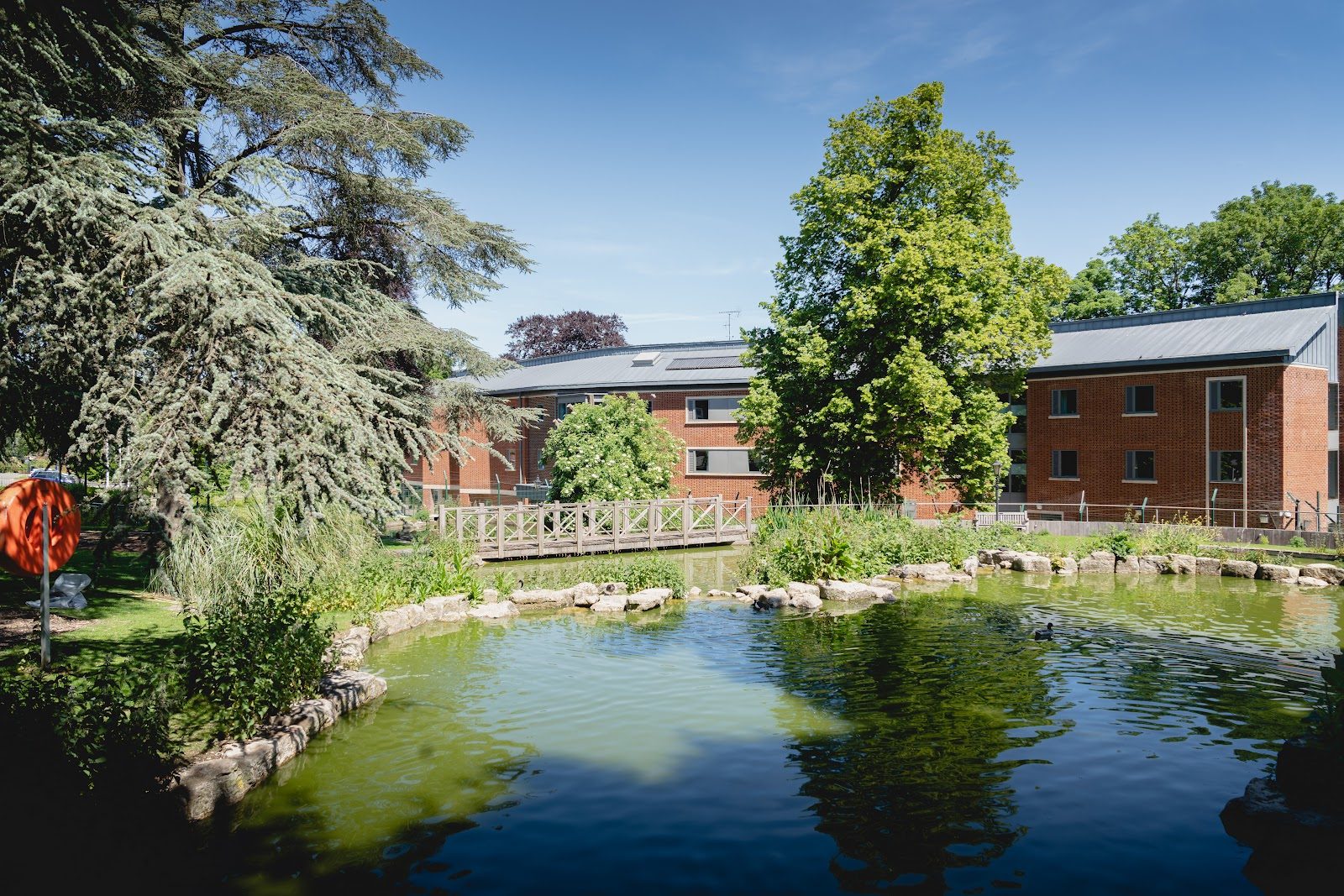
Whitgift School
Croydon · United Kingdom
A 1596 archbishop's foundation set on a 45-acre Croydon park where peacocks roam and bursaries can cover the full cost of fees.
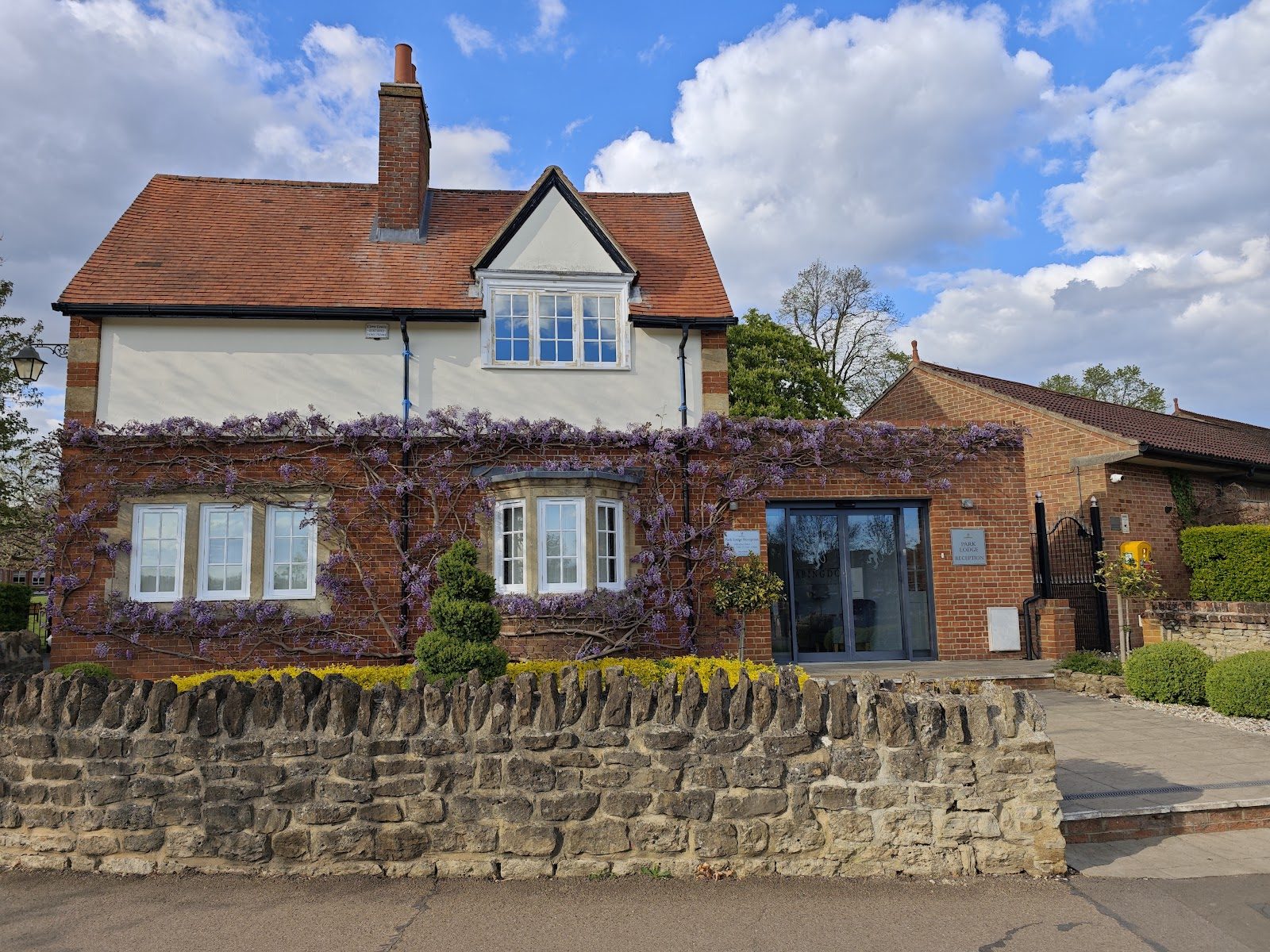
Abingdon School
Abingdon · United Kingdom
On the banks of the Thames just south of Oxford, a nine-century foundation whose boathouse has long fed Oxbridge rowing crews.
James Allen's Girls' School
London · United Kingdom
Founded in 1741 in Dulwich, this all-through day school built one of Britain's first school science labs and still leads in STEM.
Wimbledon High School
London · United Kingdom
In central SW19, girls debate weekly in Civil Discourse class, embracing a distinctive ethos of 'Playful Scholarship'.
Same country and curriculum — closest matches within ±10 points either way