
North Carolina
Durham Academy
low confidence· 2/6 cats · 2.75 avg sourcesIn the Research Triangle's shadow, a day school where cross country and track have piled up 39 state titles and academics outrun the AP checklist
Type
Day
Ages
3–18
Curriculum
American
Qualifications
AP
Ratio
6:1
The Verdict
Editor's commitment
Right for
Research Triangle families who want a 1933 day school with a 6:1 ratio, 1,267 pupils and academics beyond an AP box-tick.
Wrong for
Parents chasing boarding, religious formation or a mass-market prep factory; Durham Academy is secular, day-only and runs across 3 campuses.
Watch out for
NAIS accreditation and 76% of full-time faculty holding advanced degrees read well; the school does not publish aggregate AP or college-outcome figures here.
Ranking breakdown
Durham Academy · #435 of 1591
Composite score 69.9. 8 weighted criteria.
By criterion
Academic Outcomes
Weight 20%
#585
of 1529 scored
University Placement
Weight 16%
#516
of 1529 scored
Prestige & Heritage
Weight 12%
#597
of 1571 scored
Alumni Network
Weight 12%
#334
of 1530 scored
Facilities
Weight 12%
#478
of 1534 scored
Transparency & Communications
Weight 8%
#455
of 1532 scored
Peer & Industry Review
Weight 10%
#527
of 1548 scored
Admissions Selectivity & Demand
Weight 8%
#607
of 1529 scored
Peer & Industry Review
How Durham Academy is regarded in the sector
70
Respected · medium confidence
Within North Carolina, Durham Academy is consistently grouped with Cary Academy, Ravenscroft and Charlotte Latin as one of the state's stronger non-boarding independents, a positioning reflected in Niche.com's recurring placement of the school among the top private K-12 options in North Carolina. Its Research Triangle location gives it a visible, if not uniquely privileged, pipeline into Duke, UNC-Chapel Hill and NC State, schools whose admissions offices are familiar with its curriculum through regional counselor networks rather than through any special institutional arrangement. Independent education press coverage is modest compared with the national boarding tier -- it rarely appears in Good Schools Guide or WhichSchoolAdvisor commentary aimed at international families -- reflecting its identity as a well-regarded regional day school rather than a globally marketed brand. It maintains standard NAIS and SAIS accreditation and a visible presence at regional admissions and NCISAA athletic conferences, but lacks the head-to-head rivalry commentary or league-table prominence associated with the very top American independent schools.
Editors' overview
Durham Academy occupies a strong niche in the Triangle’s independent-school market: a non-sectarian American day school with the scale to offer breadth and the staffing to keep pupils known. Founded in 1933, it now serves 1,267 pupils from pre-kindergarten to Grade 12 across three campuses and four divisions, with a 6:1 student-teacher ratio. The school’s own language leans hard on “moral, happy and productive” lives; stripped of slogan, the substance is this: Durham Academy sells close adult attention, intellectual seriousness and a whole-school experience that extends well past classroom performance. The figure that sharpens that claim is 76% of full-time faculty holding advanced degrees. For parents who want an academically ambitious day school without the narrowness of an exam factory, that matters.
What distinguishes Durham Academy is that it does not frame itself as an AP treadmill. The school’s mission puts “intellectual endeavour and growth” at the centre, but couples that with athletics, the arts, citizenship and relationships. That mix is common in independent-school rhetoric; Durham Academy’s advantage is the operational capacity to deliver it, with three campuses, substantial resources and a long-established local reputation. The editorial hook is clear: this is a school for families who want high standards without hysteria, serious teaching with human scale and a long-game education rather than a crude credentials race. Its public emphasis on Diversity, Equity and Belonging also places it firmly in the mainstream of current US independent-school culture, not outside it. With 49% students of colour, it also serves a more diverse student body than many peer schools in the South.
Why shortlist it? Because Durham Academy offers a rare combination of pastoral intimacy, institutional heft and breadth of opportunity in a research-driven metropolitan area full of demanding families. The school suits students who want to do many things well: the strong all-rounder, the academically engaged child who still wants sport or the arts to count, and the pupil who benefits from teachers noticing changes in pace, confidence and interest. It also fits families who value character language and expect it to carry through daily school life, not just sit on a website. Children who need anonymity, relish sink-or-swim environments or want a sharply specialised conservatory-style education will find a better fit elsewhere. Durham Academy is for pupils who thrive when adults know them, challenge them and expect them to build a life larger than a transcript.
Academic Performance
Durham Academy does not publish the hard data that would let parents place its academic performance cleanly against top US independent-school peers. We have not seen aggregate AP scores, mean SAT or ACT results, National Merit counts, matriculation tables by volume, or year-on-year external exam breakdowns. That is a real gap. In a market where ambitious families expect crisp academic proof, opacity weakens the case, especially for a school that sells intellectual seriousness and close teaching. The available public picture rests instead on inputs and institutional intent: a low staffing ratio, a faculty body in which 76% hold advanced degrees, and a mission that puts intellectual development at the centre. Those are credible foundations for strong outcomes, but they are not outcomes.
Relative to peers, that places Durham Academy in an awkward middle ground. It has the scale, staffing and local reputation of a serious college-preparatory school, yet its public reporting is thinner than the best independent schools, which publish enough examination and university-placement evidence for parents to judge performance without guesswork. That does not mark academic weakness; it marks limited transparency. Families choosing between Durham Academy and more data-forward competitors should ask directly for AP score distributions, standardised testing medians, and university destinations over several graduating classes. Until those figures are public, Durham Academy reads as academically ambitious, but not academically quantified.
Facilities
Durham Academy’s facilities story starts with scale and division. The school operates across 3 campuses and 4 divisions, which matters because it allows age-appropriate space rather than forcing nursery children and sixth-formers into one institutional footprint. That structure is stronger than the single-site compromise common at smaller independents. The school also states that the campuses are state-of-the-art; strip away the sales language and the operational point remains useful: there is enough physical plant here to support academics, athletics, arts and recreational life at the same time, not in uneasy rotation. For a day school, that breadth places Durham Academy in the upper tier of regional peers. It does not read as cramped, improvised or dependent on one flagship building to carry the whole estate.
The catch is specificity. The school’s public account gives the broad institutional shape of the estate, but not the granular inventory discerning parents now expect: no clear public rundown of theatres, studios, design labs, libraries, performance venues or specialist athletic provision. That leaves the facilities picture strong in outline, thin in proof. Against the best-resourced US independents, which publish detailed maps, department spaces and hard evidence of capital investment, Durham Academy is less transparent than it should be. Still, the broad comparison holds: this is a well-equipped, full-spectrum day school with the room and organisational scale to deliver a serious all-round education, not a lean academic shop with sport and arts bolted on.
Durham Academy does not publish the hard data that would let parents place its academic performance cleanly against top US independent-school peers
Prestige
Durham Academy carries real local prestige and a respectable national profile, but not the kind of brand power that turns a school name into a universal shorthand. In the Research Triangle, that distinction matters less than it would in New York, Boston or Washington. Among families in the region’s academic, medical and professional circles, Durham Academy is an established first-tier choice: non-sectarian, academically serious, well-resourced and socially legible. Its prestige rests on longevity, selectivity by reputation, and the confidence that children will be taught by adults with strong academic credentials. The figure worth noting is 76% of full-time faculty holding advanced degrees. Add a student body of 49% students of colour and the school reads as a modern independent school, not a relic of old Southern exclusivity.
I rate its prestige below the tiny cluster of US independents with national myth, deep boarding-school cachet or headline-grabbing university placement statistics in the public domain. Durham Academy does not trade on that sort of rarefied prestige, and its public academic reporting lacks the hard comparative data that top-status schools now publish as routine. Still, prestige is not only national recognition; it is also social standing, parental confidence and the strength of a school’s network in its own city. On that measure, Durham Academy is solidly elite without theatre: a school whose name carries weight where it counts most for many families — admissions conversations, professional networks and local university-minded households.
What distinguishes Durham Academy is that it does not frame itself as an AP treadmill
Communications
Durham Academy communicates with parents in the way a large, well-run day school should: frequently, institutionally and with a clear sense that family engagement is part of the operating model, not an afterthought. The public-facing signs are plain enough. The website is extensive, navigation is orderly, and parent actions are surfaced without fuss — visit, apply, financial aid, family resources, news. That matters because strong school communication starts before a child enrols. Once families are in, the school’s emphasis on teachers knowing children, the all-through structure and the low staffing ratio all point to high-contact communication rather than a distant, transactional system. A school spread across multiple campuses and divisions cannot function on charm and improvisation; it needs disciplined information flow. Durham Academy gives that impression.
The stronger point is tone. The school communicates in a voice of mission and culture, with repeated stress on moral purpose, long-term development and adult care. For some parents, that reads as coherent and reassuring; for others, it edges into institutional self-belief and leaves practical questions unanswered. That is the weakness. We have not seen much public evidence of the harder-edged parent information that exacting families value: response-time standards, complaint routes, communication charters, or clear examples of how difficult issues are handled. So the verdict is this: Durham Academy’s communications look competent, structured and warm, but not radically transparent. The machinery is there. The proof of excellence lies in how fast and candidly the school deals with friction.
Uniqueness
Durham Academy’s clearest point of difference is that it treats schooling as a long-game enterprise, not a frantic accumulation of credentials. Many American independents claim to educate the whole child; Durham Academy ties that claim to a concrete institutional inheritance from the Calvert method: strong writing, poise built through assemblies, recreational life, deliberate attention to the arts, and teaching that starts from the student rather than the system. That matters because it produces a school culture with more ballast than the AP grind. The mission language about “moral, happy and productive” lives risks sounding soft until you read the academic core alongside it: intellectual development sits at the centre, and character is not parked in a separate pastoral silo. For students, the gain is coherence: adults are not asking them to choose between scholarship, citizenship and self-possession.
The other distinctive feature is operational scale without impersonality. Durham Academy is big enough to sustain breadth, but built to keep children known. The school’s own account leans hard on close adult knowledge of pupils, and the staffing structure gives that claim force. A student body of 1,267 can easily turn anonymous in a weaker institution; here, the promise is the reverse. Add 76% of full-time faculty holding advanced degrees and 49% students of colour, and the school stands out as a serious, modern independent school with both intellectual weight and social range. Students benefit from that mix: more options, more expertise, and a community that is broader and less insular than the old Southern private-school stereotype.
Durham Academy is for pupils who thrive when adults know them, challenge them and expect them to build a life larger than a transcript
Student Profile
Durham Academy suits the child who wants range without drift. This is not a school built for narrow specialists who define themselves by one pursuit and tolerate the rest. It fits pupils who can handle strong expectations across the board: academics taken seriously, sport and arts carrying real weight, and adults asking for judgement as well as performance. The public profile points to a student body that is busy, capable and well-supervised, with enough social and intellectual breadth to avoid the country-club sameness that still marks parts of the US independent sector. With 49% students of colour, the cohort is more mixed than many Southern peers, which changes the texture of daily school life in useful ways. Children who like being known, noticed and redirected will do well here; children who want to disappear into the background will not.
The best fit is the strong all-rounder: the runner, writer, actor, debater or scientist who does not want to choose one identity too early. The school’s own stress on long-term development, character and close adult support makes it well suited to pupils who respond to structure and to families who want school to shape conduct, not just credentials. It also works for children whose confidence grows through sustained teacher attention rather than sink-or-swim competition. The misfit is clear. A teenager chasing a pure pressure-cooker culture, or one who wants a more anonymous, transactional route to university, will find Durham Academy too watchful and too invested in the whole person.
Relative to peers, that places Durham Academy in an awkward middle ground
Co-curricular strengths
Arts & sport, on a separate axis
Overall 8.22/10
Scored 0-10 from the school's own published evidence. This axis is editorial-only — it does not feed the main WTS ranking.
Sports
8.5/10
Drama
8.5/10
Dance
7.5/10
Music
8.3/10
Visual Arts
8.3/10
Strengths
- +Enrolls 1,237 students in grades PK-12 with a student-teacher ratio of 6 to 1, and 99% of graduates go on to attend a four-year college.
- +Co-educational since its 1933 founding and one of the first schools in Durham to integrate, giving it a long institutional history on diversity.
- +During the 2025-2026 school year 19% of students received financial aid, with the average grant totaling $21,947, backed by an overall $5.1 million financial aid budget.
- +Ranks among the top 20% of North Carolina private schools for most AP courses offered, most sports offered and most extracurriculars offered.
- +Sits on an 84-acre suburban campus and is easily accessible from Duke University's West Campus and within walking distance of South Square, putting it close to Research Triangle amenities.
Considerations
- −Upper School tuition runs to $32,650 for grade 12 (with slightly lower rates in younger grades), a significant recurring cost typical of elite US day schools.
- −The acceptance rate of Durham Academy is 18%, which is lower than the national average of 81%, and applicants are required to take an admissions test and submit grade reports, recommendations and other supporting evidence.
- −Day school only, with no boarding option, so families relocating from abroad must independently arrange local housing before enrollment.
- −The school is organized into four divisions on separate parts of campus - Preschool, Lower School (grades 1-4), Middle School (grades 5-8) and Upper School (grades 9-12), which can mean logistical coordination for families with children across multiple divisions.
Availability
Primary entry gate & tests
ISEE/SSAT + Interview
Parent reviews
Have you sent your child here?
Voice reviews carry the strongest trust badge — we transcribe them for you to tidy up before they go live. Prefer to type? A written review is fine too.
Add your voice
In 60 seconds, tell other parents: what's the best thing about Durham Academy, and what surprised you when your child joined?
We ask for a Google sign-in so every review has a real face behind it — no anonymous drive-by attacks on schools, and no faked positive reviews. Your email is never shown publicly.
Send this profile to a friend
International parents rely on word-of-mouth. Share this review with someone weighing the same decision.
Schools with places
Similar schools to Durham Academy with places available now.
Grace Church School
New York City · United States
- 2026-27
- CLOSEDConfirmed full
- 2027-28
- OPENS SOONOpens post-Labor Day '26
Episcopal High School
Alexandria · United States
- 2026-27
- CLOSEDRegular cycle closed
- 2027-28
- OPENS SOONOpens Sept '26
Pine Crest School
Fort Lauderdale · United States
- 2026-27
- CLOSEDRegular cycle closed
- 2027-28
- OPENS SOONOpens Sept '26
Belmont Hill School
Belmont · United States
- 2026-27
- CLOSEDRegular cycle
- 2027-28
- PLACES OPENApplication route live
Availability first, then country, area, curriculum, price, co-curricular
Consider also
Also worth looking at alongside Durham Academy.

Episcopal High School
Alexandria · United States
A 130-acre hilltop campus 10 minutes from the Capitol, running America's only fully residential school of its caliber in a major metro area.
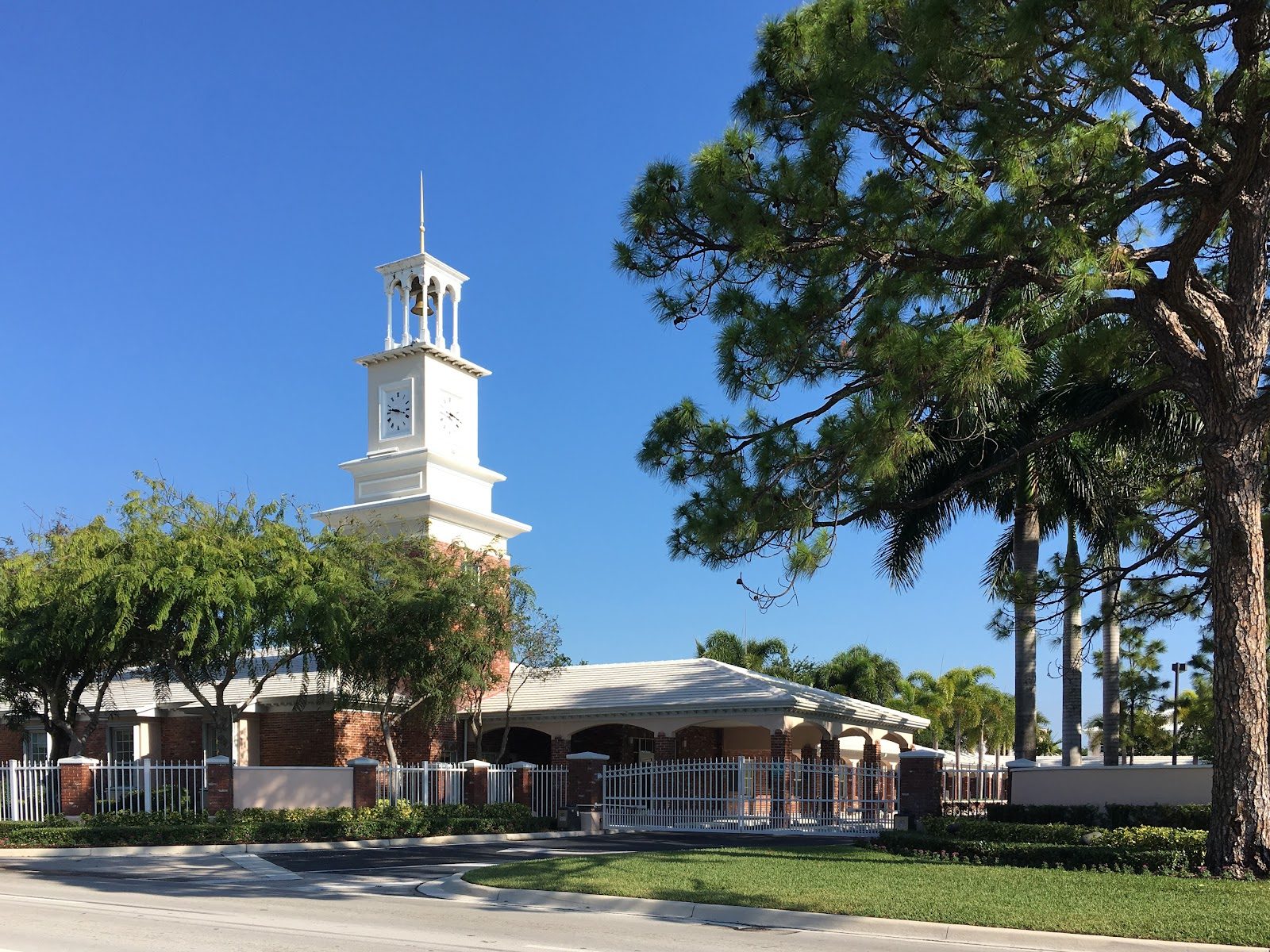
Pine Crest School
Fort Lauderdale · United States
Born as a 1930s tutoring practice for winter visitors, this Fort Lauderdale day school now tops the nation's Challenge Index rankings.
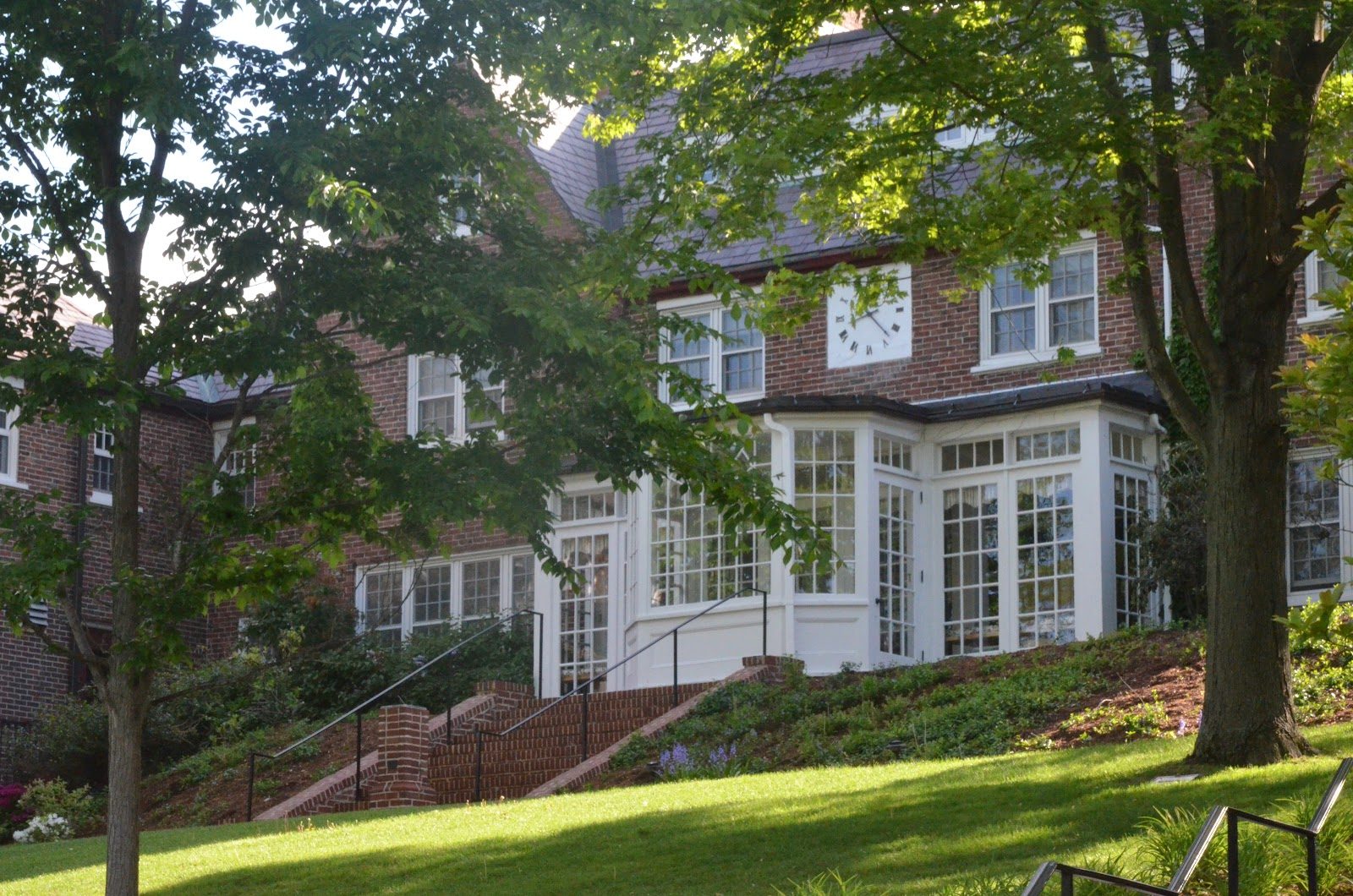
Belmont Hill School
Belmont · United States
A hilltop day school outside Boston, where jacket-and-tie ritual and family-style lunch anchor a century-old all-boys formation.

Ransom Everglades School
Miami · United States
On Biscayne Bay since 1903, where sailing and marine science turn the water itself into a classroom
Same country and curriculum — closest matches within ±10 points either way