
Ceará
Colégio Farias Brito
In Fortaleza, a pre-vestibular powerhouse whose seniors have topped Brazil's national Enem average eight separate years

Photo © AnaPaula EducaçãoFísica via Google Maps
Type
Day
Ages
11–18
Curriculum
Brazilian
Qualifications
ENEM · ITA/IME entrance · Vestibular
Ratio
—
The Verdict
Editor's commitment
Right for
Fortaleza families who want a day school founded in 1961, teaching in Portuguese and English, with serious Brazilian academic ambition.
Wrong for
Parents seeking boarding, a religious ethos, or a non-Brazilian curriculum for ages 11–18 will need another school.
Watch out for
The Enem-heavy reputation cuts both ways: this secular Fortaleza school prizes results, and the school does not publish wider outcome data here.
Ranking breakdown
Colégio Farias Brito · #833 of 1591
Composite score 65.9. 8 weighted criteria.
By criterion
Academic Outcomes
Weight 20%
#208
of 1529 scored
University Placement
Weight 16%
#219
of 1529 scored
Prestige & Heritage
Weight 12%
#750
of 1571 scored
Alumni Network
Weight 12%
#1110
of 1530 scored
Facilities
Weight 12%
#1200
of 1533 scored
Transparency & Communications
Weight 8%
#1151
of 1532 scored
Peer & Industry Review
Weight 10%
#999
of 1548 scored
Admissions Selectivity & Demand
Weight 8%
#686
of 1529 scored
Peer & Industry Review
How Colégio Farias Brito is regarded in the sector
65
Respected · medium confidence
Colegio Farias Brito is widely regarded within Ceara and northeastern Brazil as the benchmark pre-vestibular institution, a status reflected in its consistent placement among the state's top ENEM performers in annual rankings published by O Povo and Diario do Nordeste, and in national compilations by Estadao and Folha de S.Paulo that track schools with the highest average ENEM scores. Its results are frequently cited alongside traditional Sao Paulo and Rio powerhouses when education journalists discuss Brazil's most academically intensive private schools. Universities, particularly UFC's competitive Medicine and Engineering programs, informally treat Farias Brito graduates as strong applicants, a reputation reinforced by the school's own published approval statistics into federal universities, which local press repeats each vestibular season. Rival Fortaleza schools acknowledge its dominance in raw exam performance even while some education commentators critique its heavy focus on drilling for standardized tests over broader pedagogical innovation. Independent Brazilian education outlets rarely rank it internationally, but domestically it functions as a reference point for academic rigor rather than for holistic or arts-based education models.
Award
Elite Entrepreneurship, Economics & Finance 60
World's Top School · The Global Ranking
Colégio Farias Brito is featured on our Global Top 60 ranking at #15. This seal is available for the school's marketing team to use on their website, prospectus and social channels.
Editors' overview
Colégio Farias Brito occupies a specific corner of the Fortaleza market: the high-pressure academic school for families who want Brazilian university admissions results, not educational theatre. Founded in 1961, it has built its name on pre-vestibular strength and Enem performance. That matters. In a city with no shortage of schools promising rounded formation and bilingual polish, Farias Brito’s distinction is harder-edged: serious academic ambition, exam-floor discipline and a culture that treats top marks as the main event. It is a day school for ages 11–18, secular, with teaching in Portuguese and English, but its centre of gravity remains unmistakably Brazilian.
What puts it on a shortlist is clarity of purpose. Parents who want a school geared towards competitive higher education entry will understand the offer at once. The editorial line attached to the school is the point: seniors have topped Brazil’s national Enem average in 8 separate years. That is not a decorative claim; it defines the institution’s market position. Farias Brito is for families who value measurable academic output and accept the trade-offs that follow: intensity, pace, scrutiny and a strong institutional preference for students who can handle pressure. This is not a soft landing school. It is a school for pupils who gain energy from ranking, repetition and visible standards, and for parents who prefer a demanding regime to a diffuse one.
The student who will thrive here is bright, resilient and competitive, with the patience to work through volume and the confidence to live inside a meritocratic system. Self-motivated pupils who want clear benchmarks, strong peers and a route towards selective Brazilian university entry will find a fierce academic engine. Children who need a gentler rhythm, more pastoral cushioning or broad educational experimentation will find the culture tight, exacting and unsentimental. In short: Farias Brito belongs on the shortlist for families in Fortaleza who want results with teeth from a day school shaped by 11–18 academic progression and a long-established local reputation.
An Elite Entrepreneurship, Economics & Finance 60 school
Colegio Farias Brito, in Fortaleza, Brazil, sits at rank fifteen on the Elite Entrepreneurship, Economics & Finance 60 on the strength of a single unambiguous result: in July 2025, tenth-grader Arthur Alencar Spuri won gold at the International Economics Olympiad in Shenzhen, China, finishing first overall with 199.469 points among more than 260 competitors from countries including the United States, Switzerland, Japan and Singapore, and he also anchored the winning Business Case team that had to solve a live economic problem for a company. He arrived at that gold medal having already taken bronze and silver in the same Olympiad in prior years, alongside a silver medal at the International Physics Olympiad days earlier.
The specialism here is not a bolted-on business elective but an extracurricular olympiad pipeline layered onto the Brazilian national curriculum, which the school itself frames around Enem leadership and international science olympiad preparation rather than IB or A-Level business tracks. What differentiates Farias Brito is FB Ideias, a dedicated Centre of Innovation and Entrepreneurship opened in 2020 inside Fortaleza's Iguatemi mall, built as a hub concentrating innovation and entrepreneurship in one place, complete with coworking space and a podcast studio. Within it, Acelera FB gathers entrepreneurship, innovation and technology projects built by the organisation's own students, giving the economics-olympiad talent pool a venue to build ventures rather than only compete academically.
Named finance or founder alumni tied specifically to this specialism are still emerging; the school's better-documented alumni cluster in entertainment, including singer Fagner and actresses Juliana Paiva and Karla Karenina, rather than finance or venture-building. In their place, the strongest verified evidence is competition-based: Arthur Spuri's 2025 IEO gold and world-ranking first place, his prior bronze and silver Economics Olympiad medals, and the school's long-standing habit of producing Brazil's top scorer across national and international science olympiads.
International openness is limited and mostly outbound rather than inbound: this is a day school with no boarding, instruction is in Portuguese under the Brazilian curriculum, and the school's FB Application programme exists to help its own students win places at foreign universities rather than to admit overseas applicants with a dedicated ESL bridge or visa office. Published tuition varies widely by campus and grade band, and no international-admissions pathway is documented. Families abroad should treat Farias Brito as an aspirational model for olympiad-driven economics coaching rather than a relocation destination, and should contact the school directly, well in advance, if considering a genuine transfer into Brazilian-language instruction.
Academic Performance
Academic performance is the whole proposition here, and the school has the public record to justify that stance. Farias Brito states that its students have led the national Enem average in 8 different editions, and that places it in rare company even in Brazil’s intensely competitive private-school market. This is not the profile of a school that produces a good top cohort and leaves the rest to drift. It signals a system built around relentless exam preparation, tight academic management and a student body selected for stamina as much as intellect. For families targeting Brazilian university admission through national assessments, that record carries real weight.
Relative to peers, Farias Brito sits with the hard-driving academic specialists, not the all-rounders that market ambience, extracurricular theatre and bilingual gloss first. The comparison that matters is not with schools selling broad international identity, but with other Brazilian heavyweights whose reputations rest on vestibular and Enem output. On that measure, Farias Brito belongs near the top of the conversation. The limitation is transparency beyond the headline. We have not seen a fuller public breakdown of score distribution, subject-by-subject strength, university destinations across the whole cohort or value-added data. That does not erase the result; it does narrow the picture. Even so, the central verdict stands: this is a results-first machine with a formidable examination culture.
Facilities
Farias Brito’s facilities matter less as a display of abundance than as tools for throughput. The key asset is the wider ecosystem around the school: dedicated teaching spaces tied to an educational group that spans schools, a publishing arm and a recognised pre-university preparation operation. That structure gives students access to a tightly engineered academic environment rather than a campus built to impress on open day. The school also highlights a mathematics laboratory, and that fits the institutional logic: resources are channelled towards measurable academic gain, not decorative enrichment. Parents looking for flashy premium infrastructure — vast performing arts complexes, resort-grade sports grounds, maker spaces curated for brochure effect — will need to recalibrate expectations.
Against Fortaleza’s stronger private-school competitors, the benchmark is clear. Farias Brito does not trade on architectural theatre or broad co-curricular spectacle. It trades on facilities that support volume teaching, test preparation and disciplined study. That places it closer to Brazil’s exam-driven academic specialists than to bilingual lifestyle schools that use campus scale as a selling point. For the target family, that is a rational exchange. A science-rich innovation campus or elite sports set-up counts for less if the academic machine is the main purchase. The weakness is transparency: the school does not publish much detail on specialist spaces, sports provision or arts infrastructure, and that opacity matters. Parents who care about campus breadth need a visit and hard questions, because the public picture is functional, not expansive.
The editorial line attached to the school is the point: seniors have topped Brazil’s national Enem average in 8 separate years
Prestige
Farias Brito carries serious local prestige, but it is a specific kind of prestige. This is not the polished, society-school aura built on heritage rituals, elite networks or broad international cachet. Its status rests on something harder and more Brazilian: public exam dominance, disciplined academic culture and a name that parents associate with university entry at the sharp end. In that field, the school commands real respect. The Enem record — 8 years at the top of the national average — gives it authority far beyond ordinary private-school brand recognition. Families who care about measurable academic standing will rate that highly; families chasing social sheen or an expansive global profile will rate it less generously.
That distinction matters when judging prestige honestly. Farias Brito is prestigious for outcomes, not for image management. In Fortaleza, that carries weight because results travel quickly through parent networks, tutoring circuits and admissions conversations. The school has built a reputation as a high-pressure academic brand with standards that students must earn, not inherit through association. That gives the name force. It also narrows the appeal. Prestige here does not buy breadth, softness or educational romance; it buys credibility in a competitive system and the confidence that the school knows exactly what it is doing. For families who value scholastic status over lifestyle gloss, that is top-tier prestige.
This is not the profile of a school that produces a good top cohort and leaves the rest to drift
Communications
Parent communication is serviceable but narrowly pitched. The public-facing channels do the core job: contact routes are easy to find, the school’s academic identity is unmistakable, and the wider group structure gives communication a degree of organisational coherence that smaller schools often lack. Families will not struggle to work out what the institution values. That clarity counts. A school built around performance needs direct messaging, clear expectations and fast operational updates, and Farias Brito’s communication style fits that model. It reads as controlled, purpose-built and institution-first, not warm or discursive.
The weakness is depth. The school does not publish much that helps a parent judge day-to-day school life beyond the academic mission: little granular detail on pastoral systems, limited public explanation of broader student experience, and thin visibility on the practical texture of arts, sport and student support. That matters because strong communication is not just about announcements; it is about whether parents can see how the school runs for children outside the classroom. Here, the picture is tight-lipped. For families already sold on the school’s exam culture, that will feel efficient. For families conducting due diligence, it will feel opaque and at times one-dimensional. In short, communication is effective at reinforcing the brand and operational message; it is less effective at giving parents a rounded understanding of the school their child will inhabit for 7 years.
Uniqueness
What makes Farias Brito distinct is not a vague commitment to excellence but a whole institutional model built around one outcome: winning in Brazil’s admissions race. Many schools add exam preparation to a broader educational story. Here, the exam culture is the story. The school’s educational group structure sharpens that advantage. It does not operate as a standalone campus with a few revision classes bolted on; it sits inside a system that includes its own publishing arm and a recognised pre-university preparation operation. That creates a closed academic circuit: teaching, practice material, revision culture and performance expectations all pull in the same direction. The result for students is exceptional clarity. They know what matters, how work is measured and where the school intends to take them.
That brings real benefits for the right child. Strong pupils get constant academic traction, fast pacing and peers who treat marks as serious business. There is less institutional drift, less ambiguity and less time wasted on inflated rhetoric about “balance” when the school’s real expertise lies elsewhere. The school’s national Enem record — 8 separate years at the top of the average table — turns that model from rhetoric into proof. For students who thrive on pressure, repetition and external benchmarks, that is a powerful advantage. The trade-off is just as clear: this is narrow-band excellence. Students who want room for reinvention, wide exploratory learning or a looser school identity will find the model restrictive rather than liberating.
On that measure, Farias Brito belongs near the top of the conversation
Student Profile
The best fit is a student who wants school to function as a competitive system, not a lifestyle experience. Farias Brito suits adolescents who are motivated by ranking, routine and visible standards; who can absorb heavy workloads without constant emotional negotiation; and who do not need every lesson dressed up as enrichment. The social environment will reward speed, consistency and academic nerve. Pupils who like clear pecking orders, fast correction and the satisfaction of outperforming a strong peer group will find that electrifying. So will children who already know they want selective Brazilian higher education and are prepared to organise their lives around that target. This is not for the faint-hearted. A bright child with weak self-management, patchy resilience or a low tolerance for comparison will feel exposed very quickly.
The less suitable student is easy to identify. Children who need broad pastoral cushioning, freedom to drift between interests, or a school culture that prizes self-expression above measurable attainment will chafe here. The same goes for pupils whose strengths sit outside the examinable mainstream and need patient cultivation rather than constant benchmarking. There is status in belonging to a school with 8 years of headline exam leadership, but that status brings pressure with it. Families need to ask a hard question at the outset: does their child draw confidence from high-stakes competition, or lose confidence in it? At Farias Brito, that distinction is decisive. The right student will find serious traction; the wrong one will find a tight, unforgiving rhythm.
The Enem record — 8 years at the top of the national average — gives it authority far beyond ordinary private-school brand recognition
Co-curricular strengths
Arts & sport, on a separate axis
Overall 5.8/10
Scored 0-10 from the school's own published evidence. This axis is editorial-only — it does not feed the main WTS ranking.
Sports
6.5/10
Drama
5.5/10
Dance
5/10
Music
6/10
Visual Arts
6/10
Strengths
- +The school's Colegio de Aplicacao unit topped Brazil's 2024 ENEM national exam rankings with an average score of 789.93, the highest of any school in the country.
- +Farias Brito has led Brazil's ENEM performance rankings for eight consecutive years, according to CNN Brasil.
- +Founded on 19 April 1935 in Fortaleza, giving the institution close to nine decades of continuous operation.
- +Students from the school have gone on to universities including Harvard, Stanford, University of Chicago and MIT.
- +Notable alumni include the singer Fagner and actresses Juliana Paiva and Karla Karenina.
Considerations
- −Monthly tuition for the school's most advanced ENEM-prep track reached R$3,669 in 2024, one of the higher figures among Brazil's top-performing private schools.
- −Entry into the school's advanced 'turma de aplicacao' stream requires passing a formal selection process involving an interview and a placement test.
- −The institution's reputation rests heavily on exam-oriented outcomes, with Ceara schools noted as champions of admission to Medicine and to the military ITA and IME institutes rather than broader liberal-arts strengths.
- −In 2020, the #ExposedFortal social-media movement raised allegations of physical and verbal harassment by teachers connected to the wider Farias Brito organisation.
Availability
Primary entry gate & tests
Entrance Exam
Gallery
Photo © Gilberto Neto via Google Maps
Photo © Gilberto Neto via Google Maps
Photo © Joao Joao via Google Maps
Photo © Josemir mendes Eduardo via Google Maps
Photo © Josemir mendes Eduardo via Google Maps
Photo © Josemir mendes Eduardo via Google Maps
Photo © Josemir mendes Eduardo via Google Maps
Parent reviews
Have you sent your child here?
Voice reviews carry the strongest trust badge — we transcribe them for you to tidy up before they go live. Prefer to type? A written review is fine too.
Add your voice
In 60 seconds, tell other parents: what's the best thing about Colégio Farias Brito, and what surprised you when your child joined?
We ask for a Google sign-in so every review has a real face behind it — no anonymous drive-by attacks on schools, and no faked positive reviews. Your email is never shown publicly.
Send this profile to a friend
International parents rely on word-of-mouth. Share this review with someone weighing the same decision.
Schools with places
Similar schools to Colégio Farias Brito with places available now.
Graded - The American School of São Paulo
São Paulo · Brazil
- 2026-27
- WAITPOOLGrade-specific
- 2027-28
- PLACES OPENLocal Oct 2; Intl relocators now
Escola Americana do Rio de Janeiro
Rio de Janeiro · Brazil
- 2026-27
- WAITPOOLSpace-dependent
- 2027-28
- PLACES OPENRolling
St. Paul's School
São Paulo · Brazil
- 2026-27
- WAITPOOLVacancy-dependent
- 2027-28
- PLACES OPENNursery Active; Others available
Availability first, then country, area, curriculum, price, co-curricular
Consider also
Also worth looking at alongside Colégio Farias Brito.
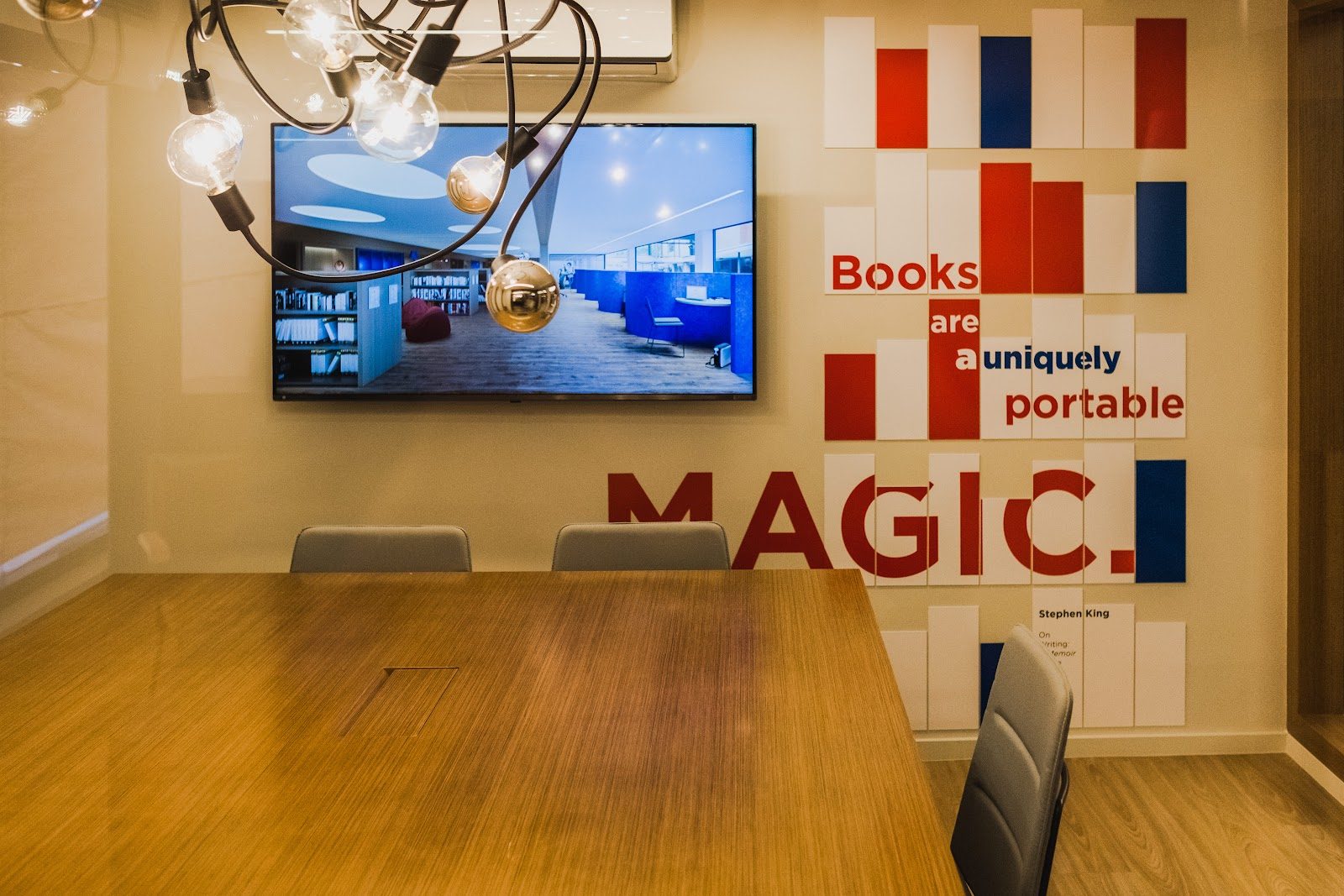
Graded - The American School of São Paulo
São Paulo · Brazil
Born in 1920 as a corporate venture of Citibank, Ford and GE, this Morumbi campus still sends seniors off with three diplomas at once.
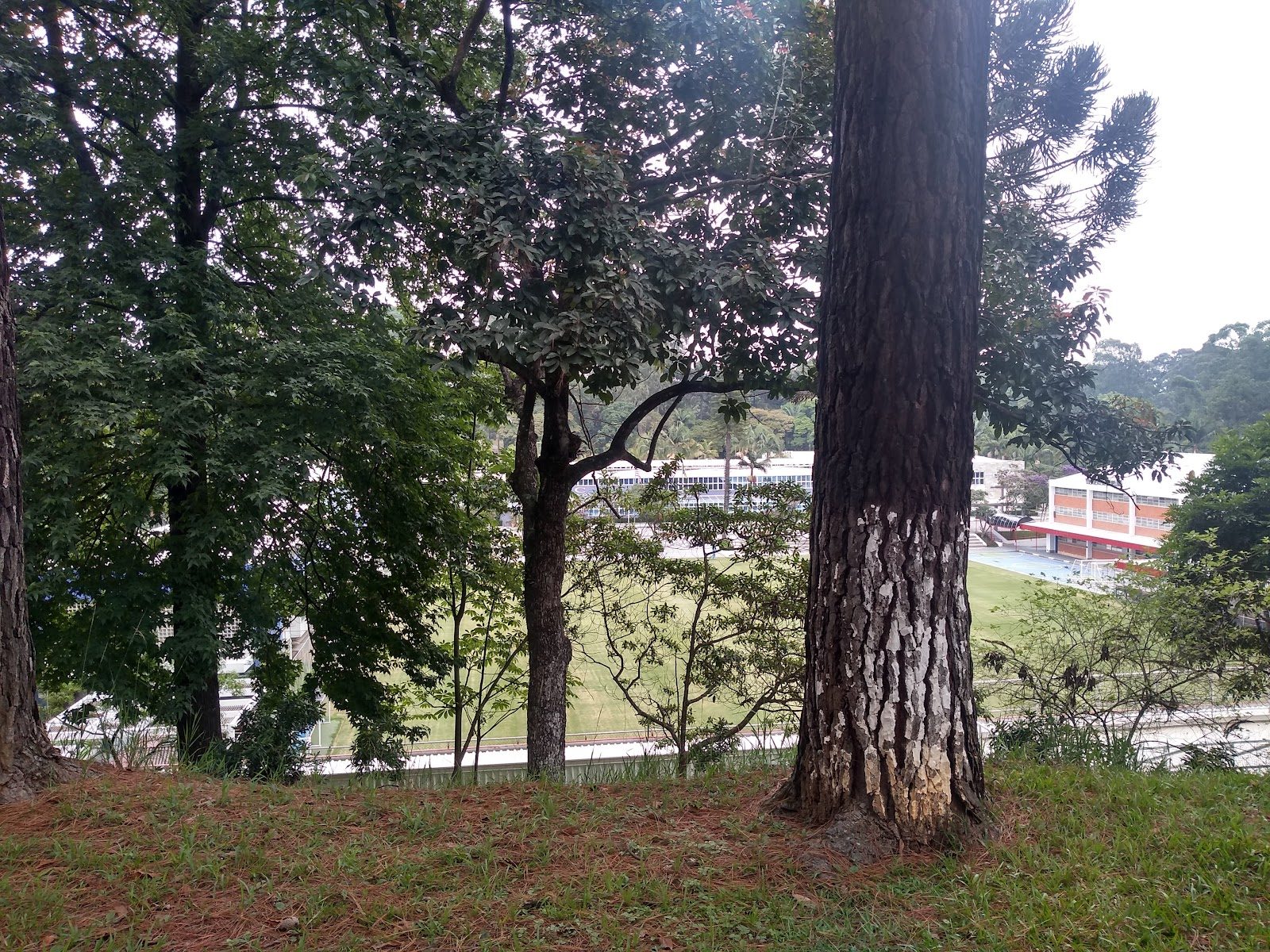
Chapel School
São Paulo · Brazil
Founded in 1947 by Oblate priests for American Catholic families, this Sao Paulo day school runs American, Brazilian and IB diplomas side by side.
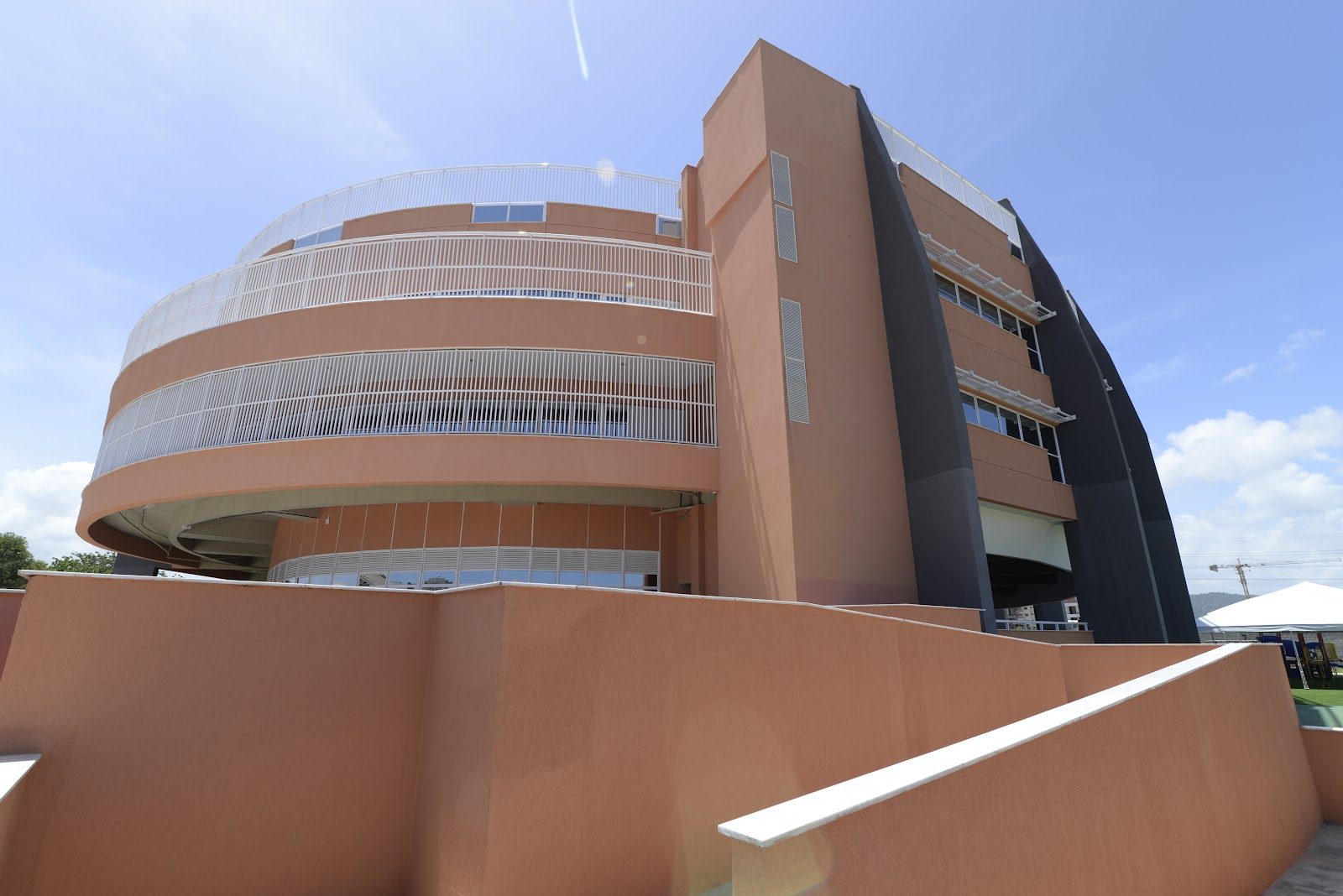
Escola Americana do Rio de Janeiro
Rio de Janeiro · Brazil
Perched at the edge of Tijuca National Forest with Christ the Redeemer in view, a 1937 campus layers IB, American and Brazilian diplomas.

Dubai Heights Academy
Dubai · United Arab Emirates
In Al Barsha South, an MIT-built AI curriculum and a Tommy Fleetwood golf programme pair with top KHDA marks for pupil wellbeing.
Same country and curriculum — closest matches within ±10 points either way