
Zapopan
The American School Foundation of Guadalajara
low confidence· 4/6 cats · 1 avg sourcesFounded in 1908, a bilingual Jalisco campus pairing UNAM-certified diplomas with U.S. accreditation and a LEED Gold campus.
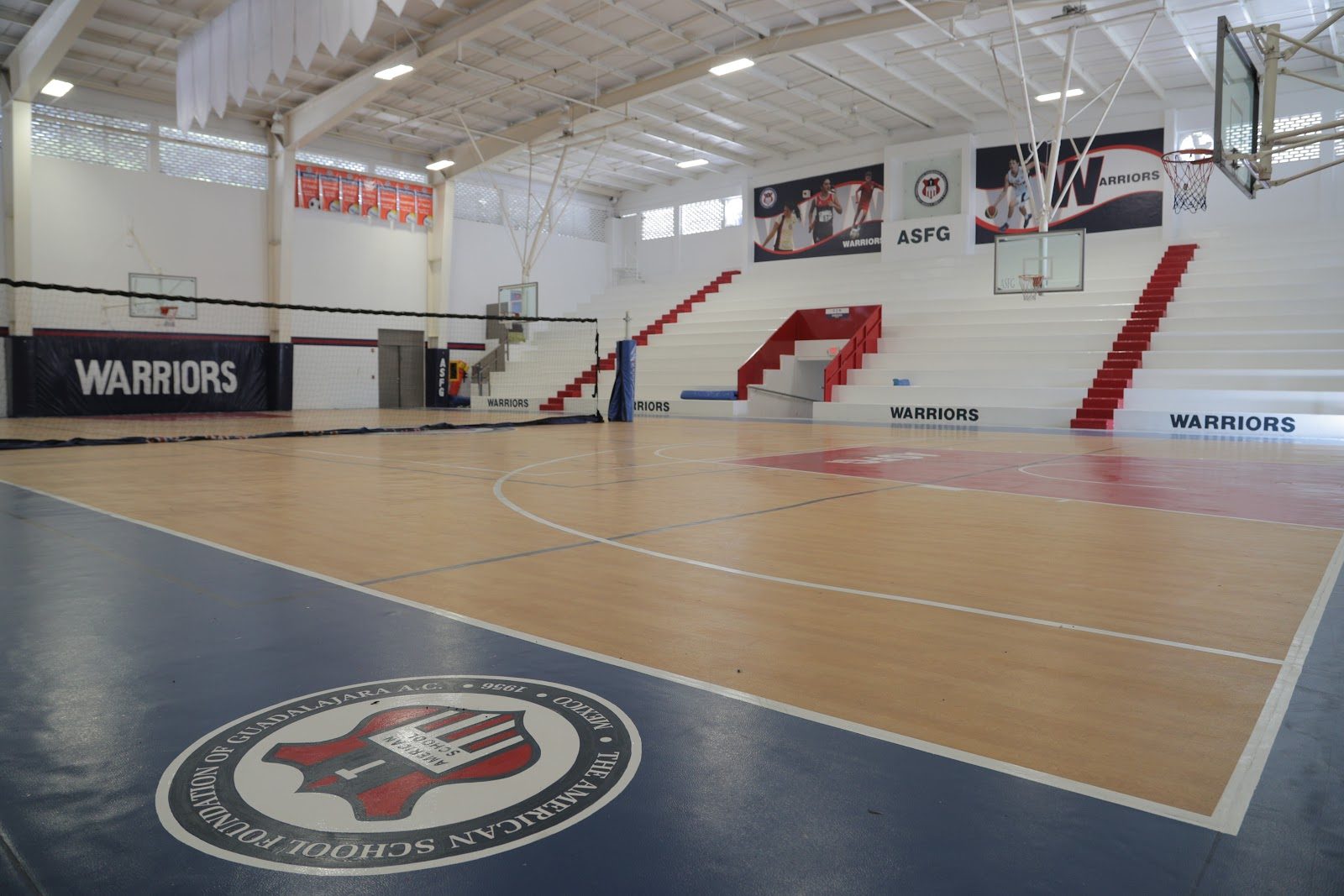
Photo © The American School Foundation of Guadalajara, A.C. via Google Maps
Type
Day
Ages
3–18
Curriculum
American · IB
Qualifications
AP · IB Diploma · US High School Diploma
Ratio
—
The Verdict
Editor's commitment
Right for
Families wanting a bilingual 3–18 day school founded in 1908, with American and IB pathways on a LEED Gold campus.
Wrong for
Anyone seeking boarding, a religious ethos or a cheap option: this non-religious Guadalajara school averages MXN 203,807 a year.
Watch out for
ASFG carries Middle States, IB World School, AASSA and SEP badges; that breadth demands clarity on which diploma route your child follows.
Ranking breakdown
The American School Foundation of Guadalajara · #648 of 1591
Composite score 67.3. 8 weighted criteria.
By criterion
Academic Outcomes
Weight 20%
#746
of 1529 scored
University Placement
Weight 16%
#736
of 1529 scored
Prestige & Heritage
Weight 12%
#734
of 1571 scored
Alumni Network
Weight 12%
#481
of 1530 scored
Facilities
Weight 12%
#732
of 1533 scored
Transparency & Communications
Weight 8%
#779
of 1532 scored
Peer & Industry Review
Weight 10%
#793
of 1548 scored
Admissions Selectivity & Demand
Weight 8%
#547
of 1529 scored
Peer & Industry Review
How The American School Foundation of Guadalajara is regarded in the sector
58
Credible · low confidence
ASFG appears in the U.S. State Department's Office of Overseas Schools directory and holds Cognia/SACS accreditation, indicating solid institutional standing among American overseas schools, but it rarely appears in specialist rankings like Tatler or Good Schools Guide and has limited independent press coverage beyond expat forum mentions (e.g., InterNations, Expat Exchange) discussing Guadalajara international schooling options. Its reputation seems regionally solid among expat parents but lacks the broader peer-benchmarking visibility of top-tier Mexican international schools like ASF Mexico City.
Evidence sources
Editors' overview
A school founded in 1908 on a bilingual campus in Guadalajara has had time to decide what it is. The American School Foundation of Guadalajara is not a casual international school with a thin U.S. label attached. It runs in English and Spanish, awards UNAM-certified diplomas alongside U.S. accreditation, and adds the IB to the mix. That combination matters in Mexico. It gives families a route that keeps local academic legitimacy in view while preserving an outward-facing international framework. The LEED Gold campus adds a modern, practical advantage rather than a branding flourish: this is an established school that has invested in physical infrastructure, not just reputation.
Its accreditations tell you where it sits in the market. Middle States gives it recognised U.S. institutional oversight; IB World School status confirms that the IB is a real part of the academic offer, not decorative language; SEP anchors it in the Mexican system; AASSA places it firmly in the Americas international-schools circuit. The average annual day fee is 203,807 MXN, which puts it in Guadalajara’s premium bracket rather than the broad middle market. Parents paying that level should expect a school with academic range, bilingual seriousness and administrative maturity. The founding date, the accreditations and the dual local-international orientation justify that expectation.
What is special here is not novelty but structural depth. Many schools can claim bilingualism; fewer can combine English and Spanish instruction with American and IB curricula, Mexican recognition, and a campus built to contemporary environmental standards. That mix suits families who do not want to choose between local rootedness and international portability at age 16 or 18. It also suits students who can handle a demanding academic environment across two languages and who benefit from moving between different academic cultures rather than staying in one neat lane. Children who need a narrow, low-pressure setup will find this less comfortable. Students who are adaptable, linguistically confident and intellectually mobile will get the most from it.
This school belongs on a shortlist for parents in Jalisco who want scale, history and a credible cross-border academic proposition in one place. It is not a boutique option and not a budget one. It is for families who value institutional permanence, care about recognised accreditation, and want a school that can carry a child from age 3 to 18 without forcing a choice between Mexico and the wider international system. In a crowded market, that is a serious distinction.
Academic Performance
Academic performance is where this profile turns frustratingly opaque. The school has the structural ingredients for strong outcomes — a long-established senior offer, recognised oversight and access to international pathways — but it does not publish the kind of aggregate examination data that lets parents place it cleanly against top regional competitors. We have not seen cohort-wide IB averages, diploma pass rates, score distributions, SAT or AP summaries, or university-matriculation breakdowns with enough precision to test academic strength properly. For a school charging an average of 203,807 MXN a year, that gap matters. Premium schools do not get credit for implied quality; they earn it through disclosed results.
That does not put ASFG in weak academic company. It puts it in the credible but unproven tier for families comparing hard outcomes across Guadalajara’s upper end. Schools that publish full IB and university data make a cleaner case to analytical parents. ASFG instead asks families to trust institutional reputation, programme breadth and longevity. That is not worthless; it is also not enough for a school with a serious price tag and an ambitious academic identity. The practical conclusion is straightforward: parents interested in sixth form outcomes should ask for recent IB diploma averages, pass rates across at least 3 years, and destination lists broken down by country and institution type before treating the school as an academic front-runner.
Facilities
The campus’s clearest asset is scale with purpose. ASFG’s LEED Gold site gives it an edge over many legacy schools whose reputations outlast their buildings. That matters in daily school life: a modern campus handles circulation, climate, specialist teaching and co-curricular traffic better than retrofitted blocks. For parents, the headline is not architectural vanity but operational competence. A school covering the full age range needs spaces that can absorb early years, heavy secondary timetables and after-school use without feeling cramped or improvised. On that measure, this reads as a serious piece of infrastructure. Against Guadalajara peers, that places ASFG in the upper tier of physical provision rather than the charming-but-dated category that still persists in older private schools.
What is less clear is the level of specialist detail the school puts into the public domain. We have a strong campus signal, but not a granular public inventory of theatres, maker spaces, competition-standard sports provision, science capacity or standout arts facilities. That weakens the comparison with top schools that spell out exactly what students can use and at what standard. The result is a facilities picture with one genuinely persuasive headline and some unanswered practical questions. Parents touring the school should press on the specifics: library provision, lab stock, indoor sports space, music practice rooms, and how heavily shared the best facilities are across age groups. A campus can be impressive on paper and still feel oversubscribed at peak hours.
The American School Foundation of Guadalajara is not a casual international school with a thin U.S. label attached
Prestige
ASFG carries real local weight and a credible international profile, but it does not sit in the tiny group of schools whose status rests on publicly documented academic dominance. Its prestige comes from institutional permanence, recognised oversight and the fact that it serves families who want both Mexican legitimacy and outward mobility without moving schools. In Guadalajara, that combination has value. So does the fee level: an average of 203,807 MXN a year places it firmly among the city’s expensive choices, and price at that level filters the intake and the parent body in obvious ways. This is the kind of school that reads as established, connected and socially visible rather than insurgent or niche.
Why not rate it higher? Because prestige without disclosure has limits. The school has the markers parents associate with status, but it does not publish the hard outcome data that would lift it from respected to undeniably elite. For some families, long-standing reputation and a strong bilingual, cross-system structure are enough. For exacting parents comparing top-end options, they are not. The result is a school with serious standing in its market, strong name recognition, and clear appeal to professional and internationally minded families — but not the unanswerable academic authority that the best schools build by putting results into the public domain year after year.
That weakens the comparison with top schools that spell out exactly what students can use and at what standard
Communications
ASFG communicates like an established institution rather than a nimble concierge school. The public-facing basics are in place: a functional website, routine news flow, admissions information, calendars and contact routes. That gives parents the minimum architecture they need. What it does not give them is high-resolution transparency. The same pattern shows up elsewhere in the school’s public profile: the broad story is clear, the fine grain is thinner than exacting families at this price point deserve. For a school charging an average of 203,807 MXN a year, parents should not need detective work to pin down senior outcomes, specialist provision or the practical detail behind headline claims. Good communications are not only about warmth and frequency; they are about usable precision.
That distinction matters even more in a school running multiple academic pathways across a full age range. Parents need clean explanations of who takes which route, when choices narrow, how progression works and what support sits behind decision points. ASFG has the institutional maturity to do this well, but the public communication we have seen is more serviceable than exemplary. It informs; it does not fully illuminate. For day-to-day families, that may be enough once enrolled and inside the school’s own channels. For prospective parents making a hard comparison with other premium schools, it leaves avoidable gaps. The test on a visit is straightforward: ask for a current parent communication sample, a full assessment calendar and a clear senior pathways map. A strong school supplies them without fuss.
Uniqueness
What sets ASFG apart is not one flagship programme but a rare three-way alignment: a school can finish with a Mexican route that carries UNAM certification, an American high-school framework, and the IB in the same institutional ecosystem. In practical terms, that gives families more than branding. It widens exit options without forcing a teenager into a late strategic switch, and it gives students daily practice in handling different academic expectations, assessment styles and cultural reference points. That matters for children who are genuinely adaptable and happy working across systems rather than sitting inside one national script from start to finish. The age span — 3–18 — also matters here: a structure like this works best when the school can build habits early and carry them through to senior years instead of stitching together disconnected phases.
There is also a sharper point about identity. Many bilingual schools produce competent language users; fewer build a student profile that is institutionally bicultural rather than cosmetically international. ASFG’s setup gives students a stronger local footing than the standard expatriate-school model, while still keeping overseas higher-education routes open. That combination suits families with roots in Mexico, mixed-nationality households, and parents whose careers move between domestic and international spheres. The payoff for students is real versatility: they learn to translate between systems, audiences and expectations. The trade-off is clear too. This is not the easiest path. Students who thrive here need stamina, organisational discipline and comfort with academic complexity across more than one frame of reference.
The result is a facilities picture with one genuinely persuasive headline and some unanswered practical questions
Student Profile
The students who fit best here are the ones who can operate in more than one register without constant hand-holding. This is not a narrow local private school and not a soft international bubble. It suits children who can move between home cultures, academic expectations and social groups with real composure. Mixed-nationality families, internationally minded Mexican families and returnee households all make sense here, because the school’s structure rewards students who are comfortable with more than one frame of reference. By the upper years, that tends to favour organised, verbal, self-directed teenagers rather than children who need a simpler, lower-pressure track. Families paying an average of 203,807 MXN a year will also expect classmates from a professional, ambitious parent body, and that has consequences for peer culture: standards, pace and expectation all rise.
Socially, the best fit is a student who is confident without needing to dominate and adaptable without losing their footing. A child who wants every task reduced to one system, one style and one set of assumptions will find the school demanding in exactly the wrong way. A student who enjoys intellectual range, handles transition well and can keep up across a long all-through journey will do far better. This is a strong match for globally mobile families who still want local legitimacy, and for students with solid executive function who can manage competing deadlines, identities and ambitions. It is a weaker fit for children who need heavy pastoral cushioning or a boutique level of personal curation.
For exacting parents comparing top-end options, they are not
Co-curricular strengths
Arts & sport, on a separate axis
Overall 7.3/10
Scored 0-10 from the school's own published evidence. This axis is editorial-only — it does not feed the main WTS ranking.
Sports
8.2/10
Drama
7.5/10
Dance
5.5/10
Music
7.5/10
Visual Arts
7.8/10
Editor first-pass · editor-reviewable · 7/30/2026
Strengths
- +One of the longest-established American-curriculum schools in Guadalajara, tracing its founding to the mid-20th century.
- +Offers a dual pathway combining a US-style high school diploma with the IB Diploma Programme, giving families flexibility on university destination.
- +Operates as a bilingual institution, with instruction split between English and Spanish across the curriculum.
- +Single, purpose-built day campus serving PreK through Grade 12, allowing continuity from early years through graduation.
- +Long-standing ties to the US overseas schools network, which has historically supported curriculum alignment and teacher recruitment.
Considerations
- −Editorial rank and rising_star_400 tier indicate a school still building broader international recognition rather than a long-established global reputation.
- −Day school only, with no boarding option, so relocating families must independently arrange housing in Guadalajara.
- −Guadalajara offers fewer direct international flight connections than Mexico City, a practical consideration for frequently mobile expat families.
- −Published tuition figures and detailed university placement data are not consistently available in public sources, making cost and outcomes harder to verify in advance.
Availability
Primary entry gate & tests
Academic Record
Gallery
Parent reviews
Have you sent your child here?
Voice reviews carry the strongest trust badge — we transcribe them for you to tidy up before they go live. Prefer to type? A written review is fine too.
Add your voice
In 60 seconds, tell other parents: what's the best thing about The American School Foundation of Guadalajara, and what surprised you when your child joined?
We ask for a Google sign-in so every review has a real face behind it — no anonymous drive-by attacks on schools, and no faked positive reviews. Your email is never shown publicly.
Send this profile to a friend
International parents rely on word-of-mouth. Share this review with someone weighing the same decision.
Schools with places
Similar schools to The American School Foundation of Guadalajara with places available now.
Availability first, then country, area, curriculum, price, co-curricular
Consider also
Also worth looking at alongside The American School Foundation of Guadalajara.
The American School Foundation
Mexico City · Mexico
Founded in 1888, the oldest continuously operating American school outside the U.S., blending IB rigor with bilingual roots in Mexico City.

Puebla American School Foundation
Puebla · Mexico
Since 1942, this bilingual Puebla day school became the city's first to run the full IB continuum, from PYP to Diploma.

Greengates School
Mexico City · Mexico
Since 1951 in Naucalpan, the only Mexico City school requiring every sixth-former to sit the full IB Diploma, with results to match
Li Po Chun United World College of Hong Kong
Hong Kong · Hong Kong
Perched above Tolo Harbour, this United World College gathers scholars from 90 nations for a service-driven IB Diploma.
Same country and curriculum — closest matches within ±10 points either way