
Abu Dhabi
The British International School Abu Dhabi
medium confidence· 5/6 cats · 2.25 avg sourcesIn Zayed City, Juilliard-shaped arts and MIT-linked science underpin an IB average of 34.1, well above the global norm.
Photo © British International School Abu Dhabi via Google Maps
Type
Day
Ages
3–18
Curriculum
British · IB
Qualifications
IB Diploma
Ratio
10:1
The Verdict
Editor's commitment
Right for
Families who want a British school with IB to 18, an Outstanding ADEK rating, and a 10:1 student-teacher ratio.
Wrong for
Parents chasing a cheaper Abu Dhabi option: the average annual fee is AED 68,319, and this is a Nord Anglia premium play.
Watch out for
The arts-and-science pitch is polished, but outcomes rest on an IB average of 34.1 and sparse destination data beyond Cambridge, Oxford and Imperial.
Ranking breakdown
The British International School Abu Dhabi · #401 of 1591
Composite score 70.6. 8 weighted criteria.
By criterion
Academic Outcomes
Weight 20%
#294
of 1529 scored
University Placement
Weight 16%
#354
of 1529 scored
Prestige & Heritage
Weight 12%
#689
of 1571 scored
Alumni Network
Weight 12%
#721
of 1530 scored
Facilities
Weight 12%
#125
of 1533 scored
Transparency & Communications
Weight 8%
#254
of 1532 scored
Peer & Industry Review
Weight 10%
#480
of 1548 scored
Admissions Selectivity & Demand
Weight 8%
#1077
of 1529 scored
Peer & Industry Review
How The British International School Abu Dhabi is regarded in the sector
78
Strong · high confidence
The British International School Abu Dhabi has built a solid top-tier reputation within the emirate's crowded British curriculum market, with WhichSchoolAdvisor noting it as the only international school to hold the double Outstanding ADEK rating across both inspection frameworks. SchoolsCompared ranks it among the top five British curriculum schools in Abu Dhabi, praising "some of the must humane and warm school dynamics" observed across its inspections and highlighting Nord Anglia's Juilliard and MIT partnerships as genuine differentiators. Its verdict also flags strong ROI on premium fees and not-for-profit-style community investment, tempered by a campus it calls constrained next to newer ultra-premium rivals. Together the coverage signals a well-regarded, consistently benchmarked school rather than a unanimous sector leader.
Evidence sources
Editors' overview
Juilliard-shaped arts and MIT-linked science give The British International School Abu Dhabi a sharper profile than the standard premium expat school. This is a British school by regulator attestation, with the IB in the senior years by school declaration, and it has the hard signals to back up the pitch: an ADEK rating of Outstanding for 2023/24, IB World and BSO accreditation, and a student-teacher ratio of 10:1. The published IB average of 34.1 sits comfortably above the global norm. That matters more than glossy language about “personalised learning”: it tells parents that the academic core is working.
The school’s strongest selling point is breadth with structure. Nord Anglia’s external collaborations can drift into brand garnish elsewhere; here they fit the offer. A child who wants serious performing arts, design, science and a broad international education in one place gets a coherent package rather than a set of disconnected extras. The school is day-only, covers ages 3 to 18, and charges an average annual fee of AED 68,319 across the full age range, which places it firmly in Abu Dhabi’s premium bracket without entering the most punishing fee territory. The recent university destinations listed — Cambridge, Oxford and Imperial, one student each — are credible but modest. This is not a school trading on giant headline destination numbers; it is a school with solid academic traction and a broad sixth-form proposition.
It belongs on a shortlist for families who want an English-medium education with a genuinely international finish, and who value arts and STEM enrichment without sacrificing exam outcomes. It will suit able, busy students who want to do more than grind through a narrow academic programme, and who thrive in a school that prizes participation alongside attainment. It will suit families who want a clear, well-resourced route from early years to the IB years under one roof. It is less compelling for parents who want a stripped-back, exam-factory British education, or who judge a school almost entirely by large Oxbridge admission volumes. BIS Abu Dhabi’s appeal is rounded ambition: strong results, serious co-curricular architecture and enough institutional heft to give students room to specialise.
Academic Performance
The clearest academic signal is the sixth form. The school publishes an IB Diploma average above the global baseline, and that places it in the credible upper tier of broadly inclusive international schools rather than in the tiny group of results-obsessed outliers that post eye-watering averages off the back of narrow entry filters. That distinction matters. A strong mean score in a school with a wide co-curricular brief tells parents that teaching, course guidance and study culture are doing real work. The parallel BTEC route adds another useful data point: the school reports a 100% pass rate and a cohort average of DDD, which gives the senior offer more substance than the token vocational strand found at some competitors.
Relative to Abu Dhabi’s premium market, this is a school with solid academic traction, not one built around brute-force selectivity or relentless league-table signalling. The destination list supports that reading. Oxbridge and Imperial are there, but in low volumes, which points to genuine individual wins rather than a mass-production pipeline. The weak spot is public disclosure below sixth form. There are no published aggregate GCSE or IGCSE outcomes in the public domain, and that limits comparison with British-style rivals that release detailed grade profiles. Parents can take confidence from the senior results that are published; they should also ask for hard examination data lower down the school before treating the academic picture as fully transparent.
Facilities
The physical plant supports the school’s strongest claim: breadth. The campus pages flag dedicated facilities, a gallery, physical education, co-curricular provision and specialist spaces tied to its external collaborations. That matters because many premium schools in the Gulf advertise “holistic” education while running arts and enrichment from borrowed rooms and multipurpose halls. BIS Abu Dhabi reads differently. The Juilliard-linked strand and the MIT connection need proper teaching environments to carry any weight, and the school has the scale to justify them. Add a roll of around 2,500 students and the campus has to function less like a boutique school and more like a serious all-through operation. For parents, that translates into a school where music, performance, sport and practical science sit inside the daily machinery, not at the margins.
Against Abu Dhabi peers, the facilities profile is *stronger than the standard premium package* but not uniquely lavish in the city’s top bracket. The key distinction is coherence. Some rivals have flashier single assets — a bigger theatre, a more extravagant sports build, a shinier atrium — yet feel *architecturally impressive and educationally thin*. Here, the campus offer ties back to a broad senior-school pathway and a large co-curricular programme. The weak point is disclosure: the school does not publish a clean, detailed public inventory of specialist spaces, capacities or technical specifications. Parents touring the campus should ask blunt questions about science labs, performance venues, sports provision and how access works in a school of this size. The foundations are convincing; the detail still needs inspection.
Juilliard-shaped arts and MIT-linked science give The British International School Abu Dhabi a sharper profile than the standard premium expat school
Prestige
Prestige here rests on institutional weight rather than social mythology. This is not one of the old-name British schools that trades on heritage, nor a fortress of hyper-selective admissions. Its standing comes from a stronger mix: top-tier regulatory approval, a large and conspicuously international parent body, and the pull of a global operator with enough scale to fund specialist programmes that many rivals cannot match. The student body spans 95 nationalities, which matters in Abu Dhabi’s expatriate market: families are buying access not just to teaching, but to a peer group with breadth, mobility and ambition. The school’s arts and science partnerships add real status because they are attached to visible programme architecture, not just logo-sharing. That gives BIS Abu Dhabi a serious premium-school profile.
The prestige level is high, but it is earned prestige, not inherited glamour. University destinations at the sharp end are real, yet not numerous enough to turn the school into a prestige machine in the London day-school mould. Equally, the fee level — an average of AED 68,319 a year across the full ladder — sets it in the city’s upper market and signals a parent community able to sustain a demanding all-through offer. Add a roll of around 2,500 students and the result is clear: this is a big, established, well-resourced school with strong regional standing. It carries substantial market credibility. It does not carry the rarified cachet of the most exclusive names.
Against Abu Dhabi peers, the facilities profile is stronger than the standard premium package but not uniquely lavish in the city’s top bracket
Communications
Parent communication is one of this school’s cleaner operational strengths. The public-facing structure is organised sensibly: admissions, fees, entry requirements, calendar, news, parent essentials, university destinations and contact routes are easy to find, and the school gives direct email and phone lines for general, admissions and HR enquiries rather than funnelling everything through a single generic form. Office hours are published plainly. So is the physical location. That matters for an all-through school of this scale, where weak signposting quickly turns into friction. The emphasis on parent partnership is not empty window dressing either; the school has won external recognition for parent engagement, which carries more weight than self-congratulation. For busy families, the overall impression is orderly, accessible and professionally run.
The limitation is depth. The website carries a lot of upbeat language and plenty of navigational tabs, but less hard operational detail than demanding parents may want. There is no strong public culture of disclosure on lower-school academic outcomes, no granular published breakdown of specialist facilities, and no obvious habit of putting difficult comparators front and centre. That does not make communication poor; it makes it selective. Parents will get the essentials quickly, and the school gives enough routes to ask direct questions. They still need to ask them. In practice, BIS Abu Dhabi communicates well on logistics and community tone, and less well on the hard-edged evidence that experienced parents use to test substance behind the sales language.
Uniqueness
What sets BIS Abu Dhabi apart is not the standard premium-school checklist. It is the way a large all-through school has built a joined-up identity around specialist programmes that many rivals bolt on as decoration. The Juilliard partnership gives the arts real institutional weight; the MIT link does the same for science and problem-solving. That combination matters because it widens the definition of success. Students do not have to choose between being the child who performs, the child who codes, or the child who chases top grades. The school has built a broader lane structure than the narrow academic conveyor belt favoured elsewhere, and the senior offer reinforces that with parallel pathways rather than a single prestige route. In a student body of around 2,500 drawn from over 95 nationalities, that breadth gains force: pupils work inside a genuinely international peer culture, not a token version of one.
For students, the practical benefit is range with legitimacy. Arts, sport, service and academic study sit inside the school’s main engine, not at its edges. That gives confident generalists room to stay broad for longer, and gives specialists a better platform to deepen a talent without being treated as an extracurricular side project. The trade-off is clear too. In a school of this scale, intimacy is not the defining experience; students need enough self-direction to use what is on offer. For ambitious families who want a serious, multidimensional education rather than an exam factory, that is precisely the point.
Students do not have to choose between being the child who performs, the child who codes, or the child who chases top grades
Student Profile
This is a school for families who want scale, range and momentum rather than intimacy. With students from more than 95 nationalities and a roll that runs into the thousands, the social environment is unusually international, busy and outward-facing. Children who fit best here are comfortable navigating a large community, joining in quickly and making use of a lot of moving parts. The values language points to a school that expects pupils to function well with others, not just collect grades: kindness, honesty and respect are not exotic virtues, but in a big school they matter because they keep daily life workable. Students who need a tiny setting, constant hand-holding or a tightly sheltered peer group will find the place less forgiving.
The strongest fit is the engaged all-rounder: a pupil with academic ambition who also wants proper room for music, performance, sport, service or practical projects. The staffing ratio of 10:1 supports individual attention, but this is not a boutique school built around intensive coddling. It suits self-directed children who will chase opportunities, cope with a demanding timetable and hold their own among high-achieving international peers. The sixth-form outcomes confirm that serious students can do very well here, but the school also carries a broader senior offer than the pure exam-treadmill model. That makes it a *strong home for multidimensional students* and a weaker one for children who want a narrow, pressure-cooker academic culture stripped of everything else.
The published IB average of 34.1 sits comfortably above the global norm
Co-curricular strengths
Arts & sport, on a separate axis
Overall 9.22/10
Scored 0-10 from the school's own published evidence. This axis is editorial-only — it does not feed the main WTS ranking.
Sports
9.2/10
Multiple sports—Football, Swimming, Basketball, Netball, Rugby and Athletics—showing a broad structured offering, but it gives no named sports facility, specialist staff, or competitive results.
Drama
9.3/10
Drama appears explicitly in the extracurriculars list.
Dance
9.3/10
Music
9.3/10
Choir and Orchestra, indicating named music ensembles and visible participation.
Visual Arts
9/10
Editor-verified · 8/5/2026
Outcomes & destinations
Where students go next
Top destinations
23 placements
- University of Cambridge· 1
- University of Oxford· 1
- Imperial College London· 1
- University College London· 1
- University of Edinburgh· 1
- New York University· 1
- University of California, Los Angeles· 1
- University of Toronto· 1
- McGill University· 1
- University of Amsterdam· 1
- Bocconi University· 1
- EPFL· 1
- Trinity College Dublin· 1
- University of Hong Kong· 1
- Hong Kong University of Science and Technology· 1
- New York University Abu Dhabi· 1
- Khalifa University· 1
- Mohamed bin Zayed University of Artificial Intelligence· 1
- Monash University· 1
- University of Melbourne· 1
- University of Queensland· 1
- University of Auckland· 1
- University of Otago· 1
Reported by the school. Confirm with admissions.
Official inspection · Abu Dhabi
ADEK report · 2023/24
Official · ADEKInspectorate
Department of Education & Knowledge
Abu Dhabi's mandatory education regulator; Irtiqa'a six-standard framework.
Curriculum
British
Improved vs previous cycle
Full report
ADEK private-school directoryRating history
Strengths
- +Rated Outstanding by Abu Dhabi's Department of Education and Knowledge (ADEK), the top rating available.
- +Offers a broad senior pathway: British schooling to an IB Diploma endpoint, with BTEC International Level 3 and BISAD Diploma options.
- +Part of the Nord Anglia network, giving access to collaborations offered as enrichment add-ons to the core curriculum.
- +World-class co-curricular provision, with sport, drama, dance, music and visual arts all scoring in the top band.
- +Genuinely international intake, with families from more than 90 nationalities on roll, softening the dominance of any single expat community.
Considerations
- −Tuition sits in the upper-mid tier of Abu Dhabi private schooling, above the emirate's average private-school cost.
- −The Nord Anglia stable operates multiple similarly named Abu Dhabi campuses, which can create confusion for relocating families comparing options.
- −Located behind Abu Dhabi University on the city's outskirts, meaning families in central Abu Dhabi or the outer islands face a meaningful daily commute.
- −Despite its Outstanding local rating, the school's international editorial standing remains modest relative to the very top tier of British-curriculum schools worldwide.
Availability
Primary entry gate & tests
CAT4 / Assessment
Gallery
Parent reviews
Have you sent your child here?
Voice reviews carry the strongest trust badge — we transcribe them for you to tidy up before they go live. Prefer to type? A written review is fine too.
Add your voice
In 60 seconds, tell other parents: what's the best thing about The British International School Abu Dhabi, and what surprised you when your child joined?
We ask for a Google sign-in so every review has a real face behind it — no anonymous drive-by attacks on schools, and no faked positive reviews. Your email is never shown publicly.
Send this profile to a friend
International parents rely on word-of-mouth. Share this review with someone weighing the same decision.
Schools with places
Similar schools to The British International School Abu Dhabi with places available now.
Brighton College Al Ain
Al Ain · United Arab Emirates
- 2026-27
- PLACES OPENApps open / space-dependent
- 2027-28
- OPENS SOONOpens Sept '26
Cranleigh Abu Dhabi
Abu Dhabi · United Arab Emirates
- 2026-27
- WAITPOOLSpace-dependent
- 2027-28
- OPENS SOONOpens Sept '26
American International School in Abu Dhabi
Abu Dhabi · United Arab Emirates
- 2026-27
- WAITPOOLSpace-dependent
- 2027-28
- WAITPOOL2027/28 timetable TBC
Brighton College Abu Dhabi
Abu Dhabi · United Arab Emirates
- 2026-27
- PLACES OPENApps open / space-dependent
- 2027-28
- PLACES OPENAdmissions active year-round
Availability first, then country, area, curriculum, price, co-curricular
Consider also
Also worth looking at alongside The British International School Abu Dhabi.
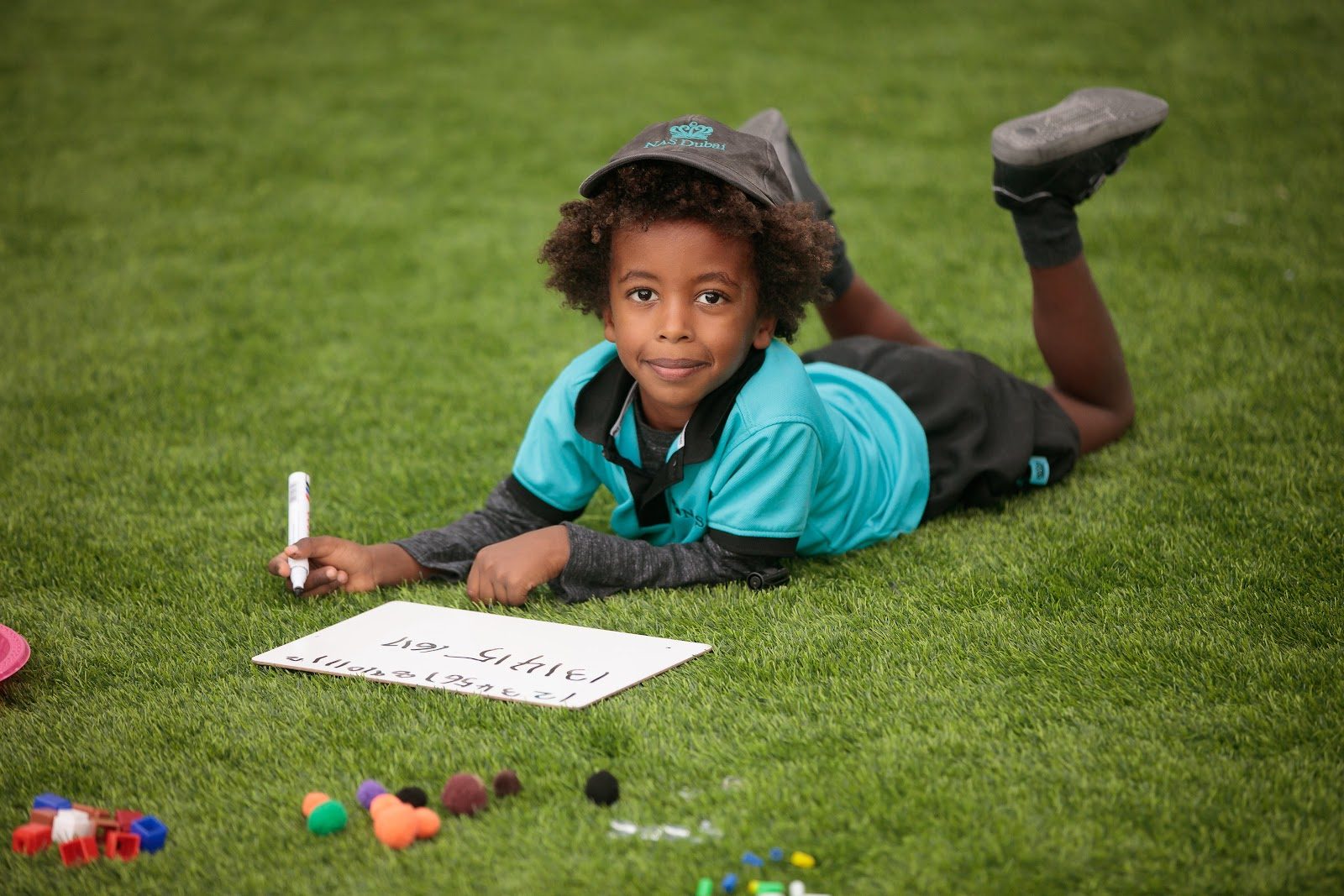
Nord Anglia International School Dubai
Dubai · United Arab Emirates
Juilliard-trained arts coaching and MIT-designed STEAM projects anchor this British-IB day school in Al Barsha South.
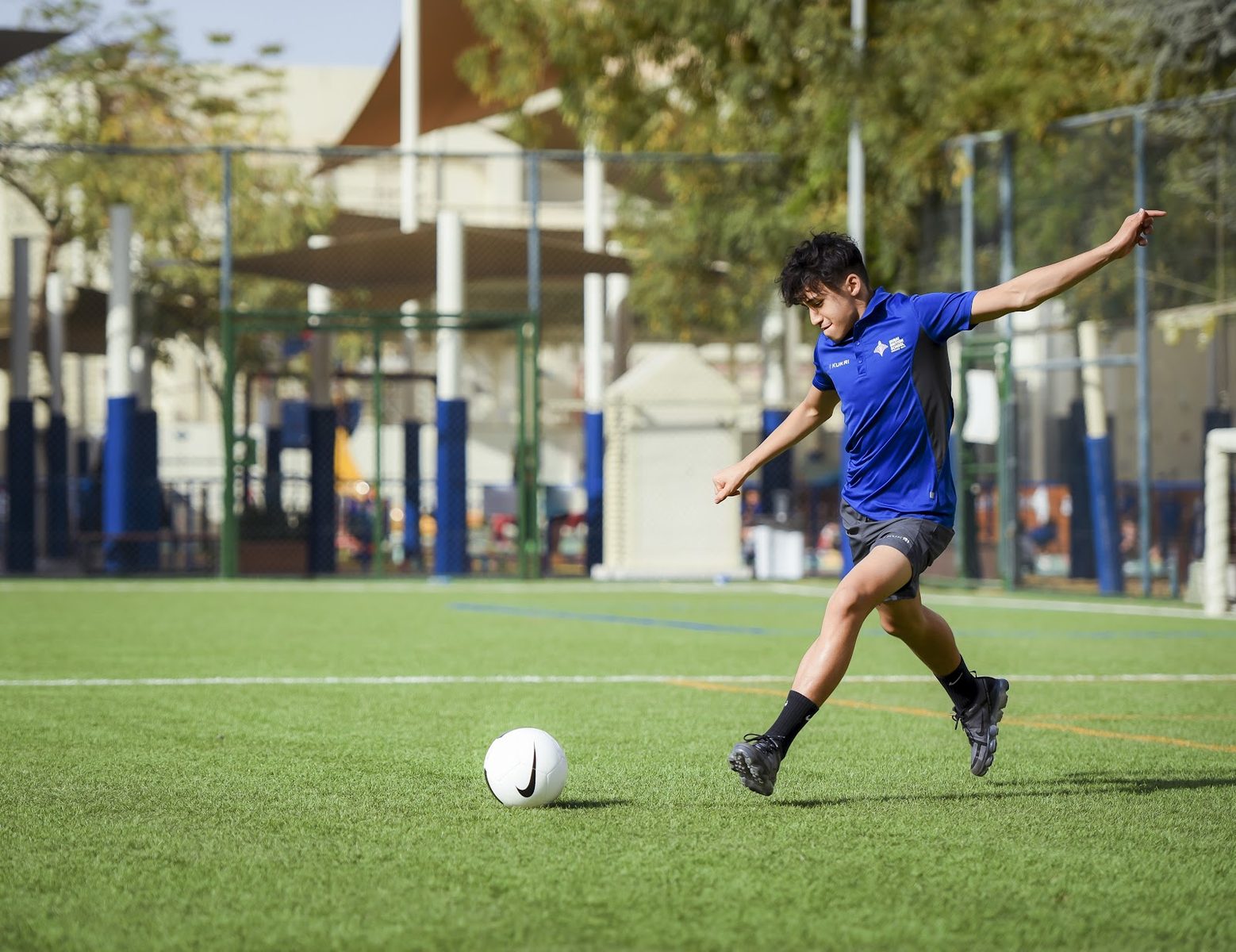
Dubai British School Emirates Hills
Dubai · United Arab Emirates
Tucked in Emirates Hills' villa lanes, a deliberately small-scale British day school that has held its top KHDA rating unbroken since 2017
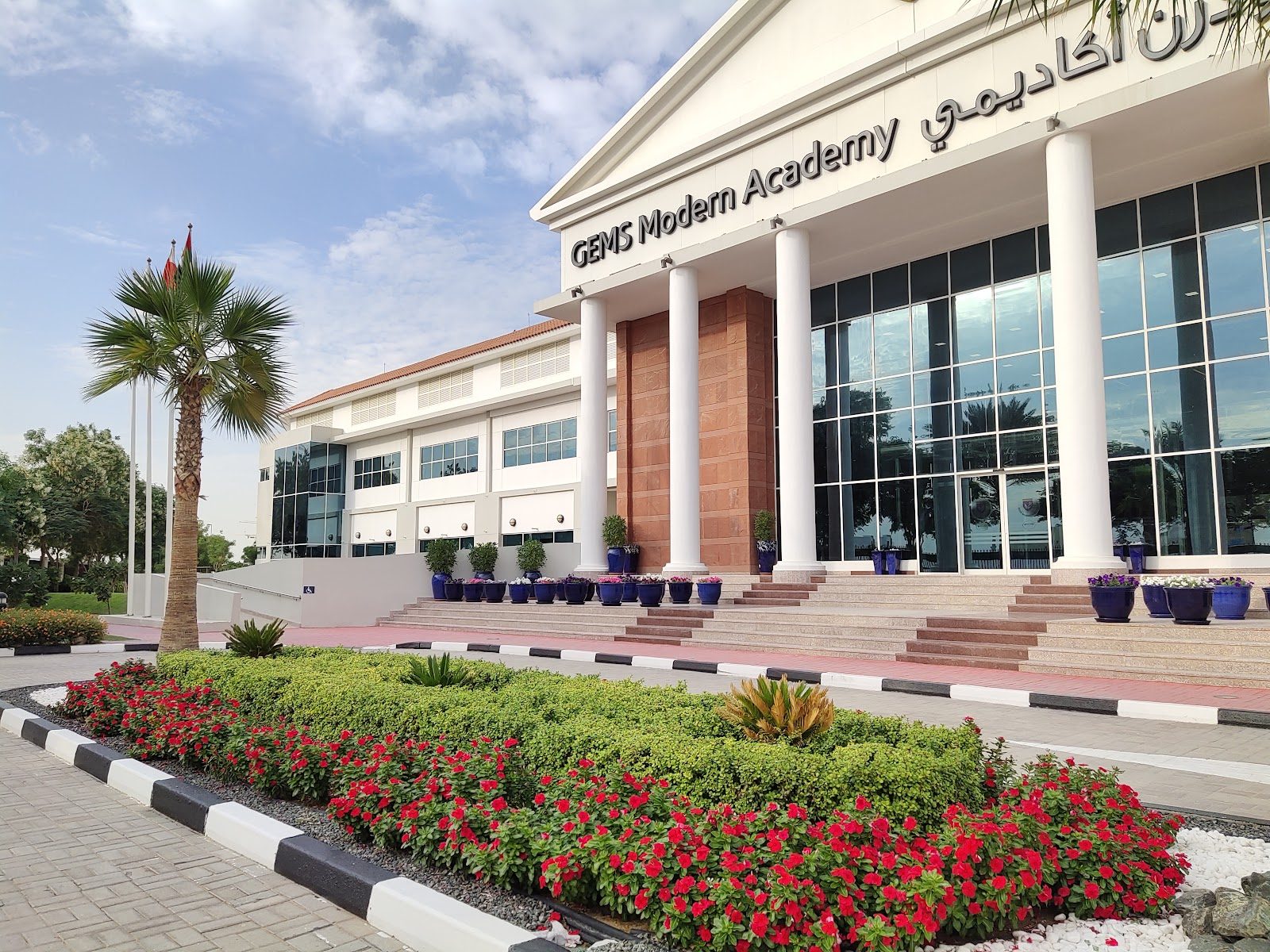
GEMS Modern Academy
Dubai · United Arab Emirates
Where the CISCE curriculum and the IB Diploma share one campus, and the only Indian-curriculum school in Dubai rated Outstanding by KHDA.
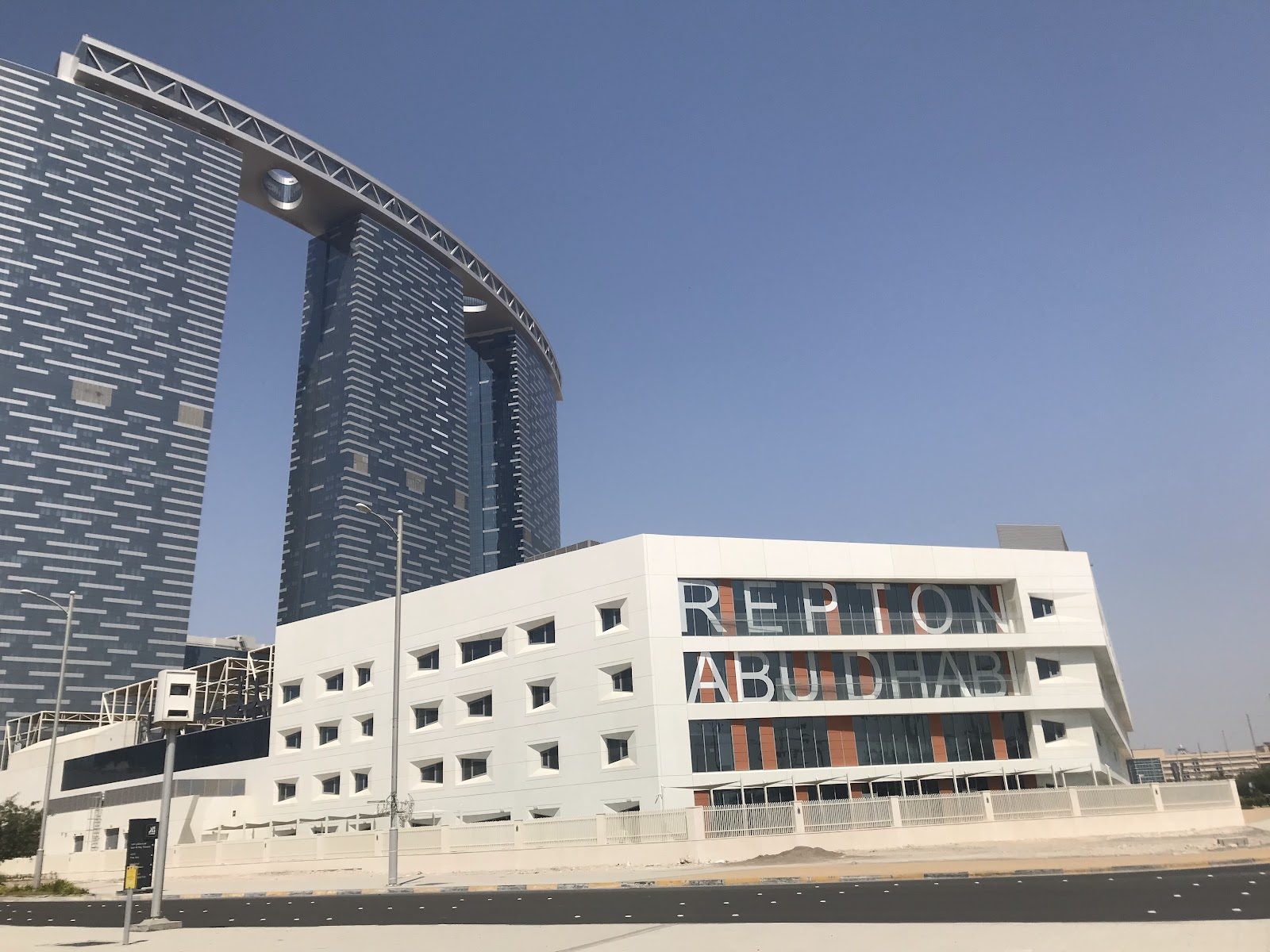
Repton Abu Dhabi
Abu Dhabi · United Arab Emirates
A 450-year Derbyshire house tradition roots this Reem Island campus, where inter-house rivalry shapes a British curriculum education.
Same country and curriculum — closest matches within ±10 points either way