
Abu Dhabi
Raha International School
low confidence· 4/6 cats · 1 avg sourcesAbu Dhabi's original full IB continuum campus, carrying students from PYP through Diploma since 2006.
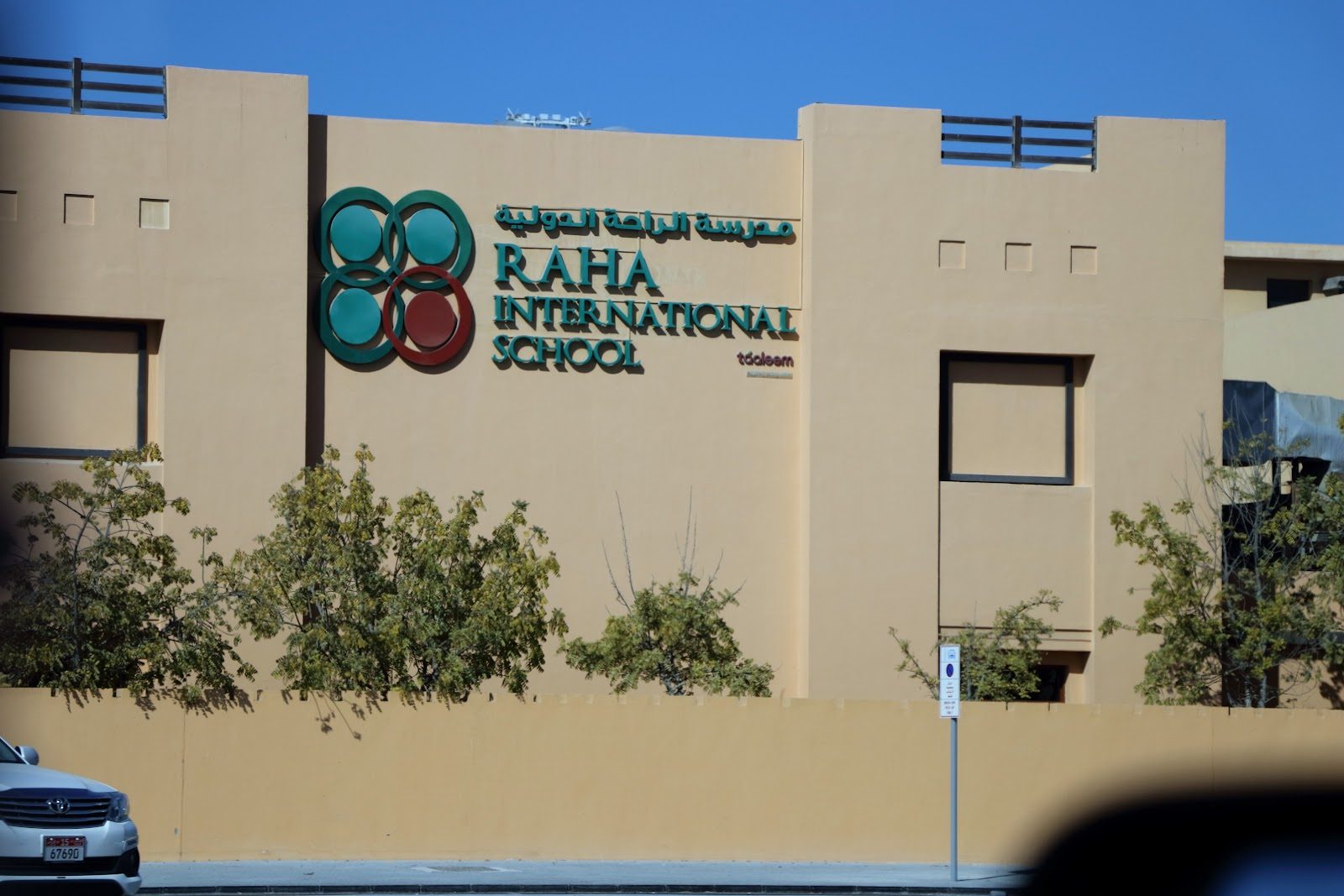
Photo © Ryan Necitas Echevarria via Google Maps
Type
Day
Ages
3–18
Curriculum
IB
Qualifications
IB PYP · IB MYP · IB Diploma
Ratio
—
The Verdict
Editor's commitment
Right for
Families wanting Abu Dhabi's original full IB continuum: PYP through Diploma since 2006, with CIS accreditation and a Very Good ADEK rating.
Wrong for
Parents set on a cheaper option than the AED 49,890 average day fee, or on anything outside an English-medium IB World school.
Watch out for
Raha's claim rests on continuity: ages 3–18, one campus, one IB spine. If that model does not suit your child, look elsewhere.
Peer & Industry Review
How Raha International School is regarded in the sector
68
Respected · high confidence
Raha International School's Gardens Campus is recognised as one of the pioneering IB Continuum schools in Abu Dhabi, holding what SchoolsCompared calls a place in the "upper echelon of Abu Dhabi" education after nearly two decades of sustained waiting lists. It was the capital's first school to be fully authorised for the entire IB Continuum, offering the PYP, MYP and DP, giving it a maturity and pedigree in the city that is still rare. Its ADEK rating slipped from Outstanding to Very Good in 2023 and was reconfirmed as Very Good in the 2025-26 inspection, a dip both publishers attribute partly to recent, frequent leadership changes and the drop to Very Good status from Outstanding, though WhichSchoolAdvisor notes stability returning under new leadership. Parent sentiment remains strong, with SchoolsCompared reporting that the verdict is overwhelmingly positive, with 51% of parents stating their children enjoy going to school "tremendously". This is a solid, well-regarded regional player rather than an unchallenged top-tier name.
Editors' overview
Raha’s claim to attention is straightforward: this was Abu Dhabi’s first school fully authorised to offer the full IB continuum, and it has carried that identity since 2006. That still matters. In a market full of schools that bolt the Diploma on to a different lower-school model, Raha offers a single academic grammar from age 3 to 18, taught in English, with the continuity that IB families usually want and many schools only advertise. It is a day school in Al Raha Gardens, not a boarding proposition, and its regulator grade of Very Good from ADEK in 2023/24 places it in the city’s stronger tier without inflating it into something rarer than that.
The school’s market position sits in the upper-middle to premium range of Abu Dhabi international schooling: the average annual day fee across the full ladder is AED 49,890. That buys a school with two pieces of external validation that matter more than glossy language: IB World status and CIS accreditation. Parents looking for hard-edged league-table theatre or selective-school machismo are shopping in the wrong place. Raha’s appeal is coherence, stability and a mature sense of what an all-through IB education requires. The school has history in its segment, and in Abu Dhabi that history counts.
What is special here is not novelty but completeness. Raha is for families who want their child to stay inside one educational philosophy from the early years to the Diploma, without a forced switch into A levels, APs or a national curriculum at 16. It suits students who are organised, inquisitive and comfortable with discussion, reflection and sustained coursework rather than a narrow diet of terminal exams. It also suits internationally mobile families who value transferability: IB carries well across borders, and a school that has run the whole sequence for years offers more credibility than a newcomer still assembling it.
This belongs on a shortlist for parents who want an established Abu Dhabi school with a clear academic identity, not a school trying to be all things to all families. The trade-off is clear too. If you want a cheaper, no-frills option, this is not it. If you want a school with a different academic culture — more traditional, more exam-drilled, more nationally anchored — Raha will feel less rigid and more concept-led. For the right child, that is the point.
Academic Performance
Raha does not publish a full set of headline outcomes in the public domain, and that limits any hard-edged judgement on raw academic strength. We have not seen aggregate Diploma averages, subject-by-subject distributions, top scores, pass rates, or a three-year trend line set out clearly for parents. In a market where the strongest schools use results data as a primary proof point, that opacity matters. It does not mark the school down automatically, but it does keep Raha out of the results-driven conversation dominated by schools that disclose high Diploma means, large cohorts and repeatable outcomes with precision.
That leaves parents judging academic performance through structure, regulatory standing and track record rather than published exam tables. On those terms, Raha sits in Abu Dhabi’s credible upper tier: an established all-through IB school with a long operating history and a regulator grade that places it comfortably above the crowded middle of the market. That tells you there is institutional competence and academic seriousness. It does not tell you whether the Diploma cohort lands at 34 points or 38 points, and that gap is important. Relative to transparent, exam-forward competitors, Raha reads as a school with solid academic foundations and incomplete public accountability on outcomes. For families who want pastoral continuity and an IB pathway delivered with consistency, that may suffice. For families choosing on published exam data, it does not.
Facilities
Raha’s facilities profile is hard to judge in fine detail because the school does not put a comprehensive campus inventory into the public domain. That matters. Parents can infer an established all-through operation with the specialist spaces an IB school needs — science provision, arts rooms, sports areas and age-segmented teaching space — but inference is not the same as disclosure. Against Abu Dhabi peers that publish floor plans, theatre capacity, pool specifications, pitch counts or dedicated sixth-form suites, Raha is less legible than it should be. That does not make the campus weak; it makes it opaque. In a premium-fee bracket — an average of AED 49,890 a year — families are entitled to sharper detail than this.
The benchmark, then, sits at a practical level rather than a trophy-assets one. Schools competing at the top end of the market now use facilities to signal ambition: major performing-arts venues, competition-standard sports infrastructure, design labs, and highly branded specialist centres. Raha’s edge has never rested on that kind of arms-race grandstanding. Its value lies in supporting an all-through school day without forcing families to buy into flashy excess. For some parents that restraint will read as sensible; for others, especially those comparing campus hardware line by line, it leaves Raha short of the most aggressively specified competitors. The school needs to publish more. Until it does, its facilities case rests on functional credibility rather than demonstrable distinction.
We have not seen aggregate Diploma averages, subject-by-subject distributions, top scores, pass rates, or a three-year trend line set out clearly for parents
Prestige
Raha carries real local standing, but this is not prestige built on scarcity, old-boy mythology or headline-grabbing selectivity. Its status rests on being an established reference point in Abu Dhabi’s international market: a school that locked in a full-through academic model early, kept it, and built trust through continuity rather than theatre. That matters to internationally minded families, to employers relocating staff, and to parents who value institutional steadiness over fashionable branding. The fee level — an average of AED 49,890 a year — also places it in a bracket where parents expect a serious operation, not a bargain proposition. Add the regulator judgement of Very Good, and you get a school with credible prestige rather than elite mystique.
Why not rate it higher? Because top-tier prestige in this segment depends on more than history and recognition; it depends on public academic proof. Raha does not publish the kind of hard results data that turns reputation into dominance. Without that, it sits below the most status-heavy schools whose exam outcomes do the talking for them. Its prestige is strongest among families who understand the value of continuity and a coherent educational philosophy. It is weaker among parents who equate prestige with brutal selectivity, sparkling scorecards and a queue for places. In plain terms: Raha is well-regarded, well-established and serious, but it does not command the city’s highest-octane cachet.
Because top-tier prestige in this segment depends on more than history and recognition; it depends on public academic proof
Communications
Raha’s parent communication has one clear strength: the school’s identity is easy to grasp. Families do not need to decode a muddled proposition or hunt for what the school stands for. That clarity matters, especially in an all-through setting where parents need to understand how the early years connect to the senior end. The weakness sits elsewhere. Public-facing communication lacks depth where parents most need it: hard academic reporting, detailed facilities information and the kind of operational specificity that reduces friction. When a school charges an average of AED 49,890 a year, thin disclosure is a real issue, not a minor irritation. Strong schools do not just project values; they publish the practical detail that lets parents judge delivery.
So how effective is it? Competent, but not fully convincing. The essentials are in place, and the school does not read as chaotic or evasive in tone. Yet the wider communications picture remains too controlled and insufficiently granular. Parents choosing schools at this fee level want more than reassurance; they want timetables, outcomes, campus detail, leadership visibility and clear answers before they ask the question. Raha gives a coherent top line, but not enough underneath it. That leaves communication at the level of institutional credibility rather than genuine transparency. For existing families, direct school channels may well be stronger than the public-facing picture. For prospective families, the published case needs tightening.
Uniqueness
Raha’s distinctiveness is not a gimmick or a specialist niche. It lies in institutional continuity. This school was the first in its market to secure full authorisation across all 3 IB programmes, and that gives it a different shape from schools that splice together mismatched phases or treat the final years as the main event. Students move through one educational logic from the early years to graduation: inquiry, writing, discussion, reflection and independent organisation build in sequence instead of being introduced late. That matters in practice. Children who stay the course get a cleaner academic progression, fewer philosophical jolts between sections, and a school life with less structural friction than families find in campuses where the lower and upper years pull in different directions.
What this brings to students is not glamour but deep coherence. Teachers, families and pupils work inside a shared set of expectations about how learning happens, how assessment works and what intellectual habits the school values. For confident, articulate students, that can be a powerful fit. For children who need constant external pressure, tighter rote structures or a more traditional exam-drill culture, it is a weaker proposition. Raha’s uniqueness, then, is plain: it offers a mature all-through model with genuine continuity, and that continuity gives students a steadier runway than many nominal competitors.
Raha gives a coherent top line, but not enough underneath it
Student Profile
The best fit at Raha is the child who thrives on continuity, not constant reinvention. This is a school for students who can handle a long runway of discussion, reading, projects and sustained written work without needing the adrenaline of a narrow exam factory. They do well if they are self-directed, verbally confident and willing to ask questions in class rather than sit back and wait for instruction to be spoon-fed. Families who want one coherent educational model from nursery to graduation will find that attractive; families chasing a harder-edged, more pressurised academic culture will not. At an average annual fee of AED 49,890, the intake sits in a professional, internationally mobile bracket, and the social environment will suit children comfortable with a diverse peer group and parents who engage closely with school life.
This is not the natural home for every child. Students who need heavy external structure, relentless drilling or a more traditional hierarchy of right answers can find an inquiry-led environment too open-textured. Equally, children who dislike reflection, collaboration and extended coursework will hit friction. Raha suits pupils who are organised enough to manage competing demands across the years, and mature enough to cope with teachers expecting independence early. The strongest match is a family that values steady institutional culture over flash, and a student who wants to grow inside one system rather than keep resetting every few years.
Raha’s distinctiveness is not a gimmick or a specialist niche
Co-curricular strengths
Arts & sport, on a separate axis
Overall 7.6/10
Scored 0-10 from the school's own published evidence. This axis is editorial-only — it does not feed the main WTS ranking.
Sports
8.2/10
The extracurriculars explicitly list Basketball and Swimming, showing visible sports participation.
Drama
7.5/10
The extracurriculars explicitly include Drama Productions, which goes beyond a bare listing of drama by indicating staged activity.
Dance
6.5/10
Music
7.8/10
The extracurriculars explicitly include Choir, evidencing a structured music activity, but there is no mention of music facilities, specialist staff, ensembles beyond choir, or performance distinction.
Visual Arts
8/10
Editor first-pass · editor-reviewable · 7/27/2026
Official inspection · Abu Dhabi
ADEK report · 2023/24
Official · ADEKInspectorate
Department of Education & Knowledge
Abu Dhabi's mandatory education regulator; Irtiqa'a six-standard framework.
Curriculum
IB
Held vs previous cycle
Full report
ADEK private-school directoryRating history
Strengths
- +Offers all three IB programmes across ages 3–18
- +IB World and CIS accredited
- +Solid published IB Diploma results (127 candidates averaged 33.1 points, 100% pass rate, 2026, WSA)
- +English-medium co-educational day school with long waiting lists
Considerations
- −Rated Very good, down from a former Outstanding rating
- −No non-IB curriculum option
- −Premium fee band (AED 40,880–64,340)
Availability
Primary entry gate & tests
CAT4 / Assessment
Gallery
Photo © Yawar Khan via Google Maps
Photo © Majid AlSaadi via Google Maps
Parent reviews
Have you sent your child here?
Voice reviews carry the strongest trust badge — we transcribe them for you to tidy up before they go live. Prefer to type? A written review is fine too.
Add your voice
In 60 seconds, tell other parents: what's the best thing about Raha International School, and what surprised you when your child joined?
We ask for a Google sign-in so every review has a real face behind it — no anonymous drive-by attacks on schools, and no faked positive reviews. Your email is never shown publicly.
Send this profile to a friend
International parents rely on word-of-mouth. Share this review with someone weighing the same decision.
Schools with places
Similar schools to Raha International School with places available now.
American International School in Abu Dhabi
Abu Dhabi · United Arab Emirates
- 2026-27
- WAITPOOLSpace-dependent
- 2027-28
- WAITPOOL2027/28 timetable TBC
The British International School Abu Dhabi
Abu Dhabi · United Arab Emirates
- 2026-27
- WAITPOOLSpace-dependent
- 2027-28
- OPENS SOONOpens Sept '26
Cranleigh Abu Dhabi
Abu Dhabi · United Arab Emirates
- 2026-27
- WAITPOOLSpace-dependent
- 2027-28
- OPENS SOONOpens Sept '26
Availability first, then country, area, curriculum, price, co-curricular
Consider also
Also worth looking at alongside Raha International School.
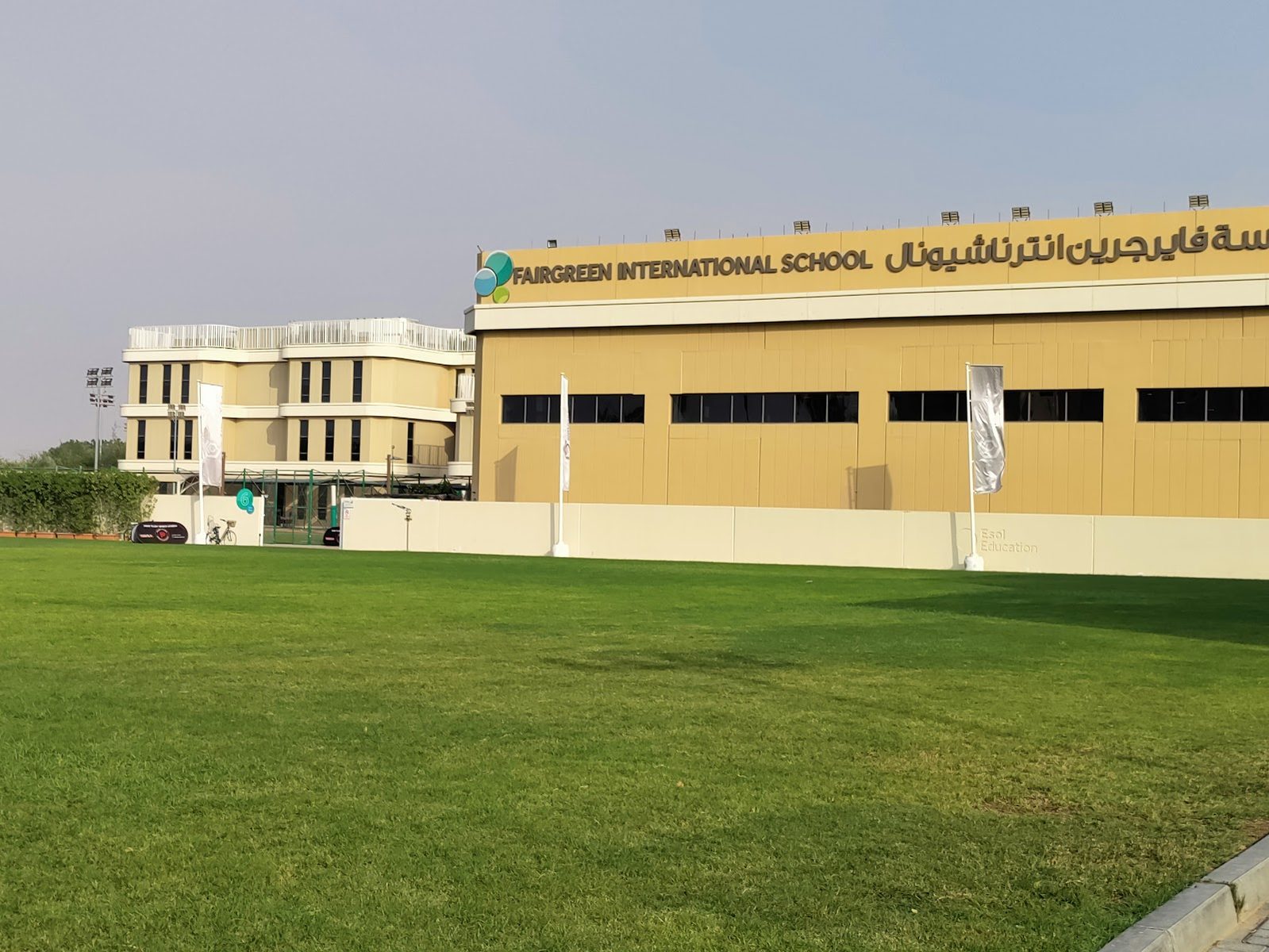
Fairgreen International School
Dubai · United Arab Emirates
Anchored in Dubai's car-free Sustainable City, this full IB continuum campus turns bio-domes and solar power into daily lessons.
GEMS World Academy – Dubai
Dubai · United Arab Emirates
One of just two UAE schools authorised for all four IB programmes, from Reggio-inspired nursery to Diploma finals.
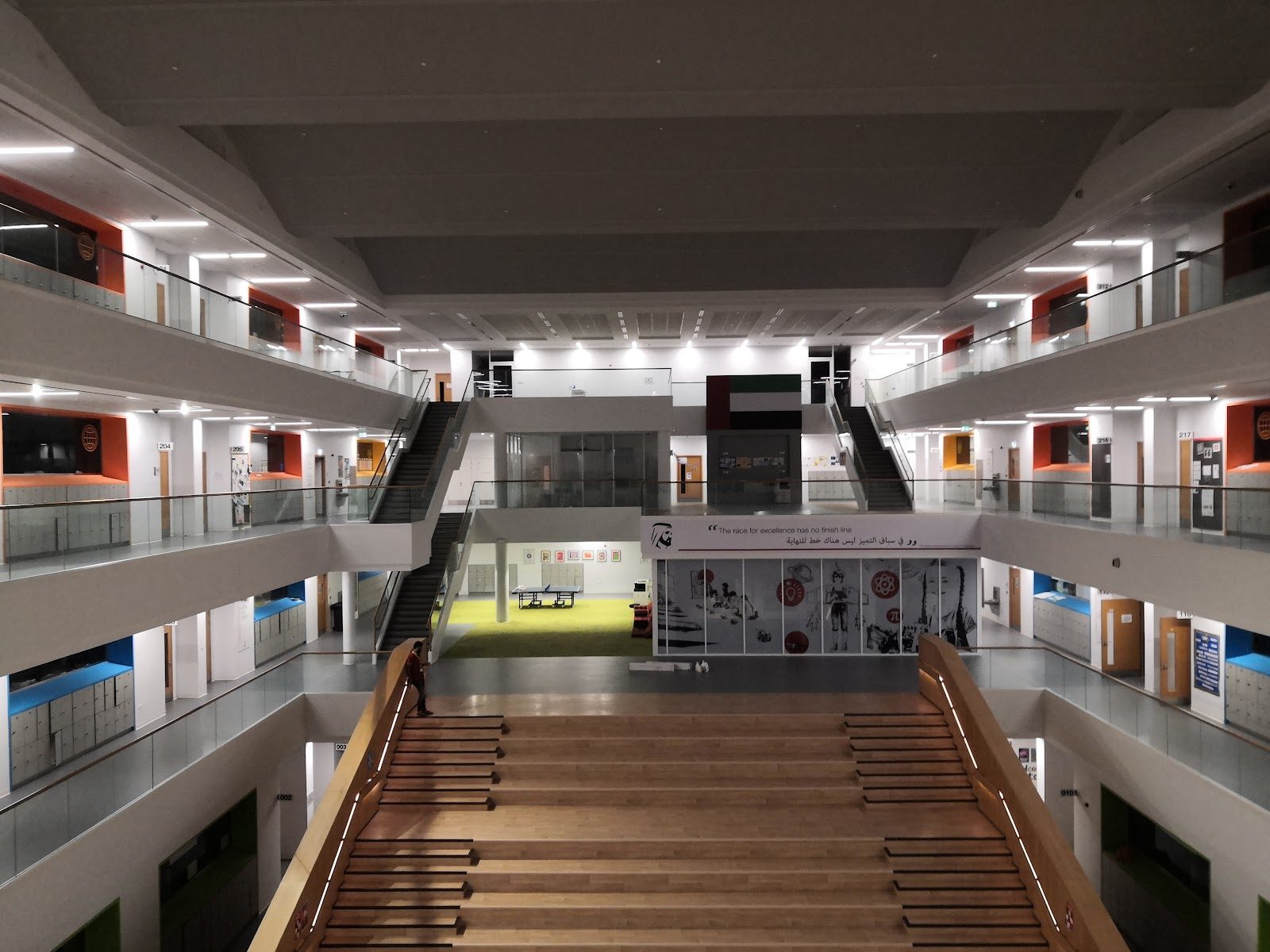
Swiss International Scientific School Dubai
Dubai · United Arab Emirates
The largest Swiss school outside Switzerland, running a bilingual IB continuum along Dubai Creek in French or German.
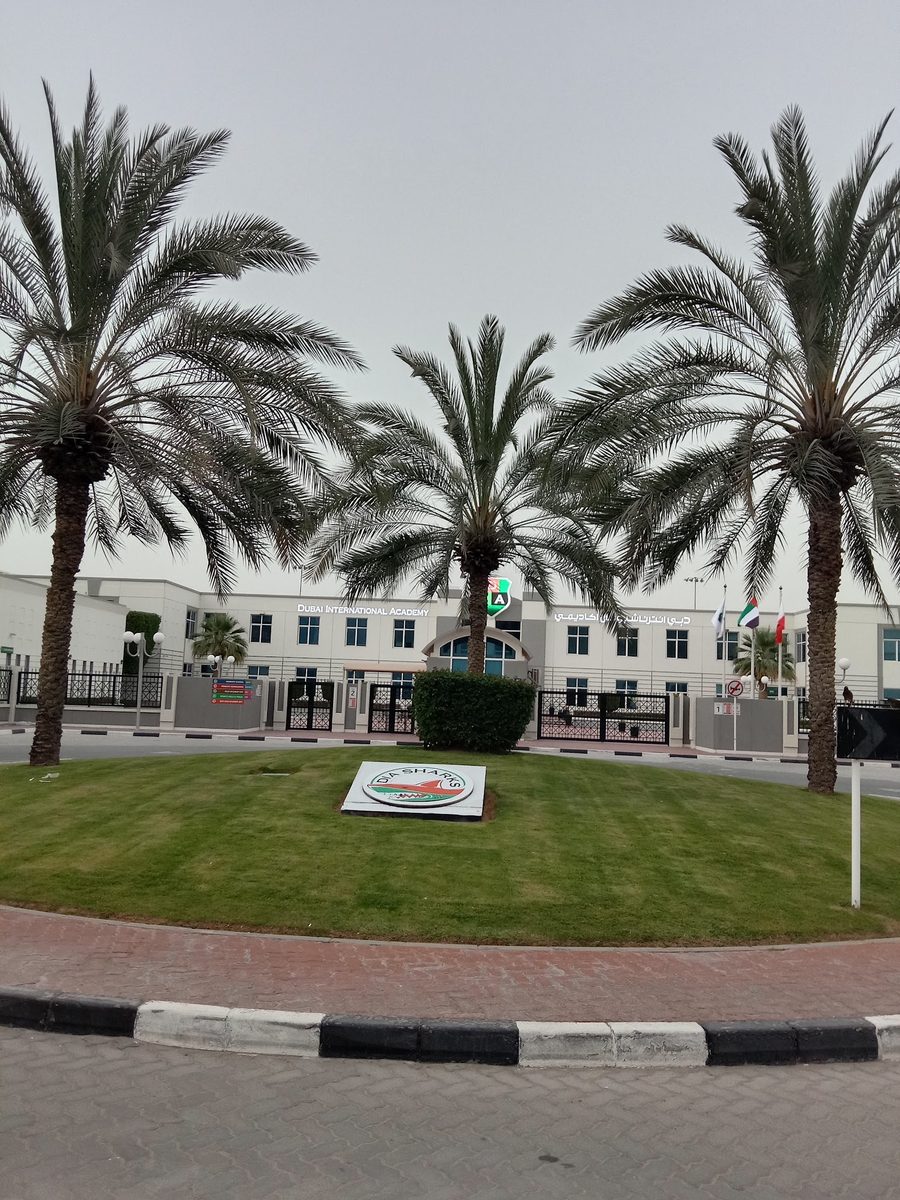
Dubai International Academy Al Barsha
Dubai · United Arab Emirates
One of Dubai's few schools to run the complete IB continuum, PYP to CP, across a 23-acre Al Barsha campus.
Same country and curriculum — closest matches within ±10 points either way