
New York
In Fort Greene, sophomores choose among 18 STEM majors inside the nation's largest single-campus high school.
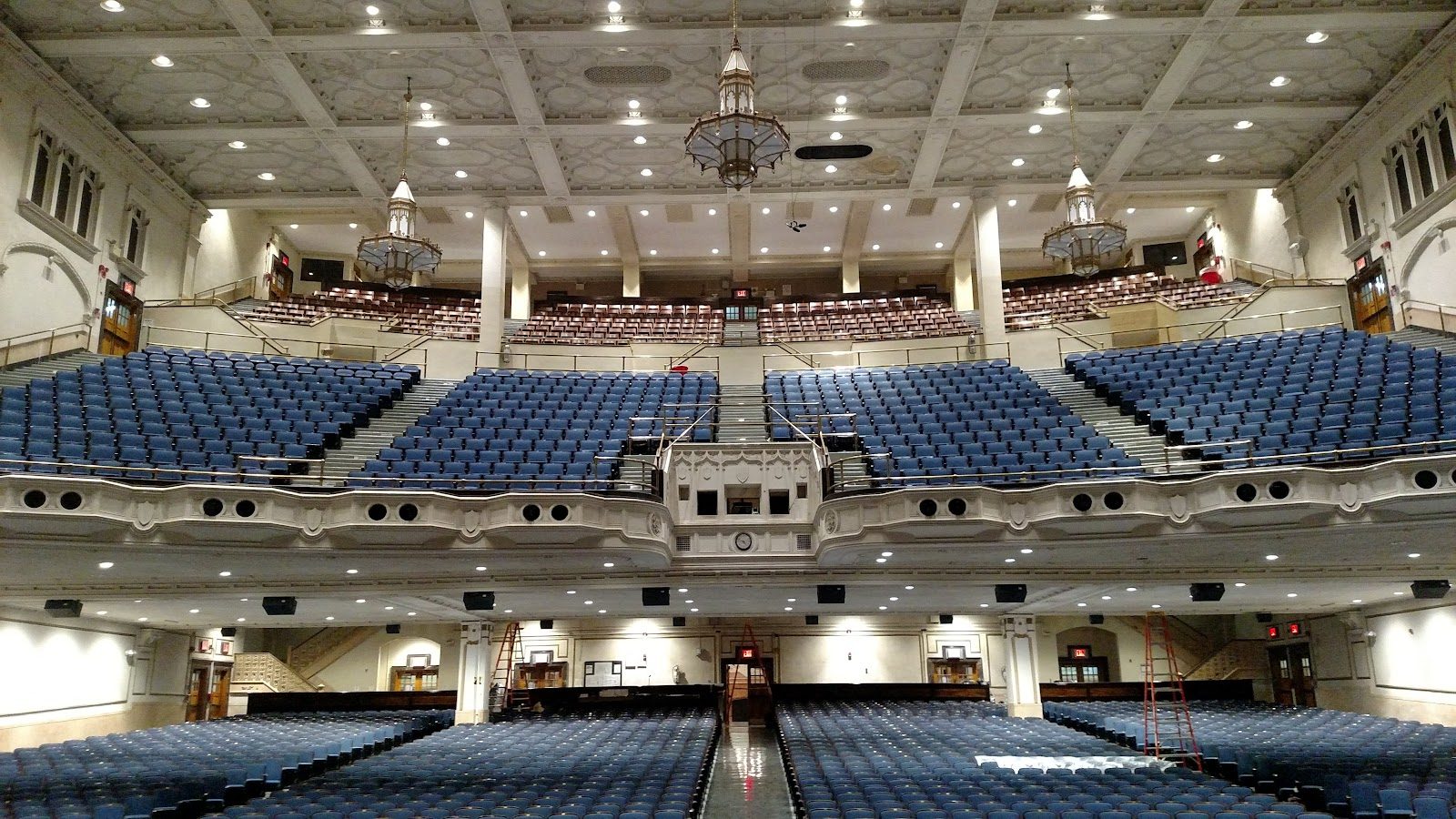
Photo © James Herrmann via Google Maps
Type
Day
Ages
14–18
Curriculum
American
Qualifications
AP
Ratio
10:1
The Verdict
Editor's commitment
Right for
Bright teenagers who want scale and range: 5,600 students, 300+ full-time faculty, 250+ clubs and 40+ athletic teams.
Wrong for
Students who need intimacy or hand-holding; the nation's largest single-campus high school and a 10:1 ratio still make for a huge machine.
Watch out for
This is a specialised American public high school for ages 14–18: founded in 1922, with 18 STEM majors and 100,000+ alumni.
Ranking breakdown
Brooklyn Technical High School · #168 of 1591
Composite score 75.3. 8 weighted criteria.
By criterion
Academic Outcomes
Weight 20%
#119
of 1529 scored
University Placement
Weight 16%
#187
of 1529 scored
Prestige & Heritage
Weight 12%
#446
of 1571 scored
Alumni Network
Weight 12%
#293
of 1530 scored
Facilities
Weight 12%
#968
of 1533 scored
Transparency & Communications
Weight 8%
#62
of 1532 scored
Peer & Industry Review
Weight 10%
#300
of 1548 scored
Admissions Selectivity & Demand
Weight 8%
#120
of 1529 scored
Score history
Brooklyn Technical High School · 2026
Movement across 2024–2026. Peer average overlaid.
Overall — 2024–2026
75.3/ 100
▲ +12.9 vs 2025
year on year
Peer & Industry Review
How Brooklyn Technical High School is regarded in the sector
82
Strong · high confidence
Brooklyn Tech is consistently ranked among the top public high schools in the U.S. by U.S. News & World Report and Niche.com, and is one of NYC's elite specialized high schools alongside Stuyvesant and Bronx Science. It has a large, well-documented alumni network including Nobel laureates, astronauts, and prominent scientists/engineers, frequently cited in press coverage of NYC's specialized high school system and admissions debates (New York Times, Chalkbeat).
Evidence sources
Editors' overview
At Brooklyn Tech, the defining choice arrives early: after freshman year, students move into one of 18 STEM majors inside a school of more than 5,600 students. That single fact explains the school’s appeal and its pressure points. This is not a small, hand-held American high school with broad-brush enrichment bolted on. It is a serious, specialist public institution built at scale, with more than 300 full-time faculty, over 250 clubs, 40-plus athletic teams and a 10:1 student-teacher ratio. Founded in 1922, it has the age, size and alumni depth to function almost like a university-in-miniature. Parents who want intensity, range and a peer group that can sustain advanced technical interests should pay attention.
What sets Brooklyn Tech apart is the combination of breadth and internal differentiation. Large schools often flatten into anonymity; Brooklyn Tech counters that with majors, clubs, publications and a long-established extracurricular machine. The numbers matter here: 100,000+ alumni and 129 notable alumni catalogued in Wikidata point to an institution with real reach across science, business, politics and the arts, not a narrow engineering silo. That matters because many STEM schools neglect the cultural life of the place. Brooklyn Tech does not; the school advertises its arts and literary magazine, theatre auditions and a full sports calendar alongside the technical offer. The scale is a strength, but it is also the catch: a campus this large rewards self-direction and punishes passivity. Students who need constant adult prompting or a tightly managed pastoral atmosphere will find it impersonal.
This belongs on a shortlist for families seeking a high-ceiling, merit-driven public option in New York, especially for teenagers who want STEM taken seriously without giving up the rest of school life. It suits the student who wants to specialise, who can navigate a big system, and who gets energy from ambitious peers rather than shrinking from them. It is not for the faint-hearted. The school does not publish the kind of polished outcome data private schools use to reassure buyers, so parents must judge it by structure, scale and track record instead. On those terms, the case is strong: Brooklyn Tech offers unusual academic depth, an enormous extracurricular platform and the institutional muscle of a school that has been doing this for more than a century.
Academic Performance
Brooklyn Tech occupies the top tier of American public-school selectivity by structure alone: admission sits inside New York City’s specialised high-school system, and the school then channels students into formal majors after the first year. That matters for results. A school built around screened entry, advanced course volume and deep subject pathways does not need remedial positioning; it competes with the strongest exam-driven public schools in the city. The school also advertises the largest AP programme, which signals serious external-exam breadth even though it does not publish aggregate AP score data on its public site. Parents therefore get a clear picture of academic architecture, but not the clean, investor-style outcomes dashboard many independent schools now provide.
Relative to peers, Brooklyn Tech sits above the standard American comprehensive high school and inside the hard-edged academic bracket occupied by selective STEM publics. Its strongest comparative advantage is range: students do not face a thin advanced menu or a token technical strand, but a full internal system built for sustained specialisation. The trade-off is opacity. There is no public roll-up here of AP pass rates, mean scores, SAT averages or university destination tables in the way fee-charging schools package performance. That weakens transparency, not academic seriousness. In plain terms: this is a high-pressure, high-ceiling school with a powerful reputation and an exam culture to match, but parents must accept less published performance data than the sector’s results-obsessed private competitors.
Facilities
The facilities story at Brooklyn Tech is defined by scale and use, not by brochure glamour. A school with more than 40 athletic teams, 250 plus clubs and the school’s own claim to the largest AP programme needs serious working infrastructure behind it: multiple teaching spaces that can sustain advanced science and technical study, large communal areas, sports provision that supports a full competitive calendar, and performance venues capable of handling theatre auditions, college visits and student publications. The public-facing picture points to a campus that functions more like a civic institution than a boutique secondary school. That is the asset. Students get a busy, high-throughput environment with enough rooms, specialist provision and extracurricular capacity to support genuine choice rather than token enrichment.
Against peer schools, the comparison cuts two ways. Brooklyn Tech outguns the average American public high school on specialist academic infrastructure simply because few schools run this breadth of advanced coursework and student activity at such volume. It also holds its own against many independent schools in practical terms: more teams, more clubs, more subject pathways, more things happening at once. What it does not offer is the curated luxury that fee-charging campuses sell so aggressively. Parents should not expect intimate arts suites, serene landscaping or a hotel-polished sports complex. The facilities are built for heavy use by a very large student body. For self-directed teenagers, that is a strength. For families chasing cosseted surroundings, it is a clear limitation.
At Brooklyn Tech, the defining choice arrives early: after freshman year, students move into one of 18 STEM majors inside a school of more than 5,600 students
Prestige
Brooklyn Tech carries serious public-school prestige in the American context because its name means something beyond its own neighbourhood. It sits inside New York’s specialised high-school echelon, one of the few public-school brackets in the country where admission itself confers status. That status is reinforced by scale and legacy: an alumni body above 100,000, a deep bench of notable graduates across science, finance, politics and the arts, and a public identity tied to technical rigour rather than fashionable branding. For families who value intellectual peer group, that matters more than manicured college-counselling theatre. The school’s stature rests on durable signals: selective entry, a long institutional memory, and a reputation that has travelled well for decades.
The prestige is not polished in the private-school sense. Brooklyn Tech does not trade on exclusivity, luxury or boutique attention; it trades on difficulty, reputation and the fact that able students know the name. That gives it a hard-earned, merit-driven cachet that many expensive schools cannot match. The school’s claim to the largest AP programme and its catalogue of 129 verified notable alumni strengthen that case. So does its place among the original specialised high schools in New York City. The limit is clear: this prestige is strongest with families who understand the American public-school hierarchy. International parents who judge status by campus gloss, fee level or published university placement tables will find the school less legible than elite independents. Among academically ambitious public options, though, its standing is formidable.
That single fact explains the school’s appeal and its pressure points
Communications
Parent communication is functional, busy and unmistakably geared to volume. The homepage works as a live noticeboard: orientation dates, the first day of school, sports try-outs, theatre auditions, college visits, summer reading and required forms all sit in plain view. Quick links to the faculty directory, bell schedule, calendars and incoming-student information do the practical work parents need. That matters in a school of this size. Families are not buying concierge attention; they need a system that pushes out logistics clearly and at pace. On that measure, Brooklyn Tech does the essentials well. The school also keeps extracurricular life visible rather than treating it as afterthought, which gives parents a truer sense of the student experience than many cleaner but thinner school sites.
The weakness is polish and hierarchy. The website reads like a high-traffic bulletin board, not a refined parent portal, and the density of notices demands effort from families to separate urgent items from background noise. Repeated announcements and cluttered presentation blunt the impact of important messages. That does not make the communication weak; it makes it institutional rather than personal. Parents who want hand-holding, streamlined weekly briefings or a white-glove admissions-to-enrolment journey will not find it here. Parents who can work with calendars, links and direct instructions will get what they need. In a school serving more than 5,600 students with over 250 clubs and 40 plus teams, that no-nonsense, mass-public-school style fits the operation.
Uniqueness
What makes Brooklyn Tech distinctive is not just that it is selective or STEM-focused, but that it treats secondary education with the internal structure of a large university department. Students do not pass through a generic academic programme with a technical gloss; they enter a system that asks them to choose a disciplinary lane after the first year, with 18 majors shaping the rest of school life. That creates something unusually adult in tone. Teenagers make consequential choices early, then work within a peer group that expects commitment rather than dabbling. For the right student, that brings clarity, momentum and access to a level of subject identity rare in school. A teenager interested in engineering, research, computing or applied science gets more than enrichment here; they get a serious intellectual track.
The other point of difference is scale used as infrastructure rather than spectacle. In many big schools, size breeds drift. Here, size supports a dense ecosystem: a huge alumni network, one of the city’s best-known public academic brands, and enough organised activity to let students build a real niche beyond the classroom. That matters because specialist schools can narrow a teenager too early. Brooklyn Tech avoids that trap. A student can pursue a demanding technical path and still find theatre, publishing, sport or politics in the same institution. The benefit is range without dilution. The cost is clear too: this is a self-propelled environment. Students who thrive here learn independence fast; students who wait to be noticed can disappear into the machinery of a school with 100,000+ alumni and the largest single-campus high-school footprint in the country.
This is not a small, hand-held American high school with broad-brush enrichment bolted on
Student Profile
The student who fits Brooklyn Tech is bright, driven and comfortable with competition. This is a school for teenagers who want to do hard things in a large, fast-moving institution, not for those who need constant checking-in or a gentle pace. Intellectual confidence matters, but so does stamina: the combination of selective entry, a major system after freshman year and the school’s sheer scale rewards students who can organise themselves, ask for what they need and recover quickly from setbacks. The right child will find the place energising, merit-driven and full of peers who take academic work seriously. The wrong child will find it overwhelming.
Socially, Brooklyn Tech suits students who are independent without being aloof. A school with 18 majors, 250 plus clubs and a huge extracurricular machine gives teenagers many routes to find their people, but it does not do the work for them. Students who flourish here tend to have clear interests, or at least the confidence to develop them fast once they arrive. It also suits children whose identities stretch beyond STEM: the public face of the school includes theatre, publishing and sport as real parts of school life, not decorative extras. Families looking for cosseted pastoralism, boutique attention or a hand-held adolescence should look elsewhere. Families with a self-propelled teenager who wants range, pressure and serious peers will find a strong fit.
Founded in 1922, it has the age, size and alumni depth to function almost like a university-in-miniature
Co-curricular strengths
Arts & sport, on a separate axis
Overall 7.9/10
Scored 0-10 from the school's own published evidence. This axis is editorial-only — it does not feed the main WTS ranking.
Sports
8.5/10
Drama
7.5/10
Verified alumni laureates include Albert S. Ruddy, an Academy Award winner, which per the alumni override anchors drama at at least 7 despite no programme details.
Dance
7.5/10
Music
8/10
Verified alumni laureates include Gerry Goffin, a Grammy Trustees Award recipient, which per the alumni override anchors music at at least 7 despite no programme details.
Visual Arts
8/10
Editor-verified · 8/6/2026
Notable alumni · Wikidata
129notable alumni
32 historic (born pre-1930) · 12 modern (born post-1970)wikidata:2026-07-28 How we source this
WTS 300 badge
2025/26 editionBrooklyn Technical High School is one of the World's Top 300 Schools for 2025/26. Claim your listing to add it to your site →
Strengths
- +Admission and full tuition are entirely free, funded through the New York City Department of Education as one of the city's specialized public high schools.
- +Offers 18-19 distinct STEM-oriented majors (from aerospace engineering to biological sciences) that students select competitively at the end of sophomore year.
- +Ranked #8 in New York State and #71 nationally by U.S. News & World Report, with a 96% Advanced Placement participation rate.
- +Alumni network includes Fortune 500 CEOs, Nobel laureates, Olympic medalists and other notable scientists and diplomats, reflecting a long institutional track record since 1922.
- +Extensive technical facilities, including engineering shops, robotics labs and architecture studios, support hands-on learning alongside standard academics.
Considerations
- −Admission is decided solely by a single high-stakes exam (the SHSAT), with no allowance for interviews, portfolios or holistic review; the acceptance rate is roughly 5%.
- −With nearly 5,800-6,000 students, it is the largest specialized high school in New York City and one of the largest in the country, which can mean less individual attention despite a 20:1 student-teacher ratio.
- −The school draws from across all five boroughs, so daily commutes for many families can be long regardless of home neighborhood.
- −Roughly 60% of the student body is classified as economically disadvantaged, indicating significant socioeconomic diversity that some higher-income relocating families may find different from private-school peer environments.
Availability
Primary entry gate & tests
SHSAT (NYC Residents Only)
Gallery
Photo © James Herrmann via Google Maps
Photo © James Herrmann via Google Maps
Photo © Warren Sze via Google Maps
Photo © James Herrmann via Google Maps
Photo © James Herrmann via Google Maps
Photo © Shenell Evans via Google Maps
Photo © Roberta Knight via Google Maps
Photo © Jonathan Cheng via Google Maps
Photo © Ossama Aoutem via Google Maps
Parent reviews
Have you sent your child here?
Voice reviews carry the strongest trust badge — we transcribe them for you to tidy up before they go live. Prefer to type? A written review is fine too.
Add your voice
In 60 seconds, tell other parents: what's the best thing about Brooklyn Technical High School, and what surprised you when your child joined?
We ask for a Google sign-in so every review has a real face behind it — no anonymous drive-by attacks on schools, and no faked positive reviews. Your email is never shown publicly.
Send this profile to a friend
International parents rely on word-of-mouth. Share this review with someone weighing the same decision.
Schools with places
Similar schools to Brooklyn Technical High School with places available now.
Nightingale-Bamford School
New York City · United States
- 2026-27
- CLOSEDRegular cycle
- 2027-28
- PLACES OPENCloses 1 Dec '26
Convent of the Sacred Heart (NYC)
New York City · United States
- 2026-27
- CLOSEDConfirmed full
- 2027-28
- OPENS SOONOpens post-Labor Day '26
Riverdale Country School
New York City · United States
- 2026-27
- WAITPOOLLate application possible
- 2027-28
- OPENS SOONOpens 8 Sept '26 (Noon ET)
Packer Collegiate Institute
Brooklyn · United States
- 2026-27
- CLOSEDRegular cycle
- 2027-28
- OPENS SOONOpens post-Labor Day '26
Availability first, then country, area, curriculum, price, co-curricular
Consider also
Also worth looking at alongside Brooklyn Technical High School.
Nightingale-Bamford School
New York City · United States
On a quiet Carnegie Hill block, a century-old liberal-arts curriculum sends ninth graders to London to fuse literature, history, science and art into one capstone journey.
Convent of the Sacred Heart (NYC)
New York City · United States
Since 1881, New York's oldest girls' school has taught inside two landmarked Fifth Avenue mansions.
School for the Talented and Gifted
Dallas · United States
A Dallas ISD magnet in Oak Cliff pairs a 12-course AP mandate with interim electives like glass blowing and ballroom dance.
Brunswick School
Greenwich · United States
An all-boys Greenwich day school since 1902, building character alongside a coeducational bond with Greenwich Academy.
Same country and curriculum — closest matches within ±10 points either way