
Surrey
The Yehudi Menuhin School
Set in Surrey woodland, this specialist conservatoire trains string, piano and guitar prodigies, sending most graduates straight into music careers.
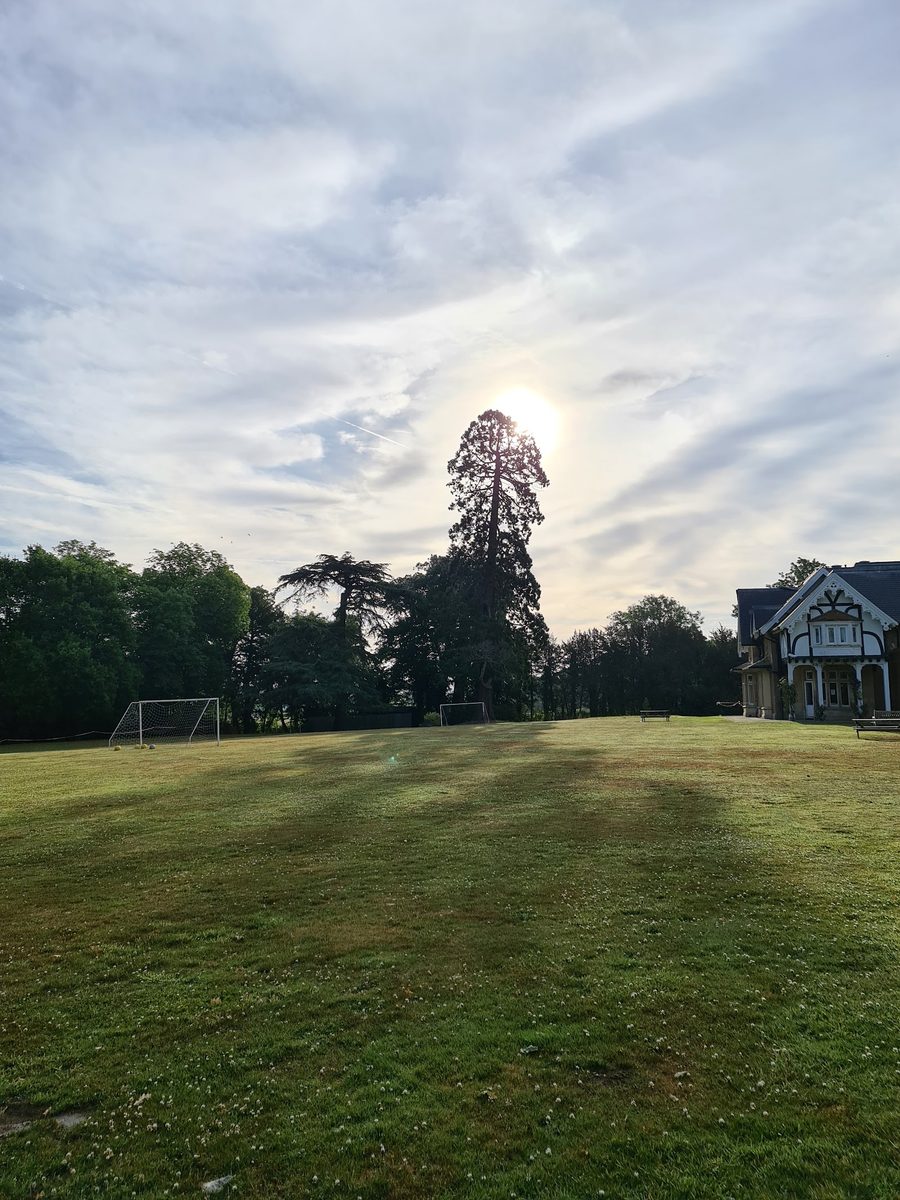
Photo © Irmengard Barbosa via Google Maps
Type
Boarding + Day
Ages
8–19
Curriculum
GCSE · A-Level
Ratio
—
The Verdict
Editor's commitment
Right for
Young musicians aged 8–19 who want a specialist Surrey boarding school with GCSE and A-Level wrapped around elite instrumental training.
Wrong for
Families seeking a broad all-round school; with average class size 10, this non-denominational conservatoire is built for serious performers, not dabblers.
Watch out for
£45,000 boarding fees buy access to one of the UK's five established music schools, but the curriculum published is GCSE and A-Level only.
Ranking breakdown
The Yehudi Menuhin School · #892 of 1591
Composite score 63.8. 8 weighted criteria.
By criterion
Academic Outcomes
Weight 20%
#1220
of 1529 scored
University Placement
Weight 16%
#1462
of 1529 scored
Prestige & Heritage
Weight 12%
#446
of 1571 scored
Alumni Network
Weight 12%
#721
of 1530 scored
Facilities
Weight 12%
#1004
of 1533 scored
Transparency & Communications
Weight 8%
#938
of 1532 scored
Peer & Industry Review
Weight 10%
#15
of 1548 scored
Admissions Selectivity & Demand
Weight 8%
#22
of 1529 scored
Peer & Industry Review
How The Yehudi Menuhin School is regarded in the sector
87
Strong · medium confidence
The Yehudi Menuhin School occupies a unique niche among UK independent schools as one of only a handful of specialist music schools, so peer comparison tends to be with Chetham's, Purcell and the Royal Ballet School rather than conventional academic rivals. The Good Schools Guide has long praised its intensive conservatoire-style teaching and small cohort intimacy, while Independent Schools Inspectorate reports consistently rate personal development and teaching quality as excellent. Its graduates regularly progress to the Royal Academy of Music, Royal College of Music, Guildhall School and Oxbridge choral/organ scholarships, evidencing strong regard from conservatoire admissions tutors who value its Associated Board and chamber music grounding. National press coverage (Telegraph, Times Educational Supplement) frequently cites alumni such as Nigel Kennedy and current professional orchestra players as proof of pedigree. Because it sits outside mainstream academic league tables, its standing is judged less by exam metrics and more by musical outcomes, conservatoire acceptance rates, and international competition results, where it retains a consistently high reputation among specialist music education commentators.
Award

Elite Music 50
World's Top School · The Global Ranking
The Yehudi Menuhin School is featured on our Global Top 50 ranking at #5. This seal is available for the school's marketing team to use on their website, prospectus and social channels.
- Nigel Kennedy — Violinist, Classical/Crossover Music
- Tasmin Little — Violinist, Classical Music
- Nicola Benedetti — Violinist, Classical Music
Editors' overview
The Yehudi Menuhin School occupies a narrow, serious niche: a specialist music school for children whose lives already revolve around performance. Founded in 1963 by Yehudi Menuhin, it stands among the UK’s five established music schools for school-age children. That alone places it in rare company. The proposition is clear: rigorous musical training, small academic classes and a boarding environment built around practice, rehearsal and performance. With an average class size of 10 and annual boarding fees of £45,000, this is an expensive, highly focused education rather than a broad independent-school experience. This is not a school for dabblers.
What sets it apart is the intensity of specialisation. The school trains young musicians in string, piano and guitar disciplines, and it does so from ages 8–19. That age span matters. Children enter early enough for technique and discipline to be shaped properly, then stay through GCSE and A-level years without having to split their identity between “school” and “conservatoire”. The result is an unusually coherent training ground for gifted instrumentalists. Parents looking for packed sports provision, a wide spread of subjects or a conventional social scene will find the offer narrow. Parents looking for total immersion in music will find the narrowness exactly right.
In market terms, The Yehudi Menuhin School sits at the elite end of UK specialist music education: smaller, more intimate and more singular in purpose than most independent schools, and closer in spirit to a junior conservatoire than to a conventional boarding school. It also benefits from public recognition through the Department for Education’s Music and Dance Scheme, alongside philanthropic support, which reinforces its status in the sector. The school belongs on a shortlist for families with a child of exceptional musical promise who needs time, expert tuition and a peer group that shares the same level of commitment. *For the right child, this is a formative environment. For the wrong child, it is too narrow, too demanding and too consuming*.
The student who will want to go here is not simply “musical”. That student is already practising hard, performing seriously and measuring progress in technical and artistic terms. He or she will value discipline over breadth, tolerate pressure, and welcome a community where talent is the norm rather than the exception. A child who wants a conventional all-round British boarding school should look elsewhere. A child who wants music at the centre of daily life should put The Yehudi Menuhin School near the top of the list.
A Global Elite 50 Music school
The Yehudi Menuhin School sits in Tier 1, Band 1-10, of the Global Elite 50 Music Schools — the Pinnacle Candidates group — because, from a deliberately tiny residential enrolment, it is one of the most concentrated per-capita producers of elite string soloists and pianists in the world. Its co-curricular music provision is rated world-class in our scoring. Founded by Sir Yehudi Menuhin, the school retains its founder's original design — one-to-one instrumental study, chamber music, and a full academic curriculum leading to GCSE and A-Level — with almost no dilution.
Its specialisms are narrow by design: violin, viola, cello, double bass, piano and guitar, with composition offered as a serious second study. Every pupil is placed in chamber-music combinations from the day they arrive, and the daily instrumental study is delivered by a faculty drawn directly from the international soloist circuit. The purpose-built Menuhin Hall sits at the heart of the campus and hosts both pupil recitals and a touring international artist series.
Progression evidence is exceptional. A significantly disproportionate share of Menuhin School leavers proceed to the Royal Academy of Music, Royal College of Music, Guildhall, Juilliard, Curtis and the Paris Conservatoire. The alumni base reads like a modern chamber-music history: Nicola Benedetti, Nigel Kennedy, Tasmin Little, Daniel Hope, Alina Ibragimova, Melvyn Tan, Paul Coker, Kathryn Stott, and a rolling roster of current international soloists and Menuhin Competition prize-winners.
International openness is high — the Menuhin School has always been an unusually international institution by design. Approximately one-third of pupils are non-UK in a typical year, with strong feeder pipelines from mainland Europe, East Asia and North America. It is a DfE Music & Dance Scheme institution for UK pupils and admits overseas families on a published boarding fee of £45,000. Admission is audition-only: recorded first-round auditions can be submitted from anywhere in the world, with recall auditions held on campus.
Academic Performance
Public exam data are conspicuously opaque. We have not seen aggregate GCSE or A-level results, grade distributions, value-added measures, university destination tables, or any year-by-year outcomes data in the public domain. That matters. In a specialist school taking pupils with exceptional musical ability and teaching small classes, parents need clear evidence of how academic performance holds up alongside heavy practice and performance demands. Here, that evidence is not published. The absence does not equal weak results, but it does leave families without the comparative markers that strong academic schools now treat as standard disclosure.
Relative to peers, The Yehudi Menuhin School sits in a category where exam metrics tell only part of the story. Its true comparator group is the small group of UK specialist music schools, not mainstream independent boarding schools chasing top-table A-level statistics. In that niche, the central question is not whether it outguns a conventional academic hothouse on raw grades; it is whether pupils can sustain credible academic attainment while training at a pre-professional musical level. The school’s reputation and graduate trajectory point to a serious conservatoire pipeline, but the academic side remains under-documented. Parents who need hard proof on external exam performance should ask for recent GCSE and A-level breakdowns before treating the school as anything other than a specialist bet on musical excellence first.
Facilities
Facilities here serve one purpose: elite instrumental training. Parents should think less in terms of sprawling independent-school amenities and more in terms of working musical infrastructure. Practice space matters most, followed by rehearsal rooms, teaching studios and a performance venue that lets pupils test themselves in public rather than rehearse in private forever. For a school charging £45,000 for boarding and teaching a highly selected cohort, that infrastructure needs to function at conservatoire standard. The woodland setting adds privacy and focus, which suits long practice hours; it does not compensate for weak specialist provision, and families should ask bluntly about instrument storage, accompanist access, recording facilities, sound isolation and the amount of individual practice time each pupil can secure daily. Those details determine whether the place runs as a serious training engine or merely a charming small school with music on top.
Against peers in the UK specialist music-school group, Menuhin’s advantage lies in singular focus and intimacy, not in breadth. Schools such as Chetham’s and Wells operate on a larger scale and can offer more of the bustle, orchestral weight and all-round institutional heft that come with size. Menuhin’s appeal is the opposite: a tighter, quieter, more exacting environment built around strings, piano and guitar rather than a huge spread of departments. That brings depth for the right young musician and limits for everyone else. Families wanting theatres, sports complexes and a conventional boarding-school facilities package are shopping in the wrong market. Families wanting rooms to practise, spaces to perform and a campus ordered around music will find the core essentials in the right place.
A child who wants music at the centre of daily life should put The Yehudi Menuhin School near the top of the list
Prestige
The Yehudi Menuhin School carries real prestige inside its field and limited prestige outside it. That distinction matters. In specialist classical music education, it belongs to an elite, tiny circle: one of the UK’s five established music schools for school-age children. That alone gives it standing with conservatoires, serious teachers and families already operating at high musical level. The school’s founder still confers cachet; Menuhin’s name is not decorative branding but a marker of artistic seriousness. Add the Department for Education’s Music and Dance Scheme support, plus philanthropic backing, and the picture is clear: this is an institution with recognised national importance, not a boutique school trading on aspiration.
Its prestige rests less on conventional academic glamour than on professional credibility. The peer group is highly selected, the training is narrow, and the implied standard is unforgiving. That creates a form of status that is powerful but specialised. Among musicians, the name carries weight because it signals disciplined early formation and a route aimed straight at performance careers. Among parents comparing broad independent schools, that status translates less cleanly. There is no all-round social prestige premium here in the usual boarding-school sense; the school’s authority comes from artistic purpose, not from scale, sporting tradition or public exam theatre. We rate it highly because its reputation is earned in a hard market and tied to a rare national role, not to glossy positioning.
What makes The Yehudi Menuhin School unique is not prestige alone but total specialisation at school age
Communications
Parent communication looks functional rather than expansive. This is a small, specialist school with a narrow mission and a fee level that invites scrutiny, so families need clear, prompt, operational information: lesson timetables, rehearsal changes, performance schedules, travel logistics, pastoral updates and plain academic reporting. The school’s public voice points to that world more than to glossy selling. That is a strength. For a conservatoire-style school, parents do not need lifestyle theatre; they need accuracy, speed and confidence that adults are coordinating a demanding child’s week properly. The presence of named musical leadership also helps. In a specialist environment, parents want to know who holds artistic standards and where decisions sit.
The weak point is transparency. We have not seen the kind of public-facing detail that marks out first-rate communication from merely adequate communication: no rich publication of outcomes, no deep sense of reporting rhythms, and little visible evidence of how the school explains the balance between musical pressure and academic oversight. At £45,000 a year for boarding, that gap matters. Families buying into such an intense, high-stakes education need more than warmth and community tone; they need hard-edged clarity. Our view: communication with existing parents is probably tight on day-to-day logistics because the school could not function otherwise, but communication with prospective parents is less effective than it should be. The school explains its purpose. It does not disclose enough about performance against it.
Uniqueness
What makes The Yehudi Menuhin School unique is not prestige alone but total specialisation at school age. It sits in a national group of only five established UK music schools for children, yet its identity is narrower still: this is a place built around young string players, pianists and guitarists whose training already demands professional discipline. That focus changes the texture of school life. Music is not an enrichment option bolted onto a standard education; it is the organising principle. The benefit for the right pupil is extraordinary concentration: daily life among peers who practise seriously, teachers who understand elite instrumental development, and a timetable shaped around artistic progress rather than around the rituals of a conventional independent school.
That intensity brings clear gains. Talented musicians do not have to defend their obsession or squeeze it into evenings and weekends; the school treats that obsession as the point. In practical terms, that gives students time, seriousness and a peer culture where high standards are normal. It also creates a rare conservatoire bridge between childhood tuition and adult musical life. The risk is plain too. Such an environment is demanding, narrow and consuming. Pupils who thrive on breadth, anonymity or a more casual relationship with music will feel constrained. Pupils who need immersion, exacting feedback and a community built around shared ambition will find something hard to replicate anywhere else in British schooling.
The Yehudi Menuhin School occupies a narrow, serious niche: a specialist music school for children whose lives already revolve around performance
Student Profile
The students who fit here are not “keen” musicians looking for stronger school orchestras. They are children and teenagers whose identity already rests on disciplined practice, individual tuition, rehearsal etiquette and public performance. In social terms, that creates a distinctive peer group: intense, self-motivated, technically minded and comfortable with repetition, correction and scrutiny. A child who needs constant variety, light-touch expectations or a broad menu of school life will chafe. A child who draws energy from single-minded ambition, structured days and the company of other gifted players will feel understood very quickly. The age span, from 8 to 19, also matters: younger pupils need unusual maturity, while older ones need the stamina to hold musical pressure and academic obligations together without drama.
Temperament counts as much as talent. The right student is resilient, teachable and able to absorb exacting feedback without collapsing or turning combative. Humility matters because in a school this specialised, brilliance is common and comparison is unavoidable. So does independence: boarders need to manage practice routines, physical care, performance nerves and communal living in a setting where music dominates the rhythm of the week. This is not a forgiving environment for the half-committed. It suits pupils who want their peer group to take music as seriously as they do, and who accept that adolescence here will be narrow by design, demanding in temperament and, for the right young musician, formative at a deep level.
Relative to peers, The Yehudi Menuhin School sits in a category where exam metrics tell only part of the story
Co-curricular strengths
Arts & sport, on a separate axis
Overall 7.34/10
Scored 0-10 from the school's own published evidence. This axis is editorial-only — it does not feed the main WTS ranking.
Sports
7.2/10
Drama
5.5/10
Dance
6.5/10
Music
10/10
Visual Arts
7.5/10
Strengths
- +Founded by the violinist Yehudi Menuhin, it is one of only a handful of UK schools recognised under the Department for Education's Music and Dance Scheme.
- +Places are means-tested through DfE-funded bursaries, so the fee a family actually pays can be far below the headline figure regardless of income.
- +Violinist Nicola Benedetti is a verified alumna, reflecting the school's history of producing internationally performing musicians.
- +A very small residential cohort spanning roughly ages 8 to 18 allows daily one-to-one instrumental tuition alongside core GCSE and A-Level study.
- +Rated Excellent by the Independent Schools Inspectorate, which oversees its boarding and welfare provision.
Considerations
- −Intense focus on music leaves limited time, staffing and facilities for competitive team sports common at larger boarding schools.
- −An extremely small cohort means a narrow social peer group and restricted subject choice at A-Level compared with mainstream independent schools.
- −Entry is closed to strong general academic students who lack near-professional instrumental ability; the school is not a fallback option for non-musicians.
- −The rural Surrey setting, though close to London, still requires organised transport for pupils to reach concerts, masterclasses and orchestral engagements.
Gallery
Photo © Irmengard Barbosa via Google Maps
Photo © Irmengard Barbosa via Google Maps
Photo © Irmengard Barbosa via Google Maps
Photo © Phil In The Kitchen via Google Maps
Photo © Phil In The Kitchen via Google Maps
Photo © Yehudi Menuhin School via Google Maps
Photo © Yehudi Menuhin School via Google Maps
Parent reviews
Have you sent your child here?
Voice reviews carry the strongest trust badge — we transcribe them for you to tidy up before they go live. Prefer to type? A written review is fine too.
Add your voice
In 60 seconds, tell other parents: what's the best thing about The Yehudi Menuhin School, and what surprised you when your child joined?
We ask for a Google sign-in so every review has a real face behind it — no anonymous drive-by attacks on schools, and no faked positive reviews. Your email is never shown publicly.
Send this profile to a friend
International parents rely on word-of-mouth. Share this review with someone weighing the same decision.
Schools with places
Similar schools to The Yehudi Menuhin School with places available now.
Royal Grammar School, Guildford
Guildford · United Kingdom
- 2026-27
- CLOSEDStandard route closed
- 2027-28
- PLACES OPEN11+ / 13+ / 16+ active
ACS International School Cobham
Cobham · United Kingdom
- 2026-27
- WAITPOOLSpace-dependent
- 2027-28
- PLACES OPENRolling
Charterhouse
Godalming · United Kingdom
- 2026-27
- CLOSEDStandard route
- 2027-28
- PLACES OPEN16+ Active (Closes 23 Sept); 13+ Late
Availability first, then country, area, curriculum, price, co-curricular
Consider also
Also worth looking at alongside The Yehudi Menuhin School.
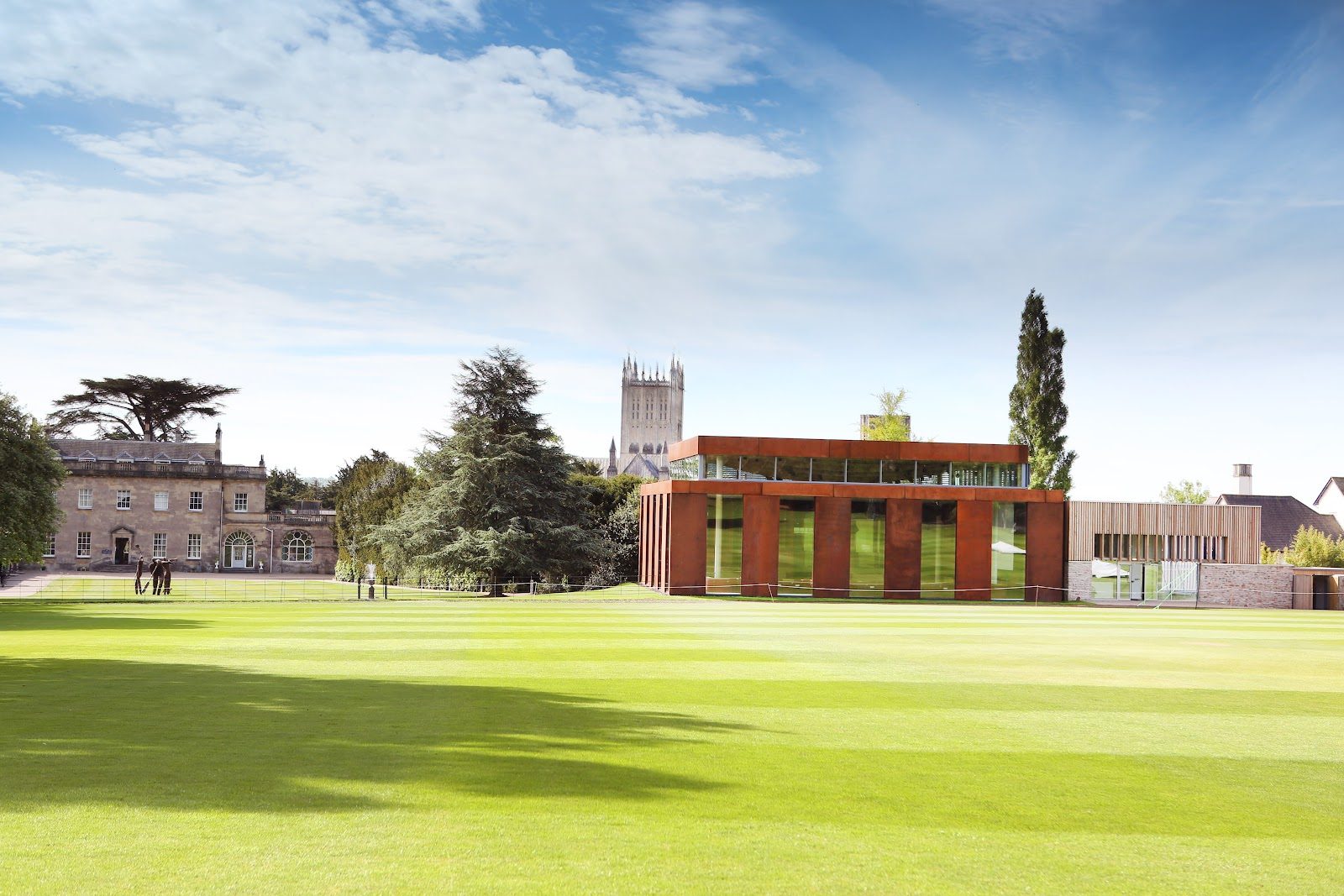
Wells Cathedral School
Wells, Somerset · United Kingdom
A thousand years of choral tradition anchors one of Britain's five specialist music schools, tucked beside a medieval cathedral close.
The Purcell School for Young Musicians
Bushey, Hertfordshire · United Kingdom
Britain's oldest specialist music school, home to the first Fazioli Pianoforti Centre of Excellence and talent-blind admissions.
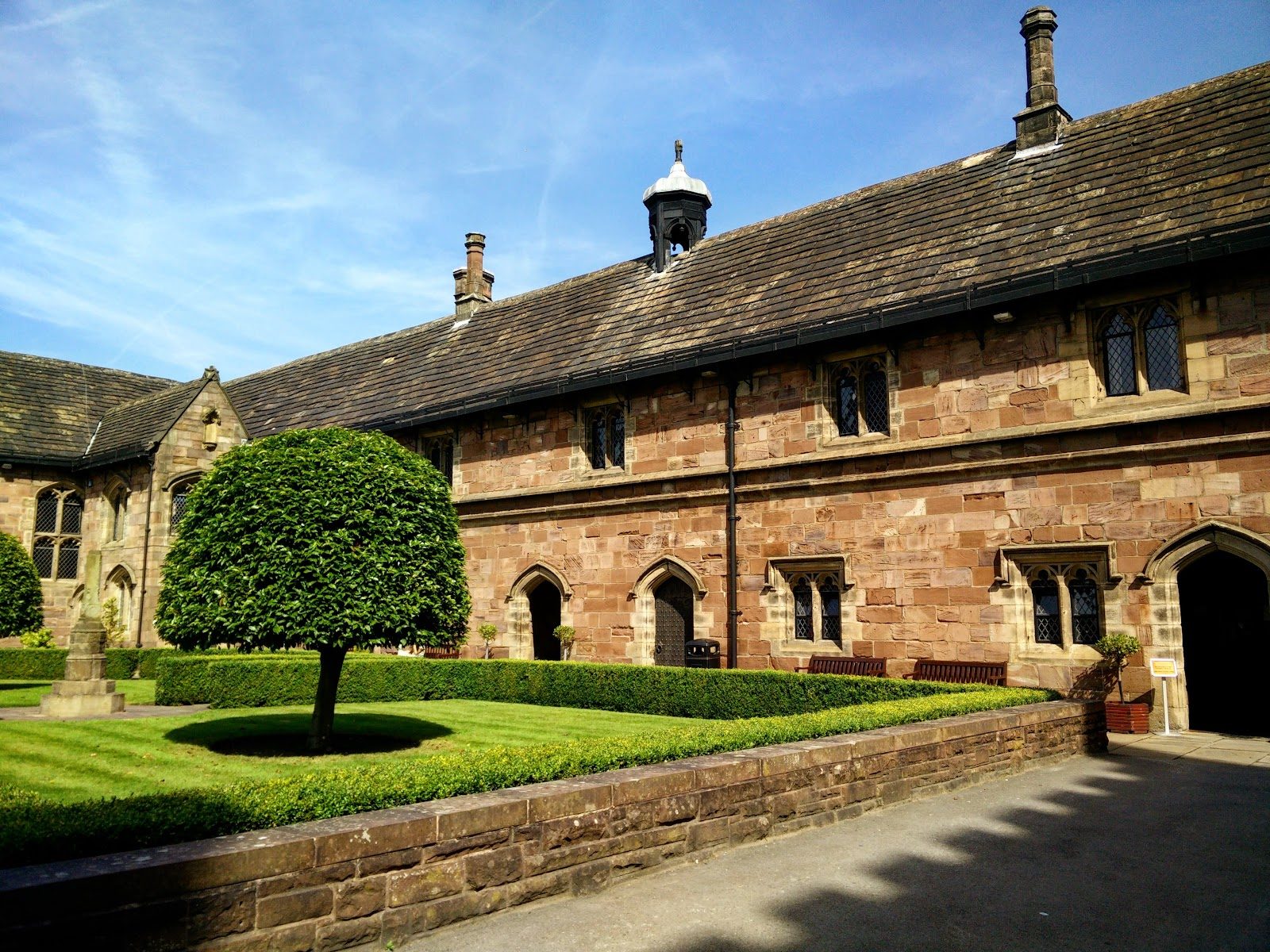
Chetham's School of Music
Manchester · United Kingdom
Set on a medieval site by Manchester Cathedral, entry here turns on musical audition, not fees, at the north's only specialist music school.
St Mary's Music School
Edinburgh · United Kingdom
Scotland's only full-time specialist music school, splitting each day between instrumental training and academic study for pupils aged 9 to 19.
Same specialism, country and curriculum — closest matches within ±10 points either way