
Beijing
The High School Affiliated to Tsinghua University
low confidence· 6/6 cats · 0 avg sourcesBeside the Old Summer Palace and Tsinghua's gates, this century-old Haidian school channels university rigor into elite gaokao prep.
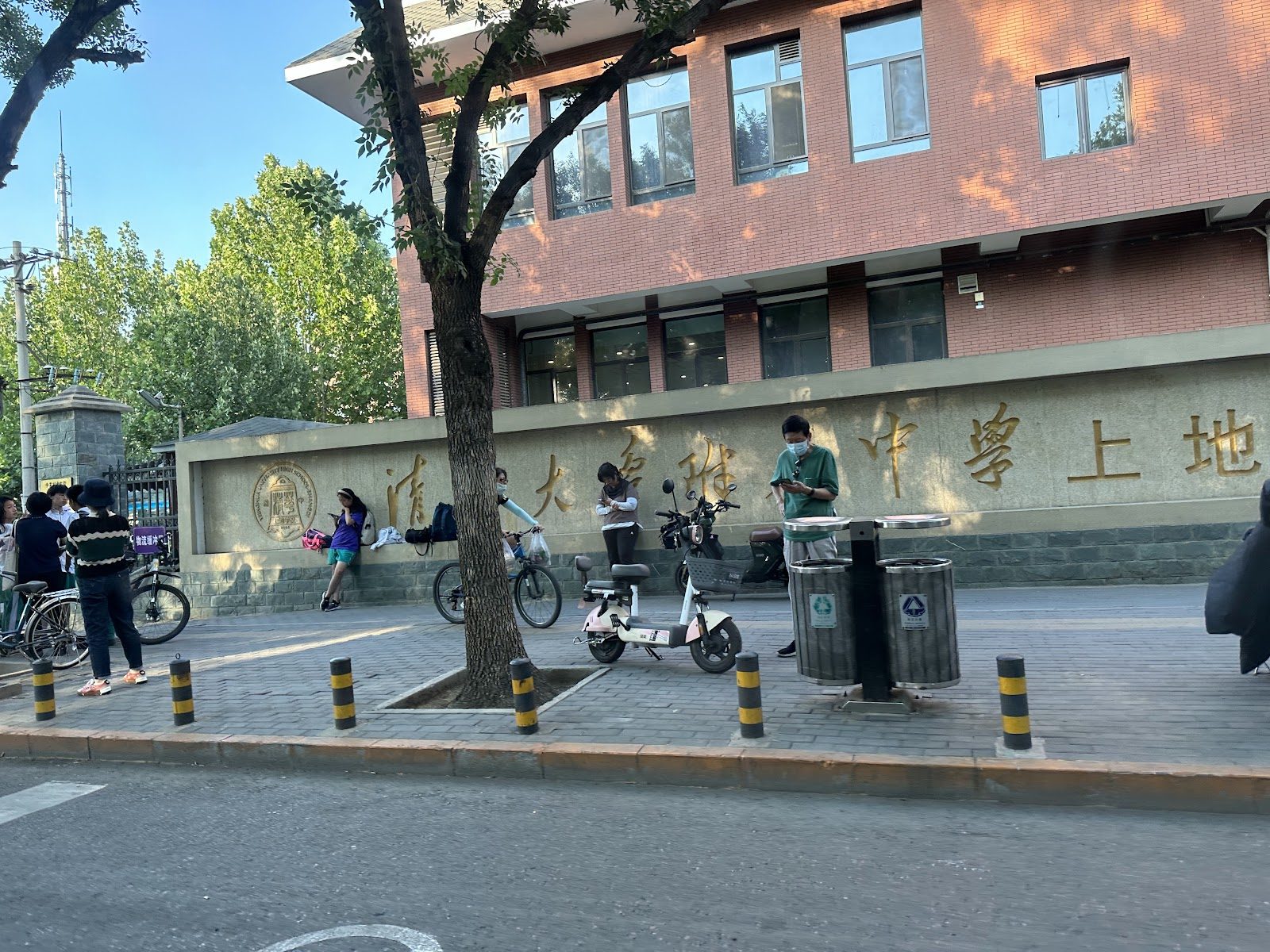
Photo © Bruce Tian via Google Maps
Type
Day
Ages
12–18
Curriculum
Chinese National
Ratio
—
The Verdict
Editor's commitment
Right for
Beijing families wanting a day school in Haidian for ages 12–18, with the Chinese National curriculum and university-adjacent academic ambition.
Wrong for
Families seeking boarding, a faith school, or a non-Chinese curriculum; this is a non-religious Beijing day school for ages 12–18.
Watch out for
The school declares the Chinese National curriculum, yet instruction is listed in English; parents need clarity on how that works in practice.
Ranking breakdown
The High School Affiliated to Tsinghua University · #21 of 1591
Composite score 81.2. 8 weighted criteria.
By criterion
Academic Outcomes
Weight 20%
#20
of 1529 scored
University Placement
Weight 16%
#9
of 1529 scored
Prestige & Heritage
Weight 12%
#92
of 1529 scored
Alumni Network
Weight 12%
#72
of 1529 scored
Facilities
Weight 12%
#352
of 1529 scored
Transparency & Communications
Weight 8%
#153
of 1529 scored
Peer & Industry Review
Weight 10%
#87
of 1529 scored
Admissions Selectivity & Demand
Weight 8%
#51
of 1529 scored
Peer & Industry Review
How The High School Affiliated to Tsinghua University is regarded in the sector
81
Strong · medium confidence
Within Beijing, the school is consistently named alongside RDFZ (Renmin University High School), Beijing No. 4 High School and Peking University High School as one of the capital's top-tier public schools, a grouping that recurs in Chinese media rankings and in discussion among rival heads of Haidian's academic ecosystem. Its closest reputational anchor is Tsinghua University itself, which draws a steady stream of its strongest gaokao performers each year, a relationship regularly cited in domestic education press coverage of Beijing admissions cycles. Coverage in Western-facing outlets such as WhichSchoolAdvisor and the Good Schools Guide is noticeably thinner than for Shanghai's international schools, reflecting its primarily domestic orientation; where it does appear, commentary emphasises olympiad strength and gaokao results over pastoral care or extracurricular breadth. Overseas university admissions officers tend to know it chiefly through its newer international division rather than as an established international-school brand.
Editors' overview
The High School Affiliated to Tsinghua University sits in the most competitive part of Beijing’s education market: Haidian, beside Tsinghua and the Old Summer Palace, where academic ambition is not a slogan but a daily operating condition. Its draw is simple. This is a school built for families who want the Chinese National curriculum delivered with the pace, discipline and status attached to a top university orbit. The proposition is intellectually hard-edged, high-pressure and deeply aspirational. For the right student, that has real force. In a city crowded with bilingual and international options, this school keeps its value by offering a domestic route with elite branding, strong peer competition and the cultural capital that comes from the Tsinghua name.
What puts it on a shortlist is not pastoral romance or progressive experimentation. It is the combination of location, legacy and academic seriousness across the 12–18 age range. Parents looking at selective Beijing schools know that proximity matters: access to top universities, a dense tutoring and olympiad ecosystem, and a parent body that treats education as a primary family project. This school belongs squarely in that world. The attraction is prestige with purpose: a chance to study in a setting shaped by one of China’s most formidable academic neighbourhoods, with expectations set high from the start. That matters to families who want a school that normalises effort rather than apologises for it.
The trade-off is clear. This is not the school for a child who needs a soft landing, a broad menu of low-stakes electives or a loose academic culture. It suits students who are self-propelled, competition-ready and comfortable in an environment where comparison with able peers is constant. Resilient, disciplined pupils with a taste for structure will find the atmosphere energising; students who wilt under pressure will not. For parents, the appeal rests in focus: a non-religious day school in Beijing, teaching in English, serving a narrow but powerful mission across 7 school years. If your family wants a school that treats academic achievement as serious work, The High School Affiliated to Tsinghua University earns its place on the list.
Academic Performance
This school’s academic reputation rests on selectivity, peer quality and its place in China’s most unforgiving school market. That carries weight, but reputation is not the same thing as published outcomes. The school does not disclose the aggregate external examination data international parents now expect: no public gaokao averages, no subject-by-subject distributions, no admission-rate tables by university destination, and no consistent school-wide performance dashboard. That opacity matters. In a system where elite schools trade on results, the absence of hard comparative data leaves parents to infer performance from status, competition and university affiliation rather than inspect it directly. For a school with this level of name recognition, that is a serious gap.
Relative to peers, the school still sits in the upper tier of academically ambitious Beijing options because its intake, expectations and local standing are all strong. In plain terms, families do not choose this school for breadth, experimentation or a gentler learning curve; they choose it for pressure, pace and the prospect of high-end domestic outcomes. That puts it closer to the capital’s exam-driven powerhouses than to schools selling a more balanced or internationally legible profile. Still, without published headline figures, it is impossible to rank it cleanly against direct competitors on outcomes alone. The verdict is *high-confidence prestige, lower-confidence transparency* — impressive, but not fully evidenced in the way rigorous parents deserve.
Facilities
The school’s strongest facility advantage is not theatrical architecture but access to a serious academic environment. A campus beside a top university carries practical benefits: libraries in the surrounding district, dense science and maths culture, strong competition infrastructure, and a daily sense that scholarship matters. For families comparing domestic academic heavyweights, that matters more than a climbing wall or hotel-grade sports centre. The key question is whether the school offers the specialist teaching spaces that high-pressure secondary study needs — science labs, well-run classrooms, examination halls, computing provision, and music and art rooms that function properly rather than decorate a prospectus. We have not seen a detailed public inventory. That absence leaves the facilities picture less transparent than at peer schools that publish floorplans, theatre capacity, pool details or dedicated STEM buildings.
Against elite Beijing competitors, the school’s facilities case therefore rests on utility and location rather than spectacle. That is a credible position for an academically driven day school, but it does not win on public detail. Families who care about sport, performing arts and specialist enrichment spaces need harder facts before treating the campus as a strength. Families who care first about an exam-centred, unflashy working environment will read the offer differently: if classrooms, labs and study spaces are disciplined and well maintained, that is enough. In this part of the market, the best-resourced rivals now market facilities aggressively. This school does not. That makes its physical offer harder to verify and, on current public evidence, less legible than the strongest peer benchmarks.
If your family wants a school that treats academic achievement as serious work, The High School Affiliated to Tsinghua University earns its place on the list
Prestige
The prestige here is genuine and structural. The school trades on one of the strongest institutional associations in Chinese education: the Tsinghua name. In practical terms, that gives it unusual cachet with Chinese families, universities and employers who read school backgrounds closely. In the domestic hierarchy, an affiliated school attached to a top national university carries more than decorative status; it signals academic seriousness, selective expectations and entry into a demanding peer group. The school’s location in Haidian strengthens that standing again, placing it inside the capital’s most competitive educational ecosystem rather than on its fringes. For ambitious families, that combination has real social currency.
That prestige also has limits, and naming them matters. This is not the same thing as global brand recognition on the level of the best-known Anglo-American independents or international schools with highly legible overseas results. Its reputation is strongest with families who understand China’s domestic school ladder and the weight of a leading university affiliation. Within that frame, the school is elite and hard-edged. Outside it, the signal weakens unless backed by clear destination data, which the school does not publish. So the rating rests on two solid pillars: the force of the Tsinghua association and the school’s position in a ruthlessly competitive local market serving pupils across 7 year groups. That is powerful prestige, but prestige with a distinctly domestic accent.
This is a school built for families who want the Chinese National curriculum delivered with the pace, discipline and status attached to a top university orbit
Communications
Parent communication does not read as a strategic strength. The school carries enough status that it does not need to sell itself hard, and that attitude shows in the public-facing information. What parents get is a functional outline of the school rather than a rich, regularly updated account of how it operates day to day. We have not seen the kind of transparent communications architecture now common at strong fee-charging schools: detailed parent handbooks, clear academic calendars, routine leadership updates, published policies in one place, or a convincing archive of news that tells families what pupils are actually doing week by week. For a school serving ages 12–18, that leaves communication too opaque, institution-first and less parent-friendly than the best-run competitors.
That does not mean communication is poor in the narrow operational sense. Schools with this kind of academic culture tend to communicate expectations, deadlines and discipline clearly because they have to. The concern sits elsewhere: clarity about process is not the same as openness. Parents choosing a high-pressure school need reliable visibility on workload, wellbeing, assessment rhythms and escalation routes when problems arise. This school does not publish enough to inspire confidence on those points. The result is a communications model that feels command-and-control rather than dialogic: efficient for administration, weaker for trust. Families already fluent in the local system will tolerate that. International parents, or anyone expecting serious transparency, will find the communications offer thin.
Uniqueness
What sets this school apart is the way it converts a university affiliation into a lived secondary-school culture rather than a decorative label. Many schools borrow prestige from a parent institution; this one gains its distinctiveness from proximity, expectation and intellectual tone. Pupils study in an environment where advanced mathematics, science competitions and top-end university aspiration sit close to the surface of daily life. That creates a rare concentration of academic intent. The benefit for the right student is obvious: able teenagers are surrounded by peers who treat hard study as normal, not exceptional, and that peer effect can sharpen pace, stamina and ambition across the full 7-year span.
The flip side is just as important. This is a school with a narrow, demanding identity. Its uniqueness does not lie in broad educational philosophy, pastoral softness or international-style flexibility. It lies in a *prestige-driven domestic academic machine* tied to one of China’s most powerful educational names. For students who thrive on hierarchy, competition and external standards, that brings clarity and momentum. They get a school culture with a clear centre of gravity and little confusion about what success looks like. For students who need room for reinvention, uneven development or a less compressed definition of achievement, the same distinctiveness turns punishing. That is the real dividing line: not whether the school is impressive, but whether its singular model fits the child in front of you.
Its reputation is strongest with families who understand China’s domestic school ladder and the weight of a leading university affiliation
Student Profile
The pupils who fit here are the ones who draw energy from academic comparison rather than protection from it. This school suits fast-processing, high-stamina adolescents who can absorb correction, recover from setbacks and keep working when the room is full of equally able peers. Intellectual confidence helps, but toughness matters more. The right student does not need constant affirmation, does not panic when standards rise, and does not confuse pressure with hostility. In a school serving ages 12–18, that profile starts early: by the time pupils move into the senior years, the culture rewards organisation, self-command and a clear appetite for measured achievement. Teenagers who enjoy olympiads, problem-solving, ranked performance and visible academic hierarchy will feel the logic of the place quickly.
The weaker fit is just as clear. A child who needs broad creative latitude, frequent individual soothing or a gentler pace will find this environment abrasive. So will students whose strengths lie outside examinable academic performance but who still want those strengths to carry equal institutional weight. This is not for the faint-hearted, and parents need to treat that as a practical warning, not a dramatic flourish. The school works best for families who value discipline, delayed gratification and external benchmarks, and whose child can hold steady across 7 years of sustained expectation. For the highly driven, it offers a strong peer field. For the fragile, the uncommitted or the chronically disorganised, it is the wrong school.
Many schools borrow prestige from a parent institution; this one gains its distinctiveness from proximity, expectation and intellectual tone
Co-curricular strengths
Arts & sport, on a separate axis
Overall 7.9/10
Scored 0-10 from the school's own published evidence. This axis is editorial-only — it does not feed the main WTS ranking.
Sports
8.5/10
National powerhouse; home to the legendary Olympic-tier "John Ma Memorial Class" system and multi-year national basketball champions.
Drama
8/10
Respectable bilingual theater programs, but plays an secondary role compared to the school's massive STEM and sports focus.
Dance
7.5/10
Award-winning elite performance ensembles featured heavily in competitive provincial youth showcase festivals.
Music
8.5/10
Home to the prestigious Golden Sail Orchestra, feeding directly into the world-class Tsinghua University Art Troupe infrastructure.
Visual Arts
7/10
Pre-conservatory technical rigor backed by a direct academy pipeline to the top-ranked Tsinghua Academy of Fine Arts.
Editor-verified · 8/6/2026
WTS 300 badge
The High School Affiliated to Tsinghua University is one of the World's Top 300 Schools. Claim your listing to add it to your site →
Strengths
- +The school sits directly on the Tsinghua University campus in Haidian District, giving students day-to-day proximity to one of China's leading research universities. Tsinghua University High School is a public secondary school in Haidian, Beijing, China.
- +It has a long institutional history, tracing its roots to the 1915 founding of Chengzhi School and later renamed and expanded into today's Tsinghua University High School. The school was founded in 1915, with its predecessor being the "Chengzhi School." It is designated as a Beijing Key High School and a Beijing Model Regular High School.
- +Gaokao outcomes for admission to Tsinghua and Peking University have been strong in recent cycles. the school's Tsinghua/Peking University admissions reached 100 students in 2024, up substantially from 80 the year before.
- +A dedicated international division (Tsinghua International School) serves foreign-passport, Hong Kong, Macau and Taiwan students from grades 1-12 and is externally accredited. The school is WASC-accredited since January 2016 and continues to be accredited by 2023, and is also a US College Board member, as well as the testing center for AP, ACT, and SAT.
- +The campus and student body are sizeable, giving access to broad facilities and a large peer cohort. Enrollment: 2,500; Campus: Urban, 78,800 sq m.
Considerations
- −The mainstream Chinese-curriculum track operates as a public Beijing school under district education authorities, and admission for most students runs through the competitive municipal zhongkao (high-school entrance exam) system rather than an open international application process.
- −Day-to-day teaching in the mainstream division is conducted in Mandarin under the Chinese national curriculum, so families without strong existing Chinese-language ability would need to route through the separate, smaller international division instead.
- −As a top Beijing public school built around gaokao and zhongkao performance, the academic culture is exam-intensive and college-preparatory in a narrowly domestic sense, offering less flexibility for students seeking a broad, low-stakes pastoral environment.
- −The school currently has no independently verifiable public website of its own (the listed site is blank), and prospective families must navigate separate portals for the mainstream school versus the Tsinghua International School division, which can create confusion about pathways and fees.
Availability
Primary entry gate & tests
Beijing Zhongkao Exam
Gallery
Photo © Bruce Tian via Google Maps
Photo © Bruce Tian via Google Maps
Photo © Bruce Tian via Google Maps
Photo © Bruce Tian via Google Maps
Photo © Bruce Tian via Google Maps
Parent reviews
Have you sent your child here?
Voice reviews carry the strongest trust badge — we transcribe them for you to tidy up before they go live. Prefer to type? A written review is fine too.
Add your voice
In 60 seconds, tell other parents: what's the best thing about The High School Affiliated to Tsinghua University, and what surprised you when your child joined?
We ask for a Google sign-in so every review has a real face behind it — no anonymous drive-by attacks on schools, and no faked positive reviews. Your email is never shown publicly.
Send this profile to a friend
International parents rely on word-of-mouth. Share this review with someone weighing the same decision.
Schools with places
Similar schools to The High School Affiliated to Tsinghua University with places available now.
Keystone Academy
Beijing · China
- 2026-27
- WAITPOOLLimited late vacancies
- 2027-28
- FUTURE CYCLE2027/28 cycle TBC
Western Academy of Beijing
Beijing · China
- 2026-27
- WAITPOOLSpace-dependent
- 2027-28
- PLACES OPENRolling
International School of Beijing
Beijing · China
- 2026-27
- WAITPOOLSpace-dependent
- 2027-28
- PLACES OPENRolling
Dulwich College Beijing
Beijing · China
- 2026-27
- WAITPOOLSpace-dependent
- 2027-28
- PLACES OPENRolling
Availability first, then country, area, curriculum, price, co-curricular
Consider also
Also worth looking at alongside The High School Affiliated to Tsinghua University.
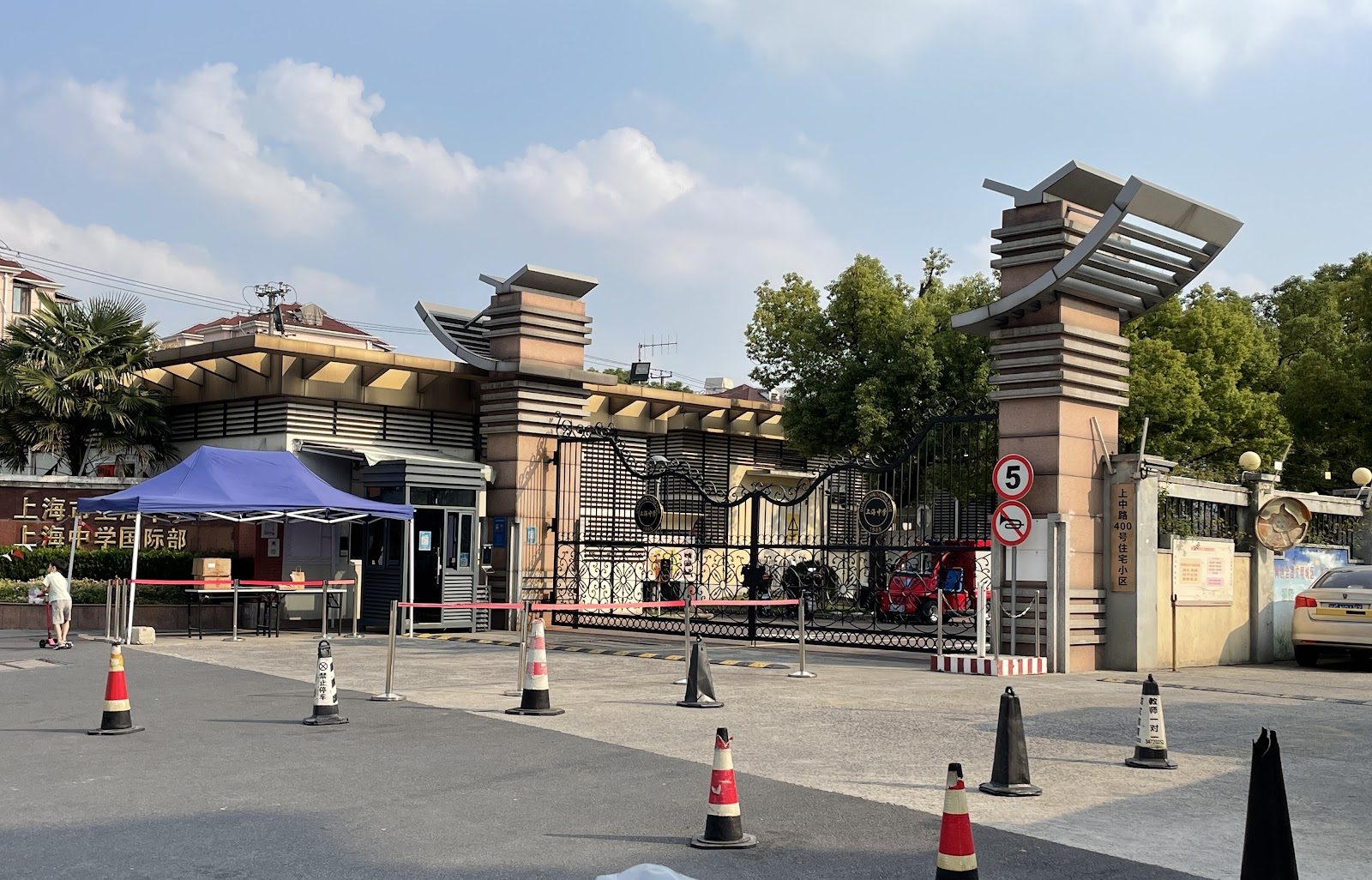
Shanghai High School International Division
Shanghai · China
Grown from a 19th-century public school in Xuhui, its IB cohort has averaged 41 points for fifteen straight years.
Shanghai American School
Shanghai · China
A century-old Shanghai institution since 1912, running AP and IB in parallel across two sprawling campuses
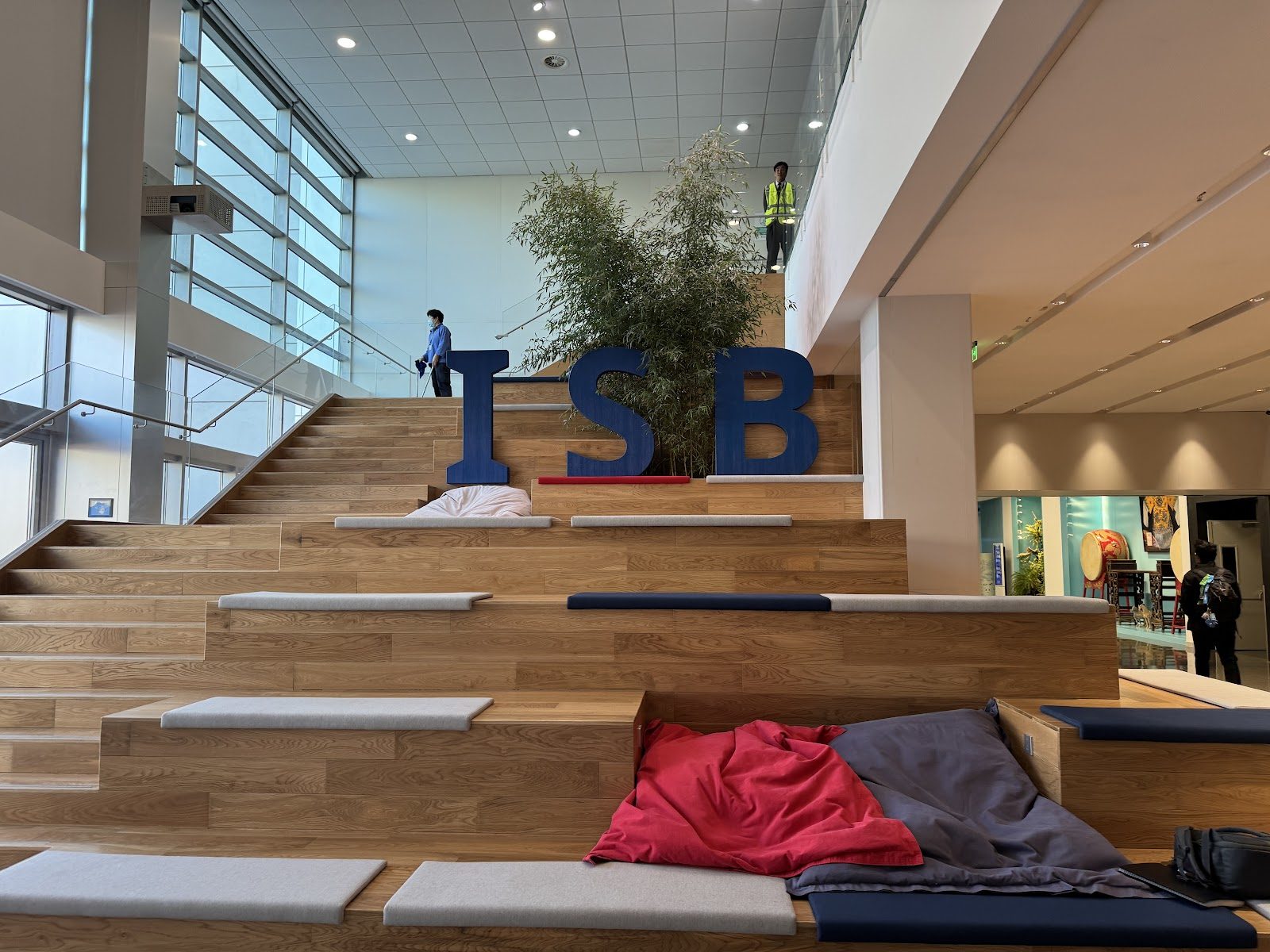
Keystone Academy
Beijing · China
Five houses named for the Chinese elements anchor a bilingual boarding culture on Beijing's Shunyi plain, near the Great Wall.
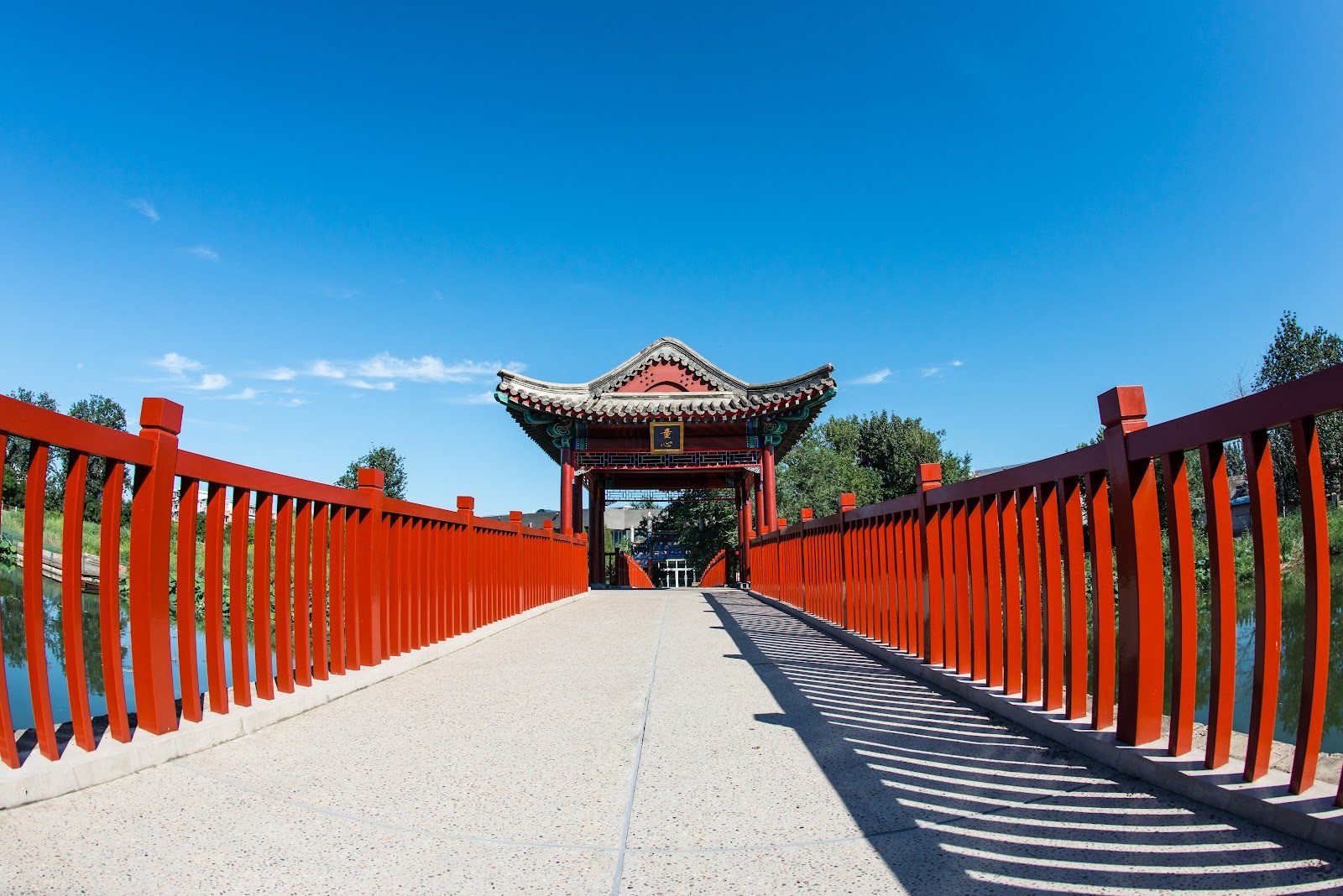
Western Academy of Beijing
Beijing · China
Running the full IB continuum since 1994 from a Chaoyang campus once named a Beijing Olympic model school
Same country and curriculum — closest matches within ±10 points either way