
Guangdong
The British School of Guangzhou
low confidence· 1/6 cats · 3.33 avg sourcesOn the shores of South Lake, Guangzhou's longest-running British school pairs English curriculum rigour with a Juilliard-designed arts programme.
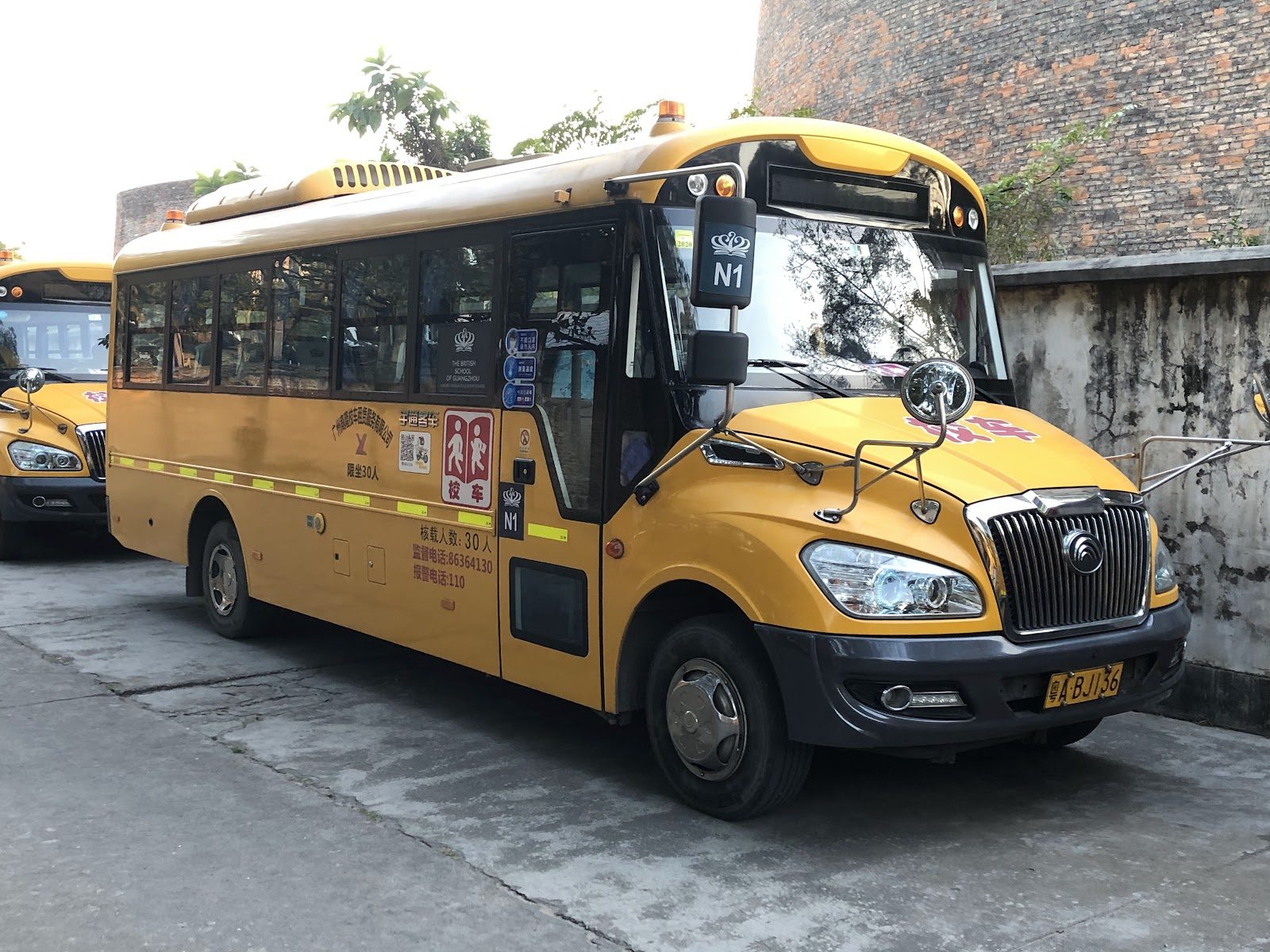
Photo © Paul C. via Google Maps
Type
Day
Ages
3–18
Curriculum
British
Ratio
—
The Verdict
Editor's commitment
Right for
Families wanting Guangzhou's longest-running British school: founded in 2005, English-medium, with IB World, CIS and BSO accreditation.
Wrong for
Parents seeking low fees or non-British pathways; the curriculum is British, the school is day-only, and the average annual fee is RMB 257,470.
Watch out for
Nord Anglia branding and a Juilliard-designed arts programme add gloss; scrutinise substance beyond marketing, despite the South Lake campus and 50-plus nationalities.
Ranking breakdown
The British School of Guangzhou · # of 1591
Composite score 48.0. 8 weighted criteria.
By criterion
Academic Outcomes
Weight 20%
#1446
of 1529 scored
University Placement
Weight 16%
#1445
of 1529 scored
Prestige & Heritage
Weight 12%
#1478
of 1571 scored
Alumni Network
Weight 12%
#1123
of 1530 scored
Facilities
Weight 12%
#1375
of 1534 scored
Transparency & Communications
Weight 8%
#1380
of 1532 scored
Peer & Industry Review
Weight 10%
#1472
of 1548 scored
Admissions Selectivity & Demand
Weight 8%
#1419
of 1529 scored
Score history
The British School of Guangzhou · 2026
Movement across 2024–2026. Peer average overlaid.
Overall — 2024–2026
48.0/ 100
▲ +9.9 vs 2025
year on year
Peer & Industry Review
How The British School of Guangzhou is regarded in the sector
55
Credible · low confidence
The British School of Guangzhou (part of the Nord Anglia Education group) has limited independent third-party coverage; it appears in some expat-parent forum discussions (e.g., forums like Guangzhou-related expat communities) and NAE group-level materials, but lacks consistent presence in specialist rankings like Good Schools Guide International, Tatler Schools Guide, or dedicated 'best schools in China' editorial lists. Its reputation appears to be solid but primarily local/regional rather than benchmarked against top-tier international peers.
Editors' overview
South Lake is the hook here, but the substance is the school’s place in the Guangzhou market: this is the city’s longest-running British school, opened in 2005, and still one of the clearer options for families who want an English-curriculum education without ambiguity. The British School of Guangzhou covers ages 3 to 18, runs as a day school, teaches in English and Mandarin, and sits inside the Nord Anglia network. That combination matters. Parents get a school with established British heritage, an English National Curriculum spine and the operational backing of a large international group, rather than a start-up still working out what it is. The average annual day fee across the full age range is 257470 RMB, which places it firmly in the expensive tier and demands serious scrutiny.
What lifts BSG above the standard premium-British formula is the breadth built around that core. The school holds IB World School, CIS and BSO accreditation, which gives it more external validation than many competitors and signals a school that has submitted itself to scrutiny. The editorial tagline points to a Juilliard-designed arts programme, and that is a meaningful differentiator in a market where many British schools still treat the arts as decoration around academics. If your child wants a conventional British structure but does not want a narrowly exam-driven experience, BSG earns a place on the shortlist. Its public positioning leans hard on academic results and university entry, but the stronger case for the school is balance: British curriculum rigour, a genuinely international student body drawn from over 50 nationalities, and a co-curricular offer tied to a major global chain rather than improvised locally.
This is not the school for families chasing a bargain, nor for those who want a small, idiosyncratic campus with a highly local identity. It suits internationally mobile families who value continuity, parents who want the discipline of a British academic route, and students who thrive in a structured, high-expectation environment but also want serious music, drama or performance opportunities. It will also appeal to children who benefit from a cosmopolitan peer group and to parents who place weight on recognised accreditation. The weak point is transparency around outcomes: the school talks confidently about excellent results and top universities, but it does not publish aggregate results or destination data in the public domain here. That does not erase its strengths, but it does matter. BSG belongs on a shortlist because it is established, accredited and academically clear-eyed; it stays there if your child wants a polished, internationally mobile British education with real arts ambition, and if you are comfortable paying 257470 RMB a year on average for it.
Academic Performance
BSG talks up academic strength, with direct reference to outstanding A-level results and a long-standing reputation for academic excellence. That places it in the serious-college-prep bracket of Guangzhou’s British schools, not the soft-focus “holistic” category that uses enrichment to distract from weak outcomes. The problem is disclosure. The school does not publish aggregate A-level grades, IGCSE results, pass rates, top-score distributions or university destination tables in the public domain here. For parents comparing selective international schools, that is a real weakness. Strong schools do not need to hide behind generic claims about excellence and aspiration. Without hard numbers, BSG cannot claim a top-results position on evidence; it can claim ambition, structure and a record long enough to carry market confidence.
Relative to peers, that leaves BSG in a mixed position. It has the institutional maturity, scale and network backing of a high-pressure premium operator, and those factors usually support stable teaching and exam preparation. Its age range and long presence in the market also matter: schools with established senior cohorts have fewer excuses for thin outcomes reporting. But families looking for the most data-driven academic choice will find the picture incomplete. BSG fits best in the tier of established British international schools that are taken seriously by parents and competitors alike, but it does not earn a clear ranking above rivals until it publishes the results itself. For now, the academic case rests on reputation rather than hard proof.
Facilities
The campus’s strongest facility asset is breadth, not spectacle. The school gives unusual prominence to the arts, and that matters because many British-style schools in this market still build around classrooms, a hall and little else. Here, the arts infrastructure carries more weight: the school foregrounds its orchestra, performance culture and specialist collaborations, which points to spaces and staffing that support regular music-making rather than occasional concerts. Add residential trips, a summer camp and a full extracurricular programme, and the offer reads as properly built out beyond the timetable. For families with children who need more than a desk-and-exam education, that is a serious advantage. The international mix — over 50 nationalities — also changes how common spaces function: these schools need gathering areas, performance venues and activity rooms that work for a high-movement expatriate community, not just a narrow academic core.
Against peer schools, BSG sits in the well-resourced premium bracket rather than the architectural showpiece tier. The South Lake setting gives it a more distinctive sense of place than many urban compounds, but the school does not publish the kind of detailed facilities inventory that top competitors now use to make their case. We have not seen a full public breakdown of sports provision, specialist labs, theatre specifications or standout design features. That opacity matters. Parents can conclude that the school has the facilities needed for a strong all-round education, with arts provision as the clearest differentiator; they cannot conclude that it outguns the best-equipped campuses in the city without harder detail.
The British School of Guangzhou covers ages 3 to 18, runs as a day school, teaches in English and Mandarin, and sits inside the Nord Anglia network
Prestige
Prestige here rests on market position, not mystique. This school has been in the city long enough to become a reference point for families who want a British-path education and do not want to gamble on a newer operator. The Nord Anglia connection adds weight: parents know the group, competitors take it seriously, and that global machinery carries status in expatriate circles. A student body drawn from more than 50 nationalities reinforces that standing. So does the school’s willingness to tie its identity to ambitious outcomes and to a serious arts offer rather than to soft lifestyle messaging. In Guangzhou terms, that puts BSG in the upper tier of international schools: established, recognisable and socially legible to employers, relocation agents and mobile professional families.
That said, prestige here is institutional rather than elite. BSG has brand strength, age, and external validation, but not the kind of public results disclosure that turns reputation into dominance. The school talks confidently about top universities and strong senior outcomes; it does not publish the aggregate numbers that would let it convert that confidence into unarguable academic prestige. The fee level alone marks it as a premium purchase at an average of 257470 RMB a year, and many parents will read price as status. Serious parents should demand more than price and brand. Our rating sits high because the school is established, visible and trusted; it stops short of the top rung because the public proof remains thinner than a school at this price ought to allow.
Its uniqueness lies in something more practical: a well-drilled British-style education with serious arts ambition and a genuinely international social mix
Communications
Parent communication is more organised than intimate. The school gives families clear contact routes, a visible admissions channel, a family portal, a calendar, news pages and parent-facing essentials, all easy to find from the main navigation. Direct phone access matters too: general and admissions numbers are published openly, alongside a bilingual extension and a shared admissions email. That is the behaviour of a school that expects enquiries and understands that international families need fast answers, not a contact form black hole. The public site also signals a parent community with structure around it, including support groups and regular events. For a school serving more than 50 nationalities, that kind of communications scaffolding is not a luxury; it is basic operating discipline. On the evidence in public, BSG meets that test and does so in a clean, well-drilled way.
The limitation is depth. The school’s communications are strong on access and upbeat messaging, weaker on the hard information serious parents need once the tour is over. We have not seen public aggregate exam data, destination tables, or a detailed public account of some facilities parents will ask about at this price point. That leaves the external communications efficient but controlled: polished enough to reassure, not transparent enough to settle every serious question. For current parents, the portal and calendar infrastructure point to a functional, high-touch day-to-day system. For prospective parents doing due diligence, the school communicates confidently but withholds some of the proof that would turn confidence into trust.
Uniqueness
What marks BSG out is not the British template on its own but the way it combines that structure with a student body spanning more than 50 nationalities and an arts offer built into the school’s identity, not bolted on for brochure effect. Plenty of premium international schools promise “holistic” education; fewer make orchestral life, performance and creative collaboration central enough that parents mention them unprompted. That gives students a school culture that is broader than the exam track and less mechanically academic than many competitors in the same bracket. For children who work hard but do not want their school life reduced to grades, that matters.
The other point of difference is market maturity without local improvisation. BSG has the feel of a school that knows its constituency: internationally mobile families who want a stable, legible route through school, with consistent systems and a peer group broad enough to avoid monoculture. Being part of a major international operator brings advantages when done well: smoother transitions for relocating families, access to bigger collaborations, and a level of operational polish that smaller independents struggle to match. The trade-off is obvious. This is not an idiosyncratic school with a quirky local character or a fiercely individual educational philosophy. Its uniqueness lies in something more practical: a well-drilled British-style education with serious arts ambition and a genuinely international social mix.
Without hard numbers, BSG cannot claim a top-results position on evidence; it can claim ambition, structure and a record long enough to carry market confidence
Student Profile
This school suits internationally mobile families who want structure, pace and a peer group that does not feel narrow. With students drawn from more than 50 nationalities, BSG is built for children who are used to crossing borders, joining mid-stream and finding their feet fast. New arrivals who need a socially mixed environment have an advantage here; so do pupils who enjoy being around classmates with different passports, languages and expectations. The best fit is a child who likes clear routines, responds to adult guidance and is comfortable in a school culture that prizes ambition. This is a high-expectation setting, not a loose one. Children who need constant informality or who resist institutional discipline will find it a poor fit.
It also suits students with genuine interests beyond the classroom, especially in music and performance. The school’s public identity gives the arts more space than many British-style competitors, and that changes the student mix: not just straight-line grade chasers, but children who want rehearsals, productions, ensembles and a busier school day. Parents who value a cosmopolitan, achievement-minded crowd will recognise the appeal. Families looking for a small-scale quirky community with a strongly local character should look elsewhere. This is a school for children who want an international peer group, visible opportunities and a clear route through school, and for parents prepared to pay 257470 RMB a year on average for that package.
The average annual day fee across the full age range is 257470 RMB, which places it firmly in the expensive tier and demands serious scrutiny
Co-curricular strengths
Arts & sport, on a separate axis
Overall 9.14/10
Scored 0-10 from the school's own published evidence. This axis is editorial-only — it does not feed the main WTS ranking.
Sports
9/10
Multiple sports—football, basketball, swimming, tennis, badminton and volleyball—showing a solid multi-activity sports offering but with no named facilities, specialist staff or competitive results cited.
Drama
9.3/10
Drama appears explicitly only as 'Drama club' in the extracurriculars list.
Dance
9.1/10
Music
9.5/10
Both a school choir and an orchestra, indicating a structured music programme with more than a bare single listing.
Visual Arts
8.8/10
Visual arts is evidenced explicitly through 'Art club' in the extracurriculars list, but there is no further detail on facilities, exhibitions or specialist teaching.
Editor first-pass · editor-reviewable · 7/27/2026
Strengths
- +Oldest British-heritage international private school in Guangzhou
- +British curriculum with IGCSE and A-level pathways
- +Part of Nord Anglia Education network
- +Represents over 50 nationalities
Considerations
- −No IB pathway stated; British curriculum only
- −South Lake campus may not suit all commutes
- −Website publishes no fees in provided extract
Availability
Primary entry gate & tests
Academic Record
Gallery
Photo © Paul C. via Google Maps
Photo © Paul C. via Google Maps
Photo © Paul C. via Google Maps
Photo © Paul C. via Google Maps
Photo © Paul C. via Google Maps
Photo © Paul C. via Google Maps
Photo © Paul C. via Google Maps
Photo © Paul C. via Google Maps
Photo © Paul C. via Google Maps
Parent reviews
Have you sent your child here?
Voice reviews carry the strongest trust badge — we transcribe them for you to tidy up before they go live. Prefer to type? A written review is fine too.
Add your voice
In 60 seconds, tell other parents: what's the best thing about The British School of Guangzhou, and what surprised you when your child joined?
We ask for a Google sign-in so every review has a real face behind it — no anonymous drive-by attacks on schools, and no faked positive reviews. Your email is never shown publicly.
Send this profile to a friend
International parents rely on word-of-mouth. Share this review with someone weighing the same decision.
Schools with places
Similar schools to The British School of Guangzhou with places available now.
Utahloy International School Guangzhou
Guangzhou · China
- 2026-27
- WAITPOOLSpace-dependent
- 2027-28
- PLACES OPENRolling
Shekou International School
Shenzhen · China
- 2026-27
- WAITPOOLSpace-dependent
- 2027-28
- PLACES OPENRolling
American International School of Guangzhou
Guangzhou · China
- 2026-27
- WAITPOOLSpace-dependent
- 2027-28
- PLACES OPENRolling
Availability first, then country, area, curriculum, price, co-curricular
Consider also
Also worth looking at alongside The British School of Guangzhou.
Concord College Beijing
Beijing · China
Tongzhou's pioneering joint boarding college pairs a British-style house system with Round Square expeditions and global exchange terms.
Shanghai Rego International School
Shanghai · China
A Minhang day-and-boarding campus delivering the English National Curriculum through GCSEs and A-Levels, with houses, an indoor pool and daily Mandarin study.
Yew Wah International Education School of Beijing
Beijing · China
Chinese-English co-teaching in every classroom, threading a through-train path from early years to the IB in Yizhuang's tech park
QSI International School of Chengdu
Chengdu · China
A mastery-learning model and single-digit class sizes anchor this American Garden campus school inside Chengdu's Third Ring Road.
Same country and curriculum — closest matches within ±10 points either way