
New York
Academy for Careers in Television & Film
A waterfront Queens campus where students edit and shoot films against the Manhattan skyline, backed by a million-dollar production arsenal.
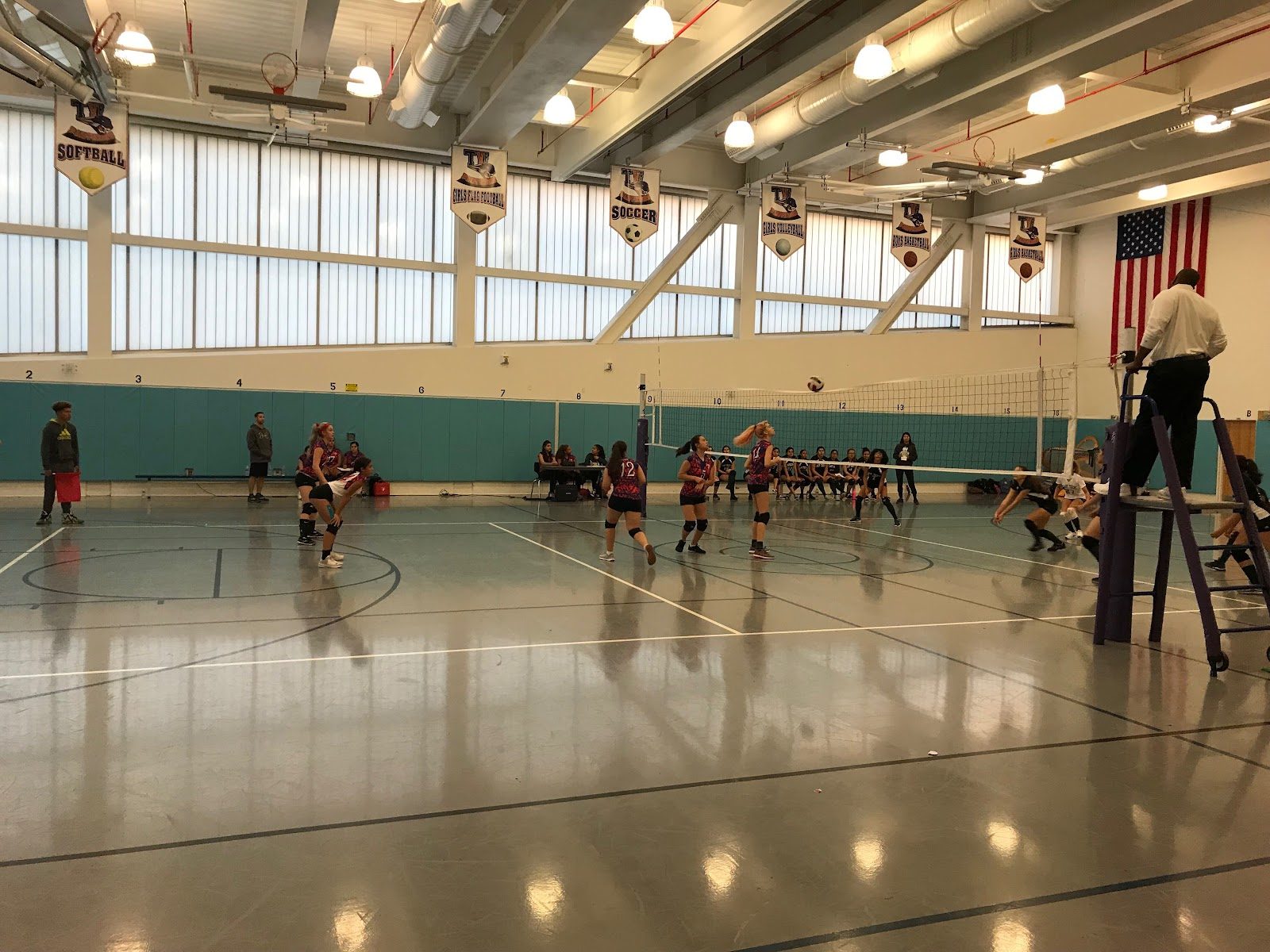
Photo © Essential Viewfinder via Google Maps
Type
Day
Ages
14–18
Curriculum
US High School Diploma · Advanced Placement
Ratio
—
The Verdict
Editor's commitment
Right for
Teenagers aged 14–18 who want a US High School Diploma with AP in Long Island City, on a campus built around television and film.
Wrong for
Families wanting boarding, faith provision or a broad conventional prep-to-graduation model; this is a secular day school for 14–18s only.
Watch out for
The specialism is narrow and the public facts are thin: the school does not publish headline outcomes beyond US High School Diploma and AP.
Ranking breakdown
Academy for Careers in Television & Film · #1469 of 1591
Composite score 48.6. 8 weighted criteria.
By criterion
Academic Outcomes
Weight 20%
#1157
of 1529 scored
University Placement
Weight 16%
#1414
of 1529 scored
Prestige & Heritage
Weight 12%
#1529
of 1571 scored
Alumni Network
Weight 12%
#1388
of 1530 scored
Facilities
Weight 12%
#1388
of 1533 scored
Transparency & Communications
Weight 8%
#456
of 1532 scored
Peer & Industry Review
Weight 10%
#1525
of 1548 scored
Admissions Selectivity & Demand
Weight 8%
#1520
of 1529 scored
Peer & Industry Review
How Academy for Careers in Television & Film is regarded in the sector
44
Regional · medium confidence
Industry regard centers on ACTF's practical internship pipeline into Queens-based studio production work; it is known among NYC media-education circles as a solid feeder of entry-level production talent rather than a nationally benchmarked filmmaking conservatory.
Award

Elite Film 50
World's Top School · The Global Ranking
Academy for Careers in Television & Film is featured on our Global Top 50 ranking at #11. This seal is available for the school's marketing team to use on their website, prospectus and social channels.
Award
Elite Drama 50
World's Top School · The Global Ranking
Academy for Careers in Television & Film is featured on our Global Top 50 ranking at #18. This seal is available for the school's marketing team to use on their website, prospectus and social channels.
Editors' overview
Academy for Careers in Television & Film occupies a niche that few public high schools can match: a specialist screen-production education inside the US diploma framework, in Long Island City, with the Manhattan skyline as a working backdrop. The pitch is concrete, not abstract. Students do not just study film; they shoot, edit and produce it in a setting built around that purpose. For families with a teenager who already spends weekends cutting footage, storyboarding scenes or obsessing over camera angles, this is *a school with a real professional flavour*. The age range is 14–18, the curriculum is the US High School Diploma with Advanced Placement, and the language of instruction is English. That combination matters: students get a standard academic route with a clear vocational edge, not a loose arts-club add-on.
What puts it on a shortlist is the strength of its specialism. The school’s identity is not diluted by a generic “creative” label; television and film are the point. In a city crowded with broad magnet and arts options, that sharp focus gives ACTF a distinct market position. The appeal lies in hands-on production, industry-shaped ambition and the discipline of making things to deadline. Students learn in a context where equipment, editing and visual storytelling carry real weight. That said, the specialism cuts both ways. This is not the right choice for a child who wants a traditional all-round independent-school experience, extensive athletic prestige or a campus built around breadth first and specialism second. It is for students who want their school day tied to media-making, and who can tolerate a narrower institutional identity in exchange for that focus.
The right student for ACTF is visually minded, technically curious and comfortable with critique. Film-making at school level still demands writing, planning, revision, teamwork and persistence; glamour has little to do with it. The strongest fit is a teenager who wants creative pressure with purpose, who prefers studios and editing suites to a conventional school polish, and who sees New York itself as part of the education. Parents should shortlist it for a child who needs a reason to care about school and finds that reason in production, broadcasting and screen culture. For that student, ACTF offers *a serious route into the language of moving image*, not just a decorative enrichment strand.
A Global Elite 50 Film school
The Academy for Careers in Television and Film in Long Island City, New York, sits at rank eleven on the Global Elite 50 Film list because it is a purpose-built vocational film high school co-founded in 2008 by Alan Metzger, a working Hollywood director and cinematographer known for The Equalizer and Law & Order: Special Victims Unit, alongside founding principal Mark Dunetz and assistant principal Edgar Rodriguez. Its lead partner, the New York Production Alliance, draws its membership from the owners of New York's major studios, top producers and directors, and industry unions, giving students a direct pipeline into professional sets rather than a simulated one.
The school runs a genuine Career and Technical Education film pathway: students learn directing, sound, set design, editing and post-production from freshman year, culminating in a year-long junior film production project. Facilities include three fully-equipped soundstages, a set construction wood shop, two editing suites and an editing lab, running Adobe Suite and Final Cut Pro on a 1:1 student-to-computer ratio. Industry partnerships with Silver Cup Studios, the Tribeca Film Institute and the Museum of the Moving Image supply internships and paid work, and an early-college arrangement with LaGuardia Community College and BMCC lets students leave with free college credit alongside a CTE diploma anchored by six AP courses.
Notable alumni are still emerging into industry-recognized careers, but the school's production culture is verifiable in other ways: the New York Production Alliance has awarded scholarships to two graduating production students every year since the first cohort in 2012, that first cohort graduated at 96.2 percent against an 80 percent peer average, and student work such as "Crazy Makeup," produced under teacher Jeff Crook, has screened in the citywide NYC Public School Film Festival run by the Mayor's Office of Media and Entertainment.
International openness is limited and should be stated plainly: this is a New York City Department of Education public high school with unscreened admission open only to New York City residents applying through the standard 8th-grade high school application process, where it recently drew over 1,600 applicants for 135 seats. There is no boarding, no tuition (it is free), no dedicated ESL track, and no visa sponsorship pathway, since it is not a private international school. Overseas families cannot enroll directly; access requires establishing genuine New York City residency well before the October application window in 8th grade. For families relocating to New York specifically to access elite pre-collegiate film training, this school is worth the move, but only once residency is secured first.
Academic Performance
Academic performance is hard to judge cleanly because the school does not publish the exam data parents would want: no aggregate Regents profile, no AP score distribution, no college-matriculation table. That is a real weakness in a city where selective public schools and specialist programmes often trade on measurable outcomes. The school sits inside the New York public system, so baseline accountability exists, but public accountability is not the same thing as editorial transparency. Families can infer that students complete a standard diploma route and have access to AP, yet inference is not evidence. For a school with such a sharply defined mission, the absence of a clear results picture leaves too much unanswered about academic stretch beyond the production specialism.
Relative to peers, ACTF fits best in the specialist CTE-and-arts bracket rather than the exam-maximising Manhattan and Queens elite. That is not a criticism in itself; it is a statement about institutional purpose. Students who want a school judged primarily by AP volume, near-perfect test profiles or a relentless Ivy conveyor belt need harder proof than ACTF publishes. Students who want rigorous media training alongside a conventional academic programme may accept that trade. The key point is plain: this is not a school with a data-rich academic brag sheet. It is a school where the case for quality rests more on programme identity and student work than on headline exam numbers.
Facilities
The facilities that matter here are the production spaces and the equipment behind them. The school’s central asset is not a grand campus but a working media environment: students have access to broadcast and film tools that many mainstream public schools do not touch. The headline point remains the production inventory, valued at $1 million, which puts ACTF ahead of the average comprehensive school and in line with stronger specialist arts and career-technical programmes. For a teenager who learns by making, that matters more than ornamental architecture. Editing capacity, camera access and spaces built for shooting give the school real operational substance. The waterfront setting adds something peer schools cannot manufacture: a visually rich urban backdrop that feeds directly into student film work rather than sitting there as a brochure image.
Against peer schools, the comparison is clear. General academic high schools may offer better sports provision, larger libraries or more traditional science infrastructure; ACTF’s advantage sits in its narrow but serious specialism. Families need to judge the trade-off cleanly. If the benchmark is a broad independent-school campus with theatres, extensive athletics and polished common spaces, ACTF loses on breadth. If the benchmark is specialist access to media production facilities inside a public-school setting, it is better equipped than most. What we have not seen is a detailed public inventory of studios, sound stages or post-production suites, and that gap matters. The school’s facilities case is strong, but it rests on production capability more than on a fully documented campus picture.
That is a narrower proposition, but it is an honest one, and for committed young filmmakers it has more value than a generic “top school” label
Prestige
ACTF has niche prestige, not city-wide status prestige. That distinction matters. In New York’s school hierarchy, the names that dominate parental conversation trade on admissions selectivity, test outcomes and college placement. ACTF does not compete on those terms, and it does not carry that social signal. Its standing comes from something narrower and more practical: a specialist public-school identity built around film and television production, with a reported $1 million production inventory and a setting that gives student work an unusually cinematic backdrop. For the right teenager, that carries real weight. In media-minded circles, a school that gives adolescents sustained access to professional-grade tools earns serious vocational credibility.
I rate its prestige as specialist rather than grand because its reputation depends on fit, not universal cachet. A family seeking broad metropolitan polish, old-name academic aura or a conventional badge of distinction will not find it here. A family seeking a school where moving-image work sits at the centre of daily life will. That produces a form of esteem that is earned in studios, not in drawing rooms. The school’s strongest claim to prestige lies in the specificity of its mission and the practical resources behind it, not in elite branding. That is a narrower proposition, but it is an honest one, and for committed young filmmakers it has more value than a generic “top school” label.
What makes ACTF distinctive is not “creativity” in the vague school-brochure sense
Communications
Parent communication looks functional rather than polished. The website does the core job: it tells families what the school is for, where it sits, and why a media-focused teenager would care. Contact routes are easy to find, and the school benefits from being part of the New York public system, where parents can also reach information through central DOE channels rather than relying on the school alone. That said, the public-facing communication lacks the crisp evidential discipline strong schools now need. Families do not get a clean dashboard of outcomes, progression, or programme performance. For a specialist school asking parents to trust a narrow model, that gap weakens confidence. The message is clear in theme but thin in proof.
What the school communicates well is identity. Parents can grasp the purpose quickly, and that matters more here than at a generalist high school. What it communicates less well is day-to-day substance: we have not seen a rich public picture of how student work is shared, how pastoral or academic updates reach home, or how leadership uses communication to build trust over time. In other words, the school explains the proposition better than it demonstrates the ongoing parental experience. For families already sold on screen production, that may suffice. For families comparing multiple specialist options, it is not fully convincing. The strongest communication asset remains the school’s distinctive mission; the weakest is the limited public transparency around how that mission translates into measured outcomes and routine parent engagement.
Uniqueness
What makes ACTF distinctive is not “creativity” in the vague school-brochure sense. It is the fact that film and television production organise the institution’s daily logic. At most schools, media sits on the edge of the timetable; here, it sits near the centre. That changes the student experience in practical ways. Teenagers learn to work under production constraints, to collaborate when ideas collide, and to accept that revision is built into the craft. The setting reinforces that focus. A campus on the East River gives students an uncommonly usable cityscape: skyline, light, bridges and streets that function as raw material for shoots rather than decorative scenery. Combined with a production arsenal valued at $1 million, that gives ACTF a rare public-school specificity.
For students, the benefit is not glamour but early professional conditioning. They spend their school years inside workflows that reward planning, technical competence and resilience under scrutiny. That matters for adolescents who need a clear link between school and the work they want to do later. It also sharpens habits that travel beyond film: meeting deadlines, taking criticism without folding, and producing finished work for an audience. The trade-off is plain. ACTF offers a narrower identity than a broad liberal-arts high school, and that narrowness is the point. For the right student, it turns secondary education into a serious apprenticeship in visual storytelling rather than a general education with a media elective attached.
Students do not just study film; they shoot, edit and produce it in a setting built around that purpose
Student Profile
The best fit is a teenager with a clear appetite for making things, not just consuming them. This school suits students who can handle critique, work through technical frustration and keep going when a project stalls in the edit. It will reward the pupil who already gravitates towards cameras, sound, scripting, pacing and post-production, or who wants school to feel tied to a concrete craft rather than a stream of abstract subjects. There is strong appeal for students who are motivated by deadlines, collaborative work and public output. The setting and specialist resources give adolescent filmmakers room to build habits early, but the atmosphere will suit only those who accept that creative work involves repetition, failed takes and constant revision. This is not a soft arts refuge for the casually “creative”.
Socially, ACTF fits students who do not need old-school campus ritual or a broad menu of identity options to feel settled. The school’s pull lies in a shared production culture: crews, roles, deadlines, peer feedback and the practical demands of getting work finished. Teenagers who prefer a conventional high-school status ladder centred on varsity sport, social polish or academic one-upmanship will find the culture narrow. Teenagers who want a peer group built around making, fixing and finishing will find it usefully focused. The age span, 14–18, also matters: students need enough maturity to cope with equipment, group accountability and the fact that specialist schools expose weak commitment quickly. For the right child, that pressure is shaping rather than decorative.
The age range is 14–18, the curriculum is the US High School Diploma with Advanced Placement, and the language of instruction is English
Co-curricular strengths
Arts & sport, on a separate axis
Overall 5.9/10
Scored 0-10 from the school's own published evidence. This axis is editorial-only — it does not feed the main WTS ranking.
Sports
5/10
Drama
7/10
Dance
4.5/10
Music
4.5/10
Visual Arts
8.5/10
Strengths
- +Located in Long Island City near Silvercup Studios, giving students proximity to an active New York production hub.
- +Offers Advanced Placement coursework alongside career and technical education in television and film production.
- +Functions as a New York City Department of Education public school, so there is no tuition charge for city residents.
- +Small-school model typical of NYC's post-2000s school reforms, intended to allow closer student-teacher contact than large zoned high schools.
Considerations
- −As a New York City public school, enrolment is restricted to residents who apply through the NYC high school admissions process, closing it to most international or relocating families.
- −No boarding option exists, so out-of-area families would need to arrange independent housing and guardianship.
- −Facilities and production equipment are constrained by public school budgets rather than the resources of a dedicated arts conservatory.
- −Publicly available performance data (graduation rates, college placement) is less consistently reported than at private specialist schools.
Gallery
Photo © Daniel Porras via Google Maps
Photo © JOSH BGOSH via Google Maps
Parent reviews
Have you sent your child here?
Voice reviews carry the strongest trust badge — we transcribe them for you to tidy up before they go live. Prefer to type? A written review is fine too.
Add your voice
In 60 seconds, tell other parents: what's the best thing about Academy for Careers in Television & Film, and what surprised you when your child joined?
We ask for a Google sign-in so every review has a real face behind it — no anonymous drive-by attacks on schools, and no faked positive reviews. Your email is never shown publicly.
Send this profile to a friend
International parents rely on word-of-mouth. Share this review with someone weighing the same decision.
Schools with places
Similar schools to Academy for Careers in Television & Film with places available now.
Poly Prep Country Day School
Brooklyn · United States
- 2026-27
- CLOSEDRegular cycle closed
- 2027-28
- OPENS SOONOpens Sept '26
The Buckley School
New York City · United States
- 2026-27
- CLOSEDConfirmed full
- 2027-28
- OPENS SOONOpens post-Labor Day '26
Friends Seminary
New York City · United States
- 2026-27
- WAITPOOLLate/held pending openings
- 2027-28
- OPENS SOONExpected Sept '26
Ethical Culture Fieldston School
New York City · United States
- 2026-27
- WAITPOOLLimited late availability
- 2027-28
- OPENS SOONOpens post-Labor Day '26
Availability first, then country, area, curriculum, price, co-curricular
Consider also
Also worth looking at alongside Academy for Careers in Television & Film.

The Cinema School
Bronx, New York · United States
A South Bronx public high school built with Ghetto Film School, where seniors write, shoot, and produce original movies on real sets.

G-Star School of the Arts
West Palm Beach, Florida · United States
A tuition-free arts charter where film students earned Raindance's top high-school-for-film honor in London, backed by IB and Cambridge AICE rigor.
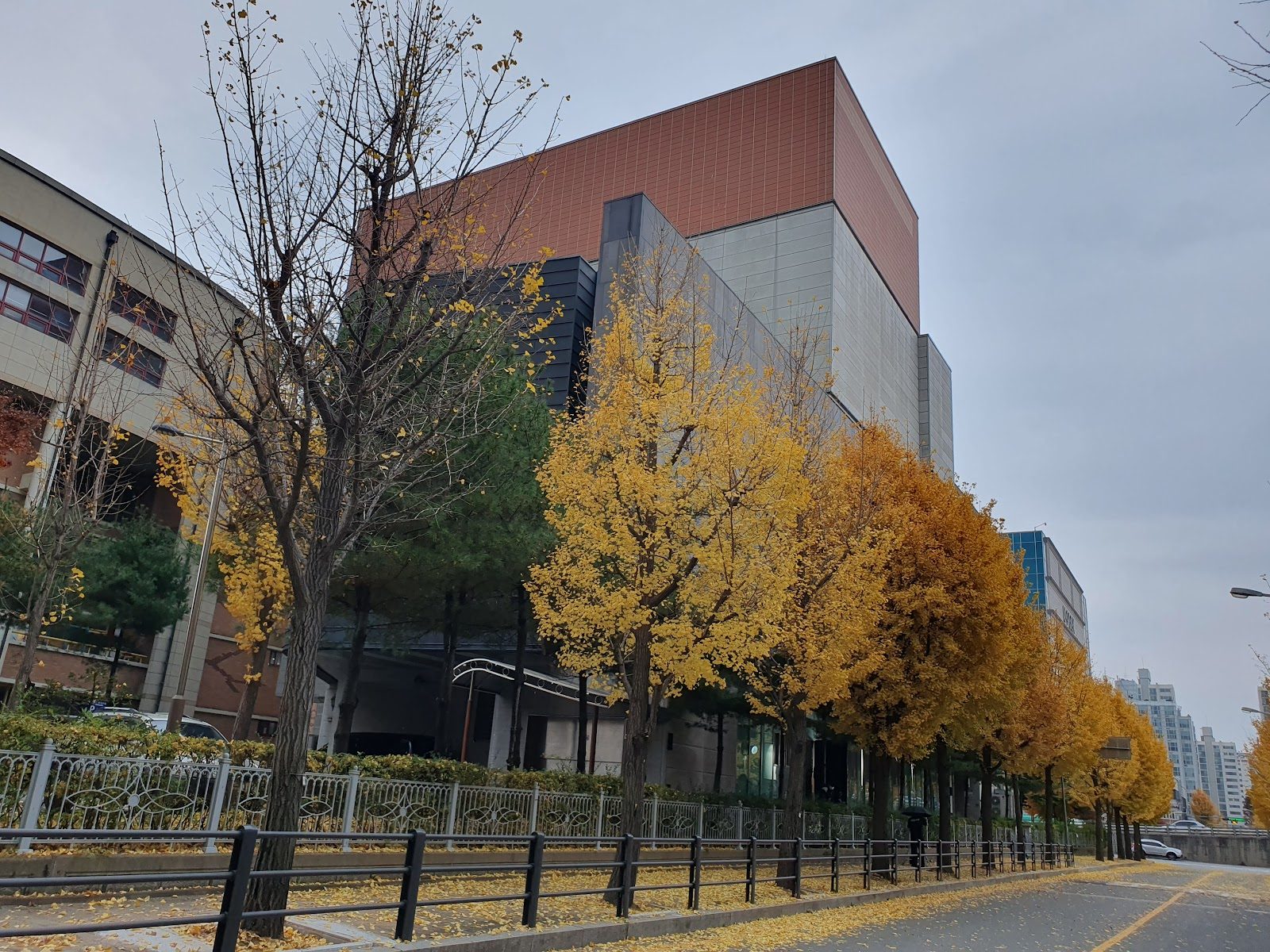
Gyeonggi Arts High School
Uijeongbu, Gyeonggi · South Korea
Gyeonggi's only publicly funded arts high school, housing music, fine art, theatre-film and animation studios under one dormitory roof.

Kaywon High School of Arts
Uiwang, Gyeonggi · South Korea
Since 1980, a Gyeonggi campus splits fine art, music, dance and theatre into four dedicated conservatory tracks under one roof.
Same specialism, country and curriculum — closest matches within ±10 points either way