
California
Tracing its roots to 1865 as St. Vincent's College, this all-boys Jesuit campus is Southern California's oldest continuously run school.
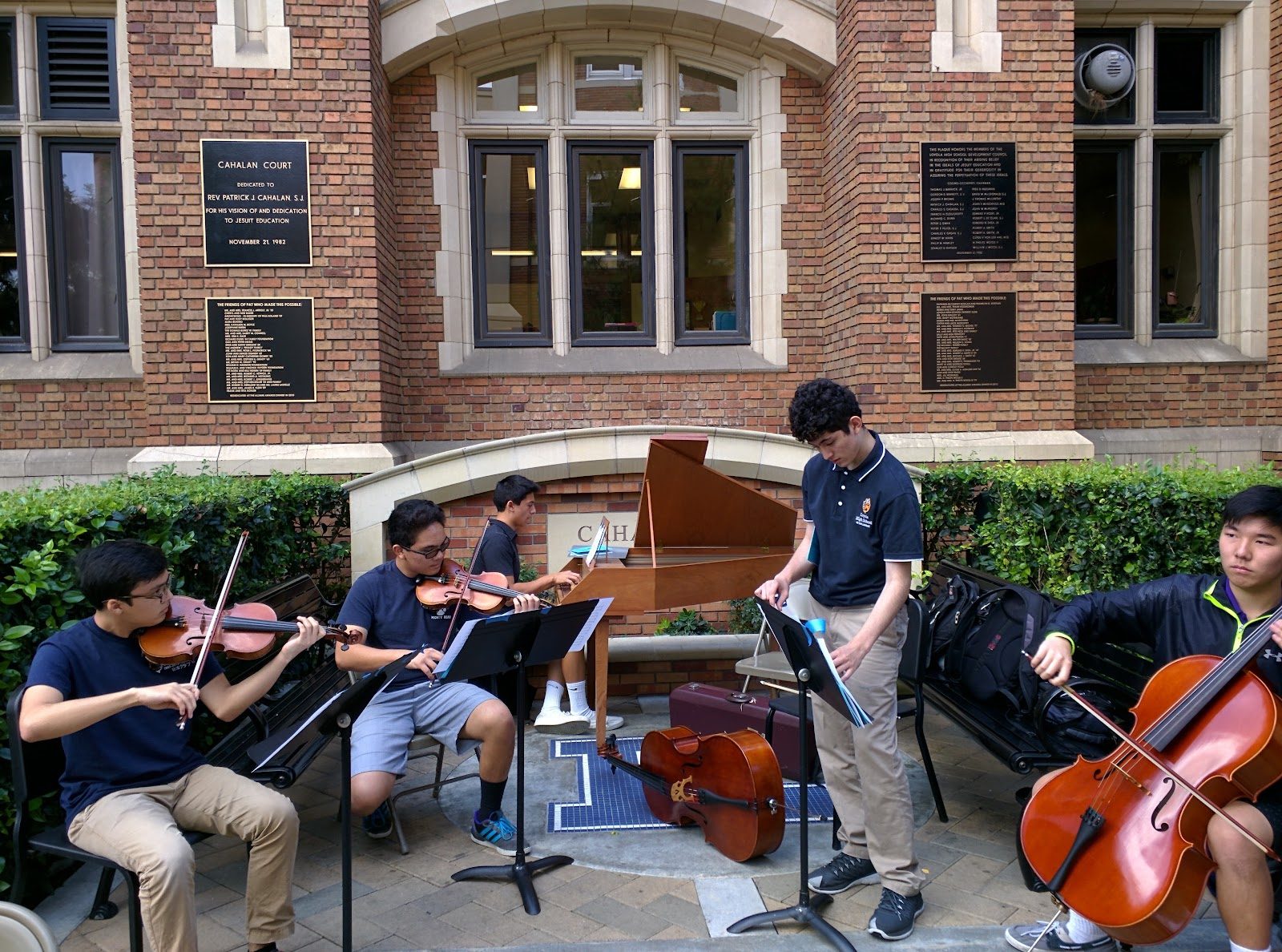
Photo © Steven Speciale via Google Maps
Type
Day
Ages
13–18
Curriculum
American
Qualifications
AP
Ratio
1:12
The Verdict
Editor's commitment
Right for
Boys 13–18 who want a Jesuit, all-boys day school with American academics, a 1:12 ratio and 120 service hours.
Wrong for
Families wanting co-education, boarding, non-Catholic ethos or a smaller school: Loyola runs past 1,300 students across 190+ postcodes.
Watch out for
NAIS accreditation and 99% college progression are solid; public academic detail is thin beyond that, so drill into course depth and outcomes.
Ranking breakdown
Loyola High School of Los Angeles · #176 of 1591
Composite score 75.1. 8 weighted criteria.
By criterion
Academic Outcomes
Weight 20%
#294
of 1529 scored
University Placement
Weight 16%
#305
of 1529 scored
Prestige & Heritage
Weight 12%
#188
of 1571 scored
Alumni Network
Weight 12%
#81
of 1530 scored
Facilities
Weight 12%
#279
of 1533 scored
Transparency & Communications
Weight 8%
#288
of 1532 scored
Peer & Industry Review
Weight 10%
#300
of 1548 scored
Admissions Selectivity & Demand
Weight 8%
#334
of 1529 scored
Peer & Industry Review
How Loyola High School of Los Angeles is regarded in the sector
75
Strong · medium confidence
Within the Jesuit Schools Network and Southern California Catholic education circles, Loyola is consistently ranked among the most academically serious all-boys Jesuit schools nationally, alongside Jesuit High Sacramento and Brophy College Prep in Phoenix, with heads at those schools referencing shared curriculum and service-program models. Against secular Los Angeles independents such as Harvard-Westlake or Marlborough, it is regarded as academically credible but narrower in elective breadth and less internationally oriented. University admissions offices at Georgetown, Santa Clara, Loyola Marymount and USC treat it as a known, reliable feeder with an established Jesuit pipeline, though it lacks the concentrated Ivy placement rates cited by top secular LA prep schools. Coverage is largely confined to the Los Angeles Times, local Catholic press and Jesuit Schools Network publications rather than UK-style guides like the Good Schools Guide or WhichSchoolAdvisor, which rarely profile US Catholic single-sex schools, reflecting its status as a respected regional institution rather than a globally benchmarked one.
Editors' overview
Loyola High School of Los Angeles occupies a rare position in the US market: an all-boys Jesuit day school with real historical weight, a large urban catchment and a clear moral brief. Founded in 1865, it is Southern California’s oldest continuously run school, and that longevity matters because the school still trades on a coherent idea rather than a loose collection of programmes. The core proposition is plain: an American college-preparatory education, Catholic formation, and the Jesuit insistence on educating the whole person. For families who want a boys’ school without the brittle old-club atmosphere, Loyola has a stronger case than many peers. The scale also matters. With more than 1,300 students drawn from 190-plus zip codes, this is not a cloistered enclave but a substantial Los Angeles institution with serious civic reach.
What puts Loyola on a shortlist is the combination of academic ambition, structure and service. The school states that 99% of graduates go on to college or university. That figure speaks to consistency, not selectivity theatre. The required 120+ hours of community service before graduation is not decorative; it signals a school that expects boys to work beyond themselves. The student body is also more socially and ethnically mixed than the stereotype of an elite Catholic boys’ school allows, with nearly half of students identified by the school as Latino, Asian-Pacific or African-American. Add a 1:12 student-teacher ratio and parents get a campus built for close supervision as well as momentum. This is not a place for drifting. It suits families who value discipline, adult expectations and a firm moral centre alongside university preparation.
Loyola’s market position is therefore distinct. It serves parents who want the advantages of a large, well-established independent school, but do not want a school defined by trend-chasing or lifestyle branding. The Jesuit identity gives the school intellectual seriousness and a service ethos that is more exacting than the generic “leadership” language used by many American college-prep schools. Boys who thrive here will be comfortable in a structured environment, willing to be pushed academically, and open to faith-inflected reflection even if they are not driven by piety alone. The strongest fit is the student who wants a busy, high-accountability school community, broad peer exposure across Los Angeles, and an education anchored in duty, purpose and service. For the right family, Loyola offers substance over performance.
Academic Performance
Loyola does not publish the exam data that lets parents judge an American college-prep school cleanly against direct rivals. We have not seen aggregate AP entry numbers, AP score distributions, SAT or ACT averages, National Merit counts, or university matriculation breakdowns by selectivity. That opacity matters. In this market, strong schools with hard academic evidence tend to show it. Loyola instead offers a single top-line outcome: 99% of graduates proceed to college or university. That confirms baseline academic competence and effective guidance, but it does not by itself place the school in the top academic tier of elite US independents, where families expect detailed external results and destination patterns, not just progression.
Relative to peers, Loyola therefore sits in a mixed position: its academic expectations are plainly serious, and the Jesuit college-preparatory model carries real intellectual weight, but public proof of exam strength is thin. For some families, that is enough; the school’s value lies in formation, structure and follow-through. For others, especially parents comparing selective boys’ schools or high-performing Catholic independents, the absence of published score data is a clear weakness. The conclusion is straightforward: Loyola reads as a school with solid university-readiness and disciplined academic culture, but not one that allows an external reviewer to rank its examination performance with precision against the strongest academic competitors.
Facilities
Loyola’s physical offer is harder to judge cleanly than its identity, because the school does not publish the kind of campus inventory that top independents now lay out in detail. What is clear is scale: this is a large urban secondary school serving more than 1,300 boys, so parents should expect a campus built for throughput, supervision and full-school activity rather than the intimate, estate-like setting some rival day schools trade on. The important facility, in practical terms, is the campus’s capacity to handle a big student body without reducing school life to logistics. Its broad draw from 190+ zip codes also raises the bar for transport, arrival routines and day-to-day organisation. At schools of this size, those systems are not background details; they shape the student experience.
Against peer schools, Loyola’s facilities profile reads as functional rather than theatrical. We have not seen a published list of signature centres, specialist labs, performance venues or standout athletic infrastructure that would let it compete on campus spectacle with the richest Californian independents. That does not mean the school lacks them; it means the public case rests elsewhere. Loyola sells mission, structure and formation first, bricks second. For many families, that is a perfectly sensible hierarchy. For parents who place heavy weight on visible capital investment in arts, sport or science, the absence of clear published detail is a real gap and leaves Loyola short of the most transparent peers.
Loyola instead offers a single top-line outcome: 99% of graduates proceed to college or university
Prestige
Loyola carries real local prestige and a narrower national prestige than the school’s own rhetoric implies. In Southern California, the name has weight: long institutional memory, a large and loyal alumni network, and a visible presence across a wide slice of the city give it standing that newer Catholic and independent schools cannot match. The all-boys Jesuit identity also matters. It signals a school with a defined moral and intellectual tradition, not a generic college-prep operation. The catchment tells its own story. Drawing from 190+ zip codes points to reach, demand and recognition well beyond an immediate neighbourhood. The required 120+ hours of service adds another layer to the brand: Loyola is associated not only with academic seriousness, but with duty-laden formation and civic expectation.
That said, prestige here rests more on history, network and institutional character than on publicly demonstrated academic supremacy. The school calls itself top-ranked, but it does not publish the external results that would settle that claim against the strongest American independents. That limits its prestige in the eyes of globally mobile families who use hard outcomes as their benchmark. Even so, within the Los Angeles market Loyola remains a serious old-school badge: disciplined, recognisable, and socially legible. For families who value Jesuit formation, male-only education and a broad citywide peer group, the name carries genuine cachet. For families chasing pure academic glamour, the public case is less complete.
The school calls itself top-ranked, but it does not publish the external results that would settle that claim against the strongest American independents
Communications
Loyola’s parent communications read as those of a large, tightly run institution rather than a boutique school trading on charm. The public-facing site does the practical work cleanly: parents get direct access to calendars, admissions information, bell schedules, bookstore details, contact routes, tuition and financial aid, and the parent-student handbook. That matters more than glossy messaging. A school drawing families from 190+ postcodes needs communication that is orderly, searchable and routine, because daily life depends on timing, transport and administrative clarity. On that front, Loyola looks operationally serious. The presence of dedicated parent, student and college portals also points to a school that segments information sensibly instead of forcing every audience through the same generic stream.
The weakness is not confusion but institutional opacity where scrutiny counts. Loyola communicates mission, service expectations and community identity with confidence, yet publishes little of the hard academic data many parents want when judging a college-prep school. That leaves communications strong on ethos and logistics, thinner on performance evidence. For existing families, that balance may suit the school’s culture: clear rules, clear routines, clear expectations. For prospective parents making hard comparisons, it is a meaningful limitation. Effective communication does not mean saying everything; it means publishing the information families need to make an informed decision. Loyola does that well in day-to-day operational terms and less well in the areas where serious parental due diligence bites hardest.
Uniqueness
What sets Loyola apart is not novelty but institutional coherence. Many American college-prep schools bolt service, faith and leadership language onto a standard academic product. Loyola runs on an older, stricter logic: Jesuit formation sits at the centre, and the school expects boys to translate that into action. The clearest expression is the compulsory 120+ hours of community service. That requirement gives moral language consequences. Students do not just hear about conscience and responsibility; they are trained to practise them, repeatedly, in the city beyond the school gates. The result is a culture with more spine than sentiment, where formation is measured in habits, obligations and public conduct rather than in polished rhetoric.
Its other distinctive strength is scale without social narrowness. An all-boys Catholic school of this size can easily turn inward or tribal. Loyola does the opposite. Its intake reaches across a huge urban catchment and the school itself points to marked ethnic and socio-economic diversity, which gives boys a broader daily peer world than many single-sex independents manage. That matters. Students get the structure and identity of a tradition-heavy institution without being trapped in a socially sealed bubble. Add the school’s wide alumni culture and city footprint, and Loyola offers something genuinely unusual: a disciplined boys’ school education tied to a large, mixed metropolitan community rather than a small self-referential enclave.
Its other distinctive strength is scale without social narrowness
Student Profile
The best fit at Loyola is a boy who can handle structure without constant coaxing. This is not a casual, self-invented adolescence. The school’s Jesuit frame asks for discipline, reflection and a willingness to accept adult authority as part of education, not as an inconvenience. Boys who do well here will tolerate pressure, keep up with deadlines and engage with the school’s moral language in good faith. They do not need to be devout, but they do need patience for a Catholic environment in which service is compulsory and conscience is treated as part of the job. The all-boys setting will suit students who benefit from a high-accountability culture and a clear code of conduct. It will not suit families looking for a looser, more expressive or ideologically neutral school experience.
Socially, Loyola suits boys who are comfortable moving across lines of background and neighbourhood. The intake is broad and the school draws from a huge span of the city, so students need a degree of confidence, adaptability and social steadiness. Boys who want a busy, adult-run community with strong traditions, visible expectations and peers from many parts of Los Angeles will find a strong match. Boys who resist supervision, dislike communal obligations or want a school built around personal latitude will chafe. The service demand alone—more than 120 hours before graduation—tells parents a great deal. Loyola rewards stamina, reliability and purposeful engagement far more than flair for its own sake.
Loyola High School of Los Angeles occupies a rare position in the US market: an all-boys Jesuit day school with real historical weight, a large urban catchment and a clear moral brief
Co-curricular strengths
Arts & sport, on a separate axis
Overall 7.36/10
Scored 0-10 from the school's own published evidence. This axis is editorial-only — it does not feed the main WTS ranking.
Sports
9.8/10
Drama
7.5/10
Dance
4.5/10
Music
7.5/10
Visual Arts
7.5/10

WTS 300 badge
Loyola High School of Los Angeles is one of the World's Top 300 Schools. Claim your listing to add it to your site →
Strengths
- +Founded in 1865, Loyola is the oldest continuously run educational institution in Southern California, with an established Jesuit tradition since 1911.
- +Niche ranked Loyola the No. 1 Catholic High School in Southern California in its 2026 Best Catholic High School rankings.
- +Ninety-nine percent of graduates go on to college or university, per the school's own published outcomes data.
- +Admissions is need-blind and financial aid is substantial, with an average grant covering roughly 52 percent of tuition for about 30 percent of students.
- +Draws students from over 190 zip codes across greater Los Angeles, producing a genuinely mixed student body by geography, ethnicity and income.
Considerations
- −All-boys school, which rules it out for families wanting a co-educational environment.
- −Tuition is a significant expense (sources cite figures from roughly $17,800 up to $26,600 for 2024-25), plus mandatory tuition insurance and fees.
- −As a well-regarded Jesuit prep school with a long reputation, admission is competitive and application requires transcripts, recommendations, an essay and often an interview.
- −Catholic religious formation and a mandatory 100-plus hours of community service over four years are built into the program, which may not suit strictly secular or purely academic priorities.
Availability
Primary entry gate & tests
HSPT Exam (Catholic Boys Only)
Gallery
Photo © Steven Speciale via Google Maps
Photo © Frank Alfaro via Google Maps
Photo © Steven Speciale via Google Maps
Photo © Steven Speciale via Google Maps
Photo © Steven Speciale via Google Maps
Parent reviews
Have you sent your child here?
Voice reviews carry the strongest trust badge — we transcribe them for you to tidy up before they go live. Prefer to type? A written review is fine too.
Add your voice
In 60 seconds, tell other parents: what's the best thing about Loyola High School of Los Angeles, and what surprised you when your child joined?
We ask for a Google sign-in so every review has a real face behind it — no anonymous drive-by attacks on schools, and no faked positive reviews. Your email is never shown publicly.
Send this profile to a friend
International parents rely on word-of-mouth. Share this review with someone weighing the same decision.
Schools with places
Similar schools to Loyola High School of Los Angeles with places available now.
San Francisco University High School
San Francisco · United States
- 2026-27
- CLOSEDRegular cycle
- 2027-28
- OPENS SOONOpens 28 Aug '26
Menlo School
Atherton · United States
- 2026-27
- CLOSEDRegular cycle
- 2027-28
- OPENS SOONOpens 1 Sept '26
The College Preparatory School
Oakland · United States
- 2026-27
- CLOSEDRegular cycle
- 2027-28
- OPENS SOONOpens early Sept '26
Lick-Wilmerding High School
San Francisco · United States
- 2026-27
- CLOSEDRegular cycle
- 2027-28
- OPENS SOONOpens early Sept '26
Availability first, then country, area, curriculum, price, co-curricular
Consider also
Also worth looking at alongside Loyola High School of Los Angeles.
Convent of the Sacred Heart (NYC)
New York City · United States
Since 1881, New York's oldest girls' school has taught inside two landmarked Fifth Avenue mansions.
Nightingale-Bamford School
New York City · United States
On a quiet Carnegie Hill block, a century-old liberal-arts curriculum sends ninth graders to London to fuse literature, history, science and art into one capstone journey.
Brooklyn Technical High School
Brooklyn · United States
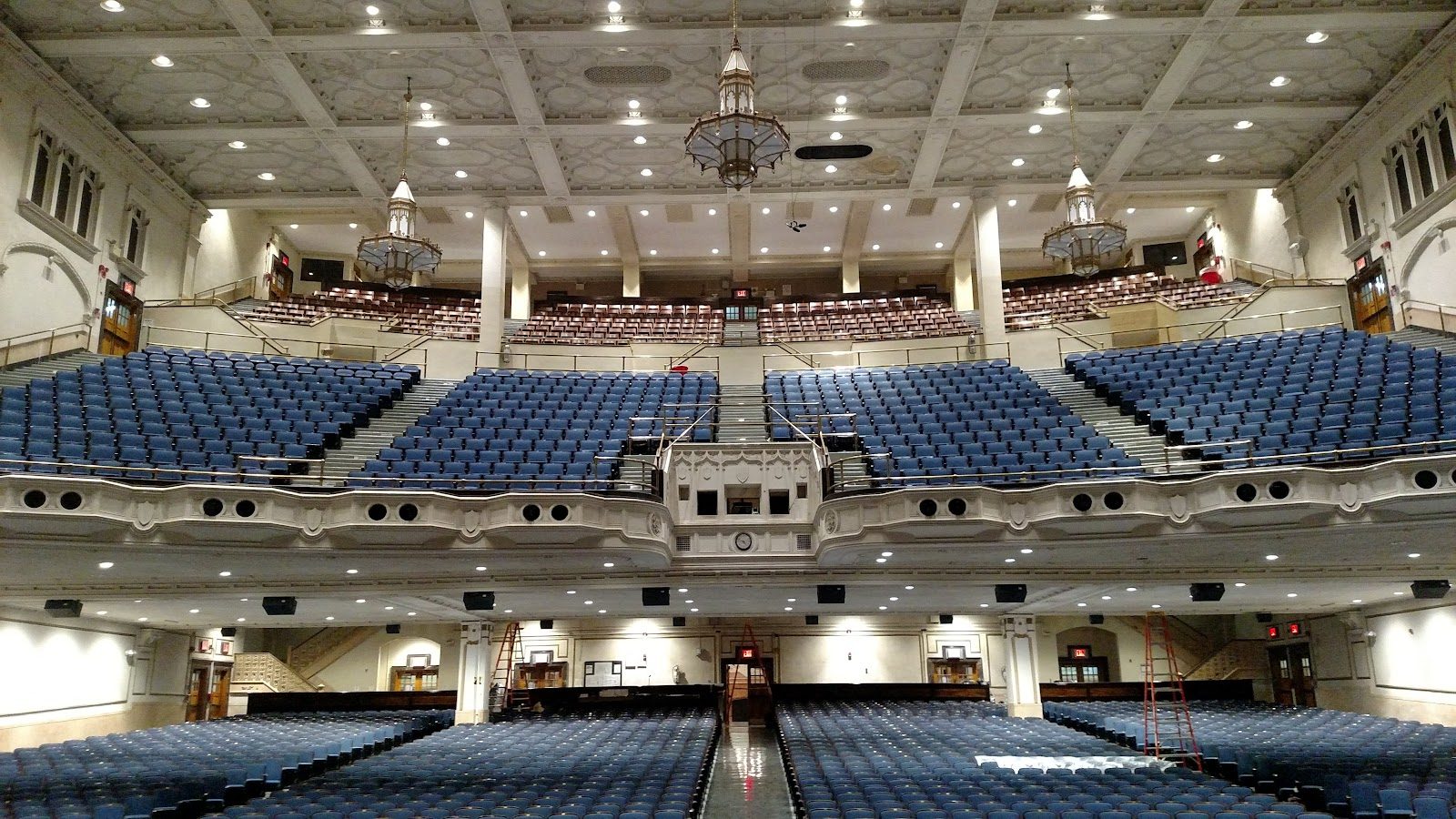
In Fort Greene, sophomores choose among 18 STEM majors inside the nation's largest single-campus high school.
San Francisco University High School
San Francisco · United States
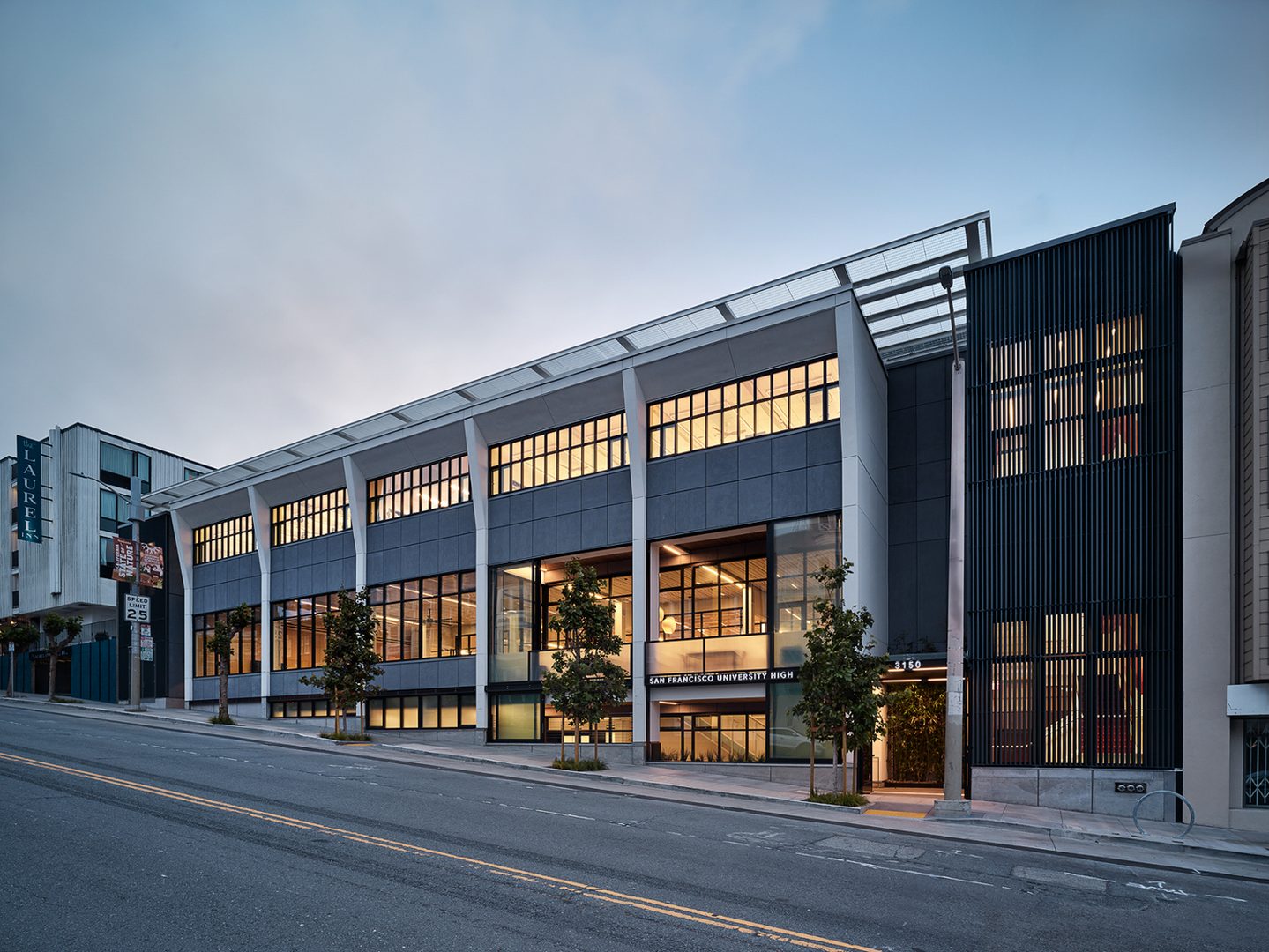
Inside a 1917 Julia Morgan building in Pacific Heights, a signature Civilization seminar drives independent-study scholarship.
Same country and curriculum — closest matches within ±10 points either way