
Aomori Prefecture
Aomori Yamada High School
A snowbound Aomori powerhouse where national soccer titles and elite university-track classrooms share the same campus.
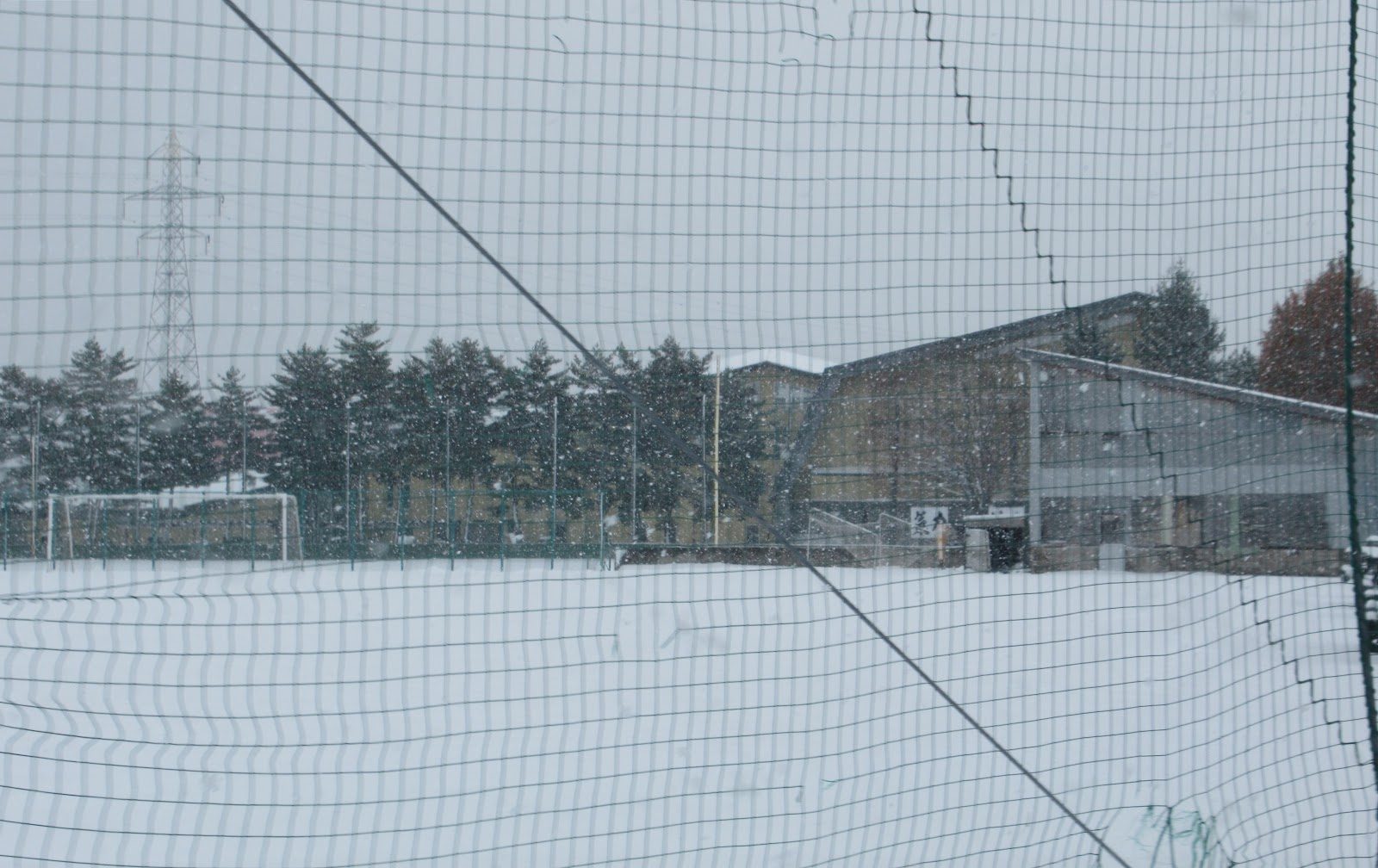
Photo © 真岡田 via Google Maps
Type
Day + Boarding
Ages
15–18
Curriculum
Japanese National Curriculum
Ratio
—
The Verdict
Editor's commitment
Right for
Teenagers aged 15–18 who want Japanese-medium study under the Japanese National Curriculum, with boarding on the same Aomori campus.
Wrong for
Families needing English-medium teaching, IB or A-Levels will get none of it here: instruction is Japanese for ages 15–18.
Watch out for
This is a day and boarding high school in Aomori, not a broad international school; overseas university guidance is not published.
Ranking breakdown
Aomori Yamada High School · #1345 of 1591
Composite score 53.8. 8 weighted criteria.
By criterion
Academic Outcomes
Weight 20%
#1514
of 1529 scored
University Placement
Weight 16%
#1510
of 1529 scored
Prestige & Heritage
Weight 12%
#1060
of 1529 scored
Alumni Network
Weight 12%
#579
of 1529 scored
Facilities
Weight 12%
#419
of 1529 scored
Transparency & Communications
Weight 8%
#1436
of 1529 scored
Peer & Industry Review
Weight 10%
#52
of 1529 scored
Admissions Selectivity & Demand
Weight 8%
#1156
of 1529 scored
Peer & Industry Review
How Aomori Yamada High School is regarded in the sector
82
Strong · medium confidence
Aomori Yamada's reputation is built almost entirely around athletics rather than academic league tables, so its standing among peers is best read through Japan's high-school sports ecosystem. Rival 'sports powerhouse' schools and the Japan High School Football/Baseball Federations treat it as a benchmark program, given its recurring appearances in the nationally broadcast All Japan High School Soccer Tournament and Koshien baseball tournament, both aired by NHK and covered extensively by Japanese sports dailies (Nikkan Sports, Sports Hochi) rather than by academic press. University and professional pipelines are a stronger signal than admissions data: J-League clubs and university football programs actively scout its graduates, with alumni such as Gaku Shibasaki reaching top-flight professional and international careers, which reinforces coach-to-coach credibility more than classroom prestige. It is essentially invisible in international academic guides like WhichSchoolAdvisor or the Good Schools Guide, and Japanese national newspaper academic rankings (Asahi, Yomiuri 'meimonko' lists) do not feature it prominently, confirming its identity as a specialist athletic institution rather than a broadly elite academic one.
Award

Elite Sport 80
World's Top School · The Global Ranking
Aomori Yamada High School is featured on our Global Top 80 ranking at #38. This seal is available for the school's marketing team to use on their website, prospectus and social channels.
- Gaku Shibasaki — Professional footballer, sport
- Hiroki Sakai — Professional footballer, sport
- Naomichi Ueda — Professional footballer, sport
Editors' overview
Aomori Yamada High School occupies a rare niche in the Japanese market: a full secondary school where serious academic progression and national-level sport operate on the same timetable. This is not an international school and not a bilingual hybrid. It teaches the Japanese National Curriculum in Japanese, for ages 15–18, with both day and boarding provision. That matters. Families are choosing a domestic Japanese education with the structure, discipline and cultural immersion that entails, not an export version built for transient expatriate life. The school's pull is clear in its editorial tagline: a snowbound powerhouse, rooted in Aomori, where elite university-track classrooms sit beside high-performance athletic training. For the right student, that combination is hard to match.
What puts Aomori Yamada on a shortlist is specialisation without fragmentation. Many schools claim balance; this one offers concentration. A student can pursue a conventional academic route under the Japanese National Curriculum while living in a school environment shaped by competitive ambition, institutional routine and peer intensity. Boarding extends that reach beyond local families and turns the school into a national proposition, not just a prefectural one. The attraction is strongest for teenagers who thrive in high-pressure routines, value clear hierarchy, and want a campus culture with serious competitive energy. It also suits families who want a Japanese-language education with no ambiguity about academic or cultural direction: 1 curriculum, 1 language of instruction, and a tightly defined age range of 15–18.
This is not the right choice for everyone. Students who need curricular flexibility, broad liberal experimentation, or English-medium teaching should look elsewhere. The school fits young people who are already committed — either to academic advancement within the Japanese system or to an exacting co-curricular life that sits comfortably beside it. In market terms, Aomori Yamada stands as a disciplined domestic boarding option with unusual name recognition beyond its region. Parents should shortlist it if they want clear purpose, a hard-driving peer group, and a school culture that treats commitment as the baseline rather than the exception.
An Elite Sport 80 school
Aomori Yamada High School in northern Japan sits at rank thirty-eight on the Elite Sport 80 because it has produced 55 J.League professional footballers — a figure among the highest of any single Japanese school — and remains a fixture at the All-Japan High School Football Championship, one of the largest and most-watched national schoolboy competitions in world football.
The specialism is football (soccer), delivered as a formal high-school academy programme in partnership with the Japan Football Association and multiple J.League clubs. The school's training regime is famously intense, with daily double sessions, on-site sports-science support and integrated academic scheduling. Baseball, judo and athletics run as strong secondary programmes at high schoolboy national standard.
Notable alumni across codes include Yoshinori Muto (Bundesliga and Japan international), Hiroshi Kiyotake (former Newcastle United and Japan international), a rolling roster of current J1 and J2 professionals, and several Japan age-group international players. In baseball, alumni have appeared in Nippon Professional Baseball rosters.
International openness is limited by structural reality. Aomori Yamada is a Japanese private high school and admits primarily Japanese residents; language of instruction is Japanese and there is no dedicated fee-paying international stream or F-1 style visa scheme. Overseas admissions are handled on a case-by-case basis, usually via a Japanese football club partnership or a personal introduction. Fees are very modest by international-boarding standards, sitting around ¥800,000-1,100,000 per year. For an overseas family already resident in Japan whose child has a genuinely elite football profile and functional Japanese, Aomori Yamada offers a distinct pathway into the J.League; for families arriving without Japanese-language capability and without a football-club introduction, it will be effectively closed and one of Japan's more international academies — such as those linked to Yokohama or Kobe — will be more practical. Overseas families without functional Japanese and without a J-League club introduction are advised to start Japanese-language preparation at least twelve months ahead of any application to give the process a realistic chance.
Academic Performance
Aomori Yamada’s academic profile is harder to judge than its sporting one, because the school does not publish the kind of exam data that lets parents benchmark performance cleanly. There are no public aggregate figures for university entrance outcomes, no cohort-wide pass rates, and no distribution data for top national universities. That opacity matters. In the Japanese senior high market, schools with serious academic firepower tend to publish at least some progression numbers, especially where selective university entry is a core selling point. Here, the absence of that data leaves families relying on reputation, course structure and student fit rather than hard comparison. That weakens the school’s case against more academically transparent peers.
That does not mean weak academics; it means unproven at scale in the public domain. The school’s value proposition rests on a dual-track identity, and that creates an obvious question: how many pupils convert classroom effort into strong university destinations while elite sport absorbs time, energy and status on campus? Without published outcomes, there is no precise answer. Relative to specialist academic high schools, Aomori Yamada sits in a less transparent tier. Relative to schools where sport dominates and academics are an afterthought, it holds a more ambitious middle ground. Parents considering it for university preparation need to ask for direct evidence: recent entrance results, destination lists, and how academic support works for boarders and high-performance athletes.
Facilities
Facilities are the school’s strongest tangible selling point, even if the public academic data are thin. Aomori Yamada operates like a serious performance campus, not a token sports school with a single good team. The standout assets sit in training and competition infrastructure: football provision carries national weight, and the wider athletics environment supports sustained, high-intensity use rather than occasional fixtures. For a family weighing specialist senior high schools, that places the school above ordinary Japanese academic campuses, which rarely build sport into the physical fabric with this level of intent. Boarding adds another practical layer. Once a school houses teenagers as well as teaches them, the quality of daily-use spaces matters more: dining, supervision, recovery, changing facilities and study areas stop being secondary details and become part of the educational offer. Here, the campus functions as an all-day regime, built for students living under constant structure.
Against peer schools, the picture is split. Compared with mainstream university-prep high schools, Aomori Yamada offers a far more purposeful athletic environment and a stronger case for students whose education depends on training access every day. Compared with premium international boarding schools, it lacks the breadth of specialist arts, design, maker and research facilities that justify high fees in that sector; we have not seen evidence of those being major campus strengths. The core judgment is clear: this is a performance-led plant, not a broad luxury campus. If your child needs elite sport infrastructure, it is compelling. If you want a lavish, multi-path facilities package, stronger rivals exist.
There are no public aggregate figures for university entrance outcomes, no cohort-wide pass rates, and no distribution data for top national universities
Prestige
Aomori Yamada carries real prestige in Japan, but it is narrow prestige, not the broad academic status of the country’s most selective senior high schools. Its name travels because of sport. In football in particular, the school sits in the national conversation, and that gives it a public profile many academically stronger schools never achieve. For families and students inside that world, the badge has weight: selection to such an environment signals discipline, endurance and comfort with hard-edged competition. That matters. Prestige built on national sporting visibility is still prestige. It draws ambitious teenagers, raises the intensity of peer culture and gives the school recognition well beyond its region. Aomori Yamada is not obscure; it is famous for a reason.
The limit is clear. This is not a school whose prestige rests on transparent university outcomes, intellectual cachet or a dominant place in the academic hierarchy. The school does not publish enough destination data to justify that claim, and the omission caps its standing with academically focused families. So the rating lands in a split category: high-status in elite school sport, more qualified in pure academic terms. For the right student, that combination is high-value and distinctive — a serious school name inside a demanding adolescent subculture. For families chasing unimpeachable scholarly prestige, it falls short. For families who prize recognised excellence in competitive performance alongside classroom structure, it holds genuine clout.
For the right student, that combination is high-value and distinctive — a serious school name inside a demanding adolescent subculture
Communications
Aomori Yamada’s parent communications look functional rather than polished. The school website carries the basics a domestic family expects — admissions information, school news, event updates and contact routes — but it does not deliver the kind of high-clarity parent-facing communication that top fee-charging schools use to build trust fast. There is no strong public habit of publishing the deeper information parents increasingly want before committing: detailed academic outcomes, fuller student destination data, or a rich explanation of how day-to-day pastoral and boarding communication works. That matters more here than at a simple local day school, because families handing a teenager to a high-discipline residential regime need detail, not just reassurance. On communications, the school feels institutionally inward: built to serve families already comfortable with Japanese school norms, less built to court or educate hesitant outsiders.
Effectiveness therefore depends on the parent. For local families who already understand the rhythms of Japanese secondary education, the school’s communication style is enough: direct notices, schedules, updates and formal channels do the job. For parents comparing schools across regions, or for those wanting forensic transparency before enrolment, it falls short. The school does not make itself easy to interrogate at a distance, and that weakens confidence. Strong schools do not need glossy prose, but they do need usable information. Here, the communication standard is serviceable, not searching — competent for routine administration, thin where parental scrutiny is sharpest.
Uniqueness
What makes Aomori Yamada distinctive is not sport on the side, but a school culture organised around institutional intensity. Plenty of Japanese high schools run clubs seriously; far fewer carry a national profile that can reshape the rhythm, expectations and social hierarchy of the whole campus. Here, competitive performance is not an extracurricular accessory. It is part of the school’s identity, and students live inside that fact every day. For the right teenager, that brings clarity of purpose. Ambition is visible, routine is non-negotiable, and peer standards run high. That environment can sharpen habits fast: punctuality, stamina, resilience after setbacks, and the capacity to function under scrutiny. It also gives students access to a rare peer ecosystem — classmates who are not dabbling, but committing.
The trade-off sits in the same place as the advantage. A campus built around exacting goals is not for the faint-hearted. Students who flourish here tend to want structure rather than freedom, defined roles rather than endless choice, and a culture where performance carries status. For athletes, that can be transformative: training has legitimacy, not apology. For non-athletes, the benefit is different but still real. They study in an environment where effort is normalised and drift is harder to hide. The school’s uniqueness, then, lies in this fusion: a domestic senior high school where competitive seriousness shapes daily life well beyond the pitch, and where that pressure can turn adolescent promise into harder, tougher, more disciplined adulthood.
What makes Aomori Yamada distinctive is not sport on the side, but a school culture organised around institutional intensity
Student Profile
The best fit is a teenager who does not need coaxing. Aomori Yamada suits students who accept hierarchy, can hold a demanding routine, and do not crumble when standards rise around them. The social centre of gravity sits with commitment, not experimentation. Pupils who enjoy clear rules, hard-edged competition and visible benchmarks will find their tribe; pupils who want a looser sixth-form atmosphere will not. This matters beyond sport. Even students outside the headline teams need to be comfortable in a campus culture where effort carries status, time is tightly used, and adults expect follow-through. At 15–18, adolescence here looks less like self-invention and more like directed formation.
The school also fits families who want a teenager shaped by discipline before comfort. Resilient boarders, self-managing day pupils, and students with strong tolerance for repetition and correction will cope best. There is less room for the child who needs constant novelty, expansive subject choice or soft pastoral handling. Socially, the strongest candidates are pragmatic rather than performative: young people who can live alongside ambitious peers without needing to dominate every room. For athletes, that peer group can be electrifying; for academically focused students, it can still be valuable if they respect a culture built on training, routine and institutional order. The wrong fit is easy to identify: a teenager who resists structure, needs broad personal freedom, or wants school to feel gentle, exploratory and forgiving.
Aomori Yamada High School occupies a rare niche in the Japanese market: a full secondary school where serious academic progression and national-level sport operate on the same timetable
Co-curricular strengths
Arts & sport, on a separate axis
Overall 7.94/10
Scored 0-10 from the school's own published evidence. This axis is editorial-only — it does not feed the main WTS ranking.
Strengths
- +Nationally recognized for its high school football (soccer) program, with multiple appearances and titles in the All Japan High School Soccer Tournament.
- +Has produced alumni who went on to play professionally in the J-League and for Japan's national team, giving the school a strong sporting pedigree.
- +On-site boarding facilities allow the school to draw promising student-athletes from across Japan, not just the local Aomori region.
- +Offers a full Japanese National Curriculum track alongside its sports programs, so students are not solely focused on athletics.
- +Long-established institution within the Yamada Gakuen group, giving it institutional continuity and local reputation in Aomori prefecture.
Considerations
- −Located in Aomori, a rural northern city with a harsh winter climate and limited direct international transport links compared to Tokyo or Osaka schools.
- −Follows the Japanese National Curriculum only, with no IB, A-Level or other international programme, which may limit fit for globally mobile families.
- −Instruction is conducted in Japanese, so students without strong Japanese language ability would face a significant barrier.
- −Public information on fees, academic outcomes, and non-sporting achievements is limited, making it harder to independently verify the school's broader academic profile.
Gallery
Photo © 5 ogswr via Google Maps
Photo © kimura061 via Google Maps
Photo © アエカズ via Google Maps
Photo © Field Track& via Google Maps
Photo © Field Track& via Google Maps
Photo © Field Track& via Google Maps
Photo © Field Track& via Google Maps
Parent reviews
Have you sent your child here?
Voice reviews carry the strongest trust badge — we transcribe them for you to tidy up before they go live. Prefer to type? A written review is fine too.
Add your voice
In 60 seconds, tell other parents: what's the best thing about Aomori Yamada High School, and what surprised you when your child joined?
We ask for a Google sign-in so every review has a real face behind it — no anonymous drive-by attacks on schools, and no faked positive reviews. Your email is never shown publicly.
Send this profile to a friend
International parents rely on word-of-mouth. Share this review with someone weighing the same decision.
Schools with places
Similar schools to Aomori Yamada High School with places available now.
Tokyo International School
Tokyo · Japan
- 2026-27
- WAITPOOLSpace-dependent
- 2027-28
- FUTURE CYCLEDates TBC
Fukuoka International School
Fukuoka · Japan
- 2026-27
- WAITPOOLSpace-dependent
- 2027-28
- FUTURE CYCLERolling claim not independently verified for 2027/28
Marist Brothers International School
Kobe · Japan
- 2026-27
- WAITPOOLSpace-dependent
- 2027-28
- FUTURE CYCLERolling claim not independently verified for 2027/28
Christian Academy in Japan
Tokyo · Japan
- 2026-27
- WAITPOOLSpace-dependent
- 2027-28
- PLACES OPENRolling
Availability first, then country, area, curriculum, price, co-curricular
Consider also
Also worth looking at alongside Aomori Yamada High School.
Duncanville High School
Duncanville, TX · United States
In this Dallas-suburb powerhouse, a four-decade band dynasty holds dual Sudler honors alongside a Grammy Signature choir.
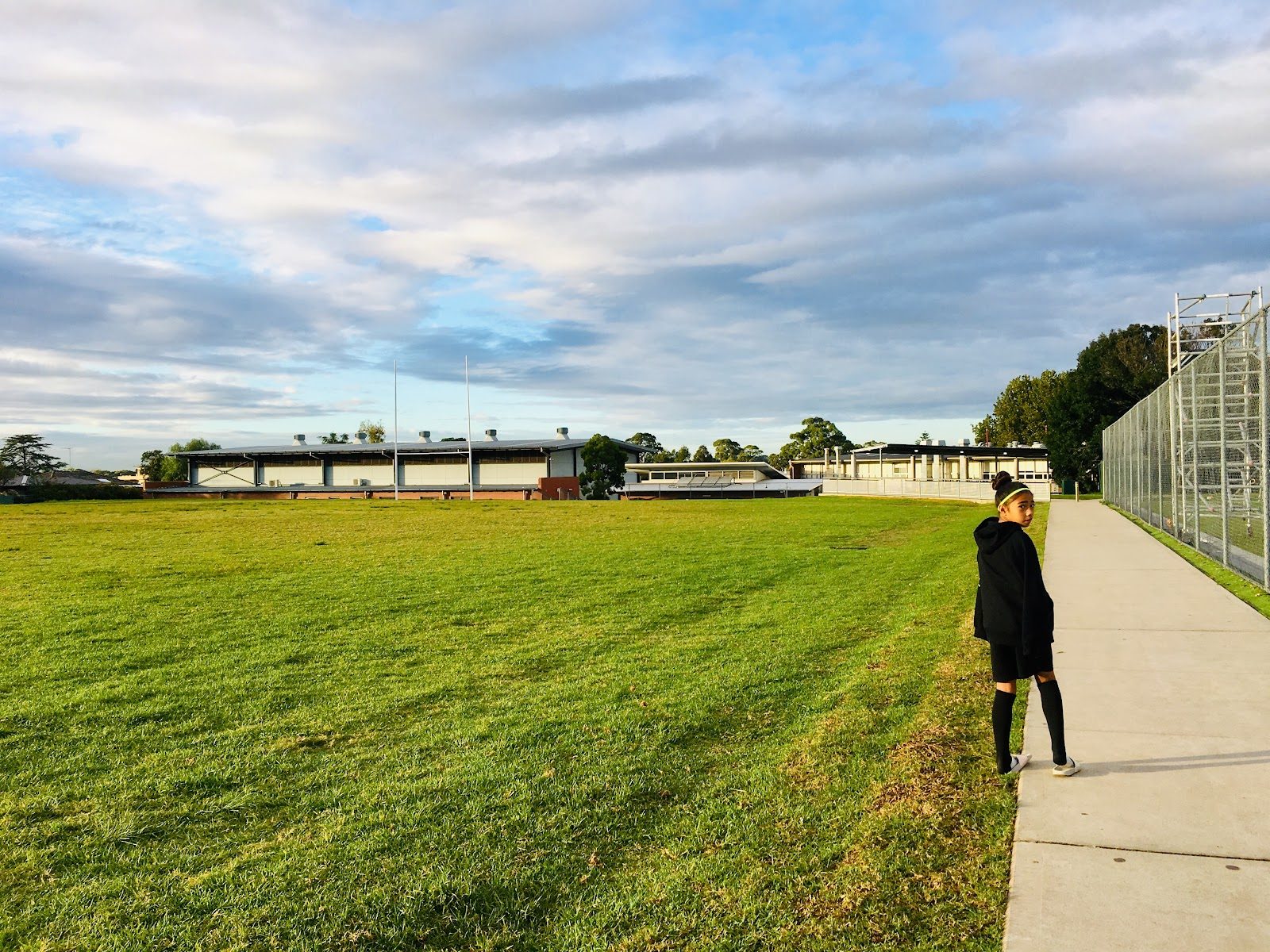
Westfields Sports High School
Fairfield West, NSW · Australia
Australia's first dedicated sports high school, pairing HSC study with pathways to NRL squads and Olympic teams in western Sydney.
Ellesmere College
Ellesmere, Shropshire · United Kingdom
Shropshire countryside campus built around six specialist sport academies, from cricket to a new PSG football partnership
Athol Murray College of Notre Dame
Wilcox, SK · Canada
On the Saskatchewan prairie, hockey, faith and academics share equal billing beneath the campus's landmark Tower of God
Same specialism, country and curriculum — closest matches within ±10 points either way