
Singapore
Singapore's storied all-girls secondary school offering a seamless six-year Integrated Programme from Secondary 1 through to A-Levels.
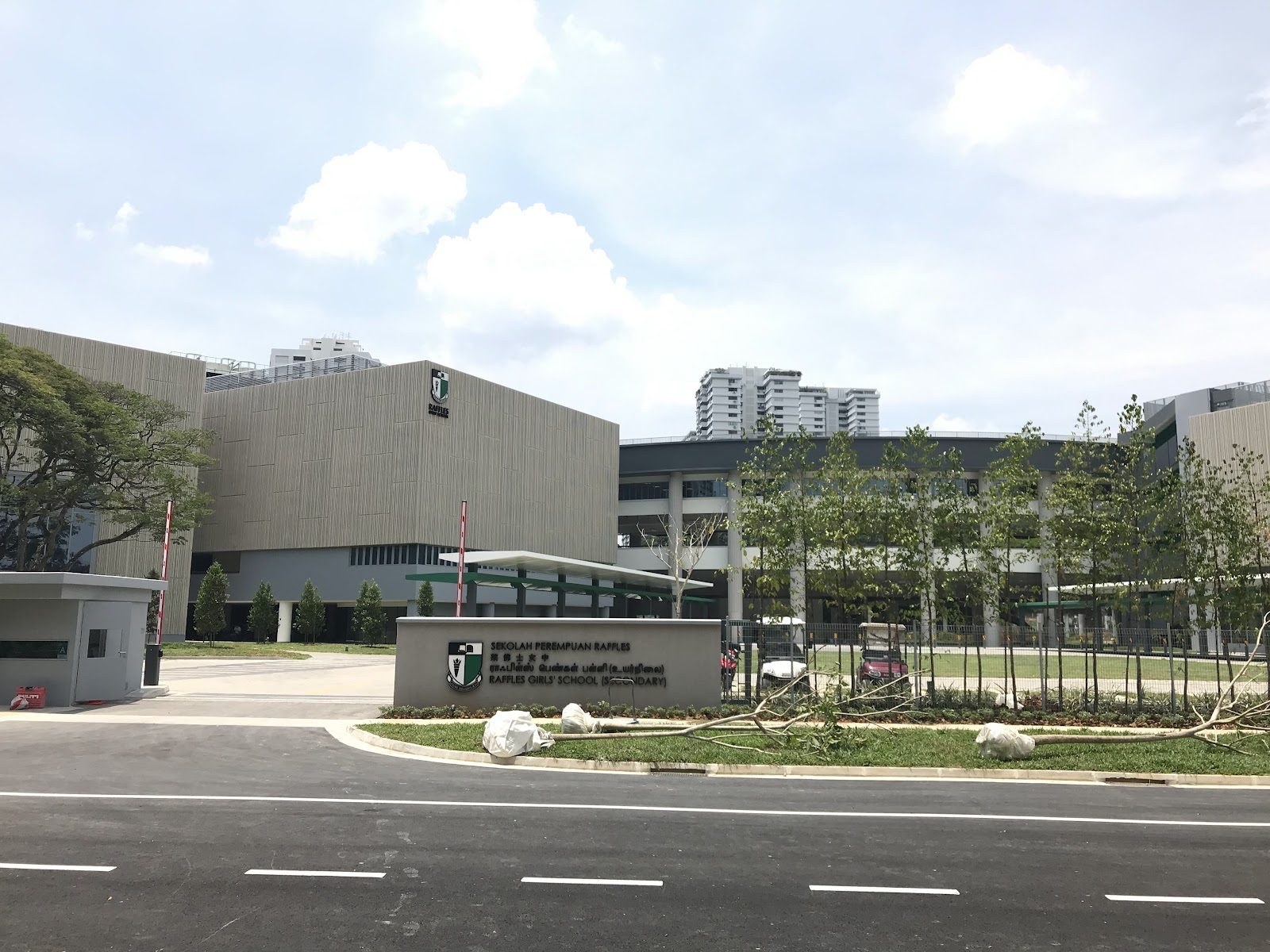
Photo © Small5 via Google Maps
Type
Day
Ages
3–18
Curriculum
IGCSE · A-Level
Ratio
15:1
The Verdict
Editor's commitment
Right for
Able girls who want a six-year route from Secondary 1 to A-Levels at an independent Singapore school founded in 1879.
Wrong for
Families wanting co-education, boarding, or intimate teaching: this is a day school with average classes of 30 and a 15:1 ratio.
Watch out for
The public case rests on mission and heritage; for a school serving ages 3–18, academic outcome data are not published clearly.
Ranking breakdown
Raffles Girls' School · #80 of 1591
Composite score 78.8. 8 weighted criteria.
By criterion
Academic Outcomes
Weight 20%
#43
of 1529 scored
University Placement
Weight 16%
#793
of 1529 scored
Prestige & Heritage
Weight 12%
#79
of 1571 scored
Alumni Network
Weight 12%
#44
of 1530 scored
Facilities
Weight 12%
#270
of 1533 scored
Transparency & Communications
Weight 8%
#92
of 1532 scored
Peer & Industry Review
Weight 10%
#52
of 1548 scored
Admissions Selectivity & Demand
Weight 8%
#35
of 1529 scored
Peer & Industry Review
How Raffles Girls' School is regarded in the sector
58
Credible · low confidence
Raffles Girls' School carries formidable domestic prestige, tracing its lineage to 1879 and consistently placed among Singapore's top-performing secondary schools in the Ministry of Education's own annual rankings, with the Raffles Programme allowing pupils to bypass O-Levels entirely en route to A-Levels. Its 2006 School Excellence Award and long-standing membership of the Alliance of Girls' Schools Australasia reinforce a reputation built on institutional pedigree rather than marketing. However, RGS sits outside the international-school ecosystem that WhichSchoolAdvisor and similar expat-facing publishers track: no dedicated review exists on WhichSchoolAdvisor, whose Singapore coverage focuses on fee-paying international schools rather than MOE-run girls' schools serving mainly citizens and PRs. Peer recognition is therefore strong within local education circles and school-ranking aggregators, but the school has limited visible footprint in the specialist expat-parent review press this guide otherwise relies on.
Evidence sources
Award
Elite Mathematics 60
World's Top School · The Global Ranking
Raffles Girls' School is featured on our Global Top 60 ranking at #53. This seal is available for the school's marketing team to use on their website, prospectus and social channels.
Editors' overview
Raffles Girls’ School occupies a narrow, powerful niche in Singapore: a historic, academically selective girls’ day school with a clear sense of purpose and a six-year route from Secondary 1 to A-Levels. Founded in 1879, it carries real institutional weight. The school’s stated mission is explicit: to nurture “the high ability girl” for leadership and service to nation and community. That focus matters. This is not a generalist school trying to be all things to all families; it is built for able students who want stretch, pace and a culture that treats ambition as normal. The student-teacher ratio of 15:1 and average class size of 30 point to scale rather than intimacy, but also to a mature, structured operation.
What sets it apart is the Integrated Programme logic. RGS, together with Raffles Institution, offers a seamless six-year Raffles Programme that bypasses the O-Level stage and runs through to A-Levels. For the right student, that is a serious advantage: less time spent teaching to an intermediate public exam, more room for depth, enrichment and intellectual range. The school leans hard into that wider formation. Its own framing centres on holistic education, character and leadership, service-learning and talent development. That can read like standard Singapore school language, but at RGS it sits within a school identity with serious academic intent, high expectations and a long-established leadership pipeline. Parents looking for a *disciplined, high-performance environment* will put that near the top of the list.
This school belongs on a shortlist for families who want an all-girls setting with academic rigour, institutional tradition and a direct runway to A-Levels in English. It will suit students who are bright, self-directed and comfortable in a competitive cohort; girls who thrive on challenge, enjoy being surrounded by other able pupils and want opportunities beyond the classroom in STEM, service, leadership and co-curricular life. It will appeal less to children who need a small, gently paced or highly pastoral environment. RGS offers prestige without apology, a demanding culture and a mission tied to public leadership. For the student who wants exactly that, it is one of Singapore’s defining schools.
An Elite Mathematics 60 school
Raffles Girls' School in Singapore sits at rank fifty-three on the Elite Mathematics 60 because it is one of the small cluster of Singapore schools that repeatedly wins the country's top mathematics honour: the Gold School Award in the Singapore Mathematical Olympiad's Category 1 rankings, taken by RGS in 2015, 2016, 2017 and 2020, alongside Raffles Institution, Hwa Chong Institution, Nanyang Girls' High School and NUS High School of Mathematics and Science - the fixed top tier of Singapore's national mathematics table.
The specialism sits inside RGS's shared six-year Raffles Programme with Raffles Institution, an Integrated Programme that skips the O-Levels and runs straight to the GCE A-Levels, with Additional Mathematics embedded early. RGS was one of the first two secondary schools in Singapore, alongside RI, to pilot the Gifted Education Programme in 1984, and that depth still shows: SMO top-30 finishers recur from RGS across Junior and Senior categories - Lee Estelle and Li Anqi in 2014, Hu Xinghui and Zhang Chenxi in 2018, Chen Xinyi in the Senior category the same year, and Yu Hanzhang in 2019 - not one isolated star. RGS has not published a cohort-penetration figure, and there is no public evidence of standalone university-level courses like real analysis or abstract algebra; the strength is competition depth within the standard syllabus, not a research bolt-on.
These named results are competition placings, not long-arc research careers, drawn from the National University of Singapore's Singapore Mathematical Society results archive across three separate years. No RGS alumna with a Fields-Medal-level or tenured research-mathematician profile turned up in public records, so notable alumni in pure mathematics are still emerging - the honest claim to fame is this repeated, named depth in national olympiad results rather than one celebrated name.
International openness runs through Singapore's national system rather than an RGS-specific track: it is a day school with no boarding, English is the sole language of instruction with limited built-in ESL support given the pace of the local syllabus, and overseas applicants must pass the Ministry of Education's Admissions Exercise for International Students (AEIS) rather than a school-set assessment. As a government-linked independent school, RGS follows MOE fee bands - non-ASEAN international students at Singapore government secondary schools pay roughly S$26,280 a year, well below private international-school fees, plus a Student's Pass arranged once a place is confirmed. AEIS runs once yearly, typically in September, so families should register at least twelve months ahead of their target entry year. For a family confident in their daughter's English and exam-mathematics fluency, RGS rewards the AEIS effort with genuine national-tier competitive mathematics; for anyone needing a gentler on-ramp, it is not the right first step into Singapore's system.
Academic Performance
RGS sits in Singapore’s top academic tier. The structure of its six-year programme matters here: students bypass the O-Level checkpoint and stay on a direct route to the A-Level stage with Raffles Institution. That design only works if the intake is strong and the school can sustain pace without the discipline of an intermediate public exam. RGS has done that for decades. In peer terms, this is not a school competing with the broad middle of the market; it sits with Singapore’s most selective state-linked independents, where academic stretch is assumed and weak cohorts are not an option. The public case for its performance rests less on glossy score-publishing and more on reputation, selectivity and the durability of the Raffles pathway.
That said, parents should note a gap in transparency. We have not seen aggregate A-Level results, subject-by-subject outcomes, university matriculation data, or comparative score distributions published on the school site. For a school with this level of stature, that opacity is striking. It does not cancel the school’s academic standing, which is formidable by any sensible reading of its place in Singapore, but it does limit hard external scrutiny. The conclusion is clear: RGS belongs among the country’s elite academic options, yet families who want published performance tables and quantified destination data will find less in the public domain than the school’s status might warrant.
Facilities
The school’s public-facing emphasis in this area sits less on architecture and more on programme infrastructure: STEM activity has visible space and support, with events such as HUSH STEM Week and RoboCup signalling active provision rather than token add-ons. That matters in a high-pressure girls’ school, where labs, computing capacity and specialist rooms need to function at scale, not as a showcase. The same applies to canteen operations: a public tender for stall operators points to a large, structured campus with the everyday machinery of a serious institution. What the school does not do is publish the kind of detailed facilities inventory that many fee-charging international peers now provide. We have not seen a full campus breakdown covering performing arts spaces, sports venues, library specifications or design and technology suites. That lack of detail is a real gap.
Against Singapore’s top academic peers, RGS reads as institutionally strong but less transparent than it should be on plant. Schools competing for internationally mobile families now spell out theatres, pools, maker spaces and specialist centres with forensic precision. RGS trades on something else: a *working campus for high-performance schooling*, not a brochure of amenities. Parents who prize glossy facilities narratives will find the public picture thin. Parents who care more about whether science, robotics, leadership and whole-school operations are properly resourced will read enough to conclude that the essentials are in place, even if the school leaves too much unstated.
Parents looking for a disciplined, high-performance environment will put that near the top of the list
Prestige
An RGS education carries top-tier prestige in Singapore because the school sits inside one of the country’s most established academic power structures. The name has weight with parents, universities and employers, not through branding theatrics but through long institutional memory, selective entry and a track record of producing high-achieving women in public life and the professions. Its affiliation with Raffles Institution strengthens that standing: the route onward is built into the school’s identity, and that continuity reinforces a high-status, high-expectation culture from the start. In a system that prizes academic seriousness, RGS occupies a rarefied position.
The prestige also rests on fit, not just fame. This is not a school that confers status simply by attendance; it demands that students can keep pace in a cohort of able peers and make use of a broad programme built around leadership, service and talent development. That makes the badge credible. The school’s own language — nurturing “the high ability girl” — is blunt, and the market reads it the same way. The 15:1 staffing ratio and average class size of 30 point to a school operating at scale rather than boutique intimacy, so the prestige does not derive from luxury or exclusivity of facilities. It derives from academic selectivity, institutional heft and a formidable reputation earned over time.
Against Singapore’s top academic peers, RGS reads as institutionally strong but less transparent than it should be on plant
Communications
Parent communication looks functional rather than polished. The school runs on a Singapore government web platform, which brings a degree of institutional clarity: official-domain assurance, straightforward navigation, and current notices posted in plain view. The homepage foregrounds practical updates — event highlights, operational notices and school news — instead of lifestyle storytelling. That suits a serious school. Parents who want to know what is happening, and when, get a direct answer. The public message is also strikingly consistent: vision, mission, values and programme priorities align cleanly, with no mixed signals about what the school is for. For a large, high-pressure environment with average classes of 30 and a staffing ratio of 15:1, that coherence matters.
Where the communication falls short is depth. The school tells parents what it stands for, but publishes less than many internationally minded families now expect about outcomes, facilities and day-to-day school experience. There is too much left unsaid. We have not seen the richer parent-facing detail that marks out the best communicators: fuller academic reporting, clearer campus documentation, or a more developed window into pastoral life and student support. That does not make RGS opaque in the operational sense; it makes it selective in what it chooses to explain. The effect is efficient, authoritative and institution-first, but not especially warm. Families comfortable with a brisk, state-sector style will cope well. Families wanting forensic transparency and a stronger sense of dialogue will find the public-facing communication thin.
Uniqueness
What makes RGS distinct is not just selectivity or heritage, but the way it defines its task with unusual bluntness. The school exists to educate “the high ability girl”, and that clarity shapes everything around it: pace, peer group, expectations and the type of confidence it tries to build. Plenty of schools talk about leadership. RGS ties leadership to service, nation and community, which gives the project a more civic and less self-congratulatory edge than the standard elite-school script. In an all-girls setting, that matters. Students grow up in a culture where intellectual authority, public voice and ambition are treated as normal female territory, not exceptions to be managed.
The second point of difference is the Raffles pathway itself. A seamless 6-year route shared with Raffles Institution changes the texture of school life. Students get more room for depth, more freedom to pursue serious interests and more pressure to manage themselves without the constant rehearsal of intermediate external exams. That brings real gains for able, motivated girls: stronger independence, a hard-driving academic rhythm and access to a peer culture that rewards substance. It also makes the school demanding in a very specific way. RGS does not cushion ambition or dilute standards for comfort. For the right student, that produces formidable self-possession and a sense that excellence is a duty, not a performance.
An RGS education carries top-tier prestige in Singapore because the school sits inside one of the country’s most established academic power structures
Student Profile
The right student for RGS is bright, fast-moving and untroubled by pressure. She does not need constant reassurance that she is capable; she already works that out for herself and wants peers who think at the same clip. This is a school for girls who enjoy intellectual competition, not girls who merely tolerate it. The school’s own mission centres the “high ability girl”, and families should take that line literally. A child who likes structure, takes pride in mastery, and is willing to be measured against strong classmates will fit. So will the girl who wants her school life to stretch beyond lessons into service, leadership and serious co-curricular commitment. With classes around 30 and a staffing ratio of 15:1, this is a scaled, high-expectation environment, not a cosseting enclave.
The weaker fit is just as clear. A student who needs slow pace, heavy hand-holding or a soft landing when work gets difficult will find the culture hard-edged. The all-girls setting will suit those who thrive in a community where female academic authority is normal and ambition carries no social penalty. It will not rescue a girl who dislikes challenge or resists discipline. RGS suits students with inner drive, serious self-management and enough confidence to hold their ground in a formidable peer group. The school asks for substance early, and it does not dilute that demand for comfort.
The school’s stated mission is explicit: to nurture “the high ability girl” for leadership and service to nation and community
Co-curricular strengths
Arts & sport, on a separate axis
Overall 8.5/10
Scored 0-10 from the school's own published evidence. This axis is editorial-only — it does not feed the main WTS ranking.
Sports
8.8/10
Drama
8/10
Dance
8.2/10
Music
9/10
Visual Arts
8.5/10
Editor-verified · 8/5/2026
WTS 300 badge
Raffles Girls' School is one of the World's Top 300 Schools. Claim your listing to add it to your site →
Strengths
- +Established in 1879, it is one of the oldest schools in Singapore, giving it a long institutional history and a large, well-networked alumnae base.
- +RGS, together with its affiliated school Raffles Institution, offers a six-year Raffles Programme, which allows students to skip the Singapore-Cambridge GCE Ordinary Level examinations and proceed to take the Singapore-Cambridge GCE Advanced Level examinations at the end of Year 6, streamlining the path to university entry.
- +The school was recognised by the Ministry of Education in 2006 by being awarded the School Excellence Award (recognising schools with 'exemplary school processes and practices').
- +RGS was one of the first schools in Singapore to offer the Gifted Education Programme in 1984, reflecting a long-standing focus on high-ability learners.
- +In October 2019, RGS moved to a new campus at Braddell, giving the school purpose-built, relatively modern facilities compared with its former Anderson Road site.
Considerations
- −As a girls-only institution, students have no coeducational classroom experience at secondary level; girls from RGS join RI at Year 5 for their pre-university education, meaning mixed-gender schooling only begins at the pre-university stage.
- −The six-year Integrated Programme means students skip the Singapore-Cambridge GCE Ordinary Level examinations, which narrows optionality for a family wanting to switch tracks or sit O-Levels partway through.
- −Entry is overwhelmingly merit-based on PSLE results and primary-school affiliation, and a small number of international students may enter via the Admissions Exercise for International Students, though public data on broader demographic access is limited, leaving few places for lateral or overseas transfers.
- −Independent-school status means fees sit above standard government secondary schools, but the school's website does not publish a clear, itemised current fee schedule for prospective families to compare against international schools.
Availability
Primary entry gate & tests
PSLE / S1 Posting / DSA (Girls)
Gallery
Photo © Rafael Navarro via Google Maps
Photo © K via Google Maps
Photo © Mokkie Mok via Google Maps
Photo © Mokkie Mok via Google Maps
Photo © Mokkie Mok via Google Maps
Photo © Mokkie Mok via Google Maps
Photo © Mokkie Mok via Google Maps
Photo © Jeganathan karuppiah jeganathan via Google Maps
Photo © Small5 via Google Maps
Parent reviews
Have you sent your child here?
Voice reviews carry the strongest trust badge — we transcribe them for you to tidy up before they go live. Prefer to type? A written review is fine too.
Add your voice
In 60 seconds, tell other parents: what's the best thing about Raffles Girls' School, and what surprised you when your child joined?
We ask for a Google sign-in so every review has a real face behind it — no anonymous drive-by attacks on schools, and no faked positive reviews. Your email is never shown publicly.
Send this profile to a friend
International parents rely on word-of-mouth. Share this review with someone weighing the same decision.
Schools with places
Similar schools to Raffles Girls' School with places available now.
NUS High School of Math and Science
Singapore · Singapore
- 2026-27
- CLOSEDStandard route
- 2027-28
- PLACES OPENYr 3 active (12-26 Aug); Yr 1 DSA
United World College of South East Asia
Singapore · Singapore
- 2026-27
- CLOSEDStandard route
- 2027-28
- OPENS SOONOpens 1 Sept '26 (Closes 2 Nov)
Anglo-Chinese School (Independent)
Singapore · Singapore
- 2026-27
- CLOSEDStandard route
- 2027-28
- WAITPOOLDSA completing; PSLE & JAE pending
Hwa Chong Institution
Singapore · Singapore
- 2026-27
- CLOSEDStandard route
- 2027-28
- WAITPOOLDSA completing; PSLE & JAE pending
Availability first, then country, area, curriculum, price, co-curricular
Consider also
Also worth looking at alongside Raffles Girls' School.
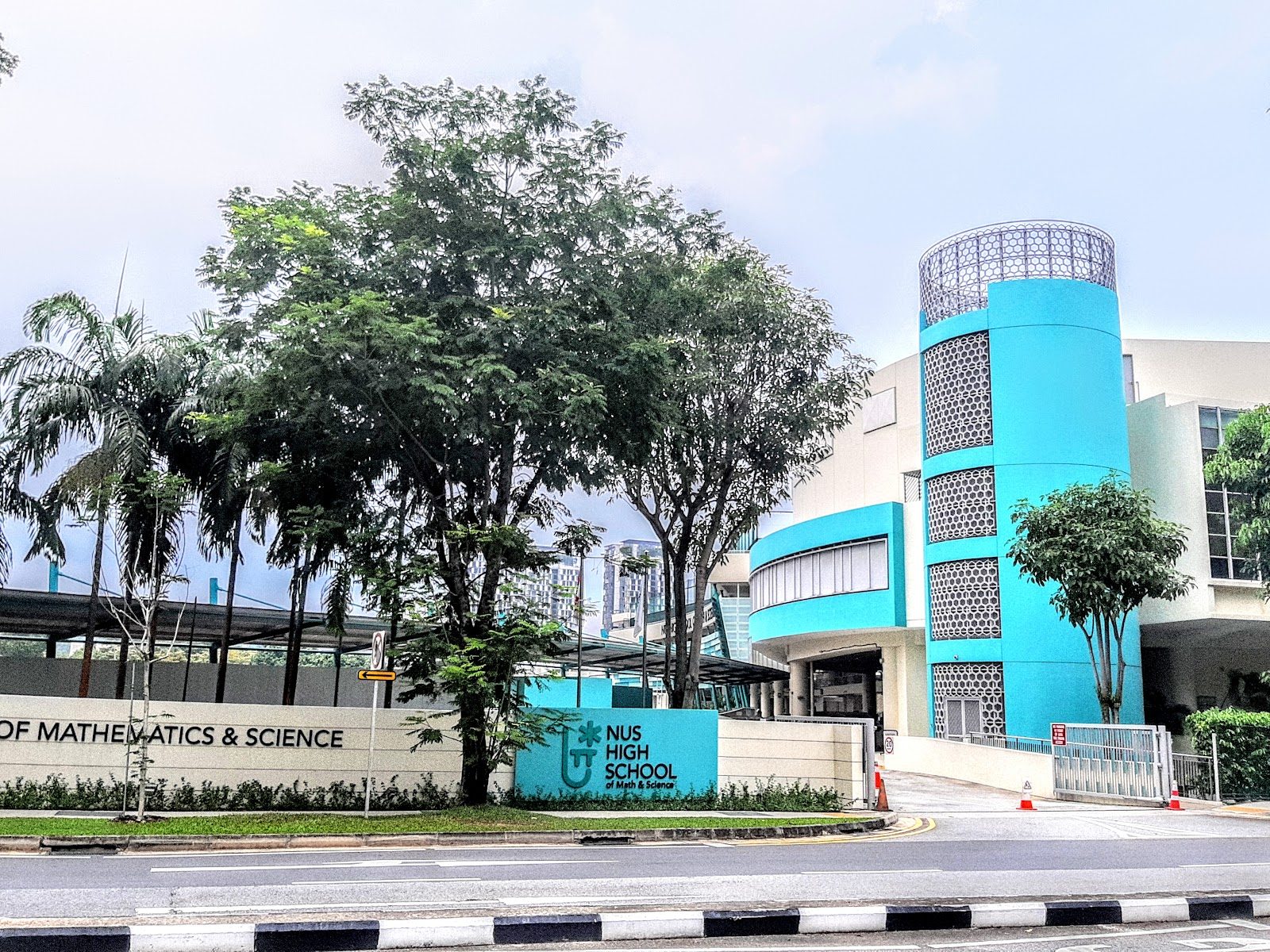
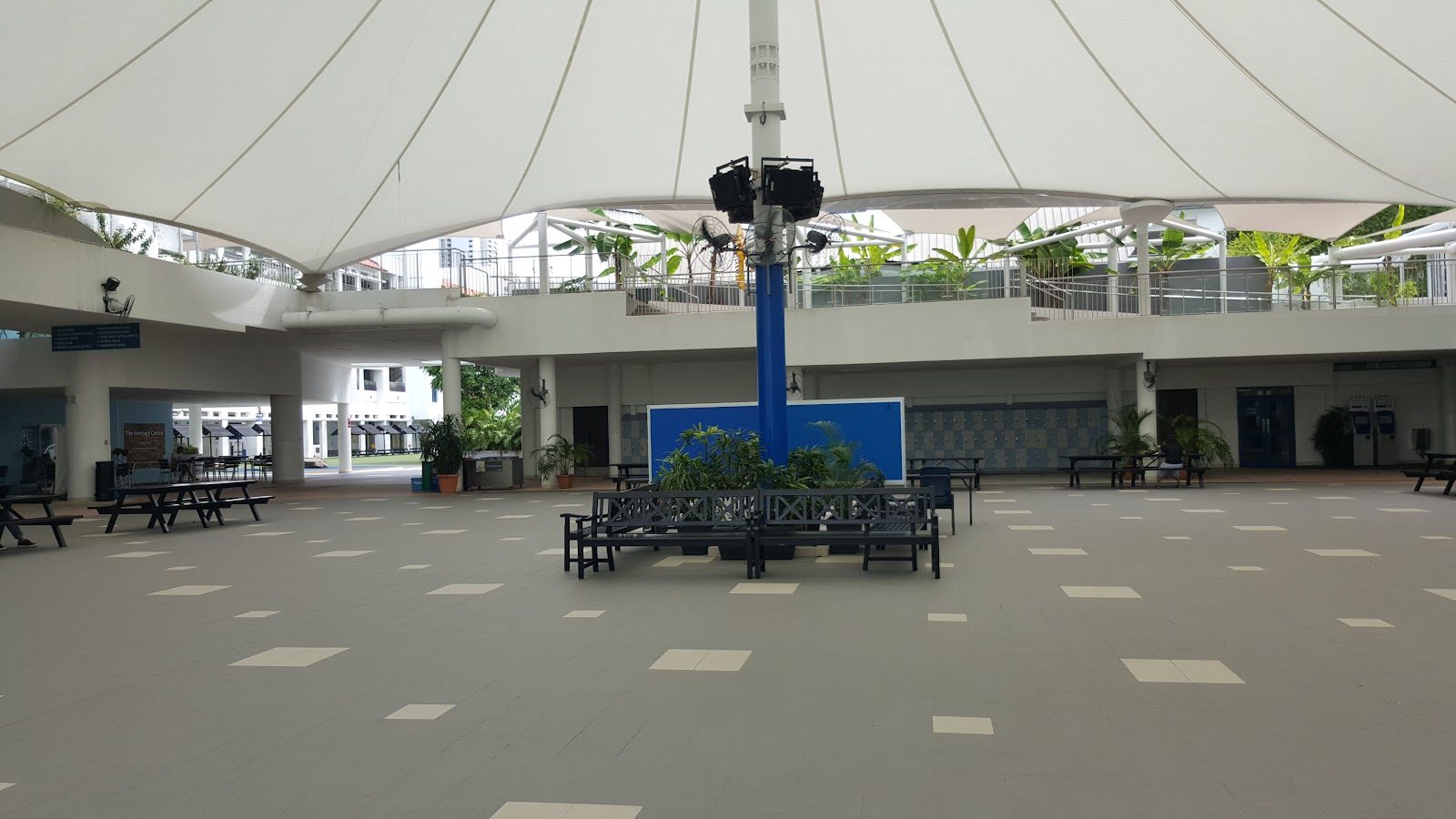
NUS High School of Math and Science
Singapore · Singapore
Six years, no O-levels, no A-levels -- just a bespoke diploma built around university-level math and science modules.
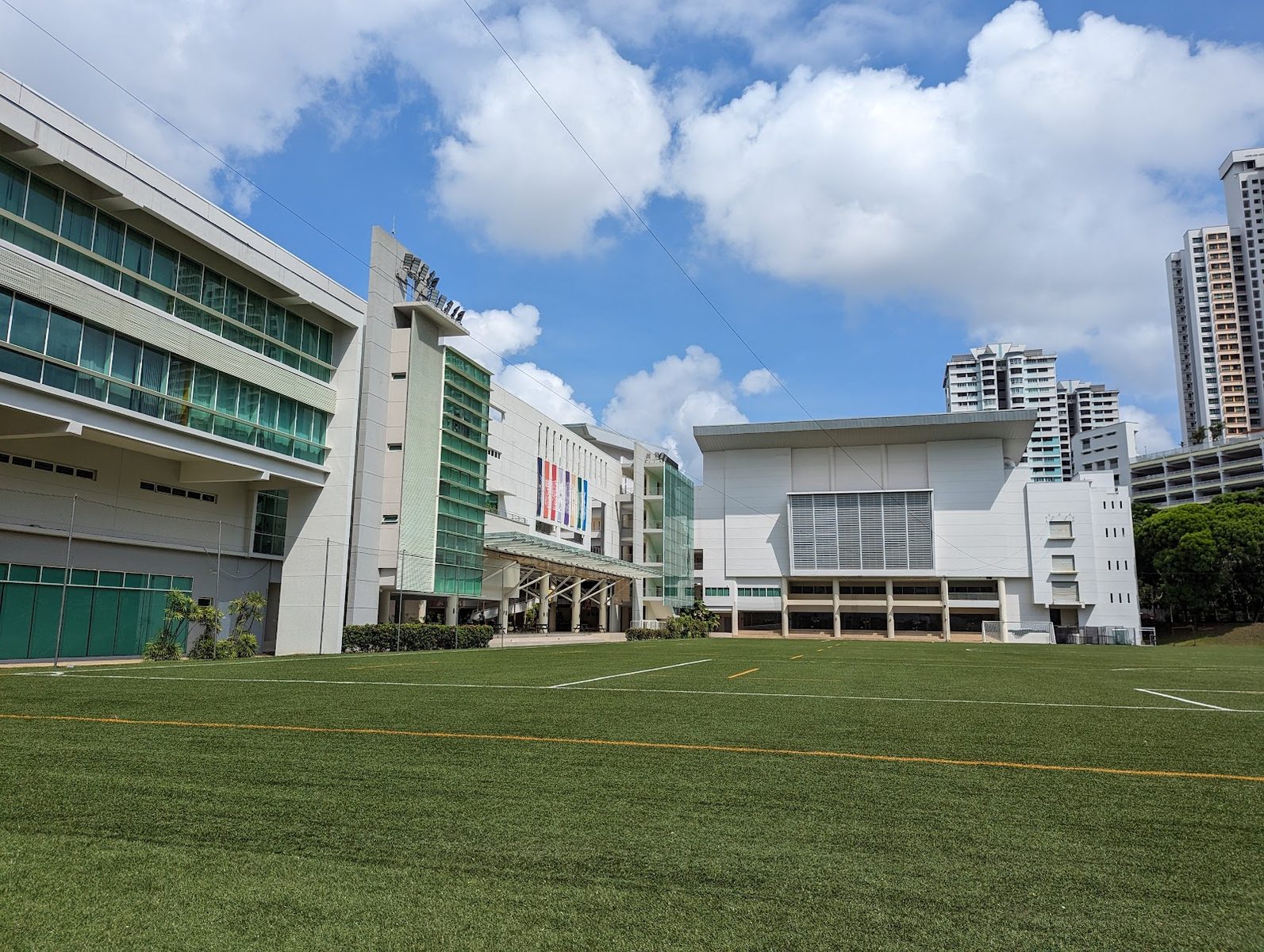
United World College of South East Asia
Singapore · Singapore
Across two Singapore campuses, service learning anchors an IB path capped by a rare Systems Transformation course for change leadership.
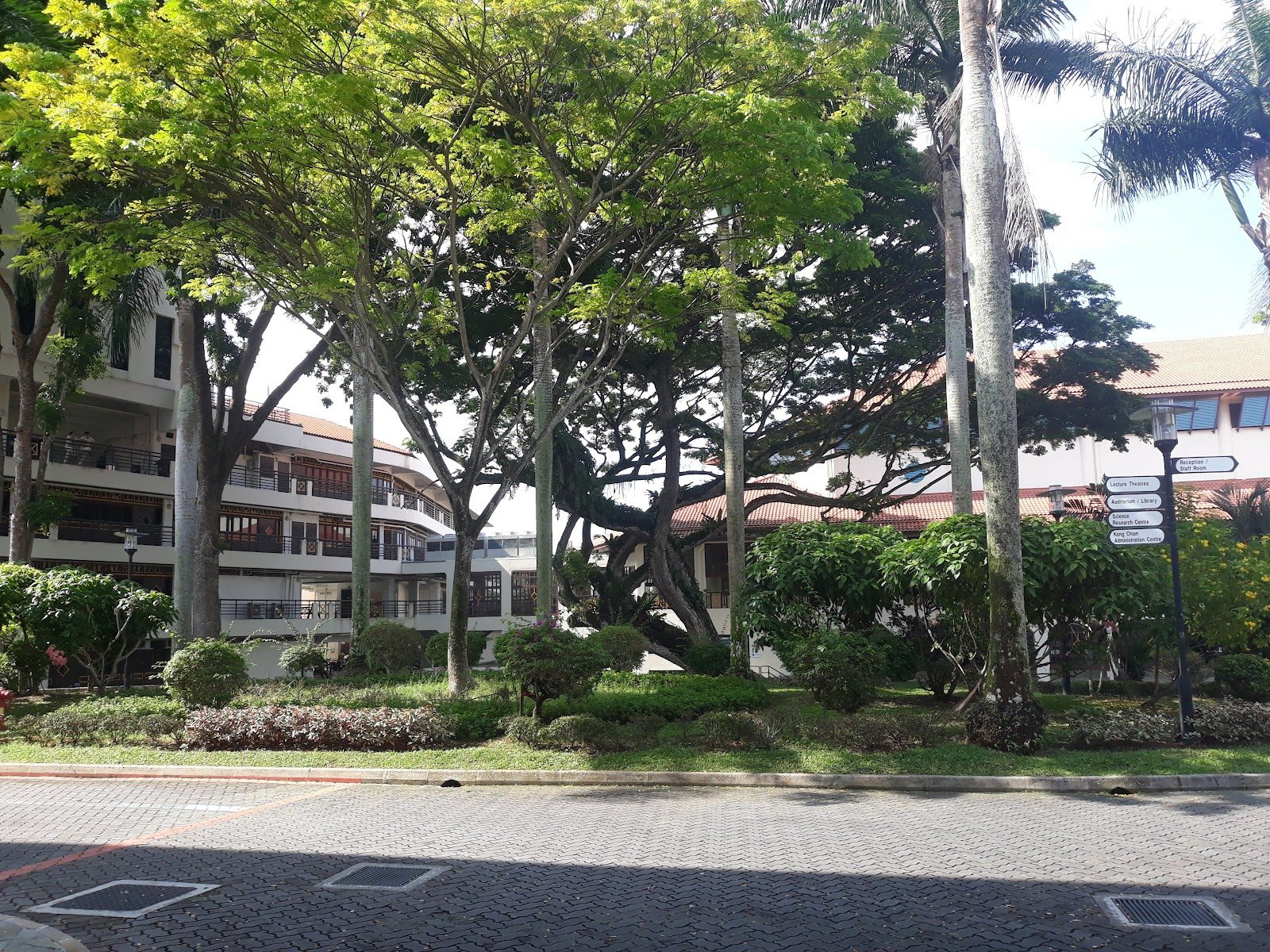
Anglo-Chinese School (Independent)
Singapore · Singapore
Singapore's first IB Diploma school, this Methodist boys' campus on Dover Road has ranked among the world's top three IB scorers for years.
Hwa Chong Institution
Singapore · Singapore
Singapore's storied merged independent school, pairing its Integrated Programme with an IB track at its Bukit Timah campus.
Same country and curriculum — closest matches within ±10 points either way