
Singapore
Singapore's storied merged independent school, pairing its Integrated Programme with an IB track at its Bukit Timah campus.
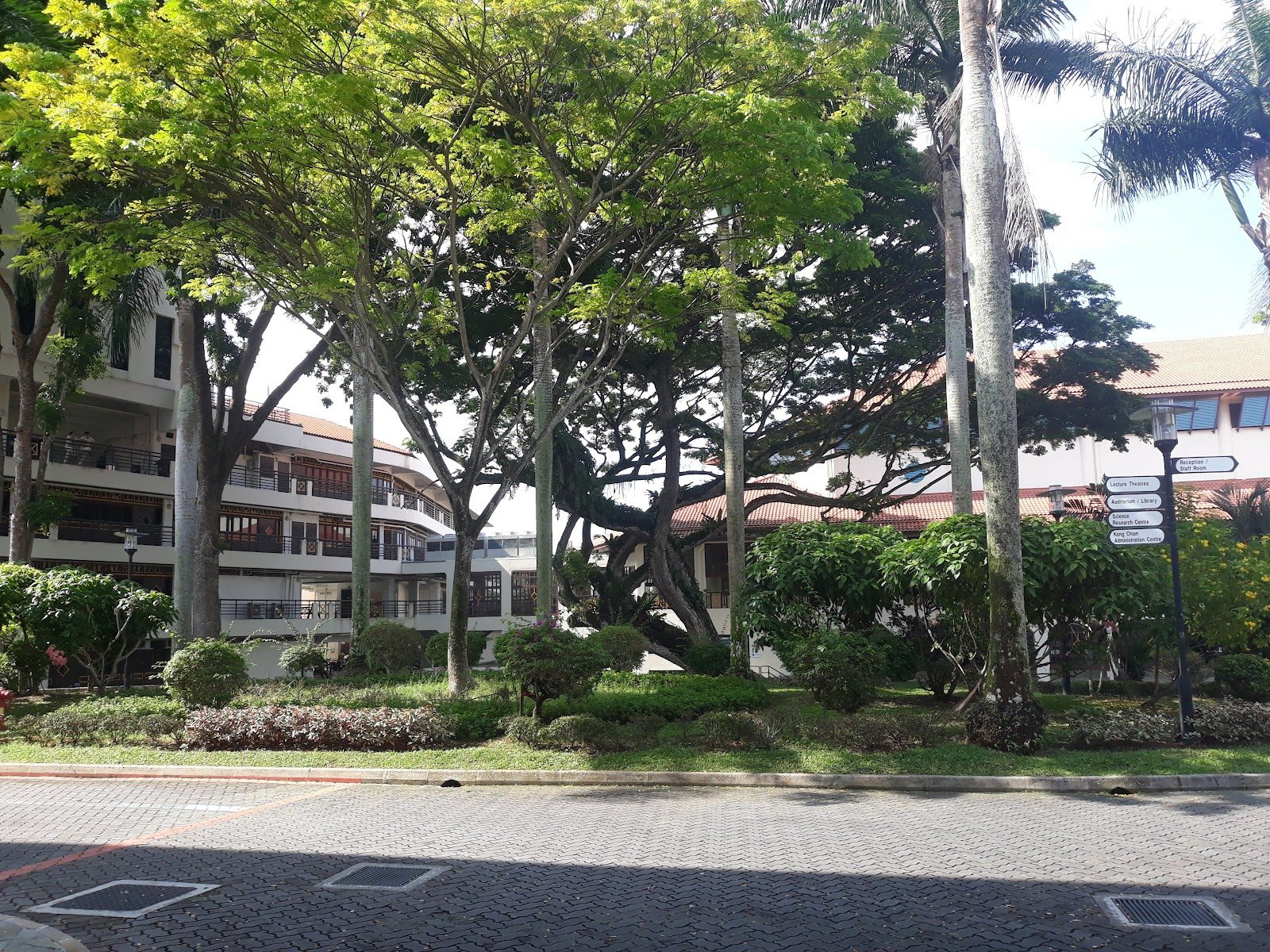
Photo © Jun Yan Yap via Google Maps
Type
Day
Ages
3–18
Curriculum
British · IB
Qualifications
A-Level · IB Diploma
Ratio
10:1
The Verdict
Editor's commitment
Right for
Families wanting an independent day school in Bukit Timah with British and IB routes, CIS and IBO accreditation, and a 10:1 ratio.
Wrong for
Parents seeking boarding, a religious ethos, or a small all-through setting: Hwa Chong is non-religious, day-only, and runs to age 18.
Watch out for
Founded in 2005 through a merger, Hwa Chong carries institutional heft; at SGD 33,000 average annual day fees, it is expensive by local standards.
Ranking breakdown
Hwa Chong Institution · #18 of 1591
Composite score 81.4. 8 weighted criteria.
By criterion
Academic Outcomes
Weight 20%
#13
of 1529 scored
University Placement
Weight 16%
#18
of 1529 scored
Prestige & Heritage
Weight 12%
#76
of 1529 scored
Alumni Network
Weight 12%
#48
of 1529 scored
Facilities
Weight 12%
#292
of 1529 scored
Transparency & Communications
Weight 8%
#153
of 1529 scored
Peer & Industry Review
Weight 10%
#146
of 1529 scored
Admissions Selectivity & Demand
Weight 8%
#51
of 1529 scored
Score history
Hwa Chong Institution · 2026
Movement across 2024–2026. Peer average overlaid.
Overall — 2024–2026
81.4/ 100
▲ +13.1 vs 2025
year on year
Peer & Industry Review
How Hwa Chong Institution is regarded in the sector
92
Top-tier · high confidence
Hwa Chong Institution is regarded as one of Singapore's two or three unimpeachably top-tier schools, a fixture in every serious ranking of the country's independent sector and a school peers routinely benchmark against. Its own Wikipedia-documented record, cited across independent education sites, notes it has produced 50 President's Scholars and been described as a leading Oxford and Cambridge entry centre outside the UK, with educator Edward de Bono dubbing it the "Eton of the East" a nickname repeated by independent directory schools-index.com. WhichSchoolAdvisor's coverage of the Hwa Chong family centres on its international sister campus, HCIS, which it calls a "top-performing all-through school with impressive IGCSE and IBDP results," rather than a standalone review of the flagship boys' institution itself, a modest gap given how thoroughly the wider brand is documented elsewhere. Alumni include a former Singapore President and multiple cabinet ministers, evidence of a peer and industry reputation built on substance rather than marketing.
Award
Elite Science & Research 58
World's Top School · The Global Ranking
Hwa Chong Institution is featured on our Global Top 58 ranking at #18. This seal is available for the school's marketing team to use on their website, prospectus and social channels.
Award
Elite Computing & AI 60
World's Top School · The Global Ranking
Hwa Chong Institution is featured on our Global Top 60 ranking at #10. This seal is available for the school's marketing team to use on their website, prospectus and social channels.
Award
Elite Mathematics 60
World's Top School · The Global Ranking
Hwa Chong Institution is featured on our Global Top 60 ranking at #11. This seal is available for the school's marketing team to use on their website, prospectus and social channels.
Award
Elite Entrepreneurship, Economics & Finance 60
World's Top School · The Global Ranking
Hwa Chong Institution is featured on our Global Top 60 ranking at #10. This seal is available for the school's marketing team to use on their website, prospectus and social channels.
Editors' overview
Hwa Chong Institution sits in a rare position in Singapore: a merged independent school created in 2005, with roots reaching back through The Chinese High School and Hwa Chong Junior College, and a campus identity that still carries that older weight. What puts it on a shortlist is not charm or gloss, but density of ambition. This is a school for families who want a high-pressure academic culture with real intellectual range, not a softer comprehensive model. The published structure matters: HCI covers ages 3 to 18, teaches in English, runs as a day school, and combines a British curriculum with the IB. That dual framing gives it broader reach than a single-track sixth form, and the school’s accreditations from the IBO and CIS add external validation that many locally dominant schools do not bother to secure.
The operating numbers are strong and concrete. A 10:1 student-teacher ratio and average class size of 18 point to a school that can sustain discussion, close tracking and selective pace without the sprawl that blunts top-end teaching. The average annual day fee across the full age range is SGD 33,000, expensive by local standards but not absurd for an independent school with this profile. HCI’s appeal also rests on the kind of peer group it attracts: ambitious, fast-moving, competitive, and comfortable in an environment where academic performance is part of the social air. Parents looking for a cosseting or gently paced school should look elsewhere. Hwa Chong’s attraction lies in stretch, not softness.
What is special here is the blend of institutional heft and programme breadth. The school is non-religious, academically concentrated, and old in reputation despite its 2005 legal founding date. It offers the kind of environment where serious students gain from one another as much as from formal teaching. The verified alumni floor is also telling: 12 notable alumni catalogued in Wikidata, including 6 scientists and scholars. That is not a glossy destination list, but it does reinforce the school’s scholarly bias. Hwa Chong belongs on the shortlist for families who value intellectual competition, structured independence and a campus culture with real gravitas. It is not for every child. It is for the student who wants demanding classmates, can hold pace, and does not need school to cushion every sharp edge.
An Elite Science & Research 58 school
Hwa Chong Institution, in Singapore, sits at rank eighteen on the Elite Science & Research 58 because it feeds Singapore's national Olympiad squads more consistently than almost any other school in the country. At the 2025 International Olympiad in Informatics, Hwa Chong's Sun Beichen won gold as Team Singapore posted its joint second-best finish in 34 years of competition, and in 2024 the school placed four of its own students onto the country's combined IMO/IOI training squad, with Zhao Yaoqi going on to take IMO silver.
The specialism runs through Hwa Chong's six-year Integrated Programme, which lets top PSLE scorers skip O-Levels and move straight into A-Level-track study, freeing time for a dedicated Science and Mathematics Talent Programme. Selected students join the NUS Science Mentorship Programme, paired with mentors from NUS, NTU and NIE for weekly project work from January to July plus two full-time weeks each June, and some progress into A*STAR Research Attachments at the agency's institutes. The depth shows in results rather than branding: Tan Yi Kai captained Hwa Chong to the National Olympiad in Informatics championship in 2021 before adding IOI silver that same year, part of a run of NOI and IOI medals stretching back over a decade.
Notable recent names include Huiyan Huang and Shanley Ho, who won 2021 Regeneron ISEF Grand Awards in Cellular and Molecular Biology and in Computational Biology and Bioinformatics respectively, and Georia Ang, a 2025 ISEF special-award finalist for an AI-based pneumonia-diagnosis system. Informatics standouts Tan Yi Kai, Zhao Yaoqi and Sun Beichen carried that same research culture into national and international Olympiad medals across 2021, 2024 and 2025.
International openness runs through Hwa Chong's affiliated IB school rather than the flagship campus: the main Institution is a day school reached chiefly via PSLE and Direct School Admission, which in practice favours Singapore citizens and PRs. Overseas families instead apply to Hwa Chong International School, which admits local and foreign students year-round by entrance exam in English, Mathematics and Science, offers boarding, and teaches in English alongside compulsory Mandarin. Day tuition runs roughly S$30,500-S$34,900 a year, with boarding adding about S$29,800; HCIS handles student-pass paperwork for accepted applicants. Families should sit the HCIS admission test six to nine months ahead, since Hwa Chong's research culture is earned through results, not marketing.
An Elite Computing & AI 60 school
Hwa Chong Institution in Singapore sits at rank ten on the Elite Computing & AI 60 because its competitive-programming pipeline just delivered the country's best informatics showing in a generation: at the 2025 International Olympiad in Informatics, Hwa Chong's Sun Beichen won gold, helping Team Singapore to 5th place out of 84 countries and regions, its joint second-best result in 34 years of IOI participation. That followed a historic haul in 2024, when Hwa Chong students Yaw Chur Zhe took silver and Sun Beichen and Lim Chang Jun took bronze at the same olympiad.
The specialism runs through a dedicated DSA-Secondary Computing and Infocomm Technology talent track feeding into the six-year Integrated Programme, and through relentless depth at the National Olympiad in Informatics, where Hwa Chong has repeatedly topped the Junior College category and produced champions and runners-up across more than two decades of results. Sun Beichen himself was second runner-up at the 26th NOI before his IOI gold. In August 2025 HCI became founding member and secretariat of the Global AI Nexus of Schools (GAINS), an OECD-supported network of 23 schools across seven countries built around responsible, human-centred AI in teaching and learning. No named head of computer science is publicly identified, and formal AI/ML coursework beyond Cambridge A-Level Computing sits mainly inside this olympiad-training and research-project ecosystem rather than a standalone university-style syllabus.
Wang Tengyao, a top scorer at the 9th NOI as a Hwa Chong Junior College student, is now Professor of Statistics at the London School of Economics, having held posts at Cambridge and UCL and published machine-learning research at NeurIPS. HCI alumnus and AI entrepreneur Lee Sze Chin featured at the school's inaugural 2025 AI Forum. Beyond these, notable alumni in industry AI are still emerging, though the olympiad pipeline is exceptionally deep.
Hwa Chong Institution itself operates as a day school, and its DSA computing route is effectively gated to Singapore Citizens and Permanent Residents, with resident international-pass holders eligible only after clearing the Admissions Exercise for International Students. Overseas families wanting boarding and English-medium IB study should instead target the affiliated Hwa Chong International School, which offers an IB Computer Science course, boarding through Hwa Chong Institution Boarding School, and annual tuition of roughly S$30,520-34,880 plus boarding fees near S$29,774. Start that application and boarding process 9-12 months ahead; the mainstream computing DSA route requires multi-year residency planning instead.
An Elite Mathematics 60 school
Hwa Chong Institution, in Singapore, sits at rank eleven on the Elite Mathematics 60 because its Olympiad pipeline produces individual world-class results year after year, not just isolated medals. The clearest anchor is Gabriel Goh Hao Xiang, who won silver at the 2022 International Mathematical Olympiad in Oslo, then returned to the 64th IMO in Chiba in 2023 and won gold, one of only two golds earned by a Singapore team that finished 12th out of 112 countries. His HCI teammate Cheng Wenhao medalled at both Games, taking silver in 2022 and again in 2023.
The specialism is delivered through the in-house Science and Math Talent Programme, which absorbed the Gifted Education Branch's GATE track in 2023 and pairs accelerated coursework with genuine research mentorship and access to the school's Science Research Centre, the first such facility built by any Singapore school. Hwa Chong also organises the Asia-Pacific Mathematical Olympiad for Primary Schools, a legacy competition running since 1990 that feeds a talent pipeline into the school from age twelve. Olympiad training is led by HCI teacher Mr Zong Lixing, who has served as Deputy Team Leader of Singapore's IMO delegation across multiple Games. To be candid, the mainstream academic backbone remains the Singapore-Cambridge Integrated Programme leading to A Levels rather than formal university-level courses in real analysis or abstract algebra; the actual differentiator is competition depth and research access, not a published advanced syllabus.
Beyond Goh and Cheng, Wu Xinyue took silver at the 2022 IMO and Zhao Yaoqi won silver at the 65th IMO in 2024, part of a cohort of four Hwa Chong students selected that year for IMO and IOI representation. The school has also taken Singapore Mathematical Olympiad Gold School Awards in multiple recent years.
International openness needs a clear-eyed caveat. The mainstream HCI Integrated Programme, home to this Olympiad pipeline, is a day school drawing overseas almost entirely through PSLE-based Direct School Admission or the JAE, largely serving citizens and permanent residents. Genuinely overseas families instead apply through Hwa Chong International School, the group's separately run IB wing, which offers boarding through the Hwa Chong Institution Boarding School, English-medium instruction, school-handled student passes, and annual day tuition of roughly S$30,520 to S$34,880 plus boarding near S$29,774 a year. Admission requires an English and mathematics entrance test plus interview. Parents should apply nine to twelve months ahead and confirm directly whether SMTP-style enrichment is accessible to HCIS students before assuming the Olympiad ecosystem described above is automatically open to them.
An Elite Entrepreneurship, Economics & Finance 60 school
Hwa Chong Institution, in Singapore, sits at rank ten on the Elite Entrepreneurship, Economics & Finance 60. The single fact that anchors this placing is competitive and judged by industry: a five-student HCI team, Team Silicon Heights, emerged winners of the National Economics and Financial Management Challenge, edging out 47 other teams drawn from 14 Singapore schools, with the final panel including Goldman Sachs Singapore's co-head of Global Currencies and Emerging Markets in APAC as a judge, and the challenge doubling as the qualifying route for top performers to represent Singapore in the International Economics Olympiad and Australasian Economics Olympiad.
The specialism is real but unevenly distributed across the Hwa Chong family of schools. Mainstream HCI runs Entrepreneurship as a dedicated Sabbatical module and CCA track within its Integrated Programme, while the affiliated Hwa Chong International School's boarding programme runs structured IBP workshops covering entrepreneurial mindsets, values-based case study discussion and design thinking culminating in a final business plan presentation. On the applied-finance side, HCIS fielded teams that reached the global top 50 in the Wharton Global High School Investment Competition twice running: Prosperity Pinnacle Investment Co. in the 2024 semifinals and Doofenshmirtz Capital Incorporated in 2025, both drawn from a global field that in 2024 alone saw more than 5,000 registrations and 1,800 teams from 66 countries. There is no published on-site Bloomberg terminal or real-money student fund, so the finance edge sits more in competition pedigree than in dedicated trading infrastructure.
Alumni give the ranking weight. HCI's business and finance graduates include TikTok chief executive officer Shou Zi Chew, Hyflux founder Olivia Lum, United Overseas Bank chairman Wee Cho Yaw, Razer Inc. founder Min-Liang Tan, and Sea Ltd co-founder Ye Gang, alongside Jumbo Group and Qian Hu Corporation leadership from the same alumni base.
International openness runs through the affiliated Hwa Chong International School rather than the citizen-only mainstream HCI. Admission is based on the school's own entrance exam and not the MOE's AEIS, teaching is entirely in English, and 20 nationalities are represented on campus. Annual tuition runs S$30,520 to S$34,880 depending on year group, with boarding adding roughly S$29,774 a year plus deposits and a one-time acceptance fee; the school itself arranges student pass and boarding logistics. Families should apply a full academic year ahead, since HCIS boarding places and entrance-exam slots fill early relative to Singapore's January intake.
Academic Performance
Hwa Chong’s academic standing is easy to place even without a full public data dump: it sits in Singapore’s top academic tier, and families choose it on that basis. The school’s structure gives it two serious external benchmarks — the Integrated Programme route and the IB track — but the school does not publish a clear, consolidated set of aggregate examination outcomes in the public domain. That is a real gap. For a school with this level of reputation, selective intake and institutional weight, parents should expect cleaner disclosure: cohort averages, score distributions, university destinations by destination type, and year-on-year context rather than prestige by inheritance. In the absence of that, the judgement rests on standing, selectivity and the calibre of the peer group, all of which place Hwa Chong in rarefied company.
Relative to peers, this is not a school competing for basic competence or middling progression. It competes at the sharp end of Singaporean schooling, where the comparison set is other elite independent and top national institutions. That matters because the internal standard is higher than the external minimum. Students here are pushed towards serious academic stretch, not simple exam security. The verified alumni floor — 12 notable alumni in Wikidata, including 6 scientists and scholars — reinforces that scholarly direction, even if alumni data is not an exam metric. The verdict is clear: Hwa Chong belongs among the city’s high-pressure academic heavyweights, but its public reporting on results lacks the precision its stature warrants.
Facilities
Hwa Chong’s facilities matter less as selling points than as working infrastructure for an intense academic culture. The Bukit Timah site carries the scale and seriousness of a long-established flagship school, not a boutique campus assembled for brochure value. For parents, the key point is functional depth: enough specialist teaching space, study provision and activity infrastructure to support a full all-through school without obvious strain. The low staffing ratio and average class size — 10:1 and 18 respectively — only pay off if rooms, labs and timetabling can sustain close teaching at pace; at Hwa Chong, that institutional heft is part of the proposition. Against peer schools in Singapore’s top tier, the advantage is not novelty. It is capacity, discipline and the kind of campus footprint that can absorb a large, ambitious student body while still feeling academically ordered.
What we do not get is the level of public facilities disclosure that the best international schools now provide. There is no sharply itemised public account of standout laboratories, performing arts spaces, sports assets or sixth-form-specific provision, and that limits precise benchmarking. That opacity is a weakness. At this price point — an average annual day fee of SGD 33,000 — families are entitled to clearer detail on exactly what specialist spaces students use day to day. Even so, Hwa Chong sits credibly alongside Singapore’s serious academic heavyweights: not the flashiest campus proposition, but a high-functioning, institutionally weighty one that serves scholarship first and spectacle second.
It competes at the sharp end of Singaporean schooling, where the comparison set is other elite independent and top national institutions
Prestige
A Hwa Chong education carries serious cachet in Singapore because the name sits at the intersection of selectivity, history and national academic prestige. This is not the kind of school that buys status through facilities, branding or imported gloss. Its prestige is older and harder than that: it comes from a long-established place in the country’s meritocratic hierarchy, from the calibre of students it draws, and from a culture that treats intellectual performance as the baseline rather than the exception. Among families who know the local landscape, Hwa Chong signals a high-status scholarly track with a formidable peer group and a social network that extends well beyond school. That matters in a city where educational prestige is read with unusual precision.
We rate it highly because the school holds weight on several fronts at once. It has inherited institutional capital from two major predecessor schools, and that legacy still shapes how the name lands with universities, employers and Singaporean professional circles. Its verified alumni floor — 12 notable figures catalogued in Wikidata, including 6 scientists and scholars — fits that picture of intellectual seriousness rather than celebrity flash. The fee level, at SGD 33,000 on average across the full age range, reinforces its position as an elite independent option without tipping into the realm of expatriate-luxury theatre. The result is real prestige, not decorative prestige: exacting, domestically powerful, and strongest for families who value recognition inside Singapore’s own top academic establishment.
The Bukit Timah site carries the scale and seriousness of a long-established flagship school, not a boutique campus assembled for brochure value
Communications
Hwa Chong does not flood the market with the kind of polished parent-facing communications machine that many fee-charging schools now treat as standard. That is part of its character. The school trades on institutional authority and internal confidence, and its outward communication follows suit: functional, formal and decidedly unshowy. For some families, that reads as refreshingly serious. For others, it will feel too opaque by modern standards. The weakness is not chaos or amateurism; it is a shortage of crisp public explanation. When a school of this stature publishes limited consolidated reporting on outcomes and offers thin public detail on specialist provision, parents are left to infer too much. At an average annual fee of SGD 33,000, that is a legitimate complaint.
For enrolled families, the communication picture is stronger in one respect: schools with this level of academic pressure and organisational complexity do not function without disciplined routine contact. Hwa Chong’s culture points to communication that is orderly, high-expectation and geared towards students who are expected to manage themselves rather than have every issue softened for them. That suits confident families who want clarity on standards, deadlines and academic direction. It does less for parents who want abundant pastoral narration, hand-holding or a constant stream of reassuring storytelling. The verdict is straightforward: Hwa Chong communicates with the same mindset that governs the school itself — serious, sparse and exacting — and its effectiveness depends heavily on whether a family values precision more than warmth.
Uniqueness
What marks Hwa Chong out is not novelty but institutional concentration. Few schools in Singapore combine the social force of an old national name with the operational shape of a merged modern institution and an all-through age range that keeps children inside one culture for years. That produces a distinctive internal world: students are inducted early into a demanding house style, then carried through an environment where scholarship, competition and self-command are normal rather than exceptional. The school’s verified alumni floor — 12 notable figures, including 6 scientists and scholars — fits that pattern. This is a place where academic achievement is not an added feature; it is the organising principle.
That brings clear gains for the right student. A child with intellectual appetite gets a high-octane peer group, fast classroom pace and the benefit of spending time among classmates who treat hard work as routine. The school’s broad age span also gives families continuity: fewer transition shocks, stronger institutional memory, and a clearer long-term sense of what the school is training students towards. The trade-off is just as clear. Hwa Chong’s uniqueness rests on intensity, not warmth; on scholarly pressure, not easy balance. For robust, ambitious students, that can be formative in the best sense — sharpening judgement, stamina and independence. For children who need gentler handling or a more forgiving social tempo, the same culture will feel hard-edged.
Against peer schools in Singapore’s top tier, the advantage is not novelty
Student Profile
The student who fits Hwa Chong is bright, self-propelled and comfortable being judged against strong peers every day. This is not a school for children who need coaxing to work, repeated external motivation or a protective classroom culture. It suits students with serious academic hunger, fast processing speed and the stamina to handle a demanding pace without treating every setback as a crisis. The low staffing ratio — 10:1 — helps, but it does not soften the basic culture. Students still need to arrive with independence, resilience and a tolerance for competition. Socially, the best fit is a child who does not need to dominate the room, but can hold ground in a cohort where capability carries status and underperformance is felt keenly.
The age range also matters. In an all-through school, habits set early harden into culture, so families need to want that long immersion rather than a reset at each stage. Averages tell part of the story: classes of 18 give room for discussion and close scrutiny, which rewards prepared, articulate students and exposes those who drift. The strongest matches are children who enjoy ideas, accept pressure as normal and gain energy from ambitious company. The weaker fit is clear too: students who need gentle pastoral cushioning, a slower social tempo or constant reassurance will find the environment hard-driving and, at times, unforgiving. This is a school for the internally disciplined, not the merely able.
Hwa Chong’s uniqueness rests on intensity, not warmth; on scholarly pressure, not easy balance
Co-curricular strengths
Arts & sport, on a separate axis
Overall 8.54/10
Scored 0-10 from the school's own published evidence. This axis is editorial-only — it does not feed the main WTS ranking.
Sports
9.1/10
Highly dominant athletic cornerstone in Southeast Asia, fielding champion cross-country, track and field, and gymnastics teams.
Drama
8.5/10
Active classical drama societies and Chinese opera showcases focused on building bilingual public speaking and confidence traits.
Dance
7.8/10
Exceptionally strong performance ensembles featured heavily in competitive national youth showcase festivals and traditional choreography.
Music
9.2/10
High-end orchestral setups supporting advanced symphonies and traditional Chinese orchestras that perform in major civic halls.
Visual Arts
8.1/10
Legendary Art Elective Programme (AEP) center, providing pre-conservatory technical depth in studio painting and modern design.
Editor-verified · 8/6/2026
Notable alumni · Wikidata
12notable alumni
0 historic (born pre-1930) · 4 modern (born post-1970)wikidata:2026-07-28 How we source this
WTS 300 badge
2025/26 editionHwa Chong Institution is one of the World's Top 300 Schools for 2025/26. Claim your listing to add it to your site →
Strengths
- +Founded in 1919 as The Chinese High School, the school has grown into a nationally recognised institution on the Bukit Timah corridor.
- +The Integrated Programme cut-off for Hwa Chong Institution (boys) sits at PSLE Achievement Level 6(M), among the highest entry thresholds nationally.
- +The school has produced 58 President's Scholars, Singapore's most prestigious undergraduate scholarship, more than any comparable institution.
- +As a Special Assistance Plan school, Hwa Chong maintains a strong Mandarin Chinese language and culture curriculum alongside mainstream subjects.
- +The six-year Integrated Programme lets students bypass O-Levels and progress directly into A-Levels at Hwa Chong's affiliated Junior College on the same campus.
Considerations
- −The Secondary section remains boys-only despite the 2005 merger, with girls only entering the cohort at Junior College level via the affiliated Nanyang Girls' High School.
- −Entry is fiercely competitive, with the recent PSLE cut-off point sitting at 4(D) to 6(M) for non-affiliated applicants, effectively excluding all but near-top national scorers.
- −The mainstream day school's core pathway is the British-derived Singapore-Cambridge A-Level; the IB Diploma is instead delivered through Hwa Chong International School, a separate six-year integrated curriculum school, distinct from the local day school itself.
- −Hwa Chong is among the Integrated Programme schools whose miscellaneous fees for local students exceed S$250, and its affiliated international school charges substantially more for non-citizen families.
Availability
Primary entry gate & tests
PSLE / O-Level / DSA Track
Gallery
Photo © Kok Chun Teo via Google Maps
Photo © Jorge Sinval via Google Maps
Photo © Mokkie Mok via Google Maps
Photo © chuttersnap via Google Maps
Photo © Alvin Khoo via Google Maps
Photo © Wang J via Google Maps
Photo © Asp Bala via Google Maps
Photo © JX L via Google Maps
Photo © Jeffrey Chong via Google Maps
Parent reviews
Have you sent your child here?
Voice reviews carry the strongest trust badge — we transcribe them for you to tidy up before they go live. Prefer to type? A written review is fine too.
Add your voice
In 60 seconds, tell other parents: what's the best thing about Hwa Chong Institution, and what surprised you when your child joined?
We ask for a Google sign-in so every review has a real face behind it — no anonymous drive-by attacks on schools, and no faked positive reviews. Your email is never shown publicly.
Send this profile to a friend
International parents rely on word-of-mouth. Share this review with someone weighing the same decision.
Schools with places
Similar schools to Hwa Chong Institution with places available now.
Singapore American School
Singapore · Singapore
- 2026-27
- WAITPOOLGrade-specific / Waitpools
- 2027-28
- PLACES OPENRolling
Overseas Family School
Singapore · Singapore
- 2026-27
- WAITPOOLSpace-dependent
- 2027-28
- PLACES OPENRolling
Chatsworth International School
Singapore · Singapore
- 2026-27
- WAITPOOLSpace-dependent
- 2027-28
- FUTURE CYCLERolling claim not independently verified for 2027/28
Availability first, then country, area, curriculum, price, co-curricular
Consider also
Also worth looking at alongside Hwa Chong Institution.
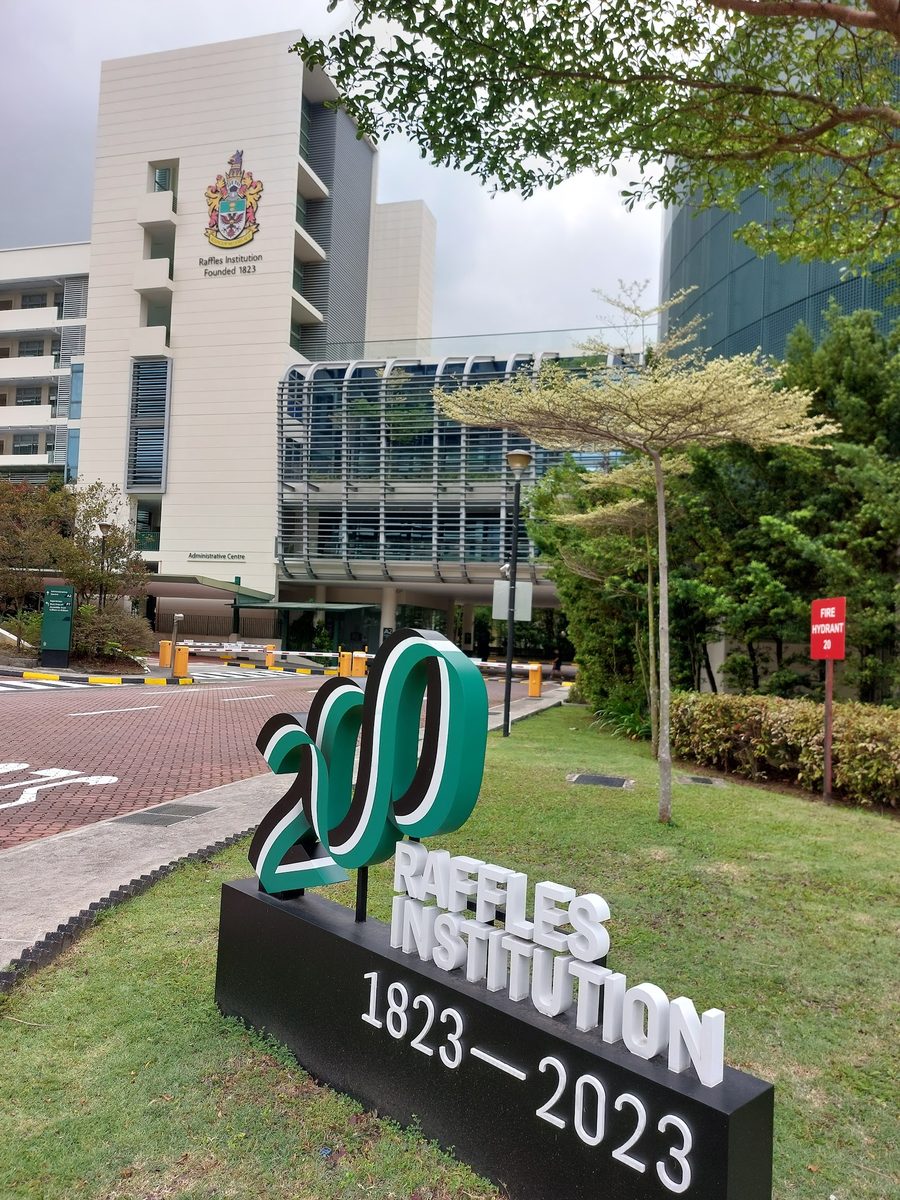
Raffles Institution
Singapore · Singapore
Founded in 1823 as Singapore's first school, its Raffles Programme now sends more students to Cambridge than any other institution.
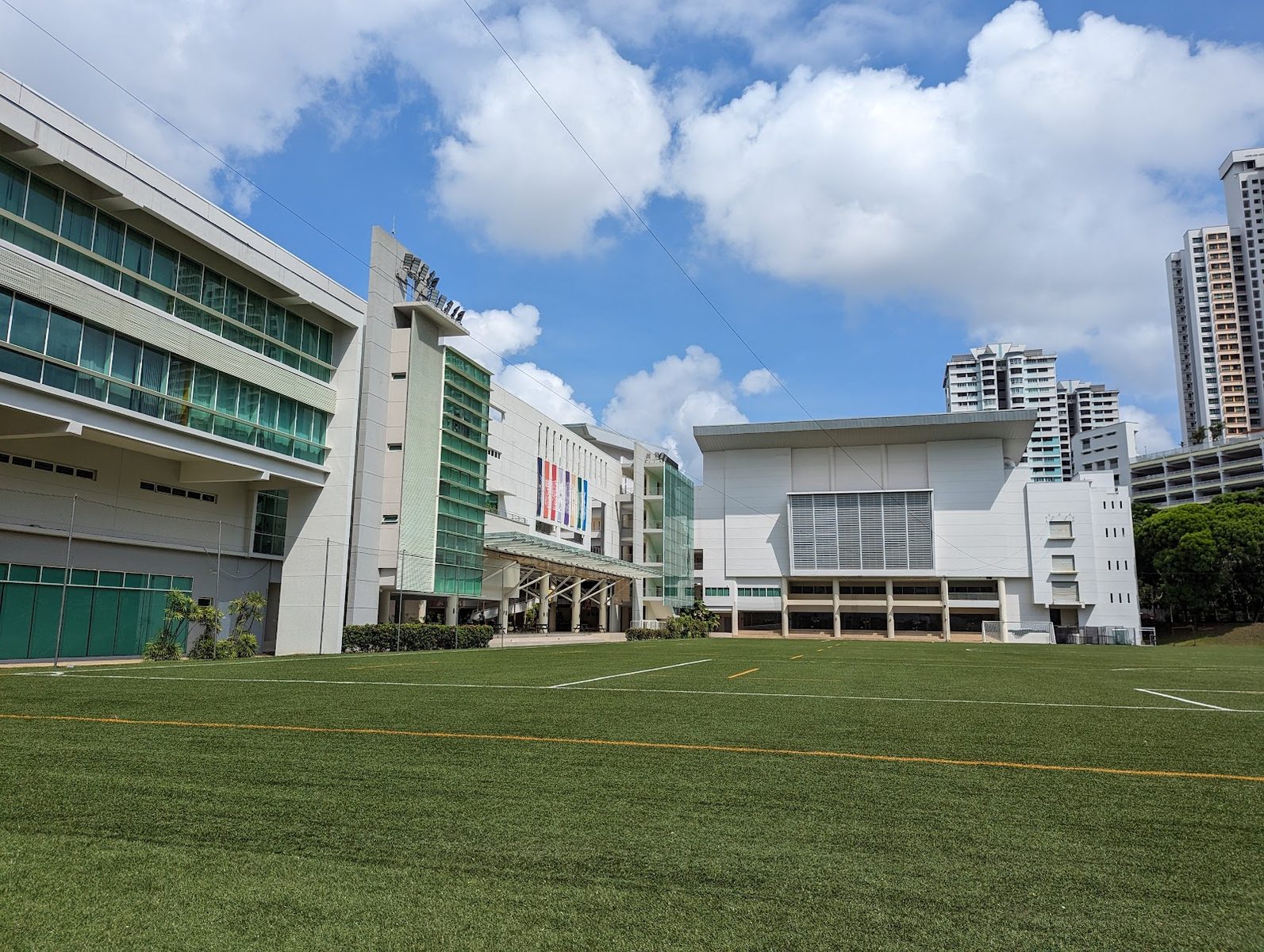
Anglo-Chinese School (Independent)
Singapore · Singapore
Singapore's first IB Diploma school, this Methodist boys' campus on Dover Road has ranked among the world's top three IB scorers for years.
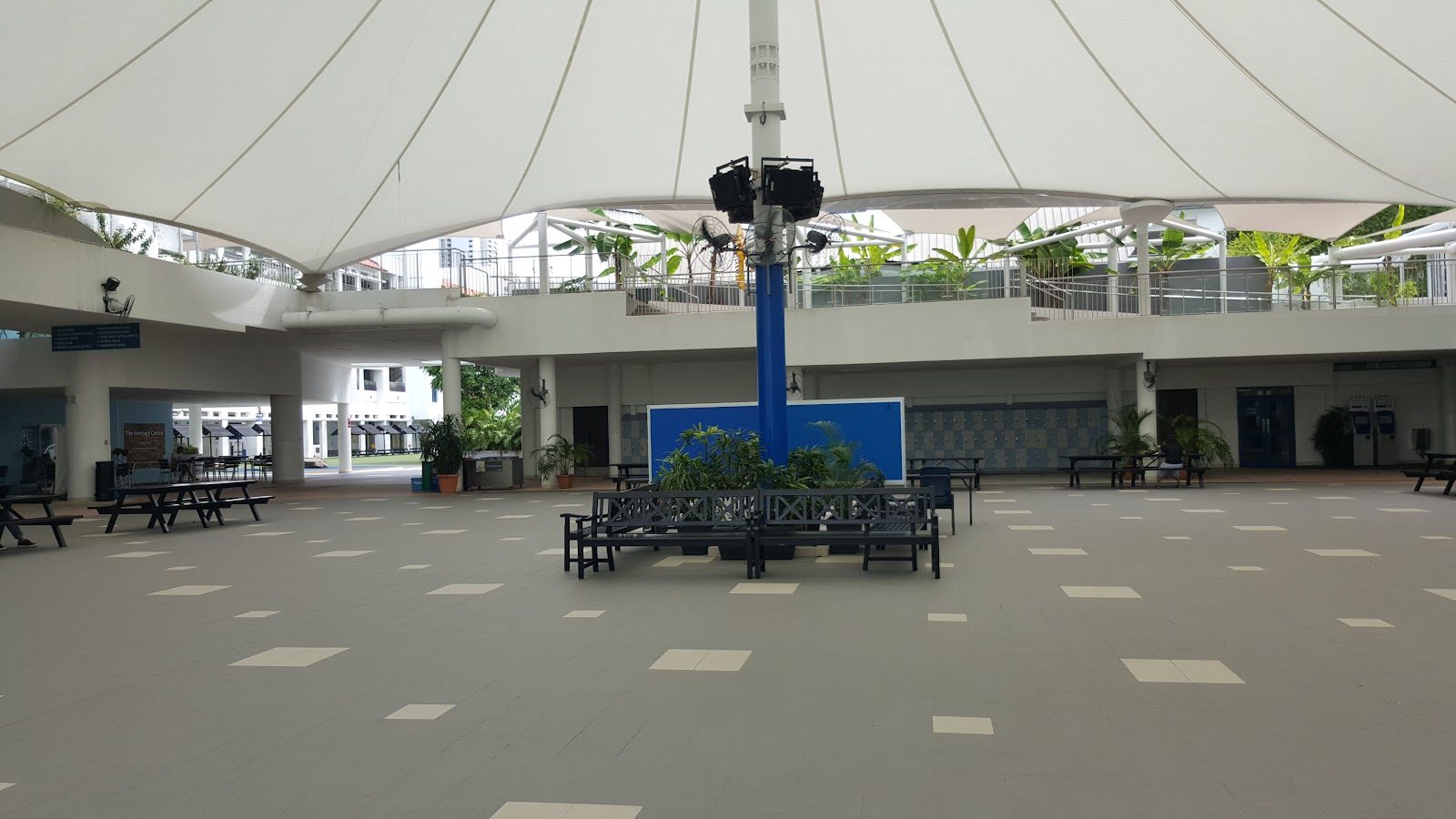
United World College of South East Asia
Singapore · Singapore
Across two Singapore campuses, service learning anchors an IB path capped by a rare Systems Transformation course for change leadership.
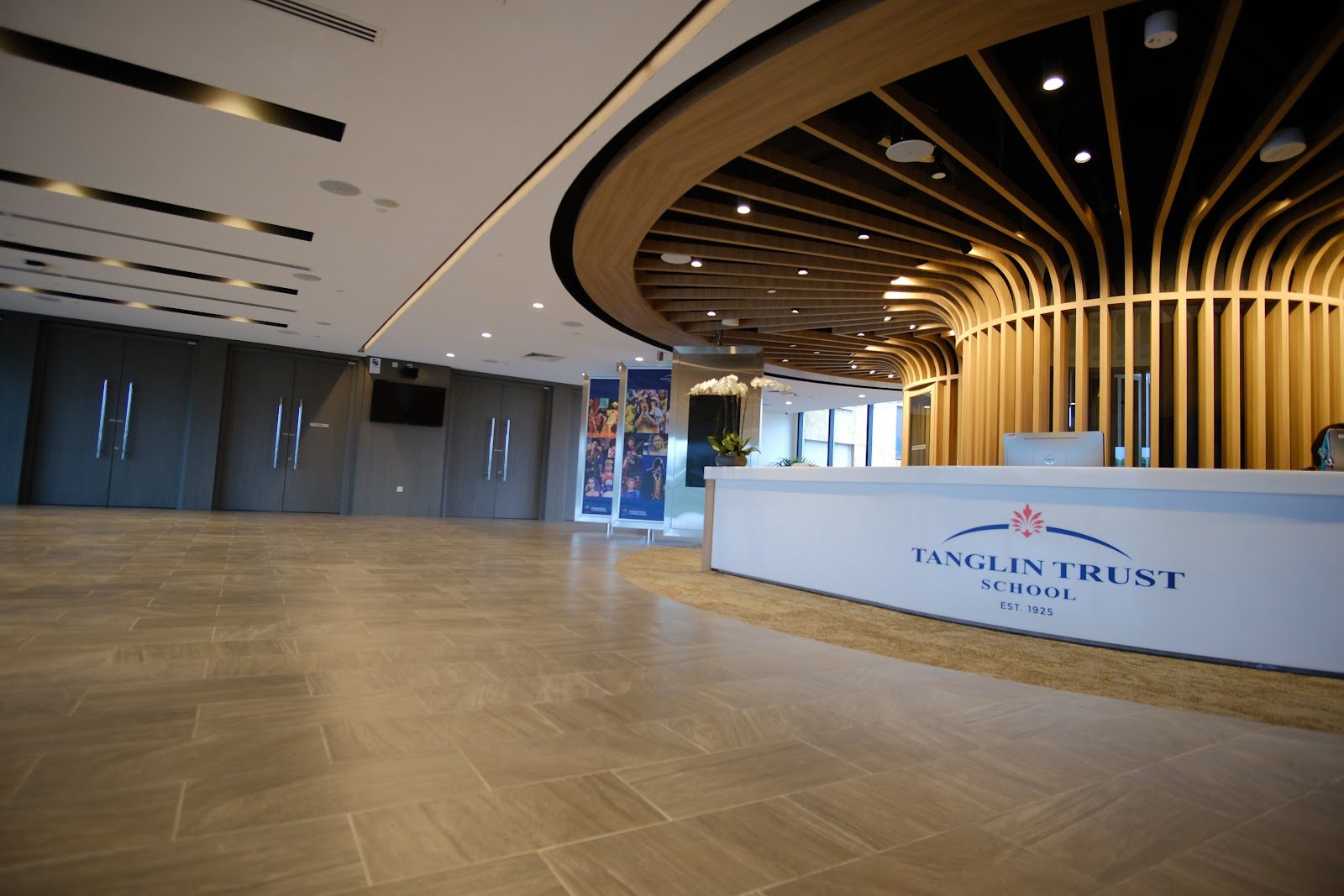
Tanglin Trust School
Singapore · Singapore
Southeast Asia's oldest British school pairs IB with A-Levels, then sends every Year 9 to the Australian bush for five weeks.
Same country and curriculum — closest matches within ±10 points either way