
Singapore
Founded in 1823 as Singapore's first school, its Raffles Programme now sends more students to Cambridge than any other institution.
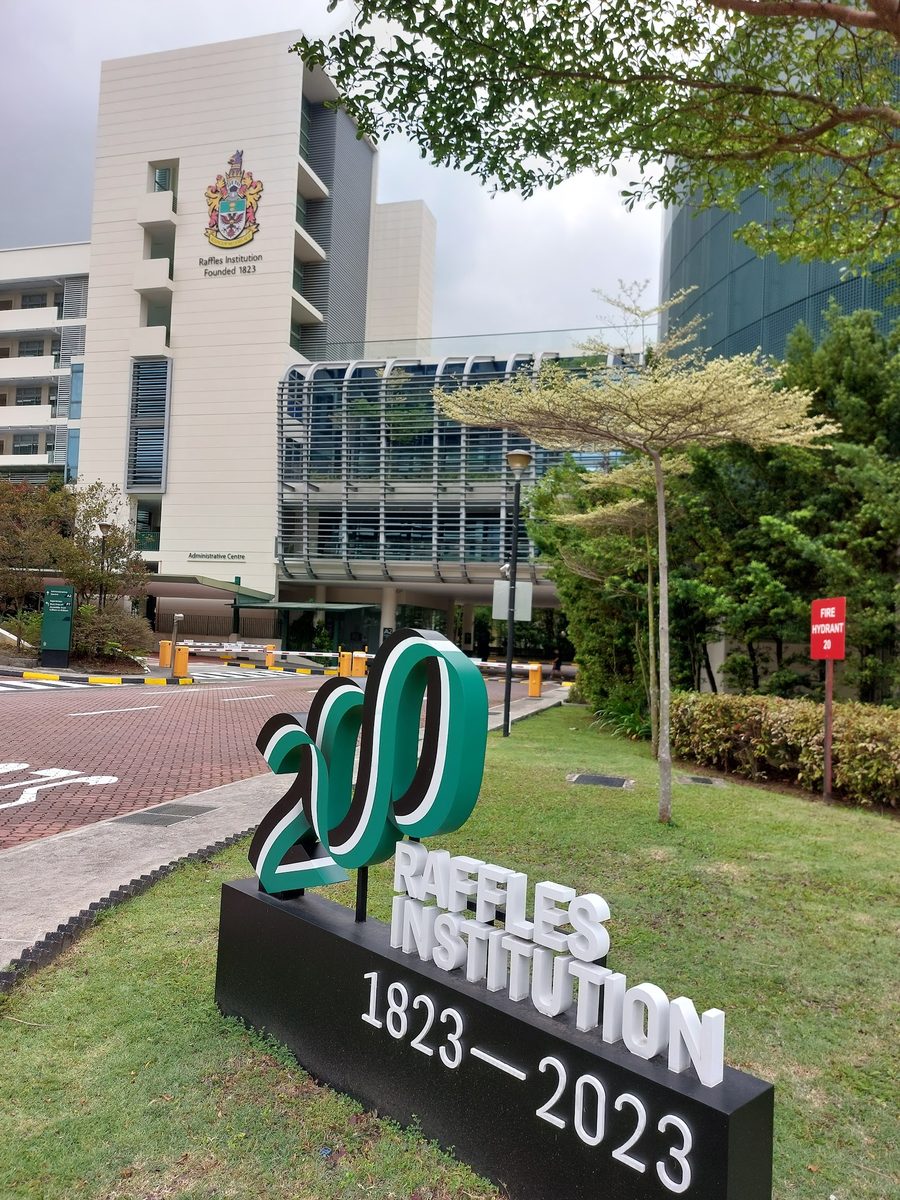
Photo © Mokkie Mok via Google Maps
Type
Day
Ages
13–18
Curriculum
British
Qualifications
A-Level
Ratio
10:1
The Verdict
Editor's commitment
Right for
Families who value academic prestige over breadth: founded in 1823, RI runs the six-year Raffles Programme and holds IBO and CIS accreditation.
Wrong for
Boys seeking co-education throughout, or families wanting a gentler culture: Year 1-4 is boys-only, with a 10:1 ratio and 18-student classes.
Watch out for
At an average SGD 37,700 a year for ages 13-18, this day school trades on elite outcomes; the website publishes no aggregate destination data.
Ranking breakdown
Raffles Institution · #10 of 1591
Composite score 81.8. 8 weighted criteria.
By criterion
Academic Outcomes
Weight 20%
#13
of 1529 scored
University Placement
Weight 16%
#18
of 1529 scored
Prestige & Heritage
Weight 12%
#53
of 1571 scored
Alumni Network
Weight 12%
#25
of 1530 scored
Facilities
Weight 12%
#339
of 1533 scored
Transparency & Communications
Weight 8%
#153
of 1532 scored
Peer & Industry Review
Weight 10%
#83
of 1548 scored
Admissions Selectivity & Demand
Weight 8%
#45
of 1529 scored
Score history
Raffles Institution · 2026
Movement across 2024–2026. Peer average overlaid.
Overall — 2024–2026
81.8/ 100
▲ +19.1 vs 2025
year on year
Peer & Industry Review
How Raffles Institution is regarded in the sector
92
Top-tier · high confidence
Raffles Institution is treated by sector observers as Singapore's benchmark school, the reference point against which every other local and international institution is measured. WhichSchoolAdvisor's own sector reporting confirms this standing at pre-university level, noting that Raffles Junior College, Singapore and Hwa Chong Institution received 85 and 53 offers respectively for Oxford and Cambridge, and are the only two overseas schools to feature in the global top 10. Spear's 500 frames it as a favourite among both British expats and locals, having educated four Singaporean prime ministers and chief ministers, four speakers of parliament and Robert Kuok. As a local, non-fee-paying government school it sits slightly outside the international-school review ecosystem that WhichSchoolAdvisor typically scores in depth, but its alumni depth and Oxbridge conversion rate give it a peer reputation few schools in the region can match.
Evidence sources
Award
Elite Science & Research 58
World's Top School · The Global Ranking
Raffles Institution is featured on our Global Top 58 ranking at #19. This seal is available for the school's marketing team to use on their website, prospectus and social channels.
Award
Elite Computing & AI 60
World's Top School · The Global Ranking
Raffles Institution is featured on our Global Top 60 ranking at #16. This seal is available for the school's marketing team to use on their website, prospectus and social channels.
Award
Elite Mathematics 60
World's Top School · The Global Ranking
Raffles Institution is featured on our Global Top 60 ranking at #10. This seal is available for the school's marketing team to use on their website, prospectus and social channels.
Award
Elite Entrepreneurship, Economics & Finance 60
World's Top School · The Global Ranking
Raffles Institution is featured on our Global Top 60 ranking at #9. This seal is available for the school's marketing team to use on their website, prospectus and social channels.
Editors' overview
Raffles Institution occupies a rare position in Singapore: a school founded in 1823 that still sets the pace for the country’s academic elite. The crucial point for parents is not the age of the institution but the structure it now offers. RI runs the six-year Raffles Programme with Raffles Girls’ School, taking boys from Years 1 to 4 and then teaching both boys and girls in Years 5 and 6, with students bypassing O Levels and going straight to A Levels. That route is a major draw for families who want an uninterrupted, high-pressure academic runway rather than a school built around repeated public-exam staging posts. The average annual day fee across the school’s age range is SGD 37,700, which is expensive in local terms but still a serious value proposition for a school with this level of selectivity and institutional weight.
This is a compact academic environment, with a 10:1 student-teacher ratio and average class sizes of 18. Those numbers matter: they support close teaching contact, but they also sit inside a culture that expects students to keep up quickly and think independently. English is the language of instruction, the school is non-religious, and its accreditations include IBO and CIS, giving it a degree of international legibility beyond Singapore’s domestic reputation. The school’s own messaging foregrounds student support, admissions, financial aid and boarding information, but the real distinguishing feature is the intellectual intensity of the place. This is not a soft, all-rounding school that tries to make every profile fit. It is built for students who want pace, competition and depth, and who do not need constant hand-holding.
Its alumni record reinforces that position. Wikidata alone captures 77 notable alumni, including 40 politicians and statespersons, 10 business and finance leaders, nine scientists and scholars, and seven writers and journalists. That is not a decorative list; it tells you what kind of institution this is. RI has long functioned as a training ground for Singapore’s governing, professional and intellectual class. Parents should shortlist it if they want a school with serious academic gravity, strong peer calibre and a clear route through to demanding university destinations. The students who thrive here are bright, ambitious, resilient and comfortable in a culture that is not for the faint-hearted. Children who need a gentler pace, broad pastoral cushioning or a less pressurised definition of success will find better fits elsewhere.
An Elite Science & Research 58 school
Raffles Institution in Singapore sits at rank nineteen on the Elite Science & Research 58 because it is verifiably the world's single strongest feeder into Cambridge undergraduate science places. Raffles Institution has one of the highest admission rates to top universities such as the Ivy League and Oxbridge, and it had the highest number of admissions to the University of Cambridge in the world, with 48 students receiving offers in the 2022 admissions cycle. That pipeline is not accidental; it is engineered by a genuine research architecture layered beneath standard A-Level teaching.
The differentiator is not the curriculum label but the scaffolding around it. From Year 1, pupils enter a Research Education programme supported by in-house RE specialist teachers and teacher-mentors, as well as extensive partnership with experts and specialists from various tertiary and research institutions, with contributors including the Boston Consulting Group and various research institutes who mentor students in specialised areas. The Raffles Science Institute, set up in 2009, oversees research projects either within the school or in collaboration with other research institutes and manages external research attachments, including placements at A*STAR institutes. At junior college level, the most able science students can progress into the Science Research Programme, where a student may submit his or her research project for assessment as an H3 subject, requiring a formal scientific paper and an oral defence before a panel.
Notable alumnus Prof Peter Ng Kee Ling, a freshwater field biologist and director of both the Raffles Museum of Biodiversity Research and the Tropical Marine Science Institute, remains an internationally-recognised authority on crustacean and freshwater crab taxonomy. On the competition side, Raffles Institution students have taken IPhO gold medals across multiple seasons in the 2012–2014 cycles, an IOI 2019 gold medal, and representation at the 2025 International Olympiad on Astronomy and Astrophysics, where Teo Kai Wen and Lan Shuheng Jerry represented Singapore.
International openness is limited but structured. RI is fundamentally a day school (boys-only Year 1–4, coeducational Year 5–6), with overseas applicants routed through MOE's Admissions Exercise for International Students, and student passes arranged via ICA once a place is confirmed. Instruction is English-only with no ESL scaffolding, so applicants need near-native fluency. Non-ASEAN international students at MOE-linked schools currently pay government-set fees of roughly S$2,190–2,540 per month at secondary and pre-university level, though RI, as an independent school, sets its own higher schedule. Families should sit AEIS 9–12 months ahead of target entry and treat RI as a destination only for children already performing at the top academic percentile.
An Elite Computing & AI 60 school
Raffles Institution in Singapore sits at rank sixteen on the Elite Computing & AI 60 because it is Singapore's most consistent producer of Olympiad-medal informatics talent, culminating in a gold medal at the 2025 International Olympiad in Informatics that helped Team Singapore finish 5th out of 84 countries, its joint second-best result in 34 years of IOI participation. That single result sits atop more than a decade of dominance at the National Olympiad in Informatics, where Raffles Institution students have repeatedly taken the overall championship and topped both the secondary and junior college school categories across multiple recent editions.
The specialism runs through Singapore's national informatics pipeline rather than a bespoke in-house AI lab, and Raffles Institution has long been the leading feeder into it. Its Computer Elective Programme activates at Years 3 to 4, alongside a dedicated competitive-programming coaching squad; one former school trainer recorded that every one of the ten-strong 2013-14 team won a medal, with the 2014 cohort taking six golds and four silvers, a record haul for any school in the competition's history. Formal classroom provision deepened in 2022 with the first cohort of 25 H2 Computing pupils, a subject modelled on first-year university courses covering algorithms and data structures, Python programming, data and information, and computer networks. From there, medal-track Rafflesians train under NUS School of Computing's national coaching programme, run since 1992 and feeding directly into a department ranked 13th globally by Times Higher Education in 2026.
Notable alumni include Andrew Ng, who graduated from Raffles Institution in 1992 before co-founding Google Brain and Coursera and serving as chief scientist at Baidu, and Min-Liang Tan, founder of gaming-hardware company Razer. On the competition side, Leong Eu-Shaun took an IOI gold in 2019, and Brian, the school's 2025 IOI gold medallist, helped deliver Singapore's near-best-ever Olympiad showing.
International openness is limited by design: Raffles Institution is a day school with no boarding houses, so overseas families must arrange independent accommodation and guardianship. Overseas applicants generally sit Singapore's AEIS or S-AEIS placement tests before applying, instruction is entirely in English with a compulsory Mother Tongue subject, and a Student's Pass through Singapore's Immigration and Checkpoints Authority is required. Non-ASEAN international pupils at pre-university level pay roughly S$2,540 a month in government-school fees before miscellaneous charges. Families should sit the AEIS at least a year ahead of intended entry and confirm guardianship arrangements well before applying.
An Elite Mathematics 60 school
Raffles Institution in Singapore sits at rank ten on the Elite Mathematics 60 because Olympiad mathematics runs through the cohort rather than a token handful of prodigies. At the 2021 IMO, held online in Singapore during the pandemic, Raffles supplied five of Singapore's six-member national team, including gold medallist Boo Tse Yang Lucas alongside silver and bronze medallists Low Choo Ray, Ong Ee Shua Etienne, Hu Xinghui and Lai Pengchong. The school's own tally, kept since its Olympiad programme began, stands at 78 Rafflesians among Singapore's 144 all-time IMO representatives.
The architecture behind this is the Euler Programme, a Mathematics Talent Development track starting in Year One that exposes selected students to accelerated, rigorous and advanced content well ahead of the national syllabus, built on deliberate ability grouping so top students across Years 1 to 6 train together. The school states that more than half of the student representation on Singapore's IMO National and Senior Training teams comes from Raffles Institution, evidence that penetration extends beyond a handful of stars. Training is led by Thomas Teo Teck Kian, Specialist in the Mathematics Department and teacher-in-charge of Olympiad training since the 2000s, who has served as Singapore's IMO Deputy Team Leader in multiple recent cycles including 2021 and 2024. No standalone university-level courses such as real analysis or abstract algebra are documented; the differentiator is Olympiad depth and cohort saturation, not formal coursework.
Senkodan Thevendran remains a touchstone as the Rafflesian behind Singapore's first-ever IMO gold in 1996. More recently, Joseph Kuan Jun Jie took gold and ranked 4th of 564 competitors at the 2010 China Mathematical Olympiad, and Boo Tse Yang Lucas's 2021 IMO gold anchors the current generation, with fellow Rafflesian Lee Ker Yang going on to study at the University of Cambridge.
International openness has real limits worth stating plainly: Raffles Institution is a day school only, teaching boys from Year 1 and a mixed cohort from Year 5, entirely in English. Overseas families cannot apply directly; entry runs through MOE's centralised Admissions Exercise for International Students, held each September or October, with places allocated on national testing, not portfolio review. Fees for citizens and permanent residents are strikingly low, sometimes as little as SGD 25 a month with bursaries, though non-citizen schedules set by MOE run higher. There is no dedicated ESL track since instruction assumes English fluency. Families should begin AEIS preparation at least a year ahead and treat a Raffles place as a merit-only route into Singapore's system, not a purchasable international seat.
An Elite Entrepreneurship, Economics & Finance 60 school
Raffles Institution in Singapore sits at rank nine on the Elite Entrepreneurship, Economics & Finance 60 because its economics pipeline consistently converts into individual honours on the toughest international stage: at the 2023 International Economics Olympiad, Rayner Chew of Raffles Institution placed fourth individually as part of the Singapore delegation, one of the strongest showings by any school-age economist that year. That result sits on top of a school culture where economics is treated as a live discipline rather than a single A-Level subject.
The architecture centres on the Economics Department working jointly with the student-run Raffles Economics and Current Affairs Society (RECAS) to produce The Common Good, a monthly student-contributed publication on economics and current affairs. On the applied-finance and venture side, Raffles teams have twice reached the Top 50 semifinalist round of the Wharton Global High School Investment Competition, run against thousands of entrants worldwide, under team names Crepusculo Capital in 2022 and Bullish Bears Capital in 2025. In entrepreneurship, Raffles Institution teams have placed on the podium at the Blue Ocean Student Entrepreneur Competition, taking second place with the Waste Fellows venture and a further third-place finish in separate editions. This is a genuine competition record rather than relabelled coursework, though it is worth being honest that RI has not published a dedicated Bloomberg terminal or real-money student fund the way some specialist finance academies have.
Notable alumni anchor the tradition at the very top of Asian business. Robert Kuok, Southeast Asia's wealthiest man at the turn of the century and founder of Shangri-La Hotels and Resorts, is a Raffles Institution alumnus. Min-Liang Tan, co-founder, chairman and CEO of gaming hardware giant Razer Inc., which listed in Hong Kong in 2017, also passed through Raffles Institution before university.
International openness is real but channelled through Singapore's national system rather than a bespoke overseas-admissions office. Raffles Institution is a day school with no boarding, and instruction is in English throughout. Overseas applicants who want to enter Singapore's mainstream system, including RI, must sit the MOE's Admissions Exercise for International Students (AEIS), held each September or October, with student passes arranged through the Ministry of Education. Fees are heavily subsidised for Singapore citizens, but non-ASEAN international students admitted through government channels currently pay MOE-set rates of roughly S$2,190 a month at secondary level and S$2,540 a month at pre-university, plus modest miscellaneous charges. Families should plan the AEIS cycle at least nine to twelve months ahead, since places and visas both depend on it.
Academic Performance
RI sits at the sharp end of Singapore school performance. The school’s own news feed gives the clearest public signal: it publishes a media release for its latest GCE A-Level cohort, which tells you external results matter here and are treated as a central measure of success. More important than publicity is structure. Students in the Raffles Programme skip O Levels and run straight through to A Levels, so the school is judged on a single, high-stakes terminal outcome rather than a sequence of easier public wins. That raises the bar. In peer terms, RI belongs with Singapore’s most selective academic institutions: the schools that recruit strong students early, move fast, and expect them to convert that advantage into top university entry.
The limitation is transparency. We have not seen aggregate A-Level statistics in the public domain here: no mean rank points, no share of top grades, no subject-by-subject breakdown. That opacity matters, because the best schools earn the right to claim supremacy with hard numbers, not institutional aura. Even so, the school’s editorial tagline is telling: it states that the Raffles Programme sends more students to Cambridge than any other institution. If accurate, that places RI in rarefied company internationally, not just domestically. The broader picture is clear enough. This is a results-driven school with an entrenched record of elite academic placement, but one whose public case would be stronger with full cohort data rather than prestige alone.
Facilities
The school’s own public navigation tells you what matters on campus: the Raffles Programme, student support, admissions, fees and financial aid, and boarding information sit at the front door, while current notices flag a “Campus Transformation” for new learning spaces. That points to a campus under active redevelopment rather than a finished showpiece, which is worth noting for parents who care about the day-to-day texture of school life. The physical estate matters here because RI is not selling resort luxury; it is building for hard use, pace and academic throughput. Against premium international-school peers in Singapore, that is a different proposition. Many rivals foreground theatres, pools and glossy specialist suites. RI foregrounds programme structure and institutional function. For the right family, that reads as serious-minded rather than sparse.
What we cannot say is just as important. The school does not publish a clear public-facing inventory of flagship facilities in the extracts here: no performing arts centre details, no sports complex specifications, no library metrics, no design-lab showcase. That is a weakness in a market where top schools usually document their estates in detail. Still, the low staffing ratio and class sizes already noted put less pressure on brute-scale infrastructure than at larger campuses. Parents should read the facilities offer as purpose-built rather than indulgent: adequate if your priority is an elite academic engine, less compelling if you want a campus that wins on spectacle alone.
Raffles Institution carries top-tier national prestige and a rare level of recognition beyond Singapore
Prestige
Raffles Institution carries top-tier national prestige and a rare level of recognition beyond Singapore. That status rests on three things. First, selectivity and historical continuity: RI has educated generations of the country’s political, professional and intellectual leadership, and that legacy still shapes how the school is read by universities, employers and Singaporean families. Second, the alumni footprint is not anecdotal. Even the conservative verified floor is 77 notable alumni, with exceptional strength in public life. Third, the school sits inside a high-performing academic pipeline that has real international traction. The editorial claim that the Raffles Programme sends more students to Cambridge than any other institution is an elite signal in a market where many schools talk grandly but few can point to that level of concentration at the top end.
Why rate it so highly? Because RI is not just respected; it is institutionally powerful. In Singapore, its name carries weight in a way that few schools do, and that influence extends well beyond school gates into universities, public service and the professions. The school’s structure reinforces that standing: a six-year route for able students, a strong peer cohort, and a culture built around serious academic ambition. The caveat is important. Prestige here is tied to scholarship, competition and social capital, not warmth or breadth. Families buying into RI are buying into one of the country’s most exacting brands of excellence, with all the pressure that entails.
Raffles Institution occupies a rare position in Singapore: a school founded in 1823 that still sets the pace for the country’s academic elite
Communications
RI’s parent communications look functional, centralised and disciplined rather than warm. The homepage gives parents a direct route into the practical channels that matter — Parents Gateway, admissions, fees and financial aid, student support, and a live news stream with dated announcements. That is the right architecture for a school with a high-demand parent body and a culture that runs on deadlines, selection points and administrative clarity. The presence of separate Direct School Admission links for different entry stages also tells you the school understands where parental anxiety sits and organises information around it. This is not a chatty school. It communicates in a formal, institutional register that fits its identity and audience.
Effectiveness is strong on core operations and weaker on richness. Parents can find the important routes quickly, and the school’s news feed shows active updating rather than a neglected front end. That matters. A school asking families to buy into an intense academic system needs clear signalling around reporting days, open-house events and exam-related notices, and RI does that competently. The limitation is depth. We have not seen much that humanises school life or explains the pastoral experience in detail; the public face prioritises systems over narrative. For many RI families, that is enough. They want efficiency, not sentiment. For parents seeking close, transparent partnership and a stronger sense of day-to-day culture, the communications will feel brisk rather than expansive.
Uniqueness
What sets RI apart is not heritage alone but the shape of the journey. This is a school built around a single uninterrupted academic climb: boys enter the secondary years, then the cohort opens up in the final two years through the joint programme with Raffles Girls’ School. That creates a distinctive social and intellectual arc. Students spend their earlier years inside a high-discipline boys’ environment, then shift into a mixed pre-university setting before the final external examinations. Few schools manage that transition within one coherent system. For the right student, it brings both stability and change: a familiar institutional culture, followed by a broader peer group at the point when discussion, collaboration and academic maturity matter most.
The other point of difference is RI’s role in Singapore’s leadership pipeline. This is not just a strong school with a famous name; it is a national feeder institution with an unusually deep hold on public life, scholarship and the professions. Even the verified floor of 77 notable alumni makes that plain, and the concentration in government is striking. For students, that translates into a peer culture with serious ambition, strong internal benchmarks and a clear sense that high achievement is normal, not exceptional. The gain is obvious: intellectual stretch, formidable networks and access to a cohort that pushes hard. The cost is obvious too. RI suits students who thrive on pressure and competition; it is a demanding ecosystem, not a protective one.
We have not seen aggregate A-Level statistics in the public domain here: no mean rank points, no share of top grades, no subject-by-subject breakdown
Student Profile
The student who fits RI is bright, fast, competitive and internally driven. This school rewards teenagers who do not need coaxing to work hard and who can hold their own among equally able peers. The public cues are clear: a six-year route with no O-Level waypoint, formal admissions pathways, and a live drumbeat of exam and reporting notices. That structure suits students who are comfortable with delayed gratification and high-stakes performance, not those who need frequent reassurance or a gentler tempo. The low staffing ratio and classes of 18 support close academic contact, but they do not change the underlying culture: expectations are high, comparison is unavoidable, and independence matters.
Socially, the best fit is a student who can handle a demanding peer environment without turning brittle. The earlier boys-only phase, followed by a mixed pre-university cohort through the Raffles Programme, adds another layer: students need enough maturity to navigate a change in group dynamics while keeping academic focus intact. RI will suit teenagers with serious intellectual appetite, strong self-management and a clear sense that school is a place to stretch, not coast. It is a poor fit for children who need heavy pastoral cushioning, abundant hand-holding or a broad, low-pressure definition of success. Families choosing RI are choosing a hard-edged meritocratic culture with a powerful network behind it; students either thrive on that energy or they chafe against it.
That is a weakness in a market where top schools usually document their estates in detail
Co-curricular strengths
Arts & sport, on a separate axis
Overall 8.1/10
Scored 0-10 from the school's own published evidence. This axis is editorial-only — it does not feed the main WTS ranking.
Sports
8.5/10
Unrivaled athletic powerhouse in Singapore, routinely capturing a massive share of national school championship titles across tracking, squash, and tennis.
Drama
7.5/10
Strong, intellectually rigorous dramatic tracking that pushes advanced scriptwriting and bilingual classical performance.
Dance
8/10
Highly popular synchronization and ensemble choreography featured prominently in major annual school cultural showcases.
Music
9/10
Home to a world-class, multi-award-winning Raffles Institution Boarding Complex music network and national-caliber symphonies.
Visual Arts
7.5/10
Highly structured fine art layout leaning heavily toward technical design, digital graphics, and portfolio mastery.
Editor-verified · 8/6/2026
Notable alumni · Wikidata
77notable alumni
20 historic (born pre-1930) · 16 modern (born post-1970)wikidata:2026-07-28 How we source this
WTS 300 badge
2025/26 editionRaffles Institution is one of the World's Top 300 Schools for 2025/26. Add it to your site →
Strengths
- +Founded in 1823, Raffles Institution is one of the oldest schools in Singapore, with origins tracing to 1823, and is regarded as one of the most academically competitive secondary schools in the country.
- +The school offers the six-year Raffles Programme, which allows students to skip the Singapore-Cambridge GCE O-Level examinations and proceed to take the Singapore-Cambridge GCE A-Level examinations at the end of Year 6.
- +Alumni include former Prime Ministers Lee Kuan Yew and Goh Chok Tong, former Chief Ministers David Marshall and Lim Yew Hock, as well as former Presidents Yusof Ishak, Benjamin Sheares and Wee Kim Wee.
- +The school has a strong record of overseas university progression, having the highest number of admissions to the University of Cambridge, with 35 students receiving offers in the 2019 admissions cycle.
- +Multiple entry routes exist beyond the standard exam, including Direct School Admissions, the Secondary 1 (S1) Posting Exercise and the S1 Posting Appeal Exercise, plus a separate pathway for students already in other schools.
Considerations
- −The secondary section (Year 1-4) is boys-only; it is an independent institution, providing secondary education for boys aged 13-16 through a boys-only Year 1-4 section, so co-education only begins at Junior College level.
- −Entry is highly selective and geared to students already scoring near the top of Singapore's PSLE; one detailed account notes candidates should be among the top 2% in PSLE, i.e. the primary school leaving exam. This is typically around 260 or higher.
- −As an independent school, RI sets its own fees, which are higher than standard government-school rates, and detailed line items are published separately by the school rather than fixed nationally.
- −Admissions routes are built around Singapore's mainstream primary system and local examinations (PSLE, DSA-Sec), which can make entry logistically difficult for families arriving from overseas without a prior local schooling record.
Availability
Primary entry gate & tests
PSLE / O-Level / DSA Track
Gallery
Photo © zhang zc via Google Maps
Photo © zhang zc via Google Maps
Photo © Kon Yew Tan via Google Maps
Photo © Isaac Goh via Google Maps
Photo © Mokkie Mok via Google Maps
Photo © Mokkie Mok via Google Maps
Photo © Mokkie Mok via Google Maps
Photo © Mokkie Mok via Google Maps
Photo © Raffles Institution via Google Maps
Parent reviews
Have you sent your child here?
Voice reviews carry the strongest trust badge — we transcribe them for you to tidy up before they go live. Prefer to type? A written review is fine too.
Add your voice
In 60 seconds, tell other parents: what's the best thing about Raffles Institution, and what surprised you when your child joined?
We ask for a Google sign-in so every review has a real face behind it — no anonymous drive-by attacks on schools, and no faked positive reviews. Your email is never shown publicly.
Send this profile to a friend
International parents rely on word-of-mouth. Share this review with someone weighing the same decision.
Schools with places
Similar schools to Raffles Institution with places available now.
Hwa Chong Institution
Singapore · Singapore
- 2026-27
- CLOSEDStandard route
- 2027-28
- WAITPOOLDSA completing; PSLE & JAE pending
Anglo-Chinese School (Independent)
Singapore · Singapore
- 2026-27
- CLOSEDStandard route
- 2027-28
- WAITPOOLDSA completing; PSLE & JAE pending
Tanglin Trust School
Singapore · Singapore
- 2026-27
- CLOSEDNo late apps
- 2027-28
- PLACES OPEN
Availability first, then country, area, curriculum, price, co-curricular
Consider also
Also worth looking at alongside Raffles Institution.
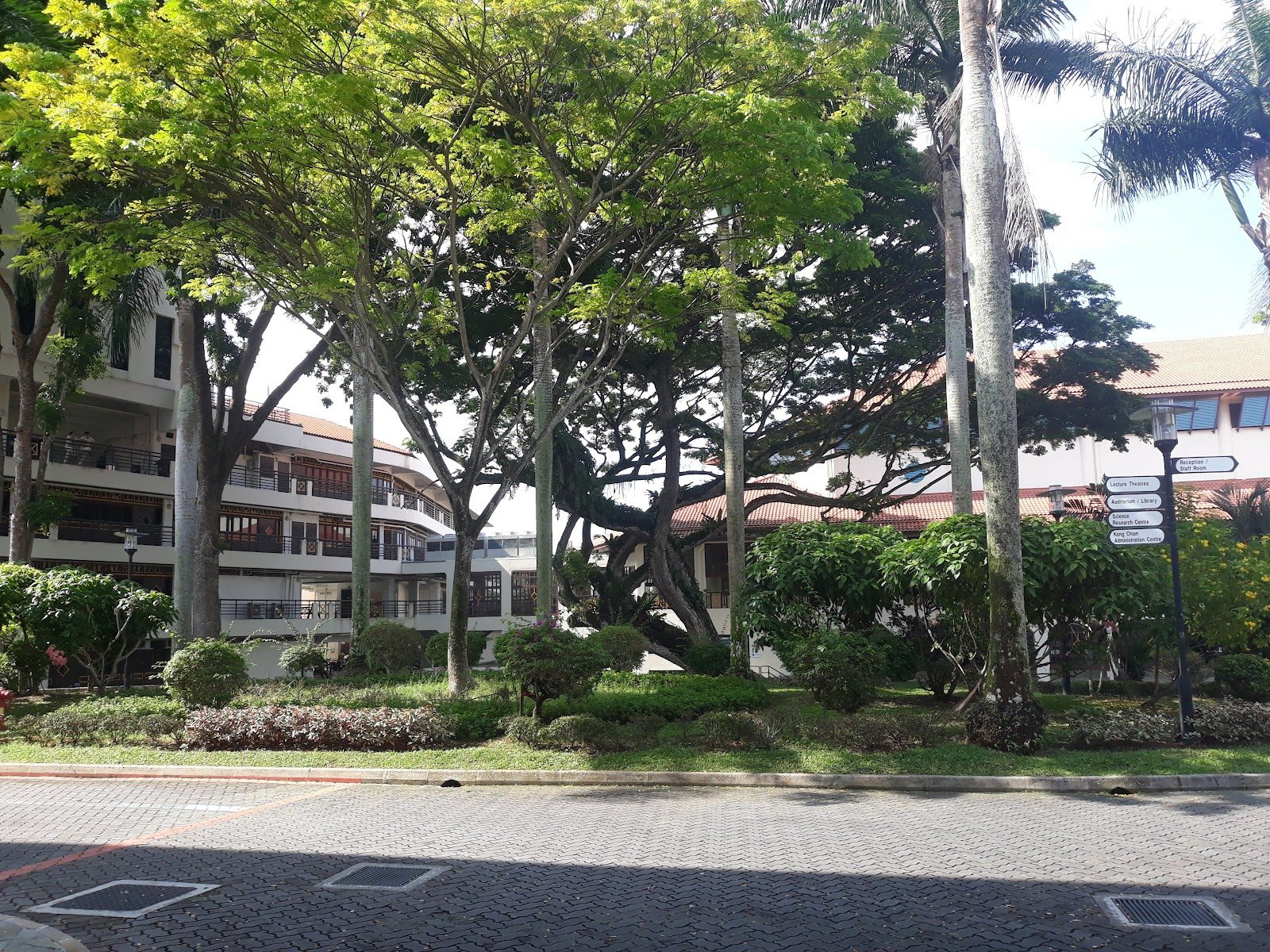
Hwa Chong Institution
Singapore · Singapore
Singapore's storied merged independent school, pairing its Integrated Programme with an IB track at its Bukit Timah campus.
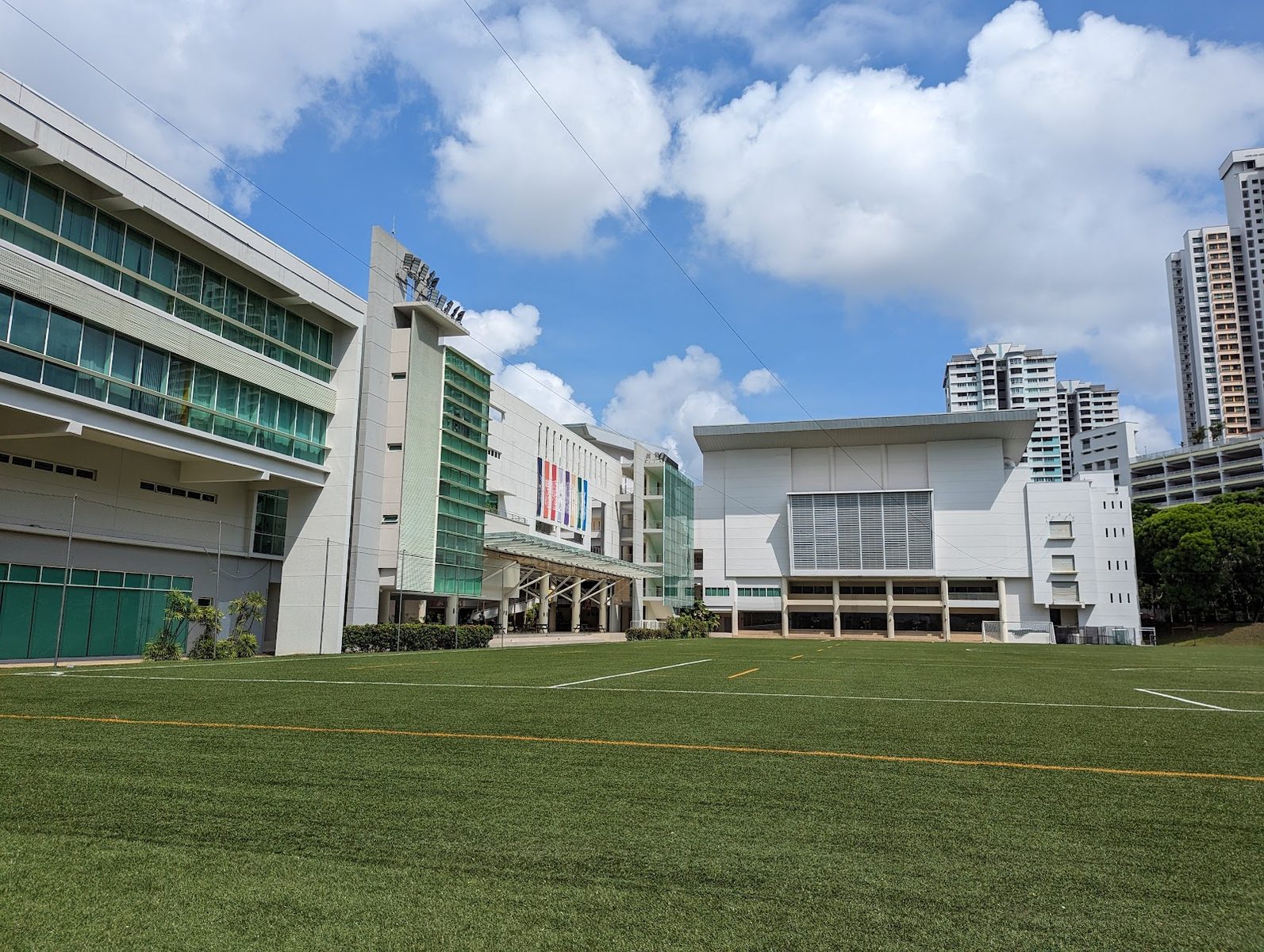
Anglo-Chinese School (Independent)
Singapore · Singapore
Singapore's first IB Diploma school, this Methodist boys' campus on Dover Road has ranked among the world's top three IB scorers for years.
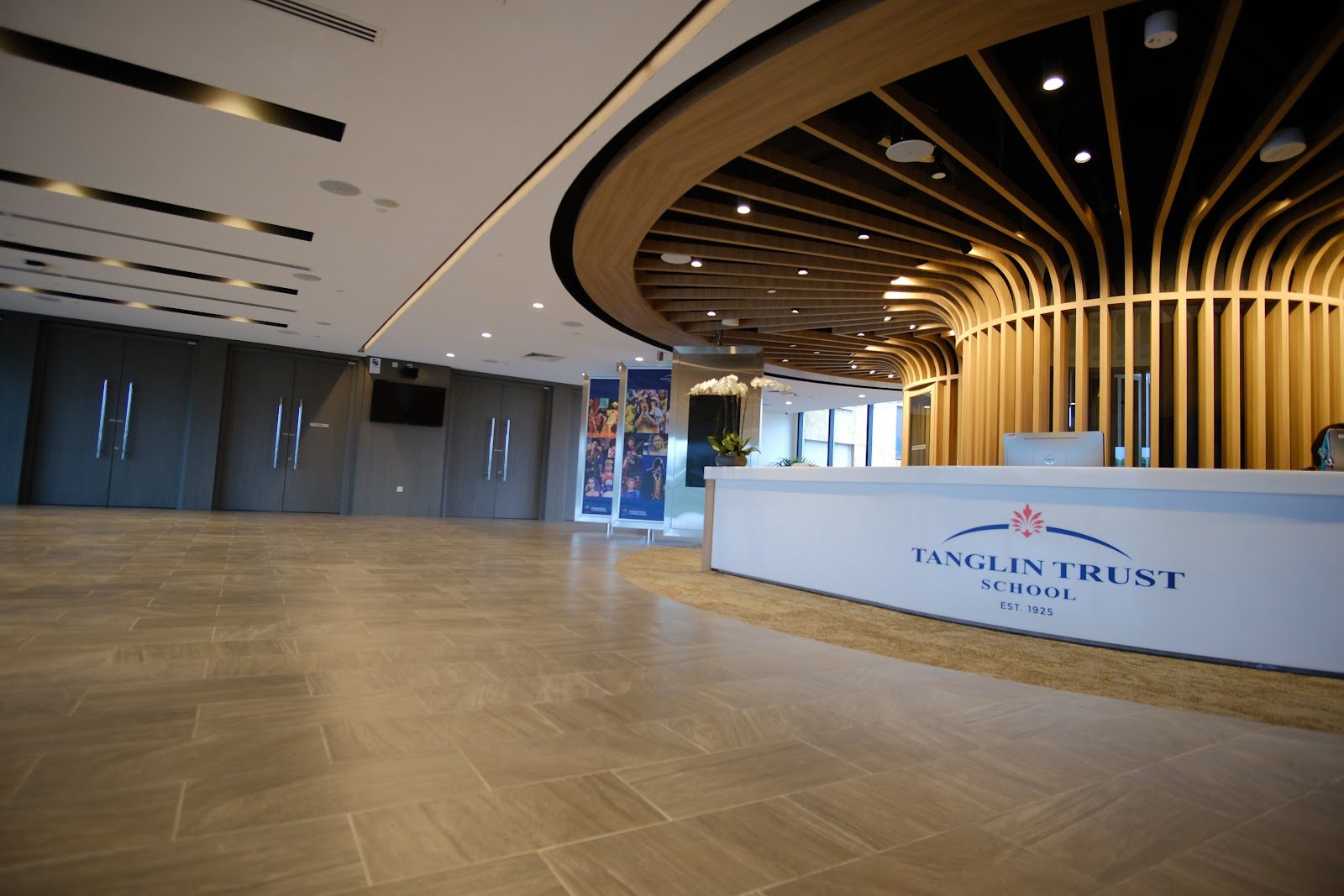
Tanglin Trust School
Singapore · Singapore
Southeast Asia's oldest British school pairs IB with A-Levels, then sends every Year 9 to the Australian bush for five weeks.
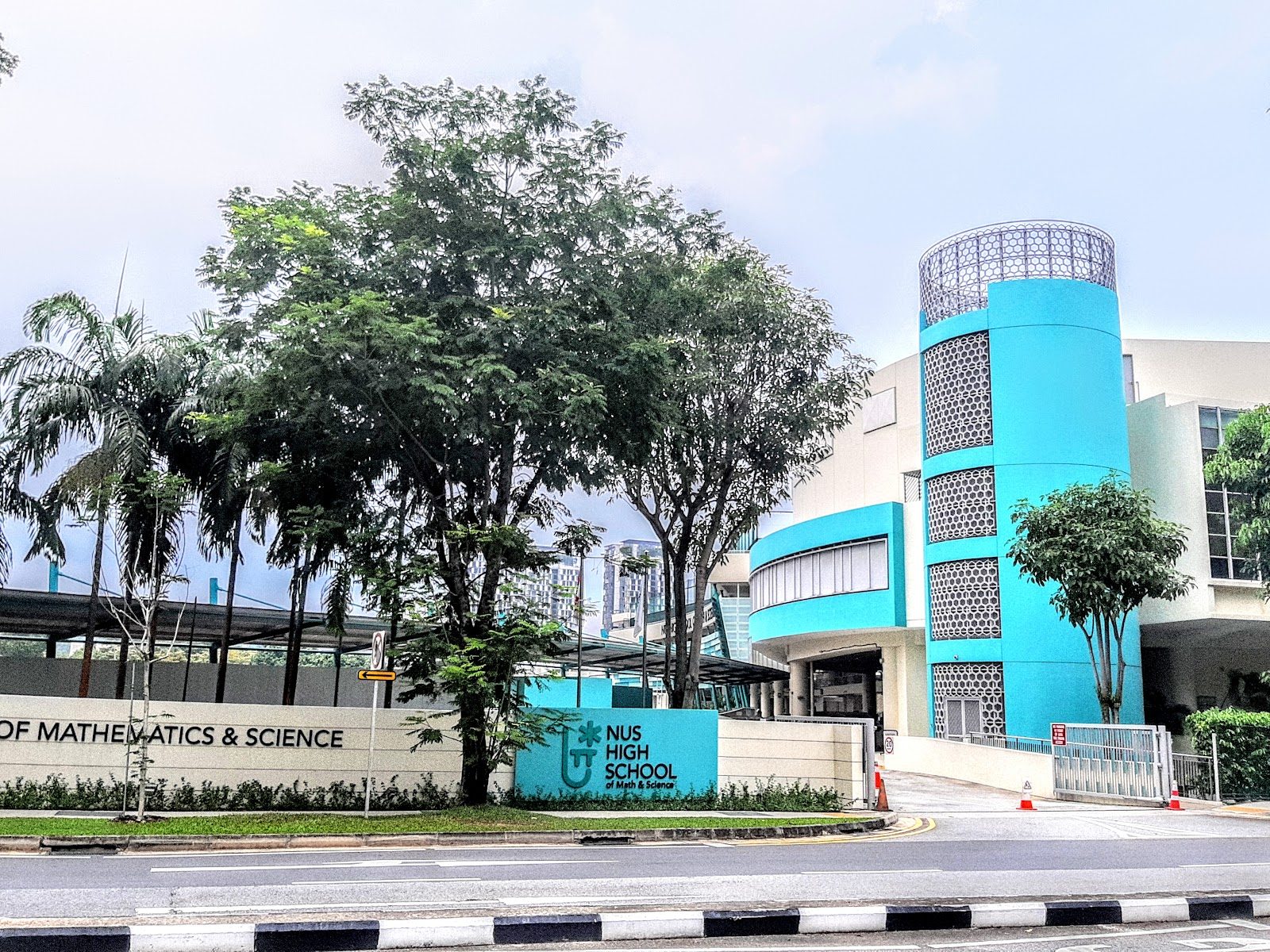
NUS High School of Math and Science
Singapore · Singapore
Six years, no O-levels, no A-levels -- just a bespoke diploma built around university-level math and science modules.
Same country and curriculum — closest matches within ±10 points either way