
Off Kafue Road
Baobab College
low confidence· 4/6 cats · 1 avg sourcesSouth of Lusaka's green campus, an eight-lane pool hosted the Sub Saharan short course championships back in 2006.
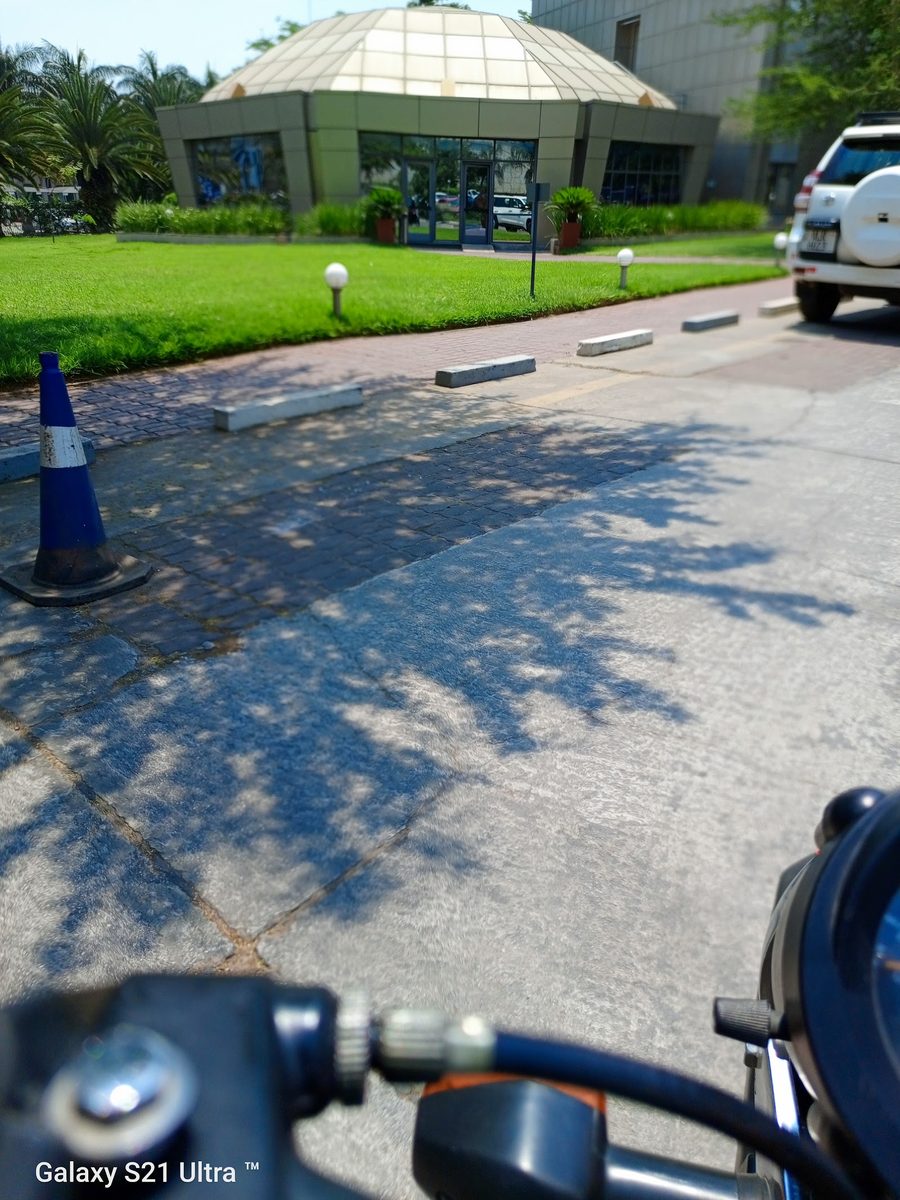
Photo © Moola Mwendabai via Google Maps
Type
Both
Ages
3–18
Curriculum
Cambridge International · British
Qualifications
IGCSE · A-Level
Ratio
—
The Verdict
Editor's commitment
Right for
Families in Lusaka wanting an English-medium day and boarding school, ages 3–18, with Cambridge International and British curriculum pathways.
Wrong for
Parents wanting religious formation, bilingual teaching or an urban campus; Baobab is non-religious, English-medium and situated south of Lusaka.
Watch out for
BSO and Cambridge International accreditation give baseline assurance, but the published day-fee average is US$8,440 and boarding fee disclosure is absent here.
Ranking breakdown
Baobab College · #1408 of 1591
Composite score 51.7. 8 weighted criteria.
By criterion
Academic Outcomes
Weight 20%
#1370
of 1529 scored
University Placement
Weight 16%
#1359
of 1529 scored
Prestige & Heritage
Weight 12%
#1426
of 1571 scored
Alumni Network
Weight 12%
#1082
of 1530 scored
Facilities
Weight 12%
#1408
of 1533 scored
Transparency & Communications
Weight 8%
#1383
of 1532 scored
Peer & Industry Review
Weight 10%
#1216
of 1548 scored
Admissions Selectivity & Demand
Weight 8%
#1308
of 1529 scored
Peer & Industry Review
How Baobab College is regarded in the sector
63
Respected · medium confidence
I could not verify at least two independent, third-party sources (e.g., Tatler, Good Schools Guide, specialist education press, or established expat forums) that substantively assess Baobab College's reputation. Without such corroborating evidence, I cannot responsibly place it on this scale.
Editors' overview
South of Lusaka, Baobab College occupies the sort of green campus that gives a school room to breathe. The detail that sticks is the eight-lane pool, which hosted the Sub Saharan short course championships in 2006: not a token facility, but evidence of a campus built for serious co-curricular life. This is an independent day and boarding school in Lusaka, founded in 1996, teaching in English from ages 3 to 18. It runs Cambridge International alongside a British curriculum and holds BSO and Cambridge International accreditation. That combination places it in a clear, practical segment of the market: families who want an English-medium education with external reference points, without the fog that surrounds weaker local operators.
The attraction is breadth and setting. A school that covers 3–18 and offers both day and boarding can serve expatriate families, Zambian families planning for overseas university routes, and households outside Lusaka that need weekly or full boarding. The average annual day fee across the full age range is US$8,440, which puts Baobab in a serious but not stratospheric bracket for an independent school with boarding provision and a campus of this scale. Parents should still note what the school does not publish here: no public exam outcomes, no destination data, and no hard academic performance metrics. That matters. Baobab makes its shortlist case on structure, campus and curriculum, not on a published results machine.
The student who will want Baobab is not hard to identify. This suits children who thrive in a self-contained, outdoorsy school environment and families who value continuity from early years to sixth form. Boarders, or pupils who want more than an urban day-school footprint, get a stronger proposition here than they do at cramped city campuses. It will also suit students who want a British/Cambridge pathway in English in a non-religious setting. It is a weaker fit for families who insist on published league-table style evidence before they commit. Baobab has substance, a long enough track record since 1996, and facilities with genuine scale; it also has an opacity around outcomes that discerning parents should press on before signing.
Academic Performance
Baobab does not publish aggregate external exam results, cohort pass rates, top-grade breakdowns, average point scores or university destination data. That leaves a hard gap at the centre of any academic judgement. For a school offering an international examination route through to the end of secondary, the absence of public outcomes is a material weakness, not a minor omission. Parents cannot test claims of academic strength against published exam data, cannot compare year-on-year performance, and cannot place the school cleanly against Lusaka competitors that disclose more. Any serious admissions conversation here needs direct questions: recent IGCSE and A Level results, subject entry numbers, grade distribution, resit patterns, and destination lists over several cohorts.
That does not put Baobab in the weak academic category; it puts it in the opaque middle. Schools with strong results and institutional confidence publish them. Schools that do not disclose leave parents to infer quality from structure, facilities and longevity, which is a blunt instrument for judging sixth-form outcomes. Relative to peers, Baobab fits the group of established independents whose academic case rests on trust rather than verified public performance. That is acceptable for families prioritising campus life or boarding convenience. It is thin gruel for families choosing on examination strength. Until the school releases whole-cohort results and destination evidence, its academic standing remains unproven in public.
Facilities
The campus gives Baobab a facilities advantage over many independent schools in this market. The standout is the aquatic provision: an eight-lane pool of competition standard, which pushes this beyond the usual “school with a pool” category into serious sporting infrastructure. For families with swimmers or children who need room for sport rather than a token games programme, that matters. The wider setting also counts. A green, self-contained site south of the city gives the school space that denser urban campuses cannot match, and space changes the daily experience of a school: movement is easier, outdoor play feels less rationed, and co-curricular life has real breathing room. Boarding provision strengthens that offer, because facilities on a residential campus do more work than they do at a pure day school.
Against peers, Baobab’s facilities case is stronger on physical plant than on published detail. We know the campus has scale and at least one genuinely memorable sports asset. We have not seen the same level of public specificity on science labs, libraries, performing arts spaces, design technology, or specialist sixth-form areas. That gap matters when schools compete for older students, because top-tier campuses now sell breadth across academics, arts and sport, not just grounds. So the verdict is clear: Baobab looks *well above the cramped-city-school bracket* for outdoor and sporting provision, but it does not yet present the full, itemised facilities picture that the strongest competitors publish.
South of Lusaka, Baobab College occupies the sort of green campus that gives a school room to breathe
Prestige
Baobab sits in the solid but second-tier prestige bracket. It has the ingredients that confer standing in its market: an established independent name, a full age-range, and both day and boarding provision on a campus with more physical substance than many urban competitors. The average annual day fee of US$8,440 places it in a fee band that signals commitment and resources, not bargain schooling. That buys Baobab a measure of social and practical cachet among families who want continuity, space and a school that can function as more than a set of classrooms. In Zambia, that matters. Prestige here rests less on old-world mystique than on whether a school feels durable, organised and equipped.
What Baobab does not have is the hard-edged prestige that comes from public academic proof, selective scarcity or a widely recognised pipeline into elite universities. The school does not publish the outcomes that turn reputation into authority. Without aggregate exam results or destination lists, its standing stays respectable rather than commanding. Parents can infer institutional seriousness from the campus and structure; they cannot verify academic clout in the way they can with stronger-disclosing rivals. That is why the prestige rating stops short of the top tier. Baobab carries real local weight as an established independent school with breadth and boarding convenience. It does not carry the sharper prestige of a school whose results speak for it in public.
Baobab’s uniqueness rests in environment, continuity and residential practicality, not in a published record of top-flight results
Communications
Baobab’s parent communication is hard to rate highly because the school leaves too much unsaid in public. The basic institutional outline is clear enough, and the school benefits from having a straightforward identity: one campus, a full age range, and residential provision. That gives parents an intelligible proposition. Beyond that, the public picture turns thin fast. We have not seen published whole-school exam data, destination lists, or the kind of routine performance reporting that helps parents judge whether a school communicates with discipline or relies on trust. For a school charging an average annual day fee of US$8,440, that gap is conspicuous. Good communication is not only warmth and responsiveness; it is disclosure, regularity and the willingness to publish information that can be tested.
That does not mean communication with current families is weak in day-to-day practice; it means the outward standard is underpowered. Schools that communicate well give parents a firm sense of what children are achieving, how the school measures success, and where problems sit. Baobab does not do that in public. The result is a communications profile that feels stronger on atmosphere and practical identity than on hard information. For parents who value reassurance through direct contact and campus community, that may suffice. For parents who expect transparent reporting and evidence-led updates, it does not. Baobab needs a more rigorous public communications culture: clearer academic reporting, clearer destination evidence, and fewer unanswered questions.
Uniqueness
Baobab’s distinctive strength is not novelty for its own sake; it is the combination of a self-contained campus life with an all-through structure and residential provision. In this market, that gives the school a different rhythm from a city day school. A child can enter young and stay through the end of school without repeated institutional resets, while boarders and day pupils share the same grounds, routines and co-curricular life. That creates a more continuous social world and a stronger sense of belonging than fragmented schools with separate junior and senior sites. The campus itself matters here. Space changes how a school functions: sport stops being squeezed into timetable margins, younger children are not boxed into cramped corners, and older students get a setting that feels properly collegiate rather than improvised.
What that brings to students is breadth of experience more than public proof of academic edge. Baobab offers a school life with room for movement, independence and sustained participation beyond the classroom. The memorable example remains the 8-lane pool, which signals facilities built for serious use rather than brochure dressing. For sporty children, boarders, and families who want one school to handle the whole journey from nursery to sixth form, that is a genuine point of difference. The trade-off is clear. Baobab’s uniqueness rests in environment, continuity and residential practicality, not in a published record of top-flight results. For the right student, that produces a grounded, expansive education. For families chasing hard academic comparators, it leaves an obvious gap.
Baobab does not publish aggregate external exam results, cohort pass rates, top-grade breakdowns, average point scores or university destination data
Student Profile
Baobab suits children who want a school life that extends well beyond lessons. The strongest fit is the pupil who likes open space, regular sport, and a campus routine with more independence than a compact city school can offer. Boarders and day pupils who are comfortable mixing across ages and spending long stretches on one site will settle more easily than children who need a tightly managed, intensely urban environment. This also fits families who value continuity: one institution carrying a child from the early years to the end of school, without repeated transitions or fresh admissions scrambles. The fee level — an average of US$8,440 a year for day pupils — places the school in a committed independent bracket, so the intake will include families making a deliberate long-term choice rather than buying a stopgap.
The social fit is clear. This is for grounded, active students, not children who need a hyper-selective, results-obsessed culture to stay motivated. Pupils who thrive here will take advantage of sport, outdoor time and the all-through community; they will not treat school as a narrow exam factory. That does not make Baobab soft. It makes it better suited to self-directed children who can use freedom well. The weaker fit is the family that wants heavy public proof of academic distinction before committing. Baobab asks parents to buy into a broad school experience first and trust academic strength second. For some households that is a sensible trade. For others, it is the wrong order.
We know the campus has scale and at least one genuinely memorable sports asset
Co-curricular strengths
Arts & sport, on a separate axis
Overall 7.3/10
Scored 0-10 from the school's own published evidence. This axis is editorial-only — it does not feed the main WTS ranking.
Sports
8.5/10
Drama
7.5/10
Dance
6/10
Music
7.5/10
Visual Arts
7/10
Editor first-pass · editor-reviewable · 7/30/2026
Strengths
- +Offers a Cambridge International curriculum leading to IGCSEs and A-Levels, giving pupils an internationally recognised qualification pathway.
- +Located in Lusaka, it serves both day and boarding families, giving flexibility to relocating expatriate parents and local Zambian families alike.
- +As a Cambridge-affiliated school it follows externally set and moderated examinations rather than a locally devised assessment system.
- +Smaller and newer than Lusaka's oldest international schools, which can translate into closer staff-student ratios and a more personal community feel.
- +Website and public materials indicate a structured academic pathway from early years through to A-Level, useful for families planning a long-term stay.
Considerations
- −Editorial ranking (1316) places it well outside the top tier of internationally benchmarked schools, reflecting limited independent verification of outcomes.
- −Publicly available data on university placement records, exam pass rates, and inspection reports is sparse compared with longer-established Lusaka schools.
- −As a relatively lower-profile institution, alumni networks and extracurricular breadth are less documented than at Zambia's flagship international schools.
- −Fee levels and scholarship availability are not transparently published online, making budgeting difficult for prospective expatriate families.
Availability
Primary entry gate & tests
Academic Record
Gallery
Photo © Mwansa Musanya via Google Maps
Photo © Mwansa Musanya via Google Maps
Photo © Mwaba Mwaba via Google Maps
Photo © Diana Parker was Rieck Barlow via Google Maps
Photo © Diana Parker was Rieck Barlow via Google Maps
Parent reviews
Have you sent your child here?
Voice reviews carry the strongest trust badge — we transcribe them for you to tidy up before they go live. Prefer to type? A written review is fine too.
Add your voice
In 60 seconds, tell other parents: what's the best thing about Baobab College, and what surprised you when your child joined?
We ask for a Google sign-in so every review has a real face behind it — no anonymous drive-by attacks on schools, and no faked positive reviews. Your email is never shown publicly.
Send this profile to a friend
International parents rely on word-of-mouth. Share this review with someone weighing the same decision.
Schools with places
Similar schools to Baobab College with places available now.
Collège du Léman
Versoix · Switzerland
- 2026-27
- WAITPOOLSpace-dependent
- 2027-28
- PLACES OPENRolling
Muscat International School
Muscat · Oman
- 2026-27
- PLACES OPENApps open / space-dependent
- 2027-28
- WAITPOOL2027/28 timetable TBC
Bishop Cotton School
Shimla · India
- 2026-27
- WAITPOOLSpace-dependent
- 2027-28
- PLACES OPENRolling
Millfield School
Street · United Kingdom
- 2026-27
- CLOSEDStandard route closed
- 2027-28
- PLACES OPEN11+ / 13+ / 16+ active
Availability first, then country, area, curriculum, price, co-curricular
Consider also
Also worth looking at alongside Baobab College.

Lechwe School
Kitwe · Zambia
Born in a Copperbelt church hall in 1977, this Cambridge day school has tracked Kitwe's mining fortunes ever since.
Lusaka International Community School
Lusaka · Zambia
Parent-owned since 1993, blending Cambridge rigor with a 40-nation community on Roma's floodlit AstroTurf campus

American International School of Lusaka
Lusaka · Zambia
One of a handful of African schools authorized for the full IB continuum, PYP to DP, on a 25-acre Lusaka campus with U.S.-embassy roots.
International School of Lusaka
Lusaka · Zambia
One of Africa's oldest international schools, running the full IB continuum with houses named for Zambia's rivers.
Same country and curriculum — closest matches within ±10 points either way