
Jiangsu
Nanjing Foreign Language School
Founded in 1963 on Premier Zhou Enlai's initiative, five foreign languages underpin a steady pipeline into China's diplomatic corps.
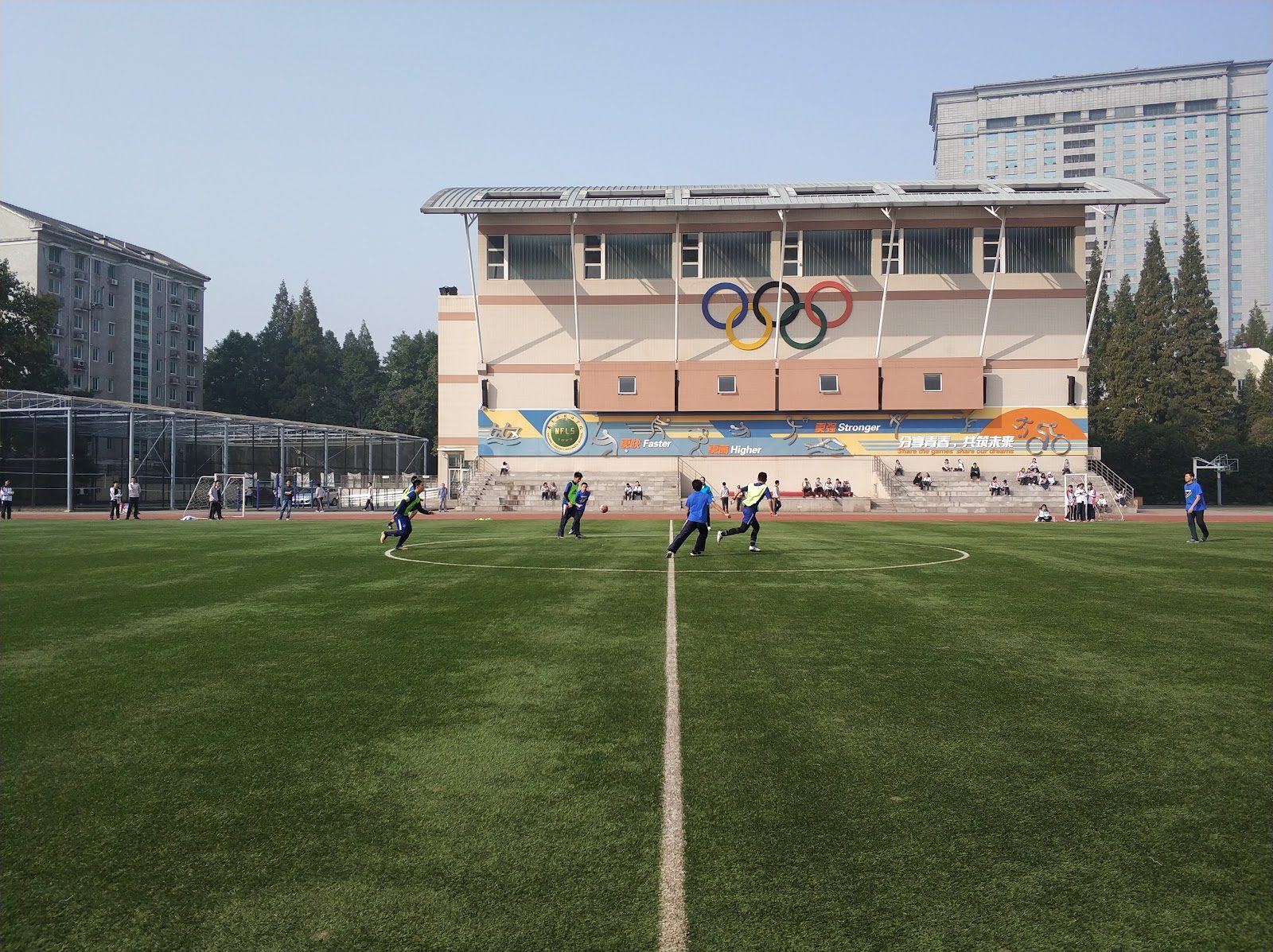
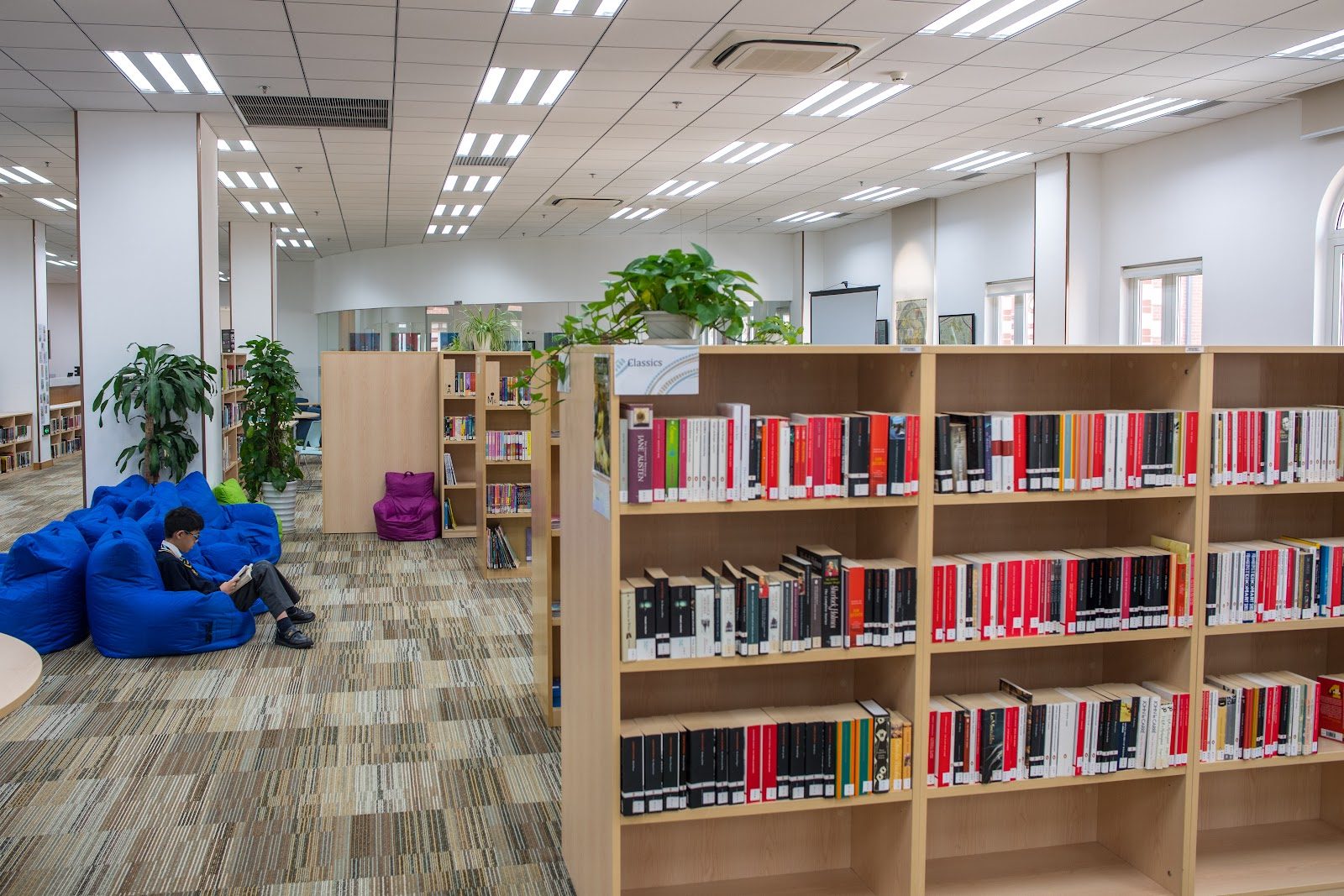
Photo © Chenyuan Hui via Google Maps
Type
Day + Boarding
Ages
15–18
Curriculum
Chinese National
Qualifications
Gaokao
Ratio
—
The Verdict
Editor's commitment
Right for
Families wanting a 1963-founded municipal public school in Nanjing, with Chinese National curriculum and Mandarin-English instruction at ages 15–18.
Wrong for
Parents seeking an international curriculum, religious ethos or private-school insulation; this is a non-religious school under the Nanjing City Education Bureau.
Watch out for
The diplomatic mystique is real, but published facts are thin: beyond Chinese Ministry of Education accreditation, the school does not disclose outcomes here.
Ranking breakdown
Nanjing Foreign Language School · #574 of 1591
Composite score 68.0. 8 weighted criteria.
By criterion
Academic Outcomes
Weight 20%
#209
of 1529 scored
University Placement
Weight 16%
#59
of 1529 scored
Prestige & Heritage
Weight 12%
#53
of 1571 scored
Alumni Network
Weight 12%
#1390
of 1530 scored
Facilities
Weight 12%
#732
of 1533 scored
Transparency & Communications
Weight 8%
#938
of 1532 scored
Peer & Industry Review
Weight 10%
#300
of 1548 scored
Admissions Selectivity & Demand
Weight 8%
#51
of 1529 scored
Peer & Industry Review
How Nanjing Foreign Language School is regarded in the sector
75
Strong · medium confidence
Nanjing Foreign Language School (NFLS) is widely regarded within China as one of the country's premier foreign-language feeder schools, consistently grouped alongside Hangzhou Foreign Language School and Shanghai Foreign Language School in national rankings of language-track secondary schools. Chinese education media and university admissions offices note its exceptionally strong placement record into top domestic universities (Peking, Tsinghua, Fudan) and into elite overseas institutions including Oxford, Cambridge, MIT, and Ivy League schools, with NFLS frequently cited in provincial gaokao top-scorer lists and Jiangsu education bureau reports. It participates in national foreign-language school conferences and exchange programs, reflecting recognition among peer institutions as a benchmark for language-immersion pedagogy. Independent commentary, largely from Chinese-language education press and parent forums rather than Western outlets like Good Schools Guide, praises its rigorous academics and competitive admissions, though it receives less coverage in international school-ranking platforms such as WhichSchoolAdvisor, which focus more on international/bilingual schools than on China's public foreign-language-track system, where NFLS sits as a flagship.
Award
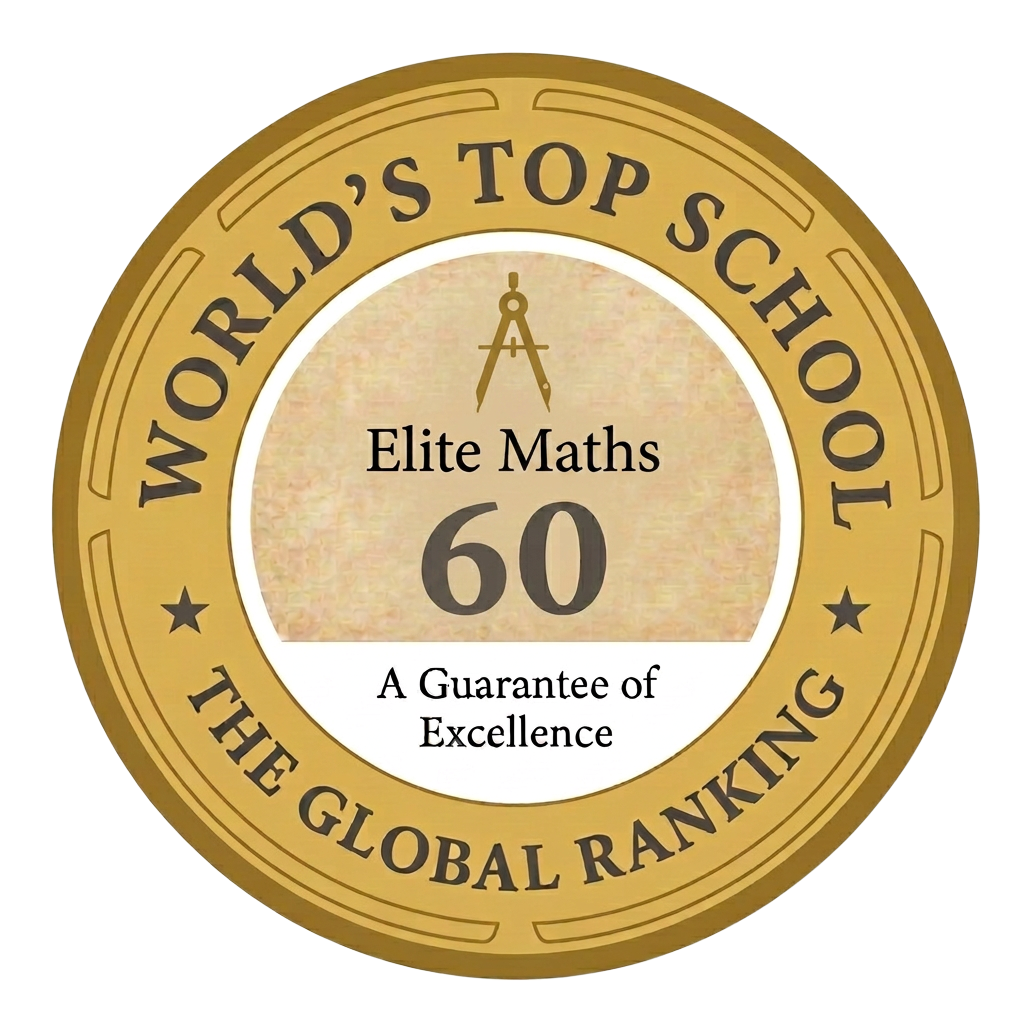
Elite Mathematics 60
World's Top School · The Global Ranking
Nanjing Foreign Language School is featured on our Global Top 60 ranking at #30. This seal is available for the school's marketing team to use on their website, prospectus and social channels.
- Qin Gang — Former Foreign Minister of China, diplomacy
- Ma Zhaoxu — Vice Foreign Minister, diplomacy
- Le Yucheng — Vice Foreign Minister, diplomacy
Editors' overview
Nanjing Foreign Language School occupies a distinct niche in China’s state sector: a public secondary school with a long foreign-language mandate and a serious reputation for linguistic training. Founded in 1963 on Zhou Enlai’s initiative, it was built with a national purpose, not as a lifestyle brand for expatriate families. That origin still matters. This is a school for students who want academic stretch inside the Chinese National curriculum, with Mandarin and English as languages of instruction and a culture shaped by disciplined language study. In a market crowded with private international schools selling global polish, NFLS offers something harder-edged and more specific: public-sector prestige, institutional seriousness and a direct association with China’s diplomatic and language-training tradition.
What sets it apart is focus. The school’s identity rests on foreign languages, and that gives it a sharper profile than the many academically strong Chinese schools that treat languages as an accessory. Parents looking for a school with a diffuse “all-round” pitch will find better-known alternatives. Parents looking for intellectual intensity, strong peer calibre and a school whose mission has held for more than 60 years will find NFLS more compelling. It is also a boarding school, which widens its appeal beyond immediate local catchment and reinforces the sense of structure. The school sits in the sweet spot for ambitious Chinese families who want high academic pressure without abandoning the national system, and for students whose interests run towards languages, international affairs and the formal disciplines of elite public education.
This is not the right school for every teenager. It suits students aged 15–18 who are comfortable with competition, responsive to clear standards and energised by rigorous study rather than hand-holding. A child who wants a loose, highly personalised, western-style sixth form experience will find the model too formal. A student who thrives on mastery, relishes languages and is drawn to clear hierarchy, serious scholarship and the prestige of a selective public institution will fit. For parents building a shortlist, NFLS earns its place because it offers a rare combination in China: historic purpose, state backing, boarding, and a foreign-language identity that is not cosmetic but foundational.
An Elite Mathematics 60 school
Nanjing Foreign Language School, in Nanjing, China, sits at rank thirty on the Elite Mathematics 60. The single fact anchoring this placement is recent and concrete: at the 41st Chinese Mathematical Olympiad final in December 2025, six NFLS students combined for three gold, one silver and two bronze medals, with Xu Yangxuan finishing first in Jiangsu and twenty-first nationally and earning a seat on China's National Training Team, the pool that supplies the six-member IMO squad.
The mathematics architecture starts before senior year. NFLS runs a dedicated foundational-discipline talent-cultivation curriculum that identifies competition-grade mathematicians from junior-high age and custom-builds their training path, and it has piloted a Shing-Tung Yau mathematics-and-science integrated class. Coaching is led by head coach Huang Zhijun and lead coach Zhou Yifei, who guided the 2025 squad from provincial qualification through three months of camp training to national-team selection. Across mathematics, physics, chemistry, biology and informatics, NFLS students have won ten international olympiad gold medals to date, and the school holds Ministry-approved recommendation status alongside places in Peking University's and Tsinghua's flagship talent-admission programmes -- evidence advanced mathematics reaches well past a handful of prodigies.
Notable alumni include Dai Jiangqi, who took first place at the 2021 Romanian Master of Mathematics -- one of three competitions, alongside the IMO and Russian Mathematical Olympiad, that China sends full teams to -- after earlier posting a perfect score at the China Mathematical Olympiad and earning direct admission offers from both Tsinghua and Peking University without sitting the gaokao. Xu Yangxuan, now on the National Training Team, leads a current cohort that also includes 2025 CMO gold medalists Li Haojin and Cheng Sibo.
International openness runs on a separate track from the Mandarin-medium competition pipeline above, which sits inside the Chinese National curriculum. The affiliated Xianlin campus has run an international high school since 2005 offering Australian, American, German and ACT/GAC pathways open nationwide regardless of household registration, entry decided by an English-and-mathematics placement test; boarding is standard, and annual fees run around RMB 100,000, against roughly RMB 60,000-70,000 for Cambridge/IB streams elsewhere in the NFLS system. Because places run through China's academic-year cycle rather than a rolling international gate, families abroad should apply at least a year ahead and confirm visa and boarding terms directly with the campus, understanding the mathematics results above belong to the gaokao-track cohort.
Academic Performance
Public data on external results is thin. The school does not publish aggregate gaokao outcomes, subject averages, score distributions, AP results or IB results. That matters. For a school with a serious academic reputation, the absence of published headline attainment figures leaves parents without the clean benchmarking that top independent international schools now treat as standard. The institution sits inside the Chinese state system, so its strongest comparison group is elite public secondary schools rather than bilingual privates courting expatriate families. In that company, NFLS carries clear academic prestige, but prestige is not the same thing as transparent reporting.
Where the school stands relative to peers, then, rests less on disclosed exam tables than on institutional status and selectivity. It is a municipal public secondary school under the city education bureau, not a marginal language academy trading on a historic name. That places it in the upper tier of local public provision. Its foreign-language mandate also gives it a more specialised academic identity than generalist state schools, with the strongest fit for pupils whose strengths run beyond raw maths-and-science competition. Parents should read NFLS as an elite, exacting school with real standing, but also as one whose academic outcomes remain too opaque in the public domain. For internationally mobile families used to published university destinations and exam averages, that opacity is a weakness, not a detail.
Facilities
Public information on facilities is thin, and that in itself tells parents something. NFLS does not publish the kind of campus inventory that stronger communicators now treat as routine: no clear breakdown of science labs, arts spaces, sports provision, specialist language suites, library scale or boarding amenities is in the public domain. For a school with a foreign-language mandate, dedicated language facilities matter more than glossy architecture, but the school does not set out that infrastructure in usable detail. Parents therefore cannot test whether the physical environment matches the school’s serious academic identity or whether facilities sit at the level of top private competitors. That is a clear weakness in public-facing transparency.
Against peer schools, the benchmark is straightforward. Elite Chinese public schools can deliver strong teaching and hard academic discipline without the expansive theatres, aquatics centres and design labs that premium international schools advertise aggressively. NFLS fits that public-sector pattern more than the amenity-heavy private model. Expect provision geared to teaching, study and student residence rather than a showpiece campus. That will suit families who value institutional substance over spectacle. It will frustrate parents who want precise evidence of specialist resources before committing. Until the school publishes a fuller account of its campus, facilities remain an area of unhelpful opacity rather than a point of demonstrable strength.
Nanjing Foreign Language School occupies a distinct niche in China’s state sector: a public secondary school with a long foreign-language mandate and a serious reputation for linguistic training
Prestige
NFLS carries real public-sector prestige inside China’s school hierarchy. This is not prestige manufactured through glossy international branding or imported affiliations; it rests on selectivity, administrative status and a mission with national weight. A municipal public secondary school under the city education bureau occupies a stronger civic position than the many private schools that charge high fees and trade on English-medium aspiration. The foreign-language specialism sharpens that standing. In China, schools with a durable language mandate sit close to channels of state service, university advancement and elite academic competition. That gives an NFLS education institutional credibility that travels well within the domestic system, especially for families who value formal academic distinction over the softer cachet of an “international” label.
I rate its prestige highly because the school combines three things that rarely sit together: state legitimacy, academic seriousness and a specialist identity that still means something. It is not the broadest badge of status in the Chinese market; a family chasing global university branding alone will find more legible names elsewhere. But within its own lane, NFLS has old-established authority. The school’s public reputation benefits from continuity, clear purpose and a long association with high-level language training. That produces a form of prestige that is hard-edged, elite without theatricality and strongest among families who understand the difference between expensive schooling and genuine standing.
Founded in 1963 on Zhou Enlai’s initiative, it was built with a national purpose, not as a lifestyle brand for expatriate families
Communications
NFLS communicates with parents in the classic way of a high-status public school: sparingly, formally and on its own terms. The school has a website, but the public-facing picture is thin, institution-first and weak on the practical detail parents now expect. There is no rich stream of published campus information, no serious data culture around outcomes, and no obvious effort to narrate student life in the polished, high-frequency manner common at private international schools. That does not signal disorganisation. It signals confidence that the school’s reputation, selectivity and official standing do much of the work. For local families already fluent in the Chinese state-school ecosystem, that style is legible. For internationally mobile parents, it feels opaque and underpowered.
Effectiveness depends heavily on the parent. A family that wants regular digital storytelling, granular academic reporting and easy comparison with rival schools will find NFLS frustrating. A family that values authority, discipline and direct administrative communication will tolerate more. The problem is not that the school communicates too little in a philosophical sense; it is that it publishes too little that helps an outsider judge fit. That leaves parents to infer too much from prestige alone. In a school serving older pupils in a high-pressure environment, communication needs to do more than announce events and preserve hierarchy. It needs to clarify expectations, workload, pastoral structures and outcomes. NFLS does not do that well enough in public.
Uniqueness
What makes NFLS unusual is not “international mindedness” in the generic private-school sense, but a state-built language mission with teeth. This is a public secondary school created for a specific national purpose, and that gives it a different centre of gravity from bilingual schools that add languages onto a conventional academic offer. Its identity rests on five foreign languages and on the institutional seriousness that flows from that focus. Students do not enter a campus trying to be everything at once. They enter a school that treats language study as a core discipline, tied to status, advancement and public service. That produces a clearer sense of purpose than most schools in this segment.
For students, the benefit is not cosmetic fluency or résumé decoration. It is immersion in a culture where languages carry intellectual weight and where peers have opted into the same high-pressure specialism. That sharpens motivation, raises the level of classroom discussion and gives able linguists a more exacting peer group than they find in a generalist school. It also broadens ambition. A teenager with interests in diplomacy, translation, international affairs or language-heavy university pathways gets a school environment aligned with those goals rather than merely tolerant of them. The trade-off is obvious: this is a narrower, more formal proposition than a broad “all-round” school. For the right student, that narrowness is its edge.
Parents looking for a school with a diffuse “all-round” pitch will find better-known alternatives
Student Profile
The right student for NFLS is academically ambitious, linguistically inclined and comfortable in a school that values rank, discipline and sustained effort. This is a strong fit for teenagers who enjoy mastering content in depth, not skimming broadly, and who draw energy from able peers rather than reassurance. Students with a genuine appetite for foreign languages will get more from the school than those who treat language study as an accessory to a conventional high-achieving profile. Its identity rests on five foreign languages, so the best-matched pupils bring curiosity about other cultures, stamina for memorisation and precision, and the patience to improve through repetition. The social fit matters too: students who respect authority and cope well with formal expectations will settle more easily than those who push constantly against structure.
The weaker fit is just as clear. A teenager who needs constant individual affirmation, a wide-open menu of self-designed pathways or a relaxed classroom tone will find NFLS too rigid. So will students who want a broad lifestyle campus where sport, performance and social life carry equal weight with study. This is a school for pupils who can live with pressure and convert it into output. The strongest candidates are driven, thick-skinned and serious-minded; they do not need school to feel warm in order to thrive. For the right family, that makes NFLS highly purposeful. For the wrong one, it makes the school not for the faint-hearted.
Parents looking for intellectual intensity, strong peer calibre and a school whose mission has held for more than 60 years will find NFLS more compelling
Co-curricular strengths
Arts & sport, on a separate axis
Overall 7.6/10
Scored 0-10 from the school's own published evidence. This axis is editorial-only — it does not feed the main WTS ranking.
Sports
8/10
Drama
7/10
Dance
7.5/10
Music
7.5/10
Visual Arts
8/10
Strengths
- +Founded in 1963, NFLS is a municipal public secondary school for grades 7-12, run by the Nanjing City Education Bureau, with an 8:1 student-teacher ratio.
- +NFLS is one of the foreign language schools approved by the Ministry of Education for recommendation-based admission and is a participating school in Peking University's Principal's Real-Name Recommendation System.
- +Alumni have won International Olympiad gold medals, including physics in 1996, chemistry in 2008, and informatics in 2005, 2006 and 2009, and the school's own materials cite over twenty alumni who became national ambassadors, alongside two foreign ministry spokespersons.
- +The Rhodes Scholarship has been awarded to 16 students from mainland China, of whom three, so far, are NFLS alumni, according to the school's own account.
- +The NFLS network includes several branch campuses across Nanjing and Jiangsu, such as the Xianlin site established in 2002 as a twelve-year private boarding school.
Considerations
- −Admission to the main Beijing Road campus's junior-high program is restricted to applicants with Nanjing municipal household registration (hukou), effectively excluding most expatriate and non-local families.
- −Entry is narrowly quota-based and highly selective: the 2025 intake plan was capped at 580 places across five languages, with a computerised lottery invoked once applications exceed eight times capacity.
- −The core programme follows the Chinese national gaokao curriculum rather than IB or A-Level, so families seeking an internationally recognised diploma must look to separately administered affiliate campuses instead.
- −Published tuition and fee data for the main campus are not readily available in English-language sources, making cost planning difficult for relocating families comparing schools.
Availability
Primary entry gate & tests
Nanjing Zhongkao + English Test
Gallery
Photo © Chenyuan Hui via Google Maps
Photo © Chenyuan Hui via Google Maps
Photo © Jason Wang via Google Maps
Photo © Jason Wang via Google Maps
Photo © Johnny Sun via Google Maps
Photo © Frank via Google Maps
Photo © Frank via Google Maps
Parent reviews
Have you sent your child here?
Voice reviews carry the strongest trust badge — we transcribe them for you to tidy up before they go live. Prefer to type? A written review is fine too.
Add your voice
In 60 seconds, tell other parents: what's the best thing about Nanjing Foreign Language School, and what surprised you when your child joined?
We ask for a Google sign-in so every review has a real face behind it — no anonymous drive-by attacks on schools, and no faked positive reviews. Your email is never shown publicly.
Send this profile to a friend
International parents rely on word-of-mouth. Share this review with someone weighing the same decision.
Schools with places
Similar schools to Nanjing Foreign Language School with places available now.
Dulwich College Suzhou
Suzhou · China
- 2026-27
- WAITPOOLSpace-dependent
- 2027-28
- PLACES OPENRolling
Nanjing International School
Nanjing · China
- 2026-27
- WAITPOOLSpace-dependent
- 2027-28
- PLACES OPENRolling
UWC Changshu China
Changshu · China
- 2026-27
- CLOSEDStandard route closed
- 2027-28
- PLACES OPEN2027 application active
Availability first, then country, area, curriculum, price, co-curricular
Consider also
Also worth looking at alongside Nanjing Foreign Language School.
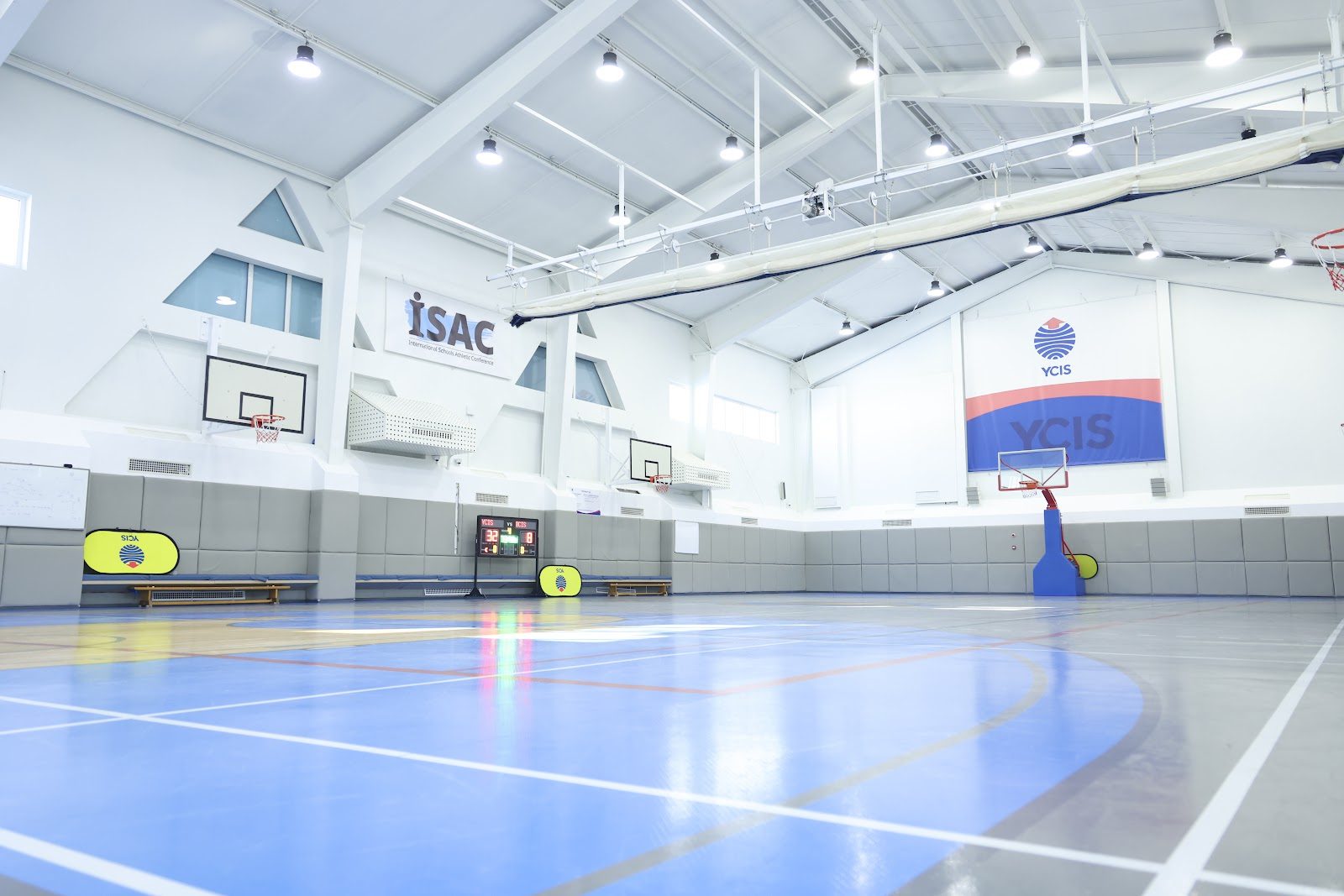
Yew Chung International School of Beijing
Beijing · China
Every classroom pairs a Western and a Chinese teacher, threading bilingual learning through a parkland Chaoyang campus.
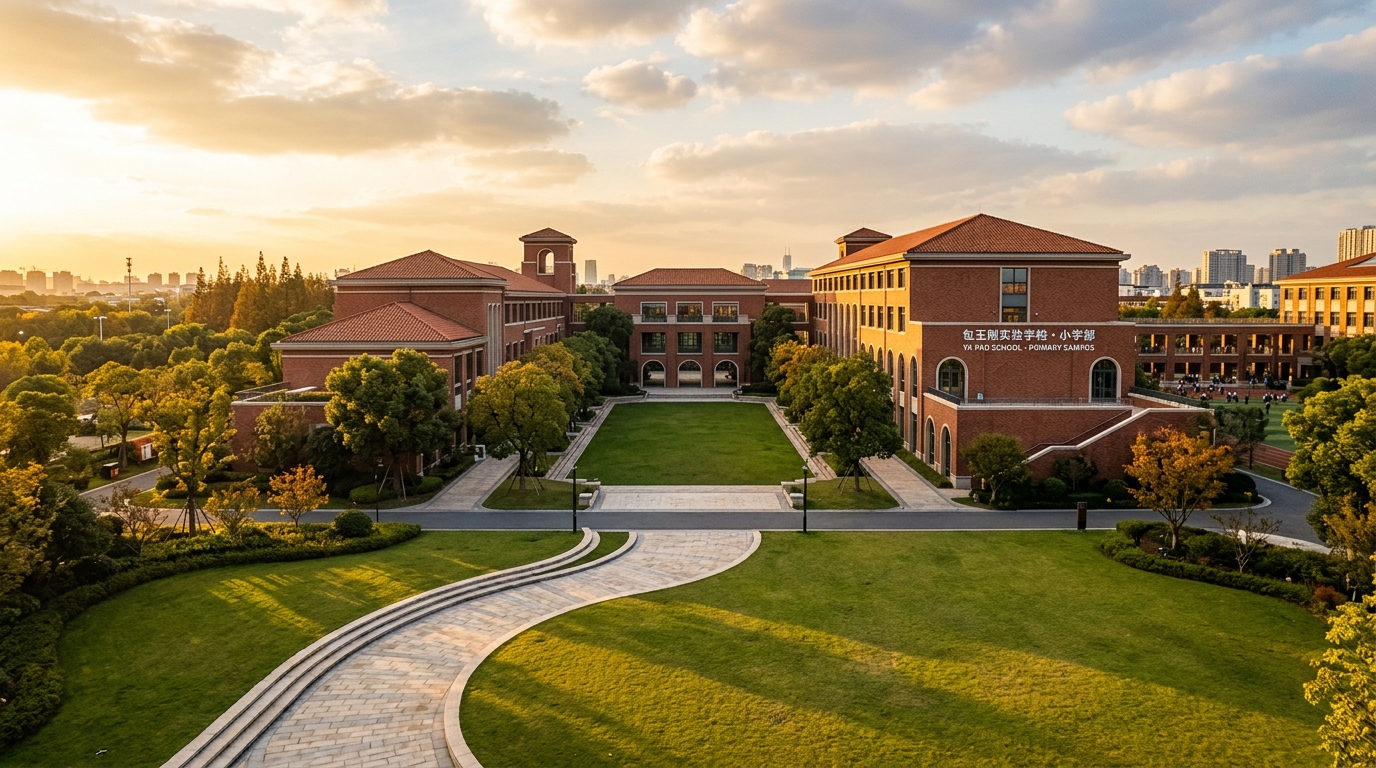
YK Pao School
Shanghai · China
Mandarin-English immersion anchors an IB and IGCSE track, with senior boarders housed in a Tudor-style village in Songjiang.
Wellington College International Shanghai
Shanghai · China
Rooted in an 1859 British foundation, this Pudong riverside campus channels house spirit into IB scores averaging 37 points.

UWC Changshu China
Changshu · China
On an island in Kuncheng Lake, mainland China's first UWC pairs the IB diploma with mandatory Mandarin study and a student-run Zhixing service programme.
Same country and curriculum — closest matches within ±10 points either way