
Santo Domingo
Colegio Babeque Secundaria
medium confidence· 4/6 cats · 2.91 avg sourcesA parent-founded cooperative school in Naco pairs the IB Diploma with unusual language tracks in French and Portuguese literature
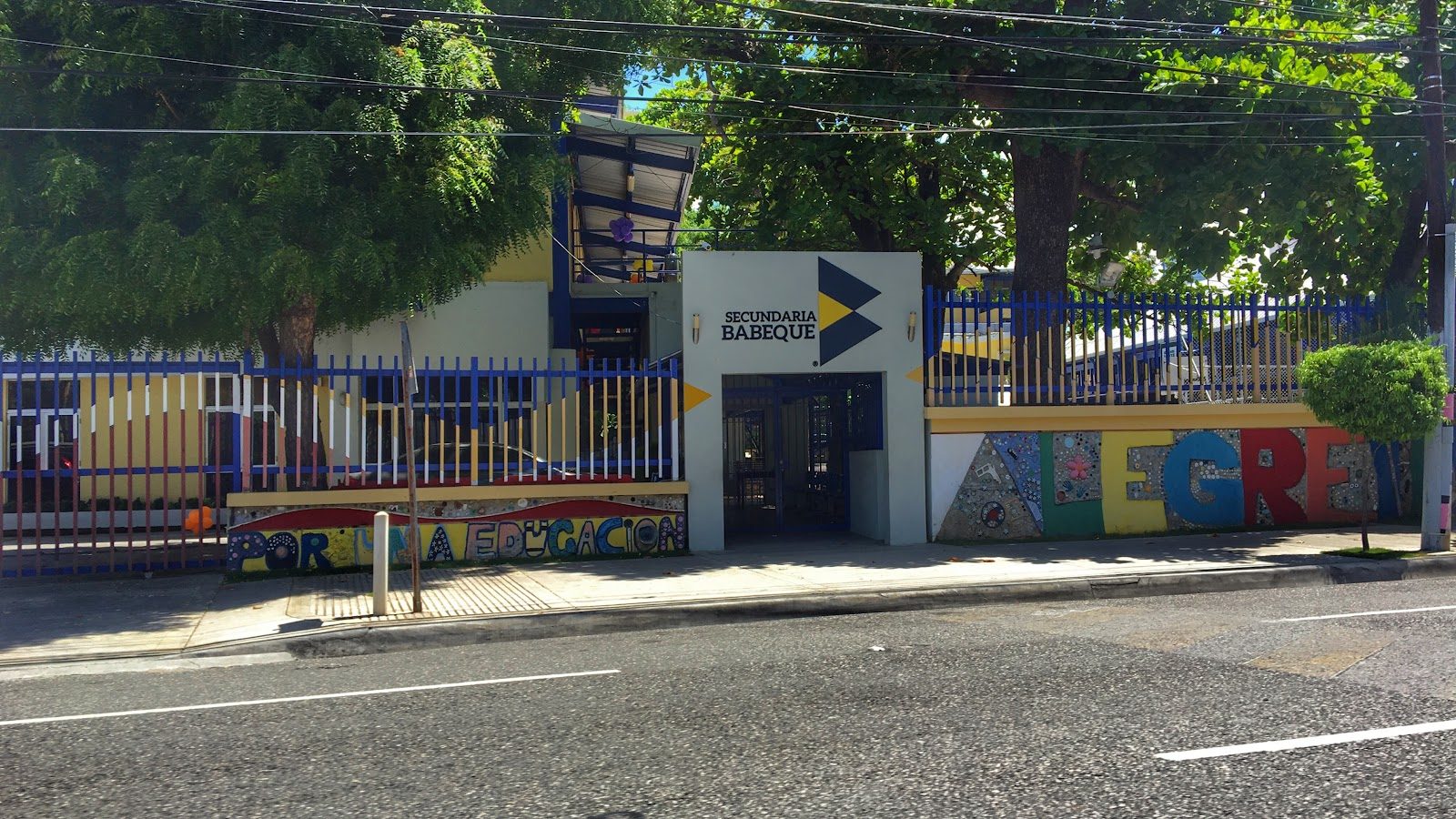
Photo © Andrés Matar via Google Maps
Type
Day
Ages
12–18
Curriculum
American
Ratio
—
The Verdict
Editor's commitment
Right for
Families in Santo Domingo wanting a day school founded in 1966, with American schooling and ages 12–18 in Spanish and English.
Wrong for
Parents wanting boarding, religious formation or a single-language education; Colegio Babeque Secundaria is day-only, non-religious, and teaches in Spanish and English.
Watch out for
The headline draw is the IB Diploma alongside an American school profile; that mix needs scrutiny, and the school does not publish outcomes here.
Ranking breakdown
Colegio Babeque Secundaria · #1220 of 1591
Composite score 57.5. 8 weighted criteria.
By criterion
Academic Outcomes
Weight 20%
#1192
of 1529 scored
University Placement
Weight 16%
#1201
of 1529 scored
Prestige & Heritage
Weight 12%
#1219
of 1571 scored
Alumni Network
Weight 12%
#835
of 1530 scored
Facilities
Weight 12%
#1228
of 1533 scored
Transparency & Communications
Weight 8%
#1197
of 1532 scored
Peer & Industry Review
Weight 10%
#1108
of 1548 scored
Admissions Selectivity & Demand
Weight 8%
#991
of 1529 scored
Score history
Colegio Babeque Secundaria · 2026
Movement across 2024–2026. Peer average overlaid.
Overall — 2024–2026
57.5/ 100
▲ +23.4 vs 2025
year on year
Peer & Industry Review
How Colegio Babeque Secundaria is regarded in the sector
64
Respected · medium confidence
No independent third-party sources—such as Tatler, Good Schools Guide, specialist education press, or expat-parent forums—could be identified that discuss Colegio Babeque Secundaria's reputation or standing. Without corroborating external evidence beyond the school's own materials, a reliable assessment cannot be made.
Editors' overview
Colegio Babeque Secundaria occupies a distinct place in Santo Domingo’s school market. Founded in 1966 as a parent cooperative, it carries a civic seriousness that many privately owned schools lack. This is not a prestige machine built around polish and social display; it is a school with an educational point of view. The offer stands out on two fronts: an American-declared curriculum delivered in Spanish and English, and the IB Diploma in the upper years, which gives older pupils an internationally legible exit route. More unusual still, Babeque has built language study beyond the standard bilingual formula, with French and Portuguese literature tracks adding real intellectual range. For families who want more than safe conventionalism, that matters.
The attraction is clear. Babeque suits students who are academically capable, linguistically curious and comfortable in a school that values ideas, reading and cross-cultural fluency. It will appeal to families who want a day school for ages 12–18 that feels rooted in Dominican society rather than insulated from it, yet still offers an outward-facing senior programme. The cooperative foundation also gives the school a different tone: parent-built purpose carries weight, and schools formed this way tend to draw families who care about governance, not just facilities. In a market where many schools sell aspiration, Babeque offers intellectual character.
The shortlist case rests on substance, not spectacle. A student who wants the IB Diploma without giving up a strong local identity will find a serious option here. A student who enjoys literature, languages and discussion, rather than a narrow exam factory culture, will fit well. This is also a strong prospect for internationally minded Dominican families and mixed-nationality households who want bilingual schooling without an imported-school affectation. The trade-off is straightforward: parents seeking high-gloss exclusivity, sprawling campuses or a heavy luxury-school aura will find other addresses better matched to that brief. Parents seeking academic breadth with backbone should look hard at Babeque.
In market terms, Colegio Babeque Secundaria sits in the space between elite-brand private schooling and purely local college-prep schools. Its edge lies in serious bilingual education, the IB Diploma, and the rare addition of French and Portuguese literature. That combination gives it a sharper academic profile than many schools that stop at English-Spanish bilingualism. For the right child — reflective, verbal, internationally aware and happy in a school with a mind of its own — Babeque deserves a place on the shortlist.
Academic Performance
Colegio Babeque Secundaria does not publish the exam data that would let parents judge external performance with confidence. We have not seen aggregate IB Diploma results, subject averages, pass rates, bilingual exam outcomes, or university placement statistics broken down in a way that allows peer comparison. That matters. In a market where serious schools use results to prove academic standards, this level of opacity is a real weakness. The presence of the IB Diploma gives pupils an internationally recognised leaving route, but the school does not disclose the numbers that show how strong that route is in practice. For an academically ambitious family, trust us is not enough.
That leaves Babeque in an awkward position relative to stronger-reporting competitors. Schools with published averages, score distributions and destination lists make a clearer case for academic performance; Babeque does not. That does not mean weak results. It means unverified outcomes. The school’s intellectual profile, language breadth and cooperative roots point to a culture that values learning over crude exam-drill, which many families will welcome. But parents comparing upper-secondary options on hard attainment need more than ethos. Until the school publishes consistent external results, its academic standing against peers remains hard to pin down and less convincing than it should be.
Facilities
The school’s facilities do not trade on spectacle. Publicly available information points to a campus built for day-to-day teaching rather than high-gloss theatre: classrooms, science provision, library space, sports areas and arts rooms form the core. That puts Babeque behind the city’s most capital-intensive competitors, where purpose-built performing arts centres, extensive athletics complexes and resort-scale grounds function as part of the sales pitch. Parents need to read that correctly. This is not a deficit if the priority is teaching and a grounded school culture; it is a limitation if a family expects the physical plant itself to feel elite-branded or expansive. We have not seen a published facilities inventory detailed enough to verify specialist capacity room by room, and that lack of precision matters.
Against peer schools, the campus reads as functional rather than grand. The important question is whether facilities support the school’s academic and cultural ambitions, especially for older pupils. On that front, the essentials are in place, but the school does not make a strong public case for exceptional laboratories, standout maker spaces, or top-tier theatre and sports infrastructure. Families comparing Babeque with wealthier bilingual schools will find a clear trade-off: less physical wow-factor, more emphasis on intellectual life. For many parents, that balance will be perfectly rational. For others, it will feel plain-spoken to a fault.
Colegio Babeque Secundaria occupies a distinct place in Santo Domingo’s school market
Prestige
Babeque’s prestige is real, but it is selective prestige, not the blunt social prestige that attaches to the most expensive, image-led schools. In Santo Domingo, it carries weight with families who value education as a serious enterprise and who pay attention to governance, culture and intellectual range. Its reputation rests less on status display than on earned regard among parents who want substance over theatre. That gives the school a stronger name in educated, professionally engaged circles than in the country-club market. For some families, that is a mark in its favour; for others, it means the badge itself does less social work than flashier competitors. Either way, this is not a school whose standing depends on luxury signalling.
That rating stops short of the top tier because the school does not publish the outcome data that would convert esteem into hard institutional authority. Prestige in education cannot rest on ethos alone. It needs visible results, clear university destinations and public proof that the senior years deliver at a high level. Babeque has a distinctive academic identity and a serious-minded reputation, but its external standing remains constrained by that lack of disclosure. The result is a school with credible intellectual prestige and solid local respect, rather than one with the unquestioned market dominance of a prestige brand. For the right family, that distinction will read as integrity; for others, as a ceiling.
In market terms, Colegio Babeque Secundaria sits in the space between elite-brand private schooling and purely local college-prep schools
Communications
Babeque’s parent communication has a clear structural advantage: a cooperative school cannot treat families as distant fee-payers. Parents expect information, explanation and access, and the school has to operate in that culture. That does not guarantee excellence, but it does create a more accountable communications climate than in schools where governance sits far from the parent body. The public-facing tone is functional rather than glossy, which fits the institution. Families drawn to serious schooling will read that as a strength. Families who want seamless digital polish, instant clarity on every process and a luxury-service feel may find it less satisfying.
The weakness is precision. The school does not publish enough hard academic reporting, and that affects communications as much as performance. When aggregate results, destination patterns and comparative outcomes stay out of view, parents get values and programme description without the hard proof that answers the most important questions. That leaves communication credible on ethos but less strong on evidence. We have not seen the kind of detailed public dashboard that marks out schools with first-rate institutional transparency. For current families who value dialogue, community and educational purpose, that may be enough. For prospective parents making a high-stakes choice, it is not quite rigorous enough.
Uniqueness
What marks Babeque out is not a single flagship feature but an uncommon combination: cooperative origins, a bilingual academic model, and a senior pathway that extends language study beyond the standard English-Spanish script. In a crowded private-school market, that matters. Many schools promise internationalism and deliver polished sameness; Babeque offers a more intellectually distinctive route. The presence of French and Portuguese literature, alongside the school’s main academic programme for students aged 12–18, gives able readers and linguistically ambitious pupils a broader frame of reference than most local competitors. That breadth does more than decorate a prospectus. It trains students to read across cultures, handle nuance and move with confidence between different literary and social worlds.
The cooperative foundation also shapes the student experience in ways that are easy to overlook and hard to copy. Parent-founded schools carry a different internal logic from owner-led businesses: they are built around educational conviction, not brand extension. For students, that can translate into a culture with more seriousness than show, stronger expectations around participation and a clearer sense that school is a civic institution, not a consumer product. Add the upper-school international exit route and Babeque offers a rare balance — rooted and outward-facing at once. For the right student, that produces something more valuable than prestige gloss: intellectual range, cultural fluency and an education with real character.
Colegio Babeque Secundaria does not publish the exam data that would let parents judge external performance with confidence
Student Profile
The student who fits Babeque is intellectually engaged, verbally confident and willing to work in more than one register at once. This is not the obvious choice for a child who wants school to run on status cues, social display or relentless hand-holding. It suits students who like reading, discussion and the discipline of forming an argument, and who do not resent peers who take ideas seriously. The age range — 12–18 — matters here: this is a school for adolescents, not a cradle-to-college cocoon, and the social environment will suit pupils ready for a more adult academic culture. Students with a real appetite for languages will get more from it than those who treat language study as a timetable obligation. So will pupils who are comfortable moving between local belonging and international ambition without needing either reduced to a slogan.
In character terms, the best fit is a young person with intellectual curiosity, cultural elasticity and a measure of independence. Babeque will reward students who can contribute to class, manage a varied workload and live with a school culture that values substance over performance. It is also a strong match for mixed-nationality families, academically serious Dominican households and children who want their education to feel rooted rather than insulated. The weaker fit is clear. A student chasing high-octane social prestige, resort-style campus life or a narrow exam-factory rhythm will find sharper matches elsewhere. This school suits the thoughtful, language-minded student who wants a community with standards and a mind of its own.
That combination gives it a sharper academic profile than many schools that stop at English-Spanish bilingualism
Co-curricular strengths
Arts & sport, on a separate axis
Overall 7.6/10
Scored 0-10 from the school's own published evidence. This axis is editorial-only — it does not feed the main WTS ranking.
Sports
7/10
The extracurriculars explicitly list Basketball, Volleyball and Football, showing a solid multi-sport offering but with no named facilities, competitive results or specialist sports staff cited.
Drama
8/10
Theatre is offered, but there is no further detail on productions, facilities, staff or programme depth.
Dance
7.5/10
Music
7/10
Choir is offered, but there is.
Visual Arts
8.5/10
Editor first-pass · editor-reviewable · 7/27/2026
Strengths
- +Day school suits Santo Domingo-based families
- +Serves ages 12–18, covering full secondary years
- +American curriculum offers familiar structure for some expatriates
- +Spanish and English instruction supports bilingual education
Considerations
- −Day-only model rules out boarding for relocating families
- −Secondary-only range excludes younger siblings under 12
- −Spanish and English instruction may challenge monolingual students
Availability
Primary entry gate & tests
Academic Record
Gallery
Photo © Monika Gomez via Google Maps
Photo © Monika Gomez via Google Maps
Photo © Monika Gomez via Google Maps
Photo © Monika Gomez via Google Maps
Photo © Monika Gomez via Google Maps
Parent reviews
Have you sent your child here?
Voice reviews carry the strongest trust badge — we transcribe them for you to tidy up before they go live. Prefer to type? A written review is fine too.
Add your voice
In 60 seconds, tell other parents: what's the best thing about Colegio Babeque Secundaria, and what surprised you when your child joined?
We ask for a Google sign-in so every review has a real face behind it — no anonymous drive-by attacks on schools, and no faked positive reviews. Your email is never shown publicly.
Send this profile to a friend
International parents rely on word-of-mouth. Share this review with someone weighing the same decision.
Schools with places
Similar schools to Colegio Babeque Secundaria with places available now.
Al Hekma International School
Manama · Bahrain
- 2026-27
- PLACES OPENApps open / space-dependent
- 2027-28
- WAITPOOL2027/28 timetable TBC
Marymount International School Rome
Rome · Italy
- 2026-27
- WAITPOOLSpace-dependent
- 2027-28
- PLACES OPENRolling
Germantown Friends School
Philadelphia · United States
- 2026-27
- CLOSEDRegular cycle closed
- 2027-28
- OPENS SOONOpens Sept '26
Poly Prep Country Day School
Brooklyn · United States
- 2026-27
- CLOSEDRegular cycle closed
- 2027-28
- OPENS SOONOpens Sept '26
Availability first, then country, area, curriculum, price, co-curricular
Consider also
Also worth looking at alongside Colegio Babeque Secundaria.
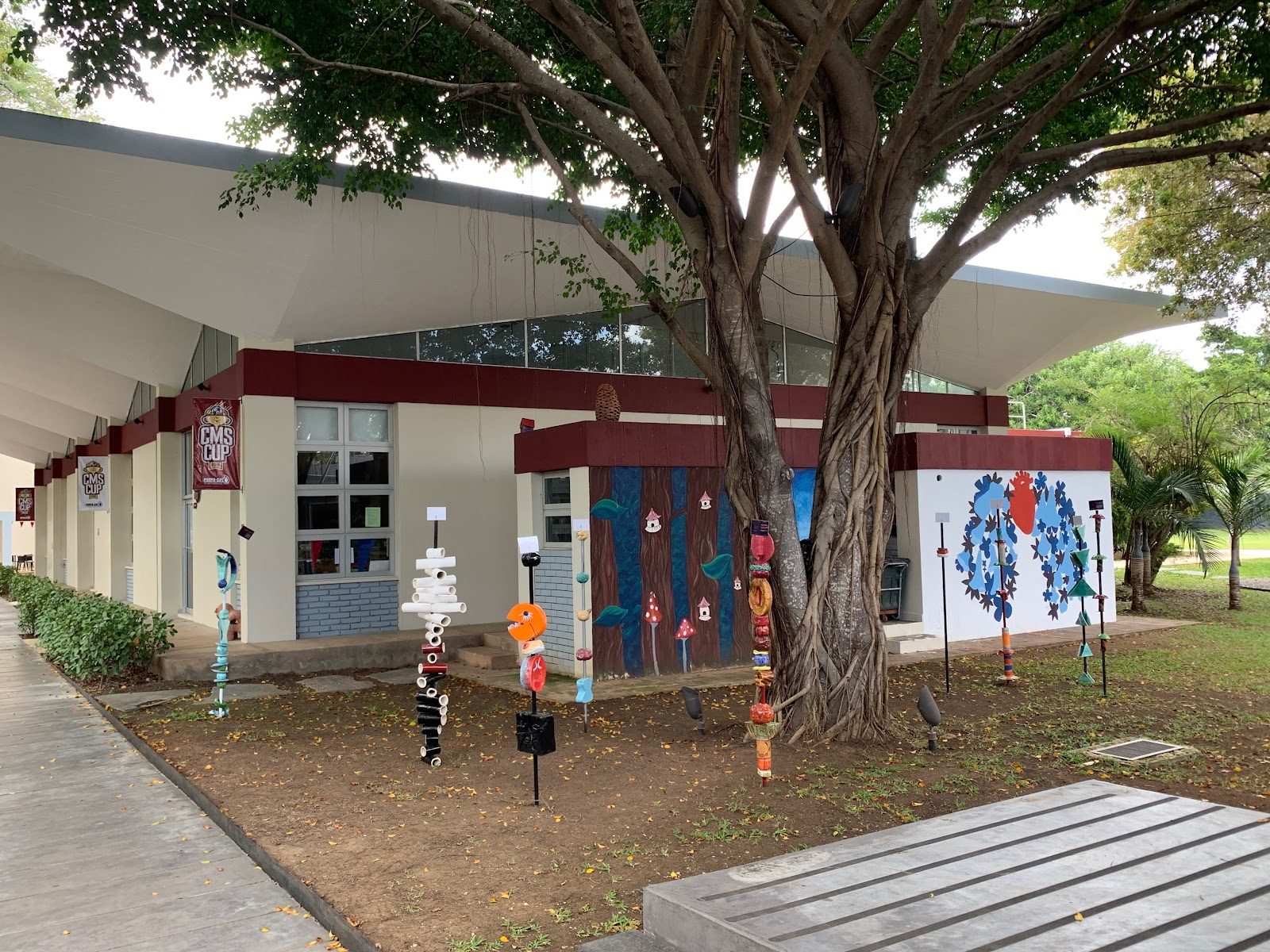
Carol Morgan School
Santo Domingo · Dominican Republic
Founded in 1933 by a missionary's wife, this Mirador Park campus still sends nearly all its graduates to US and European universities.
Daystar Academy
Beijing · China
A Chaoyang campus where bilingual immersion tilts from mostly Mandarin to mostly English by senior year, anchored by China's first K-12 social innovation curriculum.
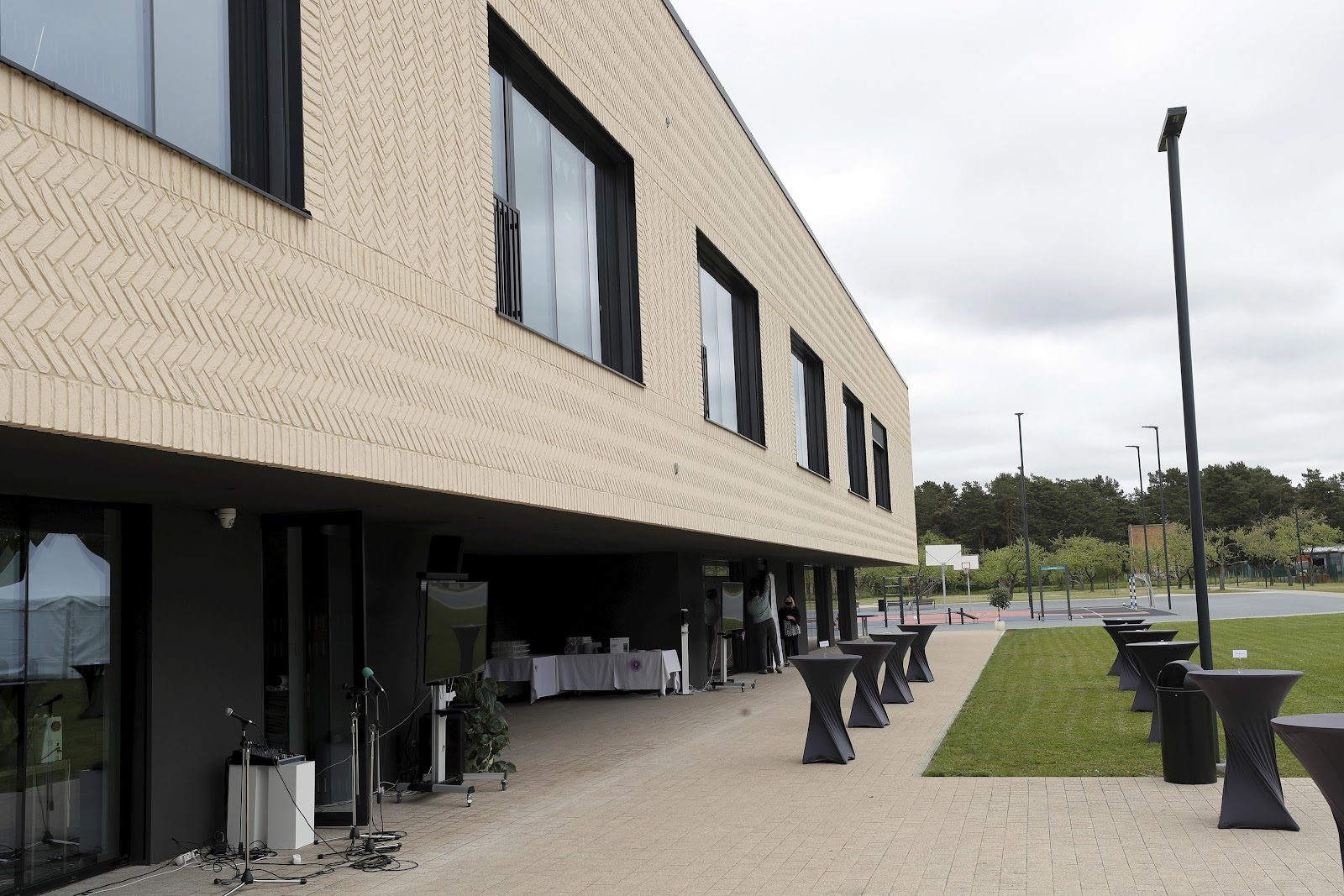
International School of Latvia
Riga · Latvia
Set among green fields between Riga and Jurmala, this IB-American day school pairs a college-prep track with Baltic calm.
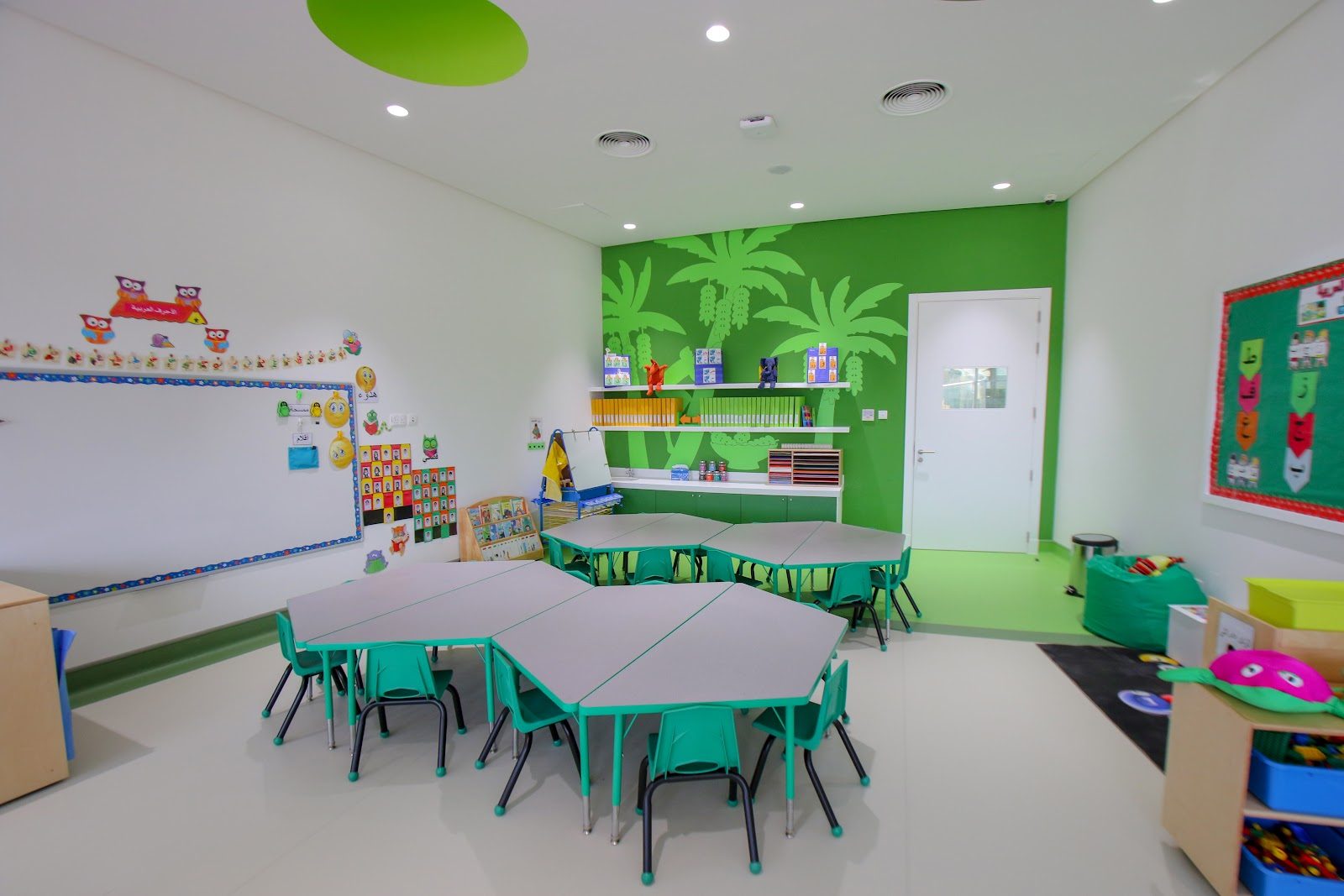
Bahrain Bayan School
Isa Town · Bahrain
Founded by parents in 1982, this Isa Town campus pairs Arabic-English bilingual roots with dual IB and American diplomas.
Same country and curriculum — closest matches within ±10 points either way