
Masovian Voivodeship
Warsaw Film High School
Embedded in a working film school, this matura lyceum trains students on the same gear and screens work at Kino Elektronik.
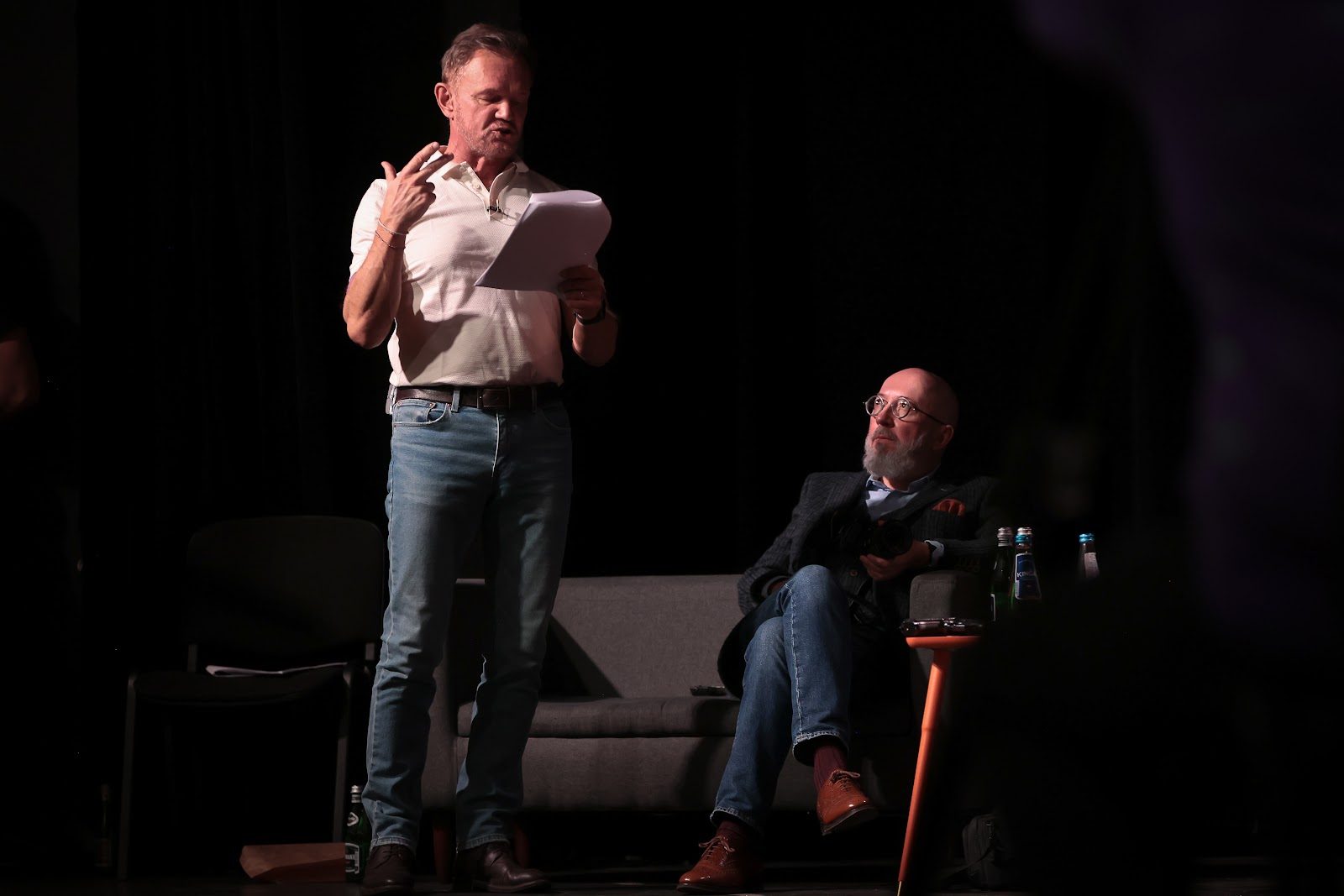
Photo © Warszawska Szkoła Filmowa via Google Maps
Type
Day
Ages
14–19
Curriculum
Matura
Ratio
—
The Verdict
Editor's commitment
Right for
Teenagers aged 14–19 who want Polish-language Matura study inside Warsaw’s film-school world, not a generic academic lyceum.
Wrong for
Families wanting boarding, English-medium teaching or a broad international curriculum will hit a wall: this is a day school in Warsaw.
Watch out for
The specialism is narrow and the language is Polish; if film fades or Polish is weak, ages 14–19 leave little room to pivot.
Ranking breakdown
Warsaw Film High School · #1206 of 1591
Composite score 58.0. 8 weighted criteria.
By criterion
Academic Outcomes
Weight 20%
#1220
of 1529 scored
University Placement
Weight 16%
#1259
of 1529 scored
Prestige & Heritage
Weight 12%
#1396
of 1571 scored
Alumni Network
Weight 12%
#1181
of 1530 scored
Facilities
Weight 12%
#193
of 1533 scored
Transparency & Communications
Weight 8%
#1243
of 1532 scored
Peer & Industry Review
Weight 10%
#645
of 1548 scored
Admissions Selectivity & Demand
Weight 8%
#686
of 1529 scored
Peer & Industry Review
How Warsaw Film High School is regarded in the sector
68
Respected · medium confidence
Within Poland's film-education circuit the school is respected as a serious feeder into technical and directing tracks, reflected in its #6 Film 50 placement, though it remains a domestic rather than internationally benchmarked name.
Award
Elite Film 50
World's Top School · The Global Ranking
Warsaw Film High School is featured on our Global Top 50 ranking at #6. This seal is available for the school's marketing team to use on their website, prospectus and social channels.
Editors' overview
Warsaw Film High School occupies a narrow, unusual niche: a Polish matura lyceum embedded in a real film-education environment rather than a standard academic secondary school with a media club attached. That distinction matters. Students study in Polish, train from ages 14–19, and work inside a culture built around production, editing, screening and critique. The school’s strongest selling point is proximity to practice: this is not arts branding pasted onto a conventional timetable, but a route for teenagers who want film to shape the school day. The reference to screening work at Kino Elektronik gives the offer real professional texture. Parents looking for a broad international curriculum, or a conventional university-prep school with film as an extracurricular, should look elsewhere.
What puts it on a shortlist is focus. For the right student, focus beats breadth. A teenager who already makes short films, shoots obsessively, edits for fun, or talks about framing and sound design with serious intent will find more purpose here than in a generalist lycée. The appeal lies in early immersion, access to working methods and equipment, and the discipline of making work that reaches an audience beyond the classroom. That creates useful pressure: students do not just consume cinema; they make it, refine it and show it. The school also benefits from being secular and day-only, which keeps the proposition clear and avoids the boarding-school theatre that inflates many specialist brands.
This school suits self-directed, creatively stubborn students who can tolerate critique and who want their peer group to care about the same things. It will not suit the child who wants every option kept open, needs a conventional school rhythm, or treats film as a passing interest. Warsaw Film High School is for a teenager ready to commit early, work hard and build a portfolio in parallel with the matura. In market terms, it is a specialist domestic option, not a broad family compromise: purpose-built, industry-facing and far more compelling for an aspiring filmmaker than a standard Polish secondary school with a theatre production once a year.
A Global Elite 50 Film school
Warsaw Film High School — the Liceum Filmowe i Kreacji Gier Wideo — sits at rank six on the Global Elite 50 Film. The single fact that anchors this is structural: Liceum Filmowe jest jedyną tego typu placówką oświatową w Polsce, and it is an artistic general lyceum attached to the Warszawska Szkoła Filmowa, founded in 2004 on the initiative of twice Oscar-nominated producer and director Maciej Ślesicki and respected actor Bogusław Linda. All 49 students who sat the 2025 matura at the school received their certificate, for a 100 percent pass rate, a result the school treats as tradition.
The curriculum architecture runs on selectable strands — Film, Acting, Video Game Creation, and Film Make-up and Styling — and specialist teaching is delivered by an experienced, professionally active faculty drawn from the Warsaw Film School. Students do not study cinema as theory; they use professional film and recording studios and premiere finished work in the school's own Kino Elektronik, where free screenings and premieres of student work are held. On active productions, crews made up of Warsaw Film School students working shoulder to shoulder with professionals have included students of the Film and Video Game Creation Lyceum and prospective applicants. The school states plainly that applicants to film schools often arrive with serious theoretical and practical gaps, whereas its own graduates will stand out with three years of experience and a portfolio full of interesting projects, feeding onward into a Warsaw Film School faculty that includes helmer Krzysztof Zanussi and Academy Award nominee Bartosz Konopka.
Named alumni credited specifically to the high school, as opposed to the affiliated tertiary film school, are still emerging, since the lyceum was only founded in 2014. What is verifiable is a run of competition results: second- and third-year acting-specialization students won first prize at the national MiniGlobe English-language school theatre review for their production of "Four Wedding Pictures", Video Game Creation-specialization students won the Copernicus Game Jam organized by the Centre for the Development of Creative Industries, and a film by a joint graduate of the Film and Video Game Creation High School and the Cinematography program at the Warsaw Film School was honored with a prestigious award in Berlin. The wider hub it sits inside has produced two Academy Award-nominated shorts, 'Our Curse,' directed by Tomasz Śliwiński, nominated for Best Documentary Short, and 'The Dress,' directed by Tadeusz Łysiak, nominated for Best Live-Action Short.
International openness runs through interview rather than paperwork: admission is decided through a recruitment conversation the candidate attends together with a parent or legal guardian and a teacher, and because the school is non-public, families do not need to register through Warsaw's electronic secondary-school enrollment system. Boarding is not offered — this is strictly a day school — instruction runs in Polish, and a separate bilingual English class requires the candidate to pass an English-language test at the recruitment interview. Fees run to a one-off 1,500-zloty enrollment fee and tuition of 1,500 zloty a month, collected over ten months of the school year, including the final matura year. Overseas families should treat visas and residency as a family-led Polish process, and note that applications for first-round admission to Year 1 close on 30 August — apply well ahead of that date for the strongest on-set apprenticeship model of its kind in Poland.
Academic Performance
Academic performance is hard to judge because the school does not publish aggregate matura outcomes, subject-level score distributions, university destinations, or value-added data. That is a serious gap for any parent trying to place it against Poland’s stronger academic lyceums. Specialist arts schools can defend uneven headline exam performance if they show strong progression into film, media or related higher education. Here, the public case is thinner than it needs to be. Without published pass rates, average percentages, or comparative standings, there is no basis for calling this a high-performing academic school, and no basis for dismissing it either. The absence of hard numbers leaves the school in an opaque middle ground.
Relative to peers, that pushes Warsaw Film High School out of the league-table conversation and into a different category: a portfolio-led specialist school where the measure of success rests as much on creative output and progression as on examination scores. That can work, but it demands evidence. Parents need to ask for the last 3 years of matura results by subject, pass rates, average marks against regional and national averages, and destinations after graduation. They should also ask how many students complete the full course and how the school supports those whose film ambitions outpace their academic discipline. Until those figures are disclosed, academic standing remains unproven, and families must judge it on fit rather than on published performance.
Facilities
The decisive facility here is not a sports hall, library wing or glossy atrium. It is access to a working film-school environment: production equipment, editing infrastructure and a real cinema screen through Kino Elektronik. For a teenager set on film, that matters more than the standard amenities many general secondary schools advertise. Screening work in a public-facing cinema pushes standards higher than classroom playback on a projector. Training on the same gear used in a wider film-education setting also gives the school a clear practical edge over ordinary lyceums that offer media studies from a computer lab and call it filmmaking. Against specialist arts peers, that places Warsaw Film High School in a serious hands-on bracket.
The trade-off is breadth. Families should not expect the sprawling multi-zone campuses, extensive athletic provision or laboratory depth of a full-spectrum private school. The core physical asset is vocational, not comprehensive. That is the right priority for this school, but it narrows the proposition. Parents need to ask exactly which cameras, sound kit, lighting rigs, edit suites and post-production software students use, how often pupils get hands-on access rather than demonstrations, and whether facilities are shared with older learners in ways that restrict timetable access. If the answer is strong access and frequent production time, the facilities are fit for purpose and better than those at many academic schools with token creative spaces. If access is tight, the model loses much of its force.
Warsaw Film High School is for a teenager ready to commit early, work hard and build a portfolio in parallel with the matura
Prestige
Warsaw Film High School carries niche prestige, not broad-status prestige. In Poland’s school market, that distinction matters. This is not the sort of name that confers instant social recognition across academic circles, nor one that competes with the country’s headline general lyceums for exam cachet. Its standing rests on specialism and context: teenagers learn inside a working film-school environment, use professional gear and screen work at Kino Elektronik. For the right student, that gives the school real subcultural credibility. Within film education, early access to production routines, critique and exhibition has weight. Outside that world, the badge carries less force. Parents who want a school name that signals elite academic selection to every university admissions office will not find it here.
That is why the school merits a measured rating for prestige: serious within its lane, limited beyond it. Prestige here comes from practical immersion and the chance to build work before higher education, not from published academic results, selective mystique or a long public record of destination outcomes. The missing performance data matters. Prestige without evidence slips into branding, and this school has not supplied the numbers that would lift it into a stronger national conversation. Its reputation, then, depends on fit and ambition. For a teenager already committed to filmmaking, that can be powerfully validating. For families seeking conventional polish, status signalling and proven academic clout, it is a specialist bet, not a prestige play.
Against specialist arts peers, that places Warsaw Film High School in a serious hands-on bracket
Communications
Parent communication does the essentials, but no more. The school website gives a clear sense of mission and enough orientation for a family already sold on the concept. It tells you what the school is for, who it suits and why the film environment matters. That clarity counts. Too many specialist schools hide behind vague arts rhetoric; this one makes its bias towards production plain. The weakness lies elsewhere: public information stops short of the detail a cautious parent needs before committing. We have not seen published aggregate exam outcomes, destination lists, or a fuller explanation of day-to-day academic monitoring. That leaves communication sharp in identity but thin in proof. A family attracted by the school’s single-minded offer will grasp the pitch quickly; a family doing proper due diligence will still have a list of unanswered questions.
Effective communication in a specialist school depends on candour about workload, access, feedback culture and progression. Here, the school needs stronger routine disclosure, not better slogans. Parents should ask how often staff report on progress, which channels they use for attendance and pastoral issues, how production deadlines are coordinated with academic demands, and how concerns are escalated if a student starts to drift. In a setting that asks teenagers to commit early, communication cannot be impressionistic or romantic. It must be disciplined, regular and concrete. At present, the public-facing picture is compelling but incomplete: good at attracting the right temperament, weaker at giving parents the hard operational detail that builds trust over 5 years.
Uniqueness
What sets Warsaw Film High School apart is structural, not cosmetic. Most schools that advertise film for teenagers bolt it onto a standard secondary experience as an elective, club or enrichment strand. Here, film sits at the centre of the proposition. Students enter young, stay through to school-leaving age, and spend those years inside an institution built around making, editing, screening and discussing moving-image work. That gives the school a rare vocational clarity. It also creates a peer culture with a sharper creative temperature than in a generalist school: classmates care about rushes, cuts, sound and deadlines, not just grades and timetables. For the right student, that concentration is formative. It accelerates taste, technical confidence and the ability to absorb criticism without collapsing.
The gain is not only equipment or access to a cinema screen. It is the discipline of learning in a setting where film is treated as work, not decoration. Teenagers build habits that many students do not reach until higher education: planning shoots, revising edits, defending choices, and finishing projects to a public standard. That can produce a serious head start in portfolio development and in understanding whether a life in film actually suits them. It also brings an early narrowing of options. A student who wants equal exposure to sciences, sport, debate and the full menu of school life will find the model restrictive. This school’s uniqueness lies in commitment. It asks for it early and rewards it with real immersion.
Warsaw Film High School carries niche prestige, not broad-status prestige
Student Profile
The students who fit here are not dabblers. They are the teenagers who already organise their lives around image, sound and story: the child who spends weekends cutting footage, watches films with forensic attention, and does not need persuading that repeated retakes, technical failure and blunt criticism are part of the job. They will also need more stamina than glamour. A specialist arts environment at 14–19 rewards persistence, self-direction and tolerance for uneven days; it punishes vanity, drift and romantic ideas about creativity. The strongest fit is a young person with serious artistic appetite, solid work habits and enough emotional ballast to separate criticism of the work from criticism of the self. Peer culture matters here too. A student who wants friends to care about edits, deadlines and screening standards will find a usefully demanding tribe.
The weaker fit is easy to define. This school will frustrate the child who wants a conventional spread of school identity, broad extracurricular status markers, or maximum flexibility before deciding what matters. It also risks overwhelming students who need constant external structure or who freeze when their work is exposed to an audience. Parents should ask one blunt question: does their teenager want film badly enough to build a school life around it for 5 years? If the answer is yes, the school offers early professional discipline. If the answer is no, the specialism becomes a narrow corridor rather than a launchpad.
What sets Warsaw Film High School apart is structural, not cosmetic
Co-curricular strengths
Arts & sport, on a separate axis
Overall 7.42/10
Scored 0-10 from the school's own published evidence. This axis is editorial-only — it does not feed the main WTS ranking.
Sports
4/10
Drama
9.3/10
Dance
6.5/10
Music
8/10
Visual Arts
9.3/10
Strengths
- +Offers a state Matura curriculum combined with a specialised film-studies strand, unusual among Warsaw day schools.
- +Location in Warsaw gives students access to Poland's main film industry hub, including studios and festival circuits.
- +Small, subject-focused cohort structure typical of specialist liceum programmes rather than large comprehensive schools.
- +Day-only structure keeps students embedded in family life and the local Warsaw expat/international community.
Considerations
- −As a niche specialist school, it lacks the broad extracurricular and sporting infrastructure of larger international schools.
- −Film-focused curriculum may narrow options for students who are undecided about pursuing creative-industry careers.
- −Being Matura-based, instruction is primarily in Polish, which can be a barrier for non-Polish-speaking expat families.
- −Publicly available data on outcomes, fees and admissions statistics is limited compared with established international schools.
Gallery
Photo © David Slawinski (eSUBA94) via Google Maps
Photo © David Slawinski (eSUBA94) via Google Maps
Photo © Rob Haslewood via Google Maps
Photo © Stanisław Kobylański via Google Maps
Photo © Daniel Maszkowski via Google Maps
Photo © Maciej Miąsik via Google Maps
Photo © Warszawska Szkoła Filmowa via Google Maps
Parent reviews
Have you sent your child here?
Voice reviews carry the strongest trust badge — we transcribe them for you to tidy up before they go live. Prefer to type? A written review is fine too.
Add your voice
In 60 seconds, tell other parents: what's the best thing about Warsaw Film High School, and what surprised you when your child joined?
We ask for a Google sign-in so every review has a real face behind it — no anonymous drive-by attacks on schools, and no faked positive reviews. Your email is never shown publicly.
Send this profile to a friend
International parents rely on word-of-mouth. Share this review with someone weighing the same decision.
Schools with places
Similar schools to Warsaw Film High School with places available now.
Availability first, then country, area, curriculum, price, co-curricular
Consider also
Also worth looking at alongside Warsaw Film High School.

G-Star School of the Arts
West Palm Beach, Florida · United States
A tuition-free arts charter where film students earned Raindance's top high-school-for-film honor in London, backed by IB and Cambridge AICE rigor.
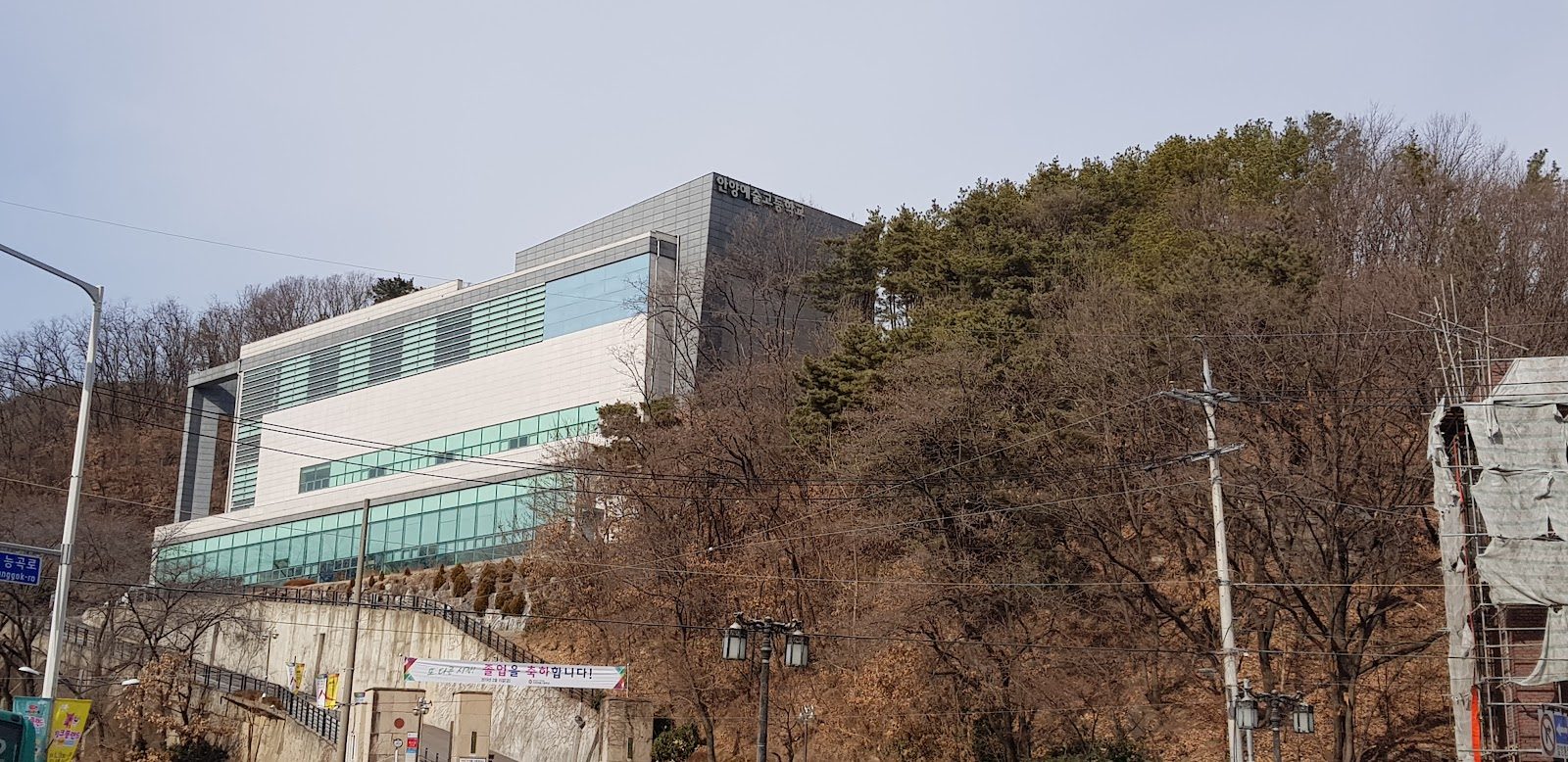
Anyang Arts High School
Anyang · South Korea
Tracing its roots to a 1960s film academy, this Anyang campus pairs literary, theater and dance training under one arts-focused roof.
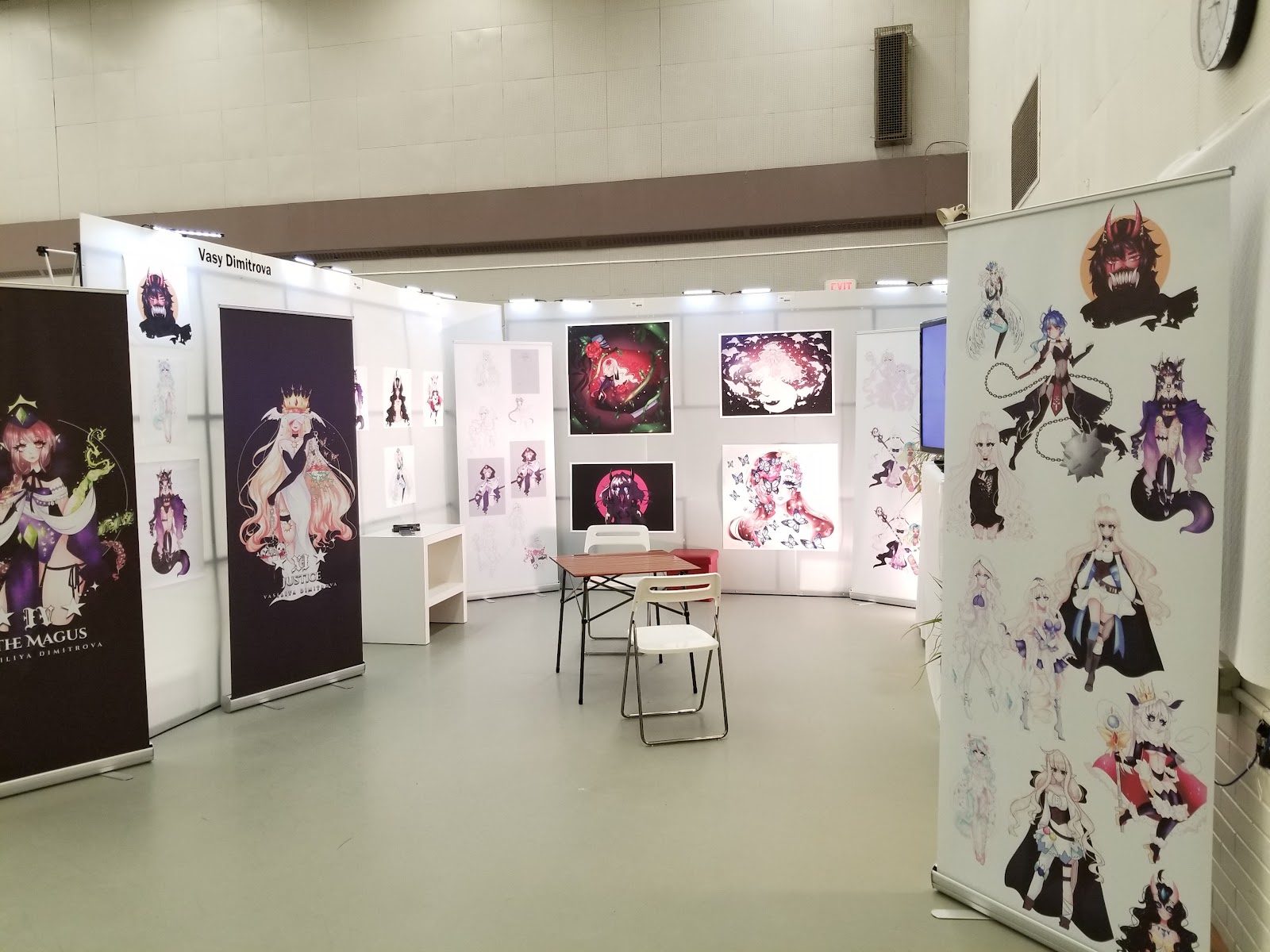
Etobicoke School of the Arts
Toronto, Ontario · Canada
Canada's oldest freestanding arts high school pairs audition-only majors in dance, film and music with a full OSSD academic load.
Orange County School of the Arts
Santa Ana, CA · United States
Seventeen conservatories and a half-day devoted to pre-professional training turn this Santa Ana charter school into a proving ground for young artists.
Same specialism, country and curriculum — closest matches within ±10 points either way