
Makkah Province
Dar Al Fikr Schools
A campus engineered like a solar system, with faith as the fixed center around which British rigor and Arab-Islamic identity orbit.
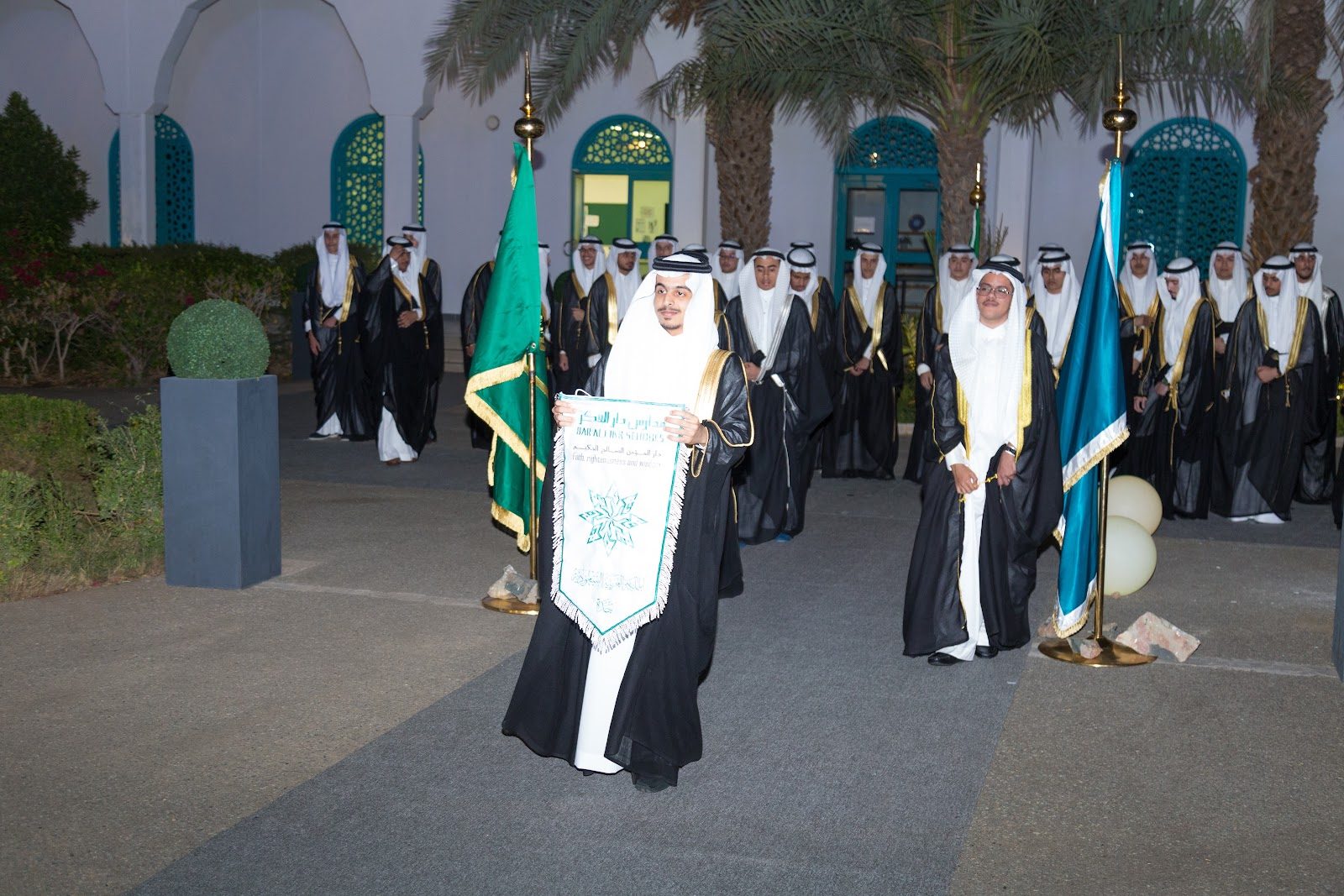
Photo © Ahmed via Google Maps
Type
Day
Ages
4–18
Curriculum
Saudi National · British
Qualifications
Saudi Tawjihi
Ratio
—
The Verdict
Editor's commitment
Right for
Jeddah families wanting one school from ages 4–18, with Saudi National and British curricula taught in Arabic and English.
Wrong for
Parents who want a secular education, boarding, or a single-curriculum school; Dar Al Fikr is Islamic, day-only, and dual-track.
Watch out for
Founded in 1985, Dar Al Fikr has pedigree, but the Saudi National plus British mix needs scrutiny: ask where each pathway begins.
Ranking breakdown
Dar Al Fikr Schools · #1496 of 1591
Composite score 48.8. 8 weighted criteria.
By criterion
Academic Outcomes
Weight 20%
#1382
of 1529 scored
University Placement
Weight 16%
#1414
of 1529 scored
Prestige & Heritage
Weight 12%
#1324
of 1571 scored
Alumni Network
Weight 12%
#1240
of 1530 scored
Facilities
Weight 12%
#1247
of 1533 scored
Transparency & Communications
Weight 8%
#1497
of 1532 scored
Peer & Industry Review
Weight 10%
#1495
of 1548 scored
Admissions Selectivity & Demand
Weight 8%
#1419
of 1529 scored
Peer & Industry Review
How Dar Al Fikr Schools is regarded in the sector
50
Credible · medium confidence
Dar Al Fikr Schools occupies a solid but locally-bounded reputation rather than an internationally benchmarked one. Within Jeddah's private education sector it is generally regarded as a credible, well-established Saudi/bilingual institution, mentioned alongside peers like Manarat and Rowad in parent forums and local school-comparison threads, but it does not appear in the international review ecosystem that covers GCC international schools -- it is absent from WhichSchoolAdvisor's Saudi coverage, Good Schools Guide International, and Tatler's schools guides, all of which concentrate on British/American curriculum international schools in Riyadh, Jeddah and the Eastern Province rather than Saudi National Curriculum providers. No verifiable university admissions-officer commentary, rival head quotations, or national newspaper league-table placement could be sourced. Its visibility is largely confined to Ministry of Education accreditation listings and Arabic-language local press rather than English-language education trade media or peer conference circuits (e.g., NESA, COBIS). This suggests a school respected regionally for consistency and community standing, but one that has not yet built the cross-border academic or press profile typical of internationally ranked institutions.
Editors' overview
Dar Al Fikr Schools occupies a distinctive niche in Jeddah: an Islamic day school that refuses the false choice between local identity and international academic method. Founded in 1985, it teaches in Arabic and English, and combines the Saudi National and British curricula across ages 4–18. That matters. Many schools in this market bolt English-medium academics onto a generic private-school frame. Dar Al Fikr builds the whole proposition around moral seriousness, religious coherence and a clear Arab-Islamic centre of gravity. Parents who want a school to reinforce faith and cultural fluency, not dilute them, will find a sharper fit here than at the city’s more cosmopolitan, export-style schools.
What puts it on a shortlist is the clarity of that model. Dar Al Fikr is not chasing a placeless global-school identity; it is serving families who want academic structure with cultural confidence and intellectual discipline. The British strand gives it recognisable external shape and progression, while the Saudi National element keeps the school anchored in local expectations and Islamic values. That dual structure gives students a more demanding daily experience than a school running on one track alone. It asks children to move comfortably between languages, codes and traditions. For the right student, that produces strong habits of mind and a rooted sense of self. For the wrong one, it can feel tight, formal and non-negotiable.
The best fit is a family that wants education to do more than deliver grades. Students who thrive here will value order, respect boundaries, and respond well to a school culture where faith is not an accessory but the organising principle. Bilingual pupils, or children ready to become genuinely bilingual, will gain most from the Arabic-English environment. This is not the obvious choice for families seeking a loose, progressive atmosphere or a school built around maximum personal latitude. It is a serious option for parents who want conviction without confusion: a school in Jeddah that keeps Islam at the centre while still giving students the tools to operate confidently in English-speaking academic settings.
Academic Performance
Dar Al Fikr publishes enough headline data to place it in the upper tier of academically selective schools in its market, even if the picture is not as complete as it should be. The school reports 100% pass rates in IGCSE and A Level, alongside an SAT average of 1360. Those are strong signals. A clean pass rate tells you students are not falling through the floor, and a 1360 average points to a cohort performing well above ordinary international-school norms. The stronger claim lies in progression at the top end: the school also cites graduates moving on to institutions such as MIT, Stanford and Imperial. That does not prove depth across the whole year group, but it does mark out a school with serious academic ambition and genuine stretch for high achievers.
The weakness is disclosure. Dar Al Fikr does not publish aggregate grade distributions for IGCSE or A Level, so parents cannot see how many students secure top bands rather than simply passing. Nor does it break results down by subject, cohort size or year-on-year trend. That matters, because selective schools can look impressively polished on headline figures while masking uneven strength beneath them. Even so, the available numbers place Dar Al Fikr above the broad middle of the sector. This is not a school trading on ethos alone; it delivers hard academic outcomes. Parents who want full statistical transparency will find the reporting thin. Parents who want evidence of real examination strength will find enough to take seriously.
Facilities
Dar Al Fikr’s campus planning is the standout. The school uses a “solar system” model: separate buildings arranged as planets around a central mosque, with each cluster tied to a developmental stage. That is not a gimmick. It gives the site a clear organising logic and keeps the religious core literal as well as symbolic. The school also states that the campus has 6 science laboratories, 6 computer laboratories and 4 libraries, plus specialist rooms for art and music. Against Jeddah peers, that is a serious academic plant rather than a bare private-school shell. Many schools can claim labs and libraries; fewer publish this kind of subject-specific spread across a single campus.
Sport and shared spaces look solid rather than exceptional. Dar Al Fikr lists an indoor gymnasium, outdoor football field, basketball and volleyball courts, a swimming pool and a theatre. That covers the essentials for a full day-school programme and supports a broad co-curricular life, but it does not put the campus into the Gulf’s arms-race tier of showpiece facilities. The more interesting distinction lies in coherence. At Dar Al Fikr, the built environment serves the school’s disciplined worldview: ordered, segmented, purposeful, and centred on worship. Parents who want flash and scale will find grander campuses elsewhere. Parents who want facilities that reinforce the school’s educational philosophy will find this campus unusually well aligned.
Dar Al Fikr Schools occupies a distinctive niche in Jeddah: an Islamic day school that refuses the false choice between local identity and international academic method
Prestige
Dar Al Fikr carries real local prestige in the part of the market that matters to religiously serious, academically ambitious families. Its reputation does not rest on glossy international branding or imported social cachet. It rests on a harder combination: disciplined Islamic identity, selective academic expectations and visible routes into elite overseas universities. The school’s published outcomes do enough to support that standing. A 1360 SAT average is not decorative; it signals a cohort with strong academic horsepower. The school also points to graduates reaching institutions with global name recognition. In Jeddah, that gives Dar Al Fikr status as more than a pious alternative to mainstream private schooling. It reads as a school for families who want high-status seriousness without surrendering religious and cultural authority.
That prestige has clear limits. Dar Al Fikr does not command the same kind of prestige as the most internationally legible schools whose reputations travel instantly across Gulf expatriate circles. Its appeal is sharper and narrower. For the right family, that concentration strengthens the brand: the school stands for something exact, not generic excellence. For families outside that orbit, the name carries less universal pull. The other constraint is transparency. Prestige built on strong outcomes holds best when a school publishes full grade profiles and cohort trends; Dar Al Fikr does not. So the verdict is solid rather than mythic: respected, high-performing and socially weighty in its own constituency, without the blanket prestige of the region’s most globally recognised names.
Bilingual pupils, or children ready to become genuinely bilingual, will gain most from the Arabic-English environment
Communications
Dar Al Fikr communicates with parents in a way that fits its institutional character: formal, orderly and message-led rather than chatty. The school’s public-facing communication has a controlled tone and a clear moral frame. Parents do not get the sense of a school trying to entertain them into confidence; they get a school setting terms, explaining expectations and reinforcing community norms. That works in its favour. For a family choosing this school for discipline, faith and structure, steady institutional clarity matters more than performative warmth. The school also benefits from being explicit about parts of its educational model that other schools blur or bury. That directness builds trust.
The limits sit in transparency and practical detail. Dar Al Fikr does not publish the kind of granular academic reporting, parent-facing data or year-by-year performance breakdowns that make communication fully convincing for hard-nosed families. Nor does its public communication project the frictionless responsiveness now standard at the most polished international schools, where portals, calendars, curriculum maps and routine updates are tightly integrated. The result is effective communication for parents who value authority and coherence, and less effective communication for parents who want constant visibility into school operations. In short: serious, disciplined and credible, but not especially open-handed with detail. That distinction matters, because strong ethos can carry communication only so far; after that, parents need information, not just confidence.
Uniqueness
Dar Al Fikr’s distinction lies in integration. Many schools in this bracket run faith, academics and culture on parallel tracks; Dar Al Fikr binds them into one operating system. The central mosque is not decorative branding but the clearest expression of the school’s logic: worship at the centre, learning organised around it, daily life structured to match. The campus design reinforces that order, but the deeper point is educational. Students are not asked to switch between a religious self at home and an academic self at school. They are trained inside a single moral frame, with clear behavioural expectations and a strong sense of inheritance. For families who want coherence rather than compromise, that is a rare offer.
What this gives students is identity with structure. They learn to handle demanding academic work without detaching from Islamic reference points or Arab cultural fluency. In a market crowded with schools that treat local identity as a soft add-on, Dar Al Fikr treats it as the spine. That produces graduates with rooted confidence: comfortable in formal academic settings, but not stripped of religious vocabulary, social codes or communal belonging. The trade-off is real. This is a tight institutional culture, not a loose space for self-invention, and children who resist rules or want maximal personal latitude will feel constrained. For the right student, though, the result is unusually coherent: a school life in which belief, conduct and scholarship pull in the same direction.
The stronger claim lies in progression at the top end: the school also cites graduates moving on to institutions such as MIT, Stanford and Imperial
Student Profile
The best fit is a student who works comfortably inside a high-boundary culture. Dar Al Fikr suits children who accept authority, follow routines without constant negotiation and do not need school to flatter their individuality at every turn. Religious commitment matters here, not as a background label but as a daily organising force. Pupils who already live in households with clear Islamic expectations will find continuity between home and school; pupils from looser family cultures will feel the pressure quickly. This also suits students with strong self-command: the kind who can move between demanding academic work, formal behaviour standards and a visible moral code without treating each as a separate performance. The school’s published SAT average of 1360 tells you the academic bar is real, and the school’s clean exam pass profile confirms that this is not a soft landing place.
Socially, the school fits families who want *conviction, order and cultural rootedness* more than experimentation or personal latitude. Children who thrive here will value belonging to a community with shared norms and few ambiguities about conduct. Bilingual students, or those ready for a serious bilingual education, gain an extra advantage because they can inhabit both sides of the school’s intellectual world without strain. The weaker fit is easy to identify: highly oppositional children, students who resent formality, or teenagers who want school to function as a zone of maximum self-invention. Dar Al Fikr is not for the casually enrolled. It works best for students ready to be shaped, not merely accommodated.
Parents who want facilities that reinforce the school’s educational philosophy will find this campus unusually well aligned
Co-curricular strengths
Arts & sport, on a separate axis
Overall 6.86/10
Scored 0-10 from the school's own published evidence. This axis is editorial-only — it does not feed the main WTS ranking.
Sports
7.8/10
Drama
6.5/10
Dance
5.5/10
Music
7/10
Visual Arts
7.5/10
Strengths
- +Offers a dual-track curriculum (Saudi National plus British stream), giving families flexibility between local and international pathways.
- +Long-established presence in Jeddah, suggesting institutional continuity rather than a newly launched operation.
- +Day-school structure keeps the school embedded in the local Jeddah community rather than serving a transient boarding population.
- +Presence of a British curriculum stream allows continuity for expatriate families planning an eventual return to a UK-style system.
Considerations
- −No official website or verifiable public information portal, making it difficult for relocating families to confirm current fees, staff, or accreditation status remotely.
- −Editorial rank (742) and 'rising_star' tier indicate the school is not yet established among Jeddah's top-tier international options.
- −Lack of independently published inspection reports, exam results, or league-table data limits external verification of academic outcomes.
- −Operating two curricula (Saudi National and British) in parallel can sometimes mean neither track receives the depth of resourcing seen in single-curriculum specialist schools.
Availability
Primary entry gate & tests
Entrance exams + personal interview; seats required
Gallery
Photo © Ahmed via Google Maps
Photo © Saleh Mohammed via Google Maps
Photo © mohammad janbein via Google Maps
Photo © Alisar Ali via Google Maps
Photo © Web master via Google Maps
Photo © Raja Murtaza Tariq via Google Maps
Photo © Raja Murtaza Tariq via Google Maps
Parent reviews
Have you sent your child here?
Voice reviews carry the strongest trust badge — we transcribe them for you to tidy up before they go live. Prefer to type? A written review is fine too.
Add your voice
In 60 seconds, tell other parents: what's the best thing about Dar Al Fikr Schools, and what surprised you when your child joined?
We ask for a Google sign-in so every review has a real face behind it — no anonymous drive-by attacks on schools, and no faked positive reviews. Your email is never shown publicly.
Send this profile to a friend
International parents rely on word-of-mouth. Share this review with someone weighing the same decision.
Schools with places
Similar schools to Dar Al Fikr Schools with places available now.
The British International School of Jeddah
Jeddah · Saudi Arabia
- 2026-27
- PLACES OPENApps open / space-dependent
- 2027-28
- WAITPOOL2027/28 timetable TBC
Jeddah Prep and Grammar School
Jeddah · Saudi Arabia
- 2026-27
- WAITPOOLAdmissions open / availability-dependent
- 2027-28
- PLACES OPENMarketed as open for 2027
Availability first, then country, area, curriculum, price, co-curricular
Consider also
Also worth looking at alongside Dar Al Fikr Schools.
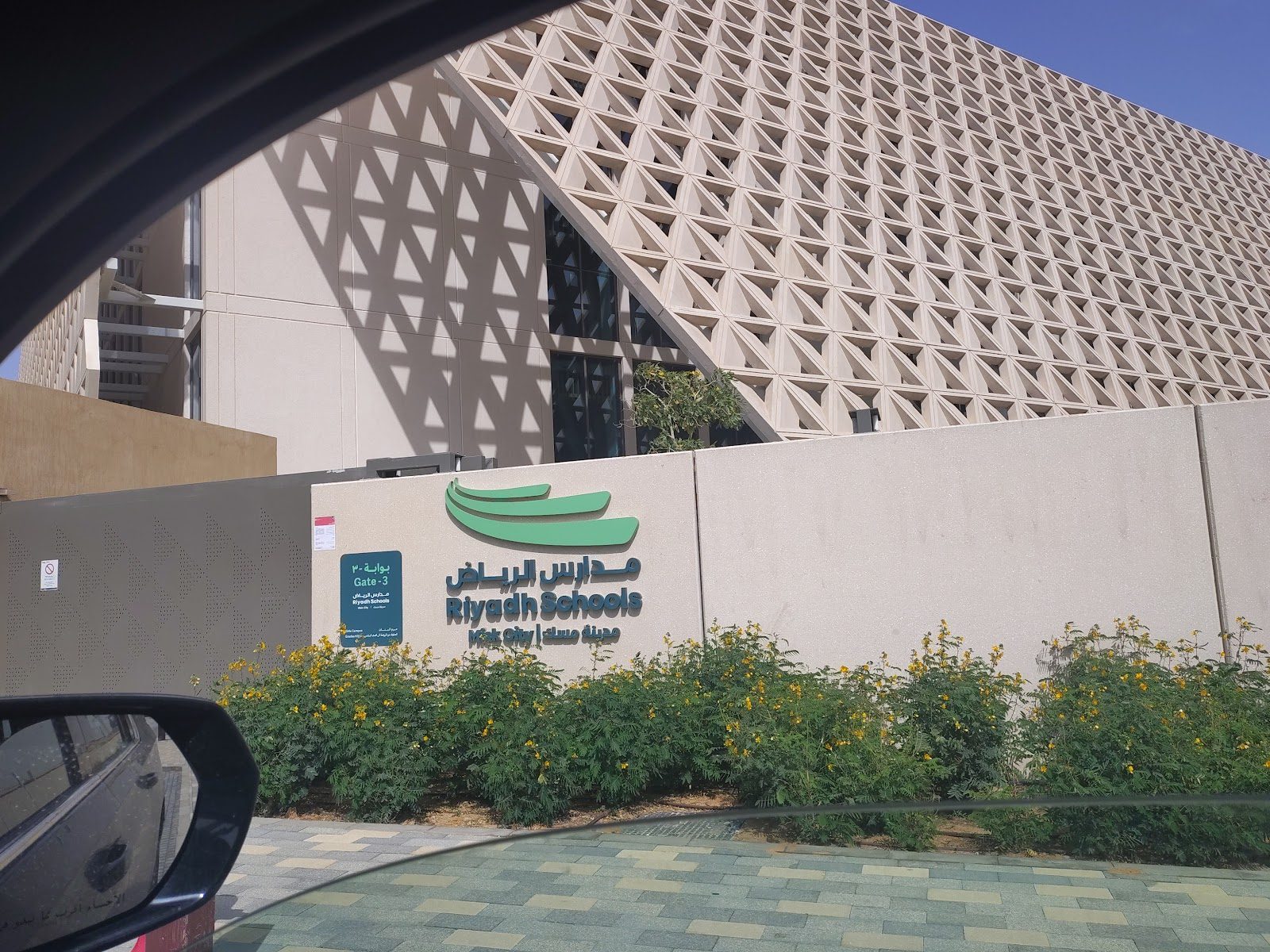
Riyadh Schools
Riyadh · Saudi Arabia
Five decades running the Saudi national curriculum in tandem with California English-standard benchmarking and MAP testing.
Al-Tarbia Al-Islamiah Schools
Riyadh · Saudi Arabia
Founded in 1964 by Saudi royalty, this Rahmaniyah day school pairs Quranic values with disciplined academic rigor in Riyadh.
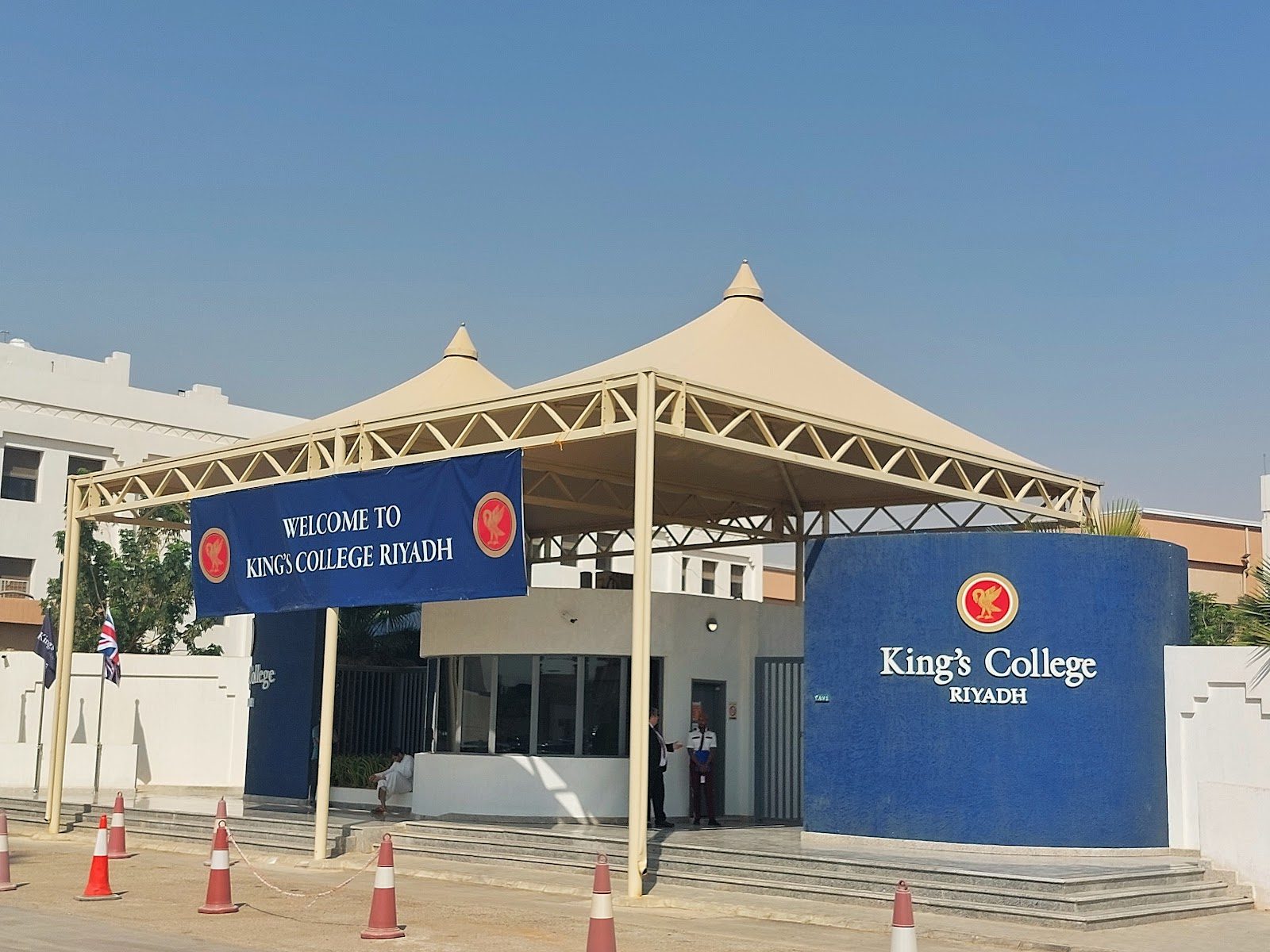
King's College Riyadh
Riyadh · Saudi Arabia
Riyadh's first British day school anchors a 140-year King's lineage in historic Diriyah, building toward iGCSE and A Level provision.
King Faisal School
Riyadh · Saudi Arabia
Founded by the King Faisal Foundation in 1991, the first school in the Kingdom to run all three IB programmes end to end.
Same country and curriculum — closest matches within ±10 points either way