
Berkshire
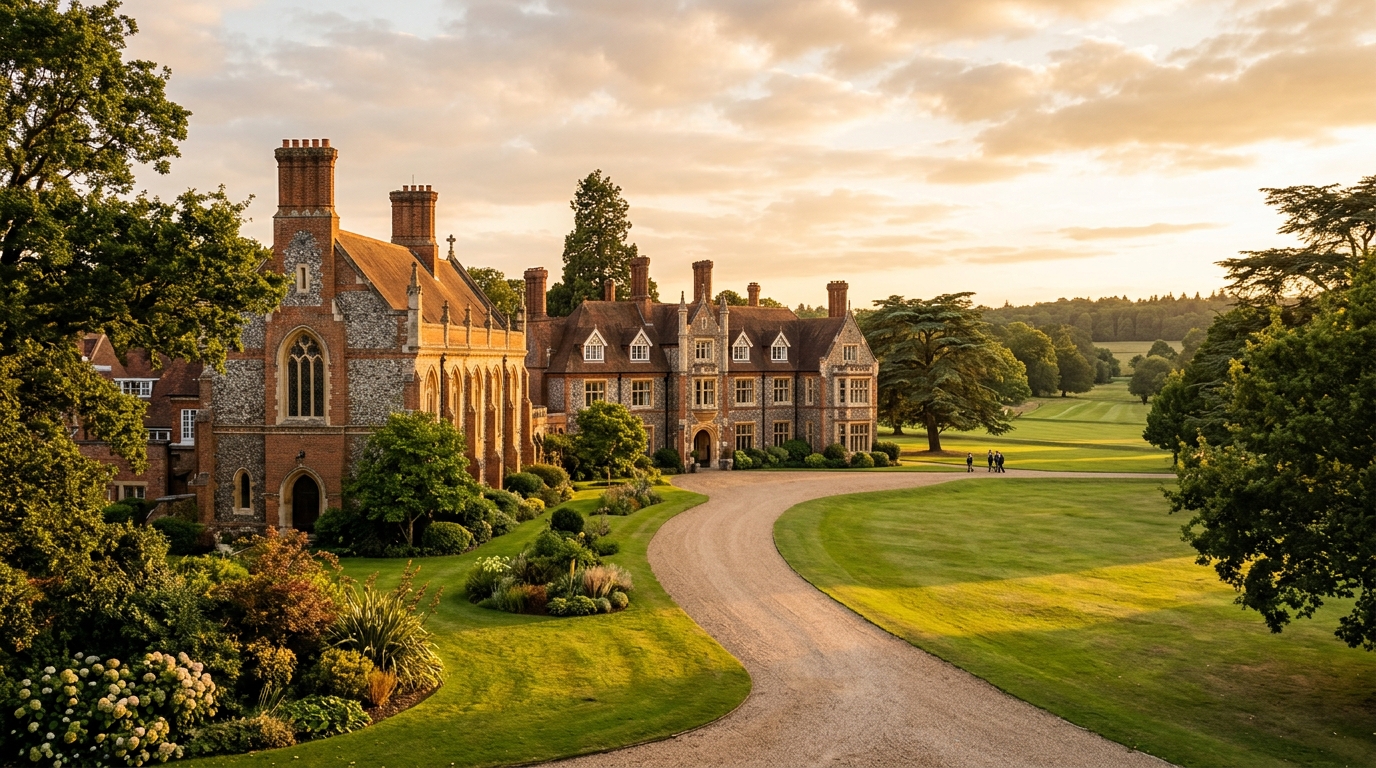
Set in 55 boarding-school acres near London, this Catholic girls' school built its reputation on topping the national GCSE table.
Type
Both
Ages
11–18
Curriculum
British
Qualifications
A-Level
Ratio
—
The Verdict
Editor's commitment
Right for
Girls who want a Catholic full-boarding school on 55 acres, with 11 Oxbridge offers and 84% of 90 leavers to top-100 universities.
Wrong for
Families wanting a co-ed or day-school culture: St Mary's has 380 pupils, few day places, and boarding drives the social life.
Watch out for
This is expensive at £66,000 boarding or £47,000 day on average, and the school's identity is unapologetically Catholic and all-girls.
Ranking breakdown
St Mary's School Ascot · #53 of 1591
Composite score 79.5. 8 weighted criteria.
By criterion
Academic Outcomes
Weight 20%
#118
of 1529 scored
University Placement
Weight 16%
#104
of 1529 scored
Prestige & Heritage
Weight 12%
#50
of 1529 scored
Alumni Network
Weight 12%
#43
of 1529 scored
Facilities
Weight 12%
#207
of 1529 scored
Transparency & Communications
Weight 8%
#153
of 1529 scored
Peer & Industry Review
Weight 10%
#146
of 1529 scored
Admissions Selectivity & Demand
Weight 8%
#153
of 1529 scored
Score history
St Mary's School Ascot · 2026
Movement across 2024–2026. Peer average overlaid.
Overall — 2024–2026
79.5/ 100
▲ +23.1 vs 2025
year on year
Peer & Industry Review
How St Mary's School Ascot is regarded in the sector
82
Strong · high confidence
St Mary's School Ascot sits among the most academically decorated Catholic girls' boarding schools in the country, having been ranked No. 1 in the U.K. by The Daily Telegraph in the 2018 GCSEs and named 2015 "Public School of the Year" at the annual Tatler Schools Awards. WhichSchoolAdvisor's review confirms the picture, describing a school proud to be an extremely academic school, with small class sizes, and less than 400 students on campus, allowing close personal attention. The Good Schools Guide adds independent parent testimony, with one parent noting the school is "much more cosy and pastorally sensitive than when I was" a pupil, alongside detailed results and pastoral data updated annually. Its alumni list, including senior economists, a High Court judge and prominent public figures, further underlines a genuinely established peer reputation, though its boarding-heavy, faith-based niche means it is discussed as a top Catholic girls' school rather than a universal top-ten name.
Editors' overview
St Mary’s School Ascot trades on a very clear proposition: a small, full-boarding Catholic girls’ school with serious academic intent, set across 55 acres in Ascot and within 45 minutes of London. The school has about 380 pupils, which matters. This is not a sprawling boarding machine where girls vanish into the system; it is a contained, highly supervised community with a strong house-and-weekend culture. The chapel sits at the centre of school life, and the Catholic identity is not decorative. For families who want a faith school in which religion shapes the rhythm of the week, that is a strength. For families who want a looser, culturally Catholic label, it is a point to test hard.
Its market position is straightforward: premium British boarding for girls, with fees to match. The average annual fee is £65,736 for boarders and £46,800 for day pupils, though the school itself makes clear that day places are few and geared to local families. What distinguishes St Mary’s from larger prestige names is not breadth on an industrial scale, but intensity, containment and consistency. The school states plainly that it is academic, and its recent university destinations support that claim: from 90 leavers in 2024, 84% went to top-100 universities, with 11 Oxbridge places and 30 to Russell Group institutions. That is strong output from a small cohort. Parents looking for a school that combines disciplined boarding, clear moral architecture and credible results will put it on a shortlist without much difficulty.
The right student for St Mary’s is a girl who wants structure, community and a girls-only environment that backs ambition rather than apologises for it. She does not need to want a flashy social scene or the anonymity of a very large school. She does need to be comfortable with a school that is deliberately traditional in some respects: full boarding, Catholic worship, and a strong emphasis on character as well as grades. For the right pupil, that can be formative and bracing. For the wrong one, it will feel enclosed. That is the essential judgement with St Mary’s: not whether it is good, because it is, but whether a family wants this specific mix of *close supervision, faith, and academic pressure*.
Academic Performance
St Mary’s has real exam pedigree. Wikipedia records it at No. 1 nationally in the Daily Telegraph’s GCSE table for 2018, and that matters because it places the school in the company of the country’s most results-driven independent girls’ schools rather than in the broad middle of the market. The school itself leans into the same identity, calling itself academic and pointing parents to public examination results as a point of proof. For a small cohort, that combination carries weight: this is not a school trading on atmosphere while hoping outcomes will take care of themselves. It has built a reputation on hard-edged academic performance.
The caveat is transparency. We have not seen a run of recent aggregate GCSE and A-level score data in the public domain here, so a parent cannot benchmark year-on-year outcomes with the ease offered by the most data-open competitors. That does not erase the school’s standing, but it does narrow the basis for comparison. Relative to peers, St Mary’s sits in the serious academic bracket of British girls’ boarding schools: selective, exam-conscious, and capable of sending pupils to top universities in meaningful numbers. The question is not whether standards are high; they are. The sharper question is whether a family wants a school where academic success forms part of the institution’s central discipline, not an optional extra.
Facilities
The estate is a real asset. A campus of 55 acres gives St Mary’s room that many academically selective girls’ schools near London cannot match, and that space matters in boarding life. The chapel is the defining facility because it shapes the school’s daily centre of gravity, not just its aesthetics. Beyond that, the school points to strong sports provision, a full co-curricular programme and dedicated sixth form and university guidance structures. The advantage here is not architectural spectacle; it is contained, lived-in functionality for a small boarding community. Girls do not need a mini-city of branded centres if the school runs well day to day. Parents who want flashy capital projects and endless specialist blocks on the scale of the biggest co-ed boarding brands will find a more restrained physical offer.
Against peer schools, that leaves St Mary’s in a strong but narrow lane. It has more land and a more coherent residential setting than many day-heavy London-area competitors, but it does not advertise the kind of arms-race facilities that dominate the marketing of the largest independent schools. There is no public drumbeat here about Olympic-standard aquatics, major performance venues or research-lab theatre, and the school does not publish a facilities narrative with much technical detail. That opacity limits close comparison. Still, for families choosing this school, the essential point is clear: the campus supports disciplined boarding life, sport, worship and academic routine effectively. The facilities fit the institution’s character. They are serious rather than showy.
That is the school’s uniqueness in plain terms: a serious, self-contained world that can be formative and exacting in equal measure
Prestige
St Mary’s carries real social and academic cachet in the British girls’ school market. Part of that rests on historic name recognition: this is a long-established Catholic boarding school with a defined identity, not a newer operator manufacturing prestige through branding. Part rests on external validation. Membership of the Girls’ Schools Association places it inside the mainstream independent-school establishment, while a national schools-award win and a stint at the top of a major GCSE league table gave it visibility beyond Catholic circles. The alumnae footprint strengthens that standing. Wikidata records 33 notable former pupils across public life, including strength in writing, scholarship, the arts and business. That is not an old-girls’ list padded with minor local figures; it points to a school with genuine cultural reach.
The prestige here is also specific rather than universal. St Mary’s does not occupy the same public pedestal as the most mythologised brands in British boarding, and families chasing maximal name-recognition in every international market will know that. Its status is stronger among parents who value girls’ education, Catholic formation and disciplined academic seriousness than among those shopping for sheer social theatre. That distinction matters. St Mary’s has earned prestige, built through outcomes, continuity and a clear institutional character, not through size or spectacle. In that lane, it sits high. The combination of elite fees, selective reputation and a compact community gives it a contained, old-guard authority that many larger schools struggle to match.
The chapel sits at the centre of school life, and the Catholic identity is not decorative
Communications
St Mary’s communicates like a school that expects parents to buy into its culture before they arrive. The public-facing website is orderly, easy to navigate and clear about the essentials: faith, girls-only education, boarding life, academic seriousness, pastoral care, university guidance and admissions routes all have obvious signposts. That matters. Too many independent schools hide behind glossy imagery and vague claims; St Mary’s does not. The tone is controlled, traditional and institution-first. Parents get a strong sense of the school’s priorities, and very little sense of corporate varnish. The head’s welcome, the prominence of the chapel, and the repeated emphasis on community and boarding tell families exactly what kind of environment this is. For the right audience, that is reassuringly direct. For others, it will read as tightly managed.
The limits are just as clear. Communication is stronger on ethos than on hard operating detail. We can see routes into sections on examination results, inspection, policies and reports, but the school does not flood the public domain with the sort of comparative academic data, technical facilities breakdowns or granular pastoral information that the most transparent competitors now publish. That leaves parents with a vivid picture of what the school believes and a thinner picture of how it measures itself. In a community of about 380 pupils, that may reflect a more personal, less broadcast-heavy style of parent communication. It still leaves external transparency short of best-in-class.
Uniqueness
What marks St Mary’s out is not one headline feature but the tight fit between its Catholic life, girls-only setting and boarding model. Many schools bolt those elements together; here they drive the whole institution. The chapel sits at the centre of the school’s daily life, and that gives the place a moral and social coherence that secular competitors do not offer. For the right pupil, that produces unusual steadiness: shared routines, clear expectations, and a community that does not dissolve after lessons end. The school’s own language about friendship, conscience and spiritual formation is not decorative. It defines how girls live together, how staff supervise them, and how independence is taught. In a cohort of about 380, that level of containment brings visibility as well as pressure. Pupils are known. They are also watched.
That combination brings real benefits. Girls who thrive here get a highly protected runway for adolescence: strong pastoral oversight, fewer distractions than at larger mixed schools, and a culture that treats female ambition as normal rather than exceptional. The best version of St Mary’s gives students confidence without brashness and discipline without anonymity. It also narrows the margin for hiding. A pupil who wants looser boundaries, a more casual relationship with religion, or the social sprawl of a bigger school will find the atmosphere too enclosed. That is the school’s uniqueness in plain terms: a serious, self-contained world that can be formative and exacting in equal measure.
For families who want a faith school in which religion shapes the rhythm of the week, that is a strength
Student Profile
The St Mary’s girl is comfortable with structure and does not need constant external stimulation to stay engaged. She values close adult oversight, takes school seriously, and can live inside a community where faith, routine and behaviour standards shape the day as much as lessons do. In a pupil body of around 380, there is little room for drift or reinvention-by-anonymity. Girls who flourish here tend to be self-possessed, diligent and socially steady rather than attention-seeking. They do not need a loud stage to build confidence. They need a school that treats ambition as normal, expects good habits, and backs them with tight pastoral supervision and hard academic expectations.
The best fit is a girl who wants depth over range: strong friendships, a contained social world, and weekends that remain part of school life rather than an escape from it. The Catholic dimension matters here. Families need to want a school where worship and moral formation sit near the centre, not at the edge for branding purposes. This suits pupils who respond well to clear boundaries, serious-minded peers and a protected adolescence. It will not suit every girl. A teenager who wants a looser atmosphere, more social anonymity, or a school culture built around performance and display will find St Mary’s constraining. A day place holder also needs to accept her minority status: this is a boarding community first, with only limited local day provision.
For families who want a looser, culturally Catholic label, it is a point to test hard
Co-curricular strengths
Arts & sport, on a separate axis
Overall 8.76/10
Scored 0-10 from the school's own published evidence. This axis is editorial-only — it does not feed the main WTS ranking.
Sports
8.3/10
Multiple sports including equestrian, lacrosse, netball, tennis, hockey, cricket, rowing and swimming, plus a named sports facility, the Orchard Centre, which clears the notable-strength band.
Drama
9/10
Drama is explicitly listed, Wikipedia cites a dedicated Performing Arts Centre called the Rose Theatre, and the school has a verified star-tier drama alumna, Pamela Brown.
Dance
8.2/10
Music
9.3/10
Both Choir and Orchestra, showing structured music participation beyond a bare mention but with no named music facility, department, specialist staff or honours evidenced here.
Visual Arts
9/10
The only arts-specific external evidence is a Performing Arts Centre named the Rose Theatre, which supports drama rather than visual arts, and there is no explicit visual-arts programme detail beyond that.
Editor first-pass · editor-reviewable · 7/28/2026
Outcomes & destinations
Where students go next
Editorial estimateClass of 2024
90 graduates
A-Level distribution
99% covered
- A*34%
- A32%
- B27%
- C6%
Top destinations
41 placements
- Oxford· 6
- Cambridge· 5
- Durham· 8
- Bristol· 6
- Exeter· 5
- Edinburgh· 4
- UCL· 4
- Warwick· 3
Berkshire girls' Catholic boarding.
Editor-approximated from the school's own leavers report. Awaiting school-attested figures.
Notable alumni · Wikidata
33notable alumni
3 historic (born pre-1930) · 11 modern (born post-1970)wikidata:2026-07-28 How we source this
The story in one line
61% achieved ≥ AAB in 2+ facilitating subjects·ISI Routine Inspection 2025
AAB with 2 facilitating subjects is the Department for Education's published predictor of admission to a top-third UK university: the pupil has scored high grades in at least two of the classic Russell-Group subjects (maths, sciences, English, history, geography, or a modern language). Independent schools don't appear in the state-only HE-destinations dataset, so this is the strongest DfE-verified sixth-form signal available. Source: DfE 16-18 school and college performance data · 2023/24. Value-added +0.25
DfE-verified statistics
Official GCSE data · 2024/2025
Progress 8
—
Value-added score. State-schools only; 0 = expected progress, +1 = one grade above.
Attainment 8
33.9
Average grade across 8 GCSEs (score out of 90). National ≈ 46.
EBacc average score
1.69
Avg grade across the 5 EBacc pillars (English, Maths, Sciences, Language, Humanity).
EBacc slots filled
2
How many of the 5 EBacc pillars pupils typically enter (max 5).
A-Level attainment
Cohort · 2023/24
Avg A-Level grade
A
APS per entry: 50.92
Best 3 grade
A
Best-3 APS: 50.91
≥ AAB + 2 fac.
61.3%
Russell-Group predictor.
Progress (value-added)
+0.25
Above average
Read with care. Independent schools frequently sit IGCSEs or Pre-U qualifications instead of standard GCSEs — DfE data only counts standard GCSEs, so these numbers may reflect a partial cohort. For a fuller picture, cross-check with the school's own annually-published results.
URN 110120Verified · DfE 2024/2025
Official inspection
ISI report · 2025
Inspectorate
Independent Schools Inspectorate
The Government-approved inspectorate for English independent schools.
Latest report
21 January 2025
Routine Inspection
Report history
Verified · Independent Schools InspectorateSource-of-truth

WTS 300 badge
2025/26 editionSt Mary's School Ascot is one of the World's Top 300 Schools for 2025/26. Claim your listing to add it to your site →
Strengths
- +The 2024 A-level cohort achieved 34% A* and 66% A*-A, with 93% at A*-B, and 84% of leavers went on to top-100 universities.
- +Eleven 2024 leavers gained Oxbridge places (six to Oxford, five to Cambridge), with strong Russell Group representation at Durham, Bristol, Exeter, Edinburgh, UCL and Warwick.
- +Founded in 1885, the school is a Roman Catholic full-boarding school for girls aged 11 to 18 with around 380 pupils on a 55-acre site, supporting small class sizes (average 18) and close pastoral oversight.
- +Co-curricular provision is exceptional, with world-class music (9.3), drama (9.0) and visual arts (9.0), plus outstanding sport (8.3) and dance (8.2).
- +The school publishes its examination results openly on its own website, giving parents direct evidence of its academic record.
Considerations
- −The school gives preference to Roman Catholic girls and, as a single-sex, faith-based school, it will not suit secular or co-educational-seeking families.
- −Boarding fees are £55,000 a year, a substantial commitment, and scholarships are worth only around 5% of fees, so means-tested bursaries are the main lever for affordability.
- −The school is predominantly full boarding with only a few day places for local pupils, so it offers limited flexibility for families wanting a weekly-boarding or day-only arrangement.
- −Situated around 45 minutes from London in Berkshire, the rural setting means less immediate access to city life than some London day schools offer.
Availability
Primary entry gate & tests
11+/13+ ISEB + Assessment
Recommended reading
Independent write-ups of this school from editorial outlets we trust.
- St Mary's School AscotGood Schools Guide
Parent reviews
Have you sent your child here?
Voice reviews carry the strongest trust badge — we transcribe them for you to tidy up before they go live. Prefer to type? A written review is fine too.
Add your voice
In 60 seconds, tell other parents: what's the best thing about St Mary's School Ascot, and what surprised you when your child joined?
We ask for a Google sign-in so every review has a real face behind it — no anonymous drive-by attacks on schools, and no faked positive reviews. Your email is never shown publicly.
Send this profile to a friend
International parents rely on word-of-mouth. Share this review with someone weighing the same decision.
Schools with places
Similar schools to St Mary's School Ascot with places available now.
Availability first, then country, area, curriculum, price, co-curricular
Consider also
Also worth looking at alongside St Mary's School Ascot.
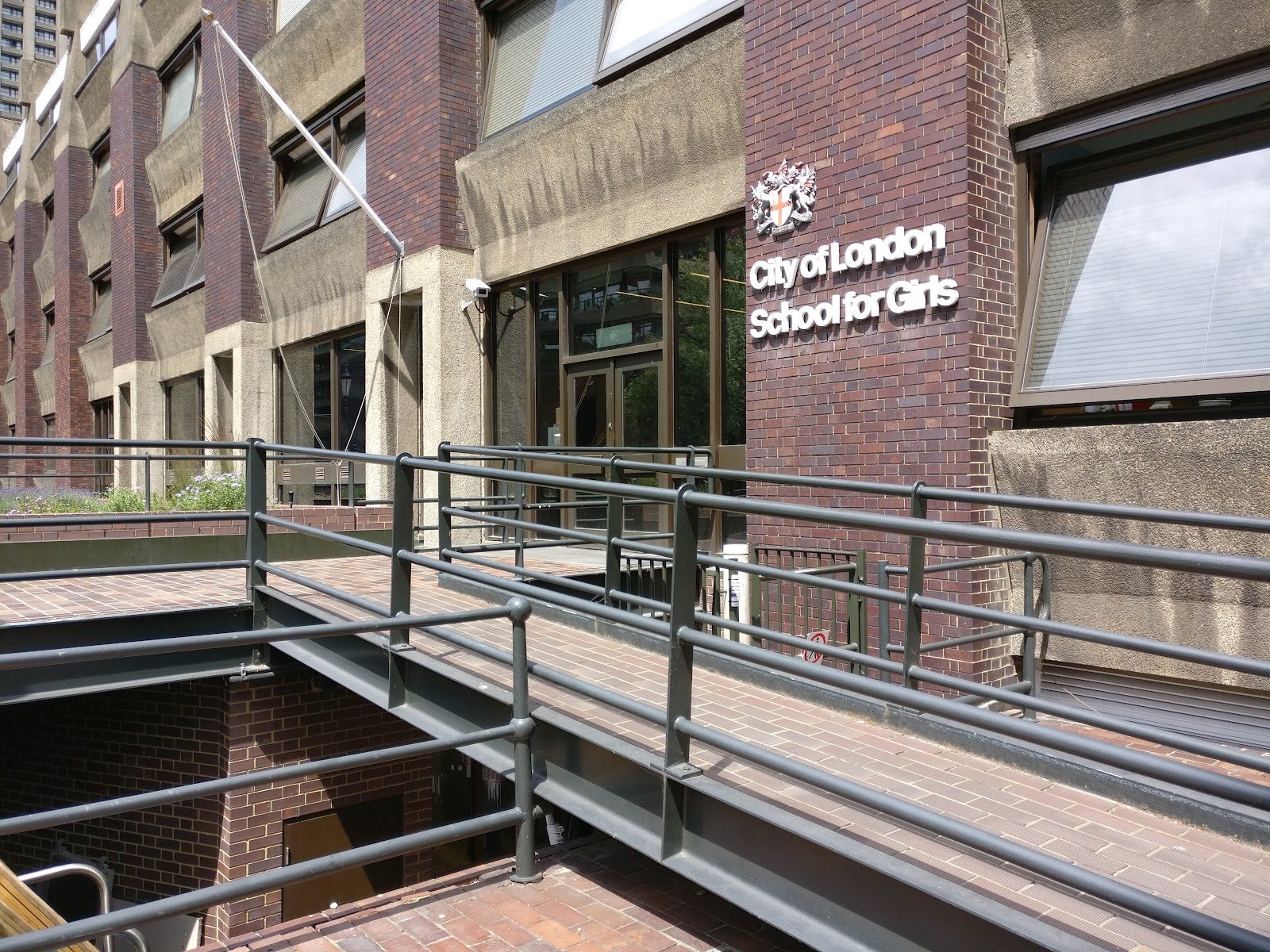
City of London School for Girls
London · United Kingdom
Wedged between brutalist towers and the old Roman city wall, a rigorously academic day school with the capital as its classroom.
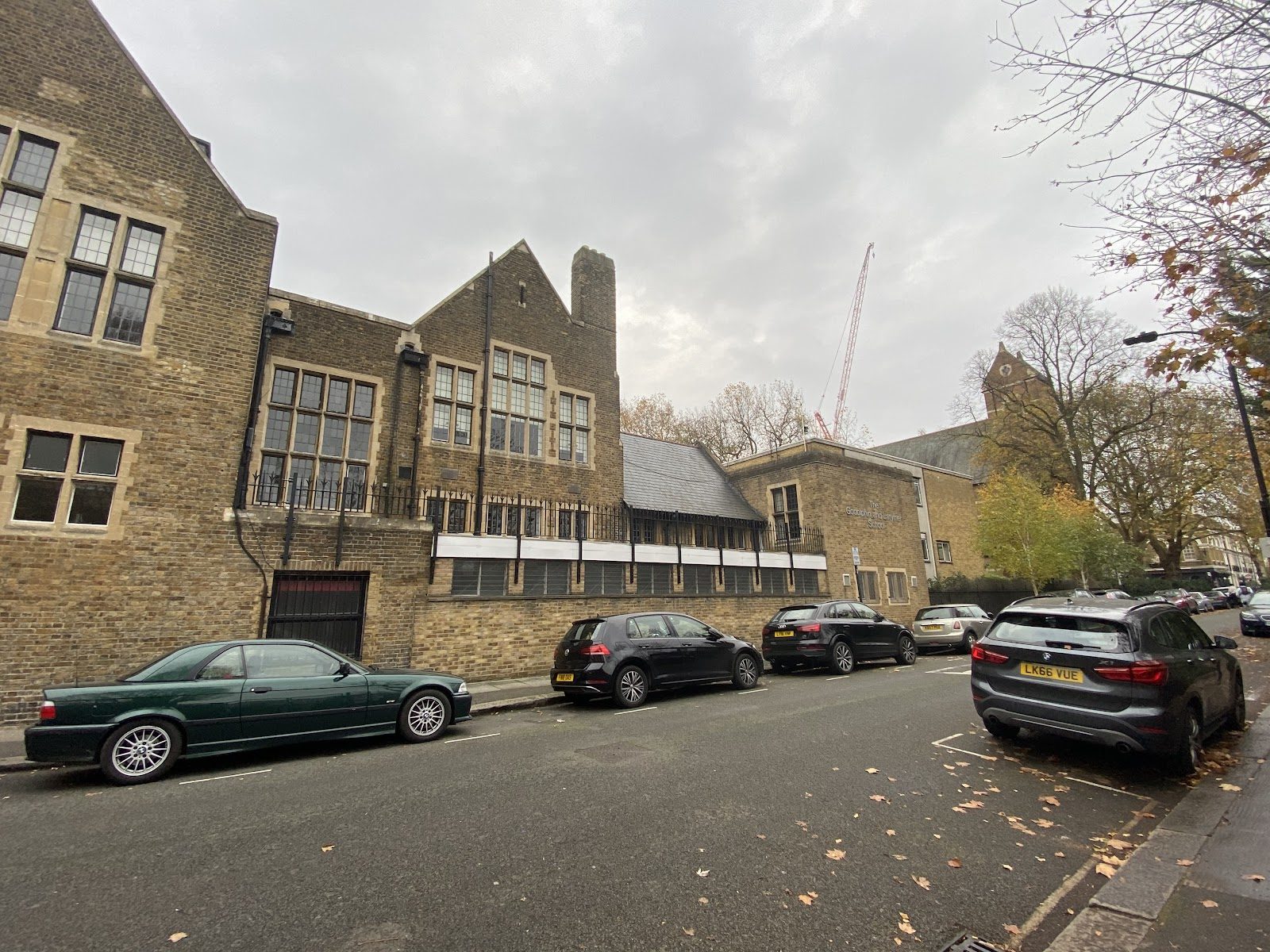
Godolphin and Latymer School
London · United Kingdom
A Thames-side Hammersmith campus where IB scores rank among the world's top ten and six houses bear the names of trailblazing women
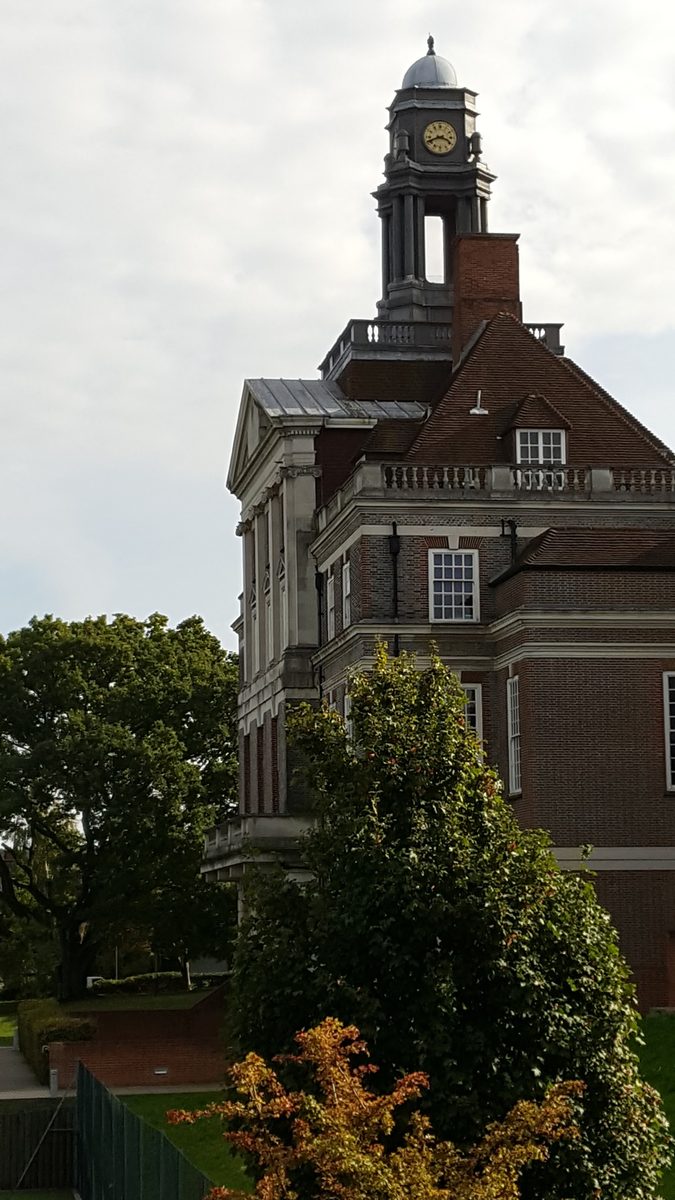
The Henrietta Barnett School
London · United Kingdom
A free, fiercely oversubscribed girls' grammar in Lutyens' Hampstead Garden Suburb, sending dozens each year to Oxbridge.
The Perse School
Cambridge · United Kingdom
Founded in 1615 as a free grammar school, Cambridge's oldest secondary keeps classics and coding on equal footing en route to Oxbridge.
Same country and curriculum — closest matches within ±10 points either way