
Bangkok
Triam Udom Suksa School
Born in 1938 as Chulalongkorn University's feeder school, where roughly 14,000 teenagers now compete yearly for 1,520 places.
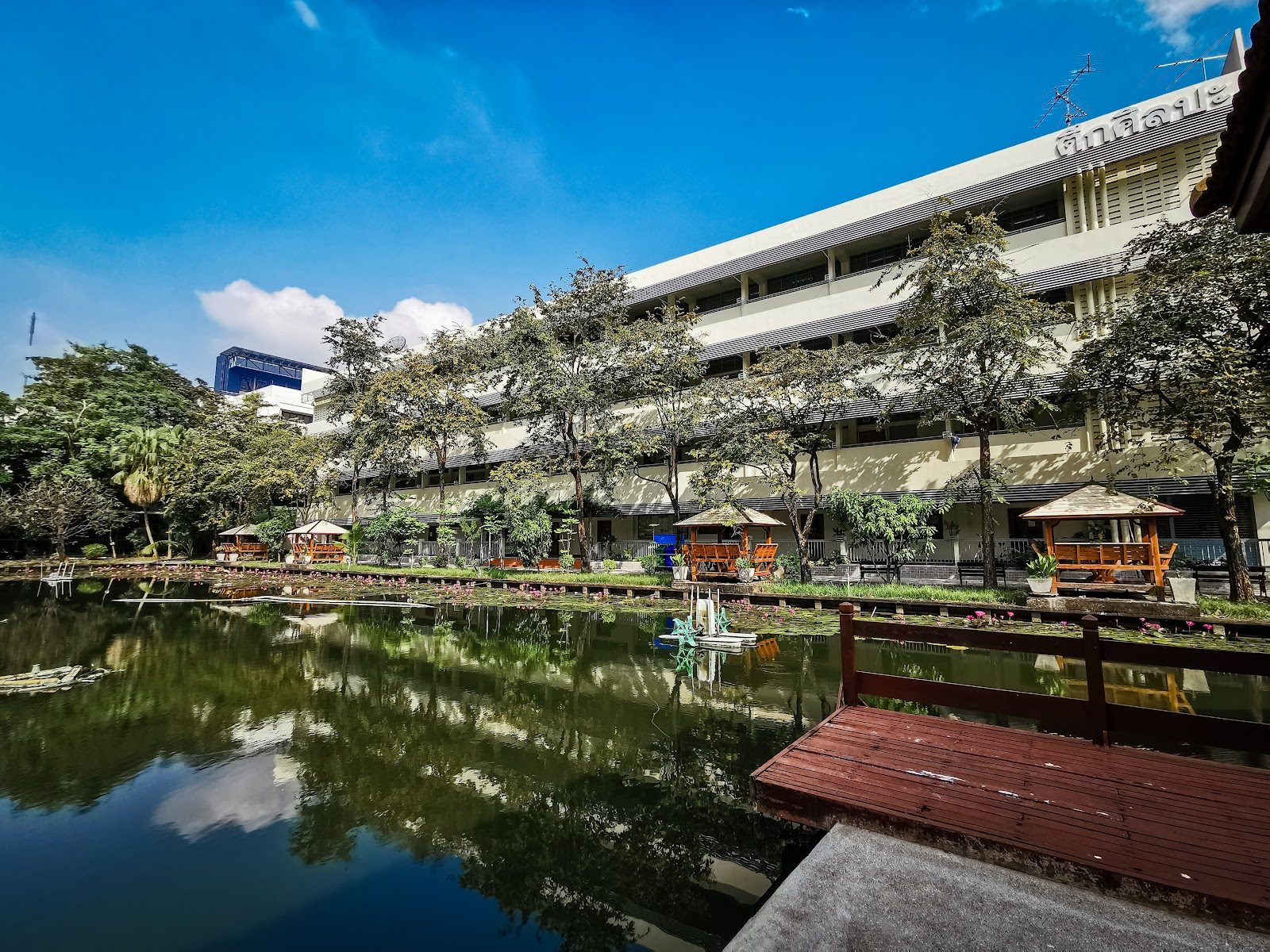
Photo © _VS_ via Google Maps
Type
Day
Ages
15–18
Curriculum
Thai National
Qualifications
Thai Matthayom 6
Ratio
—
The Verdict
Editor's commitment
Right for
Ambitious 15–18-year-olds chasing Thailand's hardest state-school prize: 1,520 places contested by roughly 14,000 applicants each year in Bangkok.
Wrong for
Families wanting a gentle, low-stakes sixth-form experience; this 1938 Chulalongkorn feeder school runs on selection, scale and national competition.
Watch out for
Triam Udom is a day school teaching in Thai and English under the Thai National curriculum; it does not offer boarding or an international pathway.
Ranking breakdown
Triam Udom Suksa School · #811 of 1591
Composite score 65.0. 8 weighted criteria.
By criterion
Academic Outcomes
Weight 20%
#209
of 1529 scored
University Placement
Weight 16%
#59
of 1529 scored
Prestige & Heritage
Weight 12%
#53
of 1571 scored
Alumni Network
Weight 12%
#1356
of 1530 scored
Facilities
Weight 12%
#1422
of 1533 scored
Transparency & Communications
Weight 8%
#1151
of 1532 scored
Peer & Industry Review
Weight 10%
#998
of 1548 scored
Admissions Selectivity & Demand
Weight 8%
#11
of 1529 scored
Peer & Industry Review
How Triam Udom Suksa School is regarded in the sector
65
Respected · medium confidence
Triam Udom Suksa is consistently regarded within Thailand as the country's most academically formidable public secondary school, functioning as a de facto national benchmark against which other selective schools, including Mahidol Wittayanusorn and Suankularb Wittayalai, are measured. Its graduates' dominance in O-NET rankings and Olympiad medal tables is routinely cited in Thai education press and Ministry of Education briefings as evidence of the school's outsized role in producing candidates for Chulalongkorn, Mahidol, and Thammasat medical, engineering, and science faculties, whose admissions staff informally treat a Triam Udom transcript as a strong quality signal. Thai-language newspapers such as Matichon and Bangkok Post education sections periodically profile the school's entrance-exam selectivity (among the lowest acceptance rates nationally) as a proxy for meritocratic rigor. International rankings bodies like WhichSchoolAdvisor and Good Schools Guide do not yet cover Thai public schools in depth, so peer regard is documented mainly through domestic press, alumni networks in academia and government, and university admissions patterns rather than Western independent-school commentary channels.
- Supachai Panitchpakdi — Former WTO Director-General; Former Deputy PM of Thailand, economics/diplomacy
- Kasit Piromya — Former Foreign Minister of Thailand, diplomacy
- Anutin Charnvirakul — Deputy Prime Minister of Thailand, politics
Editors' overview
Triam Udom Suksa occupies a singular place in Thai education. Founded in 1938 as Chulalongkorn University’s preparatory school, it still trades on that origin story — and with reason. This is a state day school in central Bangkok for ages 15–18, teaching the Thai National curriculum in Thai and English, with the largest yearly enrolment in the country. Its market position is plain: this is the national flagship for academically ambitious teenagers who want prestige, scale and competition in one package. The numbers alone sharpen the point: roughly 14,000 applicants competing for 1,520 places each year. That ratio gives the school its hard-edged allure.
What sets Triam Udom apart is not pastoral intimacy or progressive experimentation. It is selectivity, academic concentration and national reputation. Parents shortlist it for brutal academic competition, for a peer group drawn from the strongest students across Thailand, and for the status that still attaches to the name. The school’s long-standing claim to prominence rests on public reputation rather than glossy positioning: it has been regarded as the best secondary school in Thailand, and it draws students nationwide through highly competitive entrance examinations. That creates an environment of serious intellectual pressure and institutional prestige, not comfort.
This school suits a very specific student. The right candidate is resilient, examination-strong, self-directed and comfortable being measured against other high performers every day. Teenagers who want a broad, gently curated international-school adolescence will find Triam Udom a poor fit. Teenagers who want the sharp end of the meritocratic race, who thrive in large cohorts, and who value reputation as much as day-to-day hand-holding will understand its appeal at once. For the right family, Triam Udom belongs on the shortlist because it offers national elite status inside the Thai system, not an imitation of something softer or more global.
Academic Performance
Triam Udom’s academic standing rests on selectivity and national reputation, but the school does not publish the exam data international parents will look for first. We have not seen aggregate Thai national examination results, subject-level distributions, university placement tables, or longitudinal destination data in the public domain. That is a real weakness in the school’s public case. A school with this level of prestige should disclose hard outcomes, not rely on inherited status. In editorial terms, that leaves parents judging performance through proxies: the ferocity of admission, the calibre of the intake, and the school’s enduring place at the top end of Thailand’s state system.
Relative to peers, Triam Udom sits in the national academic elite. It draws high-performing teenagers from across the country and operates at a scale that few selective schools match. The school’s own competitive context matters here: roughly 14,000 candidates contest 1,520 places, which means the cohort arrives pre-filtered by examination strength. That does not prove value added, but it does place Triam Udom in a different category from ordinary state schools and many fee-charging rivals. For parents who want published scoreboards, the opacity is a problem. For parents who understand the Thai hierarchy, the school’s status is hard won and deeply entrenched — but the absence of transparent outcome data still needs saying plainly.
Facilities
Triam Udom’s facilities profile is harder to judge than its reputation because the school does not publish a clear, detailed public account of specialist spaces, equipment or campus investment. That matters. At this level, parents need to know the standard of laboratories, libraries, arts rooms, sports provision and technology infrastructure; Triam Udom does not make that easy. What can be said with confidence is structural: this is a very large upper-secondary state school serving teenagers only, so the core academic plant must support a high-pressure, exam-centred sixth-form-style environment at serious scale. In practice, that points to functional teaching accommodation and subject capacity rather than the curated polish international schools use to sell themselves. Families expecting glossy performing arts centres, resort-grade sports complexes or boutique maker spaces need to reset expectations.
Against peer schools, the comparison splits cleanly. Versus ordinary Thai state schools, Triam Udom sits in the top institutional tier and benefits from the academic concentration, alumni gravity and university-linked history that schools of lesser standing lack. Versus premium international schools in Bangkok, the likely trade-off runs the other way: stronger academic status inside the national system, less visible investment in lifestyle facilities. That does not make the campus weak; it makes it utilitarian rather than theatrical. The absence of published detail keeps this section short, and that in itself is instructive. A school with this stature should disclose its facilities properly instead of asking parents to infer quality from prestige.
Triam Udom Suksa occupies a singular place in Thai education
Prestige
Triam Udom carries first-rank national prestige inside Thailand’s school system. That judgement rests on three hard facts: it is the country’s best-known upper-secondary state school, it draws applicants from across the nation, and admission is brutally selective. When 14,000 teenagers compete for 1,520 places, the school does not need inflated branding to signal status; the market has already done that work. A place here functions as a public academic credential in its own right. For Thai families, the name carries immediate recognition and a clear message: this student won entry to one of the country’s most contested academic environments.
The prestige is also specific in character. It is not the polished, transnational prestige of an expensive international school, nor the niche cachet of a small specialist institution. It is state-sector elite prestige: exam-led, meritocratic in tone, and tied to a long-standing place near the top of the national hierarchy. That matters because reputations of this kind are hard to fake and hard to dislodge. The limitation is equally clear. The school’s public standing is stronger than its public disclosure. We have not seen the outcome data that would let parents test reputation against results. Even so, the combination of national reach, selective entry and enduring public esteem gives Triam Udom serious institutional weight and a level of prestige few schools in Thailand match.
Its market position is plain: this is the national flagship for academically ambitious teenagers who want prestige, scale and competition in one package
Communications
Triam Udom’s parent communications look functional rather than expansive. This is a huge, high-status state school with a national reputation, yet its public-facing communication does not match that stature. The school does not publish the kind of parent information international families now expect as standard: clear outcome dashboards, detailed facilities pages, or a sharply organised admissions narrative that anticipates questions before parents ask them. That matters because communication is not cosmetic at a school of this scale; it is part of basic institutional competence. Where schools are selective and pressure-heavy, families need plain guidance, fast updates and reliable signposting. Triam Udom’s public profile gives more weight to reputation than to explanation, which leaves the communication style feeling institutional, opaque and old-school.
For existing parents, the internal picture is harder to verify publicly, but the structure of the school gives a strong clue. An institution handling annual competition on the order of 14,000 applicants for 1,520 places cannot run on improvisation; there will be operational channels for notices, deadlines and routine administration. The issue is quality, not mere existence. We have not seen a communication culture built around transparency, parent partnership or polished bilingual accessibility. That does not make the school disorganised. It makes it transactional rather than warm, efficient in the essentials and thin on reassuring detail. Families used to international-school hand-holding will find that austere. Families who only want the message, the date and the instruction will cope perfectly well.
Uniqueness
Triam Udom is unique because it occupies a role few schools still hold with such force: it is the national sorting ground for academically elite teenagers inside a state system. This is not a school selling an educational lifestyle. It is a school that concentrates high scorers from across the country into one institution and then lets competition do part of the teaching. The result is a peer environment that is intellectually unforgiving, status-conscious and deeply embedded in the Thai meritocratic imagination. Entry itself carries weight. For students, that brings a rare benefit: daily exposure to classmates who are serious, fast and ambitious, with little patience for drift or complacency.
That distinctiveness brings gains and costs in equal measure. The gain is obvious: students study in an atmosphere of compressed academic intensity that can sharpen habits, raise expectations and normalise high achievement. The school’s sheer scale also matters; with 1,520 new places in each intake and around 14,000 applicants chasing them, Triam Udom combines mass with selectivity in a way few prestige schools manage. The cost is just as clear. Teenagers who need warmth, close adult monitoring or room to be average will struggle. Triam Udom offers prestige with pressure, not insulation. For the right student, that is exactly the point. For the wrong one, it is a punishing fit.
It is state-sector elite prestige: exam-led, meritocratic in tone, and tied to a long-standing place near the top of the national hierarchy
Student Profile
The student who fits Triam Udom is academically aggressive, emotionally steady and fully at ease in a school where comparison is constant. This is not the place for a teenager who needs coaxing, frequent praise or a soft landing after setbacks. It suits pupils who already know how to work, absorb pressure and recover fast when they fall short. A strong fit will treat competition as fuel rather than threat, and will not be unsettled by studying among peers who have all cleared a national admissions filter. With annual intake on this scale but demand running to around 14,000 candidates, the social and academic mood is hard-driving, rank-conscious and not for the faint-hearted.
The best-matched students are ambitious without being performative. They do not need boutique enrichment or a heavily managed school identity; they need strong peers, clear stakes and room to prove themselves. Independence matters. So does stamina. Teenagers who flourish here tend to be organised, exam-tempered and comfortable finding their place in a very large institution without much pastoral cushioning. Students who want broad self-expression, intensive adult nurturing or protection from competitive pressure will struggle. Students who want serious academic company, high-status challenge and the chance to test themselves in one of Thailand’s most selective state-school environments will fit cleanly.
That distinctiveness brings gains and costs in equal measure
Co-curricular strengths
Arts & sport, on a separate axis
Overall 7.5/10
Scored 0-10 from the school's own published evidence. This axis is editorial-only — it does not feed the main WTS ranking.
Sports
8/10
Drama
7/10
Dance
7/10
Music
8/10
Visual Arts
7.5/10
Strengths
- +Founded in 1938 as the preparatory school for Chulalongkorn University, it is Thailand's oldest and most established academic-track secondary school.
- +Consistently posts the highest or near-highest O-NET national examination averages among Thai public schools, reflecting strong academic outcomes.
- +Functions as a recognised feeder into Thailand's top universities, giving graduates an established pathway and alumni network into Chulalongkorn, Thammasat, Mahidol and Kasetsart.
- +Large, well-resourced state campus in central Bangkok on an 80-rai (about 13-hectare) site with 111 classrooms and the country's largest single-school upper-secondary enrolment.
- +Notable alumni network includes prominent public figures such as politician Thanathorn Juangroongruankit and former Bangkok governor Chadchart Sittipunt.
Considerations
- −Admission is via an extremely competitive open entrance exam only, with recent years seeing well over 10,000 applicants for around 1,500 places, effectively excluding students without intensive local exam preparation.
- −Teaching is delivered in the Thai national curriculum and Thai language, making it unsuitable for expat children who are not already fluent and academically prepared in Thai.
- −The school only covers Mathayom 4-6 (grades 10-12), so it cannot serve as a continuous option for younger children and requires a mid-teens transfer.
- −Admissions have been dogged by long-running allegations of informal 'tea money' payments influencing places, a governance issue reported in the Thai press.
Availability
Primary entry gate & tests
TU National Entrance Exam
Gallery
Photo © KOB baka Gma via Google Maps
Photo © Champ_ntwr via Google Maps
Photo © _VS_ via Google Maps
Photo © minniem1ckeymouth via Google Maps
Photo © Sonthaya Sakkarp via Google Maps
Photo © Sonthaya Sakkarp via Google Maps
Photo © Sonthaya Sakkarp via Google Maps
Parent reviews
Have you sent your child here?
Voice reviews carry the strongest trust badge — we transcribe them for you to tidy up before they go live. Prefer to type? A written review is fine too.
Add your voice
In 60 seconds, tell other parents: what's the best thing about Triam Udom Suksa School, and what surprised you when your child joined?
We ask for a Google sign-in so every review has a real face behind it — no anonymous drive-by attacks on schools, and no faked positive reviews. Your email is never shown publicly.
Send this profile to a friend
International parents rely on word-of-mouth. Share this review with someone weighing the same decision.
Schools with places
Similar schools to Triam Udom Suksa School with places available now.
NIST International School
Bangkok · Thailand
- 2026-27
- WAITPOOLSpace-dependent
- 2027-28
- PLACES OPENRolling
Bangkok Patana School
Bangkok · Thailand
- 2026-27
- CLOSEDThai closed / Non-Thai open
- 2027-28
- OPENS SOONThai 1 Sept / Non-Thai rolling
Shrewsbury International School Bangkok
Bangkok · Thailand
- 2026-27
- WAITPOOLSpace-dependent
- 2027-28
- PLACES OPENRolling
International School Bangkok
Bangkok · Thailand
- 2026-27
- WAITPOOLSpace-dependent
- 2027-28
- OPENS SOONOpens Sept '26
Availability first, then country, area, curriculum, price, co-curricular
Consider also
Also worth looking at alongside Triam Udom Suksa School.

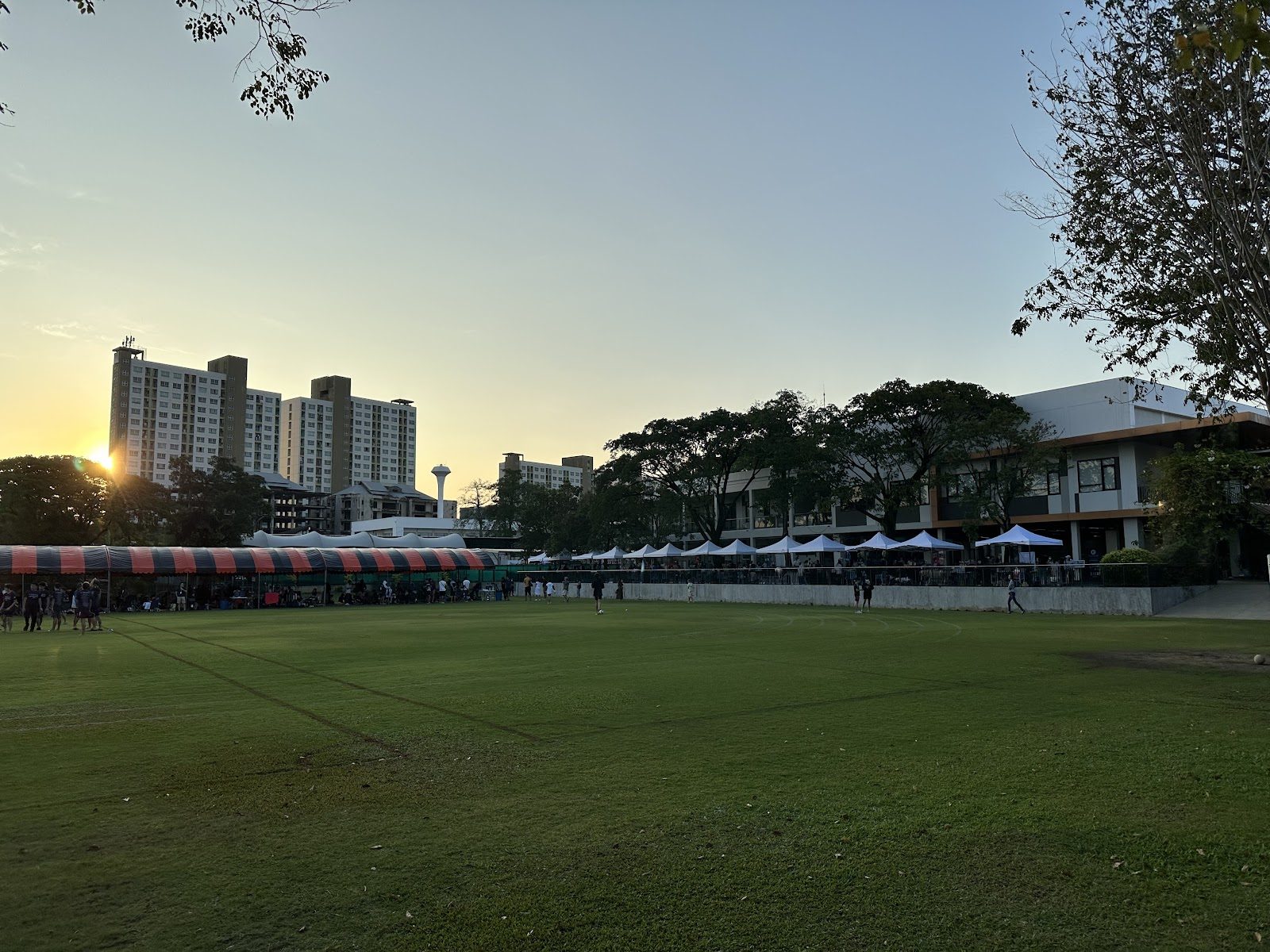
NIST International School
Bangkok · Thailand
Founded in 1992 with United Nations backing, Thailand's first not-for-profit IB World School sits amid downtown Sukhumvit.
Bangkok Patana School
Bangkok · Thailand
Thailand's first British school, running since 1957, blends English curriculum grounding with IB breadth across a 17-hectare Bang Na campus.
Shrewsbury International School Bangkok
Bangkok · Thailand
A 1552 English public-school pedigree anchors a Chao Phraya riverside campus reachable by its own school boat.
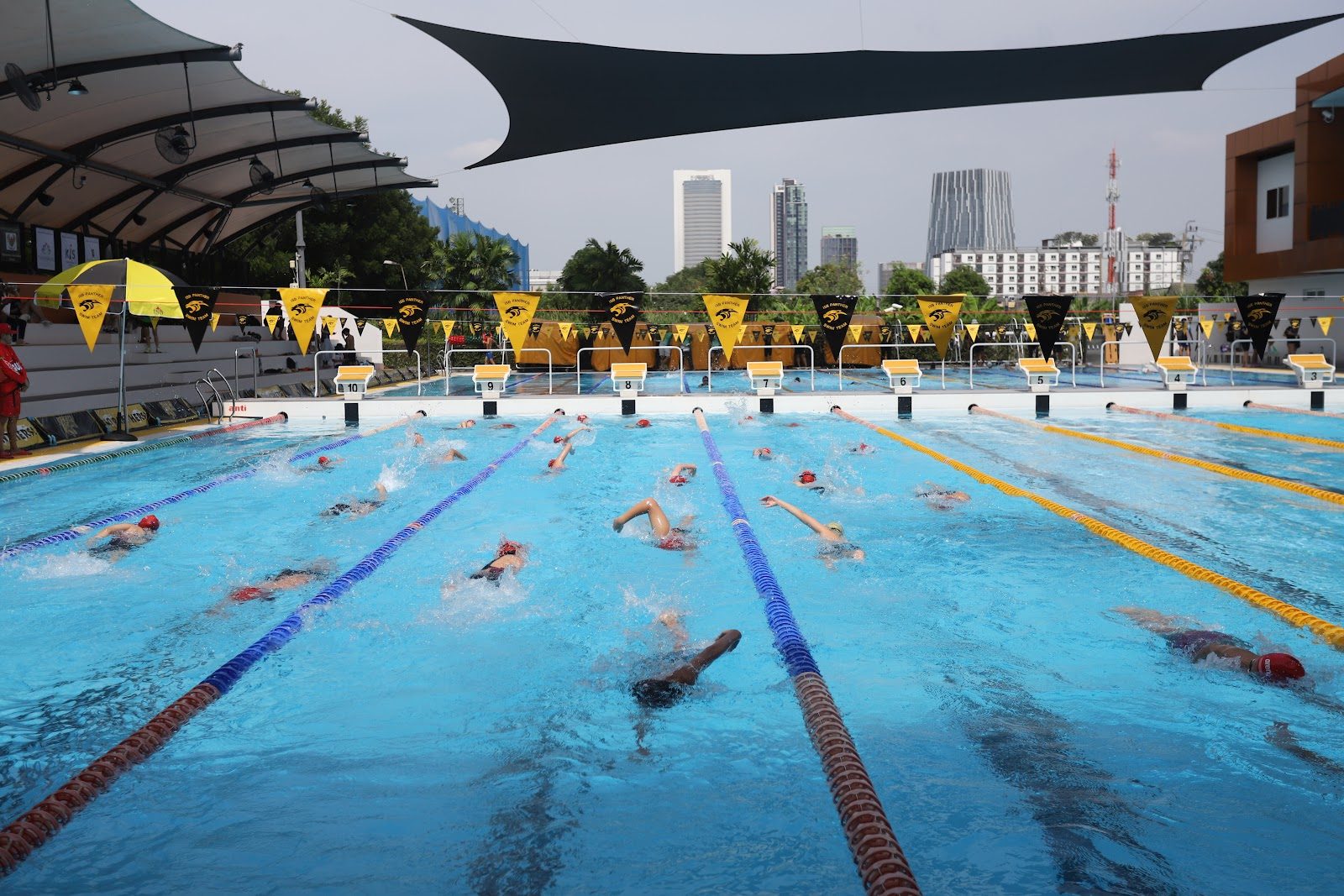
International School Bangkok
Bangkok · Thailand
Opened in 1951 as Thailand's first international school, it pioneered the country's IB Diploma and runs a wilderness campus in Phetchaburi.
Same country and curriculum — closest matches within ±10 points either way