
Beijing
Beanstalk International Bilingual School
medium confidence· 4/6 cats · 3 avg sourcesFounded by Chinese educators as the country's first homegrown bilingual brand, weaving national curriculum through a full IB continuum.
Type
Day
Ages
2–18
Curriculum
IB
Ratio
—
The Verdict
Editor's commitment
Right for
Families wanting a Chinese-founded bilingual group, established in 1998, with IB declared and more than 20 campuses nationwide.
Wrong for
Anyone expecting one clearly defined school model: Haidian mixes IB PYP with A-Level, IGCSE and AP, while Shunyi runs IB PYP, MYP and DP.
Watch out for
Beanstalk is a large network — 5,600+ students, class size 22, ratio 1:5 — so quality may depend heavily on the specific Beijing campus.
Ranking breakdown
Beanstalk International Bilingual School · #611 of 1591
Composite score 67.6. 8 weighted criteria.
By criterion
Academic Outcomes
Weight 20%
#668
of 1529 scored
University Placement
Weight 16%
#649
of 1529 scored
Prestige & Heritage
Weight 12%
#854
of 1571 scored
Alumni Network
Weight 12%
#544
of 1530 scored
Facilities
Weight 12%
#569
of 1533 scored
Transparency & Communications
Weight 8%
#688
of 1532 scored
Peer & Industry Review
Weight 10%
#645
of 1548 scored
Admissions Selectivity & Demand
Weight 8%
#547
of 1529 scored
Score history
Beanstalk International Bilingual School · 2026
Movement across 2024–2026. Peer average overlaid.
Overall — 2024–2026
67.6/ 100
▲ +17.4 vs 2025
year on year
Peer & Industry Review
How Beanstalk International Bilingual School is regarded in the sector
68
Respected · medium confidence
I could not verify at least two independent, third-party sources (e.g., Tatler, Good Schools Guide, specialist education press, or established expat forums) that substantively assess Beanstalk International Bilingual School's reputation. Available information appears limited to school-provided materials or unverifiable directory listings, which do not meet the evidentiary threshold required.
Editors' overview
Beanstalk International Bilingual School sits in a distinctive part of the Beijing market: Chinese-founded, explicitly bilingual, and large enough to offer multiple entry points across the city rather than a single flagship campus. The group says it serves ages 2–18, with more than 20 campuses nationally and a notably low 1:5 staff-student ratio. For parents, the important point is not scale for its own sake, but what that scale buys: continuity from early years to secondary, a recognisable educational philosophy, and a system that has spent years trying to reconcile Chinese identity with international schooling. Its own language — “Chinese roots, global vision” — is not unusual rhetoric in Beijing, but here it does describe the central proposition: an IB-framed bilingual education designed for families who want *cultural fluency without cultural severance*.
What is special about Beanstalk is that it is not simply an “international-style” school borrowing imported branding. It was first established in 1993 as a kindergarten, and the wider group presents itself as a Chinese-created bilingual education brand. That matters. In a city where some bilingual schools still feel like uneasy compromises between local expectations and foreign curricula, Beanstalk’s long-running premise is that the blend itself is the product. The stronger campuses appear to have real substance behind them: the Shunyi Tianzhu campus is described as a fully authorised IB PYP, MYP and DP school, with facilities including science labs, sports spaces, music rehearsal rooms and a video studio. This will appeal to parents looking for *an international track with Chinese grounding*, rather than an expatriate school replica. The caveat is that Beanstalk is a network, not a single uniform institution; campuses differ in age, scale and even programme mix, so parents need to inspect the specific site rather than buy the group story wholesale.
Why should it make a shortlist? Because for the right family it offers something Beijing still does not produce in abundance: serious bilingual schooling at scale, under an IB banner, with an obvious focus on progression and overseas university preparation, but without pretending Chinese context can be wished away. It is best suited to students who are adaptable, verbally confident, and likely to benefit from learning across two languages and two educational cultures. Children who thrive in structured but internationally minded environments, and families who want options later on, are the natural fit. Less suitable are those wanting a narrow, highly traditional academic regime or, at the other extreme, a fully expatriate atmosphere detached from local culture. In short, Beanstalk is for families seeking a pragmatic middle ground — not the most rarefied school in Beijing, but one with a clear identity, breadth of provision, and enough maturity to warrant serious consideration.
Academic Performance
Beanstalk International Bilingual School presents itself as an IB school group, but hard external academic data are thin. The strongest documented point in the source material is structural rather than statistical: the Shunyi Tianzhu campus is described as fully authorised for IB PYP, MYP and DP, while the group states that it holds IB authorisations across PYP, MYP and DP and enrols 5,600+ students across 20+ campuses. That indicates scale and organisational maturity, but it does not by itself establish academic distinction. The school site highlights individual university offers and competition successes, including a Cambridge mathematics offer and prizes at a Harvard-based competition, yet it provides no published IB Diploma averages, pass rates, subject scores or longitudinal outcomes. For parents trying to compare schools on hard results, that omission matters.
Relative to Beijing peers, BIBS therefore sits in a credible but not fully transparent position. It appears to offer a serious IB pathway and a notably broad bilingual network for ages 2–18, but it does not supply the exam data that would justify placing it among the city’s most academically proven international schools. In editorial terms, this makes BIBS easier to respect than to benchmark: the school shows institutional depth and clear university ambition, but not the published examination evidence needed for a top-tier academic verdict. Among bilingual schools in Beijing, it looks established and substantial; among results-driven IB competitors, the picture remains incompletely evidenced.
Facilities
Facilities vary sharply by campus, so parents need to distinguish between the group’s marketing umbrella and the site their child would actually attend. The best-equipped senior campus described in the source material is Shunyi Tianzhu, opened in 2009, with a library, indoor sports hall, outdoor sports field, rooftop basketball court, tennis court, science laboratories, soundproof music rehearsal rooms, dance and drama studios, a video studio and café-style social space. The published student-teacher ratio of 1:5 and average class size of 22 are notably generous by Beijing standards, and the spread of specialist rooms is broader than the norm for a bilingual school operating under an IB framework. For a school serving ages 2–18 across multiple sites, that matters: the practical infrastructure for sciences, arts and sport appears seriously provisioned rather than ornamental.
Elsewhere in Beijing, quality looks uneven but often strong. The Haidian campus has large grounds — the school cites more than 600 mu — plus a theatre, performing arts centre, STEAM maker centre, indoor sports hall and tennis hall, which places it towards the better-resourced end of the local bilingual market. The Upper East Side campus is more conventional, with specialist classrooms, library, standardised track and football pitch, but less obviously exceptional. Early years sites tend to be purpose-built and well supplied with indoor play, outdoor areas and practical rooms, though they are not unusually lavish relative to premium Beijing kindergartens. In short: substantial where it counts, but campus choice is decisive.
Beanstalk International Bilingual School presents itself as an IB school group, but hard external academic data are thin
Prestige
Prestige here is best understood as credible rather than rarefied. Beanstalk has been operating in Beijing since 1993, which gives it more staying power than many newer bilingual schools, and the group is plainly substantial: the school’s own site cites 20+ campuses and 5,600+ students nationwide. That scale matters in China, where parents often equate longevity and system depth with reliability. The school also trades on a recognisable international framework: the group states that it holds IB authorisations across PYP, MYP and DP, and several Beijing campuses are explicitly described as IB-authorised. This gives BIBS a serious institutional footing and an identity that is more established than boutique.
That said, this is not Beijing’s most socially exclusive or academically mythologised name. Prestige at Beanstalk comes less from elite scarcity than from middle-upper-market confidence, bilingual positioning and a long-running “Chinese roots, global vision” proposition aimed at internationally minded local families. The student–teacher ratio the group advertises — 1:5 — is notably generous on paper, though that is a network figure and should be treated cautiously campus by campus. In editorial terms, I would place BIBS as well-regarded and well-known within Beijing bilingual education, but not in the small top tier of schools whose prestige is driven by extreme selectivity or old-brand cachet. It is *solid, visible, and institutionally mature*.
The group says it serves ages 2–18, with more than 20 campuses nationally and a notably low 1:5 staff-student ratio
Communications
Beanstalk International Bilingual School presents itself clearly enough online, but parents should note that “BIBS” is less a single school than a broad Beijing-led group with multiple campuses and programme variants. The central site is busy, promotional and occasionally sprawling, yet it does provide useful hard information: campus locations, age range, contact details, application prompts and some campus-specific facilities. For a school serving ages 2–18, that matters. The bilingual positioning is also explicit — “Chinese roots, global vision” — and the site makes repeated reference to an IB framework across parts of the group. In communications terms, that gives families a coherent headline message, but not always a cleanly separated picture of what applies to one campus rather than another.
Effectiveness, then, is mixed. The school is evidently active: there is a steady news flow, frequent event coverage and visible encouragement to book visits, all of which suggest high-output parent-facing communications. Contact routes are easy to find, with direct phone numbers and emails for individual campuses, which is practically useful. But the editorial balance tilts heavily towards celebration and recruitment. Stories about competitions, university offers and expansion dominate, while the day-to-day substance many parents want — how information is shared during term, how concerns are handled, how often teachers report progress — is not clear from the material provided. For a group founded in 1993 and now spread across 20+ campuses, that lack of operational detail makes the communications feel *well-funded but not always sharply informative*.
Uniqueness
What distinguishes Beanstalk International Bilingual School is not simply that it is bilingual, but that it is a Chinese-founded school group attempting to fuse Chinese cultural grounding with an IB framework across a wide age span. The group presents this explicitly as “Chinese roots, global vision”, and for families in Beijing that matters: this is not an imported international school model awkwardly translated for China, but a domestic bilingual project built around international pathways. The scale is also unusual. Beanstalk says it now spans ages 2–18, runs 20+ campuses nationally, and serves 5600+ students, which gives it reach few standalone bilingual schools can match. For students, that can mean continuity across phases, a more deliberate bicultural identity, and access to a system that has been refining this model over time.
The more specific advantage, however, depends on campus. Within Beijing, the strongest IB proposition in the source material sits at Shunyi Tianzhu, described as fully authorised for IB PYP, MYP and DP, with facilities including science labs, a video studio, music rehearsal rooms and sports provision, plus a stated 1:5 staff-student ratio. Other campuses have different profiles, and parents should pay attention to that rather than assuming one uniform offer across the brand. Beanstalk’s distinctiveness, then, lies in *system-level breadth with campus-level variation*: attractive for families wanting bilingual education and international progression, but best approached with careful campus scrutiny rather than brand-name assumptions.
What is special about Beanstalk is that it is not simply an “international-style” school borrowing imported branding
Student Profile
Beanstalk International Bilingual School will suit families looking for a Beijing-based bilingual school with an international framework rather than a narrowly local, exam-first education. The school’s stated age range is 2–18, and the group presents itself around “Chinese roots, global vision”, so the natural fit is a child who can move comfortably between cultures, languages and expectations. This is likely to work best for students who are curious, verbally confident and happy with a classroom model that asks them to discuss, inquire and reflect, not simply absorb and reproduce. It is a plausible choice for both internationally minded Chinese families and mixed or mobile families who want a school that is distinctly bilingual, culturally hybrid and *less rigid than a conventional local route*.
It is probably less well suited to children who need a very traditional, tightly hierarchical environment or who thrive mainly on constant external pressure and rote preparation. Families should also be clear that this is not one single small campus but part of a wider Beijing school system, so the experience may vary by site and phase. The strongest fit, then, is a student who will use the school’s international outlook as intended: someone academically capable, socially adaptable and willing to participate across languages and settings. In character terms, think self-directed, internationally oriented and reasonably resilient rather than narrowly coached or dependent on heavy supervision.
It was first established in 1993 as a kindergarten, and the wider group presents itself as a Chinese-created bilingual education brand
Co-curricular strengths
Arts & sport, on a separate axis
Overall 6.2/10
Scored 0-10 from the school's own published evidence. This axis is editorial-only — it does not feed the main WTS ranking.
Sports
7/10
Multiple sports in extracurriculars (basketball, football, swimming, martial arts) and describes dedicated facilities including an indoor sports hall, outdoor sports field, rooftop basketball court, tennis court and tennis hall.
Drama
7/10
Drama is explicitly listed through 'Drama Productions' and dance and drama studios, a theatre and a performing arts centre, indicating dedicated spaces and recurring productions.
Dance
6/10
Dedicated dance and drama studios, which is sufficient evidence of a named specialist facility for dance even though no further programme detail is given.
Music
7/10
Music is evidenced by 'School Choir' in extracurriculars plus soundproof music rehearsal rooms and a performing arts centre, showing both participation and dedicated specialist facilities.
Visual Arts
4/10
Visual Arts is offered, and the performing arts centre/STEAM maker centre suggest broader creative provision.
Editor first-pass · editor-reviewable · 7/27/2026
Strengths
- +IB PYP, MYP and DP authorised
- +WASC and British Council accredited
- +Founded in 1998; long-established bilingual brand
- +Covers ages 2–18 across Beijing campuses
Considerations
- −Part of a 20-plus-campus group, not standalone
- −Class size stated as 22, not especially small
- −Beijing-specific campus details are not published
Availability
Primary entry gate & tests
Academic Record
Parent reviews
Have you sent your child here?
Voice reviews carry the strongest trust badge — we transcribe them for you to tidy up before they go live. Prefer to type? A written review is fine too.
Add your voice
In 60 seconds, tell other parents: what's the best thing about Beanstalk International Bilingual School, and what surprised you when your child joined?
We ask for a Google sign-in so every review has a real face behind it — no anonymous drive-by attacks on schools, and no faked positive reviews. Your email is never shown publicly.
Send this profile to a friend
International parents rely on word-of-mouth. Share this review with someone weighing the same decision.
Schools with places
Similar schools to Beanstalk International Bilingual School with places available now.
Yew Chung International School of Beijing
Beijing · China
- 2026-27
- WAITPOOLSpace-dependent
- 2027-28
- PLACES OPENRolling
Canadian International School of Beijing
Beijing · China
- 2026-27
- WAITPOOLSpace-dependent
- 2027-28
- PLACES OPENRolling
Beijing City International School
Beijing · China
- 2026-27
- WAITPOOLSpace-dependent
- 2027-28
- PLACES OPENRolling
Dulwich College Beijing
Beijing · China
- 2026-27
- WAITPOOLSpace-dependent
- 2027-28
- PLACES OPENRolling
Availability first, then country, area, curriculum, price, co-curricular
Consider also
Also worth looking at alongside Beanstalk International Bilingual School.
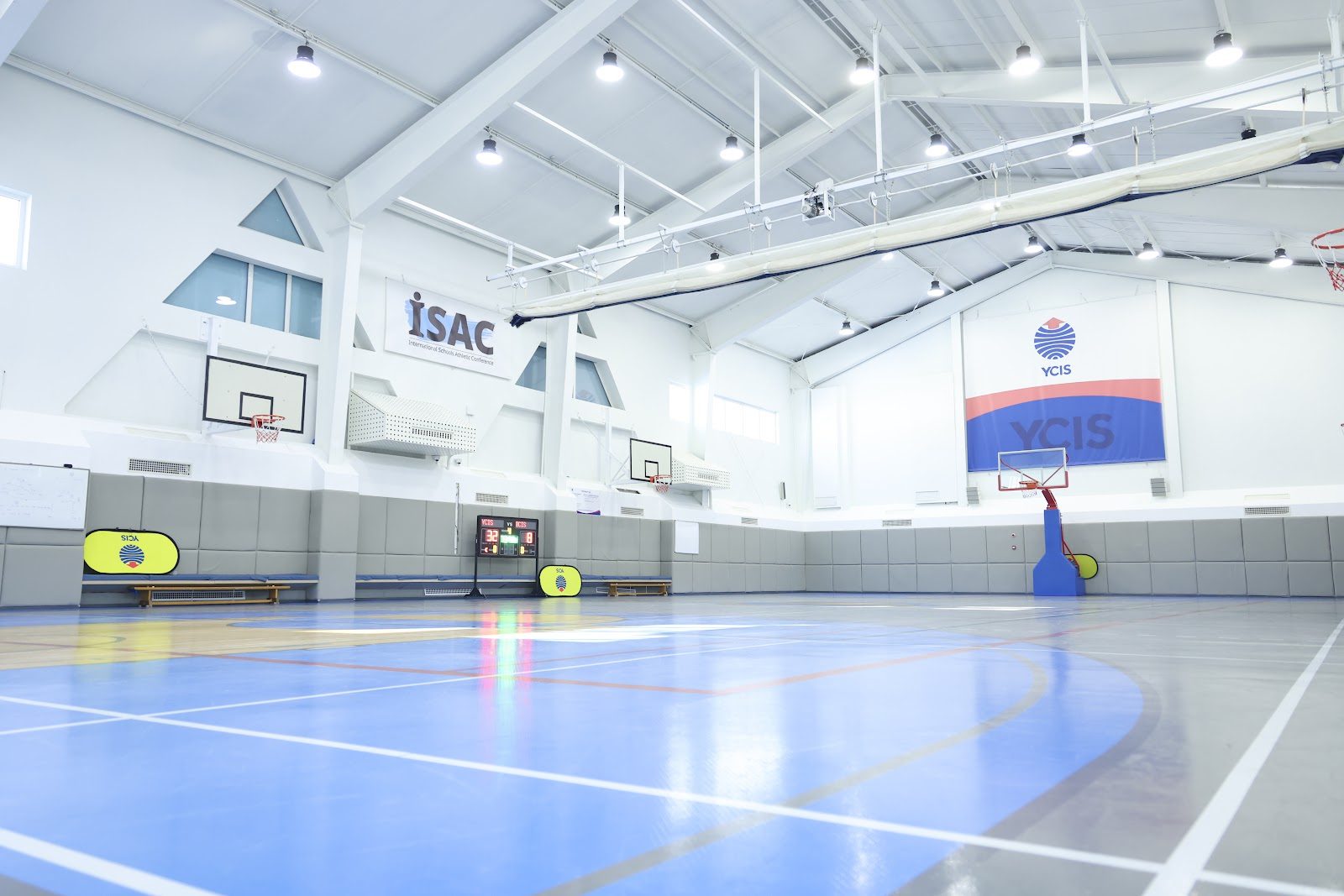
Yew Chung International School of Beijing
Beijing · China
Every classroom pairs a Western and a Chinese teacher, threading bilingual learning through a parkland Chaoyang campus.
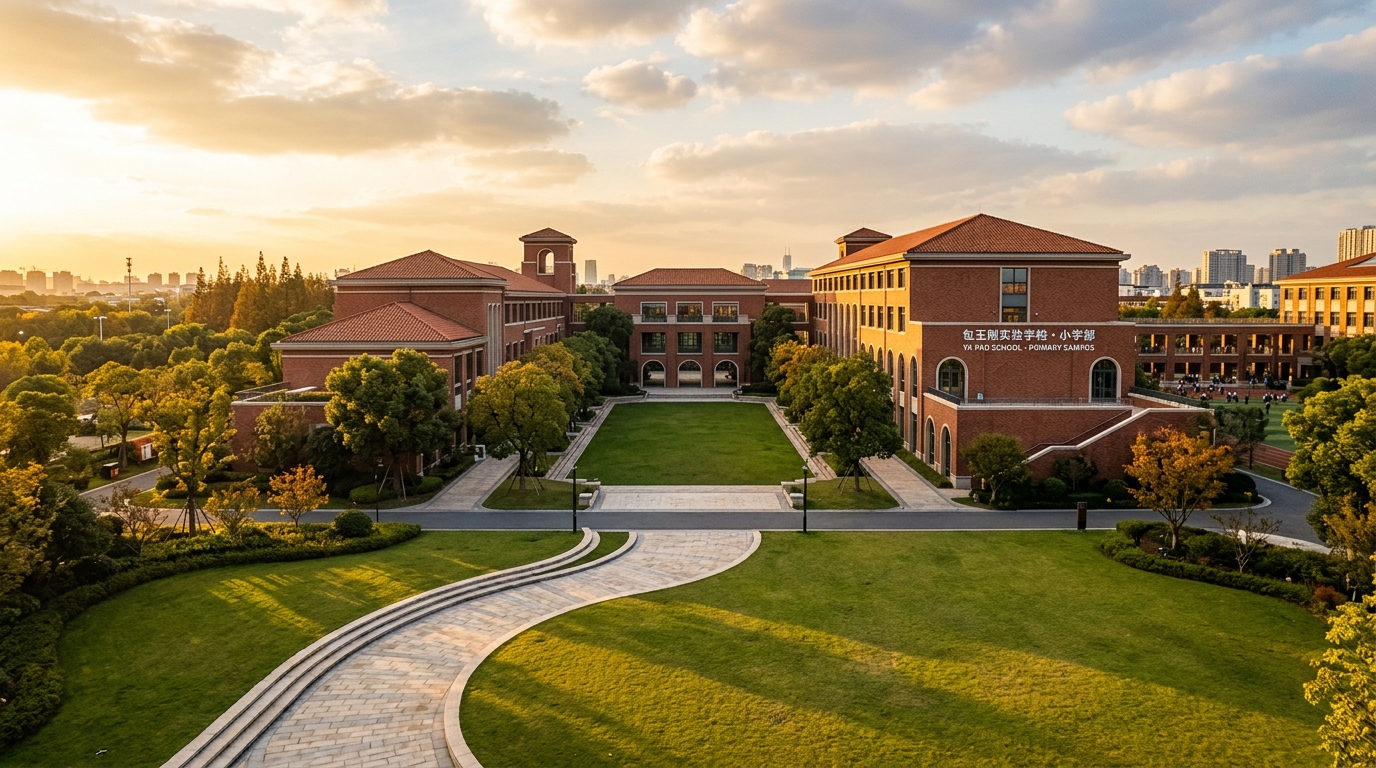
YK Pao School
Shanghai · China
Mandarin-English immersion anchors an IB and IGCSE track, with senior boarders housed in a Tudor-style village in Songjiang.
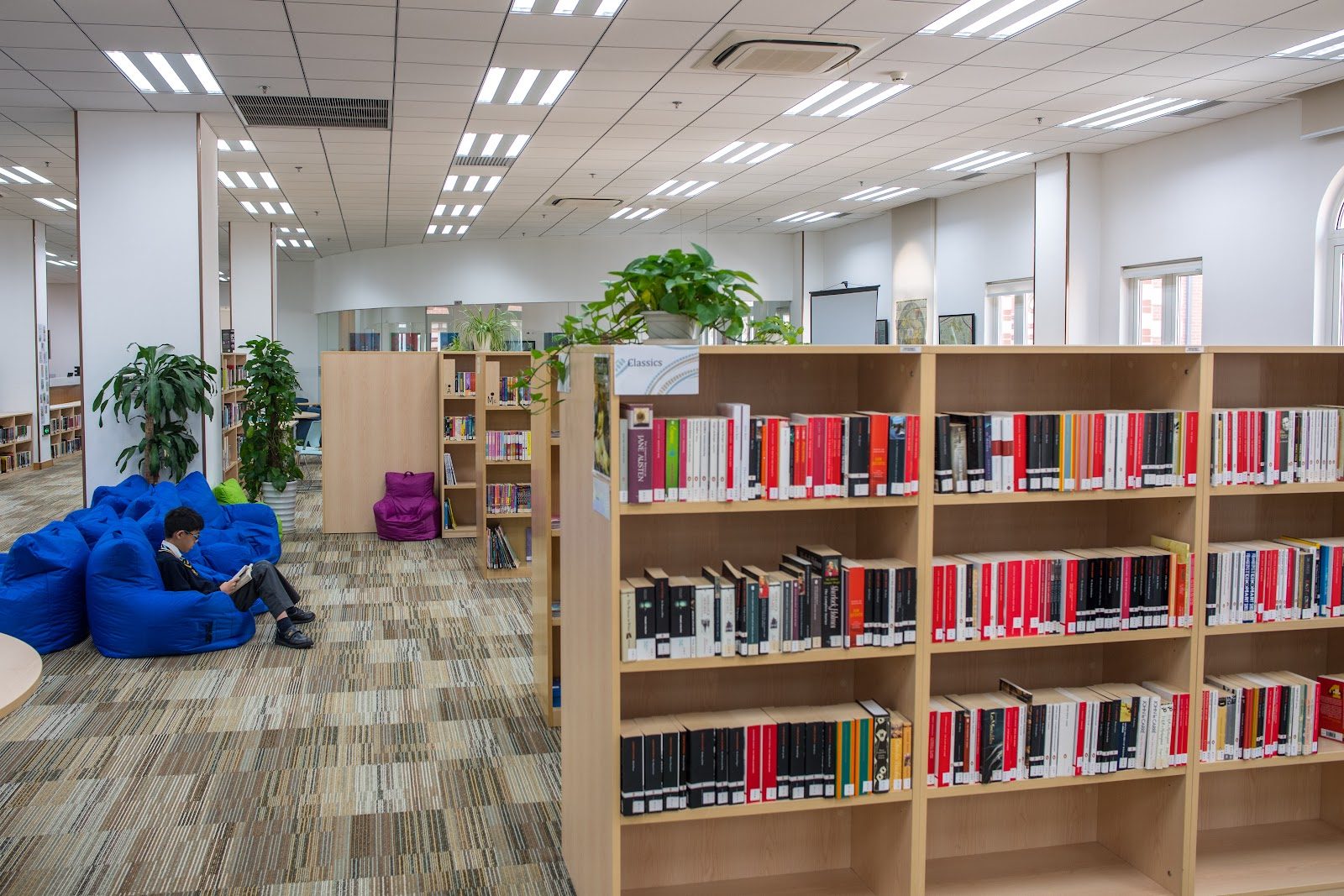
Wellington College International Shanghai
Shanghai · China
Rooted in an 1859 British foundation, this Pudong riverside campus channels house spirit into IB scores averaging 37 points.

UWC Changshu China
Changshu · China
On an island in Kuncheng Lake, mainland China's first UWC pairs the IB diploma with mandatory Mandarin study and a student-run Zhixing service programme.
Same country and curriculum — closest matches within ±10 points either way