
Mexico City
The Edron Academy
low confidence· 4/6 cats · 1.33 avg sourcesMexico City's oldest British school since 1963, blending SEP and IB study into a genuinely bicultural sixth form
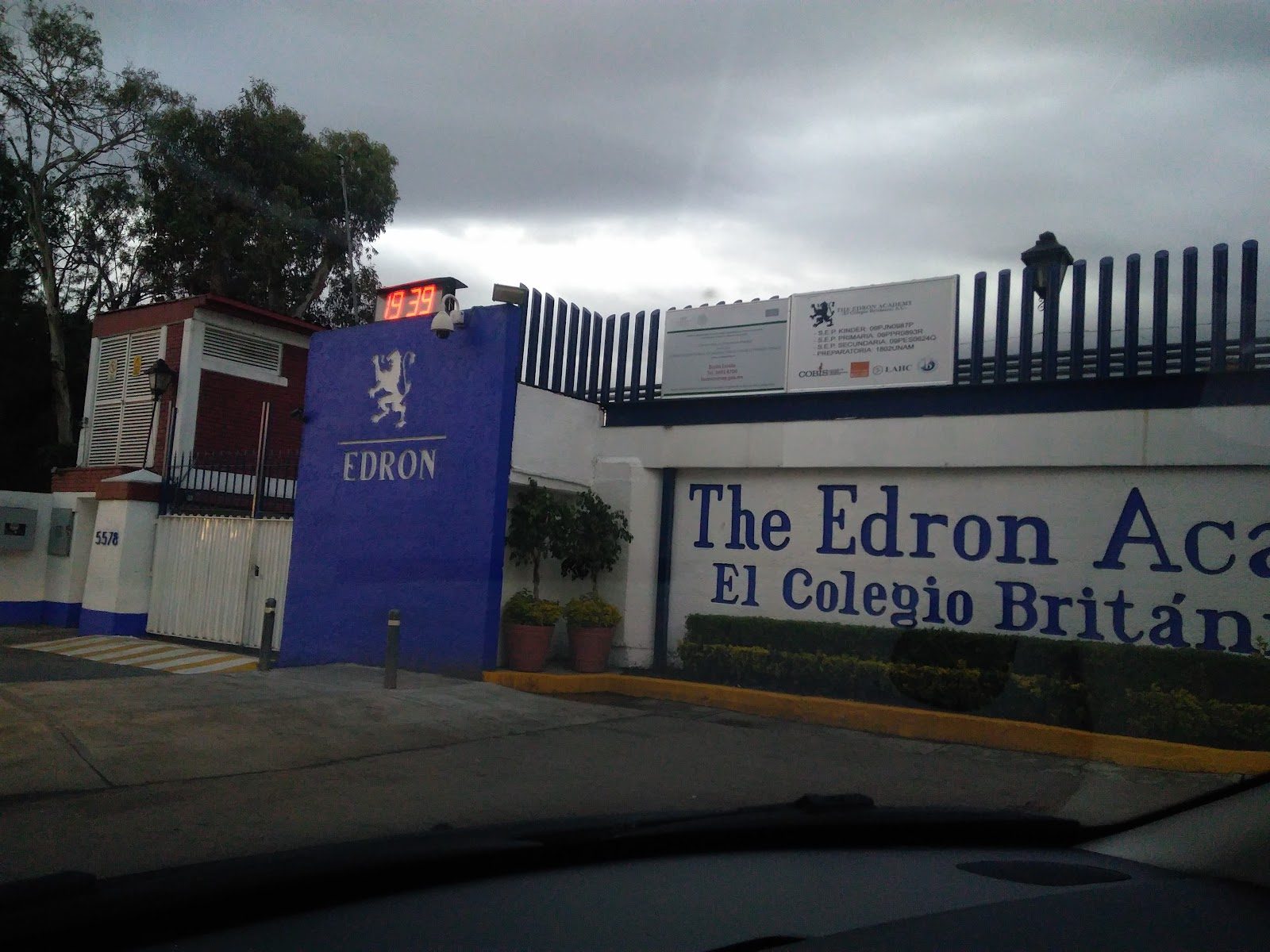
Photo © Emmanuel Bordon via Google Maps
Type
Day
Ages
3–18
Curriculum
IB · British
Ratio
—
The Verdict
Editor's commitment
Right for
Families wanting a 3–18 day school in Mexico City with British and IB study, plus English and Spanish used in earnest.
Wrong for
Anyone wanting boarding, a religious ethos, or a single-curriculum route; Edron is non-religious, day-only, and explicitly British plus IB.
Watch out for
At an average US$22,000 a year, this 1963 school trades on bicultural breadth; the school does not publish headline academic outcomes here.
Ranking breakdown
The Edron Academy · #1275 of 1591
Composite score 56.3. 8 weighted criteria.
By criterion
Academic Outcomes
Weight 20%
#1220
of 1529 scored
University Placement
Weight 16%
#1227
of 1529 scored
Prestige & Heritage
Weight 12%
#1289
of 1571 scored
Alumni Network
Weight 12%
#900
of 1530 scored
Facilities
Weight 12%
#1247
of 1533 scored
Transparency & Communications
Weight 8%
#1243
of 1532 scored
Peer & Industry Review
Weight 10%
#1108
of 1548 scored
Admissions Selectivity & Demand
Weight 8%
#1077
of 1529 scored
Score history
The Edron Academy · 2026
Movement across 2024–2026. Peer average overlaid.
Overall — 2024–2026
56.3/ 100
▲ +19.2 vs 2025
year on year
Peer & Industry Review
How The Edron Academy is regarded in the sector
64
Respected · medium confidence
I could not locate at least two independent, third-party sources (e.g., Tatler, Good Schools Guide, specialist education press, or established expat forums) that substantively assess The Edron Academy's reputation. Available information appears limited to the school's own materials or unverifiable directory listings, which do not meet the evidentiary bar required for scoring.
Editors' overview
The Edron Academy matters because it occupies a narrow and valuable niche in Mexico City: a British international school, founded in 1963, that also runs an IB pathway and teaches in both English and Spanish. That combination gives it a genuinely bicultural character rather than the thin international gloss many schools settle for. For families who want a child grounded in Mexico without sacrificing an English-medium education and an internationally portable sixth form, Edron earns a place on the shortlist quickly. It is a day school for ages 3 to 18, non-religious, and located in Álvaro Obregón, which fixes it firmly in the city rather than on the expatriate fringe.
Its appeal rests on range and continuity. A school that covers the full 3–18 span can shape habits, language fluency and academic expectations over time, and Edron’s stated blend of British and IB study gives it more texture than a single-curriculum school. The IBO accreditation matters here: it confirms the IB side of the offer rather than leaving it as branding. The average annual day fee across the full ladder is USD 22,000, which places Edron in the serious-fee, serious-expectation bracket for Mexico City, but not at the level where price alone becomes the school’s identity. Parents paying that sum should demand clarity on outcomes. On that front, the school does not publish public aggregate results here, and that opacity is the main restraint on any stronger academic claim.
The student who will thrive at Edron is not one looking for a narrowly local education or a purely British transplant. This suits children who can move comfortably between English and Spanish, and families who value cultural fluency as much as examination technique. It also suits students who want an international finish without losing contact with Mexican academic and social life. The alumni signal, while not a proxy for school quality, does add colour: Wikidata catalogues 12 notable alumni, with a strong concentration in the arts and 1 star-tier award winner. That pattern fits a school with a longer urban history and a broader cultural footprint than newer international entrants. Edron is for families who want depth, continuity and a credible bicultural identity; it is less compelling for those who insist on heavily published outcomes data or a straightforward monolingual British track.
Academic Performance
Edron’s academic picture is constrained by one central fact: the school does not publish public aggregate examination outcomes. No IB average, no pass rate, no subject spread, no university destinations data in aggregate, and no year-on-year trend line are in the public domain. That matters. In a market where strong schools use results to establish academic credibility, silence leaves parents without the basic benchmarks needed to place performance against direct competitors. The school’s bicultural structure and broad age range give it an interesting academic proposition, but proposition is not proof. At an average annual fee of USD 22,000, this level of opacity is a material weakness.
Relative to peers, Edron therefore sits in the hard-to-rank category rather than the clearly proven one. Schools with published IB results, destination lists and cohort context hold the stronger hand in any academic comparison, because parents can test claims against evidence. Edron still benefits from institutional longevity and a sixth form with an internationally recognised endpoint, which gives it serious academic potential. But potential is not a result set. Until the school discloses headline outcomes, its academic standing rests on trust rather than data, and that places it behind the most transparent schools in the city. For families who prize measurable performance, that is the decisive issue.
Facilities
Facility judgment here is constrained by a simple problem: the school does not publish a clear public account of its specialist spaces, and that leaves parents without the detail they need on laboratories, performing arts provision, sports infrastructure or library scale. For a school charging an average of USD 22,000 a year, that gap is not a trivial omission. Peer schools in this bracket tend to show parents exactly what they are buying: named science labs, theatre or black-box capacity, design and technology rooms, sports courts, pitches, pool access, and photographs that establish whether facilities are purpose-built or merely serviceable. Edron does not make that case in public with enough force.
What can be said with confidence is narrower. As a full-range day school in a major city district, Edron needs facilities that support everything from early years through sixth form, and that usually means compromises on land-heavy amenities unless a campus is exceptionally large. Without published evidence to the contrary, Edron does not rank with the showpiece campuses that use acreage and specialist buildings as a competitive weapon. That does not mean weak provision; it means unproven provision. Families who care about science, sport, music or theatre at a serious level need a campus visit that tests the practical basics: lab quality, indoor and outdoor sports space, rehearsal and performance rooms, library depth, and whether the school feels tight and urban or genuinely spacious.
That combination gives it a genuinely bicultural character rather than the thin international gloss many schools settle for
Prestige
Edron carries real local standing because it is not another new international entrant chasing cachet through branding. Its reputation rests on longevity, continuity and a recognisable place in the capital’s educated professional circles. The school’s prestige is also helped by cultural reach beyond the classroom: Wikidata records 12 notable alumni, with a heavy concentration in the performing arts and 1 star-tier award winner. That does not prove academic distinction, but it does mark the school as an institution with visible social imprint and a network that extends into Mexican public life. For families who value rootedness as much as international portability, that matters.
This is not prestige built on published scholarly dominance or global name recognition. It is city prestige, not world prestige. Outside Mexico, Edron lacks the instant brand power of the big Anglo-American names, and the absence of public aggregate results blocks it from claiming the top academic tier on evidence. The fee level reinforces the point: at USD 22,000 a year on average, parents are buying an established, bicultural education with status in its home market, not automatic elite signalling everywhere else. That leaves Edron in a strong but bounded category: *respected, established and socially credible*, without the hard-data authority or international shine that define the most prestigious schools in the region.
That makes Edron genuinely bicultural in a way many rivals are not
Communications
Edron’s parent communication is hard to rate highly because the public-facing basics are thin. The school gives parents the minimum institutional identifiers — name, location and broad educational identity — but not the operational detail that serious fee-paying families expect before they even book a visit. There is no public bank of aggregate outcomes, no clear facilities case, and no strong evidence of the kind of disciplined information architecture that signals a school takes parent communication seriously. That matters because communication is not décor; it is management. At an average annual fee of USD 22,000, parents are entitled to crisp disclosure, practical detail and a low-friction route to understanding how the school works.
That does not mean communication inside the parent body is weak; it means the school does not prove its strength in public. Some schools use their websites to answer questions before they arise: assessment, reporting rhythms, pastoral channels, leadership access, transport, calendar structure, university guidance, and who deals with what. Edron does not do enough of that work openly. The result is a trust-first model: families need direct contact, visits and pointed questioning to establish whether day-to-day communication is prompt, bilingual where needed, and administratively sharp. For confident local families, that is manageable. For international parents comparing schools remotely, it is a clear handicap and an avoidable weakness.
Uniqueness
Edron’s distinctiveness lies in combination, not gimmick. Plenty of schools in the capital offer international branding; far fewer hold together a British academic spine, Mexican national requirements and an IB finish without turning the student experience into a bureaucratic relay race. That makes Edron genuinely bicultural in a way many rivals are not. Students do not sit inside an expatriate bubble and visit local culture at weekends; they work across two educational logics every day. The gain is practical as much as cultural: intellectual flexibility, confidence moving between registers, and a stronger chance of leaving school able to operate in more than one world without strain. For families who want Mexico and international mobility in the same education, that is a serious differentiator.
Its other point of difference is historical rootedness. This is not a newcomer importing a template; it is an established city school with a social footprint large enough to have produced 12 notable alumni and 1 star-tier award winner recorded in Wikidata. The concentration in the arts gives Edron a culturally alert flavour that sets it apart from more corporate, exam-machine competitors. That does not answer the school’s weak public disclosure on academic outcomes, and it does not turn Edron into a universal choice. It does, however, mean students join a community with real metropolitan texture: more embedded in local life, less synthetic, and better suited to families who value identity, language and cultural competence alongside formal qualifications.
It is a day school for ages 3 to 18, non-religious, and located in Álvaro Obregón, which fixes it firmly in the city rather than on the expatriate fringe
Student Profile
The best fit is a student who can handle dual identity without confusion. This is not a school for children who want a single-track national education or a sealed expatriate environment. It suits internationally minded families who still want their child anchored in Mexican social and academic life, and it suits children who are comfortable moving between home cultures, peer groups and expectations. The strongest match is the pupil who enjoys switching register, adapting quickly and operating in a classroom culture that asks for cognitive flexibility rather than one fixed way of thinking. Creatively inclined students also have reason to look closely: the school’s notable alumni footprint, with 12 names catalogued and 1 top-tier award winner, points to a community with real artistic oxygen rather than a purely corporate, exam-drilled tone.
The weaker fit is just as clear. A child who needs a highly standardised, tightly signposted academic machine may find this environment less straightforward than a more narrowly defined British school. Students who flourish here tend to be socially fluent, resilient and at ease in mixed cultural settings; students who want heavy public proof of results, a monolingual routine or a simpler institutional identity will find cleaner options elsewhere. For families paying an average of USD 22,000 a year, that distinction matters. Edron suits the student who wants education tied to place, culture and range. It is *not for families chasing a polished formula*.
The IBO accreditation matters here: it confirms the IB side of the offer rather than leaving it as branding
Co-curricular strengths
Arts & sport, on a separate axis
Overall 8.1/10
Scored 0-10 from the school's own published evidence. This axis is editorial-only — it does not feed the main WTS ranking.
Sports
8/10
Football, Basketball and Swimming as extracurriculars, evidencing a solid multi-sport offering but with no named facilities, specialist staff or competitive results.
Drama
8/10
Drama Productions and a verified star-tier drama alumnus, Gael García Bernal (Golden Globe Awards), which by policy anchors drama at at least 7.
Dance
8/10
Music
8.5/10
School Orchestra and Choir, showing more than a bare mention through named ensembles, but provides no dedicated facility, specialist staff or notable results.
Visual Arts
8/10
Visual Arts is explicitly named in the extracurriculars.
Editor first-pass · editor-reviewable · 7/28/2026
Notable alumni · Wikidata
12notable alumni
0 historic (born pre-1930) · 9 modern (born post-1970)wikidata:2026-07-28 How we source this
Strengths
- +British and IB curriculum options
- +English and Spanish instruction
- +Low 10:1 student-teacher ratio
- +Average class size of 18
Considerations
- −Annual fees around USD 22,000
- −Day school only, no boarding
- −No stated accreditations beyond IBO
Availability
Primary entry gate & tests
Academic Record
Gallery
Photo © Agustin García via Google Maps
Photo © Jenna Watson via Google Maps
Photo © Jenna Watson via Google Maps
Photo © Jenna Watson via Google Maps
Photo © Subhash Kumar via Google Maps
Photo © Jenna Watson via Google Maps
Parent reviews
Have you sent your child here?
Voice reviews carry the strongest trust badge — we transcribe them for you to tidy up before they go live. Prefer to type? A written review is fine too.
Add your voice
In 60 seconds, tell other parents: what's the best thing about The Edron Academy, and what surprised you when your child joined?
We ask for a Google sign-in so every review has a real face behind it — no anonymous drive-by attacks on schools, and no faked positive reviews. Your email is never shown publicly.
Send this profile to a friend
International parents rely on word-of-mouth. Share this review with someone weighing the same decision.
Schools with places
Similar schools to The Edron Academy with places available now.
Availability first, then country, area, curriculum, price, co-curricular
Consider also
Also worth looking at alongside The Edron Academy.

Instituto Cumbres México
Mexico City · Mexico
The founding campus of a Legion of Christ network born in 1954, pairing Catholic formation with IB rigor in the hills of Cuajimalpa.
Colegio Peterson
Mexico City · Mexico
Montessori roots since 1965, four Mexico City campuses now converging on a single IB diploma track

Greengates School
Mexico City · Mexico
Since 1951 in Naucalpan, the only Mexico City school requiring every sixth-former to sit the full IB Diploma, with results to match

Puebla American School Foundation
Puebla · Mexico
Since 1942, this bilingual Puebla day school became the city's first to run the full IB continuum, from PYP to Diploma.
Same country and curriculum — closest matches within ±10 points either way