
District of Columbia
Born in 1945 as the capital's first racially integrated school, its progressive ethos still defines a Tenleytown campus
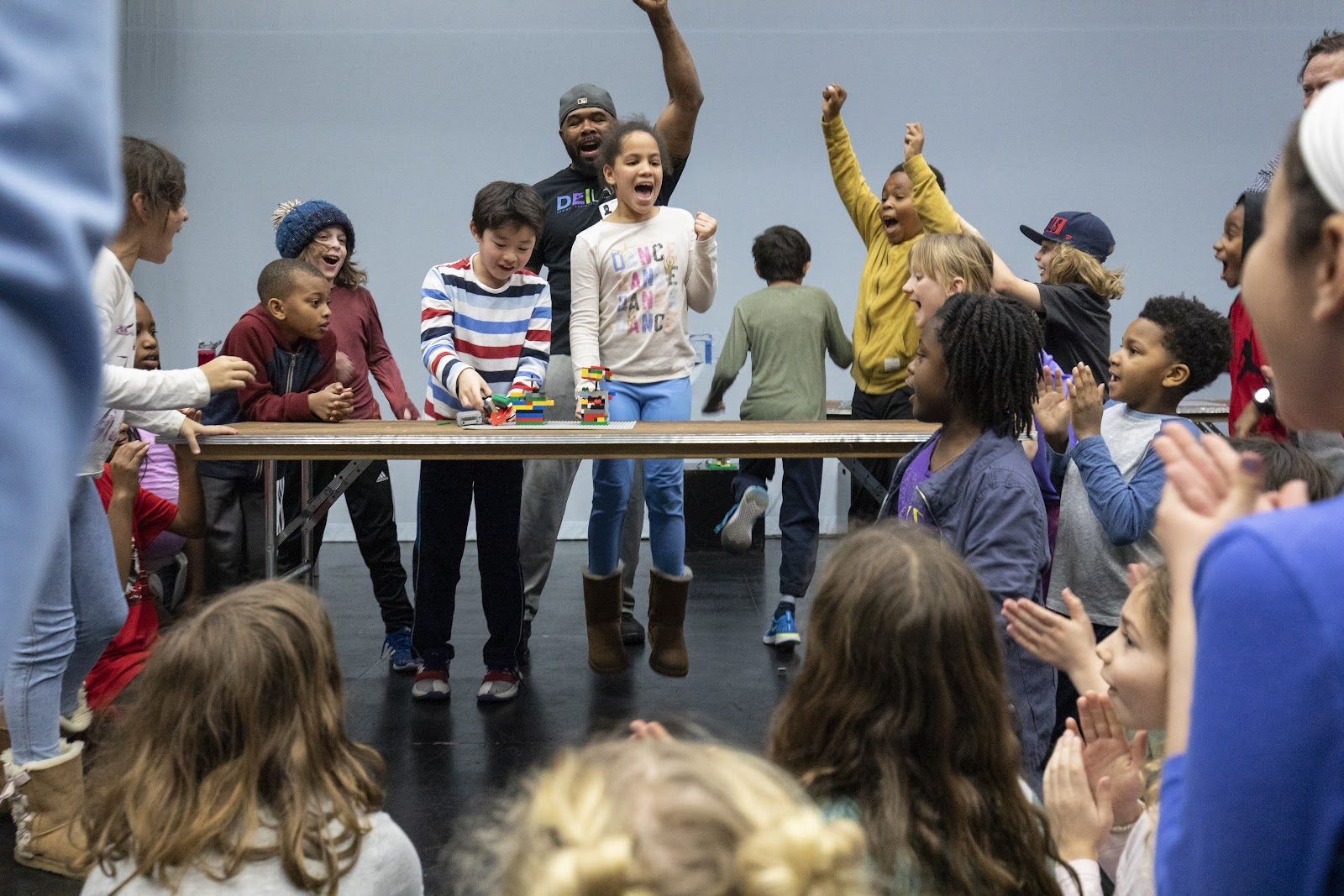
Photo © Georgetown Day School via Google Maps
Type
Day
Ages
3–18
Curriculum
American (US High School Diploma) · AP (Advanced Placement)
Ratio
8:1
The Verdict
Editor's commitment
Right for
Families who want a non-religious Washington day school, founded in 1945, with an 8:1 ratio and a progressive integrated history.
Wrong for
Parents chasing doctrinaire tradition, religious formation or boarding will not get it here: GDS is day-only, non-religious and ages 3–18.
Watch out for
At an average annual day fee of $55,048, you are paying for a full 3–18 American diploma school with AP, not a narrow exam factory.
Ranking breakdown
Georgetown Day School · #237 of 1591
Composite score 74.5. 8 weighted criteria.
By criterion
Academic Outcomes
Weight 20%
#260
of 1529 scored
University Placement
Weight 16%
#219
of 1529 scored
Prestige & Heritage
Weight 12%
#307
of 1529 scored
Alumni Network
Weight 12%
#207
of 1529 scored
Facilities
Weight 12%
#502
of 1529 scored
Transparency & Communications
Weight 8%
#354
of 1529 scored
Peer & Industry Review
Weight 10%
#387
of 1529 scored
Admissions Selectivity & Demand
Weight 8%
#229
of 1529 scored
Peer & Industry Review
How Georgetown Day School is regarded in the sector
68
Respected · medium confidence
Georgetown Day School is consistently ranked among the top private schools in the Washington, D.C. area by Washingtonian magazine and DC-area 'best schools' surveys, and is often mentioned alongside Sidwell Friends and Maret as a top-tier feeder to elite colleges. It has a notable alumni network (e.g., CNN's Jake Tapper) and strong regional reputation, but lacks the broader national/international name recognition of peer schools like Sidwell Friends in national press coverage.
Evidence sources
Editors' overview
Georgetown Day School still trades on a fact that matters: it opened in 1945 as Washington’s first racially integrated school, and that founding act still shapes the institution more than any glossy promise about “community”. This is a non-religious day school in Tenleytown for ages 3 to 18, teaching in English and running an American high school diploma with AP. Its public philosophy is explicit: inquiry, self-reliance, strength of character, concern for others, and a “democratic learning community” built by teachers who challenge intellectual, creative and physical capacities alike. That gives parents a clear read on what GDS is selling. Not polish, tradition for tradition’s sake, or narrow exam-drill, but a progressive education with moral and civic intent.
The practical proposition is strong. An 8:1 student-teacher ratio points to real adult attention, and the school’s own account places equal weight on academic study, the arts, physical education, extracurricular life and community service. That breadth will appeal to families who want serious academics without a monoculture of grades and resume-building. At an average annual day fee of $55,048, GDS sits in the expensive top tier of the Washington market, so parents are entitled to expect depth of teaching and a campus culture with substance. On the evidence available publicly, the school does offer a coherent ethos rather than a bundle of fashionable slogans. NAIS accreditation adds a baseline of institutional credibility, though accreditation alone never distinguishes a school at this price.
What is special here is the combination of political history, progressive pedagogy and a capital-city setting. GDS has an alumni footprint that reaches into public life, scholarship, journalism, the arts and music, with 42 notable alumni catalogued in Wikidata and 16 writers/journalists among them. That does not prove outcomes for every child, but it does fit the school’s long-standing emphasis on articulate, questioning, culturally literate students. The child who will thrive here is bright, verbal, socially aware and happy in classrooms that ask for participation rather than obedience. Children who want lively argument, broad exposure and adults who take ideas seriously will find a natural home. Families seeking a more traditional, hierarchical or overtly conservative school culture should look elsewhere; GDS is distinctive, values-driven and not built for deference.
Academic Performance
Georgetown Day School does not publish the exam data a hard-nosed parent wants first: no aggregate AP score profile, no subject-by-subject pass rates, no mean number of APs taken, no SAT or ACT averages in the public domain. That is a real limitation. In a market where many top independents use selective disclosure to advertise sixth-form or upper-school firepower, GDS gives families a values-rich account of education but not a forensic account of external results. The one clear outcomes signal it does publish is 100% progression of graduates to colleges and universities. That confirms a strong college-preparatory floor, but it does not by itself place the school at the razor-sharp top of the US academic pack.
Relative to peers, GDS fits best among academically serious progressive independents rather than overt score-machines. The high school offers 132 courses, which points to substantial choice and intellectual range, and the school’s stated stress on inquiry, breadth, arts, physical education and service backs that up. Parents choosing between GDS and more results-forward Washington competitors need to decide what evidence they value. If you want published league-table proxies and granular testing data, GDS is opaque. If you want a school whose academic ambition sits inside a broader moral and civic project, the proposition is coherent and deliberate. The ceiling is high; the public proof on standardised metrics is thin.
Facilities
The physical proposition is urban rather than estate-like. GDS calls itself a city campus and runs a full preK–12 operation with just over 1,100 students, so parents should picture a dense, hard-working site built to support a lot of daily movement rather than acres of spectacle. The school’s own philosophy gives the clearest clue to priorities: academic classrooms, arts provision, physical education, athletics, extracurricular activity and community service all sit inside the core offer. That points to a campus planned for breadth, not a single showpiece department. Against Washington independents with grander grounds or more overt architectural theatre, GDS reads as functional, purposeful and unflashy. That will suit families who care more about how spaces are used than how they photograph.
Where the facilities case weakens is public detail. The school does not publish the kind of room-by-room, venue-by-venue account that top-fee competitors often use to prove their capital investment: no clear public inventory of theatres, studios, science labs, maker spaces, libraries or specialist athletic infrastructure. For a school charging premium fees, that opacity is a real gap. The strongest concrete proxy is scale and programme breadth: 132 high-school courses and a whole-school model that gives equal status to arts and sport alongside academics demand a substantial set of teaching spaces. That places GDS in the bracket of well-equipped urban independents, but not among schools that make a forensic, irresistible public facilities case.
Georgetown Day School carries real social and intellectual prestige, but it is not the prestige of inherited polish, ceremonial tradition or exam-pageantry
Prestige
Georgetown Day School carries real social and intellectual prestige, but it is not the prestige of inherited polish, ceremonial tradition or exam-pageantry. Its status rests on three harder assets: a founding identity that still matters in American education, a long-standing place in the capital’s independent-school ecosystem, and an alumni network with credible reach across public life, scholarship and the arts. The school can point to 42 notable alumni catalogued in Wikidata, including strength in writing, journalism and performance, and an alumni body of 5,999. That footprint gives GDS name-recognition well beyond its own parent circle. In Washington, that counts. This is a school whose brand carries cultural capital with families who value ideas, politics, letters and public purpose.
That prestige has limits, and they matter. GDS does not trade on old-guard elitism, and families chasing the shiniest status badge may find more cachet in schools with grander architecture, more overt social selectivity or louder university-placement theatre. Its public face is serious, values-led and deliberately unflashy. That makes the school prestigious in a distinct register: educated, progressive, urban, and confident enough not to wrap itself in borrowed grandeur. For the right family, that is high-order prestige. For families who equate prestige with tradition-heavy symbolism or maximum admissions swagger, it lands with less force.
What makes Georgetown Day School distinct is not a generic claim to diversity but a founding act that still governs the school’s moral centre
Communications
GDS communicates with parents in the same register it uses to define the school itself: explicit, mission-led and heavy on educational philosophy. The public-facing copy is clear about what the school expects from teachers and students, and that matters. Parents do not have to decode euphemism. They can see the school’s priorities in plain terms: inquiry, democratic classrooms, character, respect for others, and a broad education that includes arts, athletics and service. Even simple institutional facts are presented cleanly — scale, diversity, alumni reach, financial-aid commitment, course volume. That gives communications a strong editorial spine. It tells families what the school values and who the school is for. The message is coherent, self-aware and ideologically legible.
Where communication weakens is in operational and comparative detail. The school is much better at explaining its beliefs than proving its delivery. Public information does not give parents enough hard reporting on academic outcomes, facilities depth or the day-to-day mechanics that reduce friction in family life. There is a lot of philosophy, but less of the granular accountability that high-fee families have every right to expect. Even the headline staffing picture is split between a school-context ratio and a published high-school ratio of 13:1, which does not inspire total precision. The result is effective brand communication but only partial parent communication. Families aligned with the school’s ethos will find the messaging compelling; families who want forensic clarity before committing an average annual fee of $55,048 will want more.
Uniqueness
What makes Georgetown Day School distinct is not a generic claim to diversity but a founding act that still governs the school’s moral centre. Many independent schools now talk fluently about equity, belonging and student voice; GDS built itself on racial integration when that carried real civic risk. That history gives its progressive language more weight than the sector norm. The school’s stated expectations — inquiry, self-reliance, democratic classrooms, respect for others, and an abhorrence of bigotry — form a clear ideological through-line rather than a loose set of pastoral slogans. In practical terms, students grow up in a school that treats intellectual life and social conscience as parts of the same education. The breadth of its alumni profile reinforces that point: 16 catalogued writers and journalists in Wikidata, alongside figures in politics, scholarship and the arts, fit a school that prizes articulation, argument and public engagement.
That brings real advantages for the right child. Students with opinions, curiosity and stamina for discussion get a serious platform here; they are trained not just to achieve, but to question, interpret and participate. The scale of the alumni body — 5,999 — also matters: GDS has produced enough graduates to sustain a network with reach, without losing the distinctive cultural signature that marks many larger institutions down. There is, though, a trade-off. This is not a neutral school culture and not a haven for families who want education stripped of moral or civic content. Its uniqueness lies in being openly values-charged, intellectually confident and resistant to deference. For engaged, verbally agile students, that can be formative in the best sense.
That confirms a strong college-preparatory floor, but it does not by itself place the school at the razor-sharp top of the US academic pack
Student Profile
The best fit at GDS is a child who likes to ask, argue and test ideas in public. This is not a school for quiet compliance or narrow score-chasing. Its own language points to students who are expected to wonder, inquire, work independently and contribute to respectful, democratic classrooms. Children who enjoy discussion, can tolerate disagreement and have the confidence to speak up will do well. So will students with genuine range: the school gives equal status to academics, the arts, physical activity, extracurricular life and service, and that breadth shapes the peer group. With 50% of students identifying as students of colour and families drawn from 98 zip codes, the student body is not socially or culturally narrow.
The weaker fit is just as clear. A child who wants a highly traditional, rule-bound environment, or who prefers to stay anonymous at the back of the room, will find the culture demanding. GDS asks for intellectual participation and a measure of social awareness; it does not treat school as a neutral transaction. Students who thrive here tend to be verbally agile, open to difference and willing to connect ideas with values. That does not require political uniformity, but it does require comfort inside a school culture with a strong moral centre. For the right family, that is formative. For others, it will feel intrusive rather than energising.
Its uniqueness lies in being openly values-charged, intellectually confident and resistant to deference
Co-curricular strengths
Arts & sport, on a separate axis
Overall 8.78/10
Scored 0-10 from the school's own published evidence. This axis is editorial-only — it does not feed the main WTS ranking.
Sports
8.5/10
The profile explicitly references athletics and physical education as part of the school's comprehensive program.
Drama
8.8/10
A verified Academy Award-winning alumnus, Sean Fine, anchors drama at at least 7 under the laureate rule, and a broader arts presence across school life.
Dance
8.8/10
Music
8.8/10
Visual Arts
9/10
Arts provision and says the school has a robust arts presence across school life, but offers no dimension-specific detail on visual arts facilities, courses, or exhibitions.
Editor-verified · 8/6/2026
Notable alumni · Wikidata
42notable alumni
1 historic (born pre-1930) · 21 modern (born post-1970)wikidata:2026-08-02 How we source this

WTS 300 badge
Georgetown Day School is one of the World's Top 300 Schools. Claim your listing to add it to your site →
Strengths
- +Founded in 1945 as the first racially integrated school in Washington, D.C., a heritage that still shapes its curriculum and community ethos.
- +Small classes and a low student-teacher ratio of 6:1 across a preK-12 enrollment of roughly 1,075 students.
- +Sizeable financial aid program: $9.6 million awarded to 24% of students in 2024-25, with an average grant of $36,400.
- +College placement record includes matriculation to Harvard, Princeton, Columbia, Brown and the University of Pennsylvania in recent classes, with 100% of graduates going on to college.
- +Single unified campus in Tenleytown completed in 2021 after a fundraising drive that exceeded $52 million from over 2,000 donors.
Considerations
- −Tuition is among the highest in the DC private-school market, reported at $56,217 for 2025-26.
- −Admissions are selective and competitive, with one source citing a 24% acceptance rate; the school itself does not publish official admissions statistics.
- −Day-only school with a single NW Washington campus, meaning no boarding option and a practical requirement to live within commuting distance.
- −The school's outspoken social-justice and DEI mission has drawn political and media scrutiny, which may not suit families seeking a more neutral or traditional institutional tone.
Availability
Primary entry gate & tests
ISEE/SSAT + Interview
Gallery
Photo © Georgetown Day School via Google Maps
Photo © South Lynn via Google Maps
Photo © Georgetown Day School via Google Maps
Photo © Georgetown Day School via Google Maps
Photo © Georgetown Day School via Google Maps
Photo © Georgetown Day School via Google Maps
Photo © Lucia Hassell via Google Maps
Photo © Georgetown Day School via Google Maps
Photo © Georgetown Day School via Google Maps
Parent reviews
Have you sent your child here?
Voice reviews carry the strongest trust badge — we transcribe them for you to tidy up before they go live. Prefer to type? A written review is fine too.
Add your voice
In 60 seconds, tell other parents: what's the best thing about Georgetown Day School, and what surprised you when your child joined?
We ask for a Google sign-in so every review has a real face behind it — no anonymous drive-by attacks on schools, and no faked positive reviews. Your email is never shown publicly.
Send this profile to a friend
International parents rely on word-of-mouth. Share this review with someone weighing the same decision.
Schools with places
Similar schools to Georgetown Day School with places available now.
Saint Ann's School
Brooklyn · United States
- 2026-27
- WAITPOOLLate / attrition-dependent
- 2027-28
- OPENS SOONOpens 8 Sept '26
Ethical Culture Fieldston School
New York City · United States
- 2026-27
- WAITPOOLLimited late availability
- 2027-28
- OPENS SOONOpens post-Labor Day '26
Riverdale Country School
New York City · United States
- 2026-27
- WAITPOOLLate application possible
- 2027-28
- OPENS SOONOpens 8 Sept '26 (Noon ET)
Friends Seminary
New York City · United States
- 2026-27
- WAITPOOLLate/held pending openings
- 2027-28
- OPENS SOONExpected Sept '26
Availability first, then country, area, curriculum, price, co-curricular
Consider also
Also worth looking at alongside Georgetown Day School.
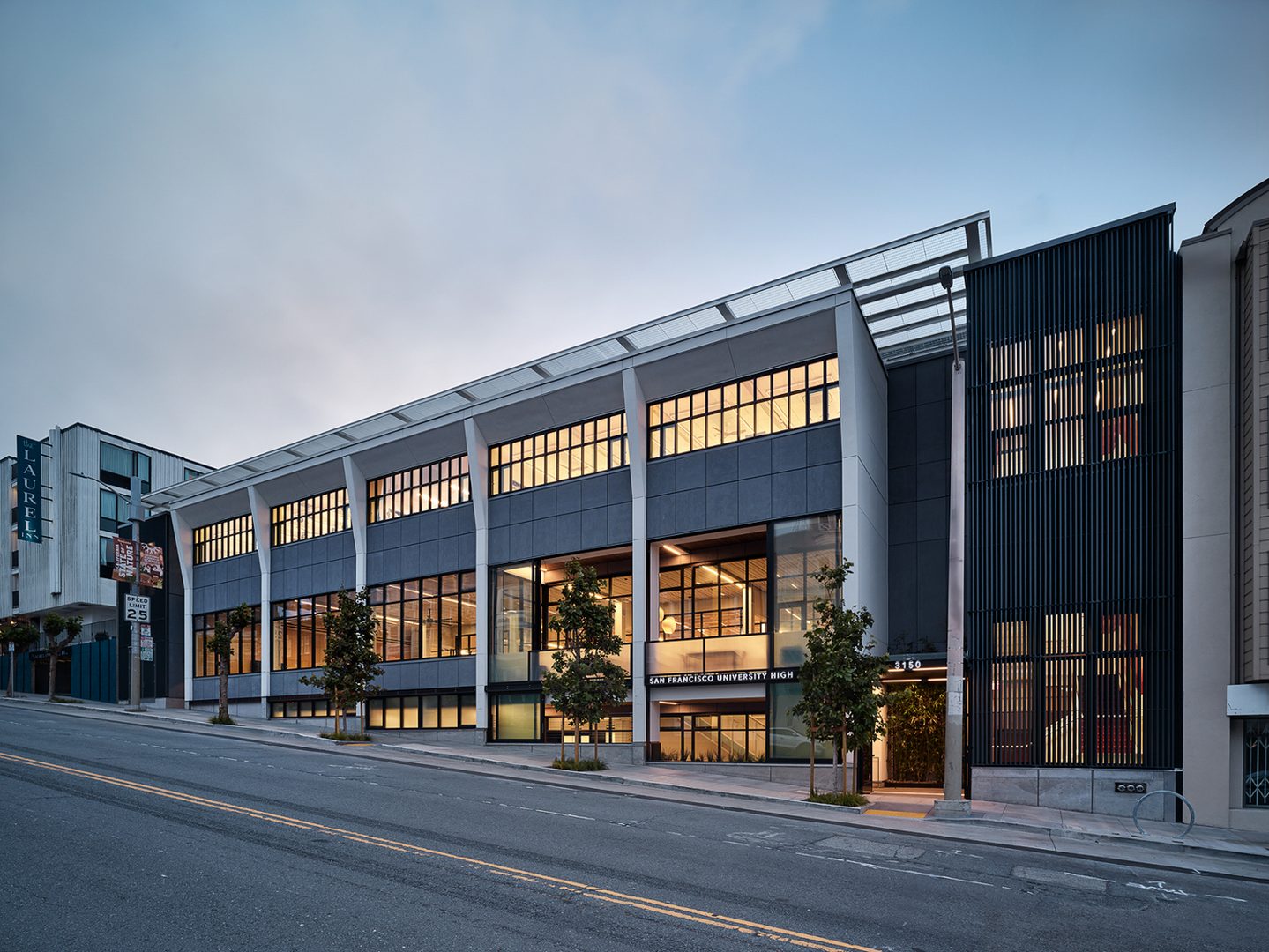
San Francisco University High School
San Francisco · United States
Inside a 1917 Julia Morgan building in Pacific Heights, a signature Civilization seminar drives independent-study scholarship.
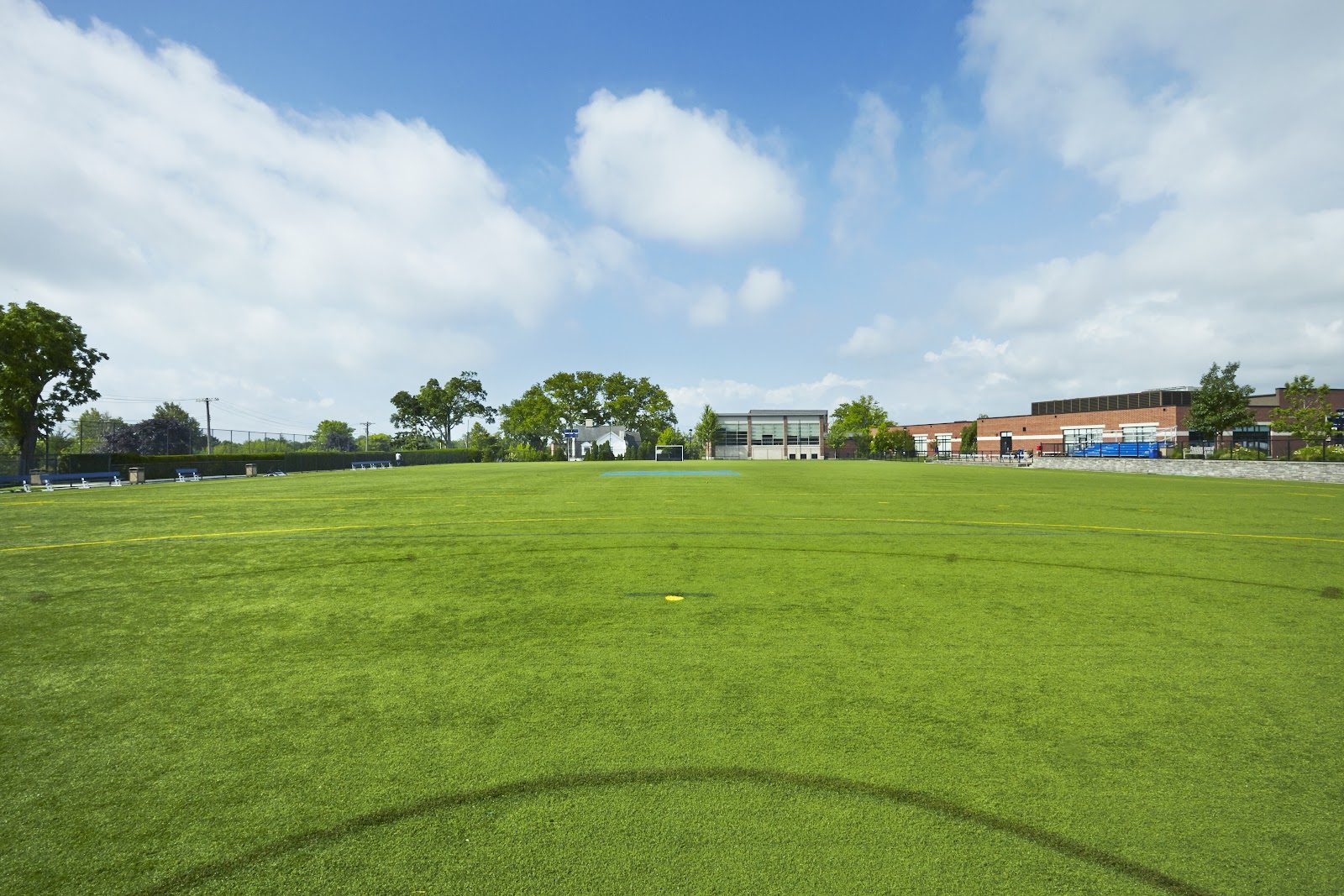
Rye Country Day School
Rye · United States
Founded in 1869 as a girls' seminary in Westchester, this campus still measures success by its motto: not for self, but for service.
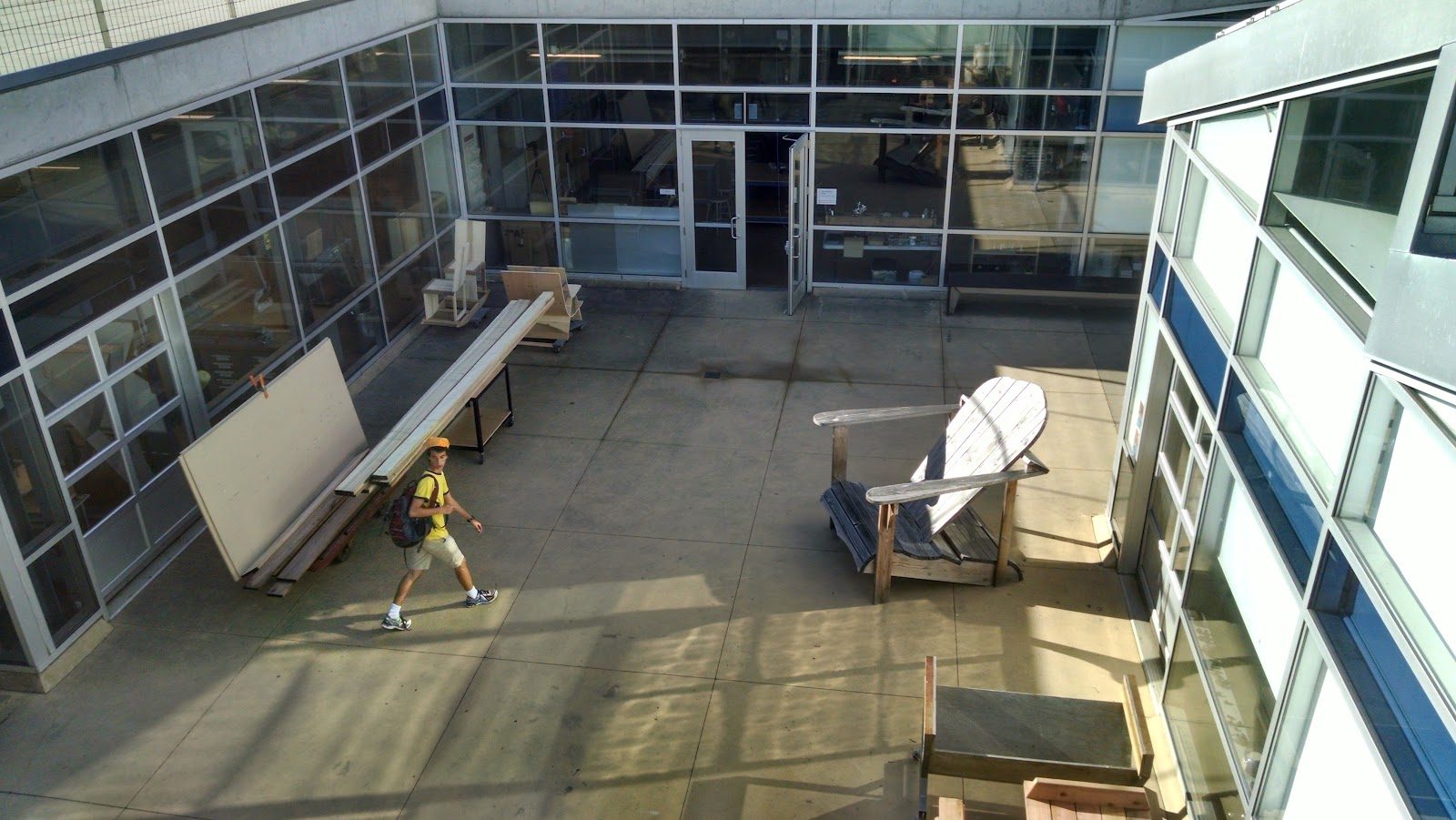
Lick-Wilmerding High School
San Francisco · United States
Founded as an 1895 mechanical-arts school, it still requires wood, metal, jewelry, or electronics credits alongside AP coursework.
Ethical Culture Fieldston School
New York City · United States
Rooted in Felix Adler's 1878 Ethical Culture movement, its wooded Riverdale hilltop campus still anchors progressive American pedagogy.
Same country and curriculum — closest matches within ±10 points either way