
Shanghai
Shanghai High School (Domestic Division)
Heir to an 1865 mandarin academy in Xuhui, it grooms its own Math Olympiad squad and will host the 2026 IMO
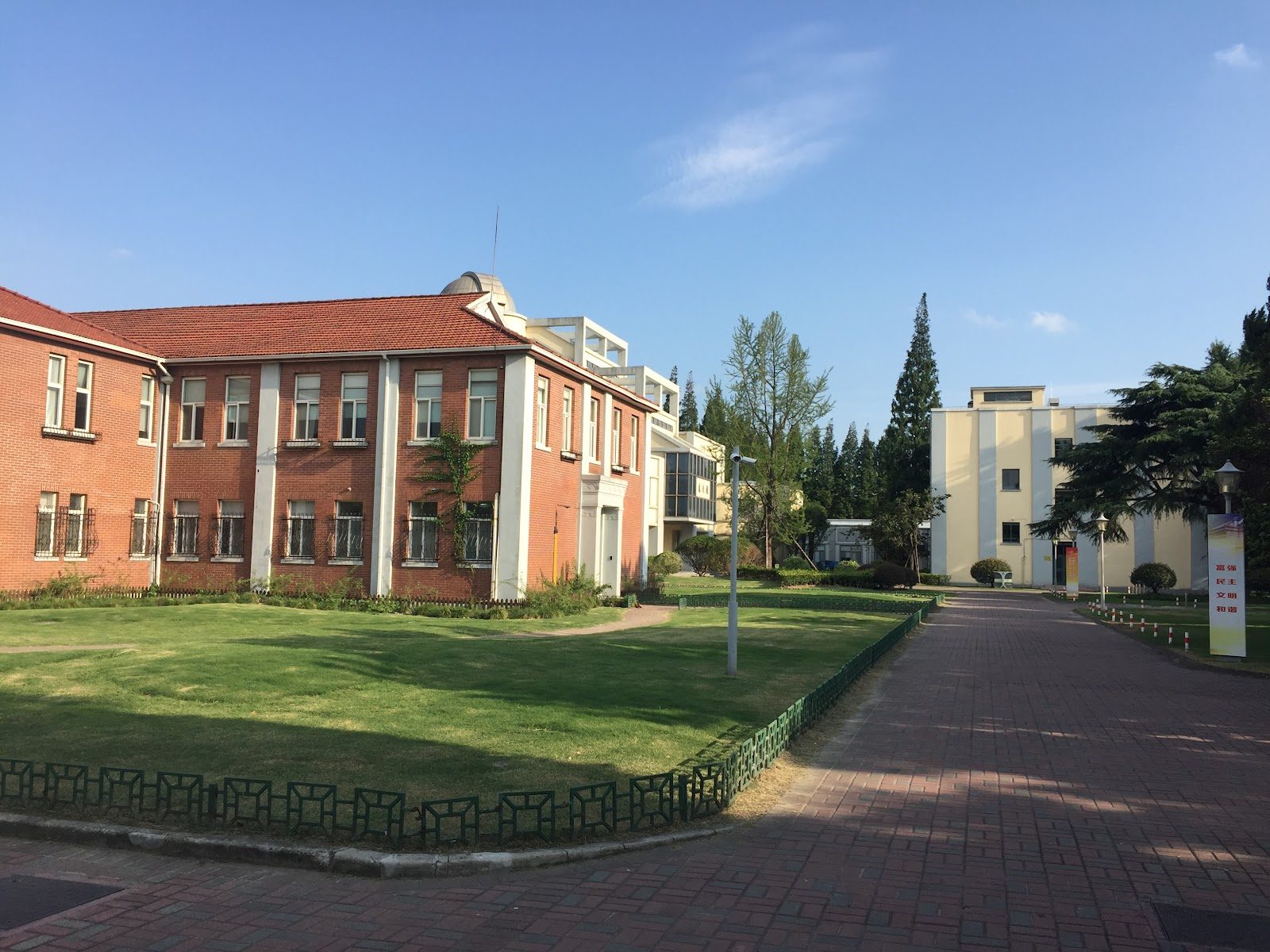
Photo © Angchen Yu via Google Maps
Type
Day + Boarding
Ages
15–18
Curriculum
Chinese National
Qualifications
Gaokao
Ratio
—
The Verdict
Editor's commitment
Right for
Students aged 15–18 who want China's national curriculum in Shanghai, with Mandarin and English, and boarding on the table.
Wrong for
Families wanting IB, A-Levels or a softer academic identity; this is a Chinese Ministry of Education school in Shanghai.
Watch out for
Founded in 1865 and now day plus boarding, it trades on serious academic prestige; the school does not publish public outcome data here.
Ranking breakdown
Shanghai High School (Domestic Division) · #673 of 1591
Composite score 66.9. 8 weighted criteria.
By criterion
Academic Outcomes
Weight 20%
#294
of 1529 scored
University Placement
Weight 16%
#136
of 1529 scored
Prestige & Heritage
Weight 12%
#25
of 1571 scored
Alumni Network
Weight 12%
#1390
of 1530 scored
Facilities
Weight 12%
#732
of 1533 scored
Transparency & Communications
Weight 8%
#1243
of 1532 scored
Peer & Industry Review
Weight 10%
#335
of 1548 scored
Admissions Selectivity & Demand
Weight 8%
#35
of 1529 scored
Peer & Industry Review
How Shanghai High School (Domestic Division) is regarded in the sector
74
Respected · medium confidence
Within China, Shanghai High School is consistently grouped with East China Normal University No. 2 High School, Fudan University Affiliated High School and Shanghai Jiao Tong University Affiliated High School as one of the city's 'Four Famous Schools' (si da ming xiao), a peer classification repeated across Chinese education media and by rival principals when discussing Shanghai's most selective public-track institutions. It holds Ministry of Education 'demonstration high school' (shifan gaozhong) status, the top tier for Chinese state secondary schools. Domestic university admissions offices, especially at Peking University, Tsinghua University, Fudan and Shanghai Jiao Tong University, regularly cite it among the most reliable gaokao and competition-medal feeder schools in Shanghai, reflected in annual admissions and Olympiad result summaries published by Chinese education outlets such as Sina Education and Eastday. Coverage in domestic press is largely statistical and results-driven rather than qualitative commentary, and Western guides (Good Schools Guide, WhichSchoolAdvisor) do not review the Domestic Division, since their coverage focuses on the school's separate International Division.
- Xie Xide — Physicist, President of Fudan University
- Chen Zhu — Former Minister of Health, Hematologist
- Su Buqing — Mathematician, Academic
Editors' overview
Shanghai High School (Domestic Division) occupies rare ground in China’s state sector: a historic flagship school with real mathematical prestige, serious selectivity and a national profile that extends beyond Shanghai. Founded in 1865, it carries the weight of one of the city’s oldest educational lineages and still operates with that old-command confidence. This is not an internationalised hybrid chasing expatriate demand; it is a Chinese National curriculum school for ages 15–18, taught in Mandarin and English, aimed squarely at families who want top-end domestic academic formation. The detail that matters most is not decorative: it trains its own Maths Olympiad squad and will host the 2026 International Mathematical Olympiad. That places it in a small national elite of schools that do not just teach mathematics well, but treat high-level problem solving as institutional business.
What sets the school apart is the combination of scale, reputation and academic seriousness without the vagueness that clouds many famous names. Shanghai has no shortage of strong senior schools; few carry this degree of intellectual pressure and public academic standing. The boarding option broadens its reach beyond Xuhui and beyond Shanghai’s immediate catchment, which matters for families chasing a concentrated peer group rather than convenience. The Chinese Ministry of Education accreditation tells you what it is: a mainstream domestic school, not a boutique alternative. Parents should shortlist it if they want a school that prizes hard scholarship, competitive mathematics and disciplined progression over pastoral theatre or glossy lifestyle positioning. It offers status with substance.
The right student for Shanghai High School is academically ambitious, resilient and comfortable in an environment where comparison is constant and standards are high. A teenager who wants to be stretched by top peers, who enjoys abstract thinking, and who does not need hand-holding will thrive. This is a strong fit for pupils with a genuine appetite for mathematics and the sciences, but the deeper attraction is broader: austere academic credibility, a powerful local brand and a culture built around attainment rather than performance of warmth. Students wanting a softer, more individualised or less competitive sixth-form experience should look elsewhere. Students who want serious academic company and are ready to earn their place will find one of China’s most formidable domestic schools.
Academic Performance
Shanghai High School’s public academic standing rests less on glossy score disclosure than on the calibre of the pupils it sends into China’s top universities and the school’s entrenched place in elite subject competition. In the domestic market, that matters. For Chinese families comparing leading municipal high schools, this sits in the top conversation, not the broad middle. Its strongest signal is mathematics: the school fields an in-house Olympiad team and has produced national-level competitors, which places it in the thin air of academic selection rather than the mass of strong-but-conventional senior schools. That does not tell parents everything about classroom teaching across every subject, but it does establish a culture of serious intellectual sorting and very high expectations.
The weak point is transparency. The school does not publish a clean, parent-friendly dashboard of gaokao outcomes, mean subject scores, university destinations by cohort, or year-on-year external examination data in the style many international schools now treat as standard. That makes precise peer comparison harder than it needs to be. Even so, within Shanghai’s selective state sector, this is a high-pressure, high-status academic institution with real heft, and families in that market will read its reputation as earned rather than inflated. If you want soft assurances and polished outcome reporting, look elsewhere. If you want a school with formidable academic gravity and a peer group shaped by competition at the sharp end, this is one of the stronger domestic options in the city.
Facilities
The facility that matters most here is not a showpiece theatre or a resort-style sports complex; it is the academic plant required to run a top domestic senior school at scale. Families should expect strong science teaching spaces, serious classrooms, libraries and competition-support infrastructure, with mathematics given more institutional weight than at the average Shanghai peer. A school that trains an in-house Olympiad group and operates at this level of selection does not run on generic labs and ordinary study rooms alone. It needs rooms for advanced coaching, supervised problem-solving and long hours of independent work. For parents comparing selective state schools, that points to purpose-built academic seriousness rather than lifestyle polish. The question is not whether the campus looks luxurious; it is whether it supports hard, sustained study. On that measure, Shanghai High School sits in the upper tier of the domestic market.
Boarding also changes the facilities brief. A school serving older pupils in both day and residential formats needs functioning dorm provision, dining, evening study capacity and the discipline systems to keep them all working. That does not make it a pastoral cocoon. It makes it intensively operational. Against premium international schools, the campus offer will feel less theatrical and less curated for admissions tours. Against academic domestic rivals, it stands as a serious working campus with the institutional depth to support scholarship at the sharp end. What the school does not publish is a crisp public inventory of specialist spaces, capacities or recent capital investment, and that opacity is a weakness.
For Chinese families comparing leading municipal high schools, this sits in the top conversation, not the broad middle
Prestige
A Shanghai High School education carries first-rank domestic prestige. In China’s hierarchy of senior schools, prestige does not come from branding exercises or imported programmes; it comes from admission difficulty, university pathways, competition strength and institutional standing among serious academic families. On those measures, this school sits high. The clearest public signal is its role in the Mathematical Olympiad ecosystem: it trains a dedicated squad and will host the 2026 IMO. That is not a decorative honour. It marks the school as a place with real intellectual clout in a discipline China treats as a national proving ground. Among parents, pupils and educators who care about scholarly reputation rather than lifestyle packaging, that carries hard-edged credibility.
We rate its prestige highly because the school combines elite selectivity with unusual public academic visibility. It belongs to the small group of Chinese senior schools whose name functions as shorthand for serious attainment and a demanding peer set. That prestige has limits. It is strongest inside the domestic Chinese system and among families who track top municipal schools closely; it does not translate into the same kind of globally legible cachet as certain international schools with glossy overseas university branding. Nor does the school help itself with transparent outcome reporting. Even so, prestige here is earned, not manufactured: it rests on a long-established reputation for producing high-calibre students and sustaining standards in a fiercely competitive market.
A teenager who wants to be stretched by top peers, who enjoys abstract thinking, and who does not need hand-holding will thrive
Communications
Parent communication is functional rather than polished. The school’s public-facing channels do the basics: notices, admissions information, contact points and news. What they do not deliver is the kind of parent-first clarity that strong independent schools now treat as standard. There is no rich public picture of how families are kept informed about academic progress, welfare concerns, boarding routines, timetable changes or university guidance through the year. For a school with day and residential pupils in a high-pressure senior setting, that gap matters. Families need to know not just that communication exists, but how fast it runs, who owns problems, and whether messages reach both pupils and parents cleanly. The school does not make that structure plain.
That leaves the impression of an institution whose communication is built to serve operations first and parents second. In a demanding domestic school, that is not unusual, but it is still a weakness. Efficient schools can be opaque schools if they rely too heavily on internal routines, student relays or fragmented notice systems. Parents who are already comfortable navigating Chinese state-school culture will tolerate that. Internationally minded families, or those expecting tight pastoral feedback and dashboard-style reporting, will find it spare and old-school. The school’s academic authority carries it a long way; its communications do not.
Uniqueness
What marks Shanghai High School out is not mere age or name recognition, but its place inside China’s hard academic machinery. This is a school that treats advanced mathematics as an institutional specialism, not an enrichment extra. Training its own Olympiad cohort and preparing to stage the world’s highest-profile school maths contest gives pupils direct exposure to elite problem-solving culture, serious intellectual competition and adults who understand how top students are stretched beyond the standard classroom track. For the right child, that changes the atmosphere of learning. High attainment stops being private ambition and becomes the school’s normal operating condition.
That distinctiveness brings clear gains and clear limits. The gain is a peer group shaped by selection, discipline and academic appetite, with real depth in quantitative subjects and a culture that rewards precision over display. Students who thrive here get first-rate scholarly company, high-pressure academic formation and a daily sense that difficult work is the point. The limit is just as plain: this is not an all-round finishing school built to flatter every talent equally. Its identity is narrower, tougher and less forgiving than softer premium alternatives. Families choosing it are buying into a school where institutional prestige rests on intellectual performance, and where the ceiling for able students in mathematics and science runs unusually high.
High attainment stops being private ambition and becomes the school’s normal operating condition
Student Profile
The pupils who fit best here are self-propelled, quick-thinking and thick-skinned. This is not a school for teenagers who need constant reassurance, elaborate pastoral framing or endless room to drift before deciding whether they care about study. It suits students who can absorb pressure without turning theatrical, take correction without sulking, and measure themselves against very able peers without collapsing into self-protection. The academic centre of gravity pulls hard towards mathematics, science and disciplined analytical work, so the strongest fit is a student who enjoys difficulty for its own sake and does not need every lesson sweetened into entertainment. The age range matters too: from 15 onwards, pupils need a level of maturity that matches the school’s pace.
Socially, the successful student is serious-minded more than glossy, competitive without becoming disruptive, and capable of working within a culture that prizes hierarchy, effort and results. A flamboyant all-rounder looking for a broad stage, soft edges and institutional hand-holding will feel constrained. A quieter high-attainer with stamina, intellectual vanity and a tolerance for comparison will do far better. Boarders need an extra layer of resilience: the ability to manage routine, communal living and long study hours without drama. In short, this is a strong match for the teenager who wants hard academic company, accepts constant benchmarking as normal, and finds satisfaction in mastering difficult material rather than in being told they are special.
Shanghai High School (Domestic Division) occupies rare ground in China’s state sector: a historic flagship school with real mathematical prestige, serious selectivity and a national profile that extends beyond Shanghai
Co-curricular strengths
Arts & sport, on a separate axis
Overall 8/10
Scored 0-10 from the school's own published evidence. This axis is editorial-only — it does not feed the main WTS ranking.
Sports
8.5/10
The profile explicitly lists Basketball Team and Track and Field and notes the campus has sports facilities, indicating a solid but not richly evidenced sports offering without named facilities, staff, or competitive results.
Drama
7.5/10
Drama Club appears as a bare extracurricular listing with no further elaboration, which fits the floor score for an explicitly named but undescribed programme.
Dance
6.5/10
insufficient evidence in profile
Music
9/10
The extracurriculars include both a Student Symphony Orchestra and Choir, showing multiple structured music ensembles, but the profile gives no named music facility, specialist staff, or competition pedigree.
Visual Arts
8.5/10
Calligraphy Club is an explicitly named visual-arts-related activity, but there is no further detail on facilities, exhibitions, staffing, or broader arts provision.
Editor-verified · 8/17/2026
Strengths
- +One of China's oldest secondary schools, founded in 1865 as Longmen Academy, giving it a long-established academic reputation in Shanghai.
- +Was designated Shanghai's first Municipal Demonstration School in 2003 and has been a UNESCO Associated School since the same year.
- +School sources report that around 99% of domestic-division graduates progress to top-tier domestic or overseas universities, with a large share entering China's most selective institutions such as Peking, Tsinghua, Jiao Tong and Fudan.
- +Alumni network includes, over its history, a large number of provincial-level or higher government officials and dozens of members of the Chinese Academy of Sciences and Chinese Academy of Engineering.
- +Offers both day and boarding options on a single large campus (over 340 mu / roughly 56 acres) in Xuhui District, with the domestic and international divisions sharing facilities.
Considerations
- −As a public 'domestic division,' entry is normally restricted to students holding Shanghai household registration or an equivalent residence permit, which excludes most newly arrived expatriate families.
- −Admission runs through Shanghai's citywide Zhongkao (senior-high entrance exam) system, including competitive quota and score-line mechanisms, making entry highly selective and effectively closed to students without a strong local exam record.
- −Instruction follows the Chinese National Curriculum toward the Shanghai Gaokao, delivered in Mandarin, so it offers little accommodation for non-Chinese-speaking or non-exam-track students.
- −The exam-focused, gifted-education model that drives its results is also associated with a demanding, high-pressure academic routine typical of top Chinese public schools.
Availability
Primary entry gate & tests
Shanghai Zhongkao Exam
Gallery
Photo © Angchen Yu via Google Maps
Photo © Angchen Yu via Google Maps
Photo © Angchen Yu via Google Maps
Photo © Angchen Yu via Google Maps
Photo © Angchen Yu via Google Maps
Photo © Angchen Yu via Google Maps
Photo © Angchen Yu via Google Maps
Parent reviews
Have you sent your child here?
Voice reviews carry the strongest trust badge — we transcribe them for you to tidy up before they go live. Prefer to type? A written review is fine too.
Add your voice
In 60 seconds, tell other parents: what's the best thing about Shanghai High School (Domestic Division), and what surprised you when your child joined?
We ask for a Google sign-in so every review has a real face behind it — no anonymous drive-by attacks on schools, and no faked positive reviews. Your email is never shown publicly.
Send this profile to a friend
International parents rely on word-of-mouth. Share this review with someone weighing the same decision.
Schools with places
Similar schools to Shanghai High School (Domestic Division) with places available now.
Wellington College International Shanghai
Shanghai · China
- 2026-27
- WAITPOOLSpace-dependent
- 2027-28
- PLACES OPENRolling
Shanghai American School
Shanghai · China
- 2026-27
- WAITPOOLSpace-dependent
- 2027-28
- PLACES OPENRolling
Shanghai High School International Division
Shanghai · China
- 2026-27
- CLOSEDStandard route
- 2027-28
- OPENS SOONOpens Late '26 (Spring '27)
Availability first, then country, area, curriculum, price, co-curricular
Consider also
Also worth looking at alongside Shanghai High School (Domestic Division).
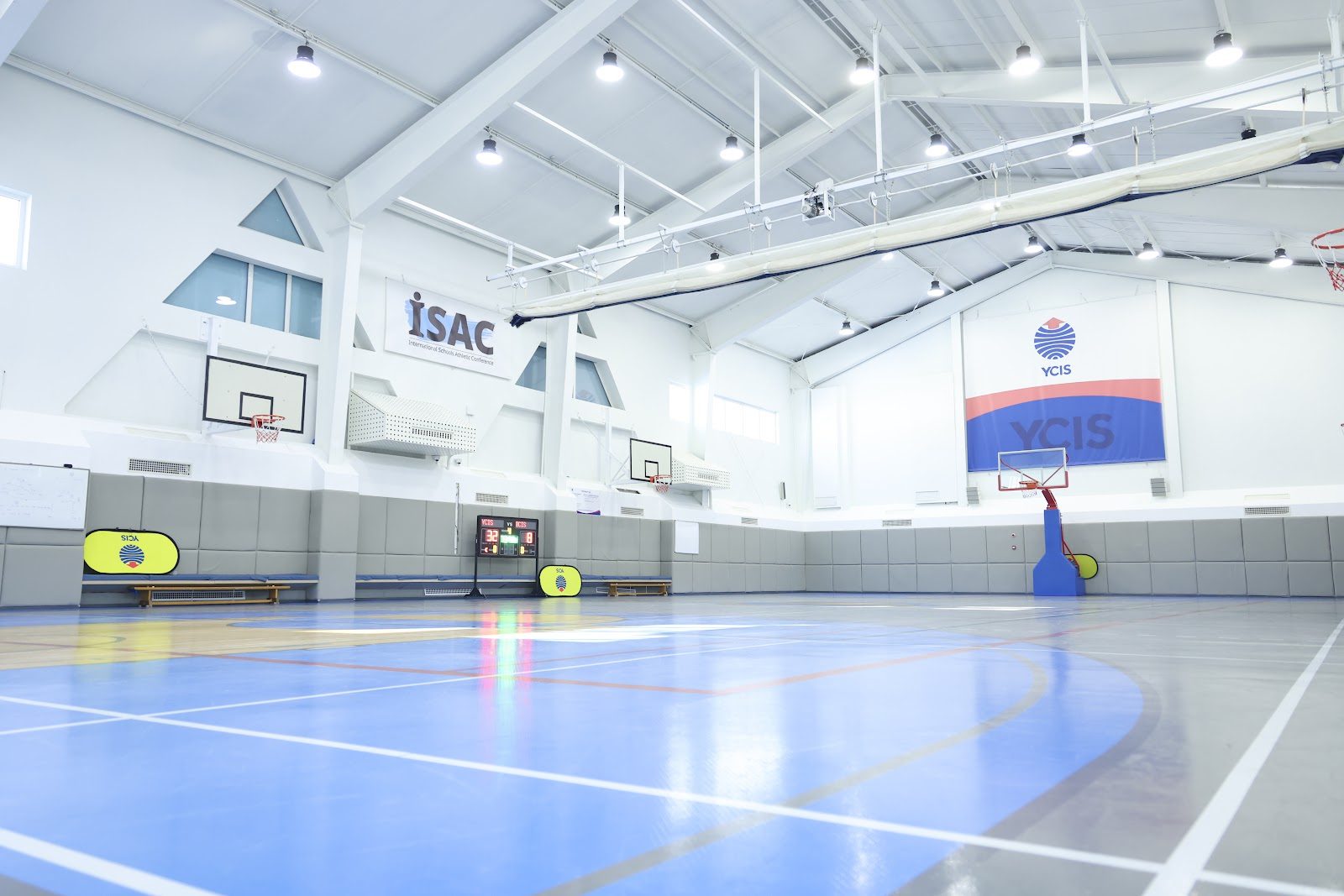
Yew Chung International School of Beijing
Beijing · China
Every classroom pairs a Western and a Chinese teacher, threading bilingual learning through a parkland Chaoyang campus.
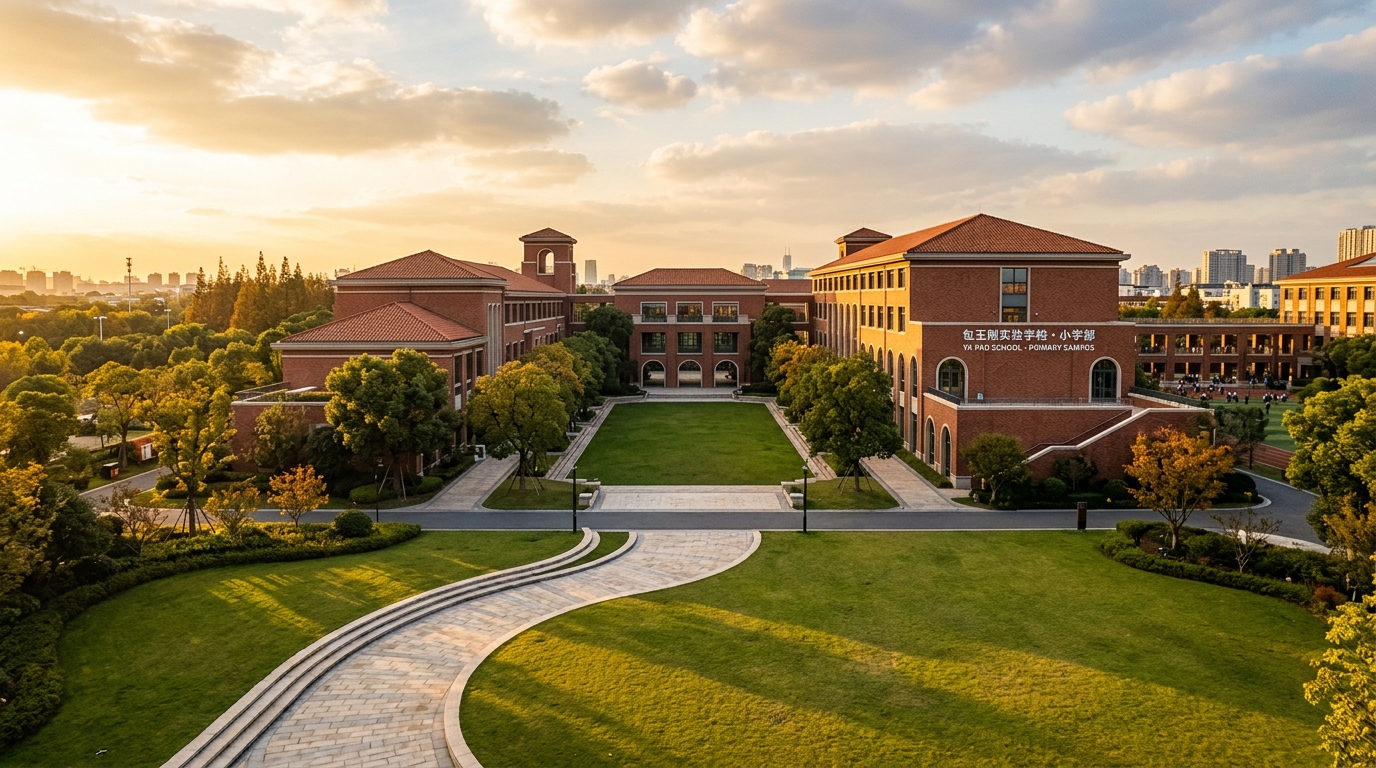
YK Pao School
Shanghai · China
Mandarin-English immersion anchors an IB and IGCSE track, with senior boarders housed in a Tudor-style village in Songjiang.
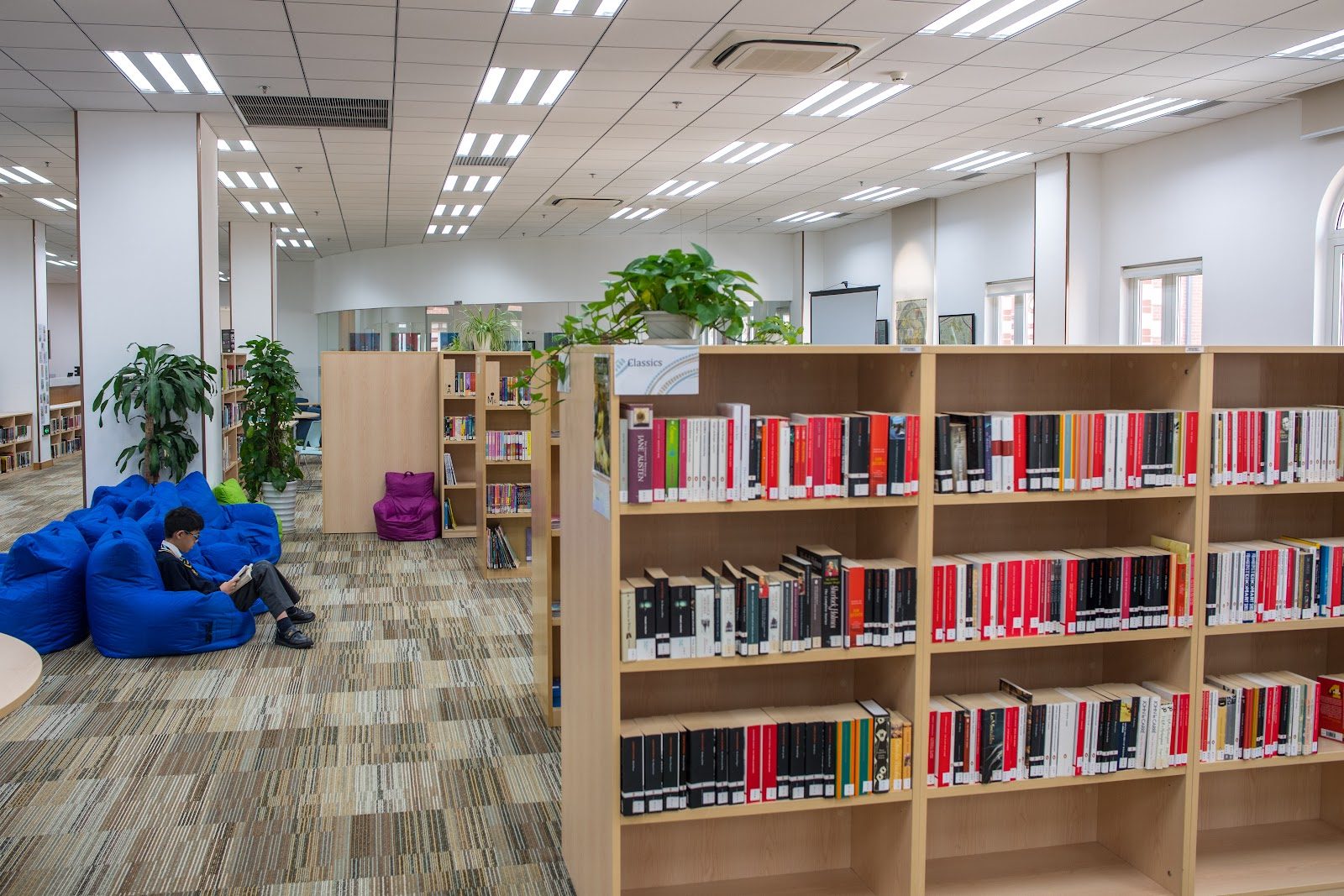
Wellington College International Shanghai
Shanghai · China
Rooted in an 1859 British foundation, this Pudong riverside campus channels house spirit into IB scores averaging 37 points.
UWC Changshu China
Changshu · China
On an island in Kuncheng Lake, mainland China's first UWC pairs the IB diploma with mandatory Mandarin study and a student-run Zhixing service programme.
Same country and curriculum — closest matches within ±10 points either way