
Uttar Pradesh
Step by Step School
In Noida, CBSE, IGCSE and IB tracks converge on a campus built around dedicated special-education pathways and a 1:6 support ratio.
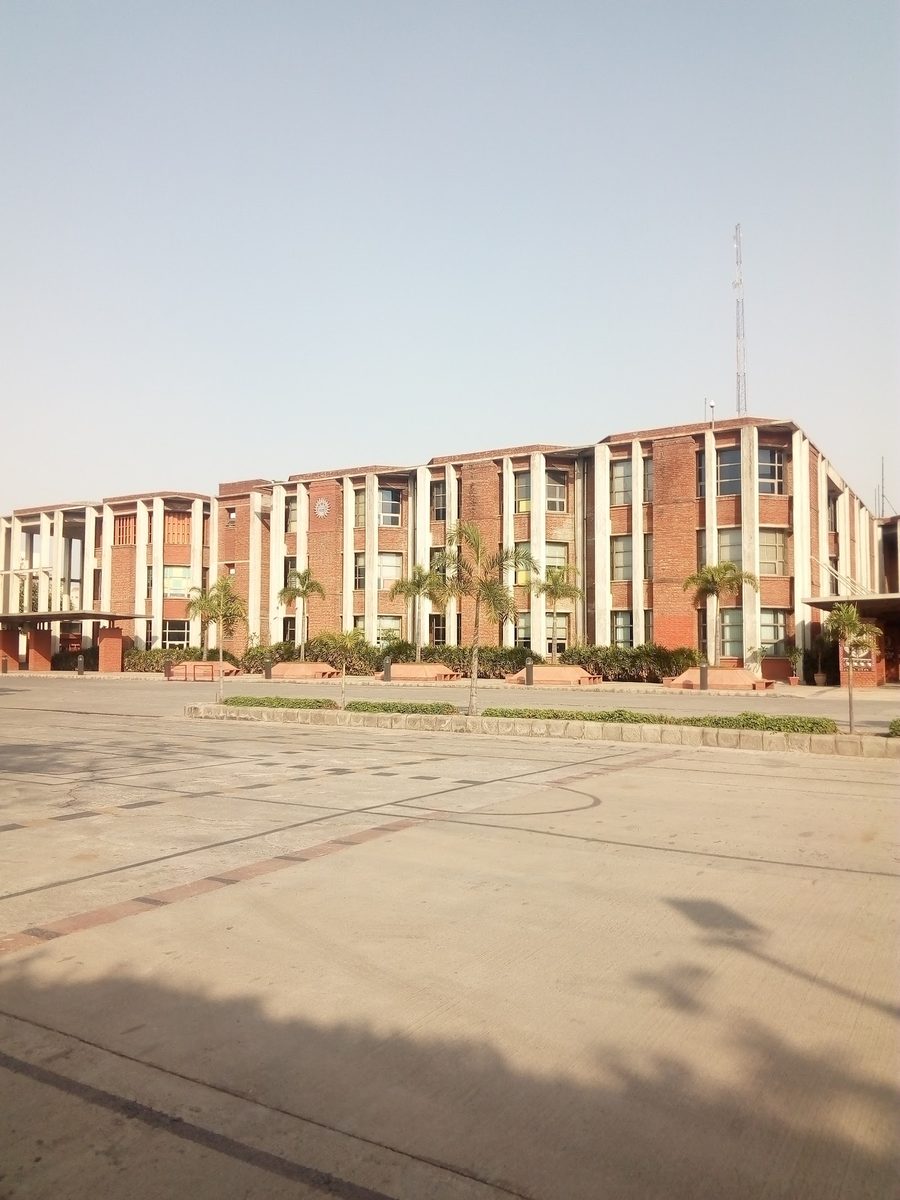
Photo © Sovaran Singh Sovaran Singh via Google Maps
Type
Day
Ages
3–18
Curriculum
CBSE · IB
Qualifications
CBSE · IB Diploma
Ratio
—
The Verdict
Editor's commitment
Right for
Families in Noida wanting one day school from age 3–18 with English-medium CBSE and IB, plus a declared 1:6 support ratio.
Wrong for
Parents chasing boarding, a religious ethos, or a single-curriculum school; Step by Step is non-religious, day-only, and runs CBSE with IB.
Watch out for
The school is CBSE-accredited, not IB-accredited in the published record here; verify exactly where the IB track starts and how it is authorised.
Ranking breakdown
Step by Step School · #1526 of 1591
Composite score 47.2. 8 weighted criteria.
By criterion
Academic Outcomes
Weight 20%
#1313
of 1529 scored
University Placement
Weight 16%
#1488
of 1529 scored
Prestige & Heritage
Weight 12%
#1437
of 1571 scored
Alumni Network
Weight 12%
#1280
of 1530 scored
Facilities
Weight 12%
#1333
of 1533 scored
Transparency & Communications
Weight 8%
#1326
of 1532 scored
Peer & Industry Review
Weight 10%
#1463
of 1548 scored
Admissions Selectivity & Demand
Weight 8%
#1471
of 1529 scored
Peer & Industry Review
How Step by Step School is regarded in the sector
54
Credible · medium confidence
Step by Step School is respected within Delhi-NCR's competitive CBSE and IB circuit as a solid, values-driven institution rather than a marquee international brand. It appears in regional rankings compiled by Education World and Careers360, which place it among Noida's better-regarded day schools for holistic and IB programming, though it rarely features in national top-10 lists dominated by Delhi's older heritage schools (Modern School, DPS RK Puram, Shri Ram School). University-facing outcomes are documented mainly through its own IB diploma results and college placement lists rather than independent admissions-officer commentary, and it has limited visible presence in outlets like WhichSchoolAdvisor or the Good Schools Guide, which focus more on international and metro-flagship schools. Its profile is stronger in local parent forums, CBSE/IB educator conferences, and Noida-Ghaziabad school-ranking surveys than in pan-India editorial coverage. Overall, peer regard positions it as a credible, steadily improving regional player rather than a nationally benchmarked elite institution, with visibility concentrated in NCR education circles rather than broader independent press or top-tier university admissions dialogue.
Editors' overview
Step by Step School occupies a distinct niche in Noida because it does not treat learning support as a side service. It has built the school around it. The headline fact is the 1:6 support ratio attached to its special-education provision, which places specialist intervention near the centre of the offer rather than at the margins. For families who need a school that can handle mainstream ambition alongside structured support, that matters more than glossy claims about holistic education. Founded in 1999, Step by Step has had time to establish itself, and its age range of 3–18 gives it the continuity many international and mobile families value. The campus proposition is clear: a full day school in Noida with English-medium teaching, a non-religious outlook, and multiple academic routes under one roof.
What sets it apart is the convergence of CBSE and IB tracks, with the editorial context also pointing to IGCSE in the mix. In the local market, that breadth is useful, but breadth alone is not enough. Parents need to ask how cleanly the school guides pupils between pathways, how early academic sorting begins, and how transparent it is about outcomes in each stream. Step by Step earns shortlist status because it offers something harder to find than curriculum choice: serious inclusion, carefully structured support and a clear institutional spine. Schools often promise to meet children where they are; this one has a market position built on doing that in a formal, resourced way. For a family comparing premium day schools in the NCR, that is a concrete differentiator, not a slogan.
The school will suit pupils who need flexibility without chaos. That includes able students who want the option to move towards IB, families who prefer the familiarity of CBSE, and children who benefit from targeted support inside a mainstream setting rather than in a separate specialist school. It will also appeal to parents who want *academic choice without institutional drift and pastoral seriousness without sentimentality*. The best fit is the child who needs a school to pay attention: bright but uneven learners, students with identified learning needs, and families who value consistency from nursery to sixth form. The weaker fit is the child who wants a narrowly traditional, exam-factory environment or a school whose identity rests on a single academic track. Step by Step’s strongest case for itself is straightforward: it is built for range, it takes support seriously, and it gives families more than one route to the finish line.
Academic Performance
Step by Step does not publish the kind of examination dashboard that would let parents place it cleanly against the top tier of NCR competitors. We have not seen consolidated board averages, score distributions, subject-level strength by stream, or multi-year trend lines. That matters. In this market, schools that are secure in their academic record put hard numbers into the public domain. When a school does not, the burden shifts to parents to ask sharper questions: what proportion of pupils secure top grades, how results break down across pathways, and where university destinations cluster. Without that data, any claim to serious academic standing remains incomplete.
That does not place Step by Step in the weak bracket; it places it in the opaque bracket. For some families, that is an acceptable trade if the school’s main attraction lies in flexibility and support rather than in a results-first identity. Relative to peers, it fits less with the high-volume exam machines that advertise headline outcomes and more with schools whose value rests on a broader proposition. Parents considering the senior years need exact figures before committing: cohort sizes, top-band results, pass rates, and destination lists over at least 3 years. Until the school publishes that, its academic performance sits in a category best described as credible but unproven in public.
Facilities
The school’s facilities matter because they are arranged around support, not bolted on after the fact. The standout asset is the dedicated SEN set-up, with the low adult-to-pupil ratio already noted and a structure that puts intervention inside the life of the school rather than in a token annex. Against peer schools in the NCR, that is a serious operational advantage. Many premium campuses advertise inclusion; fewer back it with spaces, staffing and day-to-day systems that let pupils move between mainstream classrooms and specialist help without friction. For families who need therapy rooms, learning-support areas and teaching spaces designed for differentiated instruction, Step by Step has a more purposeful physical offer than the average all-through day school.
Outside support provision, the school fits the premium day-school pattern rather than breaking away from it. Parents can expect the standard spread of academic, sports and arts facilities that a school at this level needs, but the school does not publish the kind of detailed facilities inventory that would let it claim a best-in-class campus on paper. That places it below the most expansive competitors whose estates do part of the selling for them: large auditoria, competition-standard sports complexes, specialist labs and high-spec sixth-form spaces presented in detail. Step by Step’s edge lies elsewhere. Its campus reads as functional before theatrical, student-centred before showy, and stronger in the rooms that support learning difference than in prestige architecture.
Step by Step School occupies a distinct niche in Noida because it does not treat learning support as a side service
Prestige
Step by Step carries local prestige more than old-guard cachet. In the NCR market, its name has weight with families who value inclusion, learning support and a school structure that can accommodate different kinds of pupil without treating difference as failure. That matters, and it is not common. A dedicated special-education pathway with a 1:6 support ratio gives the school a status few mainstream competitors can match. Prestige here rests less on social theatre, intergenerational brand inheritance or headline-grabbing results, and more on institutional seriousness in an area many schools handle badly. For the right family, that is more valuable than polish.
The limit on prestige is clear. Step by Step does not occupy the unquestioned top table of Indian day schools because the public academic evidence is too thin. In this tier of the market, prestige hardens when a school publishes board outcomes, university destinations and repeatable proof that its strongest pupils leave with elite options intact. Step by Step has a distinctive reputation, but not an unassailable one. Its standing is strongest among parents who need range, support and a school that can manage complexity without losing academic direction. Families chasing pure status, competitive selectivity and numbers-led academic dominance will place it below the most results-conscious names.
Step by Step does not publish the kind of examination dashboard that would let parents place it cleanly against the top tier of NCR competitors
Communications
Step by Step’s parent communication reads as serviceable rather than exemplary. The school gives families the essentials: admissions information, fee schedules, contact points, transport details, calendar items and a visible statement of ethos. That baseline matters, but strong school communication is not just about availability; it is about clarity, hierarchy and proof. Here, the public-facing picture lacks the disciplined precision that top schools use to reduce parent guesswork. We have not seen a sharply organised outcomes section, a detailed senior-school guidance trail, or the kind of data-rich academic reporting that answers hard parental questions before they are asked. For a school selling complexity — multiple pathways, mainstream ambition and specialist support — communication needs to be exceptionally crisp. This is not.
That does not mean the school is disorganised. It means too much of the value proposition still depends on direct enquiry, campus visits and follow-up conversation. For some families, that is manageable; for busy or relocating parents, it is a drag. The strongest schools communicate in layers: headline message first, operational detail next, evidence after that. Step by Step covers the first 2 competently and is thinner on the third. That leaves parents with a clear sense of intent and a less clear sense of delivery. In practical terms, communication looks warm but not forensic, helpful but not fully transparent. For a school asking parents to trust it with complex learner journeys, that is the standard to improve.
Uniqueness
What makes Step by Step unusual is not that it offers choice, but that it has built an institution capable of handling difference without treating it as disruption. In many mainstream schools, learning support sits off to the side: useful for some families, invisible to everyone else. Here it shapes the school’s working model. The dedicated provision and the 1:6 support ratio create a setting where pupils with uneven profiles do not need to fight the system to get what they need. That changes the daily experience for students: less time spent masking difficulty, fewer collisions between aspiration and provision, and a stronger chance of staying in a mainstream environment without being stretched past breaking point. It is a rare piece of institutional design, and one with real consequences for children whose confidence depends on adults noticing the detail.
That distinctiveness also benefits pupils without identified needs. A school organised around support tends to produce more patient teaching, closer monitoring and a less punitive view of difference in performance or behaviour. For able students, that can mean room to accelerate without the school defaulting to one narrow definition of success. For families, the gain is structured flexibility rather than drift: a school that can hold contrasting learners under one roof and still keep direction. Step by Step’s uniqueness lies in that balance. It is less interested in social display, more serious about fit, and stronger than many competitors at turning inclusion from a slogan into an operating principle.
Step by Step does not occupy the unquestioned top table of Indian day schools because the public academic evidence is too thin
Student Profile
Step by Step suits pupils who do not fit a single school template. The strongest match is the child who needs challenge and adjustment at the same time: able students with uneven attainment, pupils with diagnosed learning needs, children whose confidence rises or falls on whether adults notice detail, and families who want a mainstream setting without a sink-or-swim culture. The school also fits parents who value close adult oversight and practical inclusion over competitive swagger. In peer terms, this is not the obvious home for children who thrive on constant academic sorting, sharp social hierarchy or a hard-edged race for rank. It is a better fit for students who benefit from measured expectations, visible support and a school that treats variation in learning profile as normal rather than inconvenient.
The pupil mix will include families willing to trade some public academic certainty for a broader form of fit. That means children with strengths in one area and drag in another, students returning from difficult school experiences, and parents who ask first about day-to-day handling rather than brand theatre. The low support staffing — 1:6 in the specialist provision — points to a student body with real diversity of need, not a token inclusion model. Socially, the school will suit pupils who do better in a less performative environment and who need room to develop without constant comparison. The weaker fit is the child seeking a single-track, results-obsessed culture with public proof of top-end outcomes at every stage.
Step by Step has a distinctive reputation, but not an unassailable one
Co-curricular strengths
Arts & sport, on a separate axis
Overall 8.16/10
Scored 0-10 from the school's own published evidence. This axis is editorial-only — it does not feed the main WTS ranking.
Sports
7.8/10
Drama
8.3/10
Dance
8.4/10
Music
8.2/10
Visual Arts
8.1/10
Strengths
- +Runs three curricula on a single campus – CBSE, Cambridge IGCSE and the IB Diploma Programme – letting a family stay at one school from Montessori through Grade 12 while choosing an academic track later.
- +Authorised as an IB World School since 2012 (IB code 004975), giving it over a decade of experience delivering the Diploma Programme in Grades 11-12.
- +Operates a dedicated Functional and Adapted Curriculum stream for special-needs pupils, run in resource rooms with a stated 1:6 staff-to-student ratio plus speech-language and occupational therapy.
- +Sizeable purpose-built campus (about 10.1 acres/40,508 sq m) with 146 classrooms, 11 science and computing labs, a library and a 523-seat auditorium.
- +Established as a day school in 2008 under the Subros Educational Society, giving it a longer operating track record than many newer Noida entrants.
Considerations
- −Fees step up noticeably once a child moves onto the IGCSE or IB Diploma track: composite fees run to roughly INR 46,000-47,000 a month versus about INR 36,000-37,000 on the CBSE track, and the IB Diploma requires a higher refundable caution deposit of INR 225,000 against INR 100,000-120,000 elsewhere.
- −The Sector 132/Noida Expressway location sits at the eastern edge of the NCR, which can mean a long commute for expat families based in central Delhi or Gurugram.
- −With roughly 1,868 students across Nursery to Grade 12 on one site, mainstream class sizes are likely to be larger than the low ratios quoted for the specialist SEN resource rooms.
- −Running three parallel boards means families must effectively commit to a CBSE, IGCSE or IB pathway at key transition points (around Grade 9 and Grade 11), which narrows flexibility to switch systems later without disruption.
Availability
Primary entry gate & tests
Internal Assessment
Gallery
Photo © Manish Sinha via Google Maps
Photo © Manish Sinha via Google Maps
Photo © Manish Sinha via Google Maps
Photo © himani Tyagi via Google Maps
Photo © himani Tyagi via Google Maps
Photo © Bharat Sachdeva via Google Maps
Photo © TANMOY DAS via Google Maps
Parent reviews
Have you sent your child here?
Voice reviews carry the strongest trust badge — we transcribe them for you to tidy up before they go live. Prefer to type? A written review is fine too.
Add your voice
In 60 seconds, tell other parents: what's the best thing about Step by Step School, and what surprised you when your child joined?
We ask for a Google sign-in so every review has a real face behind it — no anonymous drive-by attacks on schools, and no faked positive reviews. Your email is never shown publicly.
Send this profile to a friend
International parents rely on word-of-mouth. Share this review with someone weighing the same decision.
Schools with places
Similar schools to Step by Step School with places available now.
Bishop Cotton School
Shimla · India
- 2026-27
- WAITPOOLSpace-dependent
- 2027-28
- PLACES OPENRolling
Welham Girls' School
Dehradun · India
- 2026-27
- WAITPOOLSpace-dependent
- 2027-28
- PLACES OPENRolling
Woodstock School
Mussoorie · India
- 2026-27
- CLOSED
- 2027-28
- OPENS SOONOpens 17 Aug '26
The Lawrence School, Sanawar
Solan · India
- 2026-27
- WAITPOOLSpace-dependent
- 2027-28
- PLACES OPENRolling
Availability first, then country, area, curriculum, price, co-curricular
Consider also
Also worth looking at alongside Step by Step School.
Heritage Xperiential Learning School
Gurgaon · India
A sixth-grade cycling project born on this Gurgaon campus grew into Raahgiri Day, now staged across 11 Indian cities.
Ecole Mondiale World School
Mumbai · India
In Juhu since 2004, Mumbai's first full-continuum IB school runs Primary, Middle Years and Diploma under one roof

Oeiras International School
Oeiras · Portugal
A 17th-century palace estate near Lisbon runs the full IB continuum on a deliberately non-selective, community-rooted admissions model.
Yew Wah International Education School of Beijing
Beijing · China
Chinese-English co-teaching in every classroom, threading a through-train path from early years to the IB in Yizhuang's tech park
Same country and curriculum — closest matches within ±10 points either way