
Beijing
Yew Wah International Education School of Beijing
low confidence· 3/6 cats · 3 avg sourcesChinese-English co-teaching in every classroom, threading a through-train path from early years to the IB in Yizhuang's tech park
Type
Day
Ages
3–18
Curriculum
IB
Ratio
—
The Verdict
Editor's commitment
Right for
Families in Beijing wanting a day school founded in 2001 with English-Mandarin teaching and an IB World School endpoint at 18.
Wrong for
Parents who want boarding, a single-language classroom, or a narrower age range than 3-18 under one secular roof.
Watch out for
The Chinese-English co-teaching model defines Yew Wah Beijing; if your child needs one dominant language, this day school complicates matters.
Ranking breakdown
Yew Wah International Education School of Beijing · #1522 of 1591
Composite score 47.5. 8 weighted criteria.
By criterion
Academic Outcomes
Weight 20%
#1459
of 1529 scored
University Placement
Weight 16%
#1455
of 1529 scored
Prestige & Heritage
Weight 12%
#1493
of 1571 scored
Alumni Network
Weight 12%
#1181
of 1530 scored
Facilities
Weight 12%
#1382
of 1533 scored
Transparency & Communications
Weight 8%
#1415
of 1532 scored
Peer & Industry Review
Weight 10%
#1472
of 1548 scored
Admissions Selectivity & Demand
Weight 8%
#1456
of 1529 scored
Score history
Yew Wah International Education School of Beijing · 2026
Movement across 2024–2026. Peer average overlaid.
Overall — 2024–2026
47.5/ 100
▲ +7.2 vs 2025
year on year
Peer & Industry Review
How Yew Wah International Education School of Beijing is regarded in the sector
53
Credible · medium confidence
I could not identify at least two independent, third-party sources (e.g., Tatler, Good Schools Guide, specialist education press, or established expat forums) that substantively assess Yew Wah International Education School of Beijing's reputation. Available information is limited primarily to school-provided materials or directory listings without independent evaluative content.
Editors' overview
Yew Wah International Education School of Beijing occupies a clear niche in the capital’s crowded international market: bilingual education with structural seriousness, not bilingualism bolted onto an English-medium school. Its defining feature is Chinese-English co-teaching in every classroom, carried from the early years through to the IB at age 18. That matters. Many Beijing schools promise “East meets West”; Yew Wah builds that promise into the timetable, staffing model and daily classroom experience. For families who want children to operate comfortably in both English and Mandarin, without treating Chinese as an afterthought, this is the real attraction. The Yizhuang location also gives it a distinct catchment: it suits internationally minded families living or working in Beijing’s southern tech corridor, not those chasing the social cachet of the embassy district.
The school’s through-train structure from age 3 to 18 is another practical strength. Parents do not need to re-enter Beijing’s competitive school market at every transition point, and children avoid the stop-start culture that can come with fragmented schooling. The IB status gives the senior school an internationally legible end point, which keeps Yew Wah in contention for mobile expatriate families and bilingual local families with global university ambitions. The pitch, though, is not to parents seeking a hyper-selective academic factory or a narrow exam-drilling environment. This is a school for families who value cultural fluency, daily bilingual immersion and continuity with purpose more than brute-force prestige.
Why shortlist it? Because few schools in Beijing offer this combination with such clarity: a secular day school, dual-language teaching, and a full-school pathway under one roof. That package has market value. It answers a common parental dilemma — whether to choose strong English-medium international education or sustained Chinese language development — by refusing the false choice. The result will appeal to children who are adaptable, verbally confident and comfortable moving between cultural frames. It also suits students from internationally mobile families, bicultural households, or Chinese families who want a global education without losing linguistic depth in Mandarin. For the right child, Yew Wah offers a rare sense of balance and an unusually coherent bilingual identity.
Academic Performance
Yew Wah Beijing does not publish the data that serious parents now expect from an IB school: no cohort-wide diploma average, no subject score profile, no pass rate, no university destinations list with depth, and no trend line across multiple years. That limits scrutiny. In a market where rival schools use exam data to prove academic traction, this level of opacity leaves Yew Wah harder to place with confidence. The school’s academic case therefore rests less on headline outcomes and more on the coherence of its all-through model and its bilingual teaching proposition. That is a weaker evidential base than published results.
Relative to Beijing peers, this puts Yew Wah outside the results-driven top tier of schools that trade on transparent IB performance. That does not mean weak outcomes; it means unproven outcomes in the public domain. For families who prize hard academic comparators, that is a material drawback. For families choosing the school for its bilingual structure and continuity, the absence of published exam metrics matters less, but it still matters. An IB school serving an internationally mobile, university-bound cohort needs to show what students achieve at the end of the line. Until Yew Wah publishes those figures, its academic standing remains under-documented rather than demonstrably elite.
Facilities
The physical offer is functional rather than grand. The school sits in Yizhuang’s business district on a compact urban campus, and the important point for parents is efficiency: specialist spaces exist for the arts, sport and science, but this is not one of Beijing’s land-rich schools with sprawling grounds, equestrian centres or statement architecture. Expect the core kit an all-through international school needs — classrooms designed for co-teaching, laboratories, creative arts rooms, library provision and indoor sports space — delivered in a workmanlike setting. For families choosing the school on educational model rather than campus theatre, that is enough. For families who equate premium fees with showpiece facilities, it is a weaker proposition.
Against Beijing peers, Yew Wah’s campus infrastructure sits in the middle: stronger than bare-bones operators, less expansive than the city’s top-end embassy-area compounds and purpose-built mega-campuses. That matters most in sport and outdoor provision, where space drives quality. A school serving ages 3–18 on a city campus has to ration room carefully, and that puts pressure on pitches, free play space and the range of specialist venues. The advantage lies elsewhere. Facilities here support daily bilingual classroom life and continuity across phases; they do not try to overwhelm parents on the tour. In editorial terms, this is a practical campus with the right essentials, not a destination school for families shopping on acreage, spectacle or architectural polish alone.
Prestige here rests on institutional clarity and educational distinctiveness, not on exclusivity, famous alumni or a public record of top-end results
Prestige
Yew Wah Beijing sits in the middle of the prestige market, not at its summit. Its name carries recognition among families who know Beijing’s international circuit and among parents who value bilingual schooling with real structure behind it. That gives it credible standing. It does not carry the social charge of the capital’s most status-heavy expatriate brands, nor the academic authority that comes from publishing hard leavers’ outcomes year after year. Prestige here rests on institutional clarity and educational distinctiveness, not on exclusivity, famous alumni or a public record of top-end results. For some families, that is enough. For others, it leaves the school short of first-rank cachet.
The school’s strongest prestige asset is that its bilingual model is not cosmetic. In Beijing, plenty of schools talk fluently about global outlook and Chinese roots; fewer build both into daily teaching across the whole age range. That gives Yew Wah a serious point of difference and earns it respect from parents who care more about substance than badge value. The through-school structure also adds practical confidence: families can commit early without planning an exit at the next phase. Even so, prestige in this market is earned at the sharp end by selective admissions, visible university destinations and exam data that stand up to comparison. Yew Wah does not publish that evidence. That keeps its reputation solid rather than magnetic: well regarded, professionally credible, but not a school that dominates Beijing’s hierarchy by force of name alone.
For the right child, Yew Wah offers a rare sense of balance and an unusually coherent bilingual identity
Communications
Parent communication is competent but not rich. The public-facing side does the basics: contact routes are clear, admissions information is easy to find, and the school explains its educational model in plain terms rather than drowning parents in slogan-heavy prose. That matters at a school selling a complex proposition. Families need to understand how classroom life works, how children move through phases, and what daily bilingual teaching means in practice. Yew Wah handles that side of the brief with useful clarity. The weakness is depth. We have not seen the kind of granular parent-facing disclosure that builds full confidence in a competitive market: detailed academic reporting, substantial destination data, or much evidence of a hard-edged culture of transparency beyond the admissions narrative.
That leaves the school’s communications effective for orientation, less effective for scrutiny. Parents at entry point get a coherent picture of ethos, structure and fit; parents asking sharper questions about outcomes, comparative performance or whole-school trends get less. In other words, the school communicates identity better than evidence. For some families, especially those drawn first by the educational model, that is enough. For analytically minded parents spending serious money and planning long-term, it is a clear limitation. Strong school communication does not stop at warmth and accessibility; it also publishes the numbers, explains decisions, and makes accountability routine. Yew Wah gets the first half right. The second half remains underpowered.
Uniqueness
What marks Yew Wah Beijing out is not bilingual branding but bilingual architecture. The school organises teaching around paired adults in the room, not around a dominant language with translation bolted on at the edges. That changes the student experience in practical ways: children learn to switch register, absorb explanation from different linguistic starting points, and treat Mandarin and English as working languages rather than symbolic extras. In a city full of schools claiming international-mindedness, that is a stricter model and a more demanding one. It asks students to operate across two intellectual and cultural frames every day, from the first years of school to the final phase at 18. For the right child, that builds real fluency in code-switching, confidence and classroom adaptability.
The second point of difference is the through-line between home culture and global mobility. Yew Wah does not force families into the blunt choice between a fully international school where Chinese recedes, and a local system where global portability narrows. That middle ground is hard to execute and valuable when done well. Students gain continuity, a stronger chance of retaining literacy and cultural confidence in Mandarin, and a school life that treats bicultural identity as normal rather than exceptional. The result is not glamour; it is practical sophistication. Children leave with habits of mind that suit mixed families, internationally mobile households and parents who want breadth without surrendering depth in either language.
Relative to Beijing peers, this puts Yew Wah outside the results-driven top tier of schools that trade on transparent IB performance
Student Profile
The best fit here is a child who can live with duality without turning it into drama. Yew Wah suits students who are comfortable moving between two classroom cultures, two sets of expectations and two linguistic registers across a full school day. That does not require polish at entry; it does require mental flexibility, verbal confidence and a willingness to be corrected from more than one angle. Children who need a single dominant mode of teaching, or who tire quickly when asked to shift perspective, will find the model hard work. So will students who want a high-octane pecking order built around exam swagger or social status. This is a better home for internationally mobile families, bicultural households and parents who want children to grow up with real cultural range rather than a decorative attachment to Mandarin or English.
Socially, the school will suit pupils who are steady, adaptable and open to difference, not children chasing a large, high-profile scene. The through-school structure from 3–18 gives it a more continuous community than schools built around frequent exit points, and that tends to reward students who value familiarity, stable friendships and long-term relationships with teachers. The strongest candidates are children who can thrive in a setting that asks for daily code-switching, consistent self-management and patience with complexity. For highly monolingual learners, or for families whose only metric is visible academic dominance, the fit is weaker. For students who enjoy crossing boundaries without losing their footing, it is a serious bilingual education.
Strong school communication does not stop at warmth and accessibility; it also publishes the numbers, explains decisions, and makes accountability routine
Co-curricular strengths
Arts & sport, on a separate axis
Overall 7.5/10
Scored 0-10 from the school's own published evidence. This axis is editorial-only — it does not feed the main WTS ranking.
Sports
7.5/10
The extracurriculars explicitly list Football, Basketball, and Swimming, but provide no further detail on teams, facilities, coaching, or competitive results.
Drama
7.5/10
Drama Club is explicitly named in the extracurriculars.
Dance
6.5/10
Music
8/10
School Orchestra and Choir are offered, but there is no further evidence of facilities, staff, or performance programme.
Visual Arts
8/10
Visual Arts is explicitly named in the extracurriculars, with no further detail on studios, exhibitions, facilities, or specialist teaching.
Editor first-pass · editor-reviewable · 7/27/2026
Strengths
- +IB curriculum stated by the school
- +Beijing location suits families based in the capital
- +International school setting in Beijing
- +Yew Wah brand may appeal to relocating families
Considerations
- −Context gives no published fees
- −Context gives no stated accreditations
- −Context gives no published exam outcomes
Availability
Primary entry gate & tests
Academic Record
Parent reviews
Have you sent your child here?
Voice reviews carry the strongest trust badge — we transcribe them for you to tidy up before they go live. Prefer to type? A written review is fine too.
Add your voice
In 60 seconds, tell other parents: what's the best thing about Yew Wah International Education School of Beijing, and what surprised you when your child joined?
We ask for a Google sign-in so every review has a real face behind it — no anonymous drive-by attacks on schools, and no faked positive reviews. Your email is never shown publicly.
Send this profile to a friend
International parents rely on word-of-mouth. Share this review with someone weighing the same decision.
Schools with places
Similar schools to Yew Wah International Education School of Beijing with places available now.
Beijing City International School
Beijing · China
- 2026-27
- WAITPOOLSpace-dependent
- 2027-28
- PLACES OPENRolling
Canadian International School of Beijing
Beijing · China
- 2026-27
- WAITPOOLSpace-dependent
- 2027-28
- PLACES OPENRolling
Yew Chung International School of Beijing
Beijing · China
- 2026-27
- WAITPOOLSpace-dependent
- 2027-28
- PLACES OPENRolling
Beanstalk International Bilingual School
Beijing · China
- 2026-27
- WAITPOOLSpace-dependent
- 2027-28
- PLACES OPENRolling
Availability first, then country, area, curriculum, price, co-curricular
Consider also
Also worth looking at alongside Yew Wah International Education School of Beijing.
Shanghai United International School
Shanghai · China
Chinese and Western teachers share the same classroom across an eight-campus Shanghai network built on IB and an East-meets-West bilingual ethos.
Suzhou Singapore International School
Suzhou · China
Rooted in the Suzhou Industrial Park's China-Singapore partnership, it pairs a full IB continuum with a parallel German curriculum strand.
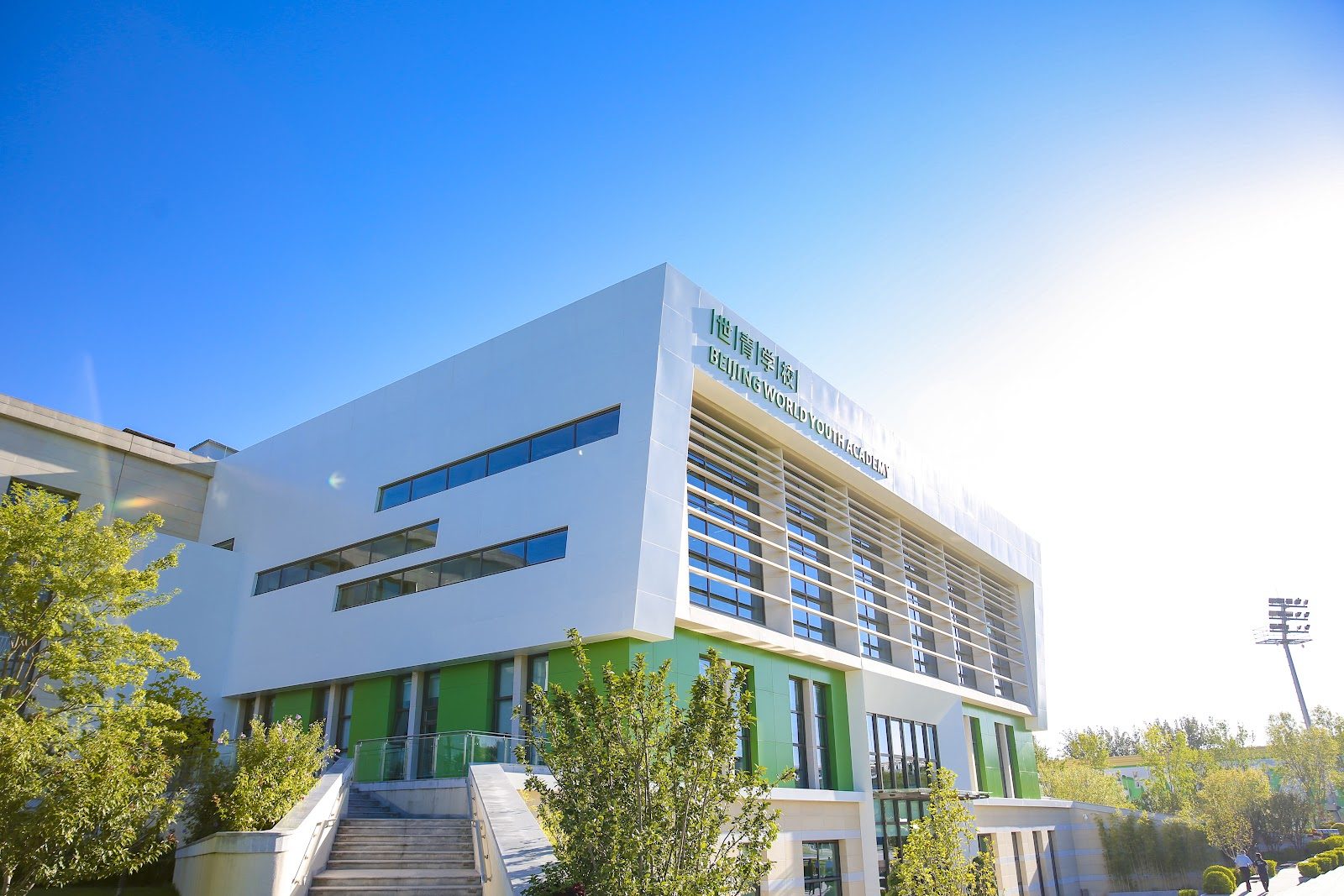
Beijing World Youth Academy
Beijing · China
In Chaoyang district, a full IB continuum runs alongside China's national curriculum, pairing local roots with global classrooms.
Yew Chung International School of Chongqing
Chongqing · China
Chongqing's first Ministry-registered international school, pairing Chinese and Western co-teachers through IGCSE and the IB Diploma.
Same country and curriculum — closest matches within ±10 points either way