Shanghai
Shanghai United International School
low confidence· 3/6 cats · 3.11 avg sourcesChinese and Western teachers share the same classroom across an eight-campus Shanghai network built on IB and an East-meets-West bilingual ethos.
Type
Day
Ages
3–18
Curriculum
IB
Ratio
—
The Verdict
Editor's commitment
Right for
Families in Shanghai wanting an IB-branded school with scale: Shanghai United International School spans eight Shanghai campuses under Xiehe Education.
Wrong for
Anyone expecting one coherent school experience; Shanghai United International School is a group across eight campuses, from Hongqiao to Qingpu, not a single site.
Watch out for
The website foregrounds multiple campuses and phases, but publishes no group-wide outcomes; campus specifics matter more than the Shanghai United International School name.
Ranking breakdown
Shanghai United International School · #1530 of 1591
Composite score 46.9. 8 weighted criteria.
By criterion
Academic Outcomes
Weight 20%
#1459
of 1529 scored
University Placement
Weight 16%
#1455
of 1529 scored
Prestige & Heritage
Weight 12%
#1504
of 1571 scored
Alumni Network
Weight 12%
#1191
of 1530 scored
Facilities
Weight 12%
#1422
of 1533 scored
Transparency & Communications
Weight 8%
#1415
of 1532 scored
Peer & Industry Review
Weight 10%
#1482
of 1548 scored
Admissions Selectivity & Demand
Weight 8%
#1456
of 1529 scored
Score history
Shanghai United International School · 2026
Movement across 2024–2026. Peer average overlaid.
Overall — 2024–2026
46.9/ 100
▲ +2.8 vs 2025
year on year
Peer & Industry Review
How Shanghai United International School is regarded in the sector
52
Credible · medium confidence
I could not identify at least two independent third-party sources (e.g., Tatler, Good Schools Guide, specialist education press, alumni network coverage) discussing Shanghai United International School's reputation. Available information appears limited to the school's own materials or unverifiable directory listings.
Editors' overview
Shanghai United International School sits in an unusual position in Shanghai’s market: not a single flagship campus, but a sizeable school group under Xiehe Education, with a broad physical footprint across the city. The school’s own site lists multiple campuses in Shanghai — including Jiaoke, Hongqiao, Shangyin, Gubei, Pudong, Wanyuan, Qingpu and Peiming — while Wikipedia notes 8 Shanghai campuses as of 2024. That matters. For parents, SUIS is less a boutique proposition than a serious citywide operator: established enough to offer continuity, visible enough to be a known quantity, and large enough to give families options by district and age phase. Founded in 2008, and covering ages 3–18, it belongs on a shortlist because it combines the reach of a network with the curriculum pull of the IB.
What is special here is scale with relative permanence. In a market where some international schools feel overly dependent on one site, one principal or one expatriate cycle, SUIS presents as firmly embedded in Shanghai. The multi-campus structure can be a practical advantage for families who want an IB pathway without pinning everything on a single congested commute. It also suggests breadth: different campuses serve different age ranges, with some focused on primary and junior secondary, and others extending through senior years. The trade-off is obvious and worth stating: parents should not assume a perfectly uniform experience across every campus. A network this large can feel less intimate than a smaller standalone school, and due diligence at campus level remains essential.
Why shortlist it? Because for many international and internationally minded families, SUIS offers a credible middle ground between ultra-elite scarcity and untested newcomers. It is likely to appeal to students who are academically steady, adaptable and comfortable in a busy, high-expectation environment rather than those needing an especially niche or pastoral-first setting. Children who benefit from a broad peer group, a recognisable school structure and the stability of an established organisation are the best fit. Families seeking urban practicality, IB continuity and the reassurance of a school group with substantial Shanghai presence will find SUIS compelling; families wanting a highly singular culture or a deliberately small-school atmosphere may look elsewhere.
Academic Performance
Shanghai United International School presents an unusual editorial problem on academic performance: it is a multi-campus school group, not a single compact senior school, and the source material supplied here does not publish consolidated external examination results. There is therefore no secure basis for quoting IB averages, diploma pass rates, top scores or university destinations across the whole organisation. What can be said with confidence is that SUIS operates at significant scale — with eight Shanghai campuses noted on Wikipedia as of 2024, while the school site lists a broad spread of junior, middle and senior provision across several sites — so any serious assessment of outcomes has to be campus-specific rather than brand-wide. In that sense, the school’s academic profile is structurally hard to generalise.
Relative to peers, SUIS is best understood as a large established operator within Shanghai’s international-facing market rather than a school whose academic reputation can be reduced to one headline examination figure. The editorial context identifies the curriculum as IB and the age range as 3–18, but without verified published results it would be wrong to place it precisely against the city’s stronger single-campus IB competitors. Parents should therefore treat claims about “SUIS results” with caution and ask for campus-level evidence: recent IB cohorts, score distributions, subject strengths and university outcomes. That is a more rigorous approach than relying on umbrella branding, and probably the only defensible comparison in a group this broad.
Facilities
Facilities are best understood at network level rather than as a single campus proposition. SUIS operates a substantial multi-campus estate, with eight Shanghai campuses named in the source material, spanning primary, middle and high school provision across sites including Hongqiao, Gubei, Pudong, Wanyuan and Qingpu. That breadth matters: compared with stand-alone international schools, SUIS can offer families more geographic choice and, in some cases, clearer age-phase specialisation — for example, the site listing shows campuses dedicated only to secondary or senior years alongside all-through campuses. The trade-off is obvious too: provision is uneven by campus, and parents should not assume that every site carries the same sports, arts or specialist teaching spaces.
What the published material does show is a school group with notable operational scale rather than one advertising a single flagship complex. The website foregrounds campus life, photos and videos, and recent items point to robotics, arts and sport activity at Qingpu, suggesting the expected mix of maker, performance and athletic spaces found in established IB-oriented schools. Even so, SUIS is *less transparent than the best-documented peers* on hard facility detail: there is no consolidated public specification of libraries, laboratories, theatres, pools or pitch provision across the group in the material provided. Against top-tier Shanghai competitors, that leaves SUIS looking *broad in footprint rather than distinctive in plant*. The sensible conclusion: a network with 3–18 coverage and considerable physical presence, but one where facilities should be judged campus by campus, not by brand alone.
What distinguishes Shanghai United International School is not a single flagship campus but a deliberately built network
Prestige
Shanghai United International School has a form of prestige that comes less from rarity than from scale, longevity in the market, and parent recognition within Shanghai. It sits inside the Xiehe Education group and, according to the school’s own site and Wikipedia, operates a substantial network of campuses, with 8 in Shanghai as of 2024. That matters. In a city where parents often judge schools by stability as much as by aspiration, a multi-campus institution with provision spanning ages 3–18 carries weight. The brand is plainly well established rather than niche: widely recognised in Shanghai, institutionally entrenched, and more influential than exclusive.
Why not rate it even higher on prestige? Because this is not a single highly selective flagship with one sharply defined identity; it is a broad school group, and broad groups can dilute cachet even as they increase visibility. The school’s standing appears to rest on consistency, reach and the attraction of the IB label, rather than on publicly documented academic selectivity or elite scarcity in the way some smaller top-tier schools trade on. That still gives SUIS real status among internationally minded Shanghai families: serious rather than glamorous, strong on presence and permanence, and *prestigious by local reputation more than by mystique*.
Against top-tier Shanghai competitors, that leaves SUIS looking broad in footprint rather than distinctive in plant
Communications
Shanghai United International School communicates with parents through a central website tied to the wider Xiehe Education group, alongside campus-specific news flow. The site makes one thing immediately clear: this is not a single small school but a network with eight Shanghai campuses listed in the Wikipedia extract, and a broader family of campuses shown on the school site. News is organised by campus — Qingpu, for example, has its own stream of dated updates — which suggests parents are expected to follow both group-level and local information. That is practical for a multi-campus school, and the campus listings are usefully explicit about which sections each site covers, from primary to senior school. For a school serving ages 3–18, that structure matters.
How effective is it? Broadly, functional rather than polished. Parents can see recent activity, identify the relevant campus, and get to admissions and FAQs from the main navigation. The weakness is that the central presentation appears heavily institution-first: it foregrounds the group and its schools more than it anticipates a parent’s likely questions about day-to-day communication, leadership visibility, or where urgent operational updates sit. In other words, it looks serviceable at scale but not especially intimate. For current parents, a campus-based news model is likely clear enough once learned; for prospective families, the sheer spread of campuses and naming can be *slightly confusing without careful reading*.
Uniqueness
What distinguishes Shanghai United International School is not a single flagship campus but a deliberately built network. Under Xiehe Education, SUIS operates a substantial multi-campus system in Shanghai; the school group lists campuses including Jiaoke, Hongqiao, Shangyin, Gubei, Pudong, Wanyuan, Qingpu and others, while Wikipedia notes eight Shanghai campuses as of 2024. That scale is *unusual in the city’s international sector*: rather than one site trying to be all things to all families, SUIS has developed campuses with different age ranges and, in some cases, distinct roles — for example, Gubei as a high school campus, Hongqiao and Shangyin for primary and middle years, and several all-through campuses. The result is a school that feels *more like a system than a standalone institution*.
For students, this brings practical advantages. Families have access to an IB school serving ages 3–18 with multiple entry points and campus options across Shanghai, which can make continuity easier as children grow or family logistics change. A network of this size can also support broader internal pathways, more specialised campus identities and greater resilience of provision than a small single-site school. The trade-off, of course, is that SUIS is not one uniform experience: much depends on the specific campus. Even so, for parents who want the reach of a large organisation without leaving one school group, SUIS’s 2008 foundation and citywide presence give it a *distinctly established, system-wide character*.
There is therefore no secure basis for quoting IB averages, diploma pass rates, top scores or university destinations across the whole organisation
Student Profile
SUIS suits families looking for a large, established school group rather than a single, intimate campus. Its scale is a defining part of the student experience: the school operates eight campuses in Shanghai as of 2024, with age phases differing by site, and the broader Xiehe system extends beyond Shanghai as well. That tends to appeal to pupils who are comfortable in a multi-campus, systems-driven environment and to parents who value continuity within one organisation from the early years through secondary. With provision spanning ages 3–18, it is likely to work best for students who benefit from a clearly structured pathway and are happy in a school where operations are substantial rather than boutique.
The best fit is therefore not simply “international-minded” in the abstract, but children who can make use of a broad institutional platform: those prepared to navigate a campus identity within a larger network, and families willing to look carefully at the differences between sites before enrolling. Students who thrive in close-knit, highly individual schools may find the group model less natural. Equally, parents should be practical: because campuses cover different age ranges and stages, SUIS is a choice that requires specificity, not a generic brand decision. For families who want an IB school in Shanghai with long-standing presence and multiple campus options, that complexity may be precisely the attraction.
What the published material does show is a school group with notable operational scale rather than one advertising a single flagship complex
Co-curricular strengths
Arts & sport, on a separate axis
Overall 3.8/10
Scored 0-10 from the school's own published evidence. This axis is editorial-only — it does not feed the main WTS ranking.
Sports
4/10
Basketball, Football and Swimming, and the review also mentions sport activity at Qingpu, showing a solid multi-activity offering but no named facility, specialist staff or competitive results.
Drama
4/10
Drama productions, which goes beyond a bare mention of drama by indicating recurring staged activity.
Dance
—
Music
4/10
School orchestra and Choir, indicating structured ensemble music participation, but there is no named music facility, department, specialist staff or competition evidence.
Visual Arts
3/10
Visual arts is offered.
Editor first-pass · editor-reviewable · 7/27/2026
Strengths
- +Eight Shanghai campuses offer location choice
- +Covers primary, middle and high school phases
- +IB listed in school context
- +Part of Xiehe Education school group
Considerations
- −Quality may vary between eight campuses
- −Not a single campus; chain model may feel impersonal
- −Website emphasises Chinese-language communication
Availability
Primary entry gate & tests
Academic Record
Parent reviews
Have you sent your child here?
Voice reviews carry the strongest trust badge — we transcribe them for you to tidy up before they go live. Prefer to type? A written review is fine too.
Add your voice
In 60 seconds, tell other parents: what's the best thing about Shanghai United International School, and what surprised you when your child joined?
We ask for a Google sign-in so every review has a real face behind it — no anonymous drive-by attacks on schools, and no faked positive reviews. Your email is never shown publicly.
Send this profile to a friend
International parents rely on word-of-mouth. Share this review with someone weighing the same decision.
Schools with places
Similar schools to Shanghai United International School with places available now.
Wellington College International Shanghai
Shanghai · China
- 2026-27
- WAITPOOLSpace-dependent
- 2027-28
- PLACES OPENRolling
Shanghai American School
Shanghai · China
- 2026-27
- WAITPOOLSpace-dependent
- 2027-28
- PLACES OPENRolling
Shanghai High School International Division
Shanghai · China
- 2026-27
- CLOSEDStandard route
- 2027-28
- OPENS SOONOpens Late '26 (Spring '27)
Availability first, then country, area, curriculum, price, co-curricular
Consider also
Also worth looking at alongside Shanghai United International School.
Yew Wah International Education School of Beijing
Beijing · China
Chinese-English co-teaching in every classroom, threading a through-train path from early years to the IB in Yizhuang's tech park
Suzhou Singapore International School
Suzhou · China
Rooted in the Suzhou Industrial Park's China-Singapore partnership, it pairs a full IB continuum with a parallel German curriculum strand.
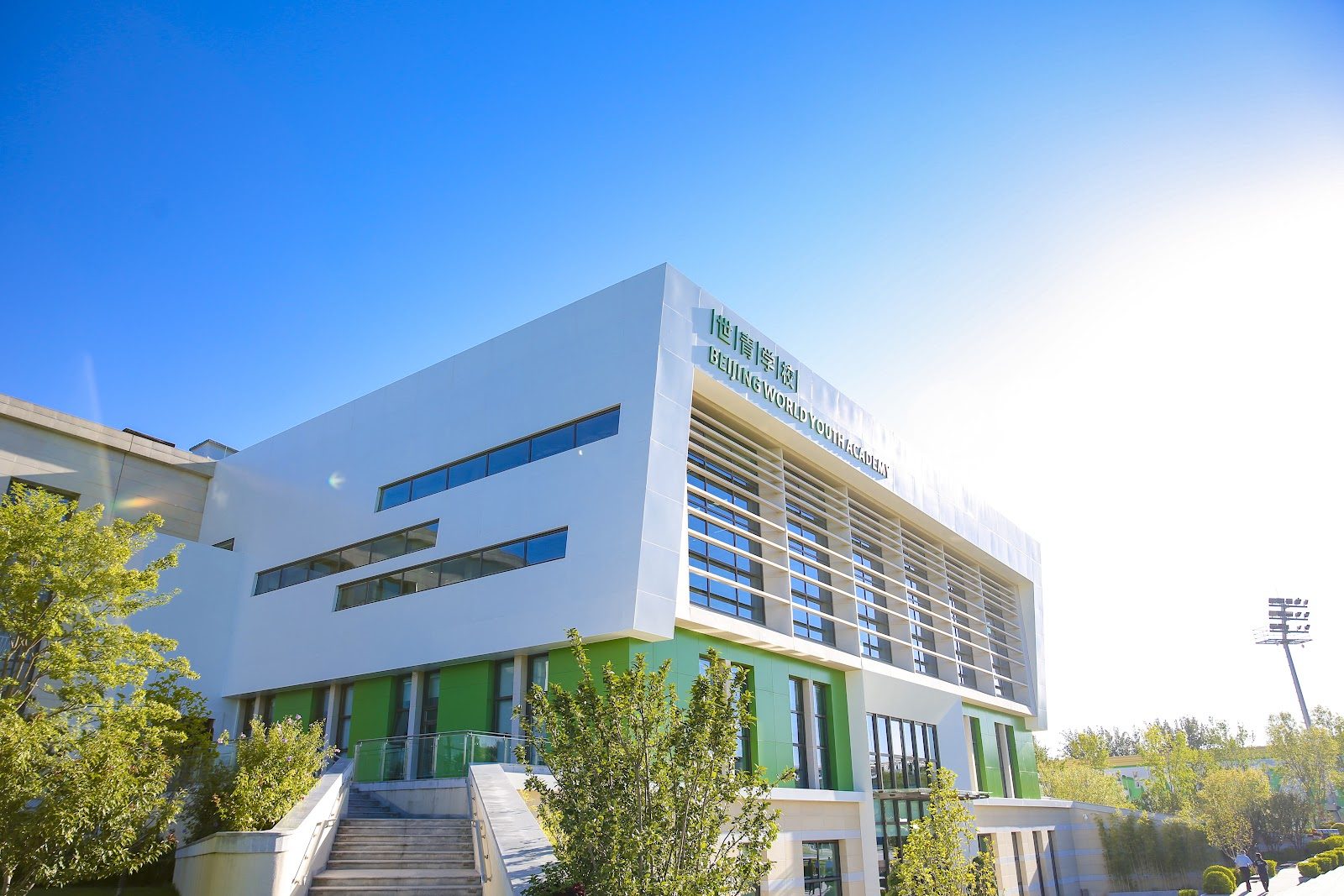
Beijing World Youth Academy
Beijing · China
In Chaoyang district, a full IB continuum runs alongside China's national curriculum, pairing local roots with global classrooms.
QSI International School of Chengdu
Chengdu · China
A mastery-learning model and single-digit class sizes anchor this American Garden campus school inside Chengdu's Third Ring Road.
Same country and curriculum — closest matches within ±10 points either way