
Jiangsu
Suzhou Singapore International School
low confidence· 3/6 cats · 2.75 avg sourcesRooted in the Suzhou Industrial Park's China-Singapore partnership, it pairs a full IB continuum with a parallel German curriculum strand.
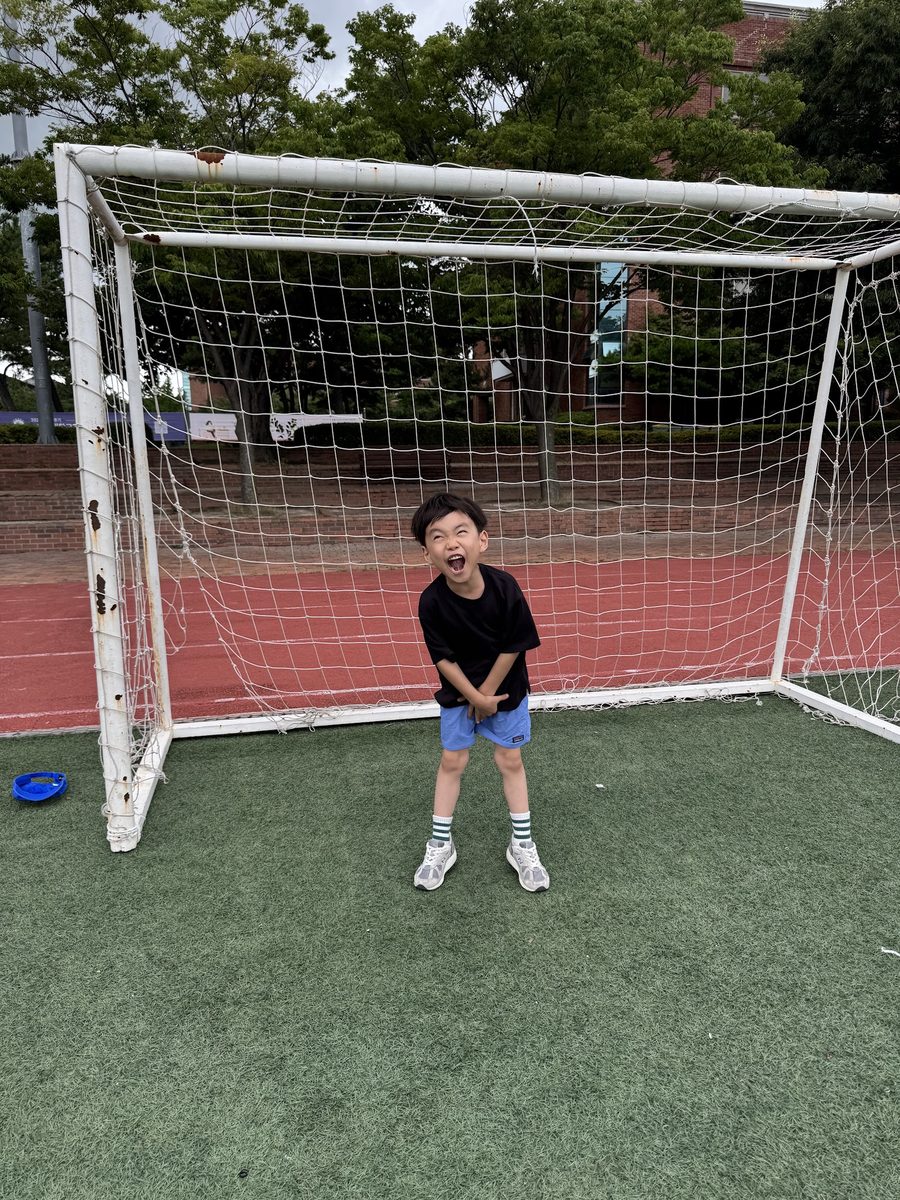
Photo © 박상천 via Google Maps
Type
Day
Ages
3–18
Curriculum
Singapore · IB
Ratio
—
The Verdict
Editor's commitment
Right for
Families in Suzhou wanting a day school founded in 1996 with the full IB continuum and a parallel German strand.
Wrong for
Parents who want boarding, a single-curriculum school, or teaching beyond English and Mandarin; SSIS is day-only and CIS-accredited.
Watch out for
The average annual day fee is RMB 205,980, and the school does not publish aggregate IB results on its public site.
Ranking breakdown
Suzhou Singapore International School · #1547 of 1591
Composite score 45.2. 8 weighted criteria.
By criterion
Academic Outcomes
Weight 20%
#1475
of 1529 scored
University Placement
Weight 16%
#1479
of 1529 scored
Prestige & Heritage
Weight 12%
#1508
of 1571 scored
Alumni Network
Weight 12%
#1210
of 1530 scored
Facilities
Weight 12%
#1465
of 1533 scored
Transparency & Communications
Weight 8%
#1472
of 1532 scored
Peer & Industry Review
Weight 10%
#1495
of 1548 scored
Admissions Selectivity & Demand
Weight 8%
#1471
of 1529 scored
Score history
Suzhou Singapore International School · 2026
Movement across 2024–2026. Peer average overlaid.
Overall — 2024–2026
45.2/ 100
▲ +6.1 vs 2025
year on year
Peer & Industry Review
How Suzhou Singapore International School is regarded in the sector
50
Credible · medium confidence
I could not identify at least two independent, credible third-party sources (e.g., Tatler, Good Schools Guide, specialist education press, alumni network coverage) that substantively assess Suzhou Singapore International School's reputation. Available information appears limited to school-published materials or unverified directory listings, which do not meet the evidentiary threshold required.
Editors' overview
Suzhou Singapore International School sits in a distinctive niche in this market: an established international school in Suzhou Industrial Park with a full IB continuum and, as the school’s own positioning makes clear, roots in the China-Singapore partnership that shaped the district. Founded in 1996, it has longevity that many newer China campuses do not, and that matters in a city where international schools can still feel transient. The structural offer is clear: Early Years, IB Primary Years Programme in Grades 1 to 5, IB Middle Years Programme in Grades 6 to 10, and the Diploma Programme in the sixth form. Add CIS accreditation and full IB World School status, and parents get a school with serious institutional ballast, not a start-up trading on glossy imagery.
What is special here is breadth with a defined character. The school covers ages 3 to 18, teaches in English and Mandarin, and carries an average annual day fee of 205,980 RMB across the full age range. That places it in the expensive bracket, so the case for SSIS has to rest on more than convenience. It does. A continuous IB pathway from the earliest years to graduation gives academic coherence, while the Singapore link gives the school a more specific identity than the generic “global international” formula. The editorial context also flags a parallel German curriculum strand; that is a genuinely uncommon feature in Suzhou and broadens its appeal beyond the standard Anglo-international crowd. Parents who want one school from nursery to sixth form, with a stable governance profile and internationally legible accreditation, have a credible option here.
It belongs on a shortlist for families who value continuity, multilingualism and an internationally portable education over local prestige games. It will suit students who thrive in an inquiry-led framework, can handle the demands of the IB as they move up the school, and want a campus that is firmly international rather than locally adapted in tone. It will also appeal to mobile expatriate families who need transferability and to bicultural households that want English-medium schooling without dropping Mandarin from daily school life. Families chasing published league-table style data will hit a limit: the school publicises IB results celebrations and alumni returns, but it does not publish the kind of aggregate outcome data that would let parents benchmark it ruthlessly against top-tier competitors. That lack of public academic detail is the main reservation.
For the right child, though, SSIS has a clear proposition. This is a school for internationally minded students who want the full arc of the IB, a mature school culture, and peers drawn to a broad, outward-looking education rather than a narrow exam factory. It is less compelling for families who want a highly defined national system, lower fees, or heavily published performance metrics. In Suzhou, its age, full-through structure, IB authorisation and CIS accreditation give it a real market claim: not the newest school, not the cheapest, but one of the more established and coherent all-through international options in the city.
Academic Performance
SSIS does not publish the hard public data that serious comparison requires. We have not seen aggregate Diploma averages, subject distributions, pass rates over time, or a clean university destinations list beyond anecdotal alumni mentions. The school publicises result celebrations and higher education events, which is normal, but that is not the same as disclosing performance. For parents trying to place it against stronger operators in the China international market, this is a material weakness. In an IB school, the basic benchmark is straightforward: publish the Diploma average, publish the pass rate, publish the cohort size, and do it year after year. SSIS does not do that in the public domain. That leaves academic performance opaque.
Where does that place it relative to peers? In the middle tier for transparency, below schools that release full IB outcome data and let families judge academic strength directly. Its age, scale and all-through structure give it the platform to produce strong results, and the site’s emphasis on milestones, alumni returns and post-school guidance points to a school with serious ambitions for older students. But ambition is not evidence. Until SSIS publishes headline figures, parents cannot rank it with the results-driven leaders of the sector on academic outcomes alone. The safest conclusion is blunt: this is a school with a credible academic framework and insufficient public proof of where its exam performance sits.
Facilities
The campus offer reads as broad rather than boutique. Public-facing school life points to the facilities that matter in practice: dedicated early years spaces, elementary and secondary teaching blocks, visual art exhibition areas, production capacity strong enough to stage a full school musical, and music provision that supports an honour ensemble. That is the profile of a school built for an all-through student body, not a compact primary with a few specialist rooms attached. The event calendar also shows spaces used for sixth-form higher education guidance and open-house evenings, which tells parents there is enough specialist and communal provision to run parallel academic, arts and community programmes without strain. For a school of 1100+ students, that baseline matters. It is a serious operational campus, not a stopgap site.
Against peer schools, the facilities picture is solid rather than dazzling. SSIS gives clear signs of functioning arts and exhibition infrastructure and enough shared space to support a busy whole-school calendar. What it does not do, at least publicly, is make a hard competitive case on facilities in the way more aggressive rivals do with detailed sports specs, theatre capacities, laboratory inventories or architecture-led campus tours. Parents can infer a well-used, mature environment with breadth across the arts and everyday school life. They cannot infer a standout facilities arms race. In this bracket, that places SSIS in the credible upper-middle range: more substantial than smaller expatriate schools, less visibly lavish than the region’s most capital-intensive competitors.
SSIS carries solid local prestige, but not the rarefied status of the China market’s best-known flagship internationals
Prestige
SSIS carries solid local prestige, but not the rarefied status of the China market’s best-known flagship internationals. Its standing rests on endurance, scale and a broad international intake, not on headline-selective admissions or publicly proven exam dominance. The school calls itself Suzhou’s oldest and largest international school, and the public-facing numbers do give it weight: more than 1100 students and 50 nationalities make for a campus with real social breadth and a genuinely international peer group. In a second-tier China city, that matters. A school with that kind of density and longevity becomes a default reference point for mobile professional families, and SSIS has clearly occupied that role for years. That gives it earned local stature.
The ceiling on prestige is academic visibility. Top prestige in this sector comes from a combination of institutional history, selective cachet, and hard outcomes published without flinching. SSIS has the first element and part of the second, but not the third. Its website leans on community language, student life, alumni anecdotes and university-name signalling; it does not put the strongest comparative evidence front and centre. That keeps the school in the respectable, established bracket rather than the category-defining one. For many families, that is enough: a recognised name, a substantial international community, and a school that carries practical credibility with employers and relocating parents. For families chasing maximum prestige, SSIS stops short of the very top table.
Top prestige in this sector comes from a combination of institutional history, selective cachet, and hard outcomes published without flinching
Communications
Parent communication is active, visible and organised around the school calendar. The homepage carries a steady stream of news stories, event notices and celebratory items, with enough volume to show that families are not left guessing what is happening next. The events feed is practical rather than decorative: art exhibitions run across multiple days, staff meetings are listed plainly, and senior-school information evenings are timed and located with precision. That matters. Schools that communicate well do the small administrative jobs cleanly, and SSIS handles those basics with professional consistency. The site also gives parents a readable picture of day-to-day school life through performances, exhibitions and milestone events, which helps families track the rhythm of the year rather than receiving communication only when a problem lands. For a school with 1100+ students drawn from 50 nationalities, that level of routine visibility is operationally important.
The limitation is the school’s instinct for celebration over disclosure. Communications are strong on atmosphere, community and student voice, but weaker where hard accountability starts. Parents get smiling narratives, alumni call-backs and headline event coverage; they do not get the crisp academic reporting that serious comparison demands. That creates a split verdict: warm, busy and accessible in tone, but not rigorous enough in the areas that matter most to analytical parents. If you want reassurance that your child will be known and that school life is well signposted, SSIS communicates effectively. If you want communication that doubles as transparent institutional reporting, the school falls short.
Uniqueness
What marks SSIS out is not novelty but combination. In one school, families get a through-school international model anchored in the Suzhou Industrial Park’s China-Singapore story, an IB pathway across the main school, and a parallel German strand flagged in the editorial record. That mix is genuinely uncommon in this market. Many international schools offer one dominant academic identity and ask families to fit around it. SSIS offers a broader architecture without collapsing into a generic “global” blur. Add a student body of 50 nationalities and more than 1100 pupils, and the result is a school where internationalism is structural rather than decorative. For students, that brings daily exposure to different languages, habits and expectations, not a token annual culture day.
The practical gain is continuity with range. A child can stay in one institution from the earliest years to graduation while still moving through distinct developmental stages, and families with mixed priorities have more room to manoeuvre than they do in a single-track school. That suits internationally mobile households, bicultural families, and students who benefit from a broad, outward-facing peer group rather than a narrow national enclave. It also gives older pupils a setting with enough scale to support arts events, exhibitions and higher-education programming alongside classroom study. The trade-off is clear: SSIS is *more distinctive in structure than in public academic disclosure*. Its uniqueness lies in the shape of the offer and the community around it, not in published results leadership.
For families chasing maximum prestige, SSIS stops short of the very top table
Student Profile
This is a strong fit for children who are comfortable in an international crowd and do not need a school built around one narrow national identity. With more than 50 nationalities and a student body above 1100, SSIS suits families who want their child’s friendships, classroom discussions and daily routines shaped by real cultural range rather than a token international veneer. The student who thrives here is curious, socially adaptable and happy moving between different expectations and perspectives. Children who enjoy languages, group work, performances, exhibitions and the wider life of a busy all-through campus will find room to grow. It also suits families in motion: expatriate households, bicultural families and internationally minded parents who value continuity without locking themselves into a rigid local track.
The better fit is for students with a broad-gauged outlook rather than single-minded exam grinders. SSIS looks stronger for pupils who want academic challenge alongside arts, activities and a visible community life than for teenagers who want a stripped-down, results-obsessed environment. The school’s public voice is warm, community-heavy and student-facing, which points to a cohort that is engaged, outward-looking and used to participating beyond the classroom. Children who need a hard-edged, intensely competitive culture may find it too rounded in emphasis. Children who value belonging, can handle a diverse peer group, and want a school where internationalism is part of the daily fabric will fit in well.
The trade-off is clear: SSIS is more distinctive in structure than in public academic disclosure
Co-curricular strengths
Arts & sport, on a separate axis
Overall 8.9/10
Scored 0-10 from the school's own published evidence. This axis is editorial-only — it does not feed the main WTS ranking.
Sports
8.5/10
The extracurriculars explicitly list Football, Basketball and Swimming, showing a structured multi-sport offering.
Drama
9/10
Drama Productions and specifically cites an elementary production of Seussical Jr., which is recurring named production evidence sufficient for a notable programme.
Dance
9/10
Music
9/10
School Choir and String Ensemble, and the review mentions an honour ensemble appearance, giving named ensembles plus a cited performance distinction.
Visual Arts
9/10
Visual Arts appears explicitly in the extracurriculars list.
Editor first-pass · editor-reviewable · 7/27/2026
Strengths
- +Founded 1996; longest-established international school in Suzhou
- +Full IB continuum: PYP, MYP and Diploma Programme
- +Early Years starts at age 2
- +First international school in Suzhou, by its account
Considerations
- −No published exam results in provided sources
- −No accreditations beyond IB authorisation cited
- −Website gives little concrete detail beyond programme structure
Availability
Primary entry gate & tests
Academic Record
Gallery
Photo © 박상천 via Google Maps
Photo © Xiaoyi Peng via Google Maps
Parent reviews
Have you sent your child here?
Voice reviews carry the strongest trust badge — we transcribe them for you to tidy up before they go live. Prefer to type? A written review is fine too.
Add your voice
In 60 seconds, tell other parents: what's the best thing about Suzhou Singapore International School, and what surprised you when your child joined?
We ask for a Google sign-in so every review has a real face behind it — no anonymous drive-by attacks on schools, and no faked positive reviews. Your email is never shown publicly.
Send this profile to a friend
International parents rely on word-of-mouth. Share this review with someone weighing the same decision.
Schools with places
Similar schools to Suzhou Singapore International School with places available now.
Nanjing International School
Nanjing · China
- 2026-27
- WAITPOOLSpace-dependent
- 2027-28
- PLACES OPENRolling
UWC Changshu China
Changshu · China
- 2026-27
- CLOSEDStandard route closed
- 2027-28
- PLACES OPEN2027 application active
Availability first, then country, area, curriculum, price, co-curricular
Consider also
Also worth looking at alongside Suzhou Singapore International School.
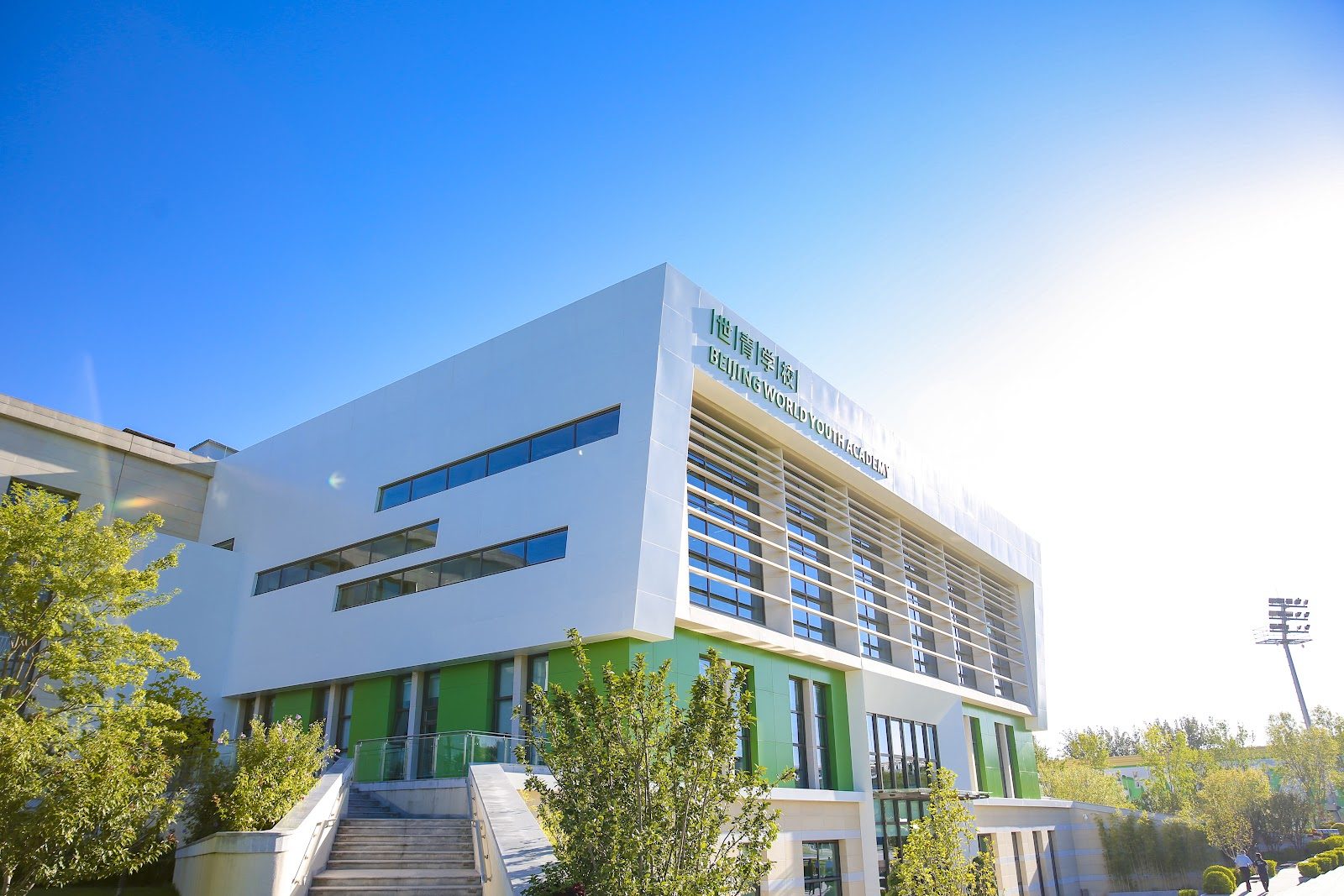
Beijing World Youth Academy
Beijing · China
In Chaoyang district, a full IB continuum runs alongside China's national curriculum, pairing local roots with global classrooms.
Shanghai United International School
Shanghai · China
Chinese and Western teachers share the same classroom across an eight-campus Shanghai network built on IB and an East-meets-West bilingual ethos.
Yew Wah International Education School of Beijing
Beijing · China
Chinese-English co-teaching in every classroom, threading a through-train path from early years to the IB in Yizhuang's tech park
Deutsche Schule Shanghai
Shanghai · China
A Franco-German campus in Yangpu's innovation district, where the Abitur pairs with a CertiLingua seal waiving university language tests.
Same country and curriculum — closest matches within ±10 points either way